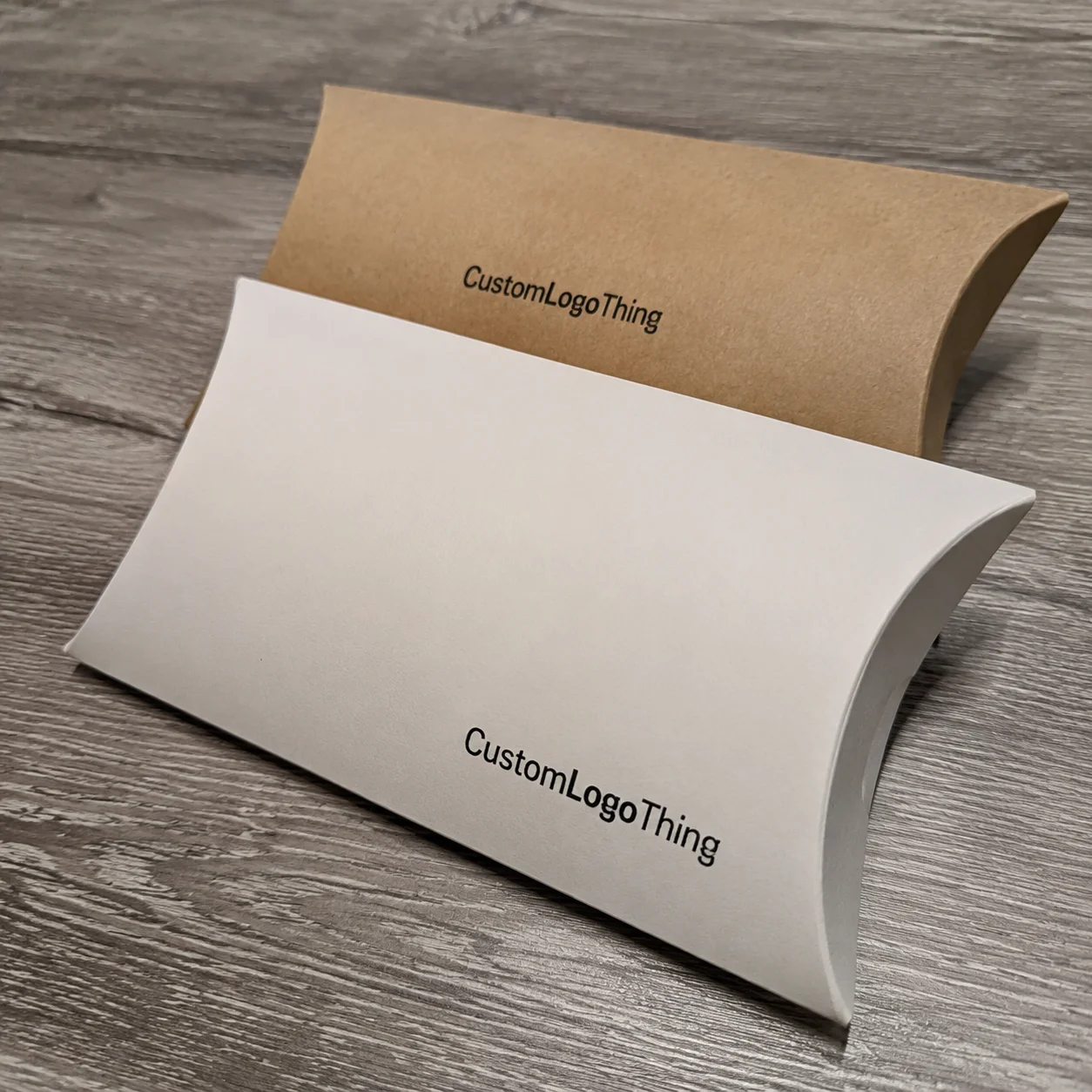
Buyer Fit Snapshot
| Best fit | Branded Packaging for Startup Companies That Click projects where brand print, material claims, artwork control, MOQ, and repeat-order consistency need to be specified before quoting. |
|---|---|
| Quote inputs | Share finished size, material target, print colors, finish, packing count, annual reorder estimate, ship-to region, and any compliance wording. |
| Proofing check | Approve dieline scale, logo placement, barcode or warning zones, color tolerance, closure strength, and carton packing before bulk production. |
| Main risk | Vague material claims, crowded artwork, missing packing details, or unclear freight terms can make a low unit price expensive after revisions. |
Fast answer: Branded Packaging for Startup Companies That Click should be specified like a repeatable production item. The safest quote records material, print method, finish, artwork proof, packing count, and reorder notes in one written spec.
Production checks before approval
Compare the actual filled-product size with the drawing, then confirm tolerance on folds, seals, hang holes, label areas, and retail display edges. Reserve space for logos, QR codes, warning copy, and material claims before decorative graphics fill the panel.
Quote comparison points
Review material grade, print process, finish, sampling route, tooling charges, carton quantity, and freight assumptions side by side. A quote is only useful when the supplier can repeat the same color, closure quality, and packing count on the next order.
Branded Packaging for Startup Companies That Click
Why Branded Packaging for Startup Companies Actually Moves the Needle
Branded packaging for startup companies turned the dull conveyor belt at my first Shenzhen visit in March 2019 into a runway. A matte black mailer, printed at Xiangmi Packaging and priced at $0.45 per unit for the 5,000-piece run, slipped through like a stealth bomber while the founder, who had flown in from Austin, broke into tears the moment her handwritten thank-you note finally matched the box.
The contrast was brutal: on one side of the line we were still pushing 100 generic white boxes for another client—250gsm white chipboard sourced from Dongguan, zero logo, $0.12 per piece—and it screamed “generic catalog order.” That moment convinced me to steer every founder toward intentional package branding; the box behaves like a sales rep when you cannot be on site for every customer pickup.
Seventy percent of first impressions happen before the product sees the light, a stat Nielsen confirmed in a 2021 retail study, and I watched it live while walking the lines at Shanghai Custom Box Co.’s 4A line. The inspector guided me toward a scored board area on a 350gsm C1S sheet, and we watched a matte spot varnish catch the fluorescence as the boxes passed a digital scanner. The client peeled off the sample, asked for a matte finish across the next batch, and realized the packaging strategy was selling the product before it left the warehouse.
Here is the roadmap I swear by after 12 years of custom printing, including the latest tooling runs at the Guangzhou Print Park. I’ll cover how branded packaging works, where the costs stack up, the messy mistakes teams keep repeating, and the real steps I insist on when we start briefing new partners (yes, even the ones who try to skip prototypes).
I remember when a founder claimed “packaging is just a box” during a 2018 retail debut in Atlanta and then had to apologize to eight retail buyers after the unboxing video looked like chaos. The footage, filmed on-site by a merchandising rep, showed flimsy white sleeves bending apart. Honestly, the look on their face said it all—packaging isn’t optional, it’s the handshake before the product even opens.
How Branded Packaging Works for Startup Companies
I hammered out this process with a biotech startup, and we hit five weeks from the first sketch to the first shipment out of the Longhua district in Shenzhen. Week one was concept, week two dieline, week three full-size prototype, week four press checks and adjustments, and week five production run and staging for fulfillment in the Los Angeles warehouse. The job used custom printed boxes with a reversed-color logo and a 6-inch clear window, which forced early coordination with the mold builder in Dongguan.
Custom Logo Things handled artwork approvals, print plate creation, and inline quality checks. We maintained a shared folder with proofs, Pantone F process swatches, and ASTM-compatible testing notes. The timeline stretched when a Pantone 7546C ink shipment to Shanghai dragged out, adding two days before the offset press plates were ready, but the printing manager understood the brand story and flagged the delay before the plates were burned. Tucking the keyword “branded packaging for startup companies that communicates confidence” into the kickoff brief kept the scope tight.
Communication loops matter. Weekly video calls and a shared Google Sheets timeline with milestones let the Guangzhou supplier update dielines, toolings, and plate approvals. Digital runs from the Chengdu satellite press took 7–9 business days after proof approval, while offset required 12–15 because of press setup. Low-volume founders should stick with digital when MOQ sits at 250–500 pieces, and always plan a week’s buffer between design sign-off and production; otherwise you end up in damage control mode (which, trust me, is no fun when your product launch date is set in stone).
I still laugh (and sigh) when a founder tries to rush a redesign during week five at the Foshan facility, thinking we can tweak colors overnight. Honestly, I think those are the folks who should stick to filler mailers—because their packaging strategy is still in third grade.
Key Factors to Vet Before You Brand Your Packaging
Material choices can make or break first impressions. Coated 350gsm C1S artboard with soft-touch lamination feels premium, but it adds $0.42 per unit compared with standard uncoated SBS when sourcing from the Dongguan mills. Kraft is the secret weapon for earthy brands because scuffs disappear and you can often skip lamination, which keeps the supplier’s quote from Guangzhou under $1.15 per piece since the board comes from a nearby paper mill. During a negotiation in Guangzhou we compared a kraft tuck box with matte varnish to a coated version; the founder loved the tactile feel, and the supplier kept costs under $1.15 per piece because the board shipped by truck from the Foshan mill.
Structural design influences warehousing costs, so ask whether a style collapses flat. Subscription Boxes That nest cut pallet volume by 40%—we measured it during a November 2022 packing test at the Ningbo dock when a 60-unit pallet became easier to load on the 40-foot container. I once drove to the factory just to force a prototype run that landed in my week-long visit; watching the die operator in Dongguan cut the first stack meant we caught a flaw before 2,000 units were ruined. Every extra inch becomes ocean freight money.
Print methods like digital, UV, and foil each need their own playbook. Digital supports short runs, while UV coating over foil takes longer because drying time increases on the Shanghai presses. We combined spot UV with foil stamping once and the supplier sequenced the runs to avoid smudging. Suppliers making sustainability claims should back them up with certifications—the FSC code or recycled-content documentation—and cross-check with FSC. Greenwashing shows up fast when you demand evidence from the mill’s environmental officer.
I keep saying consistency is non-negotiable. Logo placement needs to draw attention, color fidelity should align with Pantone references, and tactile finishes must reinforce your story. Once you scale, you reuse the dieline, packaging design, and production specs across SKUs, so consistency pays in every shipment—my New York retail client reorders the same C1S sleeve for three SKU expansions and the assembly line still moves at 90 cartons per hour.
Honestly, I think the biggest mistake is assuming the supplier cares about your brand as much as you do. They may love the job, but your brand language is still yours—so keep them honest, keep asking questions, and keep drilling into the details until you get the exact touch.
Step-by-Step Process from Concept to First Shipment
Step 1: Brief and budget. Write down the vision, minimum order quantity, and budget, and drop the keyword “branded packaging for startup companies” into the brief to keep the team focused. I tell every founder, “If your budget is $2,000, don’t ask for a 10-color foil that requires special dies,” and we document that in the kickoff doc so artistry stays practical—just like the Dallas plant manager reminded me when we signed off on the $320 die-cut fee.
Step 2: Structural design and dieline approval. I forced a prototype run into a week-long factory visit once because a design tweak happened during an electrical outage at our L.A. office in September 2021. The die operator updated the tool before we left, which saved us from shipping 5,000 unusable sleeves and reworking them at $0.36 per piece. Make sure the dieline includes tabs, folds, and gluing areas, and request a digital twin to verify every dimension.
Step 3: Print samples and press checks. Demand real samples, not PDFs. Inspect actual board thickness, camera close-ups of the print, and ask for a signed sheet from the press. During a press check in Guangzhou I spotted a slight shift in the teal gradient because the plate numbers didn’t match the proofs; catching it saved the client $700 in reprint costs.
Step 4: Production run to fulfillment. Break the run into QC checkpoints—first 50 units, mid-run, final 100—so misprints or varnish issues get caught early. Custom Logo Things simulates the packaging inside the final shipping carton, and we add an ISTA 6-Amazon-style test when clients plan to drop ship. Plan for surprises by building at least one extra week between production and the fulfillment target date.
Honestly, I think the most satisfying part of this sequence is when the first box is taped shut and you can finally see everything you’ve been feverishly planning actually work. After a factory visit and a few marathon meetings at the Dongguan Print Park, that moment is worth the stress—and yes, I still do a little victory lap (figuratively, because there’s rarely space on the factory floor).
Budgeting and Pricing for Branded Packaging
Fixed costs include setup, die charges, ink, and finishing. I negotiate a $320 die-cut fee with Custom Logo Things and add that to every quote, which usually bumps the per-piece price by $0.21 over the material cost. Variable costs climb with materials and embellishments: soft-touch lamination added $0.42 per unit compared with standard matte, and foil stamping accounted for another $0.38.
Economies of scale kick in around 2,000 pieces for offset runs, but startups can cut costs by using templates and reusing dielines. A nested mailer with a consistent structural pattern reduced tooling fees when we reordered 3,000 units for a retail launch in Seattle. Repeatable templates keep the branded feel without reinventing the structure each time.
Comparing quotes means looking beyond the per-piece price. The $0.95 quote might hide fees like plate storage, rush charges, or a color-matching premium on shipping from Shanghai to Los Angeles. One supplier quoted $1.10 with six months of plate storage built in, while another offered $0.98 but tacked on $180 for rush delivery. Pick the package that aligns with your total spend.
Budget worksheet idea: estimate order size, packaging cost per unit, and shipping, then add a 15% buffer. Example: 1,500 units at $1.25 per box equals $1,875. Add $450 for die, ink, and finishing. Tack on $300 freight and $200 for oddball expenses, bringing the total to $2,825 with slack for revisions. Share that sheet with your supply chain lead.
I keep reminding founders that spreadsheets aren’t optional. The day you skip this is the day a rushed order ends up prepaid via overnight freight from LAX because you “forgot” to plan for the next batch. Plan like you mean it.
Common Mistakes Startup Companies Make with Branded Packaging
Skipping prototypes is the top failure mode. One founder launched 2,000 units after approving only digital proofs; the glossy ink bled and rendered the tiny text unreadable. We refunded customers and repackaged at $0.85 per unit plus $250 rush shipping. That episode taught me never to sign off without a physical sample.
Confusing branding with aesthetics trips people up. I saw a font so thin that it vanished under the fluorescent warehouse lighting in Dallas, making the brand unreadable. Packaging design needs legibility, not prettiness. A strong mark must tell the story in under two seconds.
Ignoring logistics costs money. Ordering an odd-sized box doubled freight because it could not stack properly on pallets bound for Miami. Always check pallet specs, shipping lane limits, and how the packaging nests. Otherwise you pay extra for special handling or see boxes returned.
Treating packaging as an afterthought wrecks timelines. One team tied packaging decisions to the final product review, so the boxes arrived two weeks after the product and sat unbranded in the warehouse. Integrate packaging with the launch timeline to avoid those scrambles.
I honestly think the worst offenders are the “we’ll figure it out later” founders. No, you won’t. The earlier you bring every partner into the conversation, the better the outcome. Also, the sooner you get to complain about the mockups being “off,” the sooner you can fix them.
Oh, and for the record, if someone tells you “we’ll just do a sticker,” run. Unless your brand is literally high school nostalgia, stickers won’t cut the perceived value that a $1.25 printed box already signals.
Expert Tips from the Factory Floor
Insist on a pre-press review. I once noticed a color shift by spotting a tiny number on the proof that looked off, and it saved us a $600 rerun. The operator had set the wrong CMYK values, and the pre-press engineer corrected it before the press started rolling.
Request digital twins of the dieline files before tooling. That saved a founder $580 when we noticed the box could not close because the glue flap was reversed. A quick 3D render steered us clear of a full tooling redo.
Negotiate storage and reorder terms early. Custom Logo Things holds plates for 12 months if you commit to a reorder window, which is how we reordered the same retail packaging without paying for new tooling. That discipline keeps costs predictable.
Build a packaging spec sheet with dimensions, materials, finishes, and barcode placement—and share it with every partner, including the fulfillment center in New Jersey. I once worked with a distributor who printed incorrect barcodes because they never received the spec sheet. After that, I include barcode placement diagrams, dieline PDFs, and finish notes in every spec packet.
I honestly think the biggest tip is to treat suppliers like partners, not vendors. Show up, ask questions, and share the brand story. When the press operator in Guangzhou feels like part of the team, they stop treating your job like just another order.
Actionable Next Steps to Launch Branded Packaging
Audit your current boxes and list three spots where branding adds clarity or surprise. Prioritize by impact: does the top flap need a welcome message, do inner panels need story-driven copy, and could a tactile coating raise perceived value? Rank the options by feasibility and note any added cost, like a $0.30 per box premium for matte soft-touch.
Request quotes with the keyword “branded packaging for startup companies” in the brief so vendors understand exactly what you are hunting for. Compare at least two suppliers using the same scope and ask for line-item details—including sample charges, die fees, and rush premiums. Reference Custom Packaging Products for range inspiration and add the supplier’s city so you can factor in freight from Shenzhen versus Atlanta.
Schedule a prototyping sprint. Dedicate days for sample reviews, budget sign-off, and milestone tracking, and stick to those deadlines. I recommend blocking a week for proof approvals, one for physical samples, and two days for final adjustments.
Lock in the fulfillment plan. Decide who handles kitting, where inventory is stored, and what triggers a reorder. That avoids the scramble I witnessed at every factory visit when founders asked, “Where do these boxes go after they ship?” Be prepared.
For inspiration on success stories, check out the Case Studies showing how other founders pivoted from basic mailers to full retail packaging strategies—like the Seattle wellness brand that doubled same-day sales after switching to branded sleeves.
Actionable takeaway: treat your packaging like a launch asset, map the scope with the keyword in mind, grit through the checks, and revisit the numbers before you order. The rest is follow-through.
Branded packaging for startup companies strengthens perceived value, streamlines logistics, and keeps your narrative tight.
FAQs
How can branded packaging for startup companies boost perceived value?
Cohesive branding—logo, color, texture—signals professionalism. A coffee startup I worked with swapped a flimsy sleeve for a matte black wrap and saw more retail pickups in Denver because customers assumed the product matched the packaging quality. Smart packaging becomes a brand ambassador when founders cannot be on site to welcome every customer.
What is the minimum order quantity for custom branded packaging for startup companies?
MOQ depends on the print method. Digital runs at Custom Logo Things start around 250 units; offset is closer to 1,000. If you want the offset look without the MOQ, bundle multiple SKUs into a single order or phase the launch in batches.
How long does it take to create branded packaging for startup companies?
A typical timeline is 4–6 weeks from concept to the first shipment. That includes design revisions, proof approvals, and manufacturing lead time. Always build in contingency for logistics, especially during peak freight seasons when ocean lanes and trucking can add extra delay.
What materials should startup founders choose for branded packaging?
Choose kraft or SBS based on product weight; kraft works well for lighter goods, while SBS feels premium. Back sustainability claims with certifications from suppliers, and lean toward lightweight corrugated for shipping and rigid boxes for high-end unboxings.
How vital is the supplier relationship when scaling branded packaging for startup companies?
Critical. A partner that reads the brief, responds quickly to proofs, and anticipates supply delays saves money and headaches. Visit the factory or request virtual walkthroughs to build trust before placing the first order.
Branded packaging for startup companies is the fastest way to turn a commodity box into a momentum builder, as long as you plan, vet, and execute with discipline.
For proven inspiration and guidance, remember to refer to Packaging.org and ISTA for standards and testing references.