Branded Poly Mailers for Event Kits: How to Choose
The fastest way to make an event kit feel improvised is to package it like an afterthought. Branded poly mailers for event kits solve that in one move: they protect the contents, carry the logo, and shape the first impression before anyone touches the insert stack. In 2026, that first touchpoint matters even more because event teams are being measured on consistency across shipping, registration, and post-show follow-up, not just on the kit itself.
Picture the kit's journey. A speaker opens it in a hotel room. An attendee picks it up at registration. A VIP package lands on an executive's desk two days before the event begins. The mailer is the first object in that story. If branded poly mailers for event kits look crisp, fit the contents, and arrive without tears or scuffs, the whole program feels intentional. If they arrive oversized, wrinkled, or weak at the seal, the message changes fast.
I have seen teams spend weeks refining a welcome card, then ship the kit in a generic bag that creases the moment it hits a pallet. That mismatch is hard to ignore. The insert says premium; the packaging says last-minute. In practice, branded poly mailers for event kits are less about decoration and more about proving the event was planned with the same care as the content inside.
Why Branded Poly Mailers for Event Kits Stand Out
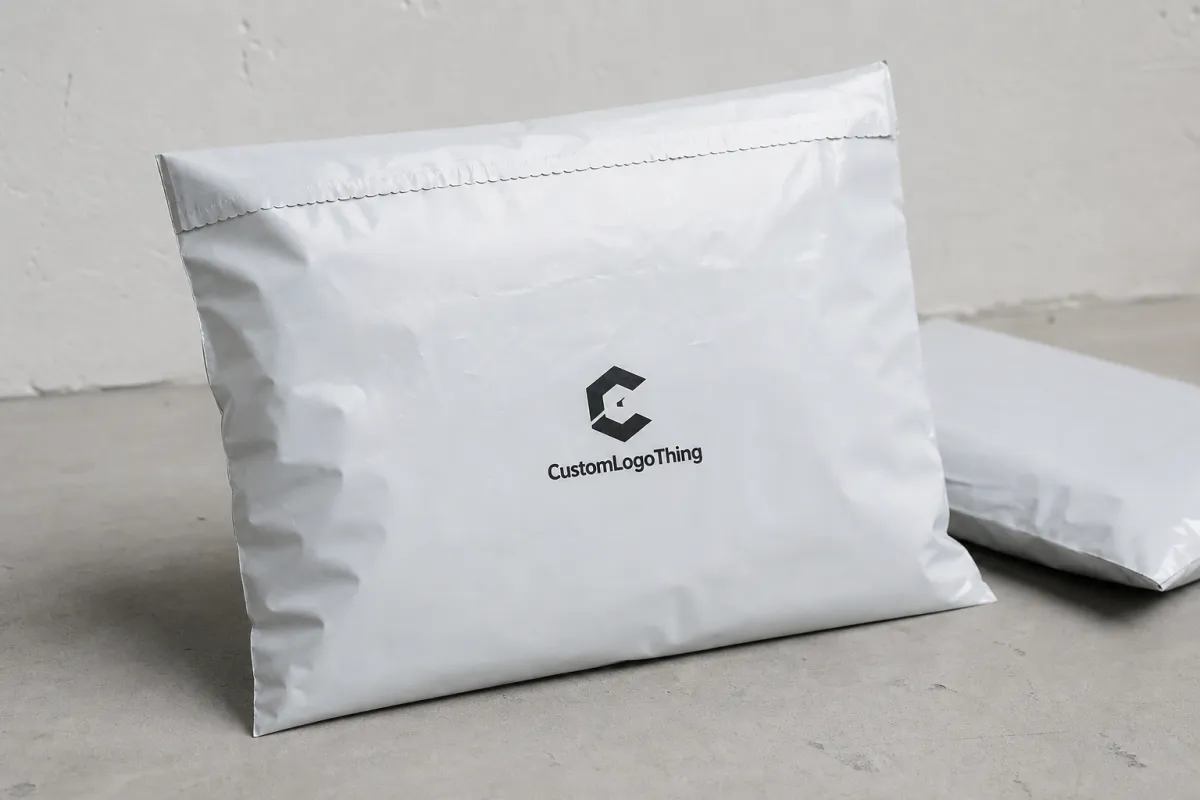
Poly mailers are light, flexible, and cheaper to ship than boxes. That sounds obvious until you compare them with corrugated packaging at scale. Boxes add cubic weight, filler, and more warehouse labor. Poly mailers are flat, easy to store, and fast to pack. For event teams moving hundreds or thousands of kits, that difference shows up in both budget and fulfillment speed.
Branding adds another layer. A logo on a poly mailer turns a transit wrapper into part of the campaign. It also helps the package stand out in busy places like conference check-in desks, hotel mailrooms, and office mail stops. People notice a mailer that looks designed on purpose, and they notice when it does not.
There is a practical side here too. A printed mailer can reduce the need for extra inserts that explain what the package is. If the outside already carries the event name, date, or sponsor line, the kit starts telling its story before it is opened. That clarity helps with multi-day events, where staff may be handling dozens of nearly identical shipments. It also helps attendees who are sorting through badges, totes, and room drops. One label looks like another; a branded mailer does not.
Still, not every event kit should use a poly mailer. Fragile items, rigid gifts, and premium objects with hard edges may need a box or a mailer plus protective inner packaging. A flat mailer is a strong fit for apparel, brochures, notebooks, lanyards, charging cables, and other soft or flat promo items. It is less suited to glassware or anything that can buckle under pressure.
What Changed for 2026 Buyers
In 2026, the biggest shift is not just that buyers want custom packaging. They want packaging that does more than one job. The strongest branded poly mailers for event kits now combine brand impact, delivery protection, and lower waste in one spec sheet. That is why recycled-content films, lighter gauges, and slimmer high-opacity constructions are getting more attention from event marketers and procurement teams.
Another change is the rise of short-run digital printing for event kits. A few years ago, smaller custom orders could feel expensive because the setup work did not scale well. In recent quotes I have reviewed, digitally printed runs still cost more per unit than large flexographic orders, but they are easier to justify for regional events, pilot programs, or VIP kits with variable messaging. That flexibility matters when the guest list changes late, which it often does.
Pricing has shifted too. For standard branded poly mailers for event kits, recycled-content film and specialty finishes usually add a modest premium, while tamper-evident seals, QR-code printing, and matte soft-touch effects can push the price up further. The tradeoff is often worth it. A simple printed mailer may be cheaper up front, but a better seal or clearer print can reduce damage claims, rework, and warehouse mistakes.
For teams comparing formats, two resources can help narrow the decision: sustainable packaging options for events and how to measure custom mailers. Those guides are useful if you are deciding whether branded poly mailers for event kits should prioritize recycled content, print coverage, or a tighter fit around the contents.
How Branded Poly Mailers for Event Kits Work
A poly mailer is usually made from polyethylene film. The film can be co-extruded for strength, and many versions include a self-seal adhesive strip. Some are opaque, which is useful when you do not want contents visible during shipping. Others use a matte finish or a heavier white outer layer to create a more polished look. For branded poly mailers for event kits, the print method matters almost as much as the material.
Most suppliers offer flexographic printing for higher quantities and digital printing for smaller runs or more complex artwork. Flexo tends to be economical at scale, especially if the artwork is simple and the number of print colors stays low. Digital printing is a better fit when you need smaller batches, variable data, or a faster turnaround. If you are ordering event kits for multiple regions, digital printing also makes versioning much easier.
There is also the question of closure. A standard peel-and-seal strip is fine for most event kits, but tamper-evident adhesive gives more confidence when the package will travel through mail networks or third-party handlers. If the kit has to survive a lot of handoffs, ask whether the adhesive is designed for cold or humid conditions. Adhesive performance can change more than people expect, especially if the mailers are stored in a warehouse before fulfillment.
From a design standpoint, the mailer should support the event, not crowd it. A strong logo, one or two brand colors, and a clean message are usually enough. Overprinting a poly mailer can make it look busy, and busy rarely feels premium. If the kit is meant for a conference with a modern, high-contrast identity, bold artwork can work. If it is for an executive program or client summit, restraint usually wins.
Cost, Pricing, and MOQ for Branded Poly Mailers
Pricing depends on size, film thickness, print method, number of colors, finish, and quantity. Minimum order quantities, or MOQs, vary by supplier and print process. Flexographic printing often comes with higher MOQs because of setup costs. Digital printing may allow smaller orders, though the per-unit cost can be higher. There is no universal number here, and anyone promising one without asking about artwork and dimensions is guessing.
For event teams, the real cost question is usually total landed cost, not just the price per mailer. Add freight, storage, packing labor, spoilage, and overage. Then ask what happens if the mailing list changes late, because event lists always seem to change late. A cheap mailer that tears in fulfillment is not actually cheap. It is just delayed expense.
Shipping cost matters too. Poly mailers are light, so they can reduce postage compared with boxes, especially when the contents are soft goods or flat items. That savings can be meaningful across a large program. It also gives teams a little more room to spend on a better print finish or stronger adhesive. If the package ships domestically and the contents are under a postal weight threshold, the format can be especially efficient.
One caution: not all suppliers define thickness or weight the same way. A 2.5-mil mailer from one vendor may not feel exactly like a 2.5-mil mailer from another. Ask for a sample, and if possible request a finished sample with your artwork. That is the only way to get past catalog language and see how the mailer behaves in hand. Paper mockups help, but a real sample is better.
Process and Timeline: From Proof to Delivery
The usual process starts with dimensions. You need the mailer size, the imprint area, the artwork file, the quantity, and the shipping destination. From there, the supplier creates a proof. This is the stage where many problems get caught, which is good, because proofing on a screen is much cheaper than reprinting thousands of mailers.
Good proofs should show color placement, logo alignment, bleed areas, and any text that might run into a seal or seam. If the mailer has a gusset, ask how the artwork wraps when the bag is filled. Flat artwork can behave differently once the package is stuffed. That is one of those details people only learn the hard way, and it usually shows up right when the warehouse is trying to close out the order.
Lead times vary, but custom printed mailers are rarely an overnight job. Art review, sampling, production, curing, and freight all take time. If the event date is fixed, build in buffer. Extra time also helps if you decide the proof needs a revision, which is common enough that nobody should pretend otherwise.
For international events or kits shipping to multiple locations, timeline planning should start even earlier. Customs, regional warehouses, and local delivery standards can all shift the schedule. If the event has a hard reveal date, test the route before committing to a full production run. A pilot shipment to one office or one venue can expose issues with size, adhesive, or handling. That small test can save a lot of embarrassment later.
Key Factors That Change Fit, Print, and Durability
Size: The mailer should fit the kit without forcing the contents or leaving too much dead space. Too small, and the seal may fail or the contents may crease. Too large, and the package looks sloppy and can shift in transit. Measure the thickest assembled kit, not the stack of items before they are packed.
Material thickness: Thicker film usually improves puncture resistance, but it can also affect cost and flexibility. If the kit includes sharp-cornered inserts or metal items, a stronger gauge may be worth it. For soft goods, lighter film might be enough. Ask suppliers whether the film is designed for shipping, storage, or both. Those are not always the same thing.
Print finish: Matte, glossy, and satin finishes each create a different feel. Gloss tends to pop visually, while matte can read more restrained and modern. If the event identity uses photography or rich color blocks, glossy film may produce sharper contrast. If the brand leans editorial or minimal, matte can feel more controlled. Neither is automatically better.
Closure strength: Adhesive has to hold under real conditions, not ideal ones. Heat, cold, and rough handling can change performance. If the mailers will be packed in bulk, stored for a while, or moved through different climates, ask for handling guidance. This is especially important for summer events, where warehouse temperatures can get extreme.
Print placement: Keep critical elements away from seams and folds. A logo in the wrong place can distort once the bag is filled. The same goes for fine text. Very small type might look acceptable on a proof and then disappear in production. If the design relies on subtle detail, push for a physical proof.
Sustainability claims: This is where honesty matters. Some poly mailers include recycled content or are designed for recyclability in specific local streams, but not every claim means the same thing everywhere. A mailer labeled recyclable may still depend on local collection systems. If sustainability is part of the event story, ask exactly what the supplier means and whether the claim holds in the regions where the kits will be received. Vague green language is not enough.
Common Mistakes When Ordering Event Kit Mailers
The biggest mistake is choosing for appearance alone. A mailer can look beautiful and still fail at the actual job. If the seal pops, if the print smears, or if the film tears during packing, the design is dead on arrival. Pretty is not a substitute for function.
Another common error is underestimating the finished weight and thickness of the kit. A notebook, shirt, charger, and brochure bundle takes up more room than people expect. Then the mailer arrives, the contents fight the corners, and somebody in fulfillment has to improvise. That is usually where quality control starts to slip.
Teams also forget to check the print color against the brand standard. Screen color is unreliable. A bright red on a monitor may print warmer or duller on polyethylene film. The same applies to metallic effects and fine gradients. If the mailer is meant to match a larger event system, compare it to approved brand assets, not just the digital mockup.
There is a quieter mistake too: not ordering enough extras. Event kits get damaged. Addresses change. VIP lists expand. A small overage is insurance, not waste. If the event is high-stakes, include a contingency amount so the team is not forced to reprint for a handful of last-minute additions.
Expert Tips and Next Steps Before You Order
Start with the contents, not the mailer. Lay out the full kit, seal it in a test sleeve or sample pouch, and measure the real finished size. Then confirm whether the mailer should be printed on one side or both, and whether the outside needs event details or just the logo. That sequence keeps the project grounded and helps you choose the right version of branded poly mailers for event kits.
Request a sample pack from at least one supplier, ideally two if the order is large. Compare the feel of the film, the adhesive, and the print quality under normal lighting. If you can, do a drop test with a packed sample. Shake it. Stack it. Push it through the same packing steps your team will use in production. The mailer should survive the work, not just the mockup.
Also think about the receiving environment. A mailer going into a hotel room has different needs than one going to a corporate office or an expo floor. Hotel delivery may need a bolder exterior for quick identification. Office delivery may need clearer recipient labeling. Expo delivery may need tamper resistance because too many hands are involved. Each route changes the design brief a little.
If the event kit includes premium materials, avoid printing so much copy on the mailer that it looks like a shipping notice. The outer layer should orient the recipient, not exhaust them. One strong mark and one concise message usually carry more authority than a crowded panel. That is where restraint pays off.
For teams still comparing formats, boxes for event kits may still be the better choice for fragile items, while branded poly mailers for event kits tend to win on speed, storage, and shipping efficiency. The decision is less about what looks best in a mockup and more about what survives the full route from warehouse to recipient.
FAQ
What are branded poly mailers used for in event kits?
They are used to package and ship flat or soft event materials such as apparel, brochures, notebooks, lanyards, and small promo items while reinforcing the event identity on the outside.
Are poly mailers better than boxes for event kits?
Not always. Poly mailers are lighter, cheaper to ship, and faster to pack, but boxes are better for fragile or rigid contents. The right choice depends on what is inside the kit and how it will be handled.
Can I order branded poly mailers in small quantities?
Sometimes. Digital printing often supports smaller runs, while flexographic printing usually requires a higher MOQ. Ask the supplier which process fits your quantity and artwork.
Do branded poly mailers protect contents from water?
They offer basic moisture resistance, but they are not a substitute for waterproof packaging in harsh conditions. If the kit contains sensitive items, add an inner barrier or choose another format.
What should I check before approving artwork?
Confirm logo placement, color accuracy, seam clearance, text legibility, and the way the design looks when the mailer is filled. A physical proof is better than relying on a screen.
The clearest way to choose branded poly mailers for event kits is to treat them like part of the event experience, not packaging trim. Start with the kit contents, match the material to the handling conditions, and test the proof in real life before you approve a run. If the mailer does its job well, nobody will stop to admire the logistics. They will just open it and keep going, which is exactly the point.


