Buyer Fit Snapshot
| Best fit | Custom Printed Mailers Supplier for Brands projects where brand print, material claims, artwork control, MOQ, and repeat-order consistency need to be specified before quoting. |
|---|---|
| Quote inputs | Share finished size, material target, print colors, finish, packing count, annual reorder estimate, ship-to region, and any compliance wording. |
| Proofing check | Approve dieline scale, logo placement, barcode or warning zones, color tolerance, closure strength, and carton packing before bulk production. |
| Main risk | Vague material claims, crowded artwork, missing packing details, or unclear freight terms can make a low unit price expensive after revisions. |
Fast answer: Custom Printed Mailers Supplier for Brands: Film, Print, MOQ, and Carton Packing should be specified like a repeatable production item. The safest quote records material, print method, finish, artwork proof, packing count, and reorder notes in one written spec.
Production checks before approval
Compare the actual filled-product size with the drawing, then confirm tolerance on folds, seals, hang holes, label areas, and retail display edges. Reserve space for logos, QR codes, warning copy, and material claims before decorative graphics fill the panel.
Quote comparison points
Review material grade, print process, finish, sampling route, tooling charges, carton quantity, and freight assumptions side by side. A quote is only useful when the supplier can repeat the same color, closure quality, and packing count on the next order.
Custom Printed Mailers Supplier Guide for Smart Brands
If you are comparing a custom printed mailers supplier, do not treat the decision like a basic print buy. The mailer is often the first physical thing a customer touches. It has to carry a lot at once: brand impression, product protection, and warehouse efficiency. That is a lot of pressure for something that looks flat on a spec sheet.
Cheap is not the right filter here. A lightweight mailer can absolutely replace a box for many shipments, but only if the dimensions, seal strength, and print method match the product. A 6-ounce apparel order, a stack of booklets, or a flat accessory bag may ship better in a mailer than in a carton. Custom Printed Boxes still make more sense for rigid items, fragile goods, or premium unboxing programs that need structure. The choice affects material behavior, labor in the warehouse, and the cost of fixing a bad spec after launch.
Most packaging projects go sideways in the same boring way. The request starts as branded shipping packaging, then turns into color approvals, seal tests, freight timing, and sign-off loops from three departments that all want a slightly different red. Normal. A good supplier takes that chaos and turns it into a repeatable product packaging spec, so the result supports package branding without slowing the line. If you are building a wider packaging stack, it helps to review Custom Packaging Products alongside the mailer category and see where mailers fit in the bigger plan.
Practical rule: if a supplier cannot explain the material, print method, and lead time in plain terms, the quote is not ready for a fair comparison.
Why choosing the right custom printed mailers supplier is a bigger deal than it looks
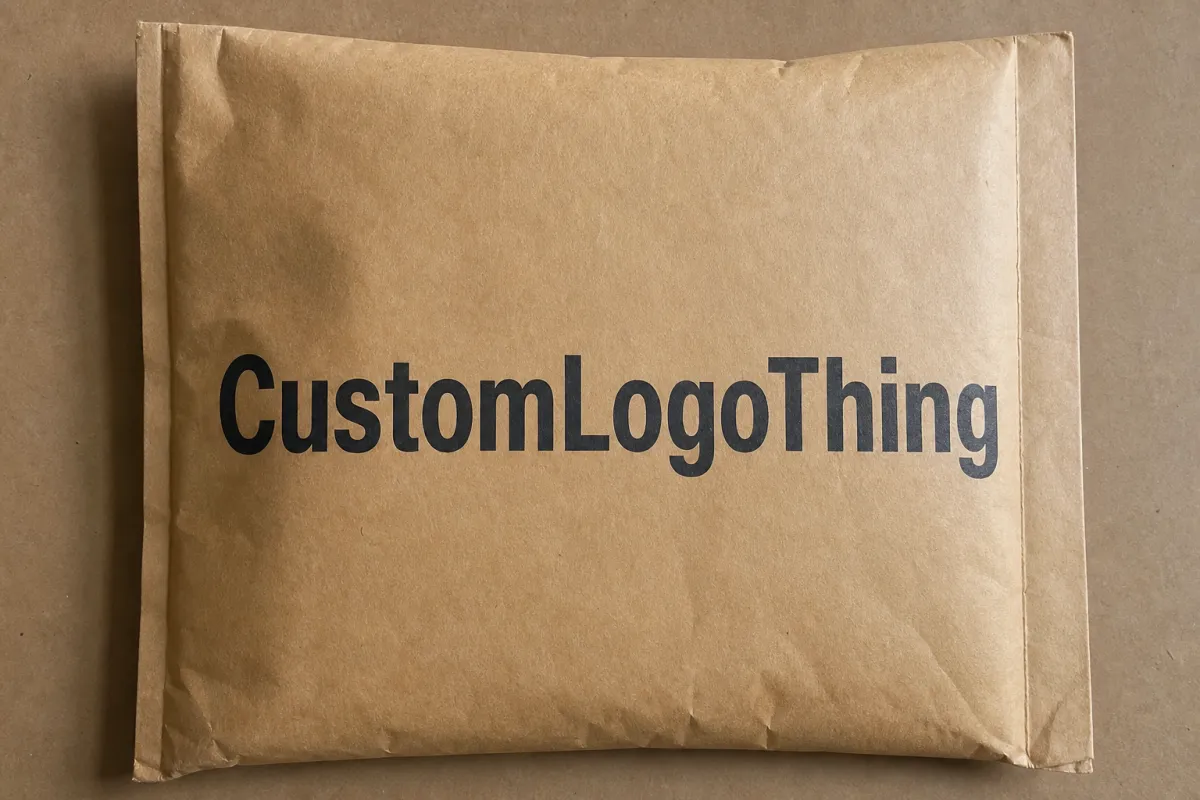
A mailer looks simple. Flat. Light. Easy to underestimate. The reality is messier. It sits at the intersection of branding, protection, and fulfillment speed. A custom printed mailers supplier is not just printing packaging. The supplier is shaping the first unboxing impression, the damage rate, and how fast a warehouse can push orders out the door.
Picture the difference between a clean branded mailer and a generic stock bag. One looks intentional. It can make a DTC apparel shipment feel designed instead of improvised. The other still works, but it throws away an easy branding moment. The visual difference matters. The operational side matters just as much. A mailer that is too large bunches around the product, wastes material, and makes pack-out look sloppy. A weak seal splits in transit. A print job with muddy logos makes a premium offer look bargain-bin before the customer even opens the package.
Buyers miss this all the time. They see a print job and ignore the packaging engineering underneath it. The supplier has to understand fit, seal style, barrier needs, stiffness, and how the design behaves after folding, sealing, stacking, and shipping. Soft goods may not need a box at all. Delicate items may need a padded format instead of a thin poly mailer. The right choice depends on the product, the route, and the fulfillment environment. No magic. Just basic physics and a little honesty.
There is a logistics side too, and it gets ignored until it causes a headache. Pre-sized mailers that arrive ready to use help packing crews standardize the process. That lowers training time, cuts down on wrong-package mistakes, and keeps line speed consistent. Those savings show up fast for brands that care about presentation and cost control. A supplier who understands the job will ask better questions before quoting: What does the product weigh? How fragile is it? Does it need a return-friendly closure? Is the warehouse humid or climate-controlled? Those answers shape the spec more than a pretty mockup ever will.
The promise is simple. The right supplier gives a brand branded shipping packaging that protects the contents, shortens packing time, and reinforces recognition on delivery. The wrong supplier can still sell you a bag. It just may be the wrong bag, in the wrong material, at the wrong time.
How a custom printed mailers supplier turns artwork into finished packaging
Once the request lands, a good supplier follows a disciplined path from inquiry to finished goods. It starts with artwork, then moves through material selection, proofing, sampling, production, finishing, and shipping. The sequence sounds obvious. The traps live inside each step. Catch the problem early and it is cheap. Catch it after production starts and the invoice gets uglier.
Artwork and file review
The first technical checkpoint is file prep. Artwork that looks fine on a monitor can still fail in production if the file is low resolution, built in the wrong color mode, or missing bleed. Packaging teams usually expect at least 300 dpi for raster assets, vector logos where possible, and a layout with clear safe areas. A 1/8 inch bleed is a sensible starting point in many jobs, though the exact requirement changes with construction and supplier workflow.
The supplier should also check logo placement against seams, folds, and seals. That matters more than buyers expect. A centered design on a mockup can shift once the mailer is formed, printed, and sealed. If barcode placement, QR codes, or legal copy sit too close to an edge, the final piece can look crowded or become hard to read after trimming. That is packaging design in the real world. Not decoration. Operational planning with graphics attached.
Good buyers ask for a proof, then actually read it. Not a glance. Read it. Measure the dieline if one is provided. Confirm the delivery address, size callout, closure direction, and any special finish notes. The fastest way to ruin a launch is to approve a pretty PDF and discover later that the back panel swallowed the logo.
Print method and order fit
Different print methods fit different buying patterns. Digital printing often works well for shorter runs, variable artwork, and faster proof cycles. Flexographic printing tends to make more sense for larger repeat orders, especially when the design is stable and the brand wants lower unit cost at scale. Some projects use specialty methods based on film, finish, and color expectations. The right method depends on volume, turnaround, and the level of consistency the brand needs across repeat orders.
This is usually where brands learn the difference between a one-off promo run and a real packaging program. A supplier that sells both should be able to tell you whether the job is a pilot, a seasonal drop, or a recurring replenishment schedule. If the order will repeat, a buyer should care less about a sample that looks nice and more about how the print holds up after several production cycles. Pretty is not a supply chain strategy.
There is also a difference between what looks good in a mockup and what survives on press. Fine gradients, tiny type, and low-contrast logos can get muddy on certain films or papers. A supplier worth your time will say that out loud before production. That kind of pushback saves money. It also saves face, which matters when marketing has already promised the moon.
From warehouse-ready to shipment-ready
The last step is not glamorous, but it decides whether the whole thing works. Mailers need to arrive in a format the warehouse can actually use. Packed too tightly, stacked unevenly, or hard to open cleanly, they slow the pack-out line. Sized correctly and built with a closure that behaves the way it should, they let fulfillment teams move faster with fewer motions. Spread that across thousands of shipments and the difference is obvious.
For brands comparing mailers against Custom Poly Mailers, the real question is not "what looks better?" It is "what format keeps the operation moving while still protecting the product?" That is the question a serious buyer should ask first.
Key factors to compare before you choose a supplier
Choosing a supplier gets easier once you compare the right things in the right order. Price matters, but it should not be the first filter. Start with material, print quality, structural performance, service, and communication. If those fail, the quote does not matter much.
| Mailer type | Best for | Typical strengths | Indicative unit cost |
|---|---|---|---|
| Poly mailers | Apparel, soft goods, flat items | Lightweight, compact, efficient for shipping | $0.12-$0.35 at mid-volume, depending on size and print coverage |
| Paper mailers | Retail packaging, eco-focused brands, lightweight goods | Paper-based feel, strong shelf and unboxing perception | $0.25-$0.55, depending on grade and structure |
| Padded mailers | Small fragile items, cosmetics, accessories | Extra cushioning, better impact tolerance | $0.30-$0.70, depending on padding and finish |
| Recycled-content mailers | Brands balancing performance and sustainability claims | Lower virgin material content, familiar handling | $0.18-$0.40, depending on recycled percentage and format |
| Compostable mailers | Specific sustainability programs and qualifying supply chains | Strong story for select brands, usually higher spec control needed | $0.28-$0.65, often higher at lower quantities |
Material choice is the first big decision. Poly mailers work well for many soft goods because they are light and efficient. Paper mailers bring a more natural look, which often fits retail packaging or premium branded packaging programs. Padded formats help when the product is likely to scuff or shift. Recycled-content and compostable options can support sustainability goals, but they need to be chosen for actual performance, not as a shortcut for good branding.
That last part matters more than people admit. A compostable claim without end-of-life context can be misleading, because acceptance depends on local facilities and the exact resin or fiber structure used. A supplier should be able to explain what the material is, what it is not, and where it actually belongs in the waste stream. Honest answers beat glossy language every time.
Print quality is the second filter. Ask for sample photos, physical samples, or prior production examples if they are available. A logo that looks crisp in a render can print with weak contrast on certain substrates. Color consistency matters even more if the mailer has to match an existing package branding system or sit beside custom printed boxes in the same product line. If your brand uses Pantone colors, ask how the supplier handles matching and what tolerance they work to.
Structural performance should get the same attention as graphics. Look at tear resistance, seal integrity, puncture protection, and how the mailer behaves under pressure. A clean-looking mailer that fails in sortation creates claims and rework. The supplier should be able to explain the material thickness, the closure method, and whether the structure suits your product weight.
Service capability matters more than a lot of procurement teams admit. Design support, packaging consultation, warehousing, and replenishment planning save time later. A supplier that can handle a small pilot run and recurring production gives the brand a cleaner path from test to scale. That helps when the launch date is fixed and nobody has room for drama.
Communication quality often predicts the rest of the project. A responsive supplier that flags file problems early, explains pricing changes clearly, and confirms the production schedule in writing is usually easier to work with than a lower-cost vendor that disappears after the deposit clears. Packaging projects already have enough moving parts. The supplier should reduce ambiguity, not add more.
For brands that care about recycled fiber, chain-of-custody claims, or paper sourcing, ask about certifications and documentation. The FSC system is a useful reference point for paper-based materials. For transit durability and pack-out confidence, the test methods used in the industry often connect to standards and protocols associated with ISTA. Those organizations do not replace the supplier’s own quality checks, but they give buyers a common language for comparing claims.
If you want a broader view of market terminology, material categories, and packaging language, packaging.org is also a useful reference point for industry context.
One more filter helps: ask how the supplier handles reorders. If the first run was good but the second run drifts in color, size, or closure behavior, the whole program becomes unreliable. A supplier with a decent quality system will have a way to repeat the job without reinventing it every time.
Process and timeline from artwork proof to delivery
One common planning mistake is assuming the production clock starts after approval. It does not. The timeline begins earlier, with quoting and file review. A realistic schedule includes proofing, sampling, material availability, production, finishing, transit, and receiving. If the mailers support a launch or seasonal drop, every one of those steps needs buffer time.
- Quote and brief review: typically 1-3 business days, depending on how complete the request is.
- Artwork check and proofing: often 1-5 business days, longer if the job has multiple versions or special color requirements.
- Sample or pilot review: 3-10 business days in many cases, especially if the buyer wants to validate size, feel, and seal behavior.
- Production: commonly 10-20 business days for standard runs, with longer windows for complex jobs or busy seasonal periods.
- Finishing and packing: usually built into the production window, though specialty finishes can extend it.
- Transit and receiving: add several days depending on freight distance and carrier mode.
Proof approval is often the bottleneck. That is not always the supplier’s fault. If a brand needs a Pantone match, a special finish, or sign-off from marketing, procurement, and operations, the review loop can stretch fast. A supplier can be ready to move and still sit idle for four days because somebody is "circling back." That delay is expensive in the only currency that matters here: time.
There is another timing issue buyers miss. Material availability changes the calendar. If the supplier is working from stock materials, lead times can be tight. If a custom substrate, special adhesive, or nonstandard size needs extra setup, the schedule stretches. The quote should spell out what is standard and what is custom. A vague promise of fast turnaround is not useful. It is marketing with a clipboard.
Rush production is possible in many cases, but it comes with tradeoffs. You may pay more, lose some substrate options, or shrink the window for proof revisions. That does not make rush bad. It just means the buyer should use it on purpose. If the packaging supports a hard launch date, a promotional drop, or a retail event, rush may be worth it. If the calendar has some room, standard lead times usually give better cost control.
A simple planning rule helps: build in extra time for artwork revisions, sample review, and freight issues. That cushion is what keeps packaging from becoming the thing that slips the launch. A good supplier helps map the sequence, but the buyer still needs to coordinate marketing, operations, and receiving so the order lands before the product needs to ship.
If the order is international or cross-border, add more padding. Customs checks, carrier handoffs, and holiday congestion can eat a schedule fast. The supplier should be able to give a realistic transit estimate, not a hopeful one.
Cost and pricing what drives your quote and unit cost
Pricing for a custom mailer order usually looks simple until you compare two quotes that are built differently. One supplier may include setup, proofing, and freight assumptions. Another may split them apart. Suddenly the numbers do not match, and nobody can tell which quote is actually lower. Ask for a line-by-line breakdown or the comparison is a guessing contest.
The biggest cost drivers are predictable:
- Material type: poly, paper, padded, recycled, or compostable formats have different base costs.
- Size: larger mailers use more material and often cost more to ship.
- Print coverage: full-coverage graphics usually cost more than a simple logo lockup.
- Color count: additional ink stations or color complexity can increase setup.
- Quantity: higher volume usually lowers the unit cost.
- Bag style: gussets, closures, padding, or specialty structures add cost.
- Finishes: matte, soft-touch, spot treatment, or specialty coatings can raise the quote.
- Shipping distance: freight can be a meaningful part of the total, especially on bulky orders.
Minimum order quantities matter too. Small test runs often look expensive on a per-piece basis because setup costs get spread across fewer units. That is not a red flag by itself. It is how print and converting economics work. A buyer running a pilot order may pay more per mailer in exchange for lower risk and faster validation. A brand placing recurring quarterly orders can usually push the number down.
Here is the kind of pricing pattern buyers often see in practice. These are not fixed rates, but they are useful for planning.
| Order profile | Typical quantity | Likely unit price behavior | What usually happens |
|---|---|---|---|
| Pilot run | 500-2,000 pieces | Highest unit cost | Best for fit checks, launch tests, and design validation |
| Mid-volume order | 3,000-10,000 pieces | Moderate unit cost | Common balance between price control and inventory risk |
| Recurring production | 10,000+ pieces | Lower unit cost, if specs stay stable | Good for established programs with repeat demand |
| Complex premium build | Any volume | Higher cost due to finishes or special materials | Used when presentation or sustainability claims need a stronger signal |
To compare quotes fairly, ask the supplier to include tooling, plates, setup, proofing, sampling, freight, and artwork help if those apply. If a quote looks low but leaves half the job out, it is not a deal. It is incomplete.
This is also the point where a brand should decide whether the custom mailer is part of a broader product packaging system. If the same company also needs insert cards, labels, or other branded packaging assets, a unified buying plan may save coordination time. If the company is building out a wider assortment, reviewing Custom Packaging Products can help map where mailers fit next to the rest of the packaging design choices.
One useful buying habit: ask for pricing at three quantity levels. For example, 2,500, 5,000, and 10,000 pieces. That shows where the price per unit starts to flatten and gives procurement a more honest picture of the volume threshold that actually improves economics.
Also ask whether price changes if the specification stays fixed for reorder. Some suppliers quote a first run cheaply and then quietly reset the economics later. A clear reorder policy saves arguments no one wants to have three months from now.
Common mistakes when buying from a custom printed mailers supplier
Most mailer sourcing problems are not mysterious. They are avoidable. The usual culprits are speed, assumptions, and incomplete information. A smart buyer can dodge a lot of pain by watching for the same mistakes that trip up other packaging teams.
Approving artwork too quickly is one of the biggest errors. A logo on screen is not the same thing as a logo on a finished mailer. Check dimensions, seam areas, barcode placement, and wrap behavior. If the design uses fine text or narrow rules, make sure they can survive printing on the chosen substrate. Small details disappear faster than people expect, and nobody enjoys discovering that after the order ships.
Choosing on appearance alone is another trap. A mailer can look attractive in a sample photo and still perform badly in real shipping. Thin material, poor seal strength, or weak puncture resistance create damage claims and returns. The customer sees the failure, not the design intent. That gap costs money and patience.
Skipping sample testing often creates the most frustration. If the product is slightly oversized, oddly shaped, or fragile, the first physical sample will show that right away. Without testing, brands sometimes discover the mailer is too tight, too loose, or awkward for pack-out after production has already started. Fixing it late is slower and more expensive. Shocking, I know.
Ignoring fulfillment reality is just as costly. The mailer has to work for warehouse staff, not just the marketing team. Does it open cleanly? Does it stack well? Can the team pack it quickly without extra motions? Does it fit the product plus any protective insert? If those questions stay fuzzy, the operation can bog down once orders start moving.
Letting internal approvals drift causes delays that get blamed on production even when the real problem sits inside the company. Procurement, marketing, and operations should agree on size, material, print requirements, and sign-off chain before the quote is finalized. A supplier can only move as fast as the decision process allows.
There is an easy way to cut down on all of this: treat the mailer as part of the shipping system, not as a decorative extra. That mindset leads to tighter specs, cleaner approvals, and fewer surprises after launch.
Ignoring quality documentation is another mistake that shows up later than people expect. If a supplier cannot show basic material info, production tolerances, or test references, the buyer is relying on faith instead of evidence. That is a bad habit in packaging. Faith does not hold a seam together.
Expert tips and next steps after you shortlist suppliers
Once you have narrowed the field to two or three suppliers, the comparison should get more structured. The goal is not to keep collecting options forever. It is to make a decision with enough evidence that you can defend it internally without hand-waving.
Start with a one-page spec sheet. Include size, product weight, branding goals, target quantity, shipping destination, and launch date. Add any must-have requirements, such as recycled content, a specific closure style, or compatibility with an existing fulfillment process. A clear brief cuts the back-and-forth and helps the supplier quote accurately the first time.
Compare samples side by side. Put them under warehouse lighting, not just office light. Check color, opacity, stiffness, seal quality, and ease of packing. If the product is premium, fragile, or sensitive to presentation, request a pilot run before committing to a larger order. A small test can confirm fit and finish before inventory is tied up in a full production run.
Ask how the supplier handles replenishment. Some brands need a one-time run. Others need quarterly reorders with stable specs. If you know the packaging will repeat, the supplier should be able to preserve the art file, the material spec, and the production settings so the next order matches the first. That consistency matters for package branding, especially if the mailers sit beside custom printed boxes, labels, or a broader retail packaging system.
Confirm internal ownership. One person should own artwork approval, one should sign off on cost, and one should manage receiving and inspection. That does not mean one person does everything. It means each decision has a named owner. Orders move faster when the supplier is not waiting on a vague group approval that drifts for a week.
Verify the paperwork. If the project depends on sustainability claims or transport performance, ask for the relevant documentation up front. For paper-based materials, FSC-related sourcing information may matter. For shipping durability, the buyer may want to know whether the format aligns with common distribution test expectations or internal quality checks. That is not overkill. It is good purchasing discipline.
One more practical point: do not let "good enough" end the review too early. A mailer that is slightly too large can raise freight costs and waste material. A design that is slightly too dark can flatten the branding. A closure that is slightly too weak can create avoidable failure. Small differences are exactly where packaging projects win or lose money.
If you are still comparing options, use the same scorecard for every supplier: print quality, fit, structural performance, communication, lead time, and total landed cost. That makes the decision less subjective and easier to explain internally.
Here is the actionable takeaway: define the product, the shipping method, and the reorder plan before you ask for quotes. Then ask each custom printed mailers supplier to respond to the same brief. That is the fastest way to spot who understands packaging as an operating system, not just a print job.
In the end, the right custom printed mailers supplier gives you more than a printed bag. It gives you packaging that protects the product, supports package branding, and keeps fulfillment predictable.
FAQ
How do I choose a custom printed mailers supplier for a new product launch?
Start with samples and compare material strength, print quality, and size fit against the actual product. Ask for a detailed quote that separates setup, artwork help, freight, and unit cost so you can compare suppliers fairly. Pick the supplier that communicates clearly and can hit the launch timeline without turning proofing into a fire drill.
What should I send a custom printed mailers supplier for an accurate quote?
Send the mailer size, product weight, target quantity, artwork files, preferred material, and any special finish requirements. Include the shipping destination and target delivery date because freight and timing can change the total cost. Tell the supplier whether you need a pilot run or a full production order so they can recommend the right pricing tier.
How long does the custom printed mailers supplier process usually take?
Plan for quoting, proof approval, and sample review before production begins. Production speed depends on order size, print complexity, and whether materials are already in stock. Build in extra buffer time for revisions and freight, especially if the mailers are tied to a product launch.
What affects custom printed mailers pricing the most?
Material choice, quantity, size, and print coverage usually have the biggest effect on price. Special finishes, custom structures, and rush orders can raise unit cost quickly. Request multiple quantity quotes so you can see where the price per mailer improves.
Can a custom printed mailers supplier support low MOQ or test runs?
Many suppliers can handle smaller runs, but the unit cost is usually higher than with larger production orders. A test run helps confirm fit, color, and packing speed before you scale up. Ask whether the supplier offers digital print options or other low-volume methods that reduce setup burden.
What should I do if the first sample looks good but feels wrong in hand?
Trust the hand test. If the mailer feels too flimsy, too stiff, or awkward to pack, that usually shows up later in shipping or warehouse labor. Ask for an alternate material weight, closure style, or size adjustment before approving the run.

