Buyer Fit Snapshot
| Best fit | Branded Sealing Tape Bulk projects where brand print, material claims, artwork control, MOQ, and repeat-order consistency need to be specified before quoting. |
|---|---|
| Quote inputs | Share finished size, material target, print colors, finish, packing count, annual reorder estimate, ship-to region, and any compliance wording. |
| Proofing check | Approve dieline scale, logo placement, barcode or warning zones, color tolerance, closure strength, and carton packing before bulk production. |
| Main risk | Vague material claims, crowded artwork, missing packing details, or unclear freight terms can make a low unit price expensive after revisions. |
Fast answer: Branded Sealing Tape Bulk: Specs, Pricing, and Ordering should be specified like a repeatable production item. The safest quote records material, print method, finish, artwork proof, packing count, and reorder notes in one written spec.
Production checks before approval
Compare the actual filled-product size with the drawing, then confirm tolerance on folds, seals, hang holes, label areas, and retail display edges. Reserve space for logos, QR codes, warning copy, and material claims before decorative graphics fill the panel.
Quote comparison points
Review material grade, print process, finish, sampling route, tooling charges, carton quantity, and freight assumptions side by side. A quote is only useful when the supplier can repeat the same color, closure quality, and packing count on the next order.
Branded sealing tape bulk looks small on a quote sheet. Then it hits the pack line, the truck, the receiving dock, and the customer opening the box with a dull blade and a low tolerance for mistakes. That is a lot of work for one strip of tape. I like products like this because they do the boring part well and still carry the brand across every shipment.
Most buyers want the same three things from branded sealing tape bulk: a seal that holds, print that stays readable, and a cost structure that does not get silly once freight and setup fees show up. Miss one of those and the whole deal gets shaky. A cheap roll that peels off dusty corrugate is not cheap. It is just delayed pain. Same for a clean seal with muddy artwork nobody can read from arm's length.
Custom Logo Things works with packaging teams that need tape to behave in actual shipping conditions, not just in a mockup. We look at carton weight, adhesive choice, artwork setup, dispenser fit, and reorder planning before the first roll gets printed. That keeps the project grounded. Also saves everyone from a second round of "wait, why does this not fit?"
Why Branded Sealing Tape Bulk Outperforms Plain Tape
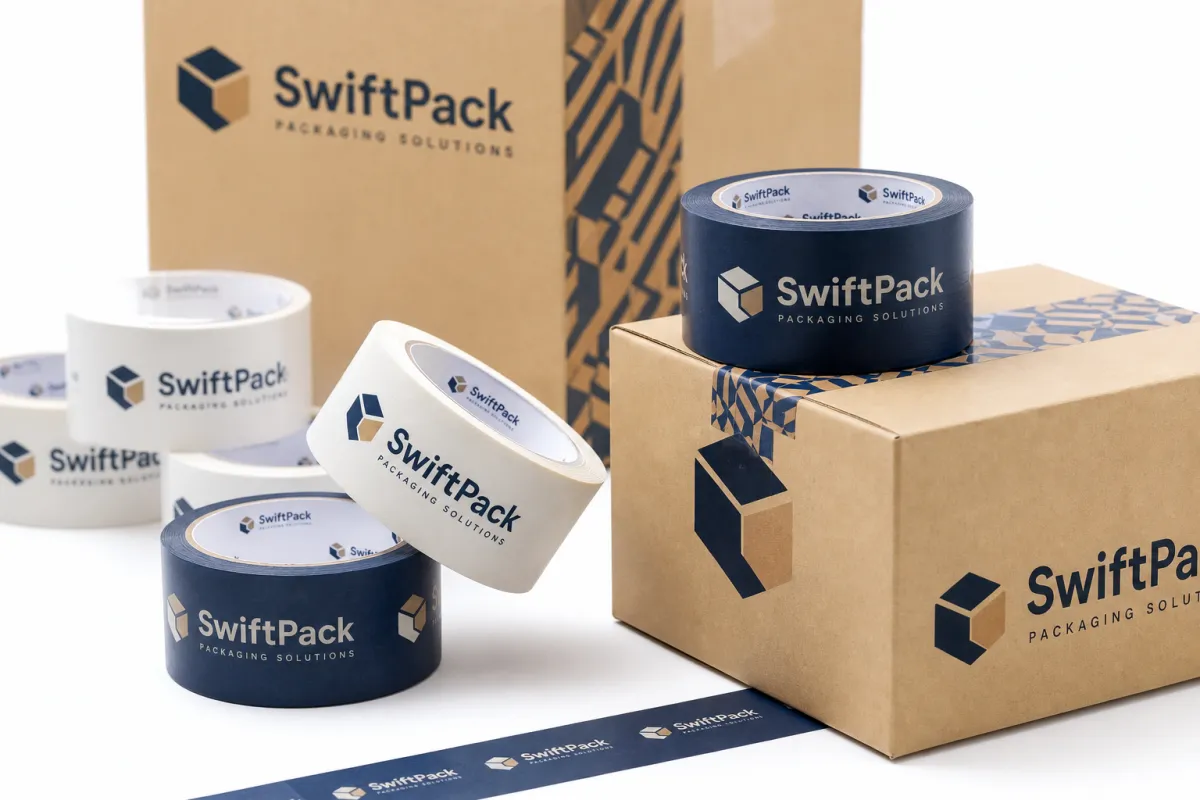
Branded sealing tape bulk does more than close a box. It puts the logo on every carton, makes outbound pallets look organized, and tells the receiving team who packed the shipment before they even cut the tape. Plain tape vanishes into the background. Printed tape keeps doing the sealing job while carrying a visible mark that says the packaging was intentional.
That matters on crowded docks and mixed pallets. A carton sealed with branded sealing tape bulk stands out without trying too hard, which makes sorting easier for warehouse teams and helps the shipment look consistent from plant to customer. It also helps with tamper evidence. A cut or replaced printed seal is easier to spot than a generic strip that could belong to anyone. I have seen receivers catch a bad repack just because the tape did not match the rest of the shipment. Small clue. Big difference.
The operational win is just as useful. Branded sealing tape bulk does not force a new carton format, a fresh label system, or extra steps at the packing station. The team tapes the box the same way it already does. Branding shows up without turning the line into a side project. Procurement likes that part, even if nobody says it in the meeting.
Good packaging solves two problems at once. It protects the shipment and makes the brand look like it belongs there. Printed sealing tape does both without asking for a parade.
I treat branded sealing tape bulk as a packaging decision first and a design decision second. Pretty artwork means very little if the adhesive fails in cold storage, dusty conditions, or a long warehouse hold. A simple one-color print that holds tight and reads clearly often beats a fancier setup that behaves badly. The customer opening the carton notices the finish. Not the mood board.
It also fits cleanly into a bigger packaging system. Cartons, inserts, and labels already do part of the work. Tape finishes the job. Teams comparing packaging approaches often review Case Studies to see how other brands handled consistency and supply flow. That is a useful habit here too.
Seasonal spikes, subscription orders, and multi-site fulfillment programs all benefit from branded sealing tape bulk. It is one of the few branding moves that does not slow the line, add labor, or force a redesign. The roll goes on, the box closes, the shipment looks deliberate. Nice when packaging actually behaves.
Branded Sealing Tape Bulk Product Details
Most branded sealing tape bulk orders use a BOPP film base with a pressure-sensitive adhesive and printed artwork on the film surface. BOPP, or biaxially oriented polypropylene, is common because it balances price, strength, and print quality. It is light, stable, and familiar to anyone sealing corrugated cartons in a shipping environment where consistency matters more than drama.
The adhesive does the real work. Acrylic is a common choice for general shipping because it handles aging well and stays dependable on many carton surfaces. Hot-melt grabs faster, which helps on high-speed lines or cartons that need quick closure. Rubber-based adhesives are often picked for dustier facilities, rougher board, or temperature swings that expose weaker formulas. For branded sealing tape bulk, the best adhesive is the one that matches the carton and the environment, not the one with the loudest sales pitch.
Printing method changes the final look. Surface printing works well for one-color logos and simple layouts, and it usually keeps costs friendlier. Reverse printing protects the artwork beneath a clear layer and can give a cleaner finish on some constructions. Small type, hairline rules, and detailed marks need to be checked at production scale. What looks crisp on a screen can turn soft once it repeats across a roll and runs through a warehouse.
Common construction choices
Most branded sealing tape bulk orders fall into a few practical options. One-color printed BOPP is the workhorse. It gives decent price, decent clarity, and very few surprises. Two-color and multi-color versions create more visual punch, but they add setup sensitivity and give proofing more chances to drag. Paper-based pressure-sensitive choices exist too, usually for a different sustainability story than pure shipping economy.
Here is a quick comparison packaging teams can use before they request quotes for branded sealing tape bulk:
| Construction | Best Fit | Typical Price Behavior | Operational Notes |
|---|---|---|---|
| Acrylic BOPP | General shipping, clean carton surfaces, longer shelf life | Often the lowest quote for simple print jobs | Solid all-around choice for standard warehouse conditions |
| Hot-melt BOPP | Fast-moving pack lines, stronger initial tack needs | Usually mid-range | Useful where cartons need to close quickly and stay shut under handling |
| Rubber-based BOPP | Dusty environments, colder storage, more demanding cartons | Often the highest of the three | Better for difficult surfaces and rougher handling conditions |
Roll size and core size matter too. Standard cores and dispenser-friendly roll lengths keep warehouse teams from dealing with odd setups they never asked for. Branded sealing tape bulk usually works best when it fits common tape guns or carton sealers. No one wants a custom reel that forces the line into a detour.
If your team manages recurring packaging purchases, take a look at Wholesale Programs. Bigger accounts care about more than unit price. They care about repeatability, predictable supply, and keeping the same tape spec available across multiple shipping points without a pile of back-and-forth emails.
Print limits are usually physical, not creative. Tape width, artwork repeat length, edge coverage, and small-text clarity decide whether the final roll looks sharp or cramped. A simple logo with high contrast often beats a crowded layout in branded sealing tape bulk applications. Clean wins. Every time, more or less.
Specifications That Matter for Shipment Performance
Before placing branded sealing tape bulk orders, define the shipping environment with the same care you give the logo. A tape that behaves nicely on a dry, climate-controlled line can act completely different in a humid receiving area, a refrigerated room, or a dusty fulfillment center. Carton weight matters too. Heavier boxes put more stress on the seam and the seal points.
Width and thickness deserve attention. Wider tape covers more seam area and can create a stronger visual presence, but it is not always necessary for lightweight cartons. Thickness affects feel, split resistance, and the way the tape lays across corrugated flutes. With branded sealing tape bulk, the goal is not the thickest possible roll. The goal is the right mix of seal strength, print quality, and line speed.
Confirm these details first
- Carton dimensions and average shipped weight
- Storage conditions, including temperature and humidity swings
- Surface condition of the corrugated board, especially if it is dusty or heavily recycled
- Dispenser type, whether handheld or machine applied
- Roll length, core diameter, and preferred unwind direction
- Artwork file type, logo placement, and approved brand colors
Those details look basic. They are also where most avoidable problems start. A team may approve branded sealing tape bulk from a digital proof, then find out the roll unwinds backward or the repeat spacing makes the logo look tiny. A sample on the real carton surface is worth the time. Guessing is cheaper right up until it isn't.
PMS color matching is another checkpoint. Final color on tape depends on the print method, ink system, film color, and how the adhesive-backed material takes the image. If brand control matters, ask for a physical sample against your carton art or label standards before production starts. That matters even more for brands that already keep their packaging colors tight across labels, cartons, and inserts.
For teams that need formal validation, sample comparison can be tied to the actual distribution profile and checked against ISTA shipping test guidance. Not every tape order needs a lab program. The seal should still be judged in the same conditions the product will face. A good tape on a bad carton surface is still a bad result.
Approval checklist that saves time
A short approval sequence cuts down mistakes on branded sealing tape bulk orders:
- Confirm carton and dispenser specifications.
- Review the print layout at actual scale.
- Check logo placement, repeat spacing, and text legibility.
- Approve the sample on the real carton surface.
- Lock the quantity and ship-to details before production starts.
That sequence keeps the project grounded. It also gives the warehouse team a chance to catch a bad fit before a large run is finished. If a dispenser needs a small adjustment or the logo needs more breathing room, those fixes are cheap at proof stage and annoying after the rolls are packed.
Branded sealing tape bulk also gives you a chance to think about carton presentation as a whole. Straight application, clean seal lines, and readable branding make a plain corrugated shipper feel deliberate. For many buyers, that is enough. They want a closure that works, prints well, and survives transit. Fancy is optional. Functional is not.
Branded Sealing Tape Bulk Pricing and MOQ
Pricing for branded sealing tape bulk moves with a few predictable variables: film construction, adhesive type, print colors, roll length, artwork complexity, and order quantity. If one quote comes in much lower than the rest, something is usually missing, softened, or simplified. The cheapest number on paper is not the cheapest outcome once freight, proofing, and production quality show up.
For standard one-color BOPP programs, working wholesale ranges often land around $1.20 to $2.80 per roll at common mid-volume quantities, depending on width, length, and print coverage. Heavier constructions, shorter runs, or multi-color work can move higher, sometimes into the $2.50 to $5.00+ range. Those are planning ranges, not promises, but they help buyers budget branded sealing tape bulk without pretending every quote will be identical.
Minimum order quantities tend to reflect production efficiency. Printed tape usually carries setup costs for artwork, plates, cylinders, or press changes, and those costs make tiny runs less attractive. A simple one-color job may allow a lower MOQ than a detailed multi-color run. Specialty adhesive formulas can raise the floor again. If the tape will be reordered, ask for pricing at several quantity levels. The curve tells you more than the first number does.
What should be in the quote
When comparing branded sealing tape bulk quotes, make sure each supplier lists the same cost pieces:
- Artwork review and file prep
- Proofing or sample approval
- Production and printing
- Roll packing and carton packaging
- Freight or shipping charges
That list matters because some quotes look good until the hidden pieces show up later. A buyer who only compares base roll price can miss freight, a setup charge, or a proof fee that should have been on the table from the start. A fair quote for branded sealing tape bulk should make landed cost easier to calculate, not turn it into a scavenger hunt.
Budget for reorder rhythm, not just the first purchase. If seasonal volume spikes or a new customer launch hits, tape spend should not surprise anyone. A reserve plan keeps emergency orders out of the picture, and emergency orders almost always cost more than planned replenishment. Funny how that keeps happening.
Branded sealing tape bulk also works better as a repeatable operating expense than as a one-time project. Once the artwork is approved and the spec is frozen, future runs usually move faster. That is one of the quiet financial wins here. Stable construction and a consistent print layout save time and reduce rework.
Process and Timeline for Branded Sealing Tape Bulk Orders
The ordering flow for branded sealing tape bulk usually follows a simple path: inquiry, specification review, quotation, artwork submission, proof approval, production, and shipping. Simple on paper. Less simple when the buyer sends half the data and expects the rest to appear by magic. Missing carton details and late artwork changes are the two most common reasons schedules slip.
Once the spec is locked, lead times become much more predictable. Standard jobs move faster when adhesive choice, roll dimensions, and print layout are already set. More complex programs, like custom colors, specialty adhesives, or wider tape formats, need more time because production has to be tuned with more care. A realistic schedule beats a too-optimistic promise that falls apart the moment the plant gets busy.
Artwork is usually the biggest schedule variable. A clean vector logo, clear copy, and approved color references help the proof move quickly. If the art needs cleanup or the brand team is still debating spacing, the calendar stretches. For branded sealing tape bulk, the fastest path is usually a ready file and a quick response to the proof. Not exactly rocket science.
Typical order sequence
- Share carton dimensions, dispenser type, and estimated quantity.
- Request a quote with at least two construction options.
- Submit print-ready artwork or have it prepared.
- Review the digital proof and request any corrections.
- Approve the final proof and lock the production slot.
- Plan freight timing around your receiving window.
Freight planning deserves more attention than it usually gets. If cartons are going to multiple locations, delivery may need to be staggered. If one plant only receives on fixed days, the ship date needs to fit that window. Branded sealing tape bulk is much easier to manage when the supplier knows whether the rolls are headed to a single warehouse, a regional distribution center, or a network of packing sites.
Reorders should move faster than the first run. Once the spec sheet, artwork, and proof are on file, the team usually gets to production sooner because the most time-consuming approvals are already done. That is one reason many buyers pick a stable tape format early and reuse it as volume grows. Less risk. Less noise. Fewer surprises in the packing room.
One more practical point: if the packaging program involves multiple suppliers or new SKUs, roll out branded sealing tape bulk with enough lead time to test it on real cartons. A small pilot run can catch a dispenser mismatch, a print contrast issue, or a seal problem before the full order lands in the warehouse.
Why Choose Us for Branded Sealing Tape Bulk
Custom Logo Things is a packaging partner, not just a print vendor, and that matters with branded sealing tape bulk. Tape is not decoration. It has to seal cartons reliably, survive transit, and show the brand clearly enough that every outbound box looks like someone cared. Technical guidance matters as much as the artwork.
We pay attention to the practical stuff buyers rely on: corrugated surface type, carton closure method, dispenser compatibility, storage conditions, and print layout. That is the difference between a roll that looks good on a screen and a roll That Actually Works on the line. If a customer is comparing options, we want the conversation to stay on performance, repeatability, and proofing clarity instead of drifting into a race to the bottom on price for branded sealing tape bulk.
For buyers managing multiple shipping locations, consistency usually matters more than anything else. A tape spec that can be reordered without re-litigating the basics keeps teams organized. It also reduces the chance that one site gets a slightly different roll from another. That kind of variation turns into confusion fast, especially when packaging standards need to stay tight across several warehouses or contract packers.
If you want to see how other buyers handled supply planning, the Case Studies page is useful because it shows how packaging choices played out in real operating conditions, not imaginary perfect ones. The useful lessons usually sit in the details: how a seal held, how a proof was corrected, or how a reorder cycle worked after the first shipment.
What buyers usually value most
- Consistent print quality from run to run
- Dependable adhesive performance on real cartons
- Practical advice on artwork setup and logo spacing
- Responsive communication during quoting and proofs
- Support for repeatable supply across different shipping sites
Those points sound basic because they are basic. They are also the reason branded sealing tape bulk stops being a headache. A supplier who answers clearly, spots a mismatch early, and helps Choose the Right construction saves time in ways that show up later as smoother packing, fewer complaints, and less waste.
For buyers who want a program instead of a one-time order, we support wholesale buying patterns that fit recurring packaging spend. That is where Wholesale Programs help: quantity, storage, and reorder rhythm get aligned before inventory drops too low. If you ship steadily, that kind of planning is usually worth more than a tiny price gap on a single order.
My blunt advice: choose branded sealing tape bulk based on how your warehouse actually runs. If the tape seals well, prints cleanly, fits your dispensers, and arrives on a schedule the team can trust, you made a good buying decision. The goal is a cleaner shipment and a better brand presentation, not a roll that only behaves in the proof stage.
Next Steps for Branded Sealing Tape Bulk Orders
If you are ready to order branded sealing tape bulk, start with three inputs: carton dimensions and weight, target quantity, and the logo or artwork file. Those three items let the supplier narrow the construction quickly and keep the quote tied to reality. If your cartons move through hot docks, cold storage, or dusty facilities, include that too. Adhesive recommendations change for a reason.
The next detail is the dispenser. Handheld tape guns and machine applicators do not always behave the same way, and unwind direction or roll size can matter more than buyers expect. If the tape needs to fit existing equipment, say so early. That keeps branded sealing tape bulk aligned with current pack flow instead of forcing a line change later.
It also helps to state whether the printed tape has to match an existing brand system or packaging standard. If your cartons already use a specific brown tone, label color, or logo treatment, the tape should work with that look instead of fighting it. A simple readable design often beats a crowded one because it stays legible at speed and still looks sharp from a distance.
Ask for at least two construction options so the team can compare price and performance honestly. One option may be the economical standard, while another may offer better tack or stronger handling. With branded sealing tape bulk, the right choice is not always the cheapest line on the quote sheet. It is the one that fits the carton, the climate, and the warehouse rhythm.
The approval sequence should stay straightforward: review the proof, confirm the quantity, lock the timeline, and schedule the first shipment or reorder cycle. That is the cleanest way to avoid delays. Once the spec is approved, future runs get easier because you are not starting over each time.
Branded sealing tape bulk is easiest to order once the carton specs, artwork, and timeline are set. Get those three pieces right, and the rest of the process becomes much more predictable.
How much does branded sealing tape bulk usually cost?
Cost depends on tape construction, print colors, roll size, adhesive type, and the total quantity ordered. Higher quantities usually cut the unit price because setup costs are spread across more rolls, and a quote should include artwork review, proofing, production, and freight so the buyer sees the real landed cost for branded sealing tape bulk.
What is the minimum order for branded sealing tape bulk?
MOQ usually follows production setup efficiency and the economics of printed roll manufacturing. Simple one-color orders may allow smaller runs than complex multi-color jobs, and if a team expects repeat orders, it makes sense to ask for a pricing ladder across several quantity levels before committing to branded sealing tape bulk.
Which adhesive is best for branded sealing tape bulk shipments?
Acrylic is often used for general-purpose shipping, while hot-melt or rubber-based options can suit tougher carton or environment demands. The right choice depends on storage time, temperature swings, dust, and how heavily the cartons are handled, so testing the tape on the actual carton surface is the safest way to confirm performance for branded sealing tape bulk.
How long does branded sealing tape bulk production take?
Timeline starts after artwork is approved, so prompt proof review shortens the overall schedule. Standard jobs move faster when the quantity, adhesive, and print layout are already defined, and freight time should also be included in the plan so the first shipment arrives before the packing window opens for branded sealing tape bulk.
Can branded sealing tape bulk match our logo colors exactly?
Color matching is possible, but the final result depends on the print method, ink system, and tape material. Supplying a correct brand reference and approving a proof reduces the risk of mismatch, and for strict brand standards it helps to ask whether the supplier can review PMS targets and provide a physical sample for branded sealing tape bulk.
For brands that care about the full shipment experience, branded sealing tape bulk is a small item with a bigger job than most people give it credit for. It protects the carton, carries the logo, and gives the customer a cleaner opening moment. Done right, it is one of the easiest ways to improve outbound packaging without rebuilding the whole box program.
If you are lining up a first order, the practical move is simple: confirm carton specs, send clean artwork, and test the tape on the actual box before you commit to full production. That one step catches most of the expensive surprises. The rest is just ordering the right roll for the job.