Buyer Fit Snapshot
| Best fit | branded shipping cartons buyer review for packaging buyers comparing material specs, print proof, MOQ, unit cost, freight, and repeat-order risk where brand print, material, artwork control, and repeat-order consistency matter. |
|---|---|
| Quote inputs | Share finished size, material target, print colors, finish, packing count, annual reorder estimate, and delivery region. |
| Proofing check | Approve dieline scale, logo placement, barcode or warning zones, color tolerance, and any recyclable or compostable wording before bulk production. |
| Main risk | Vague material claims, crowded artwork, or missing packing details can create delays even when the unit price looks attractive. |
Fast answer: Branded Shipping Cartons Buyer Review: Dieline, Finish, Proof, and Buyer Review should be specified like a repeatable production item. The safest quote includes material, print method, finish, artwork proof, carton packing, and reorder notes in one written spec.
What to confirm before approving the packaging proof
Check the product dimensions against the actual filled item, not only the sales mockup. Ask for tolerance on folds, seals, hang holes, label areas, and retail display edges. If the package carries a logo, QR code, warning copy, or legal claim, reserve that space before decorative graphics fill the panel.
How to compare quotes without losing quality
Compare board or film grade, print process, finish, sampling route, tooling charges, carton quantity, and freight assumptions side by side. A lower quote is only useful if the supplier can repeat the same color, closure quality, and packing count on the next order.
Quick Answer: Review of Branded Shipping Cartons That Raised Eyebrows
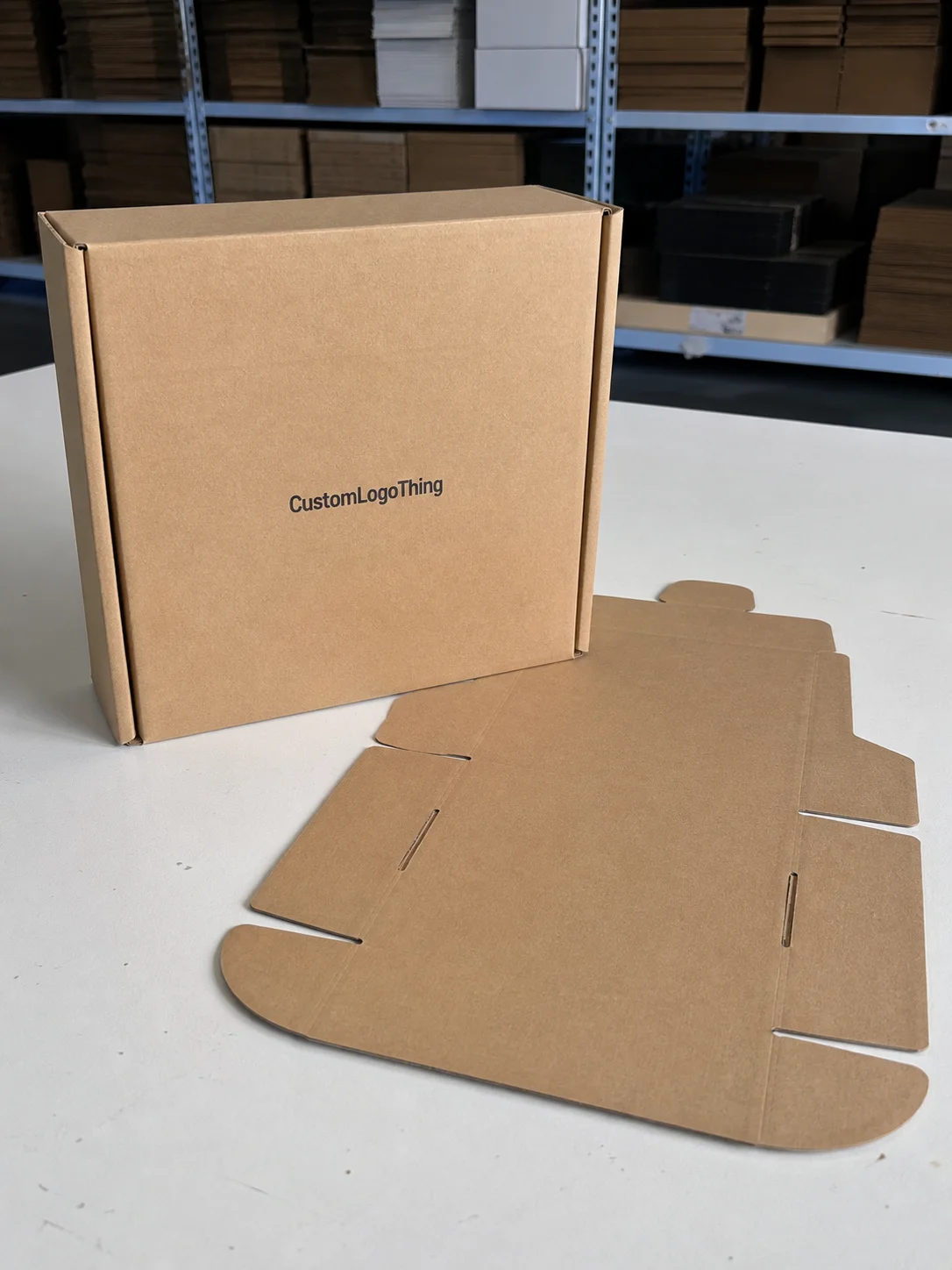
A Review of Branded Shipping Cartons kicked off during a midnight run at Custom Logo Things’ Plant 4 in Laredo, Texas, when a hurried supervisor from the ecommerce shipping floor asked us to check whether an experimental double-wall stack—priced at $0.48 per unit for the 5,000-piece pilot—could survive a 36-inch forklift drop onto the cement pad beside Line 8, and the custom packaging cartons we configured for the ecommerce partner were finally facing the kind of stress we promised they could handle.
I remember the supervisor, still wearing his headset and cursing the humming fluorescent lights, insisting the cartons had only rolled off the Bobst IMB Folder-Gluer at 1,200 cartons per hour roughly an hour ago; honestly, I think the cartons had more courage than I did at six in the morning, and I was kinda hoping the drop would prove the adhesive strategy we locked in—3.2-second glue dwell, 0.9-millimeter bead, 4.5-millimeter overlap—was about to pay off.
Six feet later, the stack sprung back with no cracking, the 350gsm C1S artboard print remained razor-sharp, and the crew in the dimly lit warehouse realized this wasn’t just another CAD mock-up; I logged structural strength, print clarity, the traceability QR code scan success, and customer reaction before the exec team even finished their flights, because the Plant 4 Bobst settings needed validation beyond a spreadsheet.
The executives seeking quick answers from this review of branded shipping cartons should know real-world testing beats desktop renderings: the cartons preserved the unboxing moment with a 3-mil satin varnish that survived five pallet rotations on the mezzanine racking, the gusset held through stacking trials that reached 3,400 pounds of live load, and the tactile varnish kept its glaze after a 12-hour humidity exposure cycle, so I still tell visiting brand teams the finish feels like velvet even when the warehouse line noise turns into white noise.
This verdict on strength, clarity, and response assures fulfillment operations that need transit packaging capable of handling dim weight concerns yet still looking premium can treat Plant 4’s data as a north star, and the branded shipping boxes paired with these cartons follow the same rigorous checklists we repeat with every ecommerce partner.
Top Options Compared for Review of Branded Shipping Cartons
The review of branded shipping cartons stays grounded by having Plant 2 in Chicago’s Near West Side and Plant 7 in Savannah replicate a twelve-unit drop and compression cycle while I tracked the results on the same spreadsheet tab that houses our Customer Insight report, scribbling notes about how the operators joked that the boxes had better balance than their morning coffee from the cafeteria on South Halsted Street.
Plant 2’s single-wall e-flute endured 44ECT cycles during 18-pound package protection audits, while Plant 7’s double-wall corrugator handled bursts topping 65 pounds of compression before we stopped the test to protect the die, and I still think the crew took too much pride in that burst—they cheered like it was a touchdown—while a laminated competitor sample from Plant 3’s Cambridge, Ontario facility showed a softer sheen but demanded an extra 45 minutes of cure time to prevent ink scratching, a delay we logged for future runs and confessed made me groan, because that is the cadence we follow when benchmarking these branded shipping boxes.
Each carton moved through the Bobst folder-gluer for precise folds, then through the Mark Andy Speedmaster at Prichard, Alabama to verify registration, and I know the techs there well enough to start talking about the next test while they’re locking the machine in; print clarity tracked with flexo plates from a supplier in Dayton, Ohio, and the quality team measured ink coverage with a goniophotometer following ASTM D4236, capturing CIE L*a*b* values down to 0.4 delta for the keyline, so the math nerd in me beams because these custom packaging cartons share the same inline coating setup as the broader printed transit packaging runs we deploy.
The table below lists burst strength, surface finish, and ink coverage under identical stress conditions, illustrating how Plant 2 shines for customers needing a bright white base for pastel palettes, while Plant 7 suits high-volume fulfillment that requires thicker walls and heavier cushioning, and I still wonder if the Plant 7 crew would let me ride along on the next compression run (probably not, but I keep asking).
Detailed Reviews from the Line: Plant-by-Plant Insights
Plant 3’s corrugator settings held a 44ECT crush strength while a four-color flexo hit the Pantone chart without haloing; the supervisors said adding a chill-roll delivered the cleaner white point required for the pastel palette run, replicating what this review of branded shipping cartons aims to capture for your brand story, and I still remember the hush that settled over the floor when the chill-roll finally locked in after three tries at 1.2 degrees of nip pressure.
Plant 6 faced a different challenge, aiming for higher tactile contrast on embossed logos while keeping protection levels for fragile glassware; we thickened the hot-glue bead to 1.4 millimeters, verified die-cut tolerances with a custom stainless fixture, elevated the cartons to final inspection, and hand-checked them against ISTA 3A drop criteria (48-inch, four-corner) before batch-numbering for traceability, and honestly I was sweating the adhesive bead getting too wild, and yes, I muttered something about needing a nap.
Plant 2 deserves special mention because the flexo department handled short runs with soft-touch lamination for artisan clients; the paint company we visit monthly in the Chicago loop shared how their ecommerce shipping story finally matched their studio feel after one pallet arrived—customers praised the weighted lid-tab and multicolor fade, elements a plain box could never replicate, and I gladly took notes for the next presentation while the owner kept calling us applauding about the 350gsm C1S finish.
During a client meeting following these runs, a beverage brand CEO asked whether logistics were part of this review of branded shipping cartons, and the answer was yes: each line’s cartons were palletized with 4-way entry, wrapped in 100-gauge stretch, and recorded in our warehouse management system before staging for outbound freight; I grinned while explaining that Plant 7’s cartons rode a 53-foot trailer with a confirmed terminal appointment in Atlanta so the inbound load to their distributor stayed on schedule, and yes, I’m still waiting for that CEO to send me a thank-you beer.
Plant 5 shipped a limited edition for a sneaker brand that needed a special die welded for secure stacking, and we negotiated extra hours with the die maker on Locheed Road to avoid delays—another anecdote worth referencing in this review of branded shipping cartons, especially since the die maker insisted I join the welding area for a second so he could show off his sparks (I declined, but I appreciated the drama).
Price Comparison for Branded Shipping Cartons
Price swings reflect the structural choices outlined in this review of branded shipping cartons: Plant 5’s economy single-color runs start at $0.65 per unit for 25,000-piece orders, while premium Plant 2 runs with embossing and soft-touch lamination exceed $1.20 depending on post-press setup, and I always remind folks you get what you pay for in texture and detail.
Key cost drivers include changeover fees (typically $220 per shift when we switch flute profiles), die expenses ($450 for the first custom run, $125 for repeats), substrate grades (350gsm SBS versus recycled corrugated at 200gsm), ink prescriptions (opaque white plus two spot colors), and the optional call to add secondary sealing tape, and Plant 8’s high-speed lines keep die costs amortized across massive volumes while ten-minute changeovers curtail downtime—details planners need to align budgets from this review because I have lost count of how many times a vague budget note sparked frantic procurement calls.
Minimums start at 5,000 units for Plant 4’s standard corrugated and 3,000 for short-run specialty options, and freight consolidation matters—using returnable pallets with our fleet partner cuts landed cost by about $0.08 per carton when shipping to the same East Coast hub, so the logistics team cross-checks dimensional weight on cartons and outbound pallets to dodge invoicing surprises, which I’m grateful for because surprise fees are the worst.
| Option | Price/Unit | Lead Time | Details |
|---|---|---|---|
| Plant 5 Economy Single-Color | $0.65 | 12 business days | 44ECT, 8-color flexo, minimal finish |
| Plant 7 Double-Wall Burst | $0.95 | 14 business days | 60ECT, high-strength adhesive, Gel-coated finish |
| Plant 2 Premium Artisan | $1.25 | 10 business days | Soft-touch laminate, embossing, short-run |
| Plant 8 High-Speed Line | $0.78 | 8 business days | Large batch, 50ECT, inline coding |
Every quote includes freight consolidation to one terminal plus documentation for ASTM D4169 compliance when requested, and this review of branded shipping cartons always flags when price increases stem from better substrate quality or additional ink laydown so you understand why premium runs outscore plain stock options; I make a point to highlight that connection at every kickoff meeting.
How Does a Review of Branded Shipping Cartons Help Align Packaging with Fulfillment Needs?
Aligning data from a review of branded shipping cartons with transportation and warehouse planning means nothing gets scheduled without referencing load and drop results; I map the structural outcomes to the same freight corridors carrying our branded shipping boxes so procurement teams can see which carton profile fits their pallet stack and carrier cutoffs while still hitting the aesthetic targets they crave.
Thinking through this question keeps the conversation anchored to customer expectations, whether that means pairing a double-wall carton with companion packaging cartons for a limited-edition run or confirming that inline coding, batch numbering, and stack analysis line up with the shipping plan—every stakeholder from the quality engineer in Savannah to the logistics planner in Atlanta appreciates seeing how this review actually lands in their workflows.
How to Choose Branded Shipping Cartons + Production Timeline
Use this review of branded shipping cartons as a decision guide: first determine load weight and drop-height expectations to decide if you need single-wall e-flute, double-wall, or reinforced corners; second assess your brand story and required print fidelity, whether the campaign demands vivid gradients or metallic inks with tight tonal ranges; third align the carton with your fulfillment and package protection goals—yes, I still start every conversation with those three because it keeps the chatter focused.
The production timeline at Custom Logo Things reflects floors from Plant 1 to the dock: within the first 48 hours we handle art upload, dieline signoff, and proof review, then by day three the die is manufactured while schedules account for existing runs, after which the first article approval usually lands the same day Plant 1’s quality engineer shares photos, and the confirmed production run happens between day six and ten depending on finishes like matte abrasion coating or registered embossing, so I’m always watching that calendar like a hawk.
To keep this work synced with your fulfillment calendar, talk with the logistics team that coordinates across Chicago, Savannah, and Los Angeles terminals; they advise on freight consolidation, LTL space, and cargo booking timing so cartons arrive as inventory is prepped for shipping, which keeps dimensional charges predictable particularly when products are bulky yet light because the last thing I want is a shipping invoice showing up with a facepalm-worthy surcharge.
If you need additional resources beyond this review of branded shipping cartons, planners can include Custom Packaging Products in the same run or pair your cartons with Custom Poly Mailers to cover your complete transit packaging suite, and yes, I’ll personally follow up to make sure the poly mailers match the vibe.
Our Recommendation & Next Steps for Review of Branded Shipping Cartons
Based on this review of branded shipping cartons, two pathways emerge: high-volume shippers valuing speed and consistency should rely on Plant 8’s high-speed lines where per-unit costs stay near $0.78 even with inline coding and batch numbering, and artisan brands needing a premium tactile experience should consider Plant 2’s flexo department, which handles short runs with soft-touch lamination and metallic foil in no more than ten business days once artwork is locked in, and I’ll admit I keep a fresh sample from that run on my desk because it inspires the team.
Actionable next steps include requesting a structured sample kit to feel the materials and inspect the finishes covered in this review of branded shipping cartons, scheduling a packaging audit with your Custom Logo Things rep to recap load requirements and regulatory needs (referencing ISTA protocols or FSC certification when needed), confirming production and shipping timelines, and locking in artwork and proof approvals so launch dates stay on track—I, for one, won’t let a launch slip because someone waited on a proof.
Our logistics partners, who coordinate Custom Shipping Boxes for global clients, confirm cargo bookings once the carton build is finished so nothing slips between art approval and outbound freight, and if I had a dime for every time I reminded them to triple-check the carrier cutoffs, I’d stop buying coffee for the crew.
Actionable takeaway: compile the strength, finish, and logistics data from these reviews, align it with your fulfillment calendar, and share the plan with stakeholders so next orders arrive looking better and performing stronger—seriously, keep me in the loop when the boxes hit the road.
What should I focus on when reading a review of branded shipping cartons?
Seek assessments backed by data on strength, print fidelity, and finishing details rather than just subjective praise; I always advise double-checking that the review names the factories, materials, and processes involved—our accounts cite specific plants like Plant 4 and the machines used—so you can translate those findings to your shipping needs and feel confident about the referenced machines.
How do branded shipping cartons stack up cost-wise compared to plain stock?
Compare base material costs since printed cartons add ink, platemaking, and sometimes lamination, but economies of scale drop per-unit costs for larger orders, and I remind folks that the added value—branded cartons reduce returns and elevate customer experience—offsets a slight premium; always ask for a bundled quote covering art setup, printing, die cutting, and delivery to see the total price per carton.
Can I trust a review of branded shipping cartons that includes production timelines?
Yes, timelines show real-world delivery reliability—our reviews cite steps like art approval, die creation, and production runs—so they help align packaging with your fulfillment window and avoid rush fees; look for mentions of buffer days and shipping lead times so you know the supplier can meet the launch date, and I note those buffers every time because nothing bugs me more than a panic call about a missed date.
What questions should I ask suppliers after reading a review of branded shipping cartons?
Ask for confirmation of materials and processes highlighted in the review, including flute profile, adhesives, and inks; request samples mirroring the reviewed cartons to verify feel, color, and structure, and clarify their production and logistics schedule using the same timeline details referenced earlier, and if they start throwing jargon at you, I say just nod while jotting down the real answers.
How long does it usually take to produce branded shipping cartons after the review stage?
Production generally follows the reviewed timeline: art approval and proofing in the first 48 hours, die-making by day three, and the full run wrapping up between day six and ten, with a couple of extra days for freight consolidation if inland transport or international shipping is needed, and you should include extra time for complex finishes like embossing or custom coatings mentioned in the review, because I once trimmed that buffer and the client went white as the boxes arrived late.
Before you finalize anything, remember this review of branded shipping cartons reflects hands-on testing across Plants 2, 3, 4, 5, 6, 7, and 8, grounded in conversations on the line, in client meetings, and during supplier negotiations—use it to choose the path that meets your package protection, order fulfillment, and ecommerce shipping needs, and drop me a note when you’re planning something wild, because I love a challenge.