Buyer Fit Snapshot
| Best fit | Branded Shoe Boxes Wholesale projects where brand print, material claims, artwork control, MOQ, and repeat-order consistency need to be specified before quoting. |
|---|---|
| Quote inputs | Share finished size, material target, print colors, finish, packing count, annual reorder estimate, ship-to region, and any compliance wording. |
| Proofing check | Approve dieline scale, logo placement, barcode or warning zones, color tolerance, closure strength, and carton packing before bulk production. |
| Main risk | Vague material claims, crowded artwork, missing packing details, or unclear freight terms can make a low unit price expensive after revisions. |
Fast answer: Branded Shoe Boxes Wholesale: Specs, Pricing, Process should be specified like a repeatable production item. The safest quote records material, print method, finish, artwork proof, packing count, and reorder notes in one written spec.
Production checks before approval
Compare the actual filled-product size with the drawing, then confirm tolerance on folds, seals, hang holes, label areas, and retail display edges. Reserve space for logos, QR codes, warning copy, and material claims before decorative graphics fill the panel.
Quote comparison points
Review material grade, print process, finish, sampling route, tooling charges, carton quantity, and freight assumptions side by side. A quote is only useful when the supplier can repeat the same color, closure quality, and packing count on the next order.
branded shoe boxes wholesale is not a side detail in footwear packaging. The box is often the first physical proof that the brand took the product seriously, and that first impression starts before anyone lifts the lid. A sneaker can feel entry-level or premium depending on the carton it arrives in, and buyers know the box has to carry more than artwork. It has to protect the shoes, communicate the brand, and hold up through repeat wholesale orders without drifting in size, finish, or print quality.
Packaging earns its keep when it does real work. A well-made shoe box supports perceived value, keeps presentation consistent across channels, and helps a brand look organized from the outside in. It also cuts down on practical problems that do not show up in a design deck: crushed corners, scuffed uppers, slow warehouse picking, and boxes that vary enough from run to run that staff have to pause and inspect them by hand. The right box is not dressing for the product. It is part of the product system.
I have seen teams spend months refining a shoe design and then treat the box as a last-minute line item. That usually comes back around. A carton that fits badly, prints inconsistently, or arrives with weak board turns the packaging into a headache fast. The good news is that the opposite is also true: a clear spec and a steady supplier process can make the whole program feel calmer, and that calm is worth real money.
If you want a sense of how packaging shapes buying behavior across different categories, our Case Studies page is a useful place to compare results. For repeat ordering and replenishment planning, our Wholesale Programs page shows how stable specs can keep production and reorders predictable.
Branded Shoe Boxes Wholesale: Why the Box Sells First
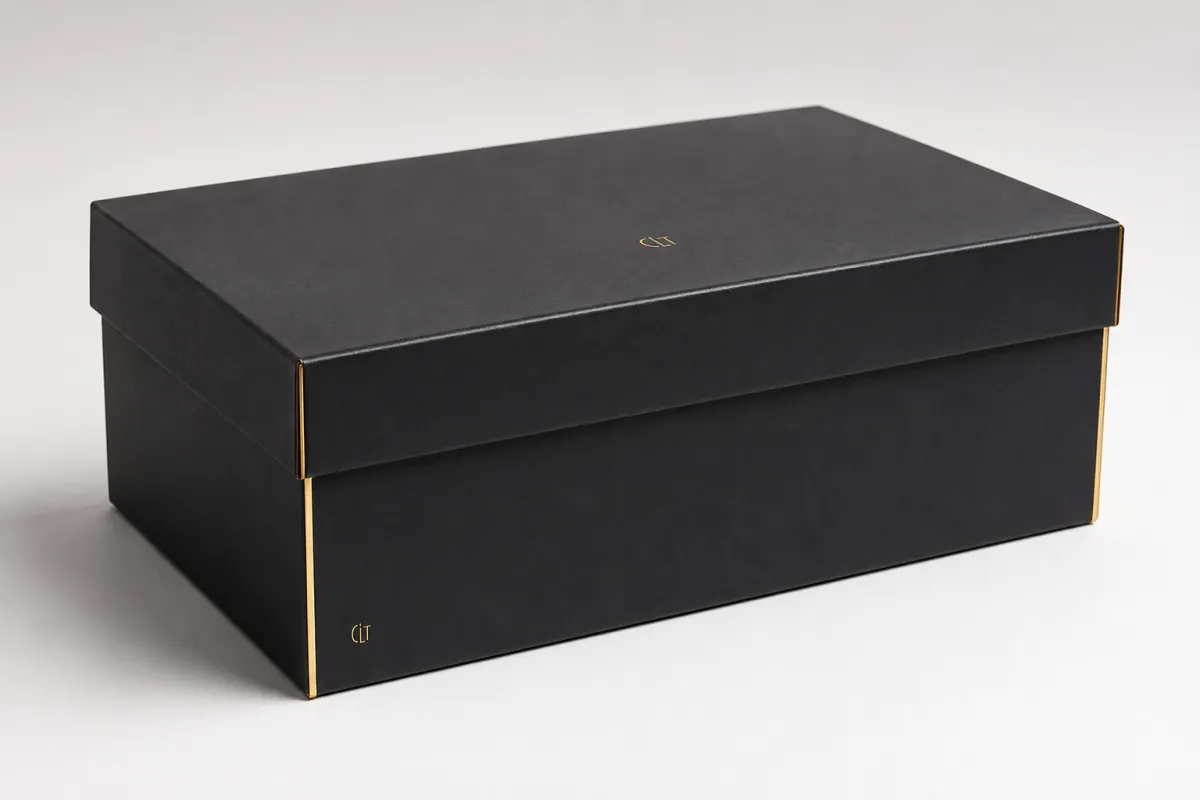
Retail buyers notice the carton before they inspect the shoe. That simple fact changes the way packaging should be specified. In a busy footwear aisle, the box is doing quiet selling work: a matte black carton with restrained foil signals premium positioning, bold graphics suggest energy and youth, and a plain shipper says the priority is efficiency. None of those directions is inherently better. The right choice depends on where the shoe is sold, how it is priced, and how much margin has to survive freight and fulfillment.
branded shoe boxes wholesale also keeps the brand experience aligned across channels. A customer who buys the same shoe through ecommerce, a boutique floor, or a distributor should not feel as if they purchased three different products. Consistent packaging helps hold that line. When the board grade, closure style, and visual system stay stable, the brand feels intentional. When the packaging changes every run, the product starts to feel less dependable even if nothing about the shoe itself changed.
There is a logistics angle too. A box that fits properly keeps the shoe from shifting, which reduces scuffing, deformation, and return risk in transit. It also makes the warehouse easier to run because stacking dimensions are predictable and picking lanes stay cleaner. That matters especially for brands moving multiple SKUs, mixed size curves, or seasonal replenishment orders. The box is visible on the shelf, yet it is also part of the shipping chain.
Buyers are rarely shopping for decoration alone. They need packaging that protects the product, supports the brand standard, and can be repeated without constant correction. That is the practical value of branded shoe boxes wholesale: a packaging system that looks good and behaves well under wholesale pressure.
There is a psychological layer that gets missed when teams focus only on cost. A well-built box tells the customer that the brand thought through the details. If the carton feels thin, the lid bows, or the print looks washed out, the weakness travels directly to the product in the customer’s mind. A clean, sturdy box has the opposite effect. It makes the purchase feel deliberate, which matters in footwear categories where style and confidence carry a lot of weight.
Premium footwear brands often use packaging to defend price. A $140 sneaker inside a crisp rigid box feels closer to its asking price than the same shoe packed in a plain folding carton. That does not mean every line should chase a luxury structure. It means the box should match the promise. For a basic evergreen style, a straightforward carton with sharp graphics may be the right call. For a limited release or collaboration, a stronger structure can support a higher ticket and a better gifting moment.
To see how those choices play out across different products, browse our Custom Packaging Products page for related structures, finishes, and insert options. The pattern stays consistent: the more carefully the packaging supports the product story, the easier it becomes to defend the price.
Product Details That Matter in Branded Shoe Boxes Wholesale
One shoe box does not serve every footwear program, and that is where packaging plans often lose efficiency. branded shoe boxes wholesale can take the form of foldable cartons, rigid presentation boxes, drawer boxes, or mailer-style shoe packaging. Each structure solves a different problem, and each one carries its own cost profile.
Foldable cartons fit high-volume retail programs well. They ship flat, store efficiently, and keep unit cost under control. Rigid presentation boxes cost more, but they create a stronger premium impression and are well suited to gift sets, collaborations, and luxury drops. Drawer boxes sit in the middle for presentation and offer a more considered unboxing moment. Mailer-style shoe boxes are a practical choice for ecommerce because they combine branding with shipping strength.
Customization turns the box into a brand tool instead of a generic container. Logo placement can sit on the lid, a side panel, the end flap, or the inside lid. Each position affects visibility, cost, and how much the packaging reads from a distance. Inside printing can strengthen the unboxing experience, though it works best with restraint. If every surface carries a message, the carton starts to feel crowded rather than premium.
Finishes change the tone quickly. Foil stamping, embossing, debossing, spot UV, and soft-touch lamination all send different signals. Soft-touch feels calm and elevated. Foil feels fashion-forward and sharp. Spot UV can catch a logo or pattern without covering the whole carton. Inserts matter as well. A folded paperboard cradle is often enough for standard sneakers, while molded pulp or a custom die-cut insert can improve support for heavier models and specialty footwear.
Use-case matching matters more than many teams expect. Athletic shoes usually call for durable, efficient cartons that can survive frequent handling. Fashion sneakers often benefit from stronger visual branding and precise color control. Luxury footwear can justify a rigid box with a drawer or lift-off lid. Limited-edition runs often need presentation value and collector appeal, which makes the structure itself part of the release.
Brand consistency becomes easier when the packaging family is planned early. A men’s size run, women’s size run, kids’ size run, and specialty fit can share one visual system while changing the internal dimensions. That keeps the line recognizable and cuts waste. A family of matched boxes usually works better than one oversized generic carton because it reduces void space, lowers board usage, and keeps movement in transit to a minimum.
The better question is not, “What looks nice?” The more useful question is, “What supports the channel, protects the shoe, and stays repeatable?” That is the difference between a packaging expense and a packaging program.
| Box Type | Best Use | Typical Wholesale Unit Cost | Strengths | Tradeoffs |
|---|---|---|---|---|
| Foldable paperboard carton | Retail programs, high-volume DTC | $0.30-$0.75 | Flat shipping, efficient storage, clean branding | Less premium feel than rigid structures |
| Rigid presentation box | Luxury, collaborations, gifting | $1.50-$3.80 | Strong shelf presence, premium unboxing, sturdy build | Higher freight and material cost |
| Drawer box | Limited editions, fashion footwear | $1.80-$4.25 | Memorable opening experience, collector appeal | More labor and tighter assembly control |
| Mailer-style corrugated box | Ecommerce and direct ship | $0.55-$1.20 | Better transit protection, branding plus ship-ready format | Bulkier than folding cartons |
Branded Shoe Boxes Wholesale Specifications: Materials, Sizes, Print
Material choice affects far more than appearance. It changes crush resistance, print clarity, folding behavior, assembly speed, and landed cost. For branded shoe boxes wholesale, the most common substrates are paperboard, corrugated board, and rigid chipboard. Paperboard is the workhorse for retail cartons because it is light, printable, and efficient at scale. Corrugated board adds strength and is often chosen for ship-ready packaging or larger footwear styles. Rigid chipboard gives the strongest premium feel and can carry heavier finishes, though it raises both material and freight costs.
Size strategy deserves careful attention. A box that is too large wastes board and increases shipping volume. A box that is too tight can compress the shoe or make packing slow. For many low-top shoes, internal dimensions often sit around 13 to 14 inches long, 8 to 8.5 inches wide, and 4.5 to 5 inches high. High-tops and boots usually need more height and sometimes a longer footprint. These are only starting points, because last shape, foam volume, and model profile all affect fit, but they are useful when a team is building a spec.
Print method should match both quantity and visual ambition. Offset printing is usually the best choice for larger branded runs because it gives better color control and sharper detail. Digital printing works well for lower quantities, faster timelines, or artwork that changes often. Foil stamping can be right for logos or accents, while embossing and debossing add tactile depth without crowding the art. Spot UV is useful for highlighting a mark or pattern on matte stock. Matte lamination creates a softer fashion look; gloss lamination gives brighter color and more surface contrast.
For brand-critical work, ask for a color target based on the actual substrate, not just the artwork file. A coated paperboard carton behaves differently from an uncoated rigid wrap. Good buyers ask for a sample reference, not only a PDF. If a brand color has to stay tight, a delta E target under 3 on the main logo color is a practical goal, though not every stock or finish will hold that target in exactly the same way.
Structural tolerance matters more than many teams expect. A practical target on standard cartons is within plus or minus 1.5 mm on key internal dimensions, with tighter control on rigid boxes where lid fit and drawer action should feel clean in hand. Inserts should support the shoe without squeezing it. Molded pulp, paperboard dividers, and custom die-cuts are all common choices. EVA can work for especially premium presentations, though not every brand wants that material from a cost or sustainability standpoint.
Transit testing should be part of the discussion as early as design. Packaging tests aligned with ISTA methods help assess vibration, compression, and drop risk before cartons move into production. For paper sourcing, FSC chain-of-custody documentation is worth requesting if the brand wants a stronger paper claim. Those references do not make a box better by themselves, yet they give buyers a cleaner standard to compare.
One detail that saves time later is deciding whether the box has to be retail-ready, ship-ready, or both. A carton built for shelf display is not always the right shipping box. If the program needs both functions, the spec should say so clearly from the start. That avoids approving a beautiful box that fails once it enters the mail stream.
Material, size, and print work together. If one piece is off, the whole package feels less considered. That is why branded shoe boxes wholesale should be specified as a system rather than a loose set of preferences.
Cost, Pricing, MOQ, and Quote Variables
The main cost drivers are usually straightforward: box size, board grade, print complexity, finish selection, inserts, and quantity. branded shoe boxes wholesale pricing changes quickly when any of those variables shift. A simple carton with one-color print on paperboard will not cost the same as a rigid drawer box with foil, embossing, and a custom insert. That sounds obvious, but quote comparisons often go wrong because the spec is not actually identical.
MOQ matters because production economics change as the run gets larger. A smaller order can still work, but the unit price usually climbs because setup, plate making, proofing, and press time are spread across fewer pieces. Larger wholesale orders usually lower the unit price and improve consistency, especially when the same spec repeats across replenishment runs. If the brand expects ongoing demand, it is often smarter to size the first order for a practical production tier rather than treating the opening run like a one-time test.
"A low quote is not a good quote if it leaves out the parts that make the box usable."
That line is worth keeping close. Ask whether the price includes tooling, sampling, freight, quality checks, and insert assembly. If the carton needs a custom dieline, confirm whether that cost is included. If the boxes must be packed in master cartons with specific counts, confirm that too. A quote that looks cheaper on paper can become more expensive once those items are added back in.
As a working range, simple branded shoe boxes wholesale orders can land near $0.30-$0.75 per unit at higher quantities, while premium rigid structures can move into the $1.50-$4.00 range or beyond depending on print coverage, finish, and assembly. These are directional numbers, not promises. Shipping mode, country of origin, and material availability all influence the final cost. The useful comparison is not just “lowest price,” but “lowest total cost for the spec That Actually Works.”
Here is a practical quote checklist that keeps the process honest:
- Exact box dimensions, including internal size
- Box style, such as folding carton, rigid, drawer, or mailer
- Artwork files in vector format when possible
- Print colors, finish requests, and any foil or embossing details
- Quantity breakpoints for pricing
- Target ship date and in-hand delivery date
- Shipping destination and preferred freight method
- Insert requirements and packing preferences
That checklist gives suppliers the information they need to quote apples to apples. It also helps the buyer spot hidden costs early. If two vendors quote the same branded shoe boxes wholesale project, the one with clearer assumptions is often the better starting point, even if the unit cost is not the lowest by a few cents.
Process, Timeline, and Lead Time From Proof to Delivery
The ordering workflow is usually simple enough, but each step carries real weight. A clean branded shoe boxes wholesale project typically moves through inquiry, specification review, dieline creation, proof approval, sample or prototype review, production, inspection, and shipment. Every one of those stages can create delay if the inputs are weak.
The first bottleneck is usually artwork readiness. Vector files move faster. Raster images buried in a presentation deck do not. The second bottleneck is size confirmation. If the shoes have not been measured properly, the dieline has to be revised. That is how a two-day setup turns into a two-week correction. The third bottleneck is proof approval. Teams that route packaging decisions through too many people often lose time on minor changes that should have been settled much earlier.
For a typical run, a sample can take about 5-7 business days after the spec is approved, and production can often take 12-18 business days after final proof sign-off. That is a planning range, not a guarantee. More complex finishes, high-volume orders, or material shortages can push the schedule longer. Freight adds its own clock. Air shipping is faster and more expensive. Ocean freight is slower and cheaper. A brand planning a launch needs to decide which pressure matters most: calendar or cost.
Delays usually come from the same places. Sample revisions add days. Color correction adds days. Last-minute inner print edits add days. If there is a custom insert or a new closure style, the line may need additional setup. None of this is unusual. It only means the best way to move quickly is to finalize the spec early and keep the approval chain short.
There are a few ways to speed the process without cutting corners. Finalize box dimensions before artwork begins. Send vector files and Pantone references where they apply. Approve the first proof quickly, but read it carefully. If a box has to support retail, shipping, and presentation, test the assembled sample before sign-off. That one step can prevent a costly rerun.
Quality control should be discussed before production, not after a problem shows up. Ask how cartons are checked for print alignment, board thickness, folding accuracy, and insert fit. For large wholesale programs, random inspection using an agreed sampling method is common. The exact method varies by supplier, but the principle stays the same: a box that only looks right in a PDF is not ready for the warehouse.
If you are comparing packaging partners, use their process as a signal. Clear spec review, precise proofing, and realistic timelines usually point to a supplier that understands the pressure of wholesale launch schedules. That matters more than a polished sales deck. A stable process is what keeps branded shoe boxes wholesale from becoming an expensive experiment.
For brands that want a deeper look at how repeat packaging programs are managed, our Case Studies page shows examples of how consistent specs reduce revision loops and keep launches on schedule.
Why Choose Us for Branded Shoe Boxes Wholesale
Most buyers do not need more adjectives. They need reliability. That is the standard we focus on for branded shoe boxes wholesale. The value is practical support: helping with structural guidance, checking print details before production, and keeping the order aligned with the same spec from sample through repeat run.
One of the biggest hidden costs in packaging is drift. A box that changes slightly on the second run can alter how the product fits, how the carton stacks, and how the brand reads on shelf. Reliable wholesale packaging reduces that drift. It keeps the graphics consistent, the dimensions steady, and the assembly behavior predictable. That helps whether the order is for a single launch or a replenishment cycle across several stores.
There is real value in having someone review the spec before production starts. Most problems are easier to fix on paper than after the board has been printed and cut. A quick check on dimensions, finish selection, and insert fit can prevent a lot of friction later. That becomes even more important if the brand sells multiple footwear categories. A men’s sneaker box, a women’s fashion box, and a kids’ carton may share the same visual language, but they should not be forced into the same structure if the fit is off.
Our approach stays simple: protect the product, support the brand, and keep the wholesale order repeatable. The challenge is execution, not the idea itself. A good packaging partner helps with the details customers never see but always feel: the sound of a lid closing properly, the way print holds under light, the way boxes stack in transit, and the way the full package reads as part of the brand.
If you are still shaping the broader packaging system, our Custom Packaging Products page is a practical place to compare formats, finishes, and insert options. That kind of comparison makes branded shoe boxes wholesale decisions easier because it turns a loose concept into a spec you can actually order.
Honestly, the best wholesale programs are not the most elaborate ones. They are the ones that hold up on the second, third, and tenth repeat order without forcing the team to renegotiate the basics. That is what good packaging should do.
Next Steps: How to Order Branded Shoe Boxes Wholesale
The fastest path starts with the basics. Before requesting quotes for branded shoe boxes wholesale, gather the shoe size range, preferred box style, print concept, target quantity, budget range, and in-hand delivery date. With those six or seven inputs, a supplier can usually tell you whether the plan is realistic and where the tradeoffs are likely to appear.
If you are unsure which structure to choose, ask for a spec comparison or a sample set. Feeling the board weight, seeing the print on the actual substrate, and checking the closure fit tells you more than a screen ever will. That matters especially for premium footwear, where the box is part of the perceived value. A sample also helps marketing, operations, and merchandising agree on one target instead of arguing from different assumptions.
A clear approval sequence keeps the project moving:
- Review the quote and confirm the spec
- Approve the dieline and artwork placement
- Review the proof or prototype
- Sign off on color, finish, and insert details
- Schedule production
- Complete inspection and shipment confirmation
That sequence works because it prevents last-minute surprises. The more final the inputs are at the beginning, the fewer corrections you have to make downstream. It is also the cleanest way to control lead time. A careful brief usually beats a rushed revision cycle every time.
For teams building a repeatable purchasing process, it helps to keep one internal checklist for packaging approvals and another for logistics. The packaging checklist should cover dimensions, materials, graphics, and finishes. The logistics checklist should cover pallet counts, master carton counts, freight terms, and delivery windows. Those two lists together make branded shoe boxes wholesale much easier to manage across seasons and replenishment cycles.
Final thought: choose the box that fits the shoe, the channel, and the order rhythm. If the structure protects the product, presents the brand clearly, and stays efficient at scale, the packaging is doing its job. That is the standard worth holding for branded shoe boxes wholesale.
FAQ
What is the typical MOQ for branded shoe boxes wholesale orders?
MOQ varies by structure, print method, and material, but wholesale programs usually become more efficient as quantities rise. Simple folding cartons often support lower starting quantities than rigid presentation boxes. Ask for the MOQ alongside unit pricing so you can compare true landed cost instead of only looking at the lowest sticker price.
Can branded shoe boxes wholesale be sized for different shoe categories?
Yes, boxes can be tailored for men’s, women’s, kids’, athletic, luxury, or specialty footwear so the fit is accurate and the box does not waste board. If you sell multiple SKUs, a family of related sizes often works better than one oversized generic carton. That keeps the shelf presentation consistent while reducing void space.
How long does branded shoe boxes wholesale production usually take?
Lead time depends on artwork approval, sample needs, order volume, and shipping method, so the fastest projects are the ones with finalized specs upfront. A production window of 12-18 business days after proof approval is a reasonable planning range for many standard runs, but complex finishes or freight delays can extend that. Build in time for proofing if color accuracy or structural fit matters.
Which printing method works best for branded shoe boxes wholesale?
Offset printing is often preferred for sharp branding and large runs, while digital printing can be useful for smaller or faster orders. The best choice depends on quantity, finish needs, and how much visual detail the design requires. If the box needs foil, embossing, or a special coating, those extras should be built into the spec from the start.
How should I compare quotes for branded shoe boxes wholesale?
Compare the same dimensions, materials, finishes, inserts, freight terms, and sampling terms across every quote. A quote that looks cheaper at first can become more expensive if it excludes tooling, inspection, or shipping. The cleanest comparison is the one that matches the actual production spec, not a rough estimate.


