Buyer Fit Snapshot
| Best fit | Branded Sticker Sheets for Packaging projects where brand print, material claims, artwork control, MOQ, and repeat-order consistency need to be specified before quoting. |
|---|---|
| Quote inputs | Share finished size, material target, print colors, finish, packing count, annual reorder estimate, ship-to region, and any compliance wording. |
| Proofing check | Approve dieline scale, logo placement, barcode or warning zones, color tolerance, closure strength, and carton packing before bulk production. |
| Main risk | Vague material claims, crowded artwork, missing packing details, or unclear freight terms can make a low unit price expensive after revisions. |
Fast answer: Branded Sticker Sheets for Packaging: Material, Adhesive, Artwork, and MOQ should be specified like a repeatable production item. The safest quote records material, print method, finish, artwork proof, packing count, and reorder notes in one written spec.
Production checks before approval
Compare the actual filled-product size with the drawing, then confirm tolerance on folds, seals, hang holes, label areas, and retail display edges. Reserve space for logos, QR codes, warning copy, and material claims before decorative graphics fill the panel.
Quote comparison points
Review material grade, print process, finish, sampling route, tooling charges, carton quantity, and freight assumptions side by side. A quote is only useful when the supplier can repeat the same color, closure quality, and packing count on the next order.
A plain mailer, pouch, or folding carton can do the job and still look unfinished. That is exactly where branded sticker sheets for packaging pull their weight. One sheet gives you logo seals, product labels, message stickers, and decorative accents in a format that stacks neatly, peels cleanly, and keeps the packing table from turning into a sticker graveyard. Small detail. Big payoff. Packaging lives or dies on those details, and branded sticker sheets for packaging help tie the whole thing together without adding drama.
From a buyer's angle, the appeal is hard to miss. Branded sticker sheets for packaging keep the brand voice steady across boxes, tissue, inserts, thank-you cards, and product seals without forcing separate print runs for every single touchpoint. That matters whether the team ships fifty orders a week or fills a retail calendar that never seems to slow down. Packaging has to look considered and still move through production without tripping over itself. Branded sticker sheets for packaging are built for that exact balancing act.
I have seen plenty of brands spend money on a beautiful box, then ignore the little things that actually shape the unboxing. That is a mistake. Customers notice the seal on the flap, the logo on the tissue, the label that keeps the insert from sliding around. They may not say it out loud, but they feel the difference. Branded sticker sheets for packaging help fill those gaps without forcing the team to juggle three different label orders.
A sticker sheet is not decoration first. It is a control point for brand consistency, labor speed, and perceived value, which is why branded sticker sheets for packaging often outperform their price tag.
The operational side matters just as much. Loose stickers get bent, misplaced, or scattered across the bench. Sheeted stickers stay aligned, easy to count, and ready to hand off to anyone on the team, even the person who just got pulled into packing because somebody called in sick. That sounds minor until the table is moving and every second counts. Good branded sticker sheets for packaging make the work calmer, cleaner, and less annoying. Which, frankly, is the point.
There is also a brand-memory angle here. A customer may not remember the exact stock weight or the finish on a mailer, but they do remember a package that felt organized and intentional. That kind of consistency builds trust faster than a lot of flashy marketing copy. One clean sheet can support that feeling across an entire packaging system.
Branded sticker sheets for packaging: what they are and why they stand out
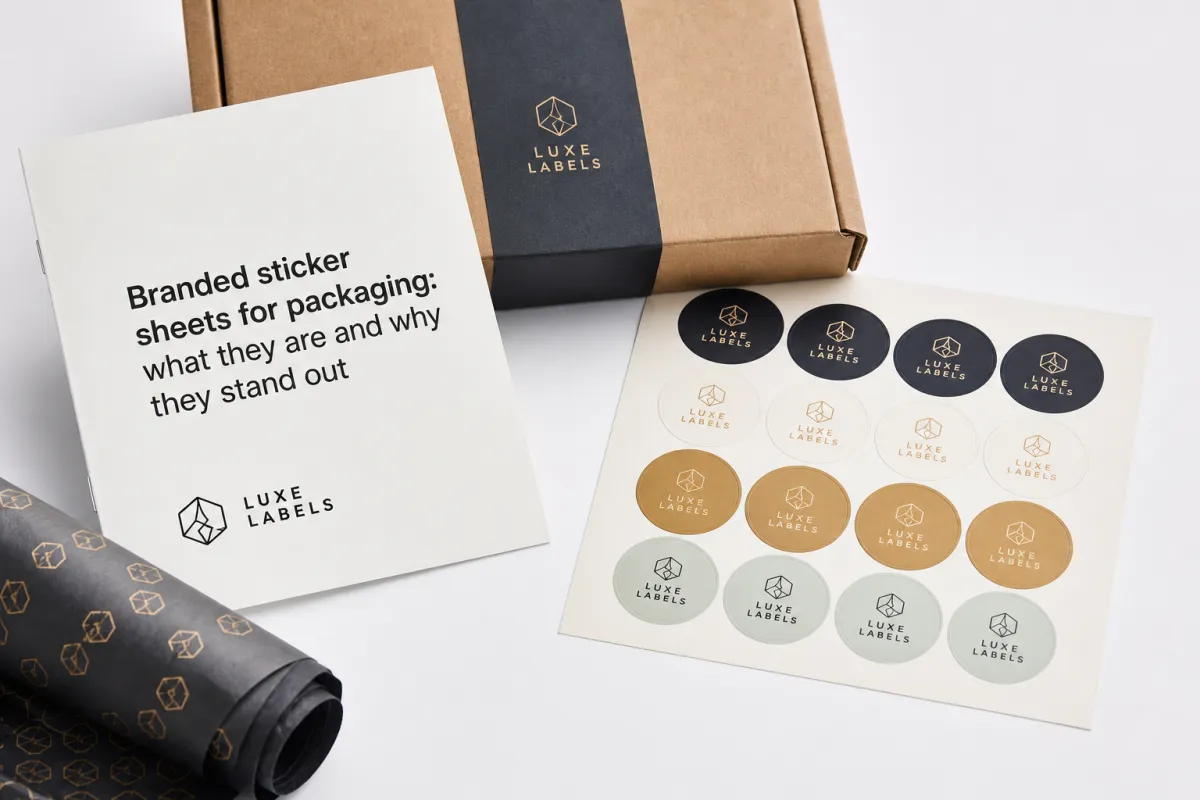
At the simplest level, branded sticker sheets for packaging are printed sheets that hold several stickers, seals, or labels in one organized layout. A single sheet might include identical logo circles, a batch of seasonal designs, tamper seals, QR codes, product-name stickers, or a mix of all four. That makes the sheet a small but useful toolkit for retail packaging, fulfillment, events, and direct-to-consumer shipping. One order. Multiple uses. Less clutter in inventory.
The main difference between loose stickers and sheeted stickers is handling. Loose stickers usually need bins, dividers, and extra care to keep adhesive faces clean and designs in order. With branded sticker sheets for packaging, everything stays lined up and ready to peel. They are easier to count, easier to store, and easier to pass off to someone who has never seen the job before. Small studios notice the neatness first. Bigger packing teams notice the speed.
Visual continuity is another reason branded sticker sheets for packaging stand out. The same logo can show up on a mailer seal, a tissue wrap, and an insert card, which gives the unboxing a consistent rhythm. That repetition builds recognition without crowding the package. Good sticker sheets support the rest of the packaging instead of fighting it for attention. That is usually the difference between something that looks assembled and something that looks designed.
There is a sales effect too. A package that looks deliberate tends to feel more valuable, even if the base materials are plain. A kraft mailer with a sharp logo seal can feel more premium than a box that cost three times as much but has no finishing detail. That is why branded sticker sheets for packaging show up in brands that want to raise perceived value without jumping straight into custom printed boxes for every SKU. If you want to compare sticker sheets with other packaging tools, the wider range of Custom Packaging Products is a useful place to start.
Loose stickers vs. sheeted stickers is not a tiny decision. Loose stickers can work for promo handouts or low-touch use. Sheeted formats usually win for organization, labeling, and fulfillment. If the goal is clean execution and a repeatable process, branded sticker sheets for packaging are usually the better bet.
Flexibility is part of the appeal. One sheet can mix a core graphic and a utility label, which means the same printed stock can support seasonal promotions, order inserts, and product seals at different points in the year. That flexibility is one reason branded sticker sheets for packaging stay useful long after the first campaign fades out. I like that they do more than one job without turning into a mess of separate SKUs.
How branded sticker sheets for packaging work in production
The production flow for branded sticker sheets for packaging is simple on paper and picky in real life. Artwork gets arranged on a flat sheet, usually with a dieline that shows where each sticker will be cut or kiss-cut. The sheet is printed, finished, and trimmed. Kiss-cutting cuts through the face stock and leaves the backing liner intact, which makes peeling easier. Full die cutting cuts the shape all the way around. Either way, the finished sheets stack cleanly, store well, and move through packing without much fuss.
Here, spacing, cut paths, bleed, and safe zones get checked before anyone signs off on the proof. That part is not optional. A clean layout on screen can still fail if the cut lines are too tight or the type sits too close to the edge. For branded sticker sheets for packaging, the file needs to behave like a production file, not a mood board.
Sheet formats vary more than most buyers expect. Some sheets carry a tight grid of identical stickers for repetitive seals. Others mix a logo mark, a thank-you label, a QR code, and a product variant sticker on one layout. For seasonal campaigns, branded sticker sheets for packaging can combine permanent brand marks with temporary artwork so one sheet covers a launch window or a holiday run. That matters in retail packaging, where the schedule gets crowded and the visual story still has to stay tidy.
Surface behavior deserves real attention. A sticker that looks perfect on coated paperboard may act very differently on uncoated kraft, glass, corrugated mailers, or a flexible film pouch. Temperature, humidity, and storage time all affect adhesive performance. A light-tack paper label may be fine on a dry insert card. A film label with stronger adhesive may be a better match for pouches that get handled constantly. Packaging is not a render. The sticker has to work on the actual surface, not just sit nicely in the mockup.
Finish changes the result too. Matte stock feels soft and restrained. Gloss brings color up fast and suits high-contrast logos. Soft-touch gives a premium feel, although it is not always the smartest pick if the sheet will be handled a lot before application. Clear film can disappear against the package and let the graphic float visually on the surface. Those choices shape how branded sticker sheets for packaging function as part of the brand, not just as another print order.
There is a real workflow upside. On packing lines, in subscription box assembly, at pop-up events, or in small studios, sheeted stickers are easier to organize than loose labels. One carton near the station. Peel what you need. Keep moving. For brands using branded sticker sheets for packaging day to day, that hidden efficiency is often the best part: less sorting, less waste, less irritation.
Testing against shipping stress is smart too. If the package will see vibration, compression, or repeated handling, it helps to think with the same discipline used in shipping tests under ISTA guidelines. Not every sticker sheet needs lab-level validation. The mindset still matters when a label has to stay put after packing, transit, and shelf handling. I am not pretending every brand needs a test lab. But if a seal is supposed to survive a rough route, it should be tested on the real package, not just admired in a proof PDF.
Key factors that shape sticker sheet quality
If you want branded sticker sheets for packaging to perform well, material choice comes first. Paper stock is usually the most economical option and often feels warm and familiar, especially on kraft mailers, tissue, and paper inserts. Film-based or vinyl-style materials handle moisture, abrasion, and repeated touch better, which is why they are often used when the package gets refrigerated, wiped down, or handled by a lot of hands before it reaches the customer. The right pick depends on the surface, the environment, and how long the sticker needs to stay in place.
Adhesive strength is the next big variable. A removable adhesive works when the sticker acts as a temporary seal or an application guide. Permanent adhesive makes more sense when the label has to survive shipping and display. Repositionable adhesive can help in some assembly settings, but it is not a magic answer for every package. Brands get tripped up here more often than they should with branded sticker sheets for packaging; they choose for appearance first, then wonder why the seal lifts on textured kraft or slides on a coated carton. Mystery solved.
Design constraints matter just as much as substrate choice. Thin type, tight spacing, and tiny symbols may look fine on screen and fall apart in production if the sheet is too dense or the line weight is too delicate. Safe zones, bleed, and minimum type size should all be checked before the proof gets a green light. A good packaging designer also looks at contrast on the actual package color, because a sticker that disappears into the background does not help retail packaging or product packaging at all.
Sheet size and sticker count affect cost and usability. Larger sheets can reduce handling because more stickers are available per pull, but they may be awkward in a small fulfillment kit or a crowded shipping drawer. Smaller sheets are easier to store and pack, but they can need more frequent replenishment. With branded sticker sheets for packaging, the best size is usually the one that fits the team’s actual workflow, not the one that squeezes the most pieces onto one piece of paper.
Cut style is another detail that matters. Kiss-cut sheets are generally easier to peel because the backing stays intact. Full die-cut shapes can feel more custom and look cleaner if the stickers are removed from the sheet one at a time. The better choice depends on whether the sheet is mainly for speed or presentation. In some jobs, the difference is only a couple of seconds per sheet. Across a larger run, those seconds stop being cute and start being money.
For sustainability-minded brands, paper sourcing and finish choices deserve a look too. FSC-certified paper stocks can support a documented sourcing story, which matters if your packaging program already emphasizes responsible materials. You can review general paper sourcing standards through FSC, then decide whether that fits the rest of your branded packaging approach. Not every sticker sheet needs a certification story. When the brand promise calls for it, the option is there.
None of these choices exist in a vacuum. I have seen a label fail because the adhesive was fine but the print was too dark for the box color. I have seen a gorgeous soft-touch sheet slow down a packing line because it was too slippery to peel cleanly. That is why quality is not just about how the sheet looks in a mockup. It is about how the sheet behaves in the hands of the people using it.
What buyers should verify before approving a proof
- Dieline accuracy so the cuts land where the sheet was planned.
- Minimum type size so small copy stays readable after printing.
- Adhesive fit for coated, uncoated, curved, or textured surfaces.
- Finish match between the sticker and the package surface.
- Peel behavior so the sheet works well on the packing table.
Branded sticker sheets for packaging: cost and pricing factors
Pricing for branded sticker sheets for packaging usually comes down to a familiar set of variables: material, print method, quantity, cut complexity, finish, and setup. Base stock affects price right away because paper and film do not behave the same way in printing or cutting. Print coverage matters too. A simple one-color seal on paper costs far less to produce than a full-color sheet with several small designs, especially if the layout includes specialty varnish or an extra finishing step.
Setup costs are easy to underestimate. Artwork prep, proofing, press setup, and die tooling carry more weight on short runs than on larger repeat orders. That is why branded sticker sheets for packaging tend to make the most sense when the brand knows the real usage volume. If the sheet is only for a one-off campaign, a massive run is just inventory sitting around pretending to be strategic. If the sheet supports weekly fulfillment, a larger quantity usually improves unit economics.
Here is a practical planning range. Small-run paper sheets with simple art may land around $0.18-$0.35 per sheet at modest quantities, depending on size and coverage. Film or specialty finishes can move that higher, often $0.30-$0.60 per sheet or more when the layout gets complex or the quantity stays low. Those are broad estimates, not quotes. They still help buyers compare branded sticker sheets for packaging against other branding tools such as printed inserts, belly bands, or custom labels.
The biggest pricing trap is comparing a starting quote to a finished invoice. One supplier may list a low per-sheet rate and quietly add tooling, freight, or proofing later. Another may build those costs into the initial number. If you are comparing suppliers, ask for the full landed cost and confirm what is included. That is the only fair way to compare a paper run against a more durable stock or a more detailed layout. Anything else is just spreadsheet theater.
| Option | Typical use | Relative cost | Practical notes |
|---|---|---|---|
| Paper sticker sheets | Dry goods, inserts, mailers, lightweight seals | Lowest | Good for warm, tactile branding and simple assembly |
| Film or BOPP sticker sheets | Moisture-prone packs, frequent handling, shipping labels | Medium | More durable; better for coated or curved surfaces |
| Special finish sheets | Premium launches, retail packaging, gift sets | Higher | Soft-touch, gloss, or clear film can improve presentation |
| Mixed-artwork sheets | Promotions, SKU variation, multi-use packing stations | Varies | Flexible, but artwork prep and layout approval take longer |
Smarter buying also means comparing sticker sheets to other branding components. A simple sheet can replace a more expensive insert program if all you need is a seal, a logo cue, and a short message. On the other side of that coin, if your packaging already depends on Custom Labels & Tags for variable data or compliance details, a sticker sheet may work best as the brand-facing layer rather than the entire labeling system. That layered thinking usually beats the "one format fixes everything" fantasy.
For a packaging buyer, the best price is not the lowest sticker price. It is the price that fits the run size, the labor model, and the life of the package. That is why branded sticker sheets for packaging should always be judged against the actual process they support, not just a mockup or a unit quote.
And if your budget is tight, do not bury the problem under prettier artwork. Start with the use case. A well-sized paper sheet that peels cleanly and holds up on the package will usually do more for the brand than a fancy finish that slows everyone down.
Step-by-step process and timeline for sticker sheet orders
The cleanest way to order branded sticker sheets for packaging is to start with the use case, not the artwork file. Decide where the sticker will live: on a mailer, a kraft carton, an insert card, a pouch, or a retail display. That answer tells you which stock, adhesive, and finish make sense. Once the surface is known, the artwork can be built around the job instead of forcing the job to fit the art.
After that, the sheet layout gets built on a dieline. Proofing comes next, and it should not be rushed. A digital proof catches copy and layout errors. A physical sample is better for peel behavior, adhesive grab, and print feel. For branded sticker sheets for packaging, that sample can spare a team a lot of grief later, especially when the sheet goes into a real fulfillment operation with real deadlines.
Lead time depends on complexity. A simple reorder with no artwork changes usually moves faster. A first-time custom sheet with multiple shapes, specialty finish, or a new material takes longer. As a planning range, many jobs land around 10-15 business days after proof approval, with more complex runs stretching beyond that if tooling or finishing is involved. If the launch date matters, build a buffer. Packaging schedules like to collide with marketing, inventory, and shipping at the worst possible moment.
Here is the workflow I would expect for branded sticker sheets for packaging:
- Define the package surface and application method.
- Select the material, adhesive, and finish.
- Build artwork to the correct dieline.
- Review the proof for spacing, cut lines, and print color.
- Approve a sample if the application is sensitive.
- Print, finish, cut, and pack for shipment.
- Store the sheets in a clean, dry place until use.
Delays usually come from the same handful of mistakes: missing dielines, low-resolution art, copy changes after proof approval, or a last-minute stock swap. Those problems show up more often than they should, and they turn a straightforward order into a scramble. If you want a broader view of how sticker sheets fit into a full packaging program, the Case Studies page is a useful place to see how other packaging decisions were handled in context.
Timing matters just as much as design. If the sheets support a product launch, place the order early enough that you are not juggling printing, receiving, and packing at the same time. Branded sticker sheets for packaging are not hard to produce. They are easiest to use when the schedule is sorted out before the pressure starts. That is the part people skip, then act surprised when everything gets tight. I am gonna say it plainly: a good sheet with a bad timeline is still a headache.
Common mistakes brands make with sticker sheets
The first costly mistake is choosing the wrong adhesive for the surface. A seal that holds fine on smooth paperboard may fail on textured kraft, and a label that behaves on room-temperature cartons may not do the same thing in cold storage or damp conditions. With branded sticker sheets for packaging, the adhesive has to match the package material and the environment. Otherwise the sheet looks great on day one and turns unreliable the minute it meets reality.
Another common problem is crowding the sheet. It is tempting to cram in as many tiny designs as possible, but if the peel margin gets too tight or the shapes get too small, application turns awkward. People slow down. They miss edges. They peel the wrong sticker. In a packing room, that is not just a design flaw. It is a labor problem. Good branded sticker sheets for packaging should make the job easier, not turn every order into a delicate finger exercise.
Artwork quality is another place where brands cut corners and regret it later. Thin type, low contrast, and untested color choices may look fine on a monitor and still fail in print. A deep black that feels rich on screen may print softer on uncoated paper. A subtle gray logo can vanish on kraft. Packaging design needs enough contrast to survive folding, handling, and shipping. That matters for retail packaging as much as it does for a subscription box.
Skipping a physical sample is risky, especially if the sticker will be touched often or applied by several people. A proof can confirm dimensions. A sample tells you how the adhesive grabs, how the sticker peels, and whether the finish feels right next to the rest of the package. In production, that tactile check is often the difference between a smooth rollout and a pile of rework. Branded sticker sheets for packaging are too useful to approve on blind faith.
Planning mistakes show up in quantities too. Brands often order just enough for a launch photo shoot or the first week of shipping, then discover they need a reorder under deadline. That is avoidable. If the sheet supports ongoing fulfillment, calculate use based on actual weekly volume, not the marketing calendar and a hopeful shrug. A short reorder window is stressful. Branded sticker sheets for packaging should not become a bottleneck because the forecast was optimistic.
Some teams also forget to match the sticker sheet to the rest of the packaging system. If the carton, tissue, and insert already carry a lot of visual information, the sticker should support the composition instead of crowding it. Strong package branding feels coordinated, not loud. That is why the best branded sticker sheets for packaging work with the rest of the pack instead of trying to win a shouting match.
One more mistake: treating the sheet like a one-time design problem instead of an operations tool. The layout should make sense for the people who pack the orders, the people who store the sheets, and the people who reorder them later. If the only thing the sheet does well is look pretty on a screen, it is not done yet.
Expert tips and next steps for using branded sticker sheets for packaging
If you are planning branded sticker sheets for packaging for the first time, start with the package surface and the handling conditions, then choose the stock around those realities. A kraft mailer, a coated folding carton, and a flexible pouch will not all need the same adhesive strength or finish. That sounds obvious. People still miss it and end up with a beautiful sheet that does not perform where it needs to.
Design the sheet around the actual assembly motion. Put the most-used stickers where the hand naturally reaches. Keep peel edges clear. If one label will be applied hundreds of times a day, give it room and make it obvious. That kind of planning saves time, especially when branded sticker sheets for packaging are being used in subscription fulfillment, event kits, or in-house kitting stations where speed matters more than it does on a mockup.
Build in flexibility. One sheet can carry a core logo seal, a utility label, and a seasonal message if the layout is thought through properly. That way, the same order supports packaging, inserts, and promotional use without forcing separate runs for every campaign. From a budgeting angle, that can reduce waste and keep the brand voice steady across product packaging and retail packaging. When the packaging system needs to grow, it also helps to compare sheeted options against other formats in the broader Custom Packaging Products lineup so the mix fits the actual operation.
I also recommend a pilot run before scaling. Put the sample sheet on real boxes, real pouches, and real mailers. See how it feels after a full packing cycle. Check whether the peel is quick, whether the seal sits flat, and whether the finish still looks good under store lighting or on camera. If anything feels awkward, fix it now. That is cheaper than finding out after the order is already moving. In my experience, branded sticker sheets for packaging pay off most when they are tested against the real workflow, not just approved as a file.
Before you place the final order, do a simple audit: list each packaging touchpoint, note the surface it sticks to, decide whether the adhesive should be permanent or removable, confirm the sheet size, and estimate how many sheets you use in a normal week. Then gather artwork, request a proof, ask for a sample if the surface is tricky, and order a test quantity first if the run is new. That is the most practical path for branded sticker sheets for packaging, especially when brand consistency and labor efficiency both matter.
If you want the shortest version of the decision, here it is: match the sticker sheet to the surface, the worker, and the shipping environment. Do those three things well, and the rest gets a lot easier. Skip them, and you will be back in reprint territory faster than you would like.
Used well, branded sticker sheets for packaging do more than dress up a box. They help shape the experience, support the packing team, and keep the brand language consistent from the shelf to the shipping table. For a lot of companies, that is exactly the kind of quiet upgrade that makes packaging feel finished.
What are branded sticker sheets for packaging used for?
They are used to seal boxes, brand mailers, label inserts, decorate tissue, and add a consistent visual cue across packaging touchpoints. They are especially useful when a brand wants multiple sticker designs in one place rather than ordering separate labels for each use, and branded sticker sheets for packaging make that easier to manage in day-to-day fulfillment.
How do I choose the right material for packaging sticker sheets?
Match the material to the package surface and handling conditions: paper works well for dry, lightweight use, while film or more durable stocks suit moisture or rough handling. Ask for a sample or proof if the sticker must stick to textured, coated, or curved surfaces. For many buyers, that is the difference between a nice-looking sheet and dependable branded sticker sheets for packaging.
What affects the price of branded sticker sheets for packaging?
Quantity, material, finish, print complexity, cut style, and setup requirements are the main cost drivers. Short runs usually cost more per sheet because setup and proofing are spread across fewer units, while larger reorders often improve the per-sheet economics of branded sticker sheets for packaging.
How long does it take to produce custom sticker sheets?
Lead time depends on artwork readiness, proof approval, material choice, and production queue. Simple reorders are typically faster than first-time custom jobs with specialty finishes or complex layouts, so it is wise to build a buffer if branded sticker sheets for packaging are tied to a launch date or seasonal shipment.
What should I check before ordering branded sticker sheets for packaging?
Verify the dieline, bleed, minimum type size, adhesive choice, sheet size, and how the stickers will be peeled and applied. Also confirm the quantity you will actually use so you do not overbuy or run short during fulfillment. That checklist keeps branded sticker sheets for packaging aligned with the real workflow instead of just the artwork file.

