Buyer Fit Snapshot
| Best fit | Branded Stretch Wrap Sleeves projects where brand print, material claims, artwork control, MOQ, and repeat-order consistency need to be specified before quoting. |
|---|---|
| Quote inputs | Share finished size, material target, print colors, finish, packing count, annual reorder estimate, ship-to region, and any compliance wording. |
| Proofing check | Approve dieline scale, logo placement, barcode or warning zones, color tolerance, closure strength, and carton packing before bulk production. |
| Main risk | Vague material claims, crowded artwork, missing packing details, or unclear freight terms can make a low unit price expensive after revisions. |
Fast answer: Branded Stretch Wrap Sleeves: What They Do for Shipping should be specified like a repeatable production item. The safest quote records material, print method, finish, artwork proof, packing count, and reorder notes in one written spec.
Production checks before approval
Compare the actual filled-product size with the drawing, then confirm tolerance on folds, seals, hang holes, label areas, and retail display edges. Reserve space for logos, QR codes, warning copy, and material claims before decorative graphics fill the panel.
Quote comparison points
Review material grade, print process, finish, sampling route, tooling charges, carton quantity, and freight assumptions side by side. A quote is only useful when the supplier can repeat the same color, closure quality, and packing count on the next order.
Branded stretch wrap sleeves turn a plain pallet into something people actually notice. That is the job. They carry brand graphics, clean up the look of the shipment, and make the freight feel deliberate instead of like a random stack of cartons waiting for a forklift to ruin the mood.
The term gets used loosely, which matters more than most buyers expect. Some suppliers mean a printed stretch film sleeve. Others mean a pallet sleeve or wrap-style band that covers part of the load. Ask for the construction, the application method, and the pallet dimensions before anybody starts talking color. Otherwise you are comparing three different products with one product name.
This is not a decorative afterthought. The sleeve has to stretch or fit correctly, hold print detail, survive warehouse handling, and still leave room for the logistics information that keeps the load moving. Miss one piece and the "branded" part becomes an expensive lesson in why freight does not care about your mood board.
For packaging buyers, the real question is not whether a pallet could look better. The question is whether branded stretch wrap sleeves earn their keep versus plain wrap, labels, cartons, or printed tape. The answer changes with the product, the route, the quantity, and how visible the freight is after it leaves your dock.
Branded Stretch Wrap Sleeves: What They Are and Why They Matter
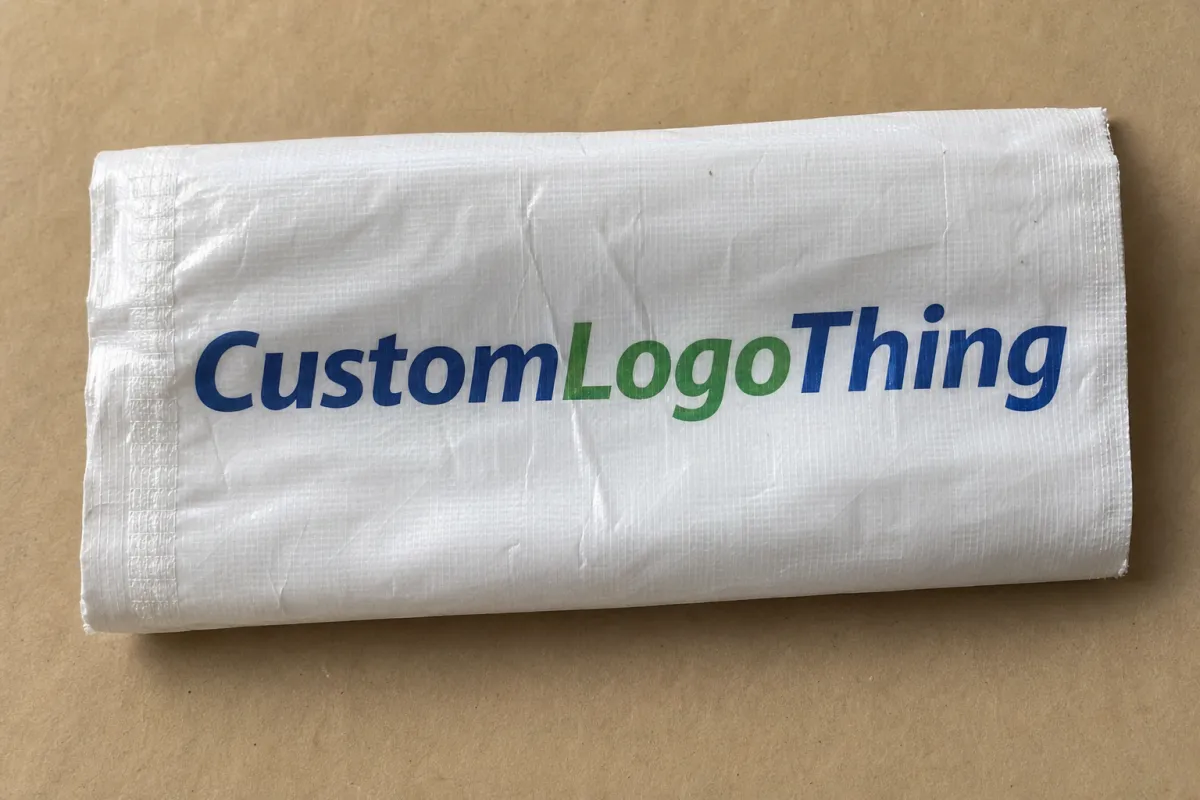
Walk into a warehouse at shift change. One pallet is wrapped in plain film, dull and anonymous, with a label stuck on one side. The next pallet is covered with branded stretch wrap sleeves, and the shipment suddenly looks intentional. Same SKU. Very different impression.
In practical terms, branded stretch wrap sleeves are printed wrapping components or sleeve-style covers used around palletized goods to add branding, visibility, and presentation. Depending on the structure, they may stretch around the load, wrap around the pallet perimeter, or cover part of the stack while still keeping the shipment stable and legible.
They make the most sense where the pallet is visible to someone who matters: a retailer, distributor, club store, promo floor, receiving dock with buyers walking the line, or a seasonal launch where the freight itself is part of the presentation. If the load is only going from one warehouse bay to another, the economics look different.
Still, this is packaging, not magic. A printed sleeve will not fix a bad pallet. It will not rescue crushed cartons, sloppy stacking, or a load that shifts because someone got creative with the bottom tier. If the base is unstable, the sleeve just gives the failure better branding.
That tradeoff is the whole decision. More brand impact usually means more planning. You need artwork that fits the format, a material spec that matches the handling environment, and a test plan that proves the sleeve works on a real load instead of a perfect mockup under office lighting.
From a buyer's perspective, the product makes sense when presentation has a cost. A beat-up pallet can make a product line feel cheaper than it is. A clean, printed sleeve can protect perception without jumping all the way to a custom shipper or fully printed carton program.
If you want to compare how pallet-level branding fits into broader packaging programs, our Case Studies page shows the kind of tradeoffs buyers make when they care about handling, visibility, and budget at the same time.
How Branded Stretch Wrap Sleeves Work on a Pallet
At the simplest level, the sleeve goes around the load so the printed surface stays visible while the material does its job on the pallet. Depending on the build, it may stretch, grip, overlap, or cover the outside of the stack in a way that keeps the graphics out front and the protection underneath.
The construction details matter more than most people expect. Film thickness affects tear resistance. Stretch behavior affects how the sleeve fits the pallet. Print surface affects color density and image sharpness. Application method affects everything from labor time to whether the graphics still line up after the third pallet in a shift.
What actually changes from one spec to another
A 40 to 60 gauge film behaves differently from a heavier 80 to 120 gauge setup. Thin film can be lighter and cheaper, but it may not like abrasion or sharp corners. Heavier material can take more abuse, but it also costs more and can be harder to apply consistently by hand.
Manual application gives more flexibility with mixed pallet sizes and odd loads. Automation is faster and more repeatable, but it asks for tighter control over dimensions, pallet consistency, and material behavior. If the sleeve is going into a machine line, the spec should be written for the machine first and the logo second. That usually saves everyone a headache later.
Graphics need their own planning too. Corners, seams, and high-tension zones can distort logos or text. Put a critical mark in the wrong place and it disappears exactly where the material pulls hardest. The fix is simple: keep bold marks away from stress points, reserve safe zones, and stop pretending tiny text will survive a pallet wrap just because it looks crisp on a monitor.
"If the logo sits across a stretch point or seam, expect distortion. Packaging art that ignores material behavior usually gets blamed on print quality, which is unfair but common."
There are also practical handling benefits. Branded stretch wrap sleeves can help shield the load from dust, light moisture, pallet rub, and the scuffs that happen when freight gets bumped through a warehouse. They do not replace a serious protective system, but they can cut down on the "looks abused before it even ships" problem that so many pallets collect for free.
Visibility still matters. A good sleeve should be readable from a distance, especially if the pallet is moving through a busy facility. It also needs to leave room for barcodes, carton marks, routing labels, and any compliance information that must stay visible and scannable. That balance is the trick. Brand the pallet, but do not bury the logistics under the art.
For shipments that touch retail or third-party logistics, standards and testing culture still matter. The packaging industry does not award points for looking good if the load fails in transit. Groups like ISTA are useful reminders that appearance and transit performance have to live in the same room.
Branded Stretch Wrap Sleeves: Cost, Pricing, and MOQ
The honest answer on pricing is that it depends on more variables than most buyers want to hear. Size, film or substrate thickness, print coverage, number of colors, print method, and any custom finishing all move the number up or down. The part nobody likes is that setup cost still exists whether you order 300 units or 30,000.
MOQ, or minimum order quantity, is where the economics stop being polite. Small runs cost more per unit because setup, proofing, and production prep are spread across fewer pieces. That is not punishment. It is just how print manufacturing works. A supplier can only spread press setup so far before the math starts laughing.
For a first run, ask for tiered quotes at a few quantities. 500, 1,000, and 5,000 units are useful reference points for many buyers. Sometimes the jump from 500 to 1,000 barely changes the unit price. Sometimes it drops sharply. Sometimes the savings show up much later than you hoped, which is why guessing is a bad buying strategy.
Here is a practical way to compare options without getting hypnotized by a low unit price:
| Option | Typical Use | Relative Cost | Best For | Tradeoff |
|---|---|---|---|---|
| Plain stretch wrap | Basic pallet containment | Lowest | Internal freight, low-visibility lanes | No branding, weak presentation |
| Printed tape + labels | Light branding on cartons or closures | Low to moderate | Small programs, mixed packaging lines | Not enough impact for pallet-level visibility |
| Printed cartons | Unit packaging with brand exposure | Moderate to high | Retail-ready products | Higher setup cost, less flexibility on pallet branding |
| Branded stretch wrap sleeves | Pallet presentation and containment | Moderate | Visible freight, promo shipments, distributor loads | Needs spec control and pallet consistency |
That table hides one point that matters: unit price is not total cost. Freight can be chunky on large, lightweight orders. Art changes can cost real money if the file is late or poorly prepared. Proofing and sample revisions can add days. Rush fees can turn a "good deal" into a regrettable spreadsheet row. Buy like a grown-up and include all of it.
For branded stretch wrap sleeves, the right comparison is usually not "what is cheapest." It is "what gives the best blend of visual impact, handling performance, and landed cost for the lane I actually run." That is a more annoying question, but it is also the useful one.
If you are building a broader packaging plan, compare the sleeve against other branded components in the same program. Some buyers use sleeves only for promotional runs, then keep cartons and labels plain the rest of the year. That is usually smarter than trying to brand everything just because the budget line allows it.
Branded Stretch Wrap Sleeves Process, Timeline, and Lead Time
The process usually starts with specs, not artwork. That is where many teams get sideways. They jump straight into design and then discover the pallet dimensions are inconsistent, the load height changed, or the application method was never confirmed. The sleeve cannot be "figured out later" if you want the quote to mean anything.
A clean workflow looks like this: gather dimensions, confirm the load conditions, define the print method, review a proof, approve samples, and then move into production. Simple on paper. More annoying in practice, because every handoff opens a new delay if the team is not disciplined.
Where the calendar usually slips
Missing dielines are a classic problem. So is fuzzy color matching. So is a marketing team sending one version of the logo while operations is working from another. If the job includes multiple stakeholders, every extra approval step can add time. Nobody likes hearing it, but the inbox is often the slowest machine in the plant.
Lead time depends on whether the job is a repeat order or a first-time custom run. A simple reorder can move faster because the supplier already knows the dimensions, artwork, and production settings. A first-time job usually takes longer because someone has to validate the spec and make sure the print still looks right once the material is under tension.
For many custom packaging programs, a practical range for a straightforward repeat order might be around 10 to 15 business days after proof approval, plus transit time. First-time custom work can stretch to 2 to 4 weeks or more if samples, revisions, or color matching are involved. That range is not a promise. It is a reality check.
Volume changes the schedule too. Higher quantities can extend production time simply because there is more material to run and more QA to check. Rush work is possible in some cases, but it usually comes with an added charge, and not always a small one. If a buyer asks for miracle turnaround, the quote should reflect the miracle surcharge.
One practical habit saves a lot of pain: build warehouse scheduling into the plan before final approval. If the sleeves land after the pallet run starts, the brand team gets a pretty file and the shipping team gets a headache. Lead time is not finished when production ends. It is finished when the cartons are actually on the dock.
Key Factors That Decide Whether They Pay Off
Not every pallet deserves a branded sleeve. There, I said it. Some freight moves quietly from point A to point B, never seen by customers, distributors, or sales teams. In that lane, plain wrap may be perfectly fine. The sleeve earns its keep when the pallet itself is part of the brand experience or the shipping environment is rough enough that presentation keeps getting wrecked.
Start with the load. Pallet size, stack height, product weight, and the way the cartons settle during transit all matter. If the load shifts or compresses, the sleeve has to handle that movement without tearing or twisting into nonsense. A beautiful design on an unstable stack is just expensive decoration.
Then look at the route. Indoor storage is kinder than outdoor exposure. Short-haul distribution is different from long-haul freight. Humidity, abrasion, and forklift traffic all change the performance demands. If the pallet gets stored near a dock door or handled multiple times, choose a spec that can take more abuse than the marketing deck admits.
Brand goal versus handling goal
If the sleeve is for a retail-facing shipment, visual quality matters more. If it is for internal warehouse ID, durability and scan visibility may matter more than fancy graphics. Those are not the same job. Trying to make one spec do both is how projects get bloated and still fail at one end.
Application method also changes the economics. Manual packing gives flexibility but costs labor. Automation cuts labor but needs tighter control over dimensions and material behavior. For a buyer, the right question is not "manual or automatic?" It is "which method matches my pallet consistency, volume, and labor setup without creating hidden waste?"
Compliance and readability deserve their own line item. If the pallet needs batch codes, routing marks, pallet labels, or scan points, the design must protect those zones. A brand panel that swallows critical logistics information is a bad design, not a clever one.
Industry testing and chain-of-custody expectations matter here too. A sleeve may look great in a mockup and still fail under distribution stress. That is why packaging teams often cross-check against transit test thinking, reusable packaging goals, and material sourcing standards. If your program includes fiber-based components or sustainability claims, FSC can help you sort those claims without making up your own rules.
Cost per pallet matters, but so does damage rate, customer impression, and the labor required to apply the sleeve. If the branded version cuts repacking, improves retail acceptance, or reduces presentation complaints, it can pay back in ways a simple purchase order never shows.
Step-by-Step Guide to Ordering Branded Stretch Wrap Sleeves
If you want a first run to go well, treat it like a packaging spec project, not a design contest. The order should start with facts. Measurements. Load details. Handling conditions. Expected quantities. Artwork comes later, after the physical job is actually understood.
- Measure the pallet and load. Record the most common pallet size, load height, carton footprint, and any overhang or irregular stacking.
- Define the job. Decide whether the sleeve is for retail visibility, distributor branding, seasonal promotion, or warehouse identification.
- Collect handling details. Note indoor or outdoor storage, long-haul versus short-haul shipping, and whether the pallets are hand-wrapped or machine-applied.
- Request like-for-like quotes. Keep the specifications identical across suppliers so you are comparing the same sleeve, not a cheaper fantasy version.
- Check artwork against the spec. Review logo placement, contrast, safe zones, barcode areas, and any panel breaks where the design could distort.
- Approve a sample or pilot. Test the sleeve on the actual pallet size, under warehouse lighting, with the people who will handle it.
- Scale only after proof. If the pilot survives real handling and still looks good, then expand the order.
That is the sequence. Skip steps and the quote turns into noise.
A decent spec sheet keeps everyone honest. It Should Include dimensions, target quantities, artwork format, print expectations, color references, application method, and approval contacts. One page is usually enough if it is written clearly. Two pages is fine if the job is messy. Twelve pages usually means nobody wants to make a call.
If you need a real-world reference point, our Case Studies section shows how buyers work through these programs across multiple product lines and why the details matter before production starts.
When the quote comes back, compare more than price. Check freight terms, sample costs, revision limits, and whether the supplier actually included the thing you asked for. A lot of ugly surprises hide in "standard terms."
Common Mistakes With Branded Stretch Wrap Sleeves
The first mistake is overdesign. Buyers love to cram everything onto the sleeve: logo, tagline, legal notes, product messaging, seasonal art, icons, and a barcode that could probably be seen from orbit. Then the material stretches, the load shifts, and the whole thing turns into visual soup. Less clutter usually prints and reads better.
The second mistake is the wrong material spec. If the film is too light for the load, it tears. If the print surface is wrong, the ink smears or the color looks dull. If the sleeve does not match the application method, production slows down or the graphics drift out of position. The problem is not just appearance. It is process control.
Three problems that show up all the time
1. Pallet inconsistency. One load fits beautifully, the next load fights the sleeve like it has a grudge. If the pallet dimensions vary, the sleeve has to account for that range or the whole program becomes unreliable.
2. No sample review. A file on screen can look sharp and still fail under real lighting, on real cartons, in a real warehouse. Color, contrast, and fit behave differently once the material is in production.
3. Ordering too much too soon. A first run should prove the spec. Buying a huge quantity before the pilot is tested is how teams end up with inventory that is technically branded and practically awkward.
Another common miss is ignoring the warehouse environment. Dust, moisture, and forklift traffic change how a sleeve performs. A design that looks perfect in a clean office can get dirty fast on a dock. That does not mean the product failed. It means the team forgot where the product lives.
There is also a paperwork problem. If marketing, procurement, and operations all approve different versions of the same file, no one gets to act surprised when the wrong logo size arrives. Control the file. Control the revision history. One approved version is enough for most programs.
Finally, do not ignore compliance and scan points. Barcodes, product IDs, and routing marks must stay visible and readable. If you bury them under decorative graphics, the sleeve is making the shipping team's life harder for no reason. That is not branding. That is self-inflicted work.
Expert Tips and Next Steps for a Strong First Run
Use one strong visual idea. That is the cleanest advice I can give. A bold logo, a clear product cue, or a simple campaign message usually works better than a sleeve trying to carry the entire brand story. Pallets move fast. The graphics need to read fast too.
Contrast matters more than most artwork teams want to admit. A color that looks fine in a design file can disappear under warehouse LEDs, dusty floors, and reflective film. Dark text on a light field, or a strong brand color with enough separation, usually holds up better than subtle gradients and tiny type.
Build a one-page spec sheet before you ask for quotes. Include pallet dimensions, load height, application method, artwork rules, material notes, approval contacts, and the environment the sleeves will face. That one document can save days of back-and-forth and a stack of preventable mistakes.
For a first run, keep the order controlled. Ask for a sample on the actual pallet size. Inspect it under real warehouse lighting. Move it through your normal handling process. If it passes, then order more. If it fails, fix the spec before the damage becomes inventory.
On the financial side, compare your sleeve program against plain wrap, printed cartons, and label-only branding. The winner is not always the cheapest item on the quote sheet. It is the one that protects the load, improves presentation, and fits the shipping lane without creating extra labor or waste.
One more practical check: confirm the timeline with everyone who touches the shipment. Marketing wants the launch date. Procurement wants the price. Operations wants the pallet to show up on time and not turn into a mess in aisle seven. If those three people are not aligned, the sleeve program will spend more time in email than on freight.
Use the authority sources when you need to sanity-check your expectations. ISTA is useful for transit thinking, and FSC helps if your packaging program includes fiber-based materials or sustainability claims. Standards are not glamorous, but neither is a failed pallet.
Branded stretch wrap sleeves work best when the load is stable, the artwork is disciplined, and the application method matches the volume. Get those three things right, and the sleeve does real work instead of just looking expensive.
FAQ
What are branded stretch wrap sleeves used for?
They add visible branding to palletized shipments while still helping protect the load from dust, scuffs, and everyday warehouse damage. They work best when the pallet will be seen by retailers, distributors, or end customers and presentation matters as much as containment.
How much do branded stretch wrap sleeves cost per unit?
Price depends on size, thickness, print coverage, color count, and order quantity, so there is no honest single number. Unit cost usually drops as quantity increases because setup costs get spread across more sleeves. Ask for tiered pricing at several quantities so you can see the real breakpoints.
What is the usual lead time for branded stretch wrap sleeves?
Simple repeat orders can move faster, while first-time custom jobs usually take longer because of proofing and sample approval. Artwork revisions, color matching, and nonstandard sizes are the usual reasons lead time stretches out. Build in shipping time and warehouse scheduling so the sleeves arrive before the pallet run starts.
Do branded stretch wrap sleeves work for manual and automated packing?
Yes, but the spec has to match the application method, because manual wrapping and automated systems have very different speed and consistency needs. Automation usually needs tighter dimensions and more predictable material behavior. Manual packing is more flexible, but you still need a clear process so the graphics stay aligned.
What should I send for an accurate quote on branded stretch wrap sleeves?
Send pallet dimensions, load height, expected order volume, artwork files, and any print or color requirements. Include whether the sleeves will be used indoors, outdoors, or across long-haul shipping lanes because that affects material choice. Add photos of the real load if possible, since a picture often exposes fit problems that a spec sheet misses.
Actionable takeaway: before you price branded stretch wrap sleeves, measure the actual pallet, confirm the handling environment, decide where the graphics can safely live, and request a sample on the real load. If the sample reads clearly, survives the warehouse, and still leaves room for labels and scan points, you have a spec worth scaling.