Buyer Fit Snapshot
| Best fit | Branded Tamper Evident Labels projects where brand print, material claims, artwork control, MOQ, and repeat-order consistency need to be specified before quoting. |
|---|---|
| Quote inputs | Share finished size, material target, print colors, finish, packing count, annual reorder estimate, ship-to region, and any compliance wording. |
| Proofing check | Approve dieline scale, logo placement, barcode or warning zones, color tolerance, closure strength, and carton packing before bulk production. |
| Main risk | Vague material claims, crowded artwork, missing packing details, or unclear freight terms can make a low unit price expensive after revisions. |
Fast answer: Branded Tamper Evident Labels: Material, Adhesive, Artwork, and MOQ should be specified like a repeatable production item. The safest quote records material, print method, finish, artwork proof, packing count, and reorder notes in one written spec.
Production checks before approval
Compare the actual filled-product size with the drawing, then confirm tolerance on folds, seals, hang holes, label areas, and retail display edges. Reserve space for logos, QR codes, warning copy, and material claims before decorative graphics fill the panel.
Quote comparison points
Review material grade, print process, finish, sampling route, tooling charges, carton quantity, and freight assumptions side by side. A quote is only useful when the supplier can repeat the same color, closure quality, and packing count on the next order.
Branded tamper evident labels do two jobs at once: they make a package look like it belongs to your brand, and they make interference visible if someone lifts, peels, or tries to replace the seal. That sounds simple on paper. In practice, it is one of the more demanding parts of packaging because the label has to communicate trust before the product ever speaks for itself.
From a buyer's point of view, the value is not limited to the printed face. The label has to survive shelf display, freight vibration, warehouse handling, chilled storage, and the final unboxing at home, in a clinic, or on a receiving dock. A strong security label can preserve confidence after a rough shipment, a freezer cycle, or a return trip through retail. A weak one can create suspicion even when the product inside is untouched.
Branding and security stop being separate decisions once a package enters the supply chain. Material choice, adhesive behavior, print coverage, surface texture, and application method all influence whether a tamper feature works in the real world. The package should drive the decision, not the artwork. For teams comparing options, it helps to review Custom Labels & Tags alongside this discussion so the branding spec and the security spec stay aligned from the start.
Branded tamper evident labels: the shelf-level trust signal
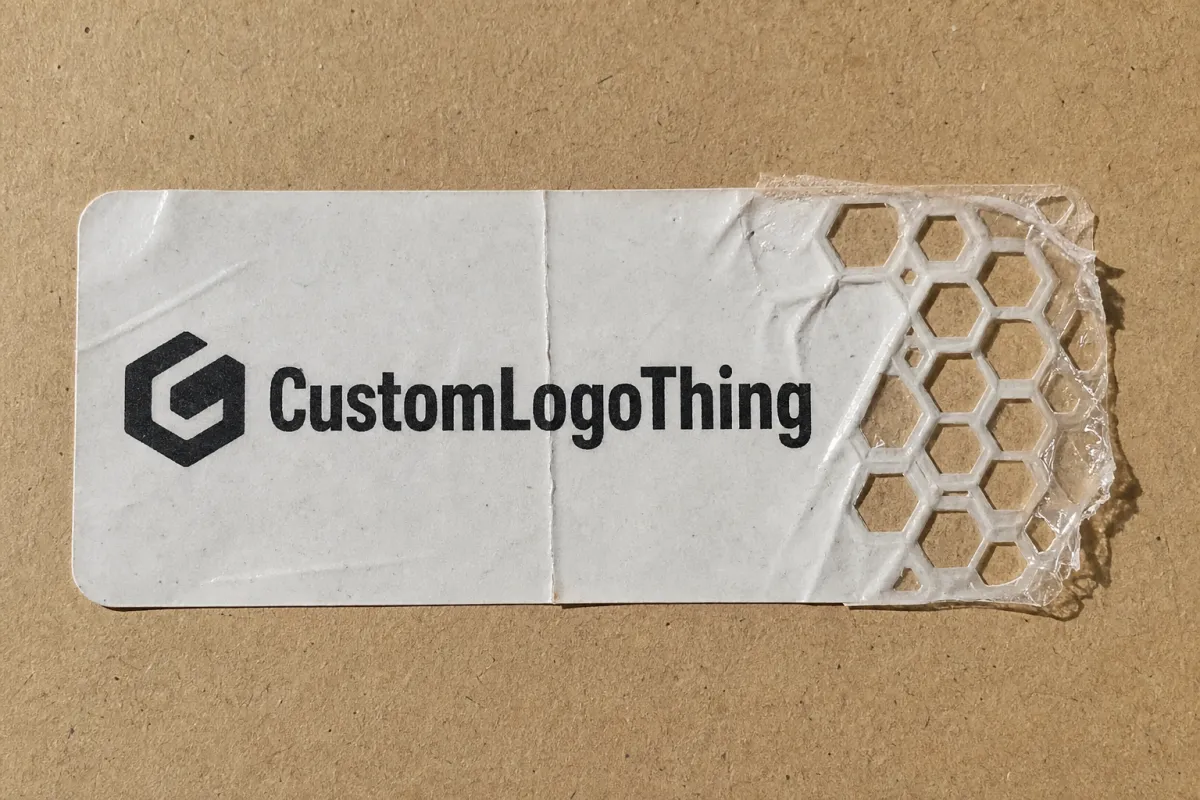
Picture a shopper reaching for a bottle and noticing a lifted edge on the seal. The product may still be safe. It may even be fully intact. The story has already changed. Once a package looks compromised, the buyer stops thinking first about flavor, dosage, fragrance, or performance. The question becomes much simpler: has this been opened before?
That is the real value of branded tamper evident labels. They provide visible evidence that a package was closed when it left your control and should not be opened without leaving a trace. At the same time, they carry the brand cues that keep the pack consistent with the rest of the system. Logo placement, color, typography, and warning language can all reinforce the message without making the label feel like a warning placard.
The uncomfortable truth is that these labels often protect reputation more than product. A toothpaste tube with a damaged seal can trigger a return. A supplement bottle with a broken band can trigger a complaint. A jar or carton that appears resealed can trigger skepticism on marketplace listings. That cost usually exceeds the cost of reprinting labels by a wide margin. In many categories, a single visible failure can undo the confidence built by an entire campaign.
Tamper features work best when they feel designed, not improvised. There is a real difference between a label that simply says "void if removed" and one built around the package shape, the application line, and the expected handling conditions. If the construction is wrong, the label may curl, fracture too early, or leave too much residue. If the design is right, it becomes part of the product's trust architecture instead of an afterthought stuck on top.
A tamper feature that peels off cleanly and goes back on without evidence is not security. It is decoration with a warning.
That is why branded tamper evident labels belong in the same conversation as shrink bands, carton seals, serialized stickers, and breakable closures. The correct choice depends on the package, the route it travels, and what failure looks like to the customer. A bottle shipped across climate zones has different needs than a carton stored in a dry warehouse. A glossy retail pack behaves differently from a refrigerated tray or a low surface energy plastic jar.
For packaging buyers, the practical question is not whether the label looks secure in a mockup. It is whether the label still looks secure after handling, shipping, temperature change, and an actual removal attempt. That is the point where branding stops being visual only and becomes a trust signal with measurable behavior. A label that survives those stresses does more than protect a closure. It helps protect the story the brand tells at first contact.
There is also a regulatory boundary worth keeping in view. Tamper evidence is not the same thing as child resistance, traceability, or a compliance seal required by a specific industry. If a product falls under a regulated category, the label strategy should be reviewed alongside the applicable rules, validation requirements, and internal quality controls. That extra step is not bureaucracy for its own sake; it is how teams avoid designing a label that looks right but does not satisfy the job.
How branded tamper evident labels work
At a basic level, tamper evident constructions are built to reveal interference. Some do that by tearing apart. Some leave a message behind. Some transfer a pattern of residue. Others combine several methods so the evidence is hard to miss. The choice depends on how visible the tamper cue needs to be and how difficult the package needs to be to reuse.
One common approach uses a destructible face stock. The material fractures when someone tries to remove it, so the label cannot come off in one clean piece. Another approach uses a void pattern. When the label is lifted, a hidden message such as "OPENED" or "VOID" stays on the package face, or the adhesive layer reveals it. A residue-transfer label leaves a disturbed area behind, which is often enough to show that the seal was handled even if part of the artwork remains intact.
Frangible films are another useful option. These are engineered to tear instead of stretch, which makes them appropriate for many one-time-use applications. Layered constructions can be more specific: a printed face, a tamper-revealing layer, and an adhesive system tuned to the substrate. Some are built to make removal noisy and messy. Others are designed to look clean until the first pull, then show evidence immediately. That difference matters in distribution, where a few seconds can decide whether a tamper event is obvious or disputed.
The first removal tells the real story. Will the label tear into fragments? Will a hidden pattern transfer to the box or bottle? Will the adhesive stay on the package, making relabeling obvious? Will the face stock delaminate? Each outcome communicates a different level of security. A simple opening indicator tells the buyer that the package was touched. A stronger system can make reuse impractical.
That distinction matters because not every product needs the same resistance. A vitamin bottle sold in a pharmacy may need a stronger anti-reuse feature than a temporary shipping seal on an inner carton. A cosmetics jar with a gloss finish may need a different adhesive system than a textured paperboard carton. The more repeatable the tamper response, the more useful the label becomes in a real production and distribution chain. Predictability is the point. A label that behaves differently from one batch to the next creates more problems than it solves.
Packaging surface is the hidden variable. Adhesion changes with curvature, coating, humidity, texture, and migration from inks or oils. A label that works on flat coated board can fail on molded plastic with a narrow neck. A construction that performs on room-temperature stock may behave differently on a chilled or condensation-prone container. That is why the best security labels are chosen by substrate and use case, not by appearance alone.
For reference, packaging teams often borrow test habits from broader industry practice. Peel performance can be evaluated with methods such as ASTM D3330, while shipping and vibration expectations are often checked against ISTA protocols. More general packaging guidance is available through ISTA and the broader industry resources at packaging.org. Those references do not replace supplier testing, but they help teams ask sharper questions before an order is placed.
Key factors that shape performance and design
Performance starts with the substrate. Glass, PET, HDPE, coated paperboard, and flexible pouches all behave differently. Glass is often straightforward if the surface is clean and dry. PET can perform well too, though curvature and handling matter. HDPE and PP are more challenging because they have lower surface energy, which can make standard adhesives behave inconsistently. Paperboard is often easier, but coatings and moisture change the picture quickly. Flexible packaging adds another layer of complexity because it moves during filling, shipping, and opening.
Environmental stress is usually where the weakest part of the system shows up. Cold storage can stiffen films and reduce initial tack. Moisture can soften carton fibers or create condensation on plastic. Heat can increase adhesive flow and affect edge lift. Friction from conveyors, cases, or retail handling can wear down print detail. Shipping vibration can push a marginal label to fail earlier than expected. In other words, the pack does not live in a lab, and neither should the spec.
Visual design is not a cosmetic afterthought. It helps the tamper cue get noticed. A good label uses contrast deliberately, with enough white space for the warning to be read at a glance. Logo placement should not bury the security message. Variable data, serial numbers, or QR codes can add traceability when needed. Short warning language usually works better than a long paragraph because the tamper cue needs to be understood quickly during stocking, fulfillment, or receiving.
There is also a branding judgment to make. A label that is too loud can make the product feel suspicious. A label that is too subtle can fail to communicate any security value at all. The right tone depends on category. Supplements, cosmetics, and electronics often benefit from a crisp, controlled design. Food packaging may need a cleaner, friendlier look. For regulated or semi-regulated products, the label should support the brand without pretending to be a compliance document unless it truly is one.
Sustainability adds another layer. Some teams want FSC-certified paper facestocks for carton programs or prefer removable systems that reduce waste during testing and staging. If paper sourcing matters, FSC guidance is available at fsc.org. That does not automatically make a tamper label the right choice, but it does help when procurement, brand, and environmental goals all need to fit in the same spec.
For teams managing multiple SKUs, the practical challenge is consistency. A label that performs on one bottle size may not behave the same way on another if the neck diameter, panel curvature, or coating changes. That is why a family of products often needs a family of label specs rather than a single universal construction. The goal is not uniformity for its own sake. The goal is repeatable evidence.
Here is the short version of what usually shapes performance most:
- Substrate compatibility - glass, PET, HDPE, cartons, and pouches need different adhesive behavior.
- Surface condition - coatings, dust, oils, condensation, and texture can change adhesion dramatically.
- Environmental exposure - cold chain, humidity, heat, and abrasion all affect the result.
- Security level - opening indication, residue transfer, or anti-reuse behavior each serve a different purpose.
- Brand presentation - color, logo, and warning language should feel deliberate, not bolted on.
Process, timeline, and production steps
The best results usually start with package specs, not artwork. Before anyone starts picking colors or writing warning copy, the team should know the exact container material, closure style, application method, and expected environment. A 28 mm round seal on a glass bottle is a different job from a 60 mm strip seal on a folding carton flap. That may sound obvious, but it is where a lot of label projects drift off course.
A clean production workflow often looks like this: brief, material selection, artwork, proof, sample, test, and only then full production. If the construction is custom, the supplier may need to recommend the face stock, adhesive, liner, and release characteristics. If the label is serialized or contains variable data, artwork setup becomes more involved. If the shape is unusual, die cutting can affect both cost and lead time. None of this is unusual. It is the part buyers do not always see.
Sampling deserves more attention than it usually gets. A proof can show color and copy, but it cannot fully predict peel behavior, edge lift, or residue transfer. A sample run should be applied to the actual package, not a stand-in. Then it should be observed after temperature exposure, handling, and a removal attempt. The question is not whether it sticks once. The question is whether it still behaves correctly after 24 hours, after a chill cycle, and after someone tries to peel it deliberately.
Timelines vary, but some patterns show up again and again. Stock-based constructions can move quickly once artwork is approved. Fully custom security labels, especially those with special face stocks or security print features, usually take longer because more parts of the spec have to line up. Sample approval can add days. Queue time can add more. Shipping distance matters too. If the artwork is not final, the schedule usually stretches more than most teams expect.
As a rough planning guide, a straightforward custom label job might take 10-15 business days after proof approval, while a more complex security construction can run longer if materials need to be sourced or sampled. Rushed projects can happen, but they tend to work only when the dimensions, print files, and usage conditions are already locked. If a team is still debating container size or label placement, the schedule usually pays the price. The production floor does not guess well. It responds best to specific instructions.
One helpful internal move is to look at past project patterns before issuing the next request. If you need a quick view of how different formats behave, scan the examples in Case Studies. That can save time on the front end and help a supplier propose a construction that fits the package instead of forcing the package to fit the label.
A practical production checklist looks like this:
- Confirm container material, finish, and geometry.
- Define the security behavior needed: open indication, residue, or anti-reuse.
- Choose the label size and placement zone.
- Approve artwork with room for the tamper message to stay readable.
- Test a small sample on the real package.
- Document the application method so the production line repeats it consistently.
Cost, pricing, MOQ, and quote drivers
Price is usually shaped by five things: material, security construction, print complexity, quantity, and finishing. A simple branded label on a standard face stock can be relatively economical. A destructible or layered security construction, especially one with custom branding, usually costs more because the materials and conversion steps are more specialized. Special shapes, metallic effects, serialization, and extra print colors also push the number upward.
MOQ matters because setup costs are spread across fewer pieces. That is why a 1,000-piece order often looks more expensive per label than a 10,000-piece run. The press still has to be set up. The die still has to be prepared. The proof still has to be approved. If the production task is almost the same but the quantity is much smaller, the unit cost climbs. That is normal, not a sign that the supplier is padding the quote. It is simply how fixed costs behave when the run is short.
For planning purposes, here is a directional comparison. These are broad ranges, not a promise of pricing, because actual figures depend on size, coverage, stock choice, and application requirements.
| Construction | Best Fit | Typical Unit Range at 5,000 Pieces | Strengths | Tradeoffs |
|---|---|---|---|---|
| Stock void label | Simple bottle, carton, or mailer seals | $0.06-$0.14 | Fast to produce, clear tamper message, economical | Less tailored to unusual surfaces or harsh handling |
| Destructible face stock | One-time-use security on common packaging | $0.08-$0.18 | Hard to remove cleanly, obvious evidence of opening | Can be brittle and sensitive to application conditions |
| Layered custom security label | Branded consumer goods, supplements, cosmetics | $0.12-$0.28 | Brand control, custom message, stronger visual presence | Longer lead time, more variables to test |
| Serialized or higher-security construction | Traceable or higher-risk products | $0.18-$0.45 | Traceability, stronger deterrence, custom evidence cues | Higher setup cost, often requires tighter spec control |
Those ranges can move in either direction depending on the exact spec. A small label with simple print can land lower. A large, full-bleed label with variable data and specialty adhesive can land higher. The important point is that buyers should compare like with like. If one quote uses a stock construction and another includes a fully custom tamper layer, the unit price may look close while the performance is not even in the same category.
To get a useful quote, send the supplier more than just quantity and artwork. The best request includes dimensions, substrate, surface finish, application method, environmental conditions, and whether the label must leave residue, reveal a void, or prevent reuse. If the package is shipped cold or stored in humid conditions, say so. If operators apply the label by hand, say that too. A label that works on an automated line is not automatically the right answer for manual application. The more honest the brief, the fewer surprises later.
Here is a simple quote brief that usually helps:
- Package type - bottle, jar, carton, pouch, clamshell, or mailer.
- Material - glass, PET, HDPE, paperboard, coated board, or film.
- Label size and shape - include final trim dimensions if known.
- Security behavior - void message, destructible, residue, or serialized.
- Run quantity - include expected forecast if the order may repeat.
- Timeline - let the supplier know whether the project is standard or urgent.
For teams that need the budget conversation to stay grounded, the right question is not simply "What is the cheapest label?" It is "What is the lowest-cost label that still behaves correctly on this package after shipping, handling, and a real opening attempt?" That framing usually leads to better decisions and fewer surprises.
Common mistakes when ordering tamper evident labels
The first mistake is choosing a label for looks alone. A design can look polished on screen and still fail when it meets a curved jar, a humid warehouse, or a refrigerated shelf. Security labels are one of those packaging components where the real test is not the mockup. It is the package in motion, under the same stress it will face after purchase.
The second mistake is skipping real-world testing. A label that behaves on a flat sample board may struggle on textured carton, molded plastic, or a high-speed application line. If the surface is oily, dusty, or chilled, failure can show up sooner than expected. Teams often discover this after the full run, which is the most expensive time to learn it.
Another common issue is overdesigning the artwork. Too many colors, too much copy, or tiny legal text can bury the message that matters most. The security cue has to be readable at a glance. If the warning hides under decoration, the label loses some of its value. Brand polish matters, but only if the tamper signal stays clear enough to do its job.
Application mistakes create another layer of trouble. Many teams underestimate placement accuracy, line speed, and operator training. Even a strong label can perform inconsistently if it is applied off-center, with poor pressure, or over a surface that has not been cleaned properly. Manual application is especially vulnerable here, because one operator may press firmly while another barely does. The result is uneven adhesion and uneven security.
There is also a category mistake that shows up often: using one security construction across very different packages. A label that works on a dry folding carton may fail on a lotion bottle. A tamper label that performs on room-temperature paperboard may not hold on a chilled container straight out of a cold room. A construction that looks expensive is not always the right fit. A construction that looks simple is not always weak. Testing settles that argument faster than opinion does.
One more issue deserves attention. Teams sometimes underestimate how tamper evidence interacts with the rest of the packaging system. If the label overlaps a closure, it may need to tear in a predictable way. If it crosses a seam, it may need to release residue in the right place. If it wraps around a neck, it may need enough flexibility to survive the radius. That is not a small detail. It is the difference between a security message that feels credible and one that feels accidental.
A few mistakes are easy to avoid if they are named early:
- Picking a label without testing it on the actual package.
- Ignoring cold storage, condensation, or heat exposure.
- Putting the security message in tiny text no one reads.
- Assuming manual application will match lab results.
- Using one construction for containers with very different surfaces.
Expert tips and next steps for packaging teams
If the project matters, run a pilot. Not a theoretical one. A real pilot, on the real package, with the real application method. Ask for samples, apply them to the production substrate, and then observe them after heat, cold, humidity, and abrasion. If the product ships through a distribution center, expose the sample to handling that resembles that trip. If the packaging is sold in cold chain or refrigerated retail, test it there too.
It also helps to prepare a short spec sheet before talking to suppliers. That sheet should define the container, label dimensions, expected environment, and security behavior. When every supplier gets the same spec, the quotes become comparable. Without that, one supplier may quote a stock label, another may quote a custom layered construction, and the comparison becomes meaningless. Clear input creates cleaner pricing and fewer revisions.
Brand voice matters more than many teams expect. Security language does not have to sound aggressive to be effective. It can be calm, precise, and direct. "Seal will void if opened" reads differently from "Do not use if broken," and both can be valid depending on the category. The goal is to make the package feel intentional. That applies to cosmetic jars, refill pouches, supplement bottles, and consumer electronics alike.
If a brand sells through multiple channels, it can help to think in terms of risk rather than format. A retail shelf, an e-commerce parcel, and a clinic supply cabinet do not create the same tamper exposure. A tamper label for a display carton may need stronger visual signaling, while a label for a shipping inner pack may need stronger structural evidence. That is one reason experienced buyers ask suppliers to talk through use case before asking for price.
For readers who want to see how different packaging programs are handled in practice, the examples in Case Studies are useful for narrowing the field. They can help you decide whether your job needs a basic void label, a destructible construction, or a more tailored custom build with traceability features.
A sensible next-step sequence usually looks like this:
- Shortlist two constructions that could fit the package.
- Request samples and test them on the actual surface.
- Check peel response after temperature and handling exposure.
- Approve artwork only after the tamper behavior is confirmed.
- Scale the order once the label performs consistently in the real workflow.
There is a commercial upside to being disciplined here. Better testing reduces rework. Better specs reduce surprises. Better brand integration keeps the security feature from looking like an afterthought. That is why branded tamper evident labels deserve more than a checkbox on a purchase order. They deserve the same discipline a team would give to closure fit, carton strength, or transit testing.
For custom logo packaging teams, the practical message is simple: the best result comes from matching the security design to the container, the supply chain, and the brand presentation at the same time. Done well, branded tamper evident labels protect trust, improve shelf confidence, and reduce the chance that a package tells the wrong story before anyone opens it. Done poorly, they create the opposite effect: a package that looks busy, but not safe.
FAQ
What makes branded tamper evident labels different from standard security labels?
They combine visible tamper protection with brand assets such as logo, color, typography, and messaging. They are usually designed around a specific package surface and application method instead of using a one-size-fits-all stock label. The result is a label that helps customers recognize the brand while also signaling that the package should not be opened or resealed.
How do I choose the right adhesive for branded tamper evident labels?
Start with the package material and finish, since glass, plastic, coated paperboard, and pouches each behave differently. Then test for the real conditions the package will face, including refrigeration, humidity, handling, and shipping vibration. If the label must remove cleanly or leave residue, specify that upfront because adhesive behavior changes the tamper result.
What affects the cost of branded tamper evident labels the most?
Material choice, security construction, and order quantity usually have the biggest impact on unit price. Additional colors, special finishes, serial numbering, and custom shapes can raise setup and production costs. Smaller runs often cost more per label because setup expenses are spread across fewer pieces.
How long does production usually take after artwork approval?
Timelines depend on whether the label is stock-based, fully custom, or requires special security materials. Sampling, proof approval, and queue time can add days before the full run begins. The fastest path is to lock dimensions, artwork, quantity, and substrate details before requesting the quote.
Can branded tamper evident labels work on curved or cold surfaces?
Yes, but only if the material and adhesive are chosen for that exact surface and temperature range. Curved bottles, chilled packaging, and moisture-prone surfaces usually need testing before production. A successful label on paperboard may fail on plastic or refrigerated packaging, so real-world trials are essential.


