Buyer Fit Snapshot
| Best fit | Branded Tamper Seals for Mailers projects where brand print, material claims, artwork control, MOQ, and repeat-order consistency need to be specified before quoting. |
|---|---|
| Quote inputs | Share finished size, material target, print colors, finish, packing count, annual reorder estimate, ship-to region, and any compliance wording. |
| Proofing check | Approve dieline scale, logo placement, barcode or warning zones, color tolerance, closure strength, and carton packing before bulk production. |
| Main risk | Vague material claims, crowded artwork, missing packing details, or unclear freight terms can make a low unit price expensive after revisions. |
Fast answer: Branded Tamper Seals for Mailers: Design, Cost, Timing should be specified like a repeatable production item. The safest quote records material, print method, finish, artwork proof, packing count, and reorder notes in one written spec.
Production checks before approval
Compare the actual filled-product size with the drawing, then confirm tolerance on folds, seals, hang holes, label areas, and retail display edges. Reserve space for logos, QR codes, warning copy, and material claims before decorative graphics fill the panel.
Quote comparison points
Review material grade, print process, finish, sampling route, tooling charges, carton quantity, and freight assumptions side by side. A quote is only useful when the supplier can repeat the same color, closure quality, and packing count on the next order.
A mailer can leave the warehouse looking sealed, travel a thousand miles, and still arrive with its closure compromised. That is the part customers notice first. They may not know exactly how the package was handled, but they know what a lifted flap looks like. That is where Branded Tamper Seals for mailers earn their keep: they show visible evidence of interference and carry your logo, warning, or mark in the exact spot where suspicion tends to land. The effect is simple. People trust what looks intentional.
From the buyer's side, the strongest seal is rarely the fanciest one. It is the one that closes cleanly, stays put under normal transit abuse, and makes tampering obvious without slowing pack-out to a crawl. I have seen beautiful seals fail because someone chose a finish that looked great under studio lighting but lifted on a slick poly surface after a cold truck ride. That kind of miss is not rare. It is just expensive.
For teams comparing Custom Packaging Products, the seal usually sits alongside the mailer, inserts, and outer branding as part of one system, not a loose afterthought. If your operation uses Custom Poly Mailers, the seal needs to behave on that surface, not on a pristine sample sheet that has never seen dust, humidity, or conveyor friction. Brands that want a few real-world references can also scan the Case Studies page to see how different teams solved the same problem with different budgets and timelines.
Branded tamper seals for mailers: what they are and why they stand out
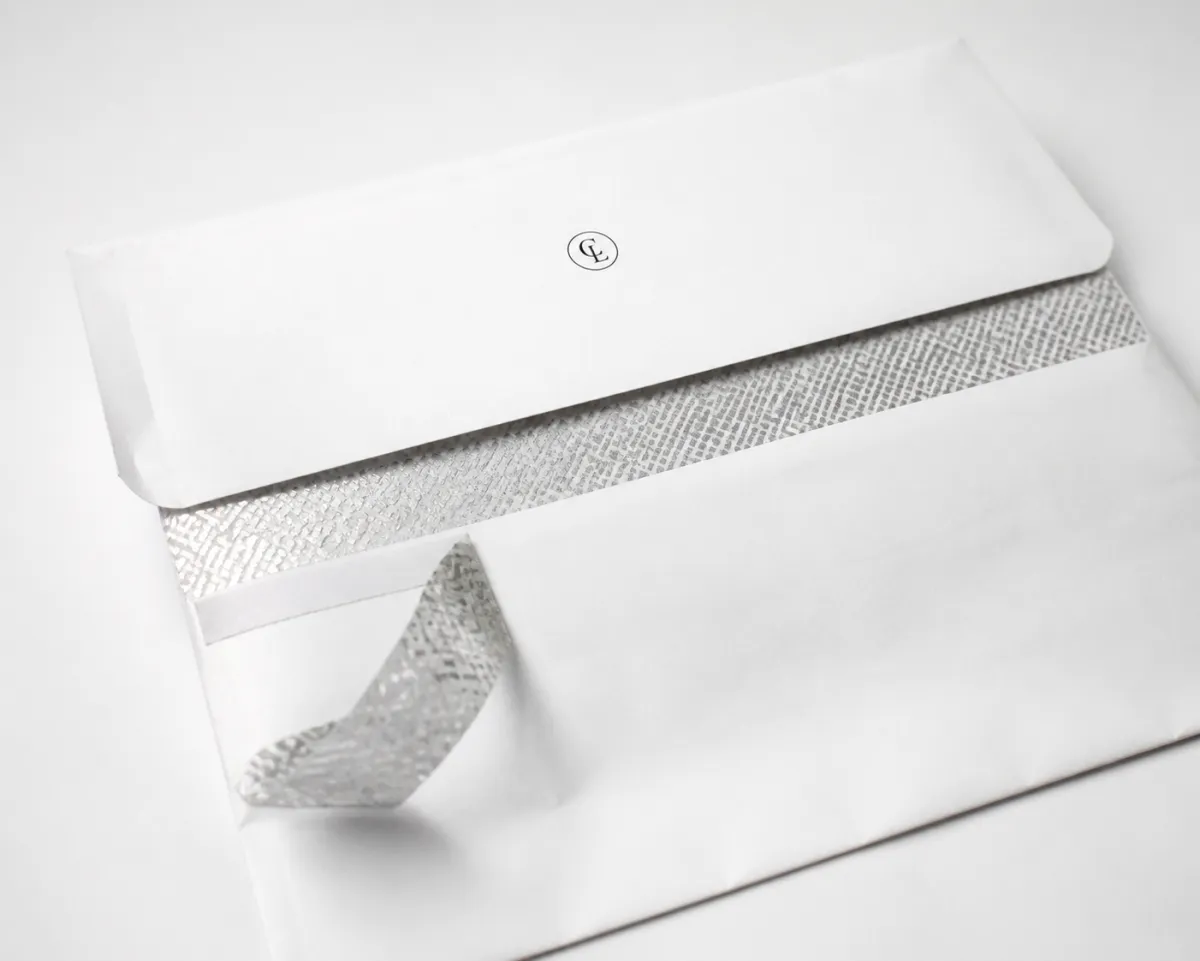
Branded tamper seals for mailers are pressure-sensitive labels, seals, or closure strips designed to show visible evidence when someone tries to lift, tear, or reapply them. The brand element is not decoration. It is part of the signal. A logo, color block, short warning line, or repeat pattern makes the seal feel deliberate instead of looking like a generic office label slapped across a flap at the last minute.
They show up on poly mailers, paper mailers, bubble mailers, return packaging, subscription kits, and outbound shipments where the closure needs to feel intentional. Cosmetics brands use them. Apparel brands use them. Parts suppliers use them. Subscription sellers use them too. The category changes, but the logic stays the same: the package should look like somebody cared about it from the first fold to the final seal.
The clearest way to think about branded tamper seals for mailers is to separate tamper evidence from tamper resistance. A seal can discourage casual opening. A better seal can slow opportunistic interference. The real job, though, is to make reopening obvious. That distinction matters because a buyer expecting the seal to work like a lock may end up disappointed. A tamper seal is a visibility tool, not a vault door.
Branding changes the customer experience in a measurable way. A plain seal says, "We closed this." A well-designed seal says, "We closed this carefully." Small difference, yes. But small differences stack. They affect unboxing, support conversations, and how quickly a customer decides whether the order feels safe. A clean seal can lower anxiety before the product even leaves the mailer.
Branded tamper seals for mailers also simplify operations in ways that are easy to overlook until volume kicks up. Returns teams can spot opened parcels faster. Packing staff get a repeatable closure point. Customer service reps have clearer evidence when a delivery issue turns into a claim. None of that sounds glamorous, but it cuts confusion, and confusion is where labor costs like to hide.
Strong design helps the seal work harder. One logo. One clear message. Strong contrast. Enough empty space for the eye to rest. That usually performs better than stuffing the label with tiny text, multiple taglines, or decorative clutter that gets lost once the seal bends around a flap or crease. A label can be branded and still be plainspoken. Honestly, that is often the better move.
How branded tamper seals for mailers work
The mechanism is straightforward. The seal crosses the opening path of the mailer. Any attempt to open the package disrupts the adhesive bond, the face stock, or both. With branded tamper seals for mailers, the visible sign of that disruption is the point of the design. If someone peels it away and tries to press it back down, the damage should remain obvious. A tamper seal should never look fresh after manipulation.
Construction options vary more than most buyers expect. Some seals use permanent pressure-sensitive adhesive for a strong bond on compatible surfaces. Others rely on destructible face stocks that split or fragment on removal. Void patterns leave a message behind. Residue-bearing adhesives leave evidence on the mailer surface. Each format has tradeoffs. Residue can be very effective, but it is not always the right choice if the brand wants a clean opening experience after the parcel is opened.
Placement matters just as much as material. The seal must cross the actual opening route, not just sit near it as decoration. I have seen mailers where the label was centered beautifully on the front panel while the real opening point sat at the top flap. In that setup, the seal looked secure and did almost nothing. If it does not cross the seam or fold line that matters, it is branding only.
The customer-facing experience matters too. A well-built branded tamper seals for mailers solution should break in a way that makes sense at a glance. The customer sees the seal, opens it, and immediately understands that the package had not been tampered with before arrival. That visual logic supports trust, cleaner returns handling, and fewer disputes. One small strip can reduce a lot of confusion.
Testing is not optional. A seal that behaves well on a smooth paper mailer may act differently on a slick poly surface, a recycled film, or a textured paper substrate. Adhesion can shift with dust, humidity, temperature, and application pressure. If you are evaluating branded tamper seals for mailers, test them on the exact mailer you plan to ship. A sample from a different material family is not enough.
For distribution testing, the resources at ISTA are useful. Their testing language pushes brands to look past appearance and ask a better question: what happens after the pack gets handled, stacked, dropped, and routed through a normal transit network?
Cost, pricing, and MOQ for branded tamper seals for mailers
Pricing for branded tamper seals for mailers usually depends on size, shape, substrate, adhesive type, print coverage, finishing complexity, and order quantity. A simple one-color seal on standard paper stock costs less than a custom die-cut label with several inks, specialty finishes, or a destructible film build. Buyers sometimes compare quotes without separating the part itself from the setup work behind it, and that can distort the real economics. A low unit price can hide a very real prep charge.
MOQ changes the math because the print method changes the setup burden. Digital production can support smaller pilot runs, often in the 250-1,000 piece range depending on the supplier's workflow. Conventional print methods usually reward larger runs where the unit price falls as volume rises. For higher quantities, a straightforward seal may land around $0.04-$0.09 each, while a more customized format can sit closer to $0.10-$0.22 each at common production levels. Small pilot runs often cost more per unit, which is fine if the goal is validation instead of scale.
The real budget check is landed cost, not just the quote line. Setup charges, proofing, sample shipments, freight, storage, and application labor all belong in the calculation. A seal that looks inexpensive on paper can become a poor value if it adds five seconds to every pack-out or creates rework because the adhesive is finicky. That is why the print bill and the operating cost need to be viewed together. A cheap seal that causes a line slowdown is not cheap for long.
| Option | Typical MOQ | Indicative Unit Price | Best Fit | Notes |
|---|---|---|---|---|
| Digital paper seal | 250-1,000 | $0.12-$0.35 | Pilot runs, seasonal tests, multiple SKUs | Lower setup burden, good for fast design changes |
| Conventional printed paper seal | 3,000-10,000+ | $0.04-$0.09 | Higher-volume ecommerce and subscription programs | Better economics at scale, usually needs firmer forecast |
| Destructible film seal | 1,000-5,000 | $0.10-$0.22 | Higher tamper visibility and premium presentation | Useful where removal resistance matters more |
| Void-pattern security label | 2,500-10,000+ | $0.06-$0.16 | Applications needing obvious opening evidence | Check whether residue is acceptable on the mailer surface |
The table is only the starting point. The final quote changes once artwork coverage and finishing enter the picture. A simple seal with a logo and tamper message is a different job from a design with metallic accents, spot varnish, or clear-window construction. If a supplier gives you a low unit price, ask what that number excludes. Prepress, revisions, slitting, packaging format, and shipping can move the total faster than many buyers expect.
A smart budget move is a pilot run across one or two mailer SKUs. That lets you confirm alignment, adhesive behavior, and application speed before larger commitments. If you are sourcing broader packaging support, it helps to review the full program through Custom Packaging Products so the seal budget is not treated as a detached line item.
For paper-based constructions, FSC-certified materials can matter if your sustainability story is part of the brand pitch. The certification details on FSC are useful if you want chain-of-custody clarity for printed paper stocks.
Production steps, timeline, and lead time for branded tamper seals for mailers
The production path for branded tamper seals for mailers usually starts with a brief, moves into size and dieline setup, then artwork proofing, sample approval, print production, finishing, quality review, and shipment. Each step seems straightforward in isolation. Put them together, and delays can stack quickly if the design keeps changing or the seal has to fit an unusual mailer shape. Clean input creates a cleaner timeline.
Artwork is often the first source of delay. Brand colors need matching. Logo files may need cleanup. Tiny text often gets flagged during proofing because it will not hold up once the seal is folded, curved, or applied at speed. A specialty material adds another layer. A standard paper stock may move quickly. A custom adhesive build or destructible film may need more patience.
Lead time also depends on print process. Digital runs are usually faster for short quantities and frequent design changes. Conventional print can be more efficient at scale, though setup takes longer. Domestic production may reduce transit time and simplify communication. Offshore production can make sense for large planned volumes if the calendar allows it. Repeat orders tend to go smoother because the artwork, die, and spec are already approved.
Testing should be part of the schedule, not a nice extra. I would not approve branded tamper seals for mailers without checking them on the actual mailer material, in the actual packing environment, and under the shipping conditions the package will face. Temperature changes, humidity, dust, and even the pressure used by a packer can affect how the seal lands and how it breaks later. That is the gap between a clean mockup and a real production run.
A practical timeline for a straightforward order is often 7-15 business days after proof approval, though more complex jobs can run longer. Color matching, specialty finishes, and custom shapes all stretch the schedule. The best way to keep the calendar under control is to keep approved artwork on file, define a reorder point before inventory gets low, and confirm whether a faster repeat run is possible for future orders.
A seal that looks strong on a screen but peels in transit creates the wrong kind of confidence, because it promises protection the package never actually earned.
That is why I separate "design approved" from "production approved." The first means the artwork looks right. The second means the seal has survived testing, handling, and live pack-out conditions. Those are different checkpoints, and skipping one is how teams end up reworking a job that should have been settled earlier. It sounds fussy, but it saves money. Usually a lot of it.
Choosing materials, adhesives, and finishes that fit the mailer
Material choice is where many branded tamper seals for mailers decisions are won or lost. A glossy poly mailer behaves differently from a matte paper mailer, and both behave differently from a recycled film with a slightly uneven surface. The seal has to bond to the substrate you actually ship, not the one that happened to look convenient in a sample pack. Surface testing is the safest step you can take.
Paper facestocks are often a good fit when the brand wants a softer, more natural look and the mailer surface has enough tooth for adhesion. Film facestocks can improve durability and print crispness, especially if the package will rub against other parcels or travel through a rough sorting network. Destructible materials are useful when the goal is obvious breakage rather than a clean peel. Clear constructions can be effective too, but only if the print stays readable against the color beneath it.
Adhesive selection is just as practical. Permanent adhesive is usually the baseline for closure confidence, yet some shipments benefit from a cold-weather version, especially if they move through winter distribution lanes or refrigerated storage. Dust, condensation, and humidity all affect performance, so the adhesive should be matched to the environment instead of chosen by habit. If your team ships from a warm pack room into a cold dock, that temperature swing matters.
Finishes affect both perception and usability. Matte can feel understated and premium. Gloss helps color pop and sharpens graphics. Soft-touch adds a tactile branded feel, though it can raise cost. Metallic or specialty inks help a seal stand out on a shelf or in a mailer stack. The strongest-looking finish is not always the best-performing one. The best seal reads clearly, stays put, and breaks in a way that makes tampering obvious.
Sustainability also belongs in the decision. If your packaging system is aiming for better material alignment, ask whether the seal stock fits the mailer's paper or film stream, and whether the adhesive or facestock complicates recycling goals. The EPA has useful guidance around materials and waste reduction on epa.gov, and that broader lens matters when a component touches thousands or millions of parcels.
Balance appearance with function. A label loaded with effects but weak in adhesion is a bad trade. A simpler seal with strong bond, readable branding, and obvious tamper evidence often performs better across real production volumes. That is especially true for branded tamper seals for mailers applied by hand at high speed.
Common mistakes when ordering branded tamper seals for mailers
The first mistake is making the seal too small, too decorative, or too delicate. If the tamper message disappears behind a border or the logo takes over every inch of the layout, the security cue gets lost. Branded tamper seals for mailers need to be readable from a modest distance, and they need enough surface area to bridge the seam correctly. A pretty seal that fails to communicate its job is a packaging miss.
Poor placement is another common error. If the seal does not cross the real opening point, it can look secure while doing very little. I have seen mailers where the seal sat too far from the flap edge, or on a section that flexed so much during handling that the adhesive never held consistently. That creates false confidence, and false confidence is expensive.
Skipping substrate testing is a classic problem. A seal can perform well on one paper mailer and fail on a slick poly mailer, or it may hold in warm conditions but lift after a cold truck ride. The only reliable way to know is to test on the exact mailer you plan to use. If the package has coatings, recycled content, or a textured surface, the test matters even more. No one wants a seal that looks fine in the proof and falls apart in the warehouse.
Artwork complexity causes trouble too. Too many colors, tiny legal text, or a logo built on subtle detail can turn muddy once the label is folded, curved, or cut to size. For branded tamper seals for mailers, clear graphic hierarchy usually beats a busy layout. If the average packer or customer cannot understand the seal in one glance, the design needs to be simplified.
The last mistake is ignoring application speed. A seal can be technically excellent and still be a bad fit if it slows the line. Hand placement must stay consistent. If the label is awkward to peel, hard to align, or too narrow for comfortable application, production suffers. On higher-volume programs, that can become a bottleneck instead of a closure solution.
Here is the rule I use: if a seal complicates packing, it needs to earn that complexity with a clear security or branding benefit. If it does not, the design should be tightened until it works at line speed.
Expert tips and next steps for branded tamper seals for mailers
Start with a packaging audit. Measure the mailer, identify the opening path, and mark exactly where the seal must land. That basic step saves a surprising amount of time. Branded tamper seals for mailers work best when the dieline is built around the real package, not around a generic label size that happened to fit on screen.
Next, define what the seal needs to communicate. Is the priority tamper evidence, premium branding, simple closure confidence, or a mix of the three? The answer should shape the material, print style, and placement. A straightforward logo seal is not always the best answer. In some programs, a bold warning line, stronger contrast, or a more obvious break pattern is the smarter move, especially for higher-value contents.
Request samples or short-run proofs and test them on live packs. Open them. Reseal them. Shake them. Run them through the kind of handling your customer will actually see. That is the test that reveals whether the seal looks right only under controlled conditions or whether it survives normal use. If a supplier has worked on similar programs, ask for proof formats and examples that match your use case instead of settling for a generic sample sheet.
Compare suppliers on total value, not just the lowest quote. A fair comparison for branded tamper seals for mailers should include adhesive performance, MOQ, turnaround, revision support, color consistency, and packaging format. A supplier that handles changes cleanly can save more than a slightly lower unit price. If you are already reviewing broader packaging partners, it is worth lining up the seal with your other Custom Packaging Products so the system feels planned rather than improvised.
My practical recommendation: keep the first version simple, approve a real dieline, validate the seal on your actual mailer, and then lock the spec before scaling. That sequence prevents a lot of rework. It also gives you a clean baseline for future reorders, which matters if your seasonality is tight or your product line grows quickly. In other words, do the boring validation first so you are not fixing a mess later. That part is kinda unglamorous, but it works.
For brands sourcing a larger mailer program, the seal and the mailer should be planned together. If the outer bag is already a core format, reviewing Custom Poly Mailers alongside the seal spec helps the adhesive and placement decisions line up with the actual package architecture. If you want more examples of how other teams handle pack-out, the Case Studies page can offer useful reference points without forcing you into someone else's exact setup.
Branded tamper seals for mailers are not a glamorous component, but they carry real responsibility. In the right setup, they close the package, support the brand, and make tampering obvious in one compact piece. The practical takeaway is simple: define the opening seam, test the seal on the actual mailer, and approve the spec only after it survives handling, transit, and real pack-out pressure. Get those three things right, and the seal becomes one of the quiet details that protects both trust and margin.
How do I choose the right size for branded tamper seals for mailers?
Choose a size that clearly bridges the opening seam and leaves enough room for the logo and tamper message to be read at arm's length. Test the seal on the actual mailer style, because the right size depends on flap width, fold shape, and the way the package opens under pressure.
Are tamper seals for mailers secure enough for higher-value shipments?
They work best as tamper evidence rather than as a standalone security system, so they pair well with tracked shipping, discreet outer packaging, or serialized labels. For higher-value products, choose a stronger adhesive, a more obvious break pattern, and a placement strategy that makes reopening hard to hide.
What materials work best for branded tamper seals for mailers?
Paper, film, and destructible stocks all have different strengths, so the best choice depends on the mailer surface, the shipping environment, and the visual style you want. Poly mailers usually need a more aggressive adhesive and careful surface testing, while paper mailers may give you more flexibility with texture and print finish.
How long does production usually take for branded tamper seals for mailers?
Lead time depends on artwork readiness, material availability, print method, and finishing requirements, so the fastest path is usually a clean file and an approved proof. A pilot order is often the best way to confirm timing, because it reveals issues with artwork, adhesion, or packing workflow before a larger run.
Can I order a small run of branded tamper seals for mailers before scaling up?
Yes, and that is often the smartest way to validate color, placement, and adhesive performance before committing to a larger MOQ. A smaller run is especially useful when you have multiple mailer sizes, seasonal packaging changes, or a new brand design that still needs real-world testing.