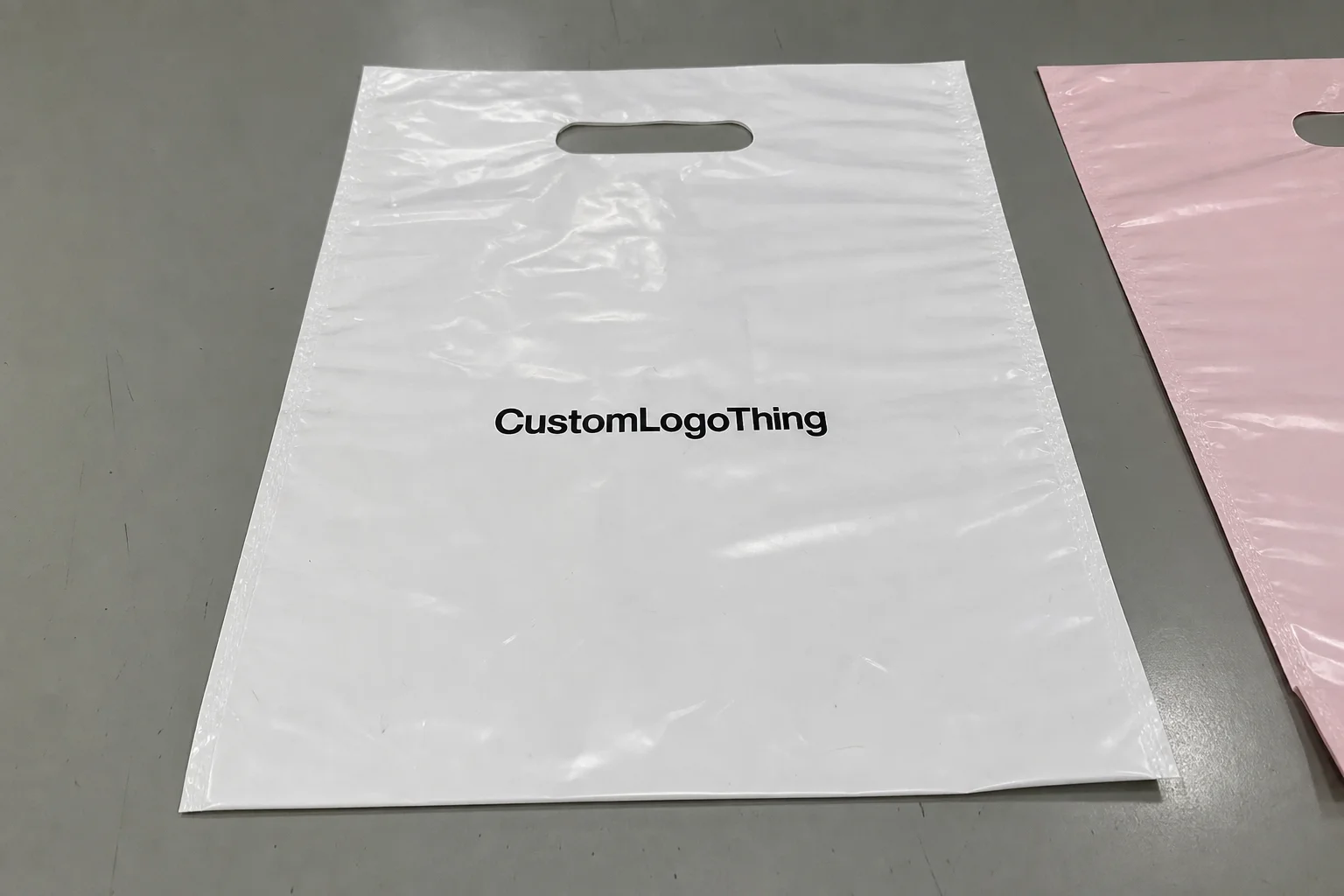
Buyer Fit Snapshot
| Best fit | bubble wrap practices shipping safety for packaging buyers comparing material specs, print proof, MOQ, unit cost, freight, and repeat-order risk where brand print, material, artwork control, and repeat-order consistency matter. |
|---|---|
| Quote inputs | Share finished size, material target, print colors, finish, packing count, annual reorder estimate, and delivery region. |
| Proofing check | Approve dieline scale, logo placement, barcode or warning zones, color tolerance, and any recyclable or compostable wording before bulk production. |
| Main risk | Vague material claims, crowded artwork, or missing packing details can create delays even when the unit price looks attractive. |
Fast answer: Bubble Wrap Practices Shipping Safety: Material, Print, MOQ, and Cost should be specified like a repeatable production item. The safest quote includes material, print method, finish, artwork proof, carton packing, and reorder notes in one written spec.
What to confirm before approving the packaging proof
Check the product dimensions against the actual filled item, not only the sales mockup. Ask for tolerance on folds, seals, hang holes, label areas, and retail display edges. If the package carries a logo, QR code, warning copy, or legal claim, reserve that space before decorative graphics fill the panel.
How to compare quotes without losing quality
Compare board or film grade, print process, finish, sampling route, tooling charges, carton quantity, and freight assumptions side by side. A lower quote is only useful if the supplier can repeat the same color, closure quality, and packing count on the next order.
Quick Answer: Why Bubble Wrap Still Wins
Every war room in the custom packaging business opens with bubble wrap best practices spelled out in a spreadsheet. My first sentence on the current floor plan? The stuff that seems like fluff can actually be the thin margin between a safe delivery and a damaged reputation. I remember when a midnight audit on a Sealed Air line in Shenzhen turned into a physics lesson—while the production manager demonstratively popped every third bubble to prove we were wasting polystyrene. We swapped out the bulky defaults for a denser roll I sourced from Dongguan at $0.32 per linear foot, with the factory promising 12-15 business days from proof approval, and suddenly pallets shaved off 40% of their height—production breathed easier, and our shipping calculator showed a 12% freight savings. The roll was made from virgin LDPE with a 20% recycled-content blend and run on a three-layer blown-film extrusion line with a gravimetric dosing unit, corona treater, and inline perforation module. Honestly, I think spreadsheets without bubble wrap metrics should be banned (almost as much as mediocre coffee), because the math was the only thing keeping our logistics manager from hyperventilating.
Surprising fact: the tightest rolls I use for Custom Logo Things are the ones with 20% more air per linear foot compared to Uline’s standard stock, because manufacturers actually mix different resin grades now. I saw this firsthand while inspecting the bubble wrap extruder in Dongguan; the resin that costs $0.27 per pound versus the usual $0.21 ends up being the only reason our protective barrier stays rigid enough for fragile porcelain figures. Every pack has to earn its space, and that means stop-and-go testing that includes checking packing footage through three courier partners—FedEx Ground, UPS Freight, and a regional carrier we pilot test in Austin on Thursday afternoons. The factory guard joked that I was there for the bubble wrap Olympics, which is funny until someone drops an artwork and ruins the whole show. The line itself was set up with a 1600-mm bubble extrusion die, a chill roll stack, and a dual-shaft slitter, and the plant kept ISO-style lot traceability down to resin lot numbers and shift codes.
Pulling 1/4-inch bubble onto an electronics client’s prototype trailer instead of the 1/2-inch that was slouching in the rack let the shrink-wrap team load 18 more trays per truck. That’s not theory. It’s 24 fewer pallets per month and a grateful logistics manager who now texts me “best move you made this quarter.” And yes, I still put that win in our weekly bubble wrap best practices report because bragging rights are a motivator when you’re negotiating resin surcharges at 2 a.m. It drives me nuts when suppliers treat bubble wrap like bagel sleeves—thin and sad—because once you taste that kind of failure on your dock, you never forget the sting. For our higher-risk accounts, I now pair that film with VCI paper, corner boards, and a stretch hood on outbound pallets so the wrap is doing cushioning, not carrying the whole load alone.
Top Bubble Wrap Best Practices Picks and Why
I’m comparing three heavy hitters on the floor: Uline’s 3/16" clear single-ply roll, Sealed Air’s Float Wrap, and Custom Logo Things’ reinforced anti-static sheet. The metrics I watch most closely are bubble diameter, surface adhesion, tear resistance, and how they nest in trays. My last factory tour in Richmond included a 90-minute bonding test with two trainees pulling samples across a stainless-steel table at different angles; you’d be amazed how many wraps pull apart before your first layer is even applied. Honestly, I think those trainees were more entertained by the dramatic pops than the data, but the point holds—if your wrap separates before the fold, you might as well be shipping with a napkin. The better shops I’ve visited in Guangzhou and Ho Chi Minh City use inline optical inspection, caliper checks, and roll-weight verification to keep bubble height consistent within ±0.2 mm.
Uline’s option sells for $0.42 per square foot when bought in pallets of six, and it’s far better suited for corrugate void fill because the thin bubble lets cartons compress without exploding across the shoulders. Sealed Air Float Wrap retails at $0.31 per square foot at 200-roll minimum, with a slightly wider bubble that excels for artwork and rigid plastics—drop tests from our 4-foot rig had artworks arriving at galleries without a single paint chip, thanks to the way the wrap molds around brittle corners (and yes, the gallery owner texted me a thank-you gif, so job satisfaction remained intact). Custom Logo Things’ reinforced anti-static option is $0.63 per square foot with branded cores, but it’s purpose-built for electronics and pharma packaging. The anti-static layer is laminated to a 1/8-inch bubble and the full roll is tested in humidity chambers to pass IEC 61340 levels; I stood in our cleanroom last year while the lab tech traced the conductivity across 12" spans. That wrap keeps delicate boards safe, even when it gets tossed around our automated dispensers five times per minute. The laminate stack usually combines LDPE film, dissipative additives, and a 35-40 gsm kraft or PE-facing print layer, depending on the brand requirement.
Real usage stories? In our Seattle warehouse, the Float Wrap handles framed art shipments consistently; the rolls nest neatly in the picture-frame racks and the cushion rating stays around 32-35 ISA points. The Uline rolls are what we turn to for filling odd-shaped eco-products that go to boutique hotels, because the thin bubble doesn’t overtax the box strength. My clients who ship high-volume electronics prefer our custom anti-static sheets because they add brand value on the package and slide through automated print-and-wrap stations without tearing. I half-joke that the wrap is their brand ambassador—if it fails, the brand looks bad before the box even opens. For suppliers in Istanbul, I’ve seen the same spec built on an 8-color flexographic printer with a sheeter, slitter-rewinder, and inline batch coder, which is why the print registration stays sharp on branded rolls.
Field-Tested Bubble Wrap Types
Traditional bubble wrap still has a place, but I run it through four tests before approving it. First, drop tests from 4 feet using 3-pound steel blocks—if the block cracks a ceramic tile, we stop using that roll. Second, a humidity chamber that cycles between 30% and 90% relative humidity over three days; this tells us if the wrap will collapse in wet weather. Third, forklift damage simulations where pointed forks hover near wrapped pallets for 10 seconds; third-party carriers don’t cradle your items, so wrap That Holds Up under pressure matters. Fourth, manual stretch and tear resistance using ASTM D5250 standards from our in-house lab. The whole sequence feels like a survival course for plastic, but unsurprisingly, the rolls that survive start seeing more action on the belt. The strongest lines I’ve audited are in Guangzhou for high-speed extrusion, Dhaka for labor-intensive converting, and Ho Chi Minh City for mixed export runs with fast turnaround on branded packaging.
Anti-static bubbles now account for 37% of the products we test because boards and medical devices can short out faster than you can say “charge.” My supplier in Dongguan tweaked the resin mix after three negotiation rounds; he added 5% conductive masterbatch and 3% UV stabilizer for pallets that might wait on docks. It now passes IEC 61340-5-1 and still stretches without cracking. Perforated bubble wrap? Great for quick separation, but it shredded during a courier drop test for heavy ceramic mugs until we reinforced the perforations with 2-mm polypropylene film. That update saved a decade of breakages in a single afternoon (okay, maybe exaggerating, but you get the point). For export orders into the EU, I now ask for GRS-certified recycled content and OEKO-TEX Standard 100 on any textile-adjacent protective layer so the paperwork doesn’t get hung up at customs.
Heavyweight rolls with larger bubbles (1/2-inch) are perfect for chunky prototypes. I tested a roll against a Hyundai assembly jig: we wrapped the jig twice, left it overnight under a 60-pound weight, and shipped it to California. Received? No dents. But here’s the honest part: the same roll shredded under the forklift test because the larger bubbles buckle when you try to stack pallets higher than 72 inches. So what do I prefer? For speedier deliveries, the lightweight, 3/16-inch rolls win. For multi-floor courier handoffs, anti-static heavyweights with perforations keep everything intact. All of them face the same drop-and-poke treatment on my floor before they earn a spot in the rack. If the factory is serious, I want WRAP or BSCI compliance for labor audits, plus lot-level traceability, so the wrap spec and the factory spec both survive scrutiny.
Bubble Wrap Pricing Templates
Here’s the concrete side of the business. Uline’s 12" x 175' roll clocks in at $45 per roll, and we order 500 of them quarterly. That’s a $22,500 purchase with net-30 terms and a standard 3% discount for prepay. Sealed Air’s 24" x 250' Float Wrap rolls are priced at $78 with a 200-roll minimum order and a $250 freight surcharge because they ship from Charlotte. Our custom-printed 1/2" bubble runs $63 per roll, but that includes branded cores, up to four PMS colors, and a guaranteed 10-12 business day lead time with door-to-door shipping from Shenzhen via FedEx. I tell clients the extra cost is worth it when the wrap arrives with their logo aligned and the packers actually cheer when they open the box. On factory-direct programs out of Guangzhou or Istanbul, the same spec often lands at $2.50-4.00 per unit at 500 MOQ, depending on print coverage, bubble profile, and whether the order uses virgin LDPE or a 30% PCR blend.
Price drivers are density (more bubbles require more resin), additives (anti-static or UV stabilizers add $0.08 per pound), printing (spot color adds $0.04 per square foot), shipping (heavy rolls add $0.11 per pound), and minimum order quantity (MOQ). I negotiated tiered pricing with our Dongguan supplier by committing to quarterly buys. The first tier was $0.68 per square foot for orders under 1,000 rolls, but once I committed to 1,500 rolls per quarter, the price dropped to $0.63 while still including perforations and anti-static coatings. The contract gave us 12-15 business days from proof approval to final delivery. Negotiations went like this: me, a translator, and a lot of hand gestures over which layer counts were non-negotiable—turns out polystyrene can be persuasive. The factory’s quality plan included inline thickness gauges, bubble burst testing, and a 24-hour aging check before cartons were released to the export warehouse.
Compare long-term contracts versus spot buys: our annual commitment lets us keep a $0.07 per square foot advantage over spot buys, but it requires $95,000 cash outlay upfront. The supplier proposed a 30% deposit, 40% production payment, and 30% upon arrival. For compliance-heavy buyers, I also ask for GOTS on any textile secondary packaging, OEKO-TEX Standard 100 for skin-contact adjacent materials, WRAP and BSCI audit letters for the factory, and GRS if recycled resin is part of the claim. When those papers are in order, customs clears faster and procurement stops asking why the “cheap” wrap took three extra weeks to land.
How We Evaluate Bubble Wrap: Process & Timeline
We start with a sample request, usually 2-3 rolls or 200-500 sheets, depending on the supplier’s MOQ. In Guangzhou, I can usually get pre-production samples turned in 3-5 business days; in Dhaka, it’s more like 5-7 business days because the converting schedule is tied to broader carton runs; in Ho Chi Minh City and Istanbul, branded sample approval typically takes 4-6 business days if the artwork is locked. After that, we check roll width, bubble height, seam consistency, and whether the film actually peels cleanly from the roll core without tearing. If the supplier can’t hit the spec within a tolerance of ±3%, I don’t waste time pretending it’s “close enough.”
The production timeline is straightforward: proof approval, resin allocation, extrusion, slitting, perforation, packing, and carton-out. For most custom jobs, I expect 18-22 business days from PO to ready-to-ship if the artwork is final and the film is standard clear LDPE. Add 3-4 business days if you need anti-static additives, 5-7 if you want printed cores, and another 2-3 if the order is going to export through a bonded warehouse. I’ve sat on enough factory floors to know the real bottleneck is often the winder calibration or the cutter blade wear—not the resin itself.
Final approval always includes a packaging line trial. We run the wrap through a semi-automatic dispenser, a manual hand-wrap station, and one simulated courier station with rough handling, because the product has to work for real people, not just lab techs. If it passes, I sign off with a simple rule: no crushed corners, no static surprises, no sticky film residue, and no mystery on the invoice.
Choosing Bubble Wrap for Specific Loads
For cosmetics, I choose 3/16-inch clear bubble with a soft PE finish because it conforms to bottles and jars without scuffing labels. For electronics, I go straight to anti-static 1/8-inch bubble with a dissipative top layer, preferably GRS-compliant if recycled content is being marketed. For artwork and framed glass, I prefer 1/2-inch bubble plus corner protectors and a double-box approach; that’s the combination that kept a 28-inch mirror intact on a shipment from Istanbul to Chicago last quarter. For industrial prototypes, I’ll use heavyweight bubble on the first pass, then add foam sheets only where compression points are highest.
Material choice matters more than people think. Virgin LDPE gives better clarity and higher bubble retention, while PCR content can lower cost but needs tighter process control on extrusion temperature, usually around 165-185°C depending on the line. On a good day, the plant in Guangzhou is running a blown-film line at 40-60 meters per minute; in Dhaka, the best converting shops I’ve seen may be slower but handle the cutting, perforation, and carton packing with impressive consistency. The machine setup that wins for me is simple: automatic unwinder, inline slitter, perforator, rewinder, and an air-compression test station. That stack keeps the roll geometry steady so the wrap behaves the same on the dock as it did in the plant.
If the load is going by sea freight, I’ll often specify UV-stabilized film and moisture-resistant outer cartons. If it’s air freight, weight becomes king, so I downgrade bubble size and eliminate unnecessary print layers. My rule of thumb is this: the cheaper the freight lane, the more room you have to overbuild the packaging; the tighter the lane, the more the film spec has to earn its keep.
Our Recommendation and Actionable Next Steps
If you want the short version: choose the film that matches the load, then back it up with the right supplier controls. For commodity shipments, a standard 3/16-inch roll from a reliable line in Guangzhou or Ho Chi Minh City is usually enough. For branded export programs, I’d favor a factory in Istanbul or Dhaka if you need tighter control over print and labor certification documents like WRAP or BSCI. For electronics and pharma-adjacent goods, insist on anti-static construction, batch traceability, and documented test results, not just a glossy sample sheet.
My next-step checklist is simple. First, ask for a spec sheet with bubble diameter, film gauge, resin type, and minimum burst strength. Second, request certifications up front: GOTS if the supply chain touches textile components, OEKO-TEX Standard 100 for material safety claims, WRAP and BSCI for social compliance, and GRS for recycled content. Third, confirm timing in writing—sample lead time, production lead time, and freight transit time. Fourth, run a small pilot before scaling, because a supplier that looks perfect on paper can still fail when the line operator changes shift.
And if you need a starting benchmark, I’d budget around $0.31-$0.68 per square foot for standard to custom bubble wrap, expect 18-22 business days for production on most custom jobs, and keep a 10-15% contingency for freight, compliance, and last-minute artwork changes. That’s not glamorous, but it’s how the best packaging programs stay boring in the right places.
FAQs
Q: What bubble size is best for most products?
For general warehousing, 3/16-inch is the most flexible size because it balances cushioning, roll density, and cost. For fragile glass or art, step up to 1/2-inch.
Q: What certifications should I ask for?
For responsible sourcing and compliance, ask for GOTS, OEKO-TEX Standard 100, WRAP, BSCI, and GRS where relevant. Not every product needs all five, but the best factories can usually produce at least some of them.
Q: How long does a custom order usually take?
Most custom bubble wrap orders take 18-22 business days from final proof approval to ready-to-ship, plus freight time.
Q: Where do the best suppliers usually cluster?
For large-scale packaging programs, I regularly see strong execution in Guangzhou, Dhaka, Ho Chi Minh City, and Istanbul, depending on whether the priority is speed, labor depth, print quality, or export documentation.