For brands comparing Custom Padded Mailers for candle brands shipping durability checklist, the real goal is not decorative packaging. It is to move a glass jar, a metal lid, and a wax-filled product through a parcel network without turning the shipment into a refund.
Candle orders are awkward freight in a small footprint. They are dense for their size, vulnerable at the edges, and unforgiving when they gain momentum inside a package. A padded mailer can work well, but only if the dimensions are tight, the closure holds under pressure, and the packout has been tested under actual handling conditions. Otherwise the mailer becomes branding around a breakage report.
"If the candle can move, the parcel can fail. Padding helps, but fit and closure do the heavy lifting."
For lighter single-jar orders, a well-built mailer is often more efficient than a box. For heavier glass, multiple candles, or higher-end gift sets, the better answer may be an internal insert or a shipping carton. The material choice matters, but the system matters more. Durability is always a chain, not a single feature.
Why Candle Jars Fail in Transit
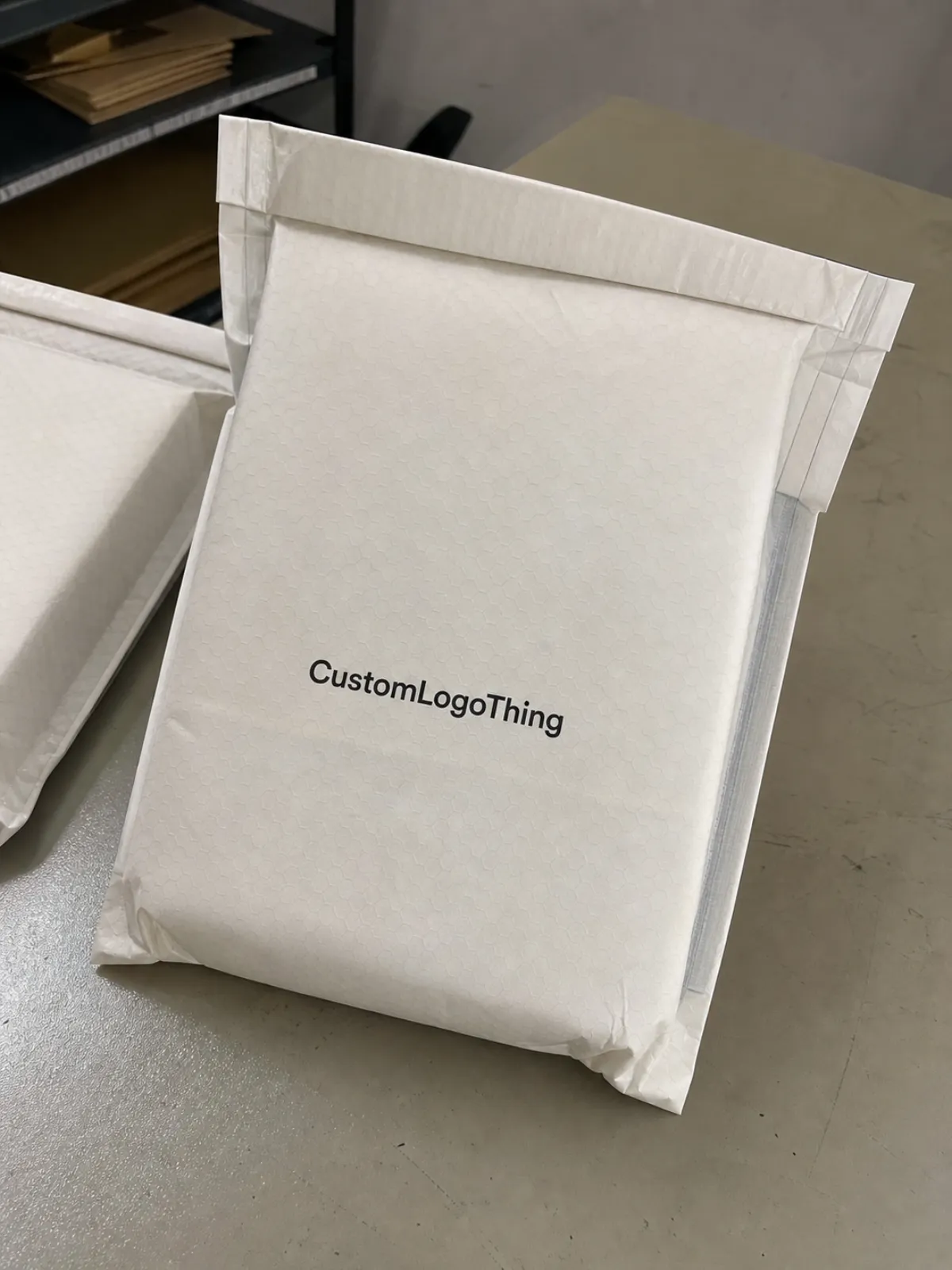
The failures usually begin at predictable points. The jar shoulder, the lid seam, and the base corners are where impact loads concentrate. A parcel can look intact on the outside and still transmit enough force to chip glass or dent a lid because the force does not spread evenly through a rigid container.
A custom padded mailer is a protective envelope designed to cushion a product, limit abrasion, and reduce motion inside the package. That sounds straightforward. It is not the same as a generic apparel mailer. Clothing compresses. Candle jars do not. A mailer built for soft goods can let a candle keep moving after a drop, which is exactly what creates cracks and scuffs.
Movement is the enemy. Vibration on conveyor belts, corner impacts during sortation, and pressure from neighboring parcels all add up. Even a short shipping lane can create damage if the product has room to rattle. The weakness is often not the padding layer itself; it is the extra air inside the package.
That is why brands comparing Custom Padded Mailers for Candle brands shipping durability checklist should start with the product geometry, not the print design. Ask where the force goes if the parcel lands on an edge. Ask whether the jar can slide toward a wall. Ask whether the closure will still hold after repeated handling. Those questions usually reveal the right structure faster than any mockup does.
If you are still deciding between formats, it helps to compare the mailer with other packaging systems. Custom Packaging Products can cover a wider range of formats, while Custom Poly Mailers are better suited to less fragile goods that do not need the same impact control.
How Padding and Seal Performance Protect Candles
A durable mailer works because three things do their jobs together. The outer shell resists abrasion. The padding absorbs and spreads impact. The closure prevents the candle from gaining enough momentum to hit the sidewall in the first place. If one element is weak, the others have to compensate, and packaging rarely gives second chances.
Void space deserves more attention than it usually gets. Too much room turns a padded mailer into a rattling sleeve. Too little room can crush edges or press hard against a lid. For most jar candles, a snug fit is better than a loose fit with extra filler. Tin candles behave differently, since they dent more easily but can tolerate a different balance of vertical and lateral clearance.
Buyers usually compare three constructions:
- Integrated padded paper mailers - cleaner for retail presentation and often enough for lighter single-candle orders.
- Bubble-lined mailers - stronger for impact control, especially with heavier jars or rougher parcel routes.
- Paper cushioning builds - attractive for fiber-based packaging goals, but they demand tighter fit control and more testing.
Seal performance matters as much as cushioning. Flap overlap, adhesive quality, and the way the closure behaves under pressure all affect the result. A seal can hold on a bench and still fail after a few transfer points on a conveyor. In transit, the package sees repeated stress, not one clean drop.
Heavier jars keep loading the closure every time the parcel is set down or shifted. If the adhesive softens, the mailer opens a little, the candle shifts more, and the problem compounds. That is why closure testing needs to include movement, not just a hand squeeze in sample approval.
For fiber-based mailers, sourcing claims also need discipline. If the material carries FSC-certified content, the claim should be accurate and specific, not inflated into vague sustainability language. Buyers notice loose claims quickly, and so do compliance teams.
Sizing, Caliper, and Print Choices That Matter Most
Fit is where packaging programs usually become smart or expensive. Measure the candle at its widest point, not just its height. Include the lid diameter, shoulder curve, and any decorative top detail that could rub against the wall of the mailer. A candle that looks small on a shelf can behave like a much larger object once the dimensions are measured honestly.
Caliper is the practical measure of thickness and structure. A lighter mailer can work for small tins or short, controlled shipping lanes. Once the product becomes heavier or the route becomes less predictable, denser padding or thicker walls usually become worthwhile. More material is not automatically better, though. If the fit is sloppy, extra thickness just gives the candle more room to move inside a costlier shell.
Print choices can affect structure more than buyers expect. Heavy ink coverage near the flap, coating across a fold line, or artwork that crosses a critical adhesive zone can weaken the package or create production headaches. A better approach is to keep the front panel expressive and leave mechanical areas cleaner. That keeps the mailer doing its actual job.
Material choice should match the shipping environment. Paper-based mailers tend to feel closer to retail packaging and suit brands that want a natural shelf presence. Poly surfaces hold up better in humid storage or damp delivery conditions. Neither option fixes a bad packout. A premium unboxing moment still fails if the jar arrives in pieces.
For candle lines that are expanding into gift sets or mixed kits, compare the mailer against Custom Shipping Boxes. A mailer may be more efficient. A box may protect better. The right choice depends on weight, fragility, and how much compression the customer experience can absorb without feeling cheap.
Pricing, MOQ, and Unit Cost Tradeoffs
Pricing for custom padded mailers usually moves with five variables: material type, size, print colors, finish, and whether the structure requires custom tooling or can use an existing format. Buyers often compare quotes that are not actually equivalent. One quote includes stronger padding and a better adhesive. Another looks lower only because it is a dressed-up envelope with thinner protection.
MOQ is where the economics become more obvious. Small runs carry more setup cost per unit because press time, plate work, and handling do not shrink in proportion to the order. Larger runs usually reduce unit cost faster than negotiation does. That is production math, and it tends to be stubborn.
Here is a practical comparison for candle mailers at a typical production scale around 5,000 units. Freight, samples, and setup can shift landed cost, so these are working ranges rather than fixed promises:
| Option | Typical Unit Cost | Strength | Best Use |
|---|---|---|---|
| Standard kraft padded mailer | $0.20-$0.35 | Basic cushioning, lower print cost | Small candles, lighter jars, lower-risk shipping lanes |
| Reinforced paper-bubble hybrid | $0.28-$0.48 | Better impact resistance, cleaner feel | Most jar candles shipping direct to consumer |
| Poly bubble mailer | $0.18-$0.30 | Moisture resistance, consistent seal | Brands shipping in humid climates or mixed fulfillment channels |
| Premium printed mailer with specialty finish | $0.40-$0.75 | Stronger shelf appeal, more branded impact | Gift sets, limited collections, higher-margin candles |
To compare quotes fairly, every vendor should be given the same spec sheet. Same candle dimensions. Same weight. Same print area. Same closure type. Same quantity. A lower quote that weakens the package is not a better deal. It is just a delayed replacement order.
Budget for samples and failure risk as part of the program, not as an afterthought. A sample may be inexpensive, but a weak mailer can become costly once reships, support time, and lost repeat orders are counted. That hidden cost often exceeds the savings people chase in the unit price.
If you want a broader read on how packaging choices behave after launch, the Case Studies page can be useful as a reality check. Real packouts usually expose more than polished sales decks do.
Process and Lead Time from Quote to Delivery
A clean quote process starts with useful inputs. Send the candle dimensions, total weight, jar material, closure type, print area, and order quantity. If you ship more than one SKU, identify which product is the main shipper. That allows the supplier to recommend a structure instead of replying with a generic template that solves the wrong problem.
Artwork proofing and sample review should come before production for anything fragile or premium. A screen mockup cannot show how the flap feels, whether the jar shifts in the cavity, or whether the seal survives rough handling. Physical samples reveal the awkward details that software skips.
A realistic schedule usually looks like this: 2-5 business days for quote and artwork alignment, 5-10 business days for sampling or proof signoff depending on complexity, 12-20 business days for production, then transit time based on origin and destination. Rush orders can shorten the calendar, but they usually reduce finish options or increase cost.
Handoffs create most of the delays. Missing dieline notes slow artwork. Late revisions reset proofs. Unclear shipping instructions delay freight booking. None of those problems are dramatic, which is probably why they happen so often. Packaging production rewards boring accuracy.
If the brand also uses custom printed boxes for sets or seasonal launches, aligning the mailer schedule with the box schedule can simplify inventory planning. It reduces duplicate coordination and keeps the packaging program from splintering into separate timelines that all need attention at the same time.
Common Mistakes That Cause Breakage and Returns
The most common mistake is buying too much empty space. A candle that can move inside the mailer will eventually hit something hard enough to crack, dent, or scrape. Sometimes the failure appears on the first shipment. Sometimes it shows up after several transfers and a few hundred miles. The result is the same: a damaged product and a return label.
Weak adhesive is the next quiet failure point. Heavy jars keep loading the closure after conveyor impacts or temperature swings. If the seal starts to separate, the mailer loses structure quickly. On a table it may still look acceptable. In transit it is already compromised.
Over-decorating the wrong areas creates another problem. If print, coating, or embossing crosses a fold line or adhesive zone, the package can lose strength or behave unpredictably in production. Branding should support the structure, not fight it. A prettier mailer that ships worse is an expensive mistake.
The testing shortcut is just as common. Some teams approve a sample after one gentle hand squeeze and call it finished. That is not enough. A real durability check needs corner drops, seam pressure, and vibration exposure. Temperature swings matter too because paper, adhesive, and glass behave differently as conditions change.
Brands that skip those checks usually pay later in replacements and negative reviews. That is why custom padded mailers for candle brands shipping durability checklist is not a marketing phrase. It is a working filter that catches the obvious failures before customers do.
Durability Testing Checklist for Candle Shipments
Start with the worst-case packout. Use the heaviest candle, the smallest acceptable mailer size, and the longest likely shipping lane. Average-case testing can hide weakness. The shipments that hurt margins are usually not average.
The minimum test set should include corner drops and seam drops. Flat drops are useful, but they do not represent how parcels actually get handled. A candle can survive a flat drop and fail as soon as a corner hits the floor or the edge of a conveyor. Orientation matters because impact is never distributed evenly.
Add a vibration check. Shake the packed mailer for a few seconds and listen for movement. If the candle can shift audibly, the package will let it shift in transit too. The goal is a snug fit without crushing the jar or creating a packout that looks overstuffed. Durability and presentation have to balance, especially in premium retail packaging programs.
Use a side-by-side review for the most promising samples:
- Fit - no rattling, no pressure points, no lid scrape.
- Seal - flap stays closed after repeated handling.
- Surface - no scuffing, denting, or adhesive bleed.
- Experience - opens cleanly without looking bulky or cheap.
Many teams use ISTA-style methods for transit screening, and that is a sensible starting point. The International Safe Transit Association has a useful overview at ISTA. A lab is helpful, but even a basic internal test beats guessing.
Check the actual customer path as well. A packout that behaves well in a warehouse can still fail after a long sortation chain, a hot truck, or a porch drop. That is why the durability checklist for candle shipping should be built around real parcel conditions rather than ideal ones.
Spec Sheet Checklist for Candle Mailer Programs
Before requesting quotes, gather the basics: candle dimensions, jar weight, closure type, print requirements, monthly volume, and the shipping channel used most often. If the brand ships mostly ecommerce orders, the spec should reflect parcel handling. If the same packaging also supports wholesale kits or retail bundles, that should be called out separately so the design does not optimize for the wrong use case.
Then send the same spec sheet to every supplier. Same measurements. Same art notes. Same quantity. That is the only fair way to compare pricing. Otherwise the quotes do not measure the same thing, and the cheapest one often wins because it quietly removed protection.
Order a sample and run the drop test. Check whether the candle stays centered and whether the mailer survives without crushed edges or sloppy fit. If the sample passes, the structure is close. If it fails, revise the spec before production instead of discovering the weakness after the first customer complaint.
For brands growing into larger packaging programs, the sensible move is to lock the spec, confirm the timeline, and place the first production run with enough quantity to make the unit cost work. That is the practical path for custom padded mailers for candle brands shipping durability checklist: Choose the Right construction, test it hard, and avoid paying twice for the same lesson.
What size custom padded mailers work best for candle brands?
Match the mailer to the candle's widest point, not only its height, so the jar and lid do not rub the inside wall. Leave only a small amount of clearance so the candle sits snugly without needing extra filler to stop movement. If you sell multiple jar sizes, build around the most common shipper first and add a second size only if the volume justifies it.
Do candle brands need boxes if they use padded mailers?
Single candle orders can often ship safely in a well-sized padded mailer if the jar is secure and the mailer passes drop testing. Heavy glass, candle bundles, or fragile decorative vessels usually need a box or internal insert because mailers alone may not control impact well enough. The right answer depends on product weight, transit distance, and how much compression the customer experience can tolerate.
How much do custom padded mailers for candle brands usually cost?
Pricing changes most with material, size, print coverage, and MOQ, so quote comparisons only work when the specs match exactly. Samples, setup fees, and freight can shift the real landed cost, especially on smaller runs. A slightly higher unit price can still be the better choice if it reduces breakage and replacement shipments.
What lead time should I expect for custom candle mailers?
Expect extra time for artwork proofing and sample approval before production starts, because skipping that step is how bad orders happen. Production and transit timing depends on quantity, print complexity, and whether the material is already in stock. Rush orders are possible, but they usually cost more and leave less room for revisions or specialty finishes.
What should I test before approving custom padded mailers for candle brands?
Test the heaviest candle, the tightest fit, and the longest likely shipping lane, because that is where failures surface first. Run corner drops, seam pressure checks, and vibration testing to see whether the closure and padding actually hold the candle in place. Check the unboxing feel too, because a package can be durable and still look careless if the fit or print layout is off.


