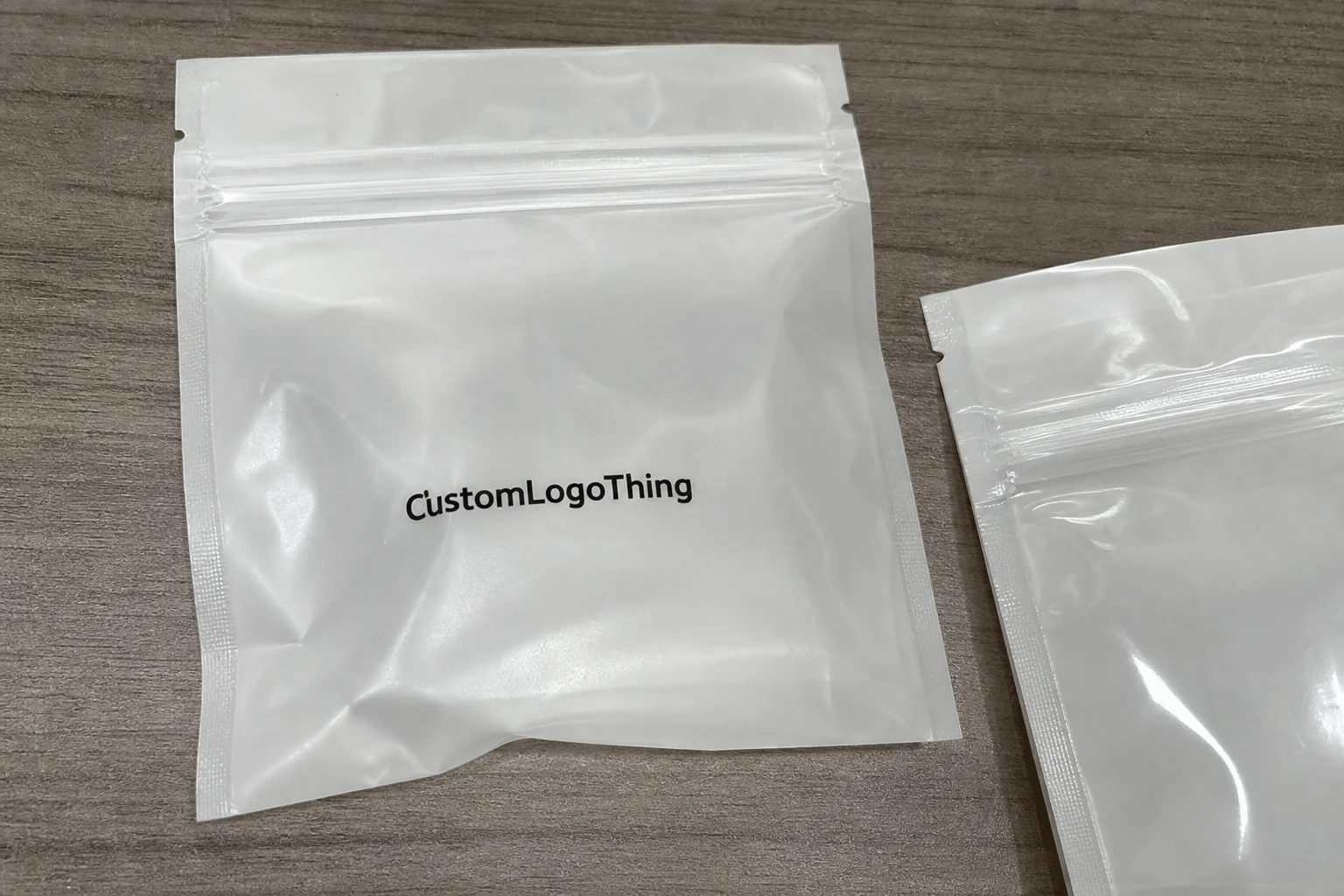
A customer opens a mailer, pulls out a delicate chain tangled in tissue, and finds the clasp bent sideways. Great. Now the brand looks cheap, even if the necklace was not.
Slider Lock Bags for jewelry brands are not glamorous packaging. That is the point. They prevent scratches, tangles, moisture exposure, missing components, and sloppy fulfillment before those tiny problems turn into refunds, replacement shipments, and annoyed emails written with too many exclamation points.
What Slider Lock Bags for Jewelry Brands Actually Solve
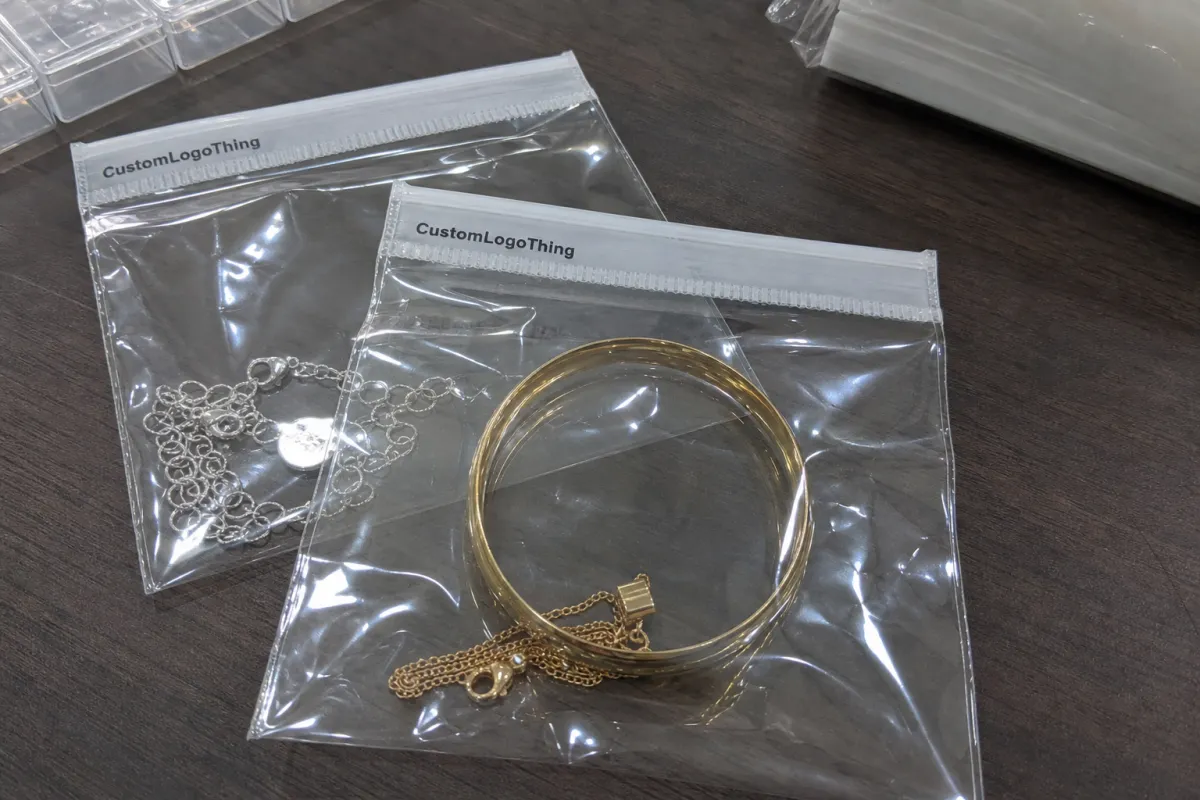
A slider lock bag is a clear or Custom Printed Plastic bag with a sliding closure across the top. The slider moves along two interlocking tracks, so packers do not need to pinch the seal perfectly from one side to the other. That sounds minor until someone is packing 600 earring sets before a Monday pickup.
Jewelry brands use these bags for earrings, rings, chains, charms, findings, repair kits, warranty cards, polishing cloths, and small accessory bundles. They are especially useful for SKUs with multiple small parts: earrings with backs, necklace extenders, bracelet charms, or repair kits with jump rings and clasps.
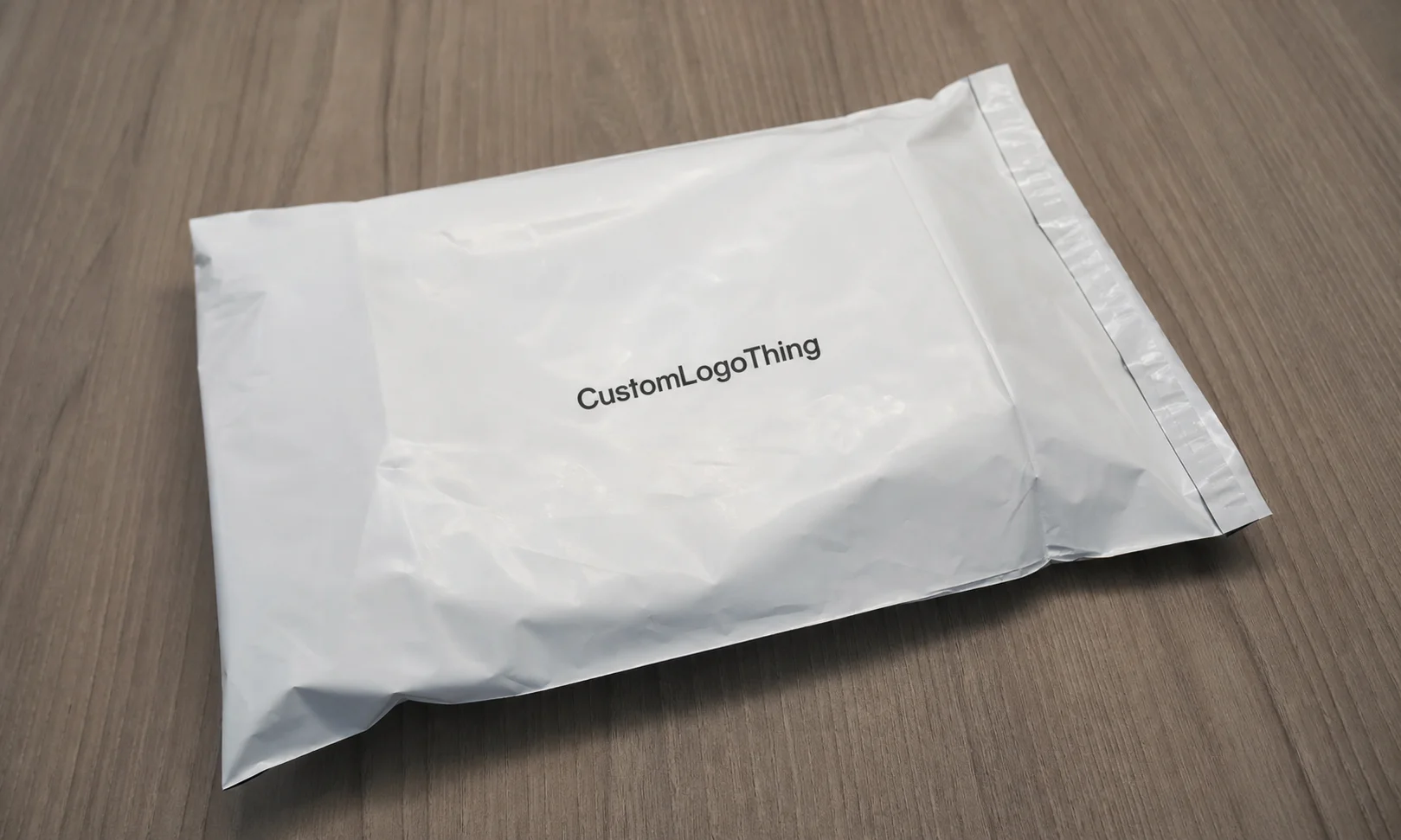
Think protection-first, not unboxing-first. The outer box, pouch, drawer box, or printed mailer sells the brand. The slider bag keeps the product from becoming a customer service problem. Different job. Different expectations.
Standard zip bags can work for low-risk pieces, but they depend on someone pressing the closure correctly. Organza pouches look giftable but let chains knot themselves into abstract sculpture. Paper envelopes are clean and recyclable in some programs, yet they hide the product and offer weak moisture protection. Rigid boxes feel premium, but using them for every tiny component can turn a packaging budget into a bonfire.
Practical rule: use the fancy package to impress the buyer, and use the slider bag to protect the item. Asking one format to do both usually creates waste, cost, or drama. Sometimes all three.
The right bag feels boring in the best way. Easy to open. Easy to reseal. Easy to label. Hard for warehouse staff to mess up. For small jewelry, boring is underrated.
How the Slider Closure Works for Small Jewelry Parts
The closure has two plastic tracks molded or sealed into the bag mouth. A small plastic slider moves across those tracks and presses them together as it travels. Unlike a press-to-close zipper bag, the packer does not need to align pressure perfectly along the full width.
That matters because tiny jewelry parts are escape artists. Earring backs, jump rings, beads, chain extenders, and charms have a special talent for disappearing exactly when the replacement cost is most annoying. A more consistent closure reduces loose parts inside mailers, bins, display trays, and customer returns.
Convenience has limits. Slider bags are reusable and efficient, but they are not the same as heat-sealed tamper-evident packaging. If theft prevention, authenticity control, or return fraud protection matters, add a wafer seal, custom sticker, hang card, retail box, or secondary package. Do not pretend a slider is a security system. It is a closure.
Film clarity also deserves attention. High-clarity PE or PP helps staff identify SKUs quickly during picking and quality control. Frosted or tinted film can look softer and more branded, but it may slow barcode scanning, stone color checks, metal finish checks, or return inspection. If your team needs to verify silver versus gold plating under warehouse lighting, choose clarity over mood.
Thickness is usually measured in mils. One mil equals one-thousandth of an inch. Thin film saves space and cost. Thicker film feels more premium and resists punctures from posts, pins, clasps, and sharp findings. For jewelry, many buyers test around 2 mil to 4 mil, with heavier gauges used for sharp or mixed-metal kits. That range depends on material, bag size, and closure construction, so sample before committing.
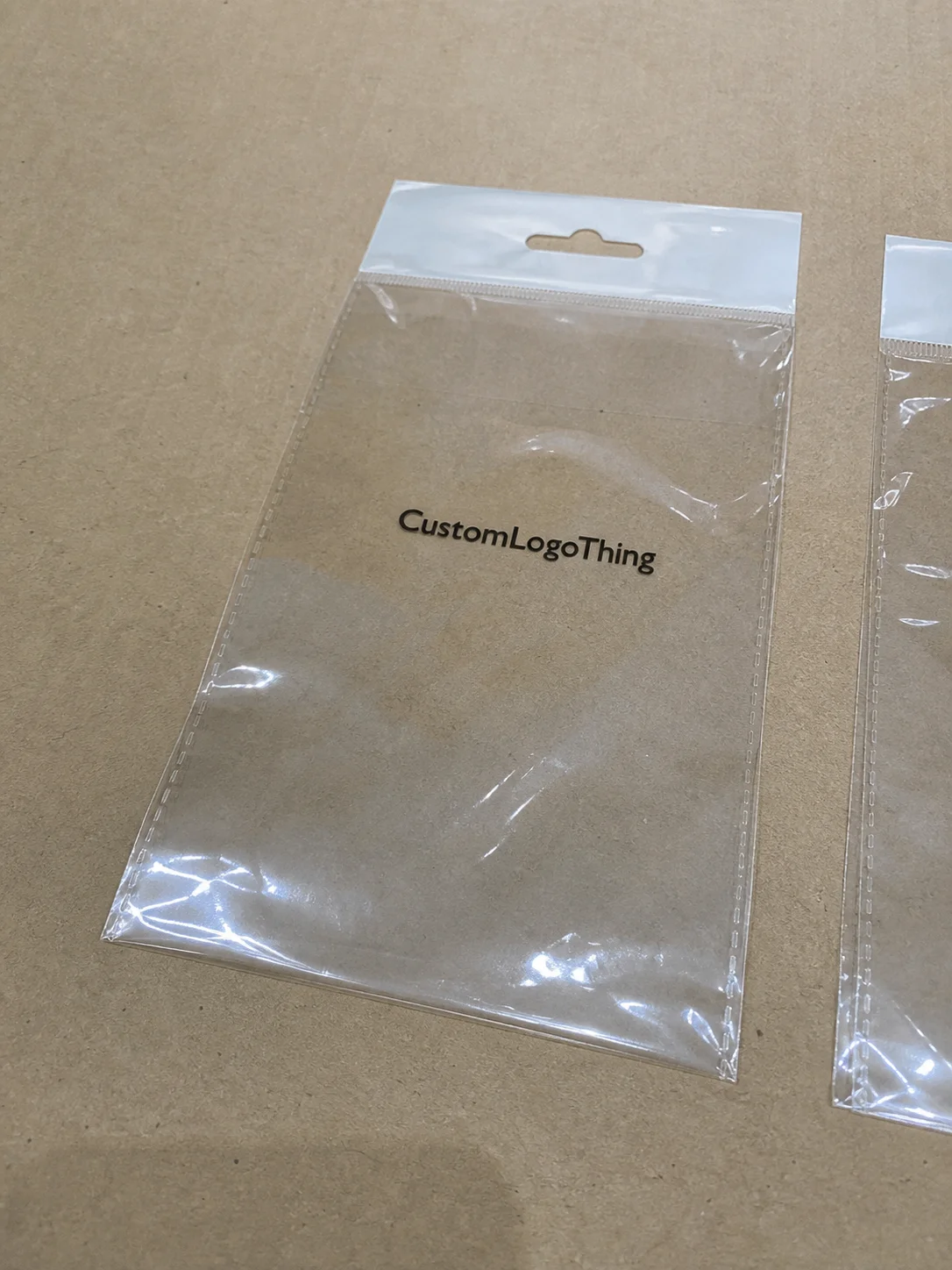
Common add-ons include hang holes, write-on panels, vent holes, suffocation warnings, barcode labels, white ink underprint, and custom logo printing. If the bag will be sold at retail or handled by a fulfillment center, barcode compatibility and label placement can matter more than the logo. Annoying, but true.
A plastic bag does not need to cosplay as a Velvet Jewelry Box. Most of the time, it sits inside another package. Its job is function plus brand consistency: clean enough to belong, practical enough to survive packing, and simple enough that customers can reuse it for storage or travel.
Key Specs to Choose Before You Ask for Samples
Start with size. Measure the actual packed product, not the jewelry alone. Include the backing card, polishing cloth, care insert, warranty card, repair slip, foam pad, label, or anything else that goes inside the bag. Guessing from the necklace by itself is how buyers end up with bags that are technically correct and practically useless.
Small bags need more precision than large ones. A quarter inch can decide whether the slider closes cleanly or catches a chain, card corner, or tissue edge. For a compact earring card, allow enough side clearance so staff can insert the card without scraping the film. For a chain, allow enough length so it rests naturally instead of bunching under the track.
Material choice affects cost, feel, and visibility. LDPE is soft and flexible, which works well for everyday packing and customer reuse. HDPE is crisper and often more economical, though it can feel less premium. PP gives higher clarity and a cleaner presentation, but it may be less forgiving around sharp corners depending on gauge and construction. Recycled-content blends can support sustainability messaging, yet availability, clarity, and minimums vary by supplier.
If sustainability claims matter, keep the language honest. Recyclability depends on local collection rules, inks, labels, and mixed-material construction. The EPA recycling guidance is a useful starting point for understanding why “recyclable” is not a magic word. For paper components paired with the bag, FSC-certified cards or inserts can support responsible sourcing; FSC explains the certification framework clearly.
| Spec Choice | Typical Use | Tradeoff | Practical Buying Tip |
|---|---|---|---|
| LDPE, 2-3 mil | Chains, charms, flat accessories | Soft feel, moderate clarity | Good starter range for many direct-to-consumer jewelry orders |
| PP, 2-3 mil | Retail-visible pieces and color checks | Higher clarity, sometimes less forgiving | Test with sharp posts and card corners before scaling |
| LDPE or PP, 3-4 mil | Earring posts, pins, metal findings, repair kits | Better puncture resistance, higher unit cost | Worth testing if repacks or scratches are already happening |
| Frosted or tinted film | Branded unboxing or boutique presentation | Softer look, slower inspection | Keep barcode and product viewing areas clear |
Print placement needs operational thinking. A centered logo may look nice in a mockup but get covered by a barcode label. A logo near the lower third may show better when bags are stacked in bins. Wild concept: design for how the bag is actually used.
Clear bags speed up fulfillment. Frosted bags feel softer. Opaque bags hide mixed components but slow down picking, returns inspection, and customer support. If a customer emails, “I think one earring back is missing,” your team needs to verify quickly without opening every bag like a detective with tweezers.
Before asking for samples, confirm label area, barcode compatibility, carton count, storage space, and outer package fit. The bag may need to slide into a rigid box, drawer box, kraft mailer, display tray, or pouch. If it fits the jewelry but bulges inside the final box, you did not solve the problem. You moved it.
Cost, MOQ, and Unit Cost: What Drives the Quote
Pricing depends on bag size, film thickness, material, print colors, print coverage, closure type, order quantity, packing method, and whether tooling or plates are needed. Anyone giving a serious quote without those basics is guessing. Maybe confidently, but still guessing.
Smaller clear stock bags cost less and usually ship faster. Custom printed slider bags cost more upfront, but they can reduce labeling labor, improve SKU organization, and make the fulfillment area look less like a craft table after a windstorm. For Slider Lock Bags for jewelry brands, that labor difference can matter more than the bag price once order volume climbs.
Stock sizes may be available in low quantities, sometimes a few hundred to a few thousand units depending on the distributor. Custom printed bags often require higher minimum order quantities because setup time, material runs, and print prep need to be spread across the order. A realistic custom MOQ might land around 5,000 to 10,000 pieces for many simple printed plastic bag projects, though exact requirements vary by supplier and construction.
Unit cost usually drops as quantity increases. The first few thousand bags carry setup pain. Larger runs spread those costs out. Still, buying a year of inventory can create cash flow problems, storage headaches, and obsolete packaging if your SKU mix changes. Cheap per unit is not cute when 18 cartons sit in the corner for nine months.
For rough planning, plain stock slider bags can sometimes land under $0.10 per unit in volume for small sizes. Custom printed jewelry slider bags may range around $0.18-$0.45 per unit at moderate quantities such as 5,000 to 10,000 pieces. Bigger bags, thicker film, heavy ink coverage, specialty finishes, or smaller runs can push higher. Treat those as planning ranges, not a promise from the packaging fairy.
Hidden costs deserve more attention. Oversized bags waste film and shipping space. Too-thin bags cause punctures, repacks, or customer complaints. Complicated print specs slow approvals. Changing artwork after proofing can trigger charges. A bag that adds 12 seconds to every order sounds harmless until you multiply it by 20,000 shipments.
Quote at two or three quantities: a safe starter run, a normal reorder volume, and a scale quantity. For example, ask for 5,000, 10,000, and 25,000 pieces using the same size, material, thickness, and print. That shows the price break without forcing a blind commitment. If the drop from 10,000 to 25,000 is small, keep your cash. If it is meaningful and storage is manageable, consider the bigger run.
Custom Logo Things can help buyers compare packaging approaches across practical use cases, and the Case Studies page shows how branded packaging decisions affect presentation, fulfillment, and repeat ordering.
Process and Lead Time From Sample to Reorder
A clean buying process saves everyone time. Define the use case, measure products, pick material and thickness, choose stock or custom sizing, confirm printing needs, request samples, approve artwork, approve proof, run production, inspect shipment, then document reorder specs. Skip steps if you enjoy surprises. Most people do not.
Stock slider bags can move quickly if the size and material already exist. Custom printed or custom-sized bags take longer because art prep, proofing, production scheduling, and freight all have to behave. They often do not. Plan accordingly.
For many custom packaging orders, buyers should allow several weeks from final proof approval to delivery, depending on quantity, production queue, and freight method. Domestic stock sourcing may be much faster. Imported custom production may need more buffer. Ask for a written timeline tied to proof approval, not a vague “soon.” Very helpful word, “soon.” Practically useless.
Test samples with real jewelry, not empty air. Pack earrings with posts, delicate chains, charms with sharp corners, and full repair kits exactly as warehouse staff will pack them. Put the bag into the final mailer or box. Shake it. Store it flat. Store it upright. Scan the barcode. Open and reseal it five times. If the slider jams on the third try, you have learned something before paying for 10,000 mistakes.
Risk points are predictable: slow artwork approvals, unclear Pantone targets, missing dielines, holidays, material availability, freight delays, and last-minute SKU changes. None are exciting. All are real. If your launch depends on packaging, approve boring details early.
Digital proofs confirm placement, scale, and general layout. Physical samples confirm hand feel, closure function, clarity, fit, and how the bag behaves with actual metal parts. Do not confuse the two. A perfect PDF cannot tell you whether an earring post will puncture 2 mil film.
Set reorder points using monthly usage plus lead time buffer. If you use 3,000 bags per month and your custom reorder takes six weeks, waiting until the final carton is half-empty is asking for a shipping upgrade bill. Jewelry brands with seasonal drops should forecast before launch traffic hits, not when the last carton has six sad bags left.
Keep a simple spec sheet with size, material, thickness, print colors, supplier item number, carton quantity, approved artwork file name, and last purchase order. If you work with multiple team members, put the spec sheet somewhere obvious. A reorder should not require archaeology.
Common Buying Mistakes That Make Jewelry Packaging Worse
The first mistake is choosing bags too small because the product technically fits once, if packed by a patient wizard. Fulfillment teams need repeatable fit, not a puzzle. If staff have to angle the card, tuck the chain, flatten the tissue, and whisper encouragement to the slider, the bag is too small.
The second mistake is ignoring sharp points. Earring posts, pins, brooch hardware, and metal findings can puncture thin film or scratch neighboring pieces if the gauge is too light or the product has no internal structure. A small backing card, foam insert, or thicker film can prevent a lot of ugly little damage claims.
The third mistake is overprinting. A giant logo across a tiny clear bag may hide the product, block barcode labels, and make quality checks slower. Branding should help the operation, not cosplay as a billboard. A small logo, clean corner mark, or subtle repeat pattern often does the job better.
The fourth mistake is using one bag size for every SKU. It sounds efficient until rings swim around, chains kink, and larger pieces bulge under the slider. Standardize where sensible. Do not standardize where lazy. Many jewelry brands can work with two or three core sizes rather than twelve, but one universal bag is rarely the hero people want it to be.
The fifth mistake is skipping compatibility testing with outer packaging. A slider bag that fits the necklace but not the drawer box insert is not a solution. It is a new problem wearing a clear outfit. Test with rigid boxes, mailers, insert cards, tissue, retail display trays, and any label your team applies after packing.
The sixth mistake is forgetting customer reuse. If the slider jams, feels flimsy, or needs two hands and a prayer, customers will throw it away instead of using it for travel or storage. A smooth closure can extend the usefulness of the package, which is one reason Slider Lock Bags for jewelry brands work well for delicate chains and small components.
The seventh mistake is buying purely on unit price. A lower-priced bag can cost more if it increases labor, repacks, damaged items, returns, or customer complaints. Cheap can be expensive. Packaging proves this daily.
Before You Place a Jewelry Bag Order
Create a SKU map first. Group jewelry by size, shape, fragility, and packing method. Rings, flat charms, necklaces, earring sets, brooches, and repair kits often need different bag logic. A 12 mm charm and a 20-inch chain should not be forced into the same packaging plan just because the spreadsheet wants fewer rows.
Pick two or three candidate sizes instead of trying to solve the whole line with one bag. Test them with real products, cards, polishing cloths, warning labels, barcode labels, and final outer packaging. If you pack in batches, ask the people doing that work which size is faster. They will tell you. Sometimes too honestly.
Decide whether the bag is purely functional or partly branded. If customers see it during unboxing, consider a small logo, soft tint, neat label area, or printed care message. If the bag stays mostly inside warehouse workflow, prioritize clarity, scanning, packing speed, and easy sorting. Pretty packaging that slows fulfillment is not premium. It is expensive friction.
Request samples in the actual film thickness and closure style you plan to buy. A similar bag helps with rough sizing, but it does not prove the final custom bag will behave the same. Film stiffness, slider quality, track alignment, and print coverage can change the feel.
Prepare quote details before contacting a supplier: size, material preference, thickness range, print colors, quantity targets, ship-to location, artwork status, and required delivery window. If you have a box, pouch, or mailer already chosen, share those dimensions too. For more examples of how packaging choices connect across a product line, review the Custom Logo Things case studies before building your spec list.
Build a reorder system immediately after the first run. Track usage rate, carton count, defects, packing comments, customer feedback, and any changes the team wants. The first order teaches you what the second order should fix. Ignore that lesson and you will buy the same annoyance twice.
Slider Lock Bags for jewelry brands work best when they are specified like a production tool, not tossed into the packaging plan after the box design is finished. Choose the size, film, closure, label area, and print for the way the product actually moves through packing, shipping, opening, and reuse.
FAQ
What size slider bags do jewelry brands usually need?
Most jewelry brands need several sizes, not one universal bag. Rings and charms often need compact bags, necklaces need more length to prevent tangling, and earring cards need enough width so corners do not fight the slider. Measure the full packed set, including backing card, polishing cloth, insert, and label, then add a small clearance so staff can close the bag quickly without catching product in the track.
Are slider lock bags for jewelry brands better than regular zip bags?
Slider lock bags are easier and more consistent to close, especially during fast packing or customer reuse. Regular zip bags are cheaper and can work fine for low-risk items. For delicate chains, tiny components, or higher-volume fulfillment, the slider usually saves frustration. For ultra-budget sample kits, a standard zip bag may be enough. Annoying, but true.
Can custom printed slider bags still show the jewelry clearly?
Yes, if the print is controlled. Use a small logo, border, or lower-corner mark instead of covering the viewing area. If barcodes, color matching, or QA checks matter, keep the main product area clear. White ink underprint can make logos pop, but it also adds cost and opacity.
What thickness should jewelry slider bags be?
Use lighter film for flat, low-risk items and thicker film for sharp posts, pins, charms, findings, or heavier kits. The right gauge depends on product shape more than product price. Always test with real jewelry. A bag that feels fine empty can puncture, wrinkle, or jam when packed with metal parts. Empty samples lie.
How long does custom slider bag production take?
Stock bags can often be sourced faster because the size and closure already exist. Custom printed or custom-sized bags need artwork approval, proofing, production scheduling, and shipping time. To avoid launch delays, start sampling before final packaging photography and request quotes at multiple quantities. Build buffer time for proof revisions and freight, because freight has never cared about your launch calendar.