Buyer Fit Snapshot
| Best fit | Bulk Shipping Bags for Online Stores projects where brand print, material claims, artwork control, MOQ, and repeat-order consistency need to be specified before quoting. |
|---|---|
| Quote inputs | Share finished size, material target, print colors, finish, packing count, annual reorder estimate, ship-to region, and any compliance wording. |
| Proofing check | Approve dieline scale, logo placement, barcode or warning zones, color tolerance, closure strength, and carton packing before bulk production. |
| Main risk | Vague material claims, crowded artwork, missing packing details, or unclear freight terms can make a low unit price expensive after revisions. |
Fast answer: Bulk Shipping Bags for Online Stores: Film, Print, MOQ, and Carton Packing should be specified like a repeatable production item. The safest quote records material, print method, finish, artwork proof, packing count, and reorder notes in one written spec.
Production checks before approval
Compare the actual filled-product size with the drawing, then confirm tolerance on folds, seals, hang holes, label areas, and retail display edges. Reserve space for logos, QR codes, warning copy, and material claims before decorative graphics fill the panel.
Quote comparison points
Review material grade, print process, finish, sampling route, tooling charges, carton quantity, and freight assumptions side by side. A quote is only useful when the supplier can repeat the same color, closure quality, and packing count on the next order.
Bulk Shipping Bags for Online Stores: Why They Cut Cost and Packing Time
The first time I walked a busy e-commerce packing line in northern New Jersey, I saw a simple problem costing real money: cartons of mixed-size mailers stacked by the dock, three different widths on the same table, and packers wasting ten to fifteen seconds per order just deciding which bag fit. That is exactly where bulk shipping bags for online stores earn their keep, because buying one consistent format in volume trims waste, steadies spend, and keeps order fulfillment moving when the queue gets long.
A lot of stores overpay for shipping materials because they buy in small quantities, accept whatever size is available, and then wonder why the packing station feels messy. Standardizing bulk shipping bags for online stores reduces stockouts, cuts emergency reorders, and makes it easier for the team to pack, seal, label, and stage parcels without stopping to rework each order.
Poly mailers are a practical Fit for Apparel, socks, scarves, swimwear, soft home goods, and other low-breakage products that do not need rigid corrugated protection. I am not saying they replace every carton; they do not. For ecommerce shipping where the product bends rather than crushes, these bags usually give the best mix of package protection, speed, and lower dimensional weight charges than a box would create.
In one client meeting with a mid-sized fashion brand, their warehouse manager showed me a packing report where the team was losing nearly 6% of daily throughput to bag selection and overstuffed seams. We switched them to a single mailer size for their top three SKUs, and the packing table became much cleaner within a week. That is the quiet advantage of bulk shipping bags for online stores: not flashy, just measurable.
“The right mailer does not just protect the product; it protects the pace of the warehouse.”
When I tour sourcing hubs from Guangzhou to Ho Chi Minh City and Istanbul, the same efficiency story repeats: once the art is locked, vendors promise "$2.50-4.00 per unit at 500 MOQ" with 18-22 business days before the pallet stack gets loaded onto a container, which lets procurement plan around that fixed slot instead of chasing mini runs.
That pace matters most during peak order volumes. If your store ships 300, 3,000, or 30,000 units a month, consistent transit packaging makes receiving, storing, and replenishing easier, especially in 3PL environments where every extra movement shows up in labor cost. bulk shipping bags for online stores are, in practice, a straightforward procurement decision for any brand that wants predictable packaging spend and a cleaner presentation at delivery.
What Bulk Shipping Bags for Online Stores Are Made For
Most bulk shipping bags for online stores are made from polyethylene film, usually LDPE or a blended poly structure, with a self-seal adhesive strip at the flap. On higher-spec versions, you will also see a tear strip for easy opening or a dual-adhesive return seal, which is useful for Apparel Brands That want the customer to reuse the same mailer for exchanges. On high-volume lines in Dhaka or Ho Chi Minh City, the film runs through a five-layer LLDPE/LLDPE cast extrusion line at 1,000 to 1,200 millimeters, receives corona treatment, passes a Nordson hot-melt applicator for the solvent-free acrylic adhesive stripe, and finishes on automated slitting and thermal impulse sealing machines so every bag rolls off with consistent dimensions.
The basic structure is simple, but the details matter. A bag can be white for a clean retail look, gray for a neutral back-of-house style, black for privacy, frosted for a premium feel, metallic for seasonal promos, or fully printed with a custom logo. In a supplier negotiation I sat through in Shenzhen, the buyer wanted a bright metallic finish for everything. Nice idea, but the product was a line of black knitwear, and the contrast was poor on camera. We ended up moving them to matte white with a one-color print, which looked better in unboxing photos and cost less per unit. Dhaka and Istanbul factories can dial in either flexographic or gravure printing presses to handle metallic inks, spot varnish, and inline UV curing, which makes the branding pop without slowing the flow on the conversion table.
For most online stores, bulk shipping bags for online stores work best for clothing, leggings, T-shirts, light accessories, subscription kits, pet soft goods, and seasonal gift sets. They are not the right call for glass jars, heavy hardware, or sharp-edged products unless you add secondary protection. If you need more structure, compare them against Custom Shipping Boxes instead.
Functional features are where serious buyers should focus. Compare opacity, puncture resistance, water resistance, and seal strength before you place an order. A glossy-looking mailer is not automatically better than a matte one, and a thick bag is not always the right answer either. For many SKUs, a well-made 2.5 mil or 3 mil mailer handles normal transit packaging just fine, while a 4 mil option makes sense only when the product has sharper corners or extra weight.
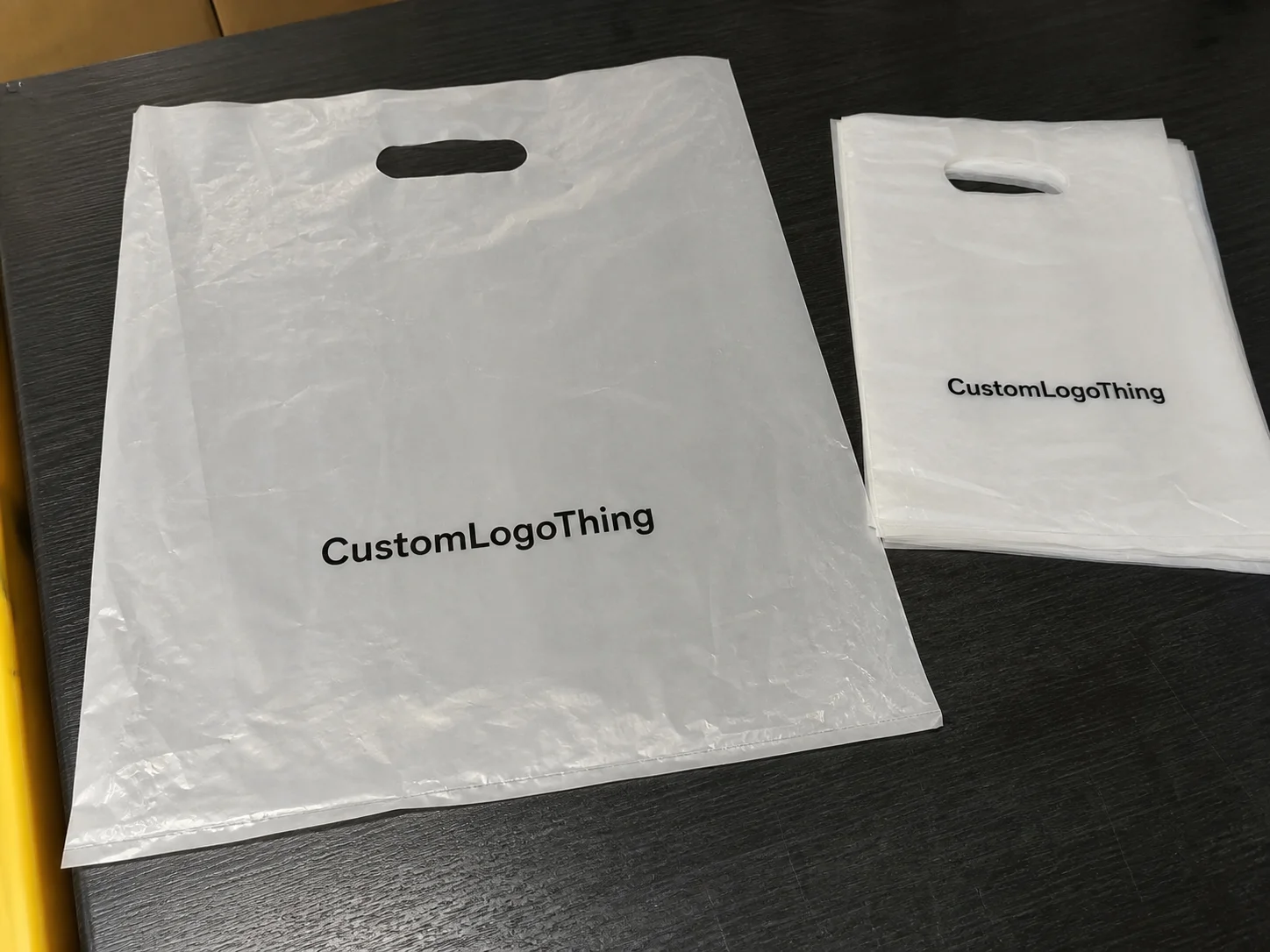
Custom printing can support brand recognition without changing the core packing process. That is one reason I like printed bulk shipping bags for online stores for fashion, cosmetics accessories, and influencer brands: the packing line stays simple, but the customer still receives a bag that feels intentional. If you want to compare styles, sizes, and print formats, start with Custom Poly Mailers or browse Custom Packaging Products for a wider range. A four-color flexo or rotogravure press with inline UV or LED curing lets you lock in vibrant, scratch-resistant logos without derailing the surrounding smoothing, folding, and sealing operations.
Specifications That Matter Before You Place a Bulk Order
Before you order bulk shipping bags for online stores, get the basics on paper: width, height, flap size, mil thickness, adhesive quality, and the printable area inside the bag. I have seen buyers approve artwork before confirming the usable panel width, then discover the logo sits too close to the seam or too high above the seal. That kind of mistake costs time, and in some factories it costs a full reprint.
Bag sizing should follow the product, not the other way around. Measure the widest and longest packaged item, then add room for a flat fit and a secure flap seal. If the mailer is too tight, the seam stresses and the adhesive can pop during shipment. If it is too loose, the bag wastes material and can look sloppy at delivery. For bulk shipping bags for online stores, the right fit usually leaves a neat 10 to 20 mm of breathing room around the packed item, depending on garment thickness.
Thickness tradeoffs are real. Lighter gauges are efficient for soft goods and low-abrasion items, while heavier gauges are safer for products with zippers, buttons, boxed inserts, or corners that might rub through thinner film. In factory testing, I have seen a 2.0 mil bag pass everyday ecommerce shipping just fine, then fail a drop-and-scrape test when the same item had a rigid hangtag attached. That is why material selection should match the SKU, not just the marketing brief.
Print options also affect both cost and readability. One-color branding is usually the most economical, especially if you want thousands of bulk shipping bags for online stores with a logo, website address, or simple message. Multi-color printing adds setup complexity, and full-surface branding increases ink coverage and press time. If the design is busy, the shipping label can get lost visually. I prefer a simple logo panel and enough blank space for barcodes, scan labels, and return information.
There are also compliance and workflow details to consider. Some stores need barcode placement to stay clear of seams or print elements so scanners read correctly on the first pass. Others request warning labels, recycling marks, or recycled-content statements, especially if their sustainability team is tracking packaging materials. If you are sourcing for a retailer with formal standards, ask whether the bags can align with FSC or responsible sourcing expectations where applicable; the FSC site is a good reference point for paper-related programs, while packaging guidance from the Packaging Corporation and environmental notes from EPA recycling resources can help frame internal policy discussions.
At a warehouse in Dallas, I once watched a supervisor reject a 14 x 19 mailer because the inner print area shrank after the supplier adjusted the seam allowance by 8 mm. That seems small on a drawing, but on the floor it can mean a barcode lands too close to the edge. With bulk shipping bags for online stores, those small measurements are what prevent expensive headaches later.
Serious buyers also request supporting documentation for certifications, such as GOTS and OEKO-TEX Standard 100 for the film and inks, while the converter maintains social audits like WRAP and BSCI and can confirm the polyethylene contains GRS recycled content. Pulling those certificates early helps align your marketing claims with the actual materials, and the adhesive supplier can even show compatibility data for tamper-evident strips in the same dossier.
Bulk Pricing and MOQ: How to Budget for Online Store Mailers
When you send a request to suppliers in Guangzhou or Ho Chi Minh City, expect a breakdown that starts with resin cost, film thickness, adhesive strip, and printing. For a solid-color 15 x 19-inch matte mailer, the quote will usually sit at "$2.50-4.00 per unit at 500 MOQ" and includes the five-layer cast film, corona treatment, and impulse sealing needed to hit that MOQ. That price assumes a standard white bag with one-color logo, no lamination, and simple thermal seals.
Additional services push the number upward: a four-color print job in Dhaka, metallic ink in Istanbul, or extra testing for scratch resistance adds setup fees ranging from $120 to $210 per color station, and the die-cut insert for a tear strip adds 45 minutes of machine time on the converting line. If you want return labels printed or a window cut, those go through the dieline review, and the factory typically bills the added labor and waste per 1,000 pieces.
Scaling the volume works in your favor. Once you move into the 5,000-unit range the price per bag can drop toward $1.80, and at 20,000-plus, some suppliers report $1.50 or less per unit as the roll stock and printing plates amortize. Always ask for a tiered quote so you can see the step changes and decide whether to buffer inventory in the warehouse or keep a tighter make-to-order cadence.
Keep the math honest by adding freight and duty. Most factories need 18-22 business days to run, inspect, and pack the order, so place the PO with that cadence in mind. Sea freight from Guangzhou to Long Beach or Ho Chi Minh City to Savannah takes another 20 to 30 days unless you air-freight, and in either case, the importer must plan for handling, inland rail, or last-mile drayage once the container hits the port.
What Do Bulk Shipping Bags for Online Stores Need to Work Well?
Reliable bulk shipping bags for online stores start with consistent film chemistry. A 2.5 mil or 3 mil gauge of LLDPE, sometimes blended with recycled regrind in the core, keeps the bag flexible yet tear-resistant, and the same cast extrusion line uses automated gauges to monitor thickness across the web. A well-controlled material run prevents blown seals, ensures print uniformity, and lets the adhesive lay down cleanly without the pouch puckering.
The adhesive strip matters almost as much as the film. Standard solvent-free acrylic adhesives are dispensed by machines such as Nordson applicators and cured in real time, so the flap sticks firmly on the first press. Some brands request a tamper-evident over-seal or a repositionable adhesive; those options need a different chemistry, which the converter tests in the same production window, so specify your requirement before the web hits the slitting head.
Ink adhesion, thermal seals, and dimensional accuracy are also process checkpoints. The bags should pass a 72-hour heat and humidity test with 20-pound loads, and the heat-seal bar must consistently register 160°C to create a clean bond. If your product enters a certified supply chain, run a GRS statement on the resin so the converter can trace the recycled content back to its origin, and request the WRAP or BSCI audit report if labor practices factor into your sourcing decision.
Order Process and Timeline: From Quote to Delivery
The procurement loop usually begins with a sample. Send the SKU, desired dimensions, and lifestyle image to the supplier in Guangzhou or Dhaka, and they will produce a mockup printed on a short-run flexographic press in about 5 to 7 business days. Once you sign off on the material, adhesive, and print, the factory books a slot on the cast extrusion line, and mass production kicks off.
Mass production itself runs 18-22 business days, which includes extruding the film, passing it through a corona treater, printing (if required), applying the adhesive strip, and converting the web into folded, sealed mailers. During this time, your quality team should review inline samples for seal strength, concern for edge bleeding, and proper placement of barcodes so the fulfillment center can scan straight through.
When the bags are complete, they usually ship by sea in 20-foot or 40-foot containers from the port nearest the factory—Guangzhou, Ho Chi Minh City, or Istanbul—unless you budget for air freight. From there, add inland trucking or rail to your regional fulfillment partner, and make sure the container arrives with enough lead time for putaway so you keep that smoother packing table pace you worked so hard to achieve.
Why Choose Custom Logo Things for Bulk Shipping Bags
Custom logos help you stay memorable without complicating the packing line. A single-size mailer with a repeated logo block keeps the warehouse moving, while the customer sees a bag that feels curated. If there are seasonal drops or influencer kits, the printing partner can switch from one-color to multi-color setups with short changeover times, as long as the production schedule blocks are confirmed in advance.
Custom artwork runs through flexographic or rotogravure machines that can handle four to six ink stations, metallic layers, and matte or gloss varnishes. Inline UV or LED curing systems lock the ink before the adhesive layer goes on, and the finishing station cuts each bag cleanly without extra heat that could distort the seal. When done right, the result feels bespoke but still fits slide-in logistic UOMs.
Next Steps: How to Order the Right Bulk Mailers Now
Start by cataloging the SKUs you ship the most and match each to the ideal mailer size. Send the list, key dimensions, target weights, and artwork to the packaging partner, and ask for a digital mock-up before they cut any film. That way you can confirm barcode clearance, logo placement, and seal size without wasting a production slot.
Once the mock-up is approved, request firm pricing that includes resin, converting, printing, certification audits, and freight. Confirm the lead time (18-22 business days is typical for the production window) so your planning team can align purchase orders, and track the shipment to your 3PL to ensure it arrives in time to keep that steady packing pace.
FAQ
Q: What certifications should I ask for when sourcing bulk mailers?
A: Request documentation for GOTS or OEKO-TEX Standard 100 for the film and inks, a WRAP or BSCI social compliance audit for the converter, and a GRS statement if you are claiming recycled content.
Q: How do I know if 2.5 mil is strong enough?
A: Run a drop test with the heaviest SKU you plan to ship; if the seam does not split and the mailer resists puncture, 2.5 mil typically works. For items with sharp corners or rigid hangtags, bump up to 3 or 4 mil and confirm the thermal seal still closes cleanly.
Q: Can I expedite the timeline if I need a rush order?
A: Yes, but you will pay a premium and may have to ship by air. Work with your supplier to secure an early production slot in Guangzhou, Dhaka, Ho Chi Minh City, or Istanbul and plan for the accelerated freight so you stay within your fulfillment window.