Compare Lamination Options for Paper Shopping Bags
Quick Answer: Paper Shopping Bags Compare Lamination Options
Paper Shopping Bags compare lamination options poorly when the decision starts with shine. A buyer sees matte and thinks “premium,” sees gloss and thinks “bright,” then discovers later that the dark bag scuffs, the soft-touch surface fingerprints, or the uncoated kraft stock absorbs more ink than expected. None of those outcomes are mysterious. They are usually finish choices behaving exactly as the materials allow.
The practical answer is simple. Standard matte lamination is the safest retail finish for most boutiques, apparel shops, lifestyle brands, cosmetics packaging, and gift bags. Gloss lamination is better for vivid artwork, event bags, trade show handouts, kids’ products, candy, and promotional retail packaging. Soft-touch lamination gives a more expensive hand feel, but it needs cleaner handling and more careful packing. Anti-scratch matte is the smarter upgrade for black, navy, burgundy, forest green, chocolate brown, and other dark flood-printed designs. No lamination makes sense when kraft texture, lower cost, or recyclability messaging matters more than surface protection.
Lamination is not just decoration. It changes stiffness, rub resistance, moisture resistance, fold behavior, color appearance, perceived price point, and the recycling conversation. A 250gsm white art paper bag with matte film does not behave like a 180gsm kraft bag with no coating, even if both have the same logo and twisted paper handles.
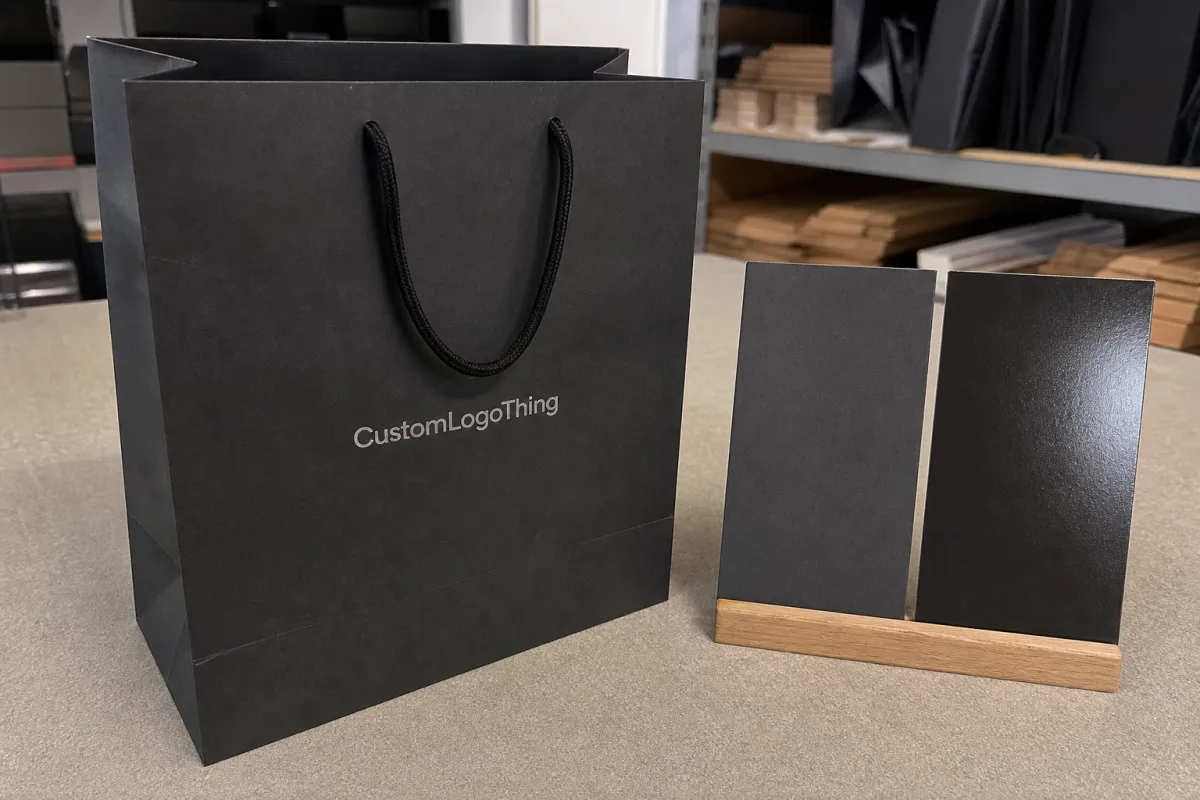
Blunt packaging truth: a black luxury shopping bag with standard matte lamination can look beautiful at proof approval, then show pale shelf rub before it reaches the customer. That is not “character.” It is the wrong finish for the job.
Use the finish, artwork coverage, handling route, paper stock, and budget together. That gives you a buying decision, not a mood board.
| Finish | Best Use | Durability | Typical Cost Impact | Common Failure |
|---|---|---|---|---|
| Standard matte | Boutique retail, gifts, cosmetics | Good for normal handling | Low to moderate | Rub marks on dark ink |
| Gloss | Bright artwork, events, promo bags | Good wipeability | Low to moderate | Can look too shiny |
| Soft-touch | Luxury, beauty, jewelry, VIP gifting | Moderate; sensitive to oils | Moderate to high | Fingerprints and handling marks |
| Anti-scratch matte | Dark premium bags | Very good rub resistance | Higher | Higher unit cost |
| No lamination | Kraft, eco-positioned, low-cost use | Lowest surface protection | Lowest | Moisture and abrasion wear |
Top Lamination Options Compared for Custom Retail Bags
Most custom Paper Shopping Bags fall into a short list of finishes: standard matte, gloss, soft-touch, anti-scratch matte, velvet-style tactile films, and uncoated paper. The right choice depends on ink coverage, paper weight, quantity, handle style, packing method, and whether the bag needs to survive a stockroom, a courier carton, or one polished handoff at a launch event.
Matte lamination is the balanced option. It reduces glare, gives printed paper a finished retail look, and protects the surface better than raw stock. For many orders, especially 1,000 to 10,000 bags on 200gsm to 250gsm art paper, matte is the default quote because it looks clean without calling attention to itself. Its weakness is dark ink. Black or navy flood printing can still show pale rub along corners and stacked surfaces.
Gloss lamination is brighter and more practical than some buyers expect. It increases the visual punch of saturated color, wipes more easily than uncoated paper, and often prices close to standard matte. It suits food-adjacent retail, candy shops, toy stores, event bags, and promotional shopping bags. On a quiet luxury layout, though, gloss may feel too reflective and commercial.
Soft-touch lamination earns its place through feel. Hand someone a pale blush beauty bag or cream jewelry bag with soft-touch film and the upcharge is obvious before anyone explains the spec. Still, tactile film is not protective armor. It can show skin oils, pressure marks, and rough packing. It works best when the brand needs a premium feel and the distribution path is reasonably controlled.
Anti-scratch matte is the grown-up version of matte for dark printed bags. If the design relies on black, navy, deep green, burgundy, or brown coverage, this finish can separate “premium” from “why does this new bag look used?” It costs more because the film is more specialized, but rejected cartons cost money too.
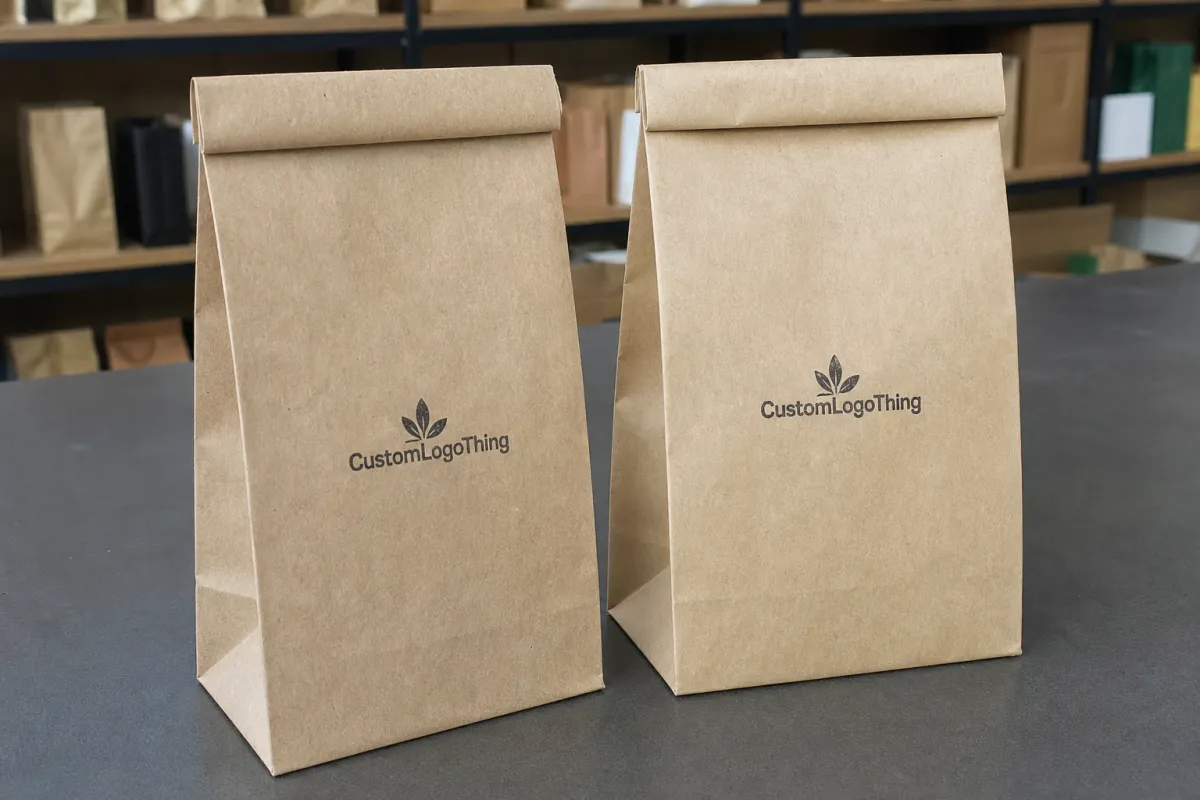
No lamination still deserves consideration. Kraft bags, natural branding, low-cost takeout carriers, simple event handouts, and some paper-first sustainability programs often look better without plastic film. The tradeoff is straightforward: raw paper has weaker moisture resistance, weaker abrasion protection, and less predictable ink holdout.
Detailed Reviews: Matte, Gloss, Soft-Touch, Anti-Scratch, and Uncoated
Matte Lamination
Matte is popular because it solves several problems at once. It softens glare, gives the print a more refined surface, and adds a protective film layer that helps the bag tolerate ordinary store handling. On 210gsm to 250gsm C1S art paper, matte lamination gives enough body and surface protection for fashion, gifts, cosmetics, lifestyle retail, and general branded shopping bags.
It also photographs better than gloss under strong retail lighting. A white or pastel matte bag with a single-color logo, foil stamp, or simple full-color print can look crisp without looking overproduced.
The weak point is dark full-coverage artwork. A black bag with white foil stamping may look perfect at press check or sample approval, then show chalky rub marks along folds, edges, and contact points after packing. If your design uses dark floods, compare standard matte against anti-scratch matte before approval, not after complaints arrive.
Gloss Lamination
Gloss gives the strongest color lift among the common film finishes. Reds, yellows, oranges, bright blues, and full-color graphics usually look more saturated under gloss. It also improves wipeability compared with uncoated paper, which can be useful for high-traffic retail counters, events, and food-adjacent use where bags are handled quickly.
For promo quantities around 2,500 to 20,000 pieces, gloss can keep unit cost practical while improving surface protection. It is not a luxury whisper; it is a bright, commercial finish. That can be exactly right for a toy store or trade show giveaway and exactly wrong for a minimalist jewelry brand.
Gloss also reflects sheet imperfections more readily. Poor mounting, uneven lamination pressure, trapped dust, or wavy paper can be easier to see because the surface catches light. Good scoring still matters, especially on heavier stock where creased folds can stress the film.
Soft-Touch and Velvet Lamination
Soft-touch and velvet films are chosen for hand feel first. They create a smooth, low-glare surface with an almost suede-like quality, especially on white, cream, pale gray, blush, and other softer palettes. Pair them with embossing or foil stamping and the bag can feel expensive quickly.
The caution is handling. Soft-touch can pick up fingerprints, skin oils, pressure marks, and carton rub, particularly on darker colors. It also asks more from production and packing: cleaner work areas, careful stacking, good carton separation, and stricter inspection standards. If bags will ship flat to multiple retail locations, sit in stockrooms, and pass through several hands before use, soft-touch may be too delicate for the route.
Velvet-style films vary by supplier. Some feel richer, some mark more easily, and some behave differently with foil or spot UV. Do not approve a velvet or soft-touch order from a screen rendering alone. A physical swatch is the minimum; a printed sample is better when the order is large or brand-critical.
Anti-Scratch Matte Lamination
Anti-scratch matte exists because standard matte has a known weakness on dark ink. Many buyers discover it late, after seeing a sample with obvious white scuffs or edge rub. The better time to learn that lesson is during finish selection, before the full order is printed.
This film is usually the sensible option for high-coverage dark bags, premium apparel, fragrance, jewelry, gift packaging, and any design where the surface itself carries the luxury cue. It costs more, but it reduces one of the most common visual failures on dark laminated paper.
Ask for rub testing or at least a side-by-side handling check on the actual artwork color. Formal testing may reference abrasion or rub methods depending on the facility, but a practical sample still tells you plenty: rub a dark standard matte sample against another bag, handle it with normal pressure, stack it, and check the folds. If it scuffs during a simple sample review, it will not improve inside a freight carton.
Uncoated Paper Bags
Uncoated paper bags work best when the texture is part of the design. A 150gsm to 180gsm kraft shopping bag with one-color flexo or offset printing can be right for bakeries, market stalls, casual retail, events, and brands that want a more natural look. It can feel honest in a way that a plastic-film surface does not.
The tradeoff is protection. No lamination means weaker moisture resistance, more visible handling wear, and less ink protection. Heavy ink coverage on uncoated paper can also shift color because the stock absorbs ink rather than holding it sharply on the surface. Dense black on kraft, for example, may look flatter and warmer than the same ink on coated white art paper.
Finishing add-ons need attention too. Spot UV, UV coating, foil stamping, embossing, and die cutting do not combine equally with every laminate. Spot UV over soft-touch can look excellent, but registration, curing, and adhesion need testing. Foil over matte is common. Foil over certain textured films can be less predictable. Ask these questions before approving 5,000 pieces on a pretty rendering.
Cost and Unit Pricing: What Each Finish Adds to the Bag
Lamination pricing depends on bag size, paper thickness, order quantity, ink coverage, film type, print method, assembly style, and packing requirements. A large 16 x 6 x 12 inch retail bag uses more film than a small jewelry bag, but a tiny luxury bag can still cost more per unit if it requires thick board, soft-touch film, foil stamping, cotton rope handles, and manual assembly.
Use the ranges below as planning numbers, not fixed pricing. Suppliers vary, paper markets move, freight changes, and low-quantity setups can distort the unit cost.
| Finish | Typical Added Cost vs. Uncoated | Best Quantity Fit | Buyer Comment |
|---|---|---|---|
| No lamination | Baseline | 500 to 50,000+ | Lowest cost, least protection |
| Standard matte | Often adds $0.03-$0.12 per bag | 1,000 to 25,000+ | Best all-around upgrade |
| Gloss | Often adds $0.03-$0.10 per bag | 1,000 to 50,000+ | Good color and value |
| Soft-touch | Often adds $0.08-$0.22 per bag | 1,000 to 10,000+ | Premium feel, careful handling |
| Anti-scratch matte | Often adds $0.10-$0.28 per bag | 1,000 to 15,000+ | Smart for dark premium artwork |
For a medium custom retail bag at 5,000 pieces, standard matte or gloss might land around $0.45-$0.95 per unit depending on size, paper GSM, handles, and print coverage. Soft-touch or anti-scratch matte could move the same bag to roughly $0.60-$1.25 or more. At 500 pieces, setup, spoilage allowance, and sampling make the jump feel sharper. At 20,000 pieces, the film premium spreads out and usually hurts less.
Large bags cost more not only because the sheets are bigger, but because finishing has less room for sloppiness. Creases need to be clean, registration needs to hold, and heavy paper with stiff film can crack or whiten if the scoring is poor. Thick ink, heavy board, and aggressive folding are a bad combination unless the production setup is built for it.
Ask for paper GSM, film type, handle type, print method, size, quantity breaks, sample cost, freight estimate, and whether lamination covers one side, both sides, or the full exterior. Also confirm packing strength. Bags that scuff in transit can cost more in replacements and complaints than the better finish would have cost at the start.
Production Steps and Lead Time for Laminated Paper Bags
The usual production path is straightforward: confirm bag size and paper stock, finalize artwork, approve the dieline, print sheets, apply lamination film, let sheets stabilize, die-cut and crease, assemble bags, attach handles, inspect, pack, and ship. Foil stamping, embossing, debossing, spot UV, custom handles, or unusual paper can add setup time and more inspection points.
Standard matte or gloss on common white art paper usually moves fastest. After proof approval, production may take about 12-18 business days for ordinary quantities, with shipping separate. Soft-touch, anti-scratch matte, custom-dyed paper, specialty handles, unusual sizes, or multi-step decoration can push production closer to 18-30 business days. Sampling can add another 5-12 business days before mass production starts.
Lamination affects timing through film availability, stabilization time, and quality-control checks. Dark bags need more rub review. Soft-touch needs cleaner handling. Foil-plus-lamination combinations need adhesion confidence. If every finish is quoted with the exact same schedule, ask what is being skipped or assumed.
A digital mockup will not show real sheen, surface drag, scuff behavior, fold stress, or how dark ink looks under a matte film. Physical samples matter most for black artwork, metallic foil, soft-touch films, anti-scratch matte, and high-value launches. A swatch can help narrow the finish. A printed sample is stronger because it shows the finish on the actual color and paper.
Rush orders have limits. Standard gloss or matte on common paper stocks is the best candidate for faster turnaround. Premium lamination on custom paper with rope handles, foil, embossing, and a changed bag size after sampling is not a rush order; it is a schedule conflict with a nicer name.
Reduce delays by sending vector logo files, Pantone references, approved copy, handle material choices, shipping destination, and clear size requirements. Confirm whether your supplier is building the dieline or using one already approved. Changing gusset width after sampling can restart more work than buyers expect.
For distribution planning, the International Safe Transit Association publishes packaging performance resources that are useful when bags ship in cartons through real handling systems rather than moving gently across a conference table.
How to Choose the Right Finish for Your Brand, Artwork, and Use Case
Start with the use case, not personal taste. A cosmetics launch bag, grocery-style kraft carrier, luxury jewelry bag, and trade show giveaway should not share the same finish just because someone likes matte. The bag has a job: carry the product, protect the surface long enough, support the brand cue, and stay within the budget.
Match finish to artwork. Heavy dark ink usually needs anti-scratch matte or gloss. Bright colorful artwork often benefits from gloss because the film increases color impact. Minimal black-on-white branding works well with matte or soft-touch. Kraft artwork often looks better uncoated, especially with one-color print and twisted paper handles.
Match finish to handling. Bags shipped flat to retail stores, stacked in stockrooms, or carried through rain need more surface protection than bags handed out at a one-night VIP event. If the bag will sit on shelves for weeks, standard matte on dark artwork may not be enough. If it only needs to hold a candle box for three hours, do not overbuild it.
Match finish to brand position. Premium brands can justify soft-touch or anti-scratch films because customers read those cues quickly. Budget and high-volume brands may be better served by standard gloss, standard matte, or uncoated kraft. There is no advantage in buying the fanciest finish if it forces a cut from 250gsm to 180gsm and the bag suddenly feels weak.
Sustainability needs a sober conversation. Lamination improves durability, which can reduce damage and waste, but traditional plastic film can complicate recycling depending on local systems and material construction. If recyclability messaging is central, ask about water-based coatings, unlaminated kraft, FSC-certified paper, or supplier-specific recyclable options. The Forest Stewardship Council is a useful reference for responsible paper sourcing, but certification does not automatically solve the disposal issue created by certain laminates.
Here is the clean decision path: choose matte for safe retail polish, gloss for durability and color pop, soft-touch for tactile luxury, anti-scratch matte for dark premium bags, and uncoated paper for cost-sensitive or natural packaging. Judge the finish against the actual job, not the sample that looked nicest under office lights.
Our Recommendation After Testing the Usual Good, Bad, and Overpriced Choices
For most custom paper shopping bags, standard matte lamination is the best all-around choice. It balances appearance, protection, price, and buyer expectations. It works on apparel bags, gift bags, boutique retail bags, and cosmetics packaging when the artwork has moderate ink coverage and the order needs to look polished without becoming fragile or expensive.
For dark full-coverage designs, upgrade to anti-scratch matte. Be direct about this: if the bag is black and premium, paying for anti-scratch is usually cheaper than pretending scuffs are part of the aesthetic. They are not. They look like wear.
Choose gloss when the artwork needs stronger color, better wipeability, and lower cost than premium tactile films. Gloss is not subtle, but subtle is not always the assignment. Candy, events, bright retail graphics, kids’ products, and promotional bags often benefit from the shine.
Use soft-touch only when hand feel is part of the brand experience and the budget allows both the higher unit cost and more careful handling. It is a strong fit for gift, beauty, jewelry, boutique apparel, fragrance, and VIP packaging. It is a weaker fit for rough distribution, high-abuse stockrooms, or bargain-driven orders.
Choose uncoated bags when kraft texture, simple branding, lower cost, or a more natural look matters most. Make sure everyone understands the protection tradeoff before approval. Raw paper is not defective because it wears faster; it is behaving like raw paper.
One warning belongs in every quote discussion: do not over-specify yourself into a budget ambush. Premium paper, soft-touch lamination, foil stamping, embossing, custom handles, low quantities, and rush freight can turn a shopping bag into a very expensive rectangle. The finish should support the brand and the handling route, not consume the budget while leaving the structure too weak.
Next Steps Before You Request a Quote or Approve Production
Before requesting pricing, gather the basics: bag size, paper GSM, quantity, logo file, print colors, handle type, finish preference, expected use, delivery deadline, and shipping destination. If you have a dieline, send it. If not, provide product dimensions and the weight the bag needs to carry.
- Size: width, gusset, and height, such as 10 x 4 x 8 inches.
- Paper: common ranges include 180gsm kraft, 210gsm art paper, and 250gsm art paper.
- Quantity: ask for breaks at 500, 1,000, 2,500, 5,000, and 10,000 pieces if flexible.
- Artwork: send vector files, Pantone colors, and any foil, embossing, or spot UV notes.
- Use case: retail shelves, shipping cartons, event handouts, or gift packaging.
If the finish is uncertain, request at least two options. For dark artwork, compare standard matte versus anti-scratch matte. For colorful retail bags, compare gloss versus matte. For luxury packaging, compare soft-touch against matte with foil stamping. One extra quote line can prevent a poor approval.
Order a physical sample or finish swatch before mass production, especially for soft-touch, anti-scratch matte, foil stamping, heavy dark ink, or a high-value launch. Ask the supplier to flag scuff risk, cracking risk on folds, handle strength, packing method, and whether lamination changes recyclability claims. These questions sound dull until they save an order.
The best lamination choice is rarely the shiniest or the most expensive one. It is the finish that fits the artwork, handling path, paper structure, budget, and brand promise without creating problems the customer will notice first.
FAQ
Which lamination option is best for paper shopping bags with dark printing?
Anti-scratch matte is usually the safest choice for black, navy, burgundy, forest green, and other dark flood-printed bags because standard matte can show pale rub marks. Gloss can also hide some scuffing better than standard matte, but it creates a shiny look that may not fit luxury or minimalist branding. Always review a physical sample if the design uses heavy ink coverage.
Do laminated paper shopping bags cost much more than uncoated bags?
They usually cost more, but the increase depends on quantity, bag size, film type, paper GSM, print coverage, and finish complexity. Standard matte and gloss are the most common budget-friendly upgrades, while soft-touch and anti-scratch matte cost more. At higher quantities, the added unit cost is usually easier to absorb because setup and waste spread across more bags.
Are laminated paper bags recyclable?
It depends on the lamination film, paper construction, and local recycling rules. Traditional plastic film lamination can make recycling more difficult than uncoated kraft or plain paper bags. If sustainability claims matter, ask about water-based coatings, uncoated paper, FSC-certified stock, or supplier-specific recyclable material options before ordering.
How long does production take for laminated custom shopping bags?
Standard matte or gloss bags on common paper stocks often take around 12-18 business days after proof approval for ordinary quantities, with shipping separate. Soft-touch, anti-scratch matte, foil stamping, embossing, custom sizes, and special handles can add production time. Sampling and artwork approval should be planned separately from manufacturing.
Should I choose matte or gloss lamination for retail paper bags?
Choose matte if you want a cleaner, more premium, less reflective retail look. Choose gloss if your artwork needs brighter color, stronger surface shine, or better wipeability at a practical cost. For dark premium bags, compare standard matte against anti-scratch matte before approving production.