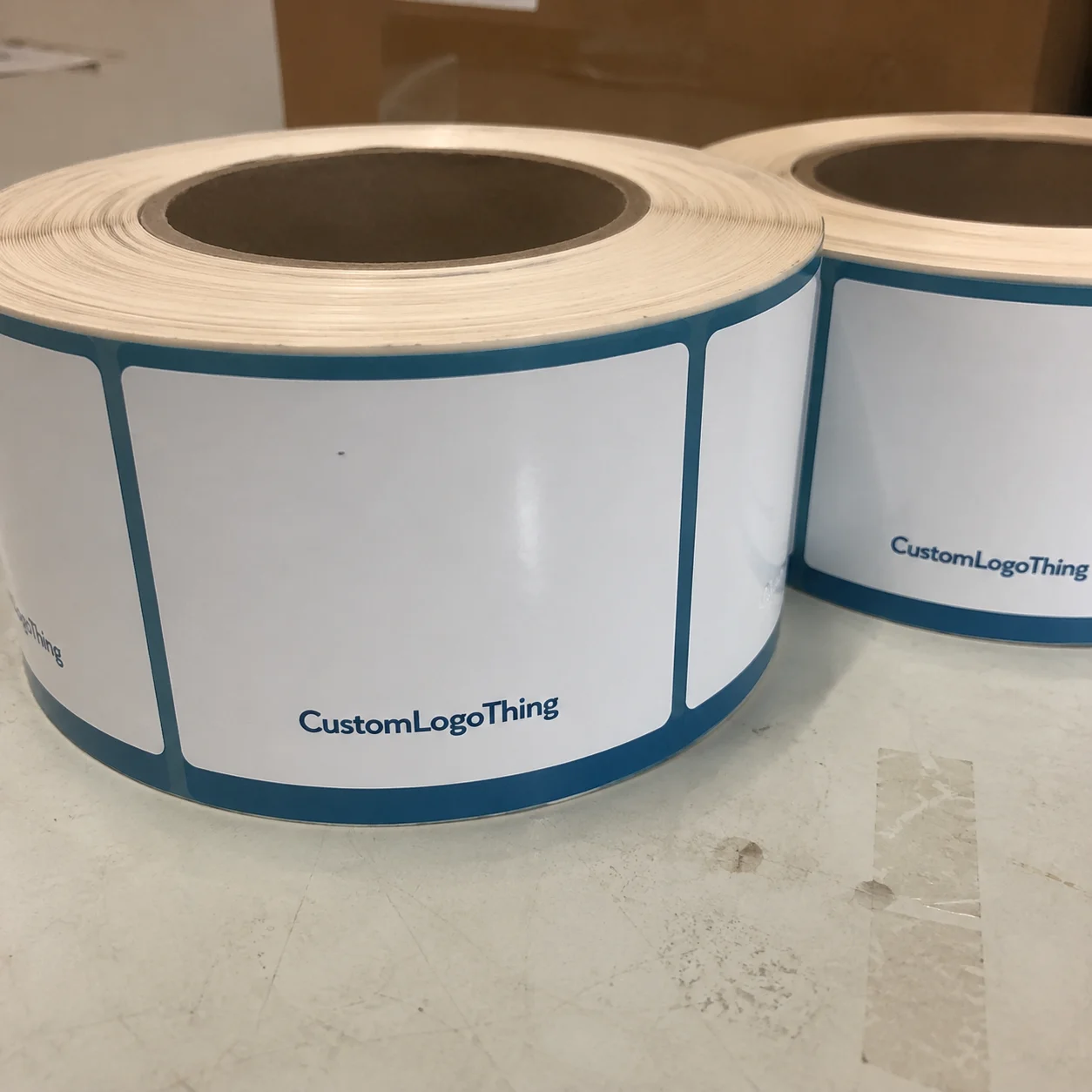
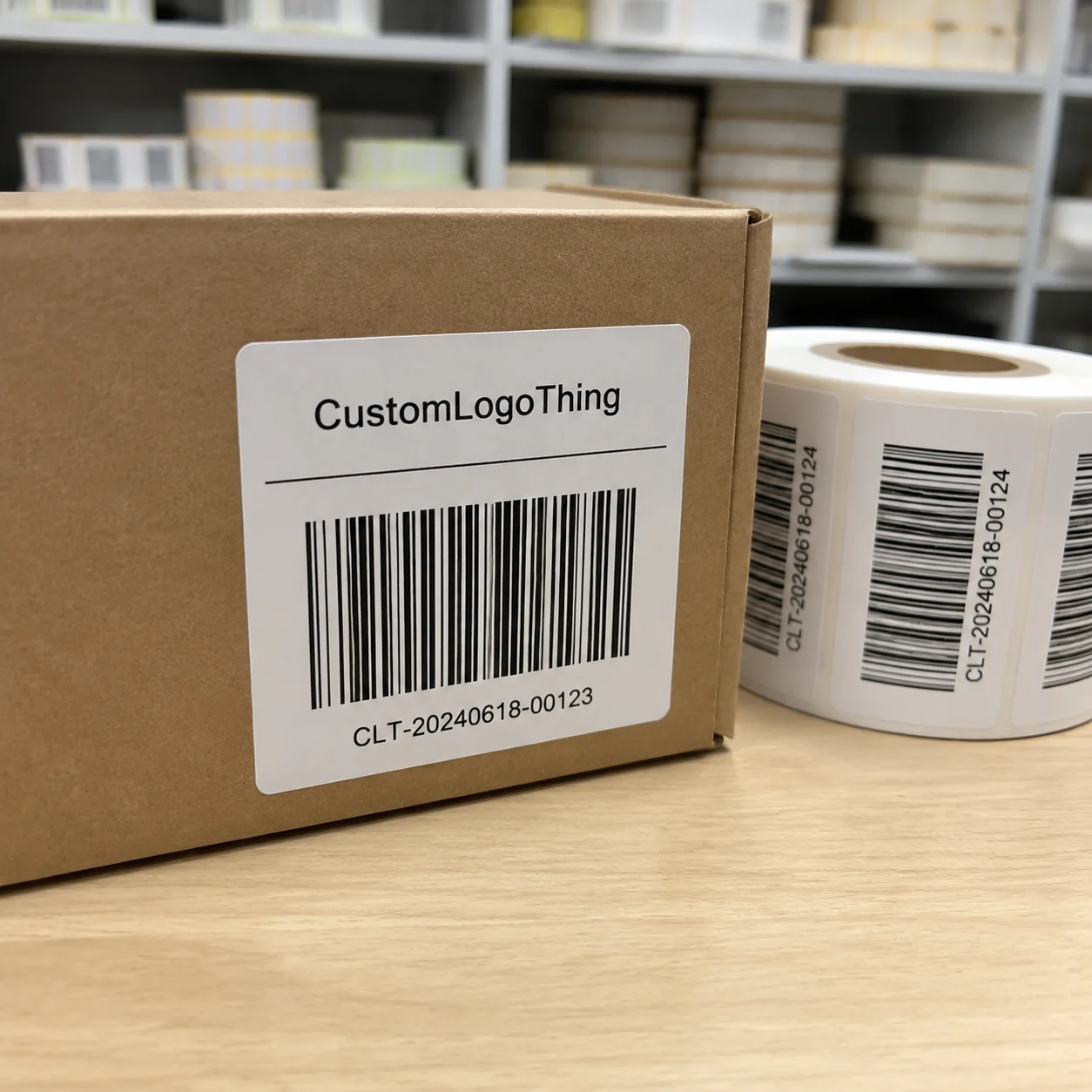
Custom Christmas Address Labels do one practical job well: they make outgoing mail look deliberate instead of rushed. That matters for holiday cards, boutique shipments, donor packets, and gift mail because the return address area is one of the few parts of an envelope or parcel people actually see. A plain text block works. A well-made label does the same job while adding a cleaner finish.
For buyers, the value is not just presentation. A label can unify envelopes, mailers, boxes, and inserts without requiring a full packaging redesign. That makes it useful for both personal mail and small business shipping, especially when speed, cost, and readability all matter at once.
A label is a mailing component first. The seasonal style should support the address, not compete with it.
The best versions are restrained. Clear type, enough contrast, and a simple holiday accent usually perform better than a crowded design. If the label is intended for a smooth envelope, the spec can stay simple. If it is going on a coated mailer, textured box, or gift package, the material and adhesive need more thought.
Custom Christmas Address Labels: What They Are and Why They Stand Out
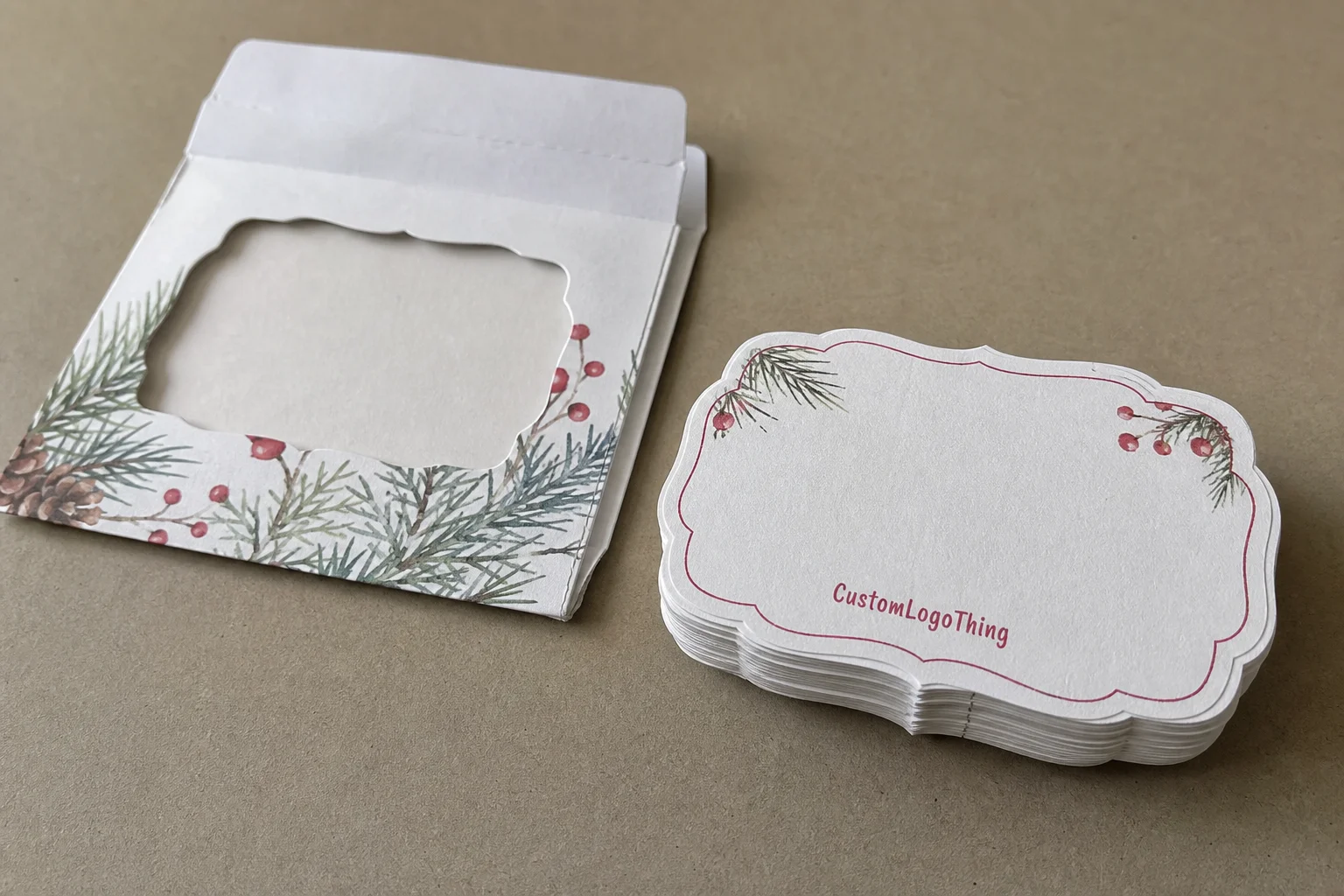
Custom christmas address labels are pressure-sensitive labels printed with sender or recipient information, usually combined with seasonal art, a logo, a monogram, or a simple decorative motif. They are not just generic address stickers. Size, layout, stock, and adhesive are chosen around the actual surface and the way the label will be used.
They stand out when they solve a layout problem cleanly. The address has to be readable at a glance. The label has to fit the mailpiece. The art has to add seasonal character without making the information harder to scan. That balance is what separates a useful label from a purely decorative one.
There are three common use cases. Families want coordinated holiday cards. Small businesses want shipping and gift mail to look more polished. Brands want seasonal mailings to match the rest of their branded packaging. In each case, the label is a low-cost way to improve the presentation of the whole package.
Holiday labels also work best when they stay restrained. A small snowflake, a narrow border, or a quiet color shift usually reads better than heavy effects or too many graphics. The label should still feel like a label. If it starts to look like a scrapbook panel, it is probably doing too much.
Surface matters. Paper labels are often fine for envelopes. Coated or synthetic materials are better when the label needs durability, moisture resistance, or better performance on shipping cartons and handled parcels. The right spec depends on where the label is going, not just how it looks in a mockup.
How the Label Design and Printing Process Works
The workflow is straightforward: artwork review, proof, approval, printing, finishing, and shipment. What usually slows the job down is not the press. It is incomplete files, late revisions, or unclear specifications about size, format, or surface.
The mailing information should always be the primary layer. Seasonal decoration is there to support it. A label can be festive and still follow basic readability rules. If the type is too small or the contrast is too weak, the design fails at its main task.
Once the layout is built, the proof is where problems are caught early. This is the point to check line breaks, spacing, bleed, cut shape, and whether the design still works at true size. A layout that looks balanced on a screen can feel cramped once it is reduced to actual label dimensions.
What printers usually need from you
Most production teams need final address copy, logo files if applicable, the intended label size, and a choice between sheet and roll format. If the logo is the only brand asset available, it can usually be worked into a simple seasonal layout. If the label needs to include a full address block, the hierarchy should clearly separate name, street, and city line.
File quality has a direct impact on the result. Low-resolution logos can print soft. Thin type can fill in on some stocks. Decorative borders can crowd the address if the safe area is too tight. These are not uncommon issues, which is why proofing matters before production starts.
Format choice also affects workflow. Sheets are common for smaller orders or hand application. Rolls make more sense for higher volumes or any operation that uses applicators and batches. For fulfillment teams, the right format can save time even if the design is identical.
Cost, Pricing, and What Actually Changes the Quote
Pricing for custom christmas address labels usually comes down to quantity, size, material, finish, and the amount of setup or artwork work required. Small orders cost more per label because press and prep costs are spread across fewer pieces. Larger runs lower the unit cost because setup is amortized over volume.
Special shapes, metallic effects, Custom Die Cuts, and rush production can move the price up quickly. Artwork cleanup can also affect the quote. A file that is ready to print is cheaper than a file that needs rebuilding. If you want a more accurate estimate, start with cleaner files and a clearer spec.
| Order Type | Typical Use | Usual Unit Cost | What Drives the Price |
|---|---|---|---|
| Small personal run | Holiday cards, family mail | $0.35-$0.90 each | Low quantity, basic setup, standard paper |
| Small business run | Boutique orders, client gifts | $0.18-$0.40 each | Moderate quantity, logo use, proofing, finish choice |
| Larger fulfillment run | Seasonal shipping, event mailers | $0.08-$0.22 each | High volume, roll format, efficient art setup |
These ranges are not fixed. Ink coverage, substrate choice, cut complexity, and the intended surface all affect the final number. A matte paper label for envelopes is a different spec from a durable label for a carton that will be stacked, handled, and shipped.
Setup charges are another detail buyers often miss. If a printer has to redraw a logo, adjust spacing, or create a custom cut line, that work appears in the quote. Sometimes a slightly different size avoids extra tooling costs. The useful question is not what is cheapest in isolation, but what spec gets the job done without unnecessary extras.
If the label is part of a seasonal packaging program, it helps to think beyond the label itself. A design that works with mailers, boxes, tissue, and inserts can add more value than a louder label that does not fit the rest of the system. That is where package branding becomes a practical decision rather than a marketing phrase.
Production Steps and Timeline: From Proof to Delivery
The usual sequence is file review, proofing, approval, printing, finishing, packing, and shipment. The timeline mostly depends on how complete the file is and how quickly the proof is approved. A clean order can move fast. A half-finished design with multiple revisions will not.
For a standard job, a reasonable expectation is about 12-15 business days from proof approval to shipment. Holiday volume can extend that. Specialty materials, custom shapes, and extra finishing steps can also add time, so peak-season orders need more margin than a routine print job.
What slows things down
The most common delays are predictable: the address list is still changing, the logo file is not usable, or the proof sits too long before approval. Typos discovered after approval are another frequent cause of rework. None of these issues are unusual, which is why the process needs a final check before production starts.
Shipping is the other variable. A label can be printed on time and still miss the mailing window if the delivery method is too slow. Roll labels, sheet labels, and packaged cartons can all affect freight cost and transit time. If the labels need to be in hand before cards are assembled or boxes are packed, shipping should be planned with the same care as printing.
The safe approach is to order earlier than feels necessary. That is not clever, but it works. The label sits inside a larger workflow that may include address verification, assembly, stuffing, and final mail prep. Any one of those steps can take longer than expected during the holidays.
Material, Adhesive, and Finish Choices That Affect Performance
Material is where the design meets actual use. Paper labels are the most economical and are usually enough for envelopes and light-duty applications. Coated paper gives sharper print contrast and a more polished look. Synthetic film adds durability and moisture resistance, which is useful for shipping cartons or handled parcels.
Adhesive strength matters just as much. A label for a smooth stationery envelope does not need the same bond as one going onto corrugated board or textured kraft stock. Stronger adhesive helps on rough or cold surfaces, but it is less forgiving if the label needs to be repositioned. The right choice depends on the surface, not on a generic claim of “best hold.”
Finish affects appearance and readability. Matte finishes reduce glare and often feel more refined for holiday mail. Gloss can look brighter, but it may reflect light under office lighting and be harder to photograph. Writable surfaces are useful if the label needs a hand-written note or number, though they usually trade away some print sharpness.
For labels that will move through a shipping workflow, it helps to think like an operations team. Surface rub, carton stacking, temperature swings, and moisture exposure all affect performance. A label that looks great on a flat sample may still fail in real use if the adhesive or finish is wrong.
If sustainability matters, ask about recycled paper, FSC-certified stock, or water-based inks. These choices do not rescue a weak design or poor adhesive, but they can align the label with a broader packaging policy without making the order more complicated. The best spec is the one that balances appearance, function, and disposal requirements.
Quality control also matters. A reliable supplier should check registration, color consistency, cut accuracy, adhesive performance, and address legibility where relevant. That is the minimum for a seasonal order, especially when the labels are tied to a fixed shipping window.
Common Ordering Mistakes That Create Delays or Waste
The most common mistake is treating the label as decoration instead of a mailing component. If the font is too small, the contrast too low, or the border too crowded, the label stops doing its core job. Holiday style is fine. It just should not reduce readability.
Size is another easy way to miss the mark. Too small, and the address looks cramped. Too large, and the label floats with too much empty space. The right size depends on the amount of text, whether a logo is included, and how much blank space should remain visible on the envelope or box.
- Skipping the proof can lead to typos, bad line breaks, and weak contrast.
- Using low-resolution art can make the finished label look soft or pixelated.
- Ordering too few labels can make the reprint more expensive than the first run.
- Waiting too late in the season can push even a simple order past the mailing window.
Address data is another source of waste. Even a good design can fail if the mailing list is stale. Before sending files to print, standardize abbreviations, verify postal codes, remove duplicates, and confirm names. It takes less time than fixing a batch of bad labels.
Surface mismatch is the other recurring issue. A label that works well on a smooth envelope may not hold on a textured box or coated mailer. Some adhesives grab immediately; others need a cleaner surface and more pressure. If the label needs to work across multiple surfaces, that should be stated up front.
Expert Tips for Better Holiday Label Results
If the goal is a better label, start with contrast. Dark type on a light background is still the most reliable option. Reverse designs can work, but they need enough breathing room and strong print quality to stay readable at a glance. Decorative elements are best kept to the margins.
One restrained accent usually beats a busy composition. Cleaner spacing, a clear hierarchy, and a stable finish often make the label feel more premium than adding more color or more graphics. Buyers notice clarity faster than decoration, especially on something they need to scan quickly.
For small brands, one label system can cover several uses if it is planned properly. The same visual family can work across holiday cards, parcel labels, gift packaging, and inserts. That creates consistency across retail packaging without making every touchpoint look identical.
It also helps to coordinate the label with the rest of the package without forcing everything to match exactly. Tissue, ribbon, thank-you cards, and boxes can share a color family or type style and still look natural. That approach is usually more useful than trying to build a perfect matched set.
If you are ordering custom christmas address labels for the first time, keep the process disciplined: define the use case, gather the final address copy, choose the size and finish based on the surface, and approve the proof only after checking it at full size. That sequence avoids most of the avoidable mistakes.
The simplest advice is still the most accurate: order early, keep the design readable, and choose the stock that matches how the label will actually be used. If the order needs to work on both envelopes and boxes, say so. If the mailing date is fixed, build in margin. The label does its job best when the production plan is clear.
What size should custom christmas address labels be for envelopes and packages?
Smaller sizes work best for standard envelopes because they keep the address readable without crowding the mailpiece. Larger labels are better for mailers or gift boxes if the label also needs to carry a decorative role. The right size depends on the amount of text and the surface, not just the space available.
How much do custom christmas address labels usually cost?
Pricing usually depends on quantity, size, material, finish, and whether the artwork is simple or fully custom. Small runs cost more per label because setup is spread across fewer pieces. Specialty shapes, premium finishes, and rush timing can raise the quote quickly.
How long does it take to get custom christmas address labels made?
A typical timeline is about 12-15 business days from proof approval to shipment, though holiday demand can extend that. Orders move faster when the file is ready, the proof is approved without revisions, and the shipping method fits the deadline. Waiting until peak season is where most delays happen.
What information should be on a custom Christmas address label?
At minimum, include the name and mailing address in a clear, legible format. If the label is for returns, add the sender name and return address in smaller type. Keep decorative elements secondary so the postal information remains easy to read.
Can custom christmas address labels be used for more than holiday cards?
Yes. They also work for retail shipping, gift boxes, client gifts, event mailers, and donor packets. A single label design can support both mailing function and seasonal branding if the size, adhesive, and finish match the surface and handling conditions.