Custom laminated bags do more than make a shelf look finished. They can improve barrier protection, stabilize seals, and raise perceived value at the same time, which is why buyers keep returning to them for coffee, snacks, powders, pet treats, and supplements. From a packaging buyer’s point of view, the real question is not whether the bag looks good; it is whether the structure protects the product, runs on the line, and still fits the margin target.
That is the commercial appeal. A well-built laminated pouch can carry several priorities at once: print performance, product protection, and retail presentation. If you are comparing formats, the right answer often sits between a plain stock bag and a fully bespoke structure such as Custom Packaging Products that are matched to fill volume, shelf life, and branding goals.
Used well, custom laminated bags become a packaging decision, not just a graphics decision. That distinction matters because the cheapest-looking option is often the most expensive one after leaks, returns, line stoppages, or weak shelf appeal start showing up in the real world.
What custom laminated bags solve on the shelf
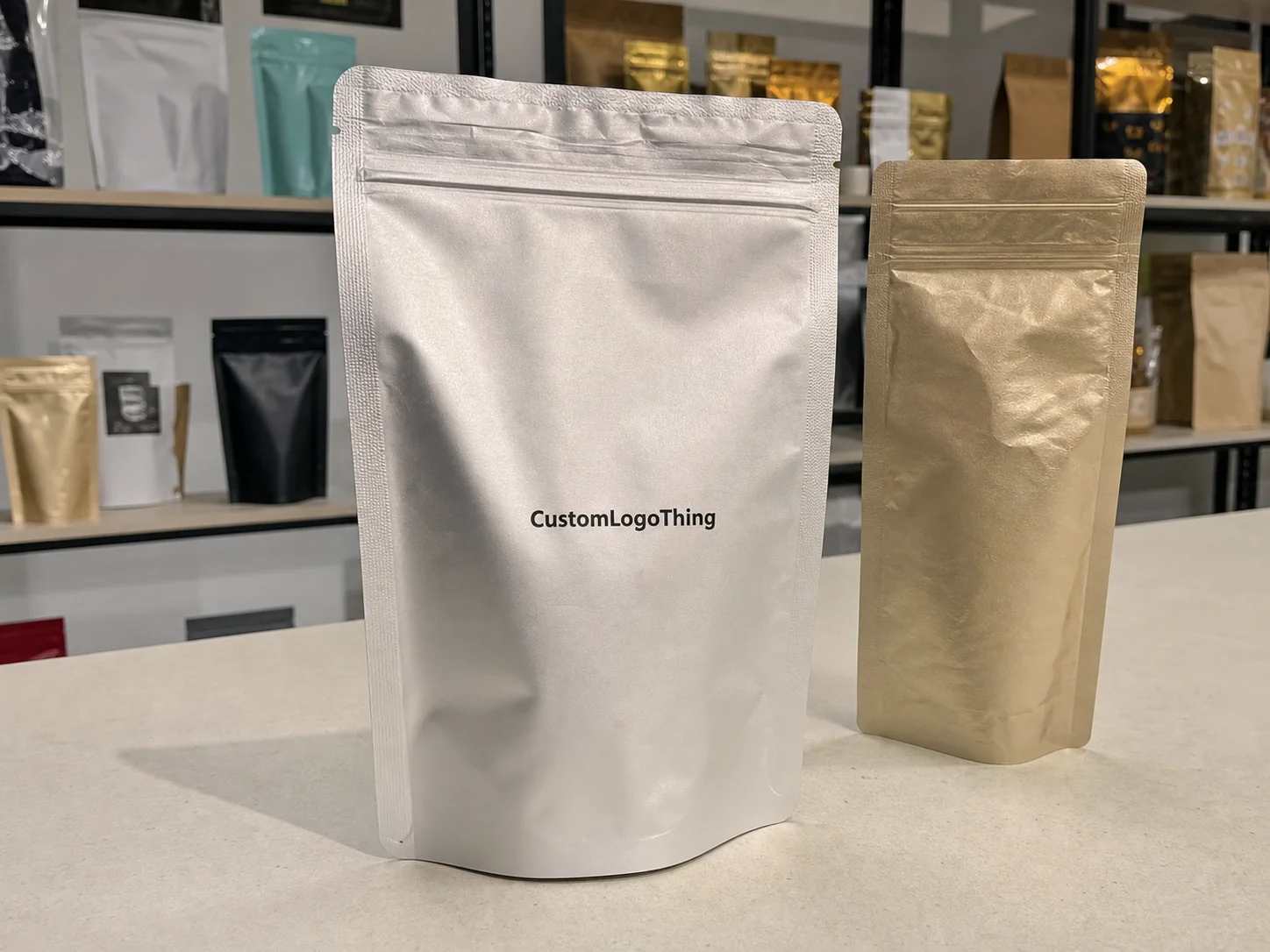
The practical surprise is that custom laminated bags solve multiple problems at once. Better print is obvious. Better barrier performance is the part many buyers miss until product quality starts drifting during distribution or storage. Moisture pickup can soften a snack. Oxygen ingress can stale coffee. Light can fade color or degrade active ingredients. Odor transfer can wreck a premium formula before a customer even opens the pouch.
In plain terms, lamination bonds more than one film into a single structure, so each layer can do a different job. One layer carries graphics. Another manages barrier. Another handles sealing. That division of labor is why a laminated structure usually outperforms a single-layer bag that tries to do everything with one film.
The right spec is not the thickest bag on the quote sheet. It is the combination that preserves product quality, matches the fill line, and supports the price point. A 3 oz snack product and a 2 lb coffee bag do not need the same structure, even if they share the same branding style.
For snacks, coffee, protein powders, pet treats, and nutraceuticals, the package often sits in a tough middle ground. Buyers want strong branding and enough barrier to support shelf life, but they do not want to overbuild. That is where custom laminated bags make sense: they let you tune protection rather than overpay for generic performance you do not need.
They also help with package branding. If a product is competing in a crowded aisle, the difference between average and premium often comes down to surface finish, stiffness, seal quality, and the way the pouch holds its shape. Those are small signals. On shelf, small signals add up fast.
If the package looks expensive but fails at the seal, the print did not matter. The customer only remembers the leak, the stale product, or the dented display.
Across the packaging industry, lamination is treated as performance architecture more than decoration. For a broader view of materials and test methods, the Packaging School and industry resources are useful starting points, while distribution testing standards from ISTA help buyers think beyond the artwork panel.
How the laminated structure turns film into a better package
A laminated bag usually starts with an outer printable layer, a barrier layer, and a sealant layer. Depending on the design, there may also be tie layers, coatings, or specialty treatments that improve bonding and processing. The goal is simple: create a stack that can be printed cleanly, resist puncture, protect the contents, and seal reliably under production conditions.
Common constructions show why the stack matters. PET/PE is a practical baseline for many dry goods. PET/VMPET/PE adds a metallized barrier layer that improves moisture and oxygen resistance while also giving the package a more premium, reflective look. OPP-based builds can work well where gloss, stiffness, and cost control matter, though the exact structure should follow the product’s risk profile rather than a generic preference for one film over another.
Here is the connection buyers often miss: lamination improves more than barrier. It can improve stiffness, print definition, puncture resistance, and handling on the line. That is why a bag that feels cheap in hand is often a signal that the structure is underbuilt, not just underdesigned.
There is a tradeoff. More layers can mean better protection, but they can also raise cost and create recycling challenges. If paper is part of the build, FSC-certified sourcing matters only when chain-of-custody paperwork is in place. If the goal is better end-of-life performance, mono-material work deserves serious attention, but it should be tested honestly rather than sold as a universal fix.
In practice, the best laminated build is the one that balances protection and manufacturability. A package that is technically impressive but tricky to run is a bad commercial choice. A simpler structure that runs cleanly and meets shelf-life targets is often the smarter buy.
If you are comparing this format with rigid or carton-based packaging, keep the whole product story in mind. Some products do better in custom printed boxes; others need the lower shipping weight and stronger barrier of flexible formats. A good packaging decision starts with the product hazard, not with the decoration style.
Choosing the right build: barrier, finish, and format
Barrier choice should start with the product hazard. Moisture-sensitive goods need a different stack than aroma-sensitive products. Oxygen-sensitive ingredients need better transmission control than shelf-stable dry mixes. Greasy products need sealant compatibility. Abrasion during shipping may push you toward a tougher outer surface or a higher-puncture structure.
Finish is a branding decision, but it is not only a branding decision. Matte gives a softer, more deliberate look and can hide handling marks better. Gloss delivers stronger color pop and can make saturated graphics feel brighter. Metallic finishes add perceived value quickly. Soft-touch can feel premium, but it only makes sense when the margin and shelf position can justify it.
Format matters just as much. Stand-up pouches are the retail workhorse because they display well and give the customer a stable footprint. Flat bags work better for portions, samples, and low-fill applications. Gusseted bags suit bulk or higher-volume fills. Zippers, tear notches, degassing valves, and hang holes should be added only when they help the user or the line. Every feature has a cost.
One useful way to think about custom laminated bags is to match the build to the product journey. A coffee pouch needs aroma control and usually a valve. A supplement bag may need stronger light protection and crisp print for compliance-heavy labeling. A pet treat pouch often needs better puncture resistance because sharp edges and repeated handling can create failures even when the shelf sample looks fine.
For sustainability, the best choices are the ones that reduce waste without pretending the problem is simple. Downgauging can save material if the pouch still performs. Mono-material structures can help recycling pathways if they are compatible with local collection systems. Over-specifying a heavy structure that nobody needs is not environmentally smart just because it feels substantial.
Two practical checkpoints help here. First, ask whether the barrier is actually required for the shelf life you want. Second, ask whether the finish and format help sell the product or merely make the sample look expensive. That discipline keeps packaging design tied to sales rather than vanity.
From a buyer’s point of view, the best quote is usually the one that gives options: a value build, a premium build, and a cost-down alternative. That comparison makes tradeoffs visible before the order is locked.
Cost, pricing, MOQ, and unit economics
Pricing is where most conversations get fuzzy, so it helps to separate the drivers. Material stack is usually the biggest one. Then size. Then print complexity. Then special finishes. Accessories such as zippers, valves, tear notches, and euro holes add cost too. Order quantity changes everything because setup charges are spread across the run.
For example, a simple printed PET/PE pouch might land around $0.12 to $0.20 per unit at 10,000 pieces, depending on size and graphics. A PET/VMPET/PE pouch with a zipper and matte finish may sit closer to $0.22 to $0.38 per unit. Higher-barrier or specialty builds with soft-touch finishes, heavy white ink coverage, or unusual dimensions can move into the $0.35 to $0.60 range or beyond. Those are not universal prices, but they are realistic enough to anchor the conversation.
| Option | Typical structure | Best fit | Indicative unit cost |
|---|---|---|---|
| Value build | PET/PE | Dry goods, snacks, simple retail launches | $0.12 to $0.20 |
| Mid-tier barrier build | PET/VMPET/PE with zipper | Coffee, pet treats, supplements | $0.22 to $0.38 |
| Premium build | High-barrier laminate with matte or soft-touch finish | Higher-value products, longer shelf life, strong shelf presence | $0.35 to $0.60+ |
The MOQ effect is real. A $600 setup fee looks manageable on 20,000 units, but it hurts on 2,000 units. That is why small runs can look expensive even when the material cost is not extreme. Buyers sometimes blame the supplier for that gap, when the math is mostly a function of fixed setup being spread too thin.
When comparing quotes, match the specification line by line: dimensions, film structure, thickness, print method, finish, accessories, and whether sampling or plates are included. A quote that is $0.04 lower may simply be missing a feature you need. That is not a bargain. It is an incomplete comparison.
Also look at the hidden costs: tooling, plates, freight, testing, and rework. A low ex-works price can turn into a high landed cost once the order moves through inspection, shipping, and reprint issues. The real number is cost per thousand usable bags that arrive on time and run properly.
If your brand is deciding between flexible packaging and more rigid formats such as custom printed boxes, use a unit-economics lens. Flexible laminates often reduce freight and storage costs, but the savings only matter if the product survives the channel with fewer complaints and fewer write-offs.
Production steps, lead time, and approval checkpoints
The workflow is usually straightforward, but the handoffs matter. It starts with the brief, then dieline development, artwork, proofing, print, lamination, conversion, inspection, and shipment. Each stage can create delay if the buyer is vague, if the artwork needs correction, or if structural details were not agreed up front.
Most delays happen before production starts. Late design changes are the classic problem. Color corrections are another. Missing spec details create back-and-forth. If the supplier has to guess about fill weight, product sensitivity, or line settings, the schedule slips because nobody wants to approve a package that may fail after launch.
Timelines depend on complexity. Simple constructions with familiar materials can move faster. Custom multilayer builds, specialty finishes, and new tooling take longer. A sensible expectation for a standard custom run is often 12 to 15 business days from proof approval, with more time needed for sampling, structural revisions, or high-volume production queues. If the bag includes a valve, zipper, or unusual finish, build extra time into the schedule.
Lead time should also include real testing. That means physical samples, not only digital mockups. It means checking the pouch on the actual filling line. It means verifying seal strength, drop resistance, and whether powders or oils contaminate the seal area. If the package is meant to travel through rough handling, consider test methods aligned with ASTM or ISTA protocols rather than relying on visual approval alone.
When paper components are part of the build, sustainability claims should be verified carefully. FSC sourcing applies only when the chain of custody is documented. A claim without paperwork is just marketing. Buyers should ask for proof, especially if the package copy will mention responsible sourcing.
Here is a simple rule: approve the structure before you approve the final artwork. If the packaging mechanics are wrong, attractive graphics will only make the mistake more expensive.
One more practical point. Keep a final sign-off checklist that covers dimensions, seal width, zipper placement, color targets, and carton pack-out. Those small items protect launch dates when the project is moving quickly.
Common mistakes that hurt performance or inflate cost
The most common mistake is overspecifying barrier or thickness. Buyers sometimes choose the heaviest structure they can find because it feels safer. That can raise cost without improving sell-through. If the product only needs moderate moisture resistance for a short shelf life, a premium barrier build may be money wasted.
Another mistake is ignoring the filling line. Heat settings, dwell time, and contamination from powders or oils can make a bag fail even when the material spec is sound. Seal problems are usually system problems, not just film problems. If the pack cannot be sealed repeatably under normal line conditions, the spec is wrong for the operation.
Artwork-only thinking causes trouble too. A packaging team can spend weeks polishing graphics while forgetting distribution realities such as vibration, stacking, light exposure, or humidity swings. That is how a beautiful sample becomes a weak commercial package. The better approach is to treat package branding and physical performance as one decision.
Comparing vendors on price alone is another easy trap. You want value per thousand usable units, not just the lowest quote. A vendor that delivers cleaner registration, better seal performance, and fewer rejects may cost more up front but less in total once returns and rework are counted.
For buyers working across several formats, the lesson carries over. Whether you are buying flexible pouches, cartons, or custom laminated bags, the product risk should determine the spec. The shelf does not reward overbuilding. It rewards a package that protects, communicates, and runs efficiently.
The cheapest package is the one that never needs to be remade. That is a harsher standard than most quotes acknowledge, but it is the one that matters.
Expert tips and next steps before you request a quote
Start with a one-page spec sheet. Include dimensions, fill weight, product type, target shelf life, expected storage conditions, finish preference, closure features, and annual volume. Add whether the product is sensitive to moisture, oxygen, light, odor, grease, or crushing. That single page will improve quote accuracy more than a long email thread with vague adjectives.
Ask for at least two or three options. One should be a value build. One should be a premium build. One should be a cost-down alternative if your margin is tight. That comparison lets you see where the real price jumps happen, especially if you are deciding whether a metallic layer, soft-touch finish, or zipper is worth the added spend.
Request physical samples or mockups and test them on the actual line. That sounds basic, but it is where a lot of launches go sideways. A pouch can look correct and still fail because the seal window is too narrow, the zipper sits too high, or the film wrinkles at the wrong point during filling. Real testing is cheaper than a production delay.
Custom laminated bags work best when the buyer thinks in systems. The package needs to protect the product, but it also needs to fit the machinery, the brand story, the distribution environment, and the sales price. If one of those pieces is off, the others carry the cost.
Use the final comparison to choose the structure that protects the product, fits the budget, and supports the launch plan. That is usually the right answer, even if it is not the flashiest one. In the end, custom laminated bags are worth buying when they improve real-world performance, not just when they make a sample sheet look impressive.
What products are best suited to laminated bags?
Products that need moisture, oxygen, aroma, or grease protection are the strongest fit. Common examples include coffee, snacks, pet treats, powders, supplements, and premium dry goods. They are also useful when shelf appearance matters as much as barrier performance.
How do laminated bags compare with single-layer poly bags?
Laminated bags usually deliver better barrier performance, stiffness, and print quality. Single-layer poly bags are typically cheaper and simpler, but they offer fewer performance options. If product protection or shelf appeal is critical, lamination is usually the better commercial choice.
What drives laminated bag pricing the most?
Material structure, bag size, print complexity, finishes, and order quantity usually have the biggest impact. MOQ changes the unit cost sharply because setup expenses are spread across fewer bags. Freight, tooling, and testing can also change the final landed cost.
How long does production usually take?
Lead time depends on artwork approval, material availability, and whether the build uses special finishes or features. Samples and proofing can add time, especially if color matching or structural changes are needed. Simple runs are faster than highly customized builds with multiple layers or specialty conversions.
What should I send for an accurate quote?
Send dimensions, fill weight, product type, target shelf life, and total quantity. Include finish preferences, closure features, and whether the bag must run on a specific filling line. The more clearly you define the product risk and production setup, the more accurate the quote will be.