Parents often replace the water bottle, lunch container, hoodie, or pencil case before they replace the label that was supposed to prevent the loss. That is the quiet reason Custom Name Stickers for kids are not just a cute school accessory. They are a small identification system, expected to survive wet hands, lunchroom bins, backpack abrasion, dishwasher cycles, sanitizer residue, and hurried adult scanning.
The difference between a useful label and a frustrating one usually comes down to four things: material, adhesive, surface, and washing routine. Miss one of those, and even a good-looking sticker can fail early.
What Custom Name Stickers for Kids Solve at Home, School, and Camp
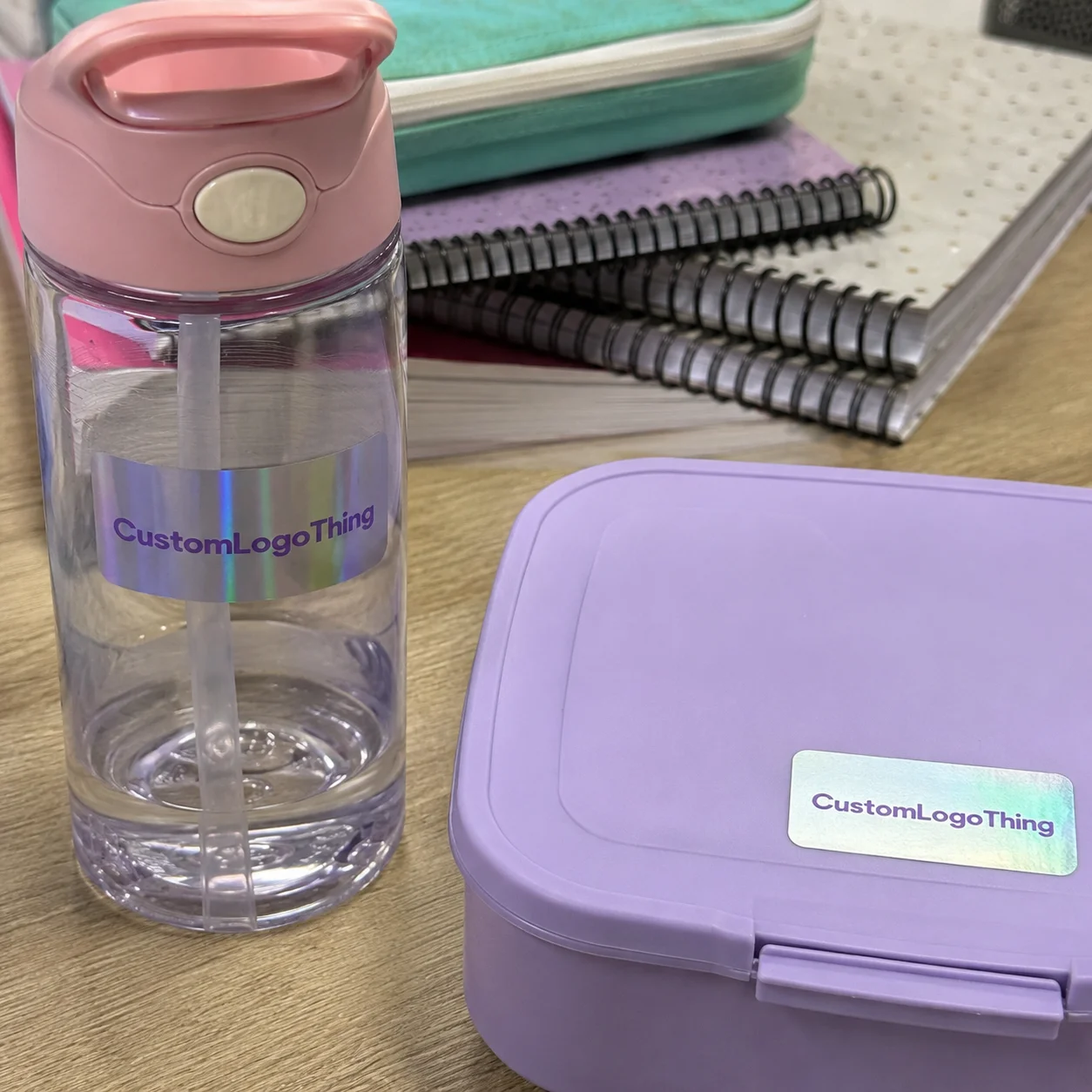
Custom Name Stickers for kids are personalized adhesive labels printed with a child’s name, initials, classroom, allergy note, icon, contact detail, or some combination of those elements. The best ones do three jobs at once: identify ownership, communicate useful information, and stay attached long enough to justify the order.
Simple on paper. Less simple in a backpack.
A daycare cubby label may need to be large, colorful, and recognizable to a toddler who cannot read yet. A pencil label has to wrap around a tight radius without lifting at the edge. A camp trunk label may need a full name, cabin group, and high contrast. A lunch box label has to handle condensation, food residue, handwashing, and, in many homes, dishwasher heat.
Sports gear, water bottles, art boxes, headphones, medication containers, sleepaway camp kits, chargers, and sunscreen tubes all create different performance demands. One sticker format rarely handles all of them equally well.
Handwritten marker labels can work for a week or two, especially on paper folders or disposable bags. Masking tape is cheap but absorbs moisture and looks tired quickly. Iron-on labels are useful for fabric, yet they do nothing for bottles, lunch containers, helmets, or plastic supply boxes. Generic blank stickers still require handwriting, and handwriting becomes a real problem when twenty children own the same blue folder, black shin guards, or stainless bottle.
From a packaging point of view, a child’s name label is doing the same job as product packaging. It carries identification. It resists handling. It supports fast recognition. It communicates under imperfect conditions. In branded packaging and retail labels, scuffing, legibility, adhesion, and surface compatibility are not decorative details; they determine whether the package functions. Kids’ labels deserve the same logic, scaled down to a two-inch sticker on a snack cup.
Packaging-style rule: a label is only “durable” if the material, adhesive, surface, and cleaning routine are matched. A strong sticker on the wrong surface is still the wrong sticker.
That distinction matters because buyers often ask for “waterproof” labels when they really need dishwasher-resistant labels, freezer-safe labels, removable labels, clothing tag labels, or short-term classroom labels. Those are not identical specifications.
How Kids’ Personalized Labels Work: Materials, Adhesives, and Print
Every sticker has layers. The visible top layer is the face stock, which may be vinyl, BOPP film, coated paper, or another printable material. The artwork is printed on that surface or protected under a coating. Beneath it sits the adhesive layer. Under that is the release liner, which peels away during application.
Vinyl is flexible and commonly used for curved bottles, helmets, storage bins, and outdoor gear. BOPP, short for biaxially oriented polypropylene, is common in product packaging because it is moisture resistant, dimensionally stable, and clean-looking. Paper is economical and fine for notebooks, folders, party favors, reward stickers, and short-term school supplies, but it is usually the wrong choice for dishwashers.
Laminated stocks add a protective film over the print. That laminate may be gloss, matte, or soft-touch depending on the supplier. For kids’ labels, the practical purpose is not luxury; it is scuff resistance, water resistance, and protection from fading or ink wear. A laminated film label typically costs more than an uncoated paper sticker, but the difference is visible after a few weeks of lunchbox duty.
Adhesive matters as much as the face stock. A removable adhesive is easier to take off but may not survive repeated washing. A permanent adhesive bonds more aggressively to smooth plastic, metal, and glass. Freezer-grade adhesives stay tacky in cold conditions, which helps lunch packs and frozen storage containers. Dishwasher-resistant adhesives need both heat and water resistance, not just a waterproof top film. Fabric-friendly adhesives are a separate category because cloth moves, stretches, sheds fibers, and absorbs detergent.
Curved surfaces are the troublemakers. Bottles, snack cups, marker barrels, lip balm tubes, and sunscreen containers place constant tension on the sticker edge. A stiff label wants to spring back. Once one corner lifts, water and dirt get underneath. Rounded corners, thinner films, and firm edge pressure during application can make a visible difference.
Digital printing is common for personalized batches because every sheet can carry different names without making separate plates. Larger school, daycare, camp, or fundraiser orders may be produced on sheets or rolls depending on the printer’s workflow. If you are ordering through Custom Labels & Tags, the practical question is not only “digital or roll-fed?” It is whether the chosen construction fits the surface, the quantity, and the cleaning routine.
Finish choices affect readability. Gloss looks bright and wipes clean, but glare can reduce legibility under fluorescent classroom lighting. Matte has a softer look and photographs well. Clear labels can look polished on bottles, electronics cases, and hard plastic containers, although contrast depends on the object color. White labels usually give the strongest readability. Write-on surfaces are useful for dates, classrooms, or temporary notes, but they may need a permanent marker and drying time.
No sticker is magic. Kids’ name labels can handle dishwashers, handwashing, sunscreen, sweat, backpack friction, freezer storage, and daycare sanitizing routines only when the full specification is built for those exposures. For broader packaging durability context, organizations such as the International Safe Transit Association publish test-focused resources that show how much real-world handling can differ from a neat product photo.
Key Specs to Choose Before Ordering Name Labels
Start with size. Tiny pencil labels may be 0.5 by 1.5 inches or narrower. Medium lunch box and notebook labels often sit around 1 by 2.5 inches. Larger bin, backpack, or camp labels may run 2 by 3 inches or more. Wraparound bottle labels need enough length to hold the name while leaving room for the curve. Too wide, and the edges fight the shape.
Shape is not just decoration. Rectangles are efficient on a sheet and easy to read. Circles and ovals feel friendlier for younger children. Die-cut icons can support themes like dinosaurs, rainbows, rockets, stars, or soccer balls. Rounded corners are usually more durable than sharp corners because they reduce the first point of peeling. Small detail. Real consequence.
Next, decide the information hierarchy. The child’s name should come first. Classroom, teacher name, phone number, allergy note, bus route, or team name can follow only if space allows. Overfilled labels fail because nobody can read them quickly. Teachers, coaches, and caregivers are not studying packaging layouts; they are sorting thirty similar items in a noisy room.
Fonts should be boring enough to work. Rounded sans serif fonts, clear uppercase-lowercase combinations, and generous spacing outperform decorative scripts on small labels. A five-year-old may recognize an icon before reading a full name, so a small panda, lightning bolt, apple, or color band can help. Icons are especially useful for pre-readers, twins, shared classrooms, sports teams, and camp groups where similar gear piles up fast.
Color contrast deserves more respect. Navy text on white is more useful than pale peach on beige. Black on yellow, white on dark blue, and dark green on white all read well from a distance. Trendy low-contrast palettes look good in a proof, then fail inside a backpack or on the bottom shelf of a daycare cubby.
Safety should guide placement and content. Ask about non-toxic inks or coatings for items handled by younger children. Keep loose labels away from infants and toddlers who mouth objects. Avoid unnecessary personal information on public-facing items such as backpacks, scooters, helmets, jackets, and outerwear. Full names may be right for classroom supplies; initials or first name plus icon may be smarter for gear used in parks, airports, sports facilities, and travel settings.
Sheet format is convenient for parents because it stores flat in a drawer and can include mixed sizes. Roll format can be better for schools, daycare centers, small brands, or fundraiser packs where staff apply many labels in sequence. For buyers comparing labels with other Custom Packaging Products, sheet versus roll is a workflow choice as much as a price choice.
One more spec is easy to miss: the surface texture. Smooth stainless steel, glossy plastic, and glass usually give adhesives a better chance. Pebbled plastic, silicone, rubberized coatings, powder-coated bottles, and flexible fabric are more difficult. If the item feels soft, waxy, oily, or heavily textured, ask before assuming a standard waterproof label will hold.
Pricing, MOQ, and Unit Cost for Personalized Kids’ Stickers
Pricing is driven by material, size, shape, finish, lamination, quantity, personalization complexity, proofing requirements, and shipping speed. MOQ means minimum order quantity: the smallest quantity a printer needs to make setup, material handling, proofing, printing, finishing, packing, and administration economical.
Unit cost usually drops as quantity rises because setup and proofing are spread across more stickers. A parent pack with 40 to 80 labels might cost more per piece than a classroom order with 500 labels or a camp order with 2,000 labels. That does not make the parent pack a bad buy. It simply means the economics are different.
| Order Type | Typical Quantity | Common Material | Estimated Unit Range | Best Fit |
|---|---|---|---|---|
| Parent starter pack | 40–80 stickers | Laminated vinyl or BOPP | $0.25–$0.75 each | School supplies, lunch items, bottles |
| Sibling or family pack | 100–250 stickers | Waterproof film with mixed sizes | $0.18–$0.45 each | Multiple names and household gear |
| Classroom or daycare batch | 300–1,000 stickers | BOPP, vinyl, or coated paper | $0.08–$0.28 each | Cubbies, folders, bins, art supplies |
| Camp or fundraiser order | 1,000–5,000+ stickers | Laminated waterproof film | $0.04–$0.18 each | Large name lists, kits, group distribution |
These are planning ranges, not guarantees. A simple paper sheet can be cheaper. A waterproof laminated die-cut label with fifty different names, rush proofing, and split shipping can cost more. Specialty shapes add cutting time. Multiple names add data handling. Artwork cleanup adds labor. Shipping can surprise buyers if the order is needed fast.
Waterproof or dishwasher-resistant labels cost more than paper labels because the material, adhesive, coating, and quality-control expectations are higher. They may still save money. If a $0.35 label keeps a $20 stainless bottle out of the lost-and-found pile, the math is not subtle.
Many buyers study the wrong number. Cost per sticker is useful, but cost per protected item is more useful. A durable label on one lunch box, one water bottle, and one jacket tag may prevent three replacement purchases in a semester. That is a better comparison than paper versus film on price alone.
Before asking for a quote for Custom Name Stickers for Kids, prepare the quantity, size, material preference, number of unique names, finish, delivery deadline, and use case. If the labels must survive machine washing or dishwashing, say so early. If they are for short-term classroom folders, say that too. Overspecifying can waste money; underspecifying creates avoidable failure.
Process and Timeline: From Name List to Delivered Sticker Sheets
The ordering flow is usually straightforward: choose the format, submit the names, select the design, confirm size and material, receive a proof, approve the artwork, print, finish, pack, and ship. The slow parts are rarely the press itself. They are decisions, proof approvals, missing data, and late changes.
Proofing is where errors get caught. A good proof review checks spelling, name length, layout, color expectations, cut lines, icons, and whether the longest name still reads clearly. Names like “Alex” and “Christopher” do not occupy the same space. Hyphenated names, classroom codes, allergy notes, and phone numbers need deliberate layout choices.
Timelines depend on order size, number of unique names, custom artwork, material availability, lamination, die cutting, packing complexity, and shipping method. As a broad planning range, many personalized sticker orders need about 5 to 10 business days after proof approval. Larger or more complex batches may need 10 to 18 business days before transit. Rush work may be possible, but it can limit material options and increase cost.
Proof approval is the gate. Production typically does not start until the proof is approved, because printing the wrong spelling beautifully is still a bad outcome. If a printer sends a proof on Tuesday and approval arrives Friday afternoon, the schedule has changed. Not because anyone is slow. Because the job was not released.
Build in buffer time before the first day of school, daycare start dates, team travel, or camp packing deadlines. A practical rule: order before supplies are packed, not the night before everything needs to be labeled. Parents know the night-before scene: a permanent marker, a pile of gear, and a rising sense of defeat.
For larger programs, one clean spreadsheet can save days. Use separate columns for first name, last name, classroom or group, icon, color, and notes. Avoid mixing nicknames and legal names unless that is intentional. If the labels are part of school store merchandise, camp kits, or a fundraiser pack, align the colors and icons with the broader packaging design so the finished sheets feel organized rather than patched together.
Quality control should include more than a quick glance. Check that the cut line does not trim letters or icons. Confirm the laminate covers the printed area. Look for color shifts that reduce contrast. On large name lists, sample several short names, long names, hyphenated names, and names with punctuation. One layout can look fine for “Mia” and crowded for “Maximiliano.”
Common Mistakes That Make Kids’ Labels Peel, Smudge, or Go Missing
The biggest mistake is choosing the prettiest design without checking whether the material matches the object and washing routine. A paper label with watercolor artwork can be lovely on a notebook. It is a poor candidate for a bottle that goes through a dishwasher three times a week.
Application conditions create many failures. Stickers do not bond well to wet, oily, dusty, textured, or cold surfaces. Wash the surface, dry it fully, avoid touching the adhesive, apply firm pressure from the center outward, and give the adhesive time to build bond strength before washing. Many pressure-sensitive adhesives improve over 24 hours. Immediate dishwashing is asking a lot.
Placement matters too. Avoid seams, ridges, flexible silicone, rubberized coatings, pebbled plastic, and areas that get constant hand friction. The side of a smooth bottle is usually better than the curved shoulder near the cap. The flat lid of a lunch box may be better than a textured bottom. On clothing, a care tag is often a better target than stretchy fabric.
Design errors are quieter but just as damaging. Tiny fonts, pale colors, thin strokes, and crowded illustrations become unreadable after a week in a backpack. If a label needs to be read by a teacher standing three feet away, design for that distance. If it is only for a pencil, accept that the layout must be stripped down.
Name-list errors are preventable. Misspellings, outdated classroom names, old phone numbers, and nickname confusion all slip through when proofing is rushed. For group orders, appoint one person to own the final list. Not five people. One.
Dishwasher failures deserve nuance. Sometimes the material was wrong. Sometimes the label was placed near a heating element, wrapped over a curved edge, washed before cure time, or applied to a bottle with an oily residue. If labels fail repeatedly on one item but work elsewhere, the surface or adhesive choice is usually the culprit, not simply rough handling.
There is also a privacy mistake: printing too much personal information. A full name and phone number may make sense inside a lunch box or on classroom supplies. It may be excessive on a backpack, helmet, or jacket worn in public. Use initials, first name, color coding, or an icon where identification can happen without broadcasting details.
For sustainability-minded buyers, ask whether paper stocks are responsibly sourced or whether backing waste can be reduced on larger programs. The Forest Stewardship Council is a useful reference point for paper sourcing conversations, though waterproof films and laminated labels involve different tradeoffs than paper-based product packaging or custom printed boxes.
Build a Label Plan Before You Buy
Do a quick inventory before ordering. List drinkware, lunch items, clothing tags, classroom supplies, sports gear, medication containers, headphones, chargers, camp equipment, and storage bins. Count actual items, then add 10 to 20 percent extra for replacements, new supplies, and the mystery objects that appear halfway through the term.
Group items by surface and exposure. Smooth bottles, hard lunch containers, and plastic supply boxes usually need waterproof film. Paper folders and notebooks can use lower-cost labels. Clothing tags need fabric-friendly or tag-specific labels. Temporary classroom bins may benefit from removable labels. Medication containers may need high-contrast text and enough space for an allergy or dosage note, depending on school policy.
Decide what information belongs on each category. Full name may be right for school supplies. First name and last initial may be enough for daycare. Initials or an icon may be safer for public-facing gear. Allergy notes should be readable, not buried under decoration. A red “No Nuts” icon that can be understood in two seconds is better than a paragraph in six-point type.
- Measure first: check bottles, pencils, snack cups, electronics cases, and clothing tags before selecting sizes.
- Clean the name list: confirm spelling, nicknames, classrooms, teams, and phone numbers before proofing.
- Choose by exposure: match waterproof, write-on, removable, or fabric-friendly materials to the object.
- Plan identification: use icons or color coding for pre-readers, siblings, teams, and shared classrooms.
- Quote clearly: provide quantity, dimensions, material, finish, deadline, and number of names.
If you are comparing options, ask for plain-language recommendations rather than only asking for the cheapest sticker. Tell the supplier what the labels will touch, how they will be washed, and how long they need to last. A competent label quote should connect the construction to the use case.
The practical promise is modest, which is why it works: fewer lost items, faster identification, and labels that fit actual daily handling. Buy custom name stickers for kids as a labeling system, not a decorative afterthought, and you have a much better chance of getting Stickers That Stay readable, stay attached, and save parents from buying the same bottle twice.
FAQ
Are custom name stickers for kids waterproof enough for water bottles?
Yes, if they are made from waterproof film such as vinyl or BOPP and paired with a strong adhesive and protective coating. For best results, apply them to a clean, dry, smooth surface and let the adhesive cure before washing. Dishwasher exposure is tougher than handwashing, so confirm dishwasher resistance if bottles go through a machine regularly.
What size personalized name stickers work best for school supplies?
Small rectangles or narrow wraparound labels work well for pencils, markers, and glue sticks. Medium labels are better for notebooks, folders, lunch boxes, and pencil cases. Use larger labels only when the item has enough flat space and the name needs to be readable from a distance.
Can kids’ name labels be used on clothing?
Regular waterproof stickers can work on care tags, but they are not always designed for fabric fibers. For shirts, jackets, and uniforms, use fabric-specific or tag labels that can handle movement and laundering. Avoid placing standard stickers directly on stretchy fabric because they may peel or wrinkle.
How much do custom kids’ name stickers usually cost?
Pricing depends on quantity, size, material, finish, shape, and how many unique names are included. Larger orders usually reduce unit cost because setup and proofing are spread across more stickers. Waterproof, laminated, die-cut, or rush orders typically cost more than simple paper sticker sheets.
How long does it take to make custom name labels for children?
The timeline depends on proof approval, order size, material availability, finishing requirements, and shipping method. Simple parent packs can often move faster than large classroom, daycare, or camp orders with many names. Ordering early is safest before school starts, camp packing begins, or sports gear needs to be distributed.


