Most buyers start with artwork. For Custom Plastic Zip Bags, the better starting point is the closure, the film, and the seal structure. Those three decisions determine whether the bag fills cleanly, protects the contents in transit, and still feels reliable after repeated opening.
The bag also has to fit the job. A sample pouch for cosmetics does not need the same build as a bag for metal parts, and neither should be specified like a generic sleeve. The format is simple, but the spec is not.
This article covers the buyer decisions that matter most: structure, material choice, pricing, proofing, and the mistakes that slow production. If you are ordering custom plastic zip bags for retail, parts, kits, or promotional use, clearer specs will save time and reduce rework.
What Custom Plastic Zip Bags Actually Do Better
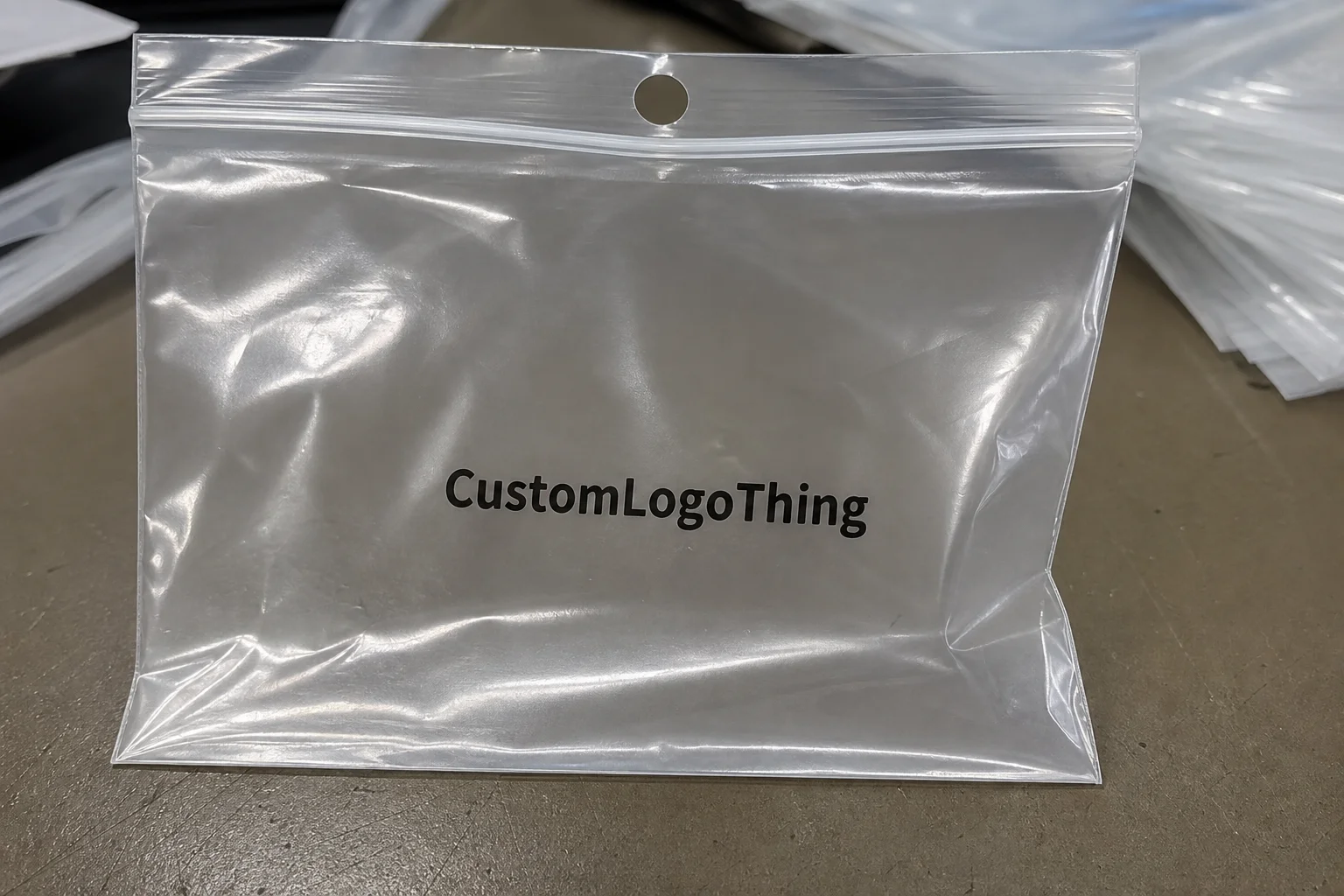
A resealable bag does several jobs at once. It keeps items together, protects them from dust and handling, and presents them more cleanly than loose packing. After the first open-and-close cycle, the bag can still be reused instead of discarded.
That is why custom plastic zip bags are used across hardware, cosmetics, sample kits, travel-size items, promotional packs, and small retail goods. Clear packaging lets buyers inspect inventory quickly. Printed packaging makes the package feel more finished.
The practical advantage is control. One bag can hold a product, instructions, a logo, batch labeling, or a barcode without adding much complexity. For warehouse use, that means fewer loose pieces. For retail and e-commerce, it means the product arrives grouped and protected.
The downside is that these bags are often treated like commodity items. They are not, if the contents matter. A weak zipper, a soft film, or a poor seal can make the whole package feel cheap even when the print is correct.
Most versions use flexible poly film, commonly LDPE or a similar low-density structure, plus a press-to-close zipper or another resealable closure. The exact build depends on how the bag will be filled, whether it needs to stand upright, and whether the contents have sharp edges or weight.
The cheapest bag is rarely the right bag if the zipper feels loose or the film stretches too easily.
How the Closure, Film, and Seal Work Together
A good bag is a small system. The zipper profile, side seals, bottom seal, and film gauge all affect the user experience. If one piece is off, the package can feel unreliable even if the proof looks fine.
The closure defines how the customer uses it. A standard press-to-close zipper is the most common option because it is fast and familiar. Slider closures are easier for some users, especially on larger bags or where the contents are accessed repeatedly. Tamper-evident styles are better for controlled kits or sensitive contents because they show whether the bag has been opened.
Film choice affects both appearance and performance. Clear film keeps contents visible. Frosted film softens the look and often feels more intentional on shelf. Opaque or tinted film can hide contents or create differentiation, but it gives up visibility. Finish matters too: glossy film reflects more light and can make colors pop, while matte film tends to feel more premium in hand.
Thickness is where performance and cost start to diverge. Thin film can work for soft items and light samples. It is less suitable for anything with corners, weight, or repeated handling. Once the contents become heavier or sharper, thicker film usually pays for itself through better puncture resistance and less customer frustration.
The seals are the part most people ignore until there is a problem. A clean bottom seal helps the bag sit flat. Side seals need enough integrity to survive packing, shipping, and repeated use. If the bag is supposed to stand up, the bottom geometry and film memory matter even more.
There is also a difference between a bag that is technically sealed and one that feels trustworthy. Buyers Should Ask about zipper engagement, seal width, burst resistance, and how the film behaves at the corners. If the supplier cannot speak to those items, the quote is probably too shallow.
For buyers comparing flexible packaging to rigid formats, the main point is simple: fewer parts does not mean fewer decisions. Even a basic bag needs a real brief. Good product packaging is specified, not guessed.
Size, Gauge, Print, and Material Choices That Matter
Start with the finished product, not the outer carton. If the item is 4 inches wide and slightly bulky, a 4-inch flat bag may be too tight to fill cleanly. A bag also needs room above the zipper so the seal closes without forcing the contents into the track.
If the product is irregular, the safest move is to test fit a sample. A mockup on screen is one thing. Watching the product fill, close, and sit on a table is another. Fit testing often catches problems that would otherwise show up in production, where mistakes are slower and more expensive.
Gauge, or film thickness, is where first-time buyers often under-specify. Thin film lowers cost, but it also lowers puncture resistance and stiffness. That can be fine for soft, lightweight items or simple sample packs. It is not fine for products with corners, tools, heavier parts, or anything the end user will open and close often.
Print should match the actual role of the bag. A one-color logo is often enough for internal kits or simple retail use. Full-coverage print can make the package feel more deliberate, but it adds setup work and may reduce transparency. If you need warnings, usage notes, barcodes, or batch labels, those need space reserved in the layout.
Material choice should be tied to the product, not the preference of the person approving the proof. Clear versus opaque changes visibility. Matte versus glossy changes shelf presence. Food-contact applications, chemical exposure, and regulatory requirements need to be addressed before production. That usually means asking the supplier whether the film, inks, and closure meet the intended standard instead of assuming a generic bag will cover every scenario.
| Option | Typical Use | General Cost Impact | Performance Notes |
|---|---|---|---|
| Clear 2-3 mil press-to-close | Samples, lightweight retail goods, soft parts | Lowest | Good visibility, economical, basic protection |
| Frosted 3-4 mil press-to-close | Branded retail packaging, cosmetics, kits | Moderate | Cleaner shelf look, better hand feel, less transparent |
| Heavier gauge slider bag | Repeated access, larger contents, premium sets | Higher | Easy opening, stronger user experience, better reuse |
| Tamper-evident style | Controlled contents, sensitive kits, compliance-driven orders | Higher | Visible opening indication, more specialized construction |
If the order touches food, health, or regulated use, ask for the specific compliance basis before approving the build. That might mean FDA food-contact requirements, REACH considerations, or a customer-specific standard. The important part is that approval happens on the actual requirement, not a general assumption that the bag is “safe enough.”
Cost, MOQ, and Quote Drivers
Price is driven more by structure than by artwork. The main variables are bag size, film thickness, zipper type, print coverage, and any special finish or functional requirement. A small artwork change might barely move the number. Switching from a standard press-to-close bag to a slider style, or going to a thicker film, usually moves it more noticeably.
MOQ matters because setup cost has to be spread across the run. On a small order, prepress, machine setup, and waste make up a bigger share of the unit price. On larger runs, the unit cost usually improves because the production run is more efficient.
For a rough planning range, a simple clear bag with light print might land around $0.18 to $0.28 per unit at 5,000 pieces, depending on size, film, and print coverage. Heavier film, more complex artwork, special closures, or tighter compliance requirements can push that higher. Smaller quantities often cost more per unit because the fixed work does not disappear when the order gets smaller.
Compare quotes carefully. The lowest unit price is not always the lowest total cost once freight, proofing, plates, overages, carton specs, and special packing instructions are added. A landed-cost comparison is more useful than a unit-price comparison alone.
Ask whether the quote includes these items:
- Tooling or plate charges
- Digital proof or production proof
- Ink changes or spot color matching
- Sampling or preproduction samples
- Overage allowance
- Freight and carton packing details
If you are also sourcing inserts, display items, or other flexible formats through a broader Custom Packaging Products order, compare the full package mix together. Sometimes the zip bag is the cleanest fit. Sometimes a slightly different build reduces handling or packing time downstream.
Production Steps, Proofing, and Lead Time
The order process should be straightforward if the spec is complete. First comes spec gathering: dimensions, quantity, Film, Closure, Print, and any compliance requirements. Then the artwork is reviewed, usually against a dieline or layout file. After that, the supplier sends a proof. Only once the proof is approved should material scheduling and production begin.
Most delays happen before the machine starts. Missing size details are common. So are unclear color expectations, low-resolution logos, and files with no bleed or safe area. Production teams need enough detail to run the job without creating scrap or forcing a reprint.
Lead time depends on the complexity of the build and the quality of the file set. Straightforward runs with ready artwork and standard materials can move faster. Custom print, specialty closures, or compliance review add time. A simple order is often ready in roughly 12 to 15 business days from proof approval, but that estimate depends on material availability and the specific build.
The proof should be checked as a production document, not as a mood board. Confirm the finished dimensions. Confirm zipper placement. Confirm the print boundaries and safe areas. Confirm the color target and how it will be matched. Confirm the quantity and any overage assumptions.
For jobs that include sustainability claims or secondary paper components, a certification reference such as FSC may matter for the paper parts of the package. That does not apply to the plastic bag itself. It just means the full packaging stack should be evaluated as a system rather than as isolated parts.
Common Ordering Mistakes That Create Delays
The biggest mistake is giving an approximate size instead of a finished spec. A bag described as “around 4 by 6” can mean several different things depending on how the supplier measures usable space, seal allowance, and closure area. If the product is bulky, the wrong guess leads to a bag that is too tight, too loose, or awkward to fill.
Artwork errors come next. Low-resolution logos, missing bleed, wrong file formats, and mismatched colors create avoidable rework. If the buyer expects a deep black but sends a screen-built RGB file, the print may not match the mental image.
Another common issue is designing for one use case and then changing the use later. A bag intended for soft accessories may fail once it is used for sharper or heavier items. A retail bag that looks fine on a shelf may not survive rough shipping. The package should be chosen for how it will really be used, not for the most flattering version of the use case.
Appearance-only approvals also create trouble. A crystal-clear sample can look excellent and still have a weak zipper feel, a flimsy seal, or poor handling characteristics. Buyers sometimes approve the sample because the visual side is right, then discover later that the bag is annoying to use.
The last problem is treating the bag like a commodity and skipping the details. That works until it does not. Even simple custom plastic zip bags need a real brief if the goal is a clean, repeatable order.
Expert Tips and Next Steps for a Quote-Ready Spec
The fastest way to get a usable quote is to build a one-page spec before asking for pricing. Include finished dimensions, target quantity, film thickness, closure type, print requirements, and packing format. If the bag is for retail, say so. If it is for parts, samples, or controlled use, say that too.
When appearance matters, ask for a prepress proof and, if the job is sensitive to fit, a sample comparison. That is especially useful for branded packaging where clarity, color, and closure feel all affect the customer’s impression.
Compare quotes on more than unit price. Look at landed cost, freight, proofing, and the risk of a weak closure or underbuilt film. A slightly thicker gauge or a better zipper often costs less than handling complaints, replacements, or damaged goods later.
Use this as the short version of the buying process:
- Measure the product exactly
- Choose the closure by use case
- Select film thickness based on handling and protection
- Confirm print coverage and color needs
- Review the proof before production starts
If you are ready to move forward, gather the dimensions, artwork, quantity, and any compliance requirements before requesting pricing for custom plastic zip bags. That gives the supplier enough information to confirm the right structure before production starts.
What size custom plastic zip bags should I order for my product?
Base the size on the finished product dimensions, not the shipping carton, and leave room for easy filling plus proper zipper closure. If the item is bulky or irregular, ask for a sample or mockup so you can verify fit before committing to production.
How thick should custom plastic zip bags be for retail or parts?
Use lighter gauges for soft, lightweight items and move to thicker film when the contents have sharp edges, heavier weight, or repeated handling. A good supplier should match thickness to the use case instead of defaulting to one standard film for every order.
Are custom plastic zip bags suitable for food or compliance-sensitive items?
They can be, but only if the film, inks, and manufacturing process meet the relevant requirement for your application. Always confirm the exact standard before ordering, because not every clear zip bag is approved for direct food use or regulated contact.
What drives the price of custom plastic zip bags the most?
The biggest cost drivers are size, film thickness, zipper style, print coverage, and quantity, with setup work mattering more on smaller runs. Freight, proofing, and special packaging can also change the final number, so compare complete quotes rather than just unit price.
How long do custom plastic zip bags usually take to produce?
Timing depends on artwork readiness, proof approval, material availability, and whether the bag uses standard or specialty features. Straightforward runs move faster, while custom print, special closures, or compliance checks add time before shipment.