Buyer Fit Snapshot
| Best fit | Buy Custom Printed Mailers in Bulk projects where brand print, material claims, artwork control, MOQ, and repeat-order consistency need to be specified before quoting. |
|---|---|
| Quote inputs | Share finished size, material target, print colors, finish, packing count, annual reorder estimate, ship-to region, and any compliance wording. |
| Proofing check | Approve dieline scale, logo placement, barcode or warning zones, color tolerance, closure strength, and carton packing before bulk production. |
| Main risk | Vague material claims, crowded artwork, missing packing details, or unclear freight terms can make a low unit price expensive after revisions. |
Fast answer: Buy Custom Printed Mailers in Bulk: Pricing, Specs, and Steps should be specified like a repeatable production item. The safest quote records material, print method, finish, artwork proof, packing count, and reorder notes in one written spec.
Production checks before approval
Compare the actual filled-product size with the drawing, then confirm tolerance on folds, seals, hang holes, label areas, and retail display edges. Reserve space for logos, QR codes, warning copy, and material claims before decorative graphics fill the panel.
Quote comparison points
Review material grade, print process, finish, sampling route, tooling charges, carton quantity, and freight assumptions side by side. A quote is only useful when the supplier can repeat the same color, closure quality, and packing count on the next order.
Buy Custom Printed Mailers in Bulk Without Overpaying
If you want to Buy Custom Printed mailers in bulk, start with the part most brands mess up: size. I’ve stood on factory floors in Shenzhen while a buyer argued over a “great deal” on 10,000 mailers that were 20 mm too long. Guess what happened? They paid for extra material, extra freight, and extra warehouse space. That’s not savings. That’s expensive decoration. I remember thinking, very politely, that the buyer had basically paid more to learn a lesson the hard way.
Honestly, the fastest way to lower unit cost is simple: Buy Custom Printed mailers in bulk only after you lock the right dimensions, the right film thickness, and the right print coverage. Bulk pricing works because setup cost gets spread across more pieces. If you order 1,000, you feel every plate charge. If you order 20,000, those same fixed costs stop hurting so much. That’s math, not magic. In Yiwu and Dongguan, factories will happily quote you a dreamy number at first and then sharpen the pencil once you ask for exact dimensions like 10" x 13" plus a 40 mm seal flap. And yes, they love vague briefs because vague briefs are where budgets go to die.
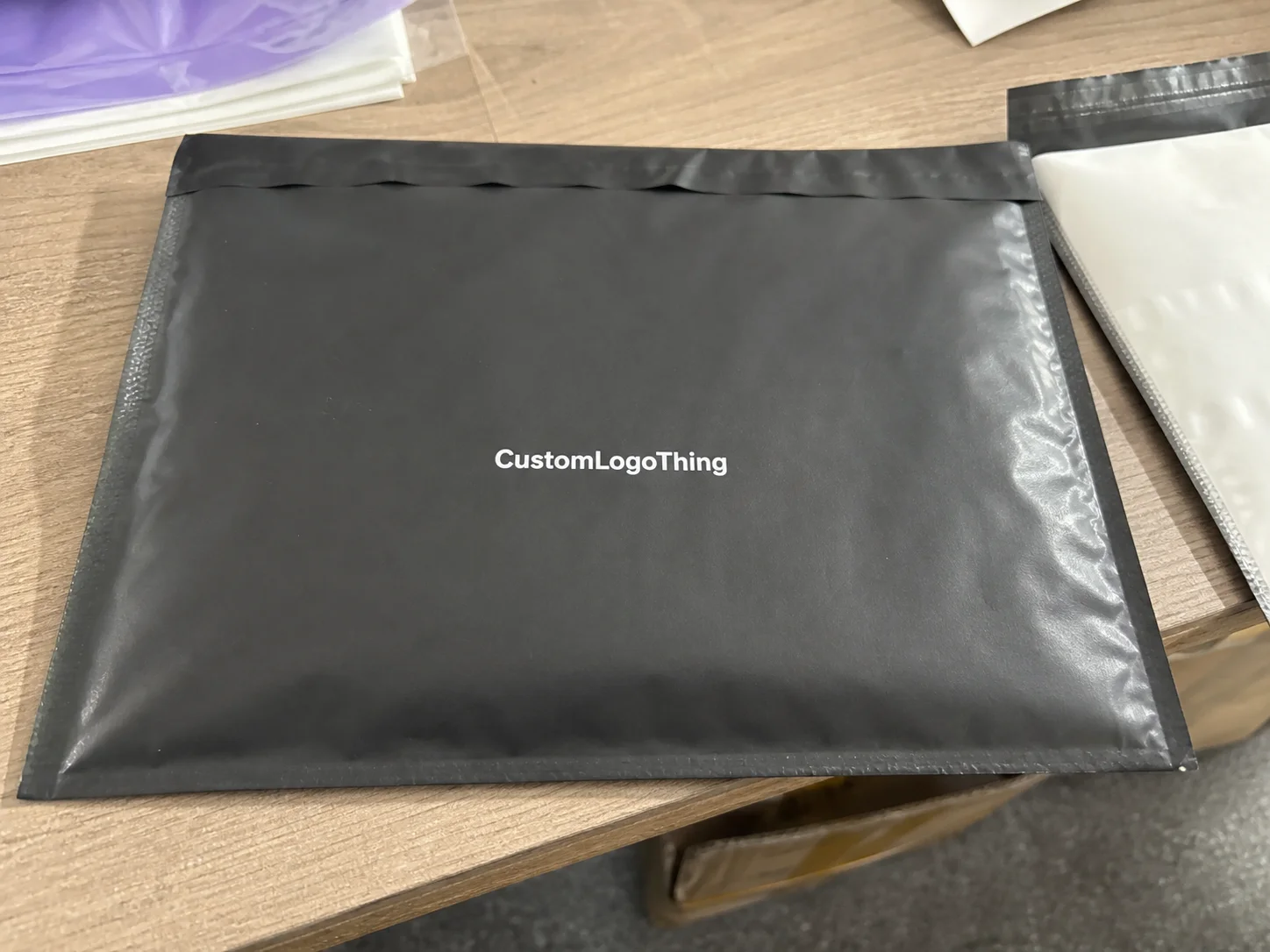
People also love comparing the wrong things. A plain white poly mailer from a warehouse supplier is not the same as a custom printed mailer with logo placement, tamper-evident sealing, and a proper brand finish. One protects a parcel. The other does that and carries brand presentation, customer trust, and a better unboxing moment. I’ve had e-commerce founders tell me their package branding improved before they changed anything else just because the shipping mailer looked intentional. I know, shocking. Customers do notice the outside of the package before they become philosophers about the product inside. A matte black 100-micron mailer with a one-color white logo lands very differently from a thin, cloudy bag that looks like it was sourced in a hurry from a back alley in Guangzhou.
The cheapest option is usually the one with the clearest spec sheet. When you buy custom printed mailers in bulk, a good supplier should quote by size, material, thickness, print sides, and artwork complexity before you send a deposit. If they skip those details and throw out a vague unit price, they’re hiding the real cost somewhere else. Probably in freight. Sometimes in quality. Sometimes in both, which is a lovely little surprise nobody asked for. A real quote should tell you whether you’re paying $0.15 per unit for 5,000 pieces or $0.24 per unit for 3,000 pieces with two-side printing, because those numbers change the decision fast.
Here’s the buying framework I use with clients:
- Choose the mailer type first: poly, bubble, compostable, or high-barrier.
- Confirm size using product dimensions plus fold allowance and label space.
- Select the print method: one-color logo, full-bleed, inside print, or two-sided branding.
- Set the order quantity based on monthly sell-through, not wishful thinking.
That order matters. Reverse it, and you end up designing around a bad size or paying for artwork changes after proof approval. I’ve seen brands do that with custom printed boxes too. Same problem, different package. Packaging design is not the place to freestyle. It’s the place to be annoyingly specific, which is not glamorous but saves money. In a factory visit in Ningbo, one client learned this after approving a 12" x 15" mailer for folded tees and then discovering the hemmed edges made the final packed width 18 mm thicker than planned. Cue panic, rework, and a very awkward lunch.
“We cut our packaging waste and got a cleaner brand look once we standardized two mailer sizes. The quote dropped too. Weird how that happens when you stop guessing.”
If you’re comparing suppliers, include Custom Poly Mailers in your review process and ask how their print method affects seal strength, opacity, and lead time. Also check their Wholesale Programs if you’re planning repeat orders. Reorders are where real cost control shows up. The first order gets the attention. The second and third ones decide whether your packaging budget stays sane or turns into a recurring headache. A supplier in Shenzhen can quote one-color bags at a sharp rate, but if their repeat run takes 18 business days instead of 12 because they lost your film spec, that cheap price suddenly looks less heroic.
What Custom Printed Mailers Actually Include
When buyers say they want to buy custom printed mailers in bulk, they usually mean one of four things: a plain poly mailer with a logo, a padded bubble mailer, a compostable shipping bag, or a heavier-duty mailer for higher-value products. Those are not interchangeable. I learned that the hard way during a client visit to a fulfillment center in Guangdong, where the team tried sending soft apparel in a thick mailer meant for cosmetics jars. The bags looked premium, sure. But they were overbuilt, overpaid, and annoying to pack. The warehouse crew was not impressed, and honestly, neither was I. We were using 120-micron film for $12 leggings, which is exactly the kind of decision that sounds fancy and behaves stupidly.
A standard custom mailer includes the film layers, adhesive strip, seal width, opacity level, and print surface. The film is usually polyethylene for poly mailers, often in 50 to 100 microns depending on the product weight and shipping lane. Bubble mailers add a cushioning layer, commonly with a 2.5 mm to 4 mm bubble profile. Compostable mailers may use PLA or other certified materials, but you need to verify the claim, not just admire the marketing copy. I always ask for the material data sheet and test reports before I tell a client to proceed. Packaging claims are cheap. Documentation is what counts. If a supplier gets weird about paperwork, I assume they’re hoping you’ll be dazzled by the word “eco” and stop asking questions. I do not stop asking questions.
These are the most common styles I spec for clients who want to buy custom printed mailers in bulk:
- Flat poly mailers for apparel, accessories, and lightweight soft goods.
- Bubble mailers for beauty items, books, and fragile small products.
- Compostable mailers for brands with verified eco claims and clear disposal messaging.
- Higher-barrier mailers for premium retail packaging, moisture-sensitive items, or security-focused shipments.
Print options matter more than most people think. A one-color logo on a clean white or frosted film is usually the lowest-friction route. Full-bleed graphics look fantastic, but they need tighter color control and better file prep. Inside printing adds a nice surprise for the customer, especially when you want a strong unboxing moment without overdoing the exterior. Matte finish feels more premium to most shoppers. Glossy finishes are louder and often cheaper. That said, cheap and cheerful can work if your brand is playful and your product packaging is low-margin. I’ve seen a bright glossy mailer pull its weight for a brand that wanted fun, not “luxury but make it dramatic.” A 350gsm C1S artboard insert inside a mailer can elevate the perceived quality too, but only if the outer bag color and print stay consistent.
There are also functional add-ons that save headaches later. I push clients to consider tear strips, double seals, perforation for returns, barcode or QR printing, size labels, and warning icons where needed. If you sell apparel, a return-ready mailer can reduce friction. If you ship electronics accessories, a QR code can point buyers to setup guides or support pages. I’ve watched one client reduce “where is my order” emails simply by printing a barcode zone and a visible order ID field. Amazing what happens when the package does part of the customer service job. In one job out of Dongguan, we added a 25 mm tear strip and a second adhesive line, and the warehouse team shaved 6 seconds off each pack-out. Multiply that by 50,000 units and suddenly packaging is doing actual work.
Artwork quality is where many first-time buyers stumble. Vector files are your friend. Spot colors reduce surprises. Tiny raster logos on a 600 mm print area are not your friend. When I was reviewing a run for a DTC skincare brand, the client sent a low-resolution logo pulled from Instagram. It printed like a smudge at 8,000 pieces. We fixed it, but only after a tense call and a delayed proof. Don’t do that to yourself. I still remember staring at that proof and thinking, “Well, that logo just turned into modern art.” For clean output, I always ask for AI, EPS, or editable PDF files at 300 dpi minimum where raster elements exist.
If you’re deciding where buy custom printed mailers in bulk fits inside your larger packaging stack, think about the relationship between shipping mailers, branded packaging, and retail packaging. A good mailer doesn’t replace product packaging. It supports it. The customer sees the outer layer first. That layer sets the tone before they even touch the box inside. In Shenzhen and Foshan, I’ve seen premium brands pair a simple frosted mailer with a rigid 350gsm C1S artboard carton inside, and the result feels far more expensive than a noisy outer bag loaded with unnecessary print.
“The mailer is the handshake. The box is the conversation. If the handshake feels cheap, people notice before they open anything.”
For deeper packaging requirements, I often point teams to standards and trade resources like ISTA for distribution testing and The Association for Packaging and Processing Technologies for broader packaging education. If your product is sensitive to shipping damage, that knowledge matters more than a pretty mockup. Pretty is nice. Surviving transit is nicer. A mailer that survives a 1.2-meter drop test in Guangzhou humidity is a lot more attractive than one that just photographs well.
Specifications to Confirm Before You Buy Custom Printed Mailers in Bulk
The fastest way to buy custom printed mailers in bulk without regrets is to request specs before pricing. Not after. Before. I’ve sat through enough supplier calls to know that “it looks fine” is not a spec. It’s a guess with a logo on it. A very confident guess, sure. Still a guess. If you want a clean quote from a factory in Shenzhen, Ningbo, or Dongguan, give them the numbers first and the enthusiasm second.
Ask for these exact details every single time:
- Thickness in microns or mils, depending on the supplier’s standard.
- Dimensions in width by length, plus usable internal space.
- Seal width and adhesive strip type.
- Print area and whether artwork can wrap onto seams or folds.
- Opacity if privacy matters for your product.
- Material grade and recycled-content percentage, if claimed.
- Carton count and pack configuration.
- Lead time from proof approval to shipment.
Dimensioning is where most bulk orders go sideways. You need product dimensions, fold allowance, label space, and a little margin for return handling. A customer’s hoodie isn’t just 300 mm wide on paper. Once it’s folded and bagged, it behaves like a brick with soft corners. I tell teams to test one packed unit with the shipping label added before they finalize the mailer size. That one 10-minute test can save a $2,000 mistake. Maybe more, depending on how much your team enjoys paying for rework. A 14" x 19" mailer might be ideal for one SKU and absurd for another, so use the packed sample, not a mood board.
Durability specs deserve equal attention. If your mailer needs puncture resistance, request a thicker film or a reinforced structure. If it needs waterproofing, confirm the seal performance and whether the adhesive holds up in cold storage or humid transit. If privacy matters, especially for cosmetics, health items, or premium apparel, ask for opacity data. I’ve had a buyer choose a “sleek translucent” mailer for a private subscription product. Bad call. The contents showed through under bright warehouse lighting. Not ideal. The client’s face when we demonstrated it in a lit room? Let’s just say it was educational. A 90-micron opaque film usually performs better than a 60-micron see-through bag when the warehouse lights are unforgiving, which they always are.
Compliance also matters, especially if you sell into regulated or eco-conscious markets. If you want to use recycled-content or compostable claims, ask for documentation. For example, if a supplier says “compostable,” find out whether that means industrial composting only and whether they have the right certifications. If you ship internationally, you may also need to think about carrier handling expectations and local packaging regulations. For environmental labeling, I cross-check against resources from the EPA because pretty marketing language does not survive scrutiny by itself. If the material is sourced from factories in Jiangsu or Zhejiang, ask for the paper trail, not just the brochure.
Proof approval is not a formality. It is the last clean stop before production. Check logo placement, color variance, bleed margins, and any small text. If your artwork has a white logo on a dark background, test the contrast on proof. If you need a precise shade, ask for Pantone matching guidance, but be realistic. Poly film, print method, and finish all affect final appearance. I’ve seen brands obsess over a Pantone number and then approve a finish that made the color look 15% darker. That’s not a defect. That’s physics. Packaging is rude like that. On one Guangzhou run, the client approved a PMS 186 C red on screen, then got a slightly muted tone on matte PE film and acted betrayed. The film was fine. The expectation was the problem.
When you buy custom printed mailers in bulk, ask the supplier for a confirmation sheet with material grade, print method, lead time, packaging configuration, and carton count. That sheet becomes your paper trail. If something goes wrong, and eventually something always does, you want a clear spec to point to. Saves arguments. Saves money. Saves everyone from pretending memory is a system. Ask for the confirmation in writing, with numbers like 80 microns, 12-15 business days from proof approval, and 100 pieces per carton if that’s the actual pack-out.
| Spec Item | What to Ask For | Why It Matters |
|---|---|---|
| Thickness | Microns or mils | Impacts durability and shipping protection |
| Dimensions | Internal usable width and length | Prevents oversize waste and packing issues |
| Print Coverage | One-side, two-side, or full-bleed | Affects price and brand visibility |
| Seal Type | Permanent adhesive or double seal | Determines closure security and returns handling |
| Certifications | FSC, compostable, recycled-content documentation | Supports sustainability claims and retail compliance |
Pricing and MOQ for Custom Printed Mailers in Bulk
Pricing is where everybody suddenly becomes an expert. Fine. Let’s make it useful. If you want to buy custom printed mailers in bulk, cost is driven by quantity, size, material, print coverage, and how many setup steps the factory has to run through. The logic is straightforward: fixed costs don’t shrink just because you want a smaller order. They get spread over fewer units. I’ve explained this in factories, on calls, and once on the edge of a production line while someone nodded very seriously and still ordered the wrong spec. So yes, the lesson can be given. Whether it is received is another story. In a Shanghai sourcing office, I once watched a buyer celebrate a quote that was $0.02 cheaper per unit, then lose that gain completely on upgraded freight and a reprint fee. Victory, apparently, had a bookkeeping problem.
Here’s a practical framework from jobs I’ve quoted and negotiated:
- Basic one-color poly mailers: usually the lowest cost option.
- Full-color or full-bleed printed mailers: higher because print setup and color control are more demanding.
- Eco-friendly mailers: often cost more due to material sourcing and certification requirements.
- Bubble or padded mailers: more expensive than flat film because of added material and cushioning.
For rough planning, small runs often sit in a higher unit-cost band because setup fees are spread across fewer pieces. A run of 1,000 mailers may carry a much higher unit price than 10,000 of the same spec. I’m not going to pretend every supplier prices the same way, because they don’t. But the pattern holds. One brand I advised paid about $0.42 per unit for 2,000 Custom Poly Mailers, then dropped to about $0.19 per unit at 10,000 pieces after we simplified the artwork from three colors to one. Same bag size. Better efficiency. That’s real savings, and it’s the kind of boring win I genuinely like. For a standard 14" x 19" bag with one-color print, I’ve also seen quotes land around $0.15 per unit for 5,000 pieces out of a Guangdong factory, provided the artwork was clean and the film spec stayed under 80 microns.
Another time, during a negotiation with a packaging factory in Dongguan, the buyer wanted a tiny MOQ but also asked for a metallic finish, inside print, and a custom tear strip. The factory quoted a number that looked cheap until we added plate charges, special film, and freight. The final landed cost made the “cheap” option look silly. I told the client to either simplify the spec or accept the real cost. They simplified. Order approved. Problem solved. The look on their face when the real total showed up? Slightly haunted. That run moved from 6,000 pieces to 12,000 pieces because the per-unit savings finally made sense once the finish was cut back to a single matte exterior and one spot-color logo.
If you want to buy custom printed mailers in bulk and keep the quote clean, ask every supplier for a full breakdown:
- Product cost per unit.
- Setup or plate fee.
- Artwork revision fee, if any.
- Freight terms and destination.
- Packaging/carton charge, if separate.
That breakdown matters because hidden costs are where margin disappears. A supplier may quote a gorgeous unit price, then charge separately for cartons, inner packs, and shipping to the port. Compare apples-to-apples. Same dimensions. Same thickness. Same print sides. Same delivery terms. If one quote is for FOB Shenzhen and another is DDP to your warehouse, you are not comparing the same thing. You’re comparing a number and a fantasy. A DDP quote to Los Angeles will never read the same as FOB from Shenzhen, and pretending otherwise is how procurement teams end up with surprise invoices and a group chat full of exclamation marks.
MOQ reality: many factories start around 1,000 to 3,000 pieces for simple custom work, but larger volume often unlocks much better rates. If your brand can forecast monthly usage, use that number instead of ordering “just enough.” Under-ordering usually costs more later because you rush replenishment at a worse price and risk color variation on a future run. I’ve watched brands save $0.03 a unit and then lose two weeks waiting for a second emergency production slot. Not a win. Not remotely. In Shenzhen, a repeat run can often be turned in 12-15 business days from proof approval if the material is already in stock and the print plate is reusable. That’s the kind of timeline that makes planning feel adult.
If sustainability is part of your brand story, consider how the material choice affects price. Recycled-content film, FSC-related paper components for hybrid mailers, or certified compostable stock can push the unit cost up. Sometimes that’s worth it. Sometimes it’s just a badge with a bigger invoice. Be honest about the marketing value. Don’t buy green packaging just to feel noble while your margins bleed. A compostable mailer sourced from a certified plant in Zhejiang may cost $0.06 to $0.12 more per unit than standard PE film, depending on the MOQ and print coverage, and that difference needs to be tied to actual brand value.
And yes, if you want to buy custom printed mailers in bulk for a product launch, compare with Custom Packaging Products across your full packaging stack. A slightly cheaper mailer can be a bad trade if your insert card, label, or outer box still looks mismatched. Packaging design needs consistency across the whole shipment, not just one shiny item. Otherwise the whole shipment looks like it was assembled during a lunch break. I’ve seen launches in Hong Kong where the mailer arrived in perfect condition but the box inside was three shades off from the website mockup. Customers notice. They always notice.
Process and Timeline: From Quote to Delivery
The process to buy custom printed mailers in bulk should be boring in the best way. If it feels chaotic, the supplier is either disorganized or under-informed. I prefer suppliers who ask detailed questions fast. That tells me they know what can go wrong. The ones who reply with “no problem, easy” before asking for your size? Those are the ones I watch closely. In a Dongguan plant, the best project manager I ever worked with asked for quantity, film thickness, adhesive type, and shipping destination before he even mentioned price. That’s the right order.
Here’s the workflow I expect:
- Inquiry with dimensions, quantity, artwork, and destination.
- Spec confirmation so nobody is guessing.
- Quote with clear pricing and lead time.
- Artwork submission in vector format whenever possible.
- Proofing for layout, color, and size check.
- Production after proof approval.
- Inspection/QC for print accuracy and seal quality.
- Shipping by air or ocean, depending on urgency and budget.
Timelines depend on complexity. A simple one-color job can move faster than a full-bleed custom run with special film. As a practical range, proofing may take 1 to 3 business days if your artwork is clean. Production may take 12 to 18 business days after approval, and then shipping time depends on the freight method. Air moves faster and costs more. Ocean takes longer and costs less. That’s not news. That’s shipping. And yes, every buyer who says “Can we just make it faster?” is describing a budget problem in sentence form. If you need a standard poly mailer run out of Shenzhen with no unusual finishing, 12-15 business days from proof approval is a normal expectation; if you add inside print, special lacquer, or compostable material, plan for the longer end of that range.
Sampling deserves respect. A digital proof is good for layout and text placement, but it won’t tell you exactly how the film will feel or how the logo will sit on the final substrate. A physical sample costs more, sure, but it can save you from a full production mistake. I usually recommend a physical prototype if the design is new, the size changed, or the print area is unusually large. One weird prototype is cheaper than one very expensive mistake. When I visited a supplier in Foshan, they showed me a sample with a 100-micron feel and a weak seal edge; the client caught it immediately and saved themselves a 9,000-piece reprint.
There are a few milestones you should ask your supplier to confirm in writing:
- Pre-press approval before plates or screens are made.
- Production start date.
- Mid-run quality check if quantity is large.
- Finished goods inspection before packing.
- Carton count and shipping method before dispatch.
I’ve had one client miss a restock window because they waited until they had 10 days of inventory left. Bad plan. Replenishment orders should go in while you still have breathing room, especially if your product packaging changes seasonally or if your distribution lane depends on ocean freight. If you want to buy custom printed mailers in bulk without panic, order before you hit the danger zone. Panic buying packaging is how people end up paying for express freight and regretting everything. A 2,000-piece air shipment from Shenzhen to Chicago can cost more than the packaging itself, which is a ridiculous sentence that unfortunately happens in real life.
For brands with a broader packaging program, this is where coordination matters. Shipping mailers, inserts, and custom printed boxes should all line up visually and physically. If one item arrives on time and the other arrives six weeks late, your team ends up with half a launch. That is a very expensive way to learn about planning. I’ve seen teams celebrate the mailers arriving early like that solved the whole project. It did not. A launch in Shanghai can look polished on day one and broken on day three if the insert cards are still sitting in a warehouse in Shenzhen.
Why Choose Custom Logo Things for Bulk Mailer Orders
Custom Logo Things exists for buyers who want to buy custom printed mailers in bulk without being sold a fairy tale. We focus on the spec first, then the quote, then the production plan. That order saves time and avoids the classic “looks good on screen” disaster. I’ve spent enough years in packaging to know that a smooth sales pitch does not equal a smooth production run. Pretty decks are not proof of competence. They’re just pretty decks. I’d rather see a factory manager in Zhejiang ask ten precise questions than a sales rep in a tidy office say everything is fine and hand me a cheerful PDF.
What I value most is direct factory communication. Fewer middlemen usually means faster answers and fewer margin layers. When I’m negotiating with a supplier, I want someone who can tell me whether the film is in stock, whether the print line can handle the artwork, and whether the carton count changes freight pricing. If those answers take three days, the project is already behind. In this business, “I’ll get back to you” can be a sentence, a delay, or a lifestyle. The best suppliers in Shenzhen usually answer in hours, not days, because they know a 5,000-piece run can’t wait around for someone to check their inbox after lunch.
We also help with customization decisions before production starts. That includes sizing guidance, print method recommendations, and artwork checks. If your file needs cleanup, you should know before the run begins. If your logo is too small for the selected bag width, I’d rather tell you now than after 12,000 units are printed incorrectly. Honestly, that’s the whole point of working with people who understand packaging design and not just sales spreadsheets. I’d rather have the awkward correction now than the very expensive apology later. In practice, that means reviewing trim lines, bleed margins, and color targets before the factory in Dongguan turns your idea into 8 pallets of inventory.
Here’s where real sourcing experience matters. When you lock specs early, you usually get better material sourcing and better cost control. I’ve sat in a factory office with a pen, a calculator, and a supplier manager who suddenly discovered that a slightly thinner film saved enough on resin to improve the quote by several cents a unit. That only happened because we had the right spec and the conversation was specific. Loose briefs get loose answers. Loose answers get bloated invoices. Funny how that works. I’ve watched a change from 90-micron to 75-micron film shave enough off a 20,000-piece order to fund the freight upgrade without hurting the margin.
For brands that care about consistency, that matters. Reorders should match the first production run. Color drift, film changes, and print shifts are annoying and expensive. If your packaging has to align with a retail packaging launch or a new ecommerce campaign, you need the same standards every time. The mailer is part of the brand. Not an afterthought. Not “just shipping.” It’s the first thing many customers touch, and it should act like it has manners. If your launch is built around a warehouse in Los Angeles and a supplier in Shenzhen, consistency is what keeps the experience from looking improvised.
When you buy custom printed mailers in bulk through a supplier that understands quality control, supplier coordination, and shipment planning, you reduce error risk. That means fewer rejected cartons, fewer emergency replacements, and fewer customer complaints about torn bags or faded graphics. The boring stuff matters. That’s where money is saved. Boring is underrated. Boring keeps the warehouse calm. A QC standard that checks seal strength, print registration, and carton count on every 5,000-piece run is not flashy, but it is how the best factories stay profitable and the rest stay dramatic.
And yes, if your program also includes Custom Packaging Products like inserts, labels, or boxes, we can help keep the whole system consistent. A unified brand across mailers and cartons looks better and prints more efficiently. You do not need five different visual languages for one customer order. Nobody needs that chaos. Your customers certainly don’t. Neither does your operations team. If your mailer is produced in Guangdong and your insert card is printed in Jiangsu, we can still keep the color targets aligned so the whole package feels like one system, not a scavenger hunt.
“The best bulk orders are the ones where the supplier asks smart questions before quoting. If they don’t care about the spec, I don’t care about the price.”
How Do You Buy Custom Printed Mailers in Bulk?
You buy custom printed mailers in bulk by nailing the spec, getting a clear quote, approving the proof, and keeping the reorder plan visible. That sounds simple because it is. The hard part is resisting the urge to improvise. Don’t. Packaging is not the place for mystery. Pick the mailer type, confirm the dimensions, decide on the print coverage, and set the quantity based on real sell-through. Then compare quotes apples-to-apples so you’re not fooled by a nice unit price wrapped around ugly freight terms.
The fastest route usually looks like this: send your size, quantity, artwork, and shipping destination; ask for a spec confirmation; review the proof carefully; request a sample if the design is new; then approve production. That process works whether you’re ordering poly mailers, bubble mailers, or compostable mailers. It also works better if your packaging stack is aligned across shipping mailers, inserts, labels, and custom printed boxes. Otherwise you end up with one polished item and three random ones. That is not a brand system. That is a collection of opinions.
If you need a shorthand: clean specs, clean files, clean quote, clean proof, clean production. That’s how you buy custom printed mailers in bulk without paying extra for avoidable mistakes. The factories in Shenzhen, Dongguan, Ningbo, and Yiwu will gladly produce whatever you approve. Your job is to approve the right thing.
Next Steps to Buy Custom Printed Mailers in Bulk
If you’re ready to buy custom printed mailers in bulk, gather three things first: the mailer size, your expected monthly quantity, and the artwork file type. That gets the conversation moving fast. If you already know whether you need poly, bubble, or compostable stock, even better. You’ll get a tighter quote and fewer back-and-forth emails. Which, frankly, is good for everyone’s sanity. A clean brief might look as simple as 12" x 16", 80-micron opaque PE, one-color logo, 10,000 pieces, Shenzhen delivery. That’s a real brief. Everything else is wallpaper.
Request two quotes: one for the standard spec you can live with, and one for the premium spec you’d like if the numbers make sense. That comparison is useful. Sometimes the premium option only adds a few cents per unit and gives you better seal strength or cleaner print. Sometimes it doubles the cost and gives you a gold foil effect nobody asked for. Use judgment. Not every SKU needs the fancy treatment. Sometimes plain and correct beats shiny and silly. If a matte white mailer comes in at $0.15 per unit for 5,000 pieces and the glossy version jumps to $0.27 because of extra coating, you already know which one deserves the order.
Before you approve anything, confirm:
- Proofing method and how revisions are handled.
- Production timeline after approval.
- Shipping terms and destination responsibility.
- Inspection standard for print quality and bag integrity.
- Reorder terms so you can restock without starting from zero.
If the design is new, ask for a sample or prototype. I’d rather spend a little extra on a physical check than explain to a client why 5,000 mailers have the wrong logo placement. That conversation is annoying for everybody, and I’ve had it more times than I care to count. The silence after someone realizes the logo is two inches off-center is almost comedic. Almost. A prototype out of Dongguan or Shenzhen can usually be turned around in 3 to 5 business days, which is cheap insurance compared with a full run of bad bags.
Once the proof is approved, lock production and set a replenishment reminder based on sell-through, not panic. That is how you keep costs stable and avoid emergency freight. If you plan to buy custom printed mailers in bulk regularly, treat the order like inventory, not a one-off purchase. It becomes cheaper and easier over time. Repeat orders reward discipline. Chaos, as usual, gets billed separately.
Send the specs, approve the proof, lock production, and keep your reorder point visible. That’s the clean path. No drama. No surprise charges. Just packaging that ships well, looks right, and supports your brand presentation without burning cash.
If you’re ready to buy custom printed mailers in bulk from a team that cares about specs and cost control, start with the exact size, material, and print coverage you need. That’s how you get the right quote, the right timeline, and the right mailer the first time.
What size should I choose when I buy custom printed mailers in bulk?
Choose based on product dimensions, fold allowance, and label space. Leave enough room for the item to slide in without stretching the seal. If you ship multiple SKUs, standardize around one or two sizes to cut waste and simplify inventory. I usually tell teams to test the packed product first, because guessing is how warehouses end up with piles of mailers that are technically correct and practically useless. For example, a 10" x 13" mailer may work for folded tees, while a 14" x 19" bag is better for hoodies or boxed kits.
How much does it cost to buy custom printed mailers in bulk?
Cost depends on size, thickness, print coverage, and quantity. Higher quantities lower the unit price because setup cost gets spread out. Ask for a quote that separates product cost, setup fees, and freight so you can compare properly. If a quote looks suspiciously cheap, there’s usually a catch hiding in another line item. Or three. In Shenzhen and Dongguan, I’ve seen straightforward one-color runs land around $0.15 per unit for 5,000 pieces, while more complex full-bleed work can climb to $0.30 or more depending on film and finishing.
What is the minimum order quantity for custom printed mailers?
MOQs vary by factory and print complexity. Many suppliers start in the low thousands for custom runs. Simpler one-color jobs usually have lower MOQs than full-color or specialty material orders. If you’re trying to keep risk low, ask for a sample run or a simplified spec first. That’s often the least painful way to start. In Guangdong, I’ve seen simple poly mailers start at 1,000 pieces, while compostable or special-finish orders often make more sense at 3,000 pieces or above.
How long does production take after I place an order?
Timeline depends on proof approval, material availability, and print method. Artwork delays are the most common reason orders slip. Shipping method matters too: air is faster, ocean is cheaper. If you’re on a launch deadline, build in buffer time. I know. Everyone hates that answer until a container gets stuck and suddenly buffering sounds brilliant. For a standard run out of Shenzhen or Dongguan, production is typically 12-15 business days from proof approval, and simple reorders can sometimes move even faster if the film and plates are already set.
Can I order eco-friendly options when I buy custom printed mailers in bulk?
Yes, but confirm the exact material and certifications before ordering. Some mailers are recycled-content only; others are fully compostable. Ask for documentation so the claims match your packaging and marketing. If the supplier can’t show paperwork, treat the claim like a rumor. Pretty language doesn’t count in procurement. A real eco order should specify the material grade, certification details, and disposal instructions, especially if the product ships into the EU, Australia, or the U.S. West Coast.