Custom Woven Tote Bag: How to Spec, Price, and Order
A Custom Woven Tote bag looks uncomplicated until the details start moving. Then the whole project changes. Weave style affects hand feel. Fabric weight affects whether the bag stands up or slumps. Handle construction affects comfort after ten minutes, not just at the moment of handoff. Even the logo can behave differently depending on how textured the surface is beneath it.
That is why two bags built from the same artwork file can land in completely different places. One looks crisp, carries well, and gets reused. The other feels thin, prints unevenly, and disappears into a drawer. Buyers usually discover this after the quote stage, when the spec sheet finally becomes real.
For teams comparing woven totes with other branded packaging formats, the tradeoff is usually presentation versus durability versus cost. A custom tote can do more than hold a product. It can extend a retail moment, support package branding, and keep the brand visible after the first use. But only if the structure matches the job.
Custom woven tote bag basics: what buyers usually miss
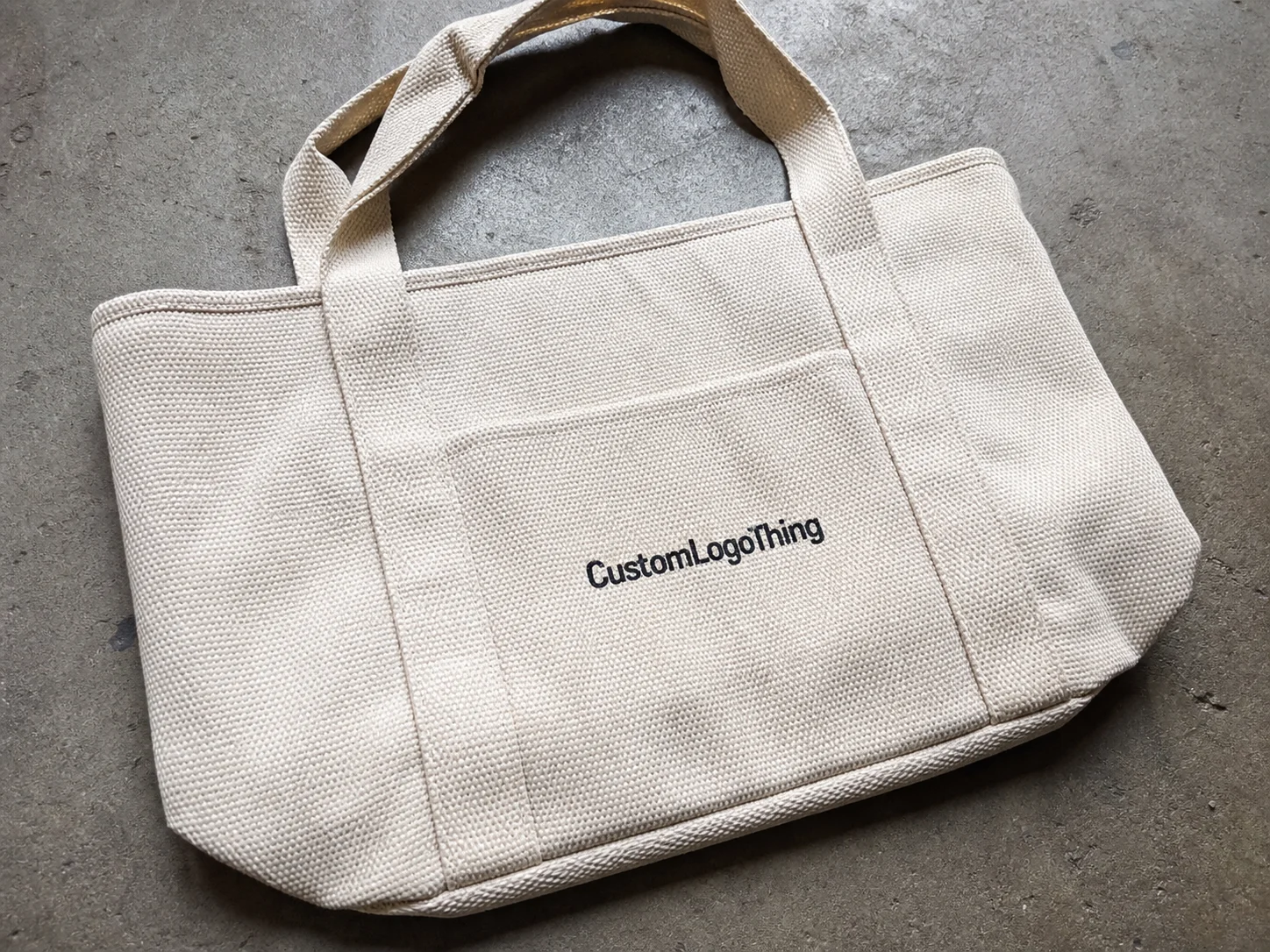
“Woven” describes the construction, not a single material. The yarns or filaments are interlaced, which gives the bag more structure than a flat disposable carrier. In practice, that can mean woven polypropylene, woven recycled blends, or textile-style tote constructions used for light retail carry. The reason buyers choose this format is simple: it feels sturdier than a thin bag and can keep working as a reusable brand asset long after the first handoff.
The part first-time buyers often miss is how much the final behavior depends on small choices. A slightly heavier fabric can help the tote stand upright. A boxed bottom changes loading. Reinforced handles affect comfort more than most artwork decisions do. Those details matter in trade shows, store giveaways, grocery-style carry, and corporate gifting, where the bag is part of the customer experience, not just a container.
When asking for pricing, be specific. “Woven tote” is too broad. A supplier needs to know whether the target is a glossy laminated look, a matte finish, a recycled content claim, or a simple utility bag that can hold 10 to 20 lb without sagging. That level of detail separates a generic promo item from a tote that can support packaging, product presentation, and brand consistency without constant revision.
One more reality check: woven does not automatically mean premium. The same construction can be built economically or upgraded with thicker fabric, cleaner stitching, better binding, and better print registration. The name on the quote matters less than the exact build.
How the bag is built and decorated
A woven tote usually consists of a body, gusset, bottom construction, handles, and edge finishing. The body panels carry the artwork. The gusset adds volume and changes the profile. The bottom can be flat or boxed, and that single choice often decides whether the bag sits neatly on a counter or collapses when empty. Handles may be folded, stitched, die-cut, or sewn in with binding, and each approach changes comfort and cost.
The most common body materials are woven polypropylene and woven recycled fiber blends. Polypropylene is lightweight, affordable, and stable for large runs. Recycled blends can support sustainability messaging, but the final hand feel and print behavior depend on yarn quality and finish. If the tote will be used for retail packaging or event carry, the surface should support the decoration method instead of fighting it. Rough textures can scatter fine detail, while smoother laminated faces usually give sharper print clarity.
Decoration is where many projects either settle into place or drift off target. Screen printing is common for bold logos, simple spot colors, and medium to large runs. Heat transfer can handle more detailed graphics, though it may sit differently on the surface than ink printed into the fabric. Woven labels and sewn-on patches create a more tactile, apparel-like finish and are useful when the bag itself carries part of the story. They also add labor and cost, so they are not the answer for every brief.
Structural upgrades that actually matter
A stronger handle stitch, wider binding tape, or reinforced seam usually delivers more value than a complicated graphic effect. If the tote is meant to be reused, those upgrades protect the brand every time the bag is carried. A bag that prints beautifully but fails at the handle is a bad investment, even if the proof looked clean.
Color should be treated in two layers: the fabric color and the artwork color. Exact brand matching across woven fabric, thread, and ink is rarely perfect, especially on textured surfaces. If color accuracy is critical, ask for a physical sample or a proof that shows the closest practical match rather than relying on a screen rendering alone.
Material choices and decoration methods should match the job. That sounds obvious, but it is where a lot of packaging mistakes start. The right structure for a grocery-style tote is not always the right structure for a premium gift handout. If you want to compare formats, start with the intended use and then look at the options inside Custom Packaging Products.
Material specs that change the result
For woven totes, buyers usually focus on the wrong number first. They ask for price before they ask for fabric weight, coating, or finish. That works for rough budgeting, but not for specifying a bag that has to perform in use. Material details change the feel more than most people expect.
Many woven polypropylene totes fall somewhere around 80 to 120 gsm, though the exact useful range depends on the yarn, lamination, and intended load. A lighter build can work for handouts or low-weight retail packaging. Heavier builds are better when the tote has to carry books, apparel, boxed gifts, or repeated daily use. Recycled blends can also vary widely, so asking for a recycled content claim without asking for performance details is not enough.
Lamination, if used, changes more than appearance. It adds surface stability, improves print clarity, and can make the tote easier to wipe clean. It can also make the bag stiffer and louder in hand. That tradeoff is not good or bad on its own. It just depends on whether the bag is supposed to feel polished or flexible.
Thread and binding matter too. Buyers tend to ignore them until a sample arrives with uneven edges or visible seam stress. If the tote will be reused, the stitching should look consistent along stress points, especially at the handle anchors and gusset corners. Small flaws there are not cosmetic only. They predict wear.
Key spec factors that affect performance
Three details control most of the bag’s behavior: fabric weight, weave density, and finishing. Fabric weight affects durability and opacity. Weave density affects how stable the surface feels and how sharply the print lands. Finishing affects foldability, sheen, and the way the tote hangs when loaded. A bag that feels stiff in hand may be the right choice for retail packaging. A softer bag may be easier to pack flat and ship in volume.
Size is not guesswork. A tote meant for catalogs or boxed gifts needs different proportions than one meant for apparel or event handouts. A practical medium size often lands around 14 x 15 x 6 inches, while larger carry bags may need 15 x 16 x 7 inches or more. Handle length matters too. Short handles sit better on the wrist. Longer handles make shoulder carry possible. Width also matters, because narrow handles can dig in once the bag reaches 8 to 12 lb.
Print area and placement deserve more attention than they usually get. A centered front logo is straightforward. A wrap print, a bleed to the edge, or artwork that crosses a seam is more complex and can require revised artwork or adjusted production steps. If the bag has side panels or a boxed bottom, ask for a dieline before final approval. Otherwise the art can look perfect on screen and awkward on the finished piece.
Sustainability and compliance are becoming part of the buying conversation. If the bag needs a recycled content claim, an FSC-linked paper insert, or a packaging sustainability story, ask for documentation rather than relying on a verbal promise. For transport testing and distribution planning, standards from organizations such as ISTA can help frame expectations for package handling, while FSC is relevant if paper components or inserts are part of the program.
Good spec work prevents expensive surprises. A bag that is 1 inch too narrow or 2 inches too short can fail in use even if the art looks great. That is why experienced buyers treat the spec sheet as part of packaging design, not paperwork.
Process and lead time: from artwork to delivery
The production flow is predictable once the inputs are clean. It usually starts with a quote request, moves to artwork review and proofing, then to sample approval or digital mockup approval, production, quality control, packing, and shipping. The weakest link is usually not the factory floor. It is the front end: incomplete artwork, vague sizing, or unclear color targets.
Slow approvals create most delays. A proof can sit for days while the buyer decides whether the logo should be 0.5 inch higher or whether the handle color should match the print panel or the binding. That time adds up quickly when the order includes multiple colors, custom sizes, or a special finish. If the bags have to arrive for a fixed event date, plan backward and leave room for at least one revision plus transit time.
For straightforward runs, a realistic production window is often 12 to 18 business days after proof approval, assuming material is in stock and the print setup is simple. More complex orders can move into the 3 to 5 week range, especially if the project needs custom cutting, multi-stage decoration, or a pre-production sample. That is not a sales tactic. It is the normal rhythm of sewn or assembled product packaging work.
A pre-production sample helps when texture, sheen, or print contrast is hard to judge on screen. Digital mockups are useful for placement and proportion, but they do not show how ink sits on woven fibers. If the artwork depends on very fine lines, gradients, or a tight brand color match, ask for a sample or at least a production-intent proof.
The cleanest tote order is usually the one that gets the spec right before the quote is approved. Fixing a dimension after printing starts costs far more than fixing it on paper.
One practical habit helps more than most buyers expect: keep the approval chain short. The more people who need to sign off on artwork, the more likely the schedule slips. For a custom woven tote bag, speed usually comes from clarity, not pressure.
Quality control checks worth requesting
Quality control for a woven tote should cover more than “does it look okay.” The useful checks are simple, and they are usually easy to define up front. Ask how the supplier verifies seam strength, print placement, handle attachment, and carton pack-out. If those checks are missing, the project is depending on hope.
For functional bags, a pull test on handles is worth asking about. It does not need to be framed as laboratory theater. The point is to confirm that the stitching and reinforcement hold under reasonable carrying loads. A tote that will hold a few folded shirts does not need the same threshold as one used for catalog shipments, but it should still be consistent across the run.
Print rub resistance matters too. Some surfaces look clean immediately after printing, then scuff once they are stacked, folded, or shipped. If the project uses dark artwork on a lighter woven base, or if a laminated finish is involved, ask whether the print has been checked for transfer and abrasion. It is a small request that can prevent a batch of disappointing bags.
Dimensions should be checked at more than one point in production. A bag that is supposed to fit a rigid box set can drift out of tolerance if cutting is loose or if the gusset is inconsistent. One or two millimeters might not matter for a giveaway tote. It matters a lot when the package has to slide into another pack-out.
Finally, look at carton packing and count verification. A bag that arrives slightly imperfect is one problem. A bag that arrives short by a measurable quantity is a different one. The second problem is avoidable and expensive.
Cost, pricing, and MOQ: what drives the quote
Pricing for a custom woven tote bag is driven by a few predictable inputs: material type, size, print coverage, number of colors, construction complexity, and order quantity. If the build is simple and the run is large, the unit cost can stay surprisingly low. If the bag needs reinforced handles, a laminated finish, multi-color decoration, or a custom shape, the quote rises quickly.
MOQ exists because setup work is real. Cutting, printing, sewing, packing, and quality checks all take time before the first saleable unit is finished. Once those fixed costs are spread across more pieces, the price per bag usually drops. That is why 1,000 pieces and 5,000 pieces do not cost the same on a per-unit basis, even if the artwork is identical.
| Build option | Typical MOQ | Common price range | Best use case |
|---|---|---|---|
| Basic woven polypropylene tote | 500 to 1,000 pcs | $0.85 to $1.60 each | Event handouts, simple promotions, cost-sensitive giveaways |
| Laminated woven tote with screen print | 1,000 to 3,000 pcs | $1.25 to $2.75 each | Retail packaging, stronger branding, repeat-use programs |
| Recycled fiber or upgraded construction tote | 2,000 to 5,000 pcs | $1.80 to $4.20 each | Premium branded packaging, sustainability messaging, higher perceived value |
Those numbers are not a promise. Artwork complexity, handle length, packaging method, and freight can move the final landed cost. But they are a practical starting point for budgeting. A buyer comparing a woven tote against other branded packaging options should think in terms of total impression value, not just unit price. A slightly higher-cost bag that gets reused 20 times may outperform a cheaper one that ends up forgotten in a drawer.
Here is the honest framework: decide what matters most first, then trade off against it. If durability matters most, choose the stronger build. If visual impact matters most, spend on print quality and finish. If cost matters most, simplify the construction before stripping away the brand message. That order usually protects the budget better than shaving a few cents from the wrong line item.
Common mistakes when ordering woven totes
The most common error is approving artwork before the printable area is confirmed. Seams, gussets, and handle attachments can interrupt a logo or crop a border in ways that do not show up in a flat mockup. If the art crosses a panel edge, ask for a production-aware proof before signing off.
Another mistake is choosing size by instinct. A bag that looks right on paper can be awkward in practice. Too narrow, and the contents stack poorly. Too shallow, and the top opens awkwardly. Too tall, and the tote feels unstable. Good retail packaging and product packaging usually start with the actual item dimensions, not a preferred bag size pulled from memory.
Low price can be seductive, but it is a poor filter if the bag feels flimsy or prints poorly. A weak surface makes branding look rushed. A handle that cuts into the hand makes reuse less likely. The first impression is not the only one that matters. The second, third, and tenth carry all reflect on the buyer’s packaging decision.
Color expectations cause more disputes than most other spec items. Fabric, thread, and ink do not behave the same way, especially on textured woven surfaces. If the project depends on a precise brand shade, specify tolerances or ask for the closest achievable match. Do not rely on a monitor alone. It will hide texture and exaggerate saturation.
Skipping the written spec sheet is the final avoidable mistake. Verbal approvals are easy to misread once the order enters production. A short written brief protects both sides. It should cover size, material, handles, print method, quantity, delivery target, and any special finish.
Practical tips for a cleaner order
The fastest way to improve a tote project is to write a one-page spec sheet before requesting pricing. Include the finished size, quantity, decoration method, artwork placement, handle length, target delivery date, and whether the bag must fit inside another pack-out such as a gift box or retail set. That one page keeps the conversation grounded and gives the supplier fewer opportunities to guess.
Ask for a sample or a realistic mockup whenever the design depends on surface texture, sheen, or close color matching. A woven finish can make a bold logo look excellent, but it can also soften fine detail. If the artwork includes thin lines, small type, or a gradient, make sure the supplier knows that before production begins.
Usability should sit beside appearance. Bags that are comfortable to carry tend to be reused more often, and reuse is where branded packaging keeps working. A tote that gets taken to lunch, reused for documents, or carried again at a later event delivers far more impressions than a bag that looks premium but is awkward in the hand.
From a purchasing standpoint, a strong woven tote program usually starts with one well-chosen standard spec. Once that version performs well, you can expand into variants for different departments, events, or price points. That approach is cleaner than building a custom shape for every use case from day one.
If you are weighing one option against another, compare the final use case first and the quote second. The best custom woven tote bag is the one that arrives on time, carries well, prints cleanly, and matches the brand story without asking the buyer to fix problems later.
FAQ
What is a custom woven tote bag used for most often?
It is commonly used for retail purchases, trade shows, corporate giveaways, grocery-style carry, and branded gift packaging. The woven construction gives it a more durable, reusable feel than many lightweight disposable bags. It works best when the bag itself is expected to carry brand value, not just the items inside it.
How do I choose the right size for a woven tote?
Start with the actual contents the bag must hold, then add space for comfortable loading and closing. Check handle length and gusset depth, because those details change how the bag carries in real use. Ask for a mockup or sample if the bag will hold a specific product set or retail package.
What affects the price of a custom woven tote bag the most?
Material type, bag size, print coverage, number of colors, and order quantity usually have the biggest impact. More complex construction or reinforced details also increase cost. Lower unit pricing typically comes from larger runs because setup costs are spread across more pieces.
How long does production usually take?
Lead time depends on artwork readiness, proof approval, material availability, and order complexity. Simple orders usually move faster than custom constructions with special sizes or multi-stage decoration. Build time into the schedule for revisions, production, packing, and shipping so the delivery date is realistic.
What is the best way to avoid mistakes when ordering woven totes?
Create a written spec sheet before requesting a quote. Confirm print area, seam placement, and color expectations before approving artwork. Review a proof carefully so the final bag matches the intended use, budget, and branding goals.