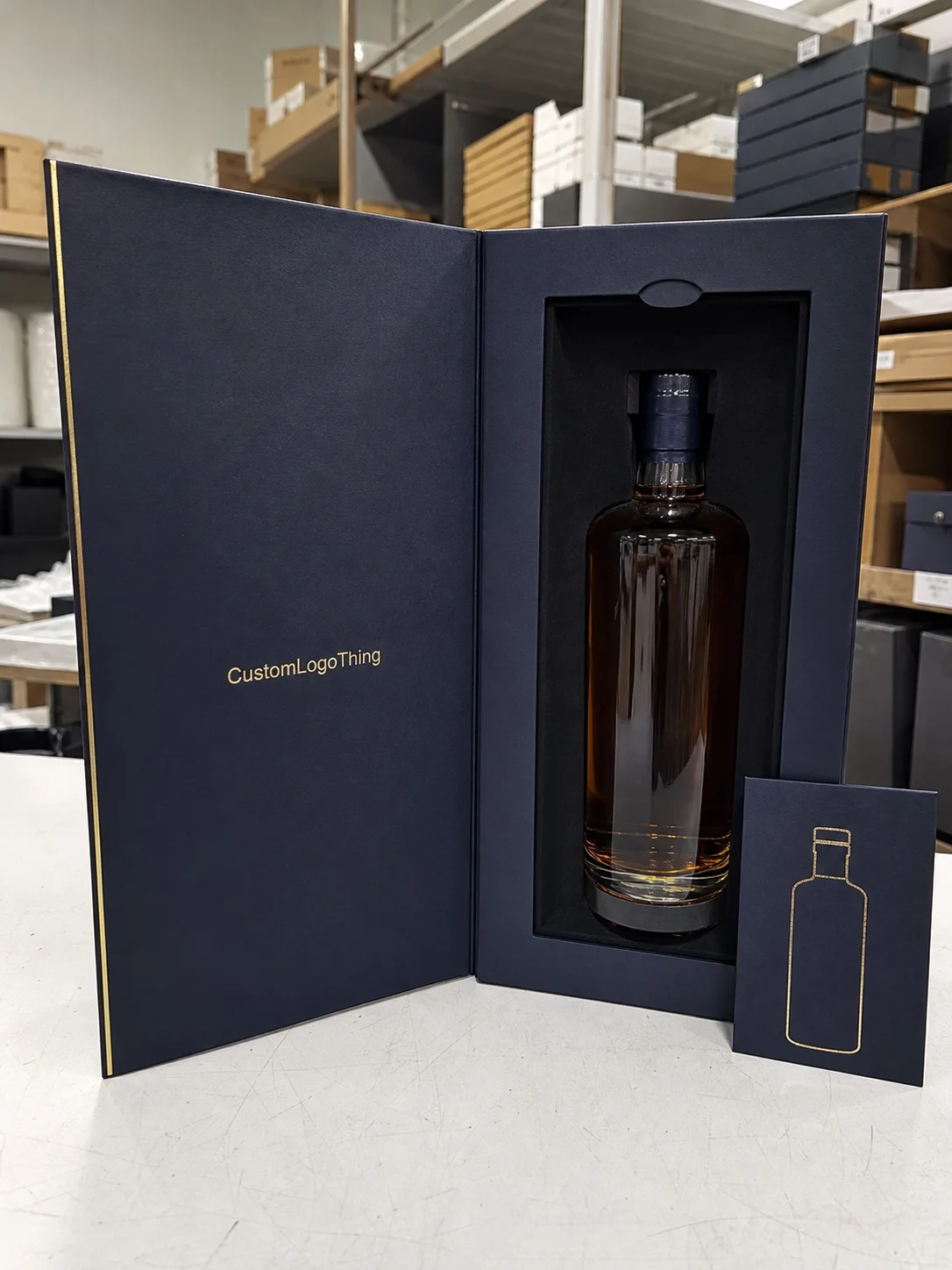
A custom engraved Johnnie Walker Blue Label does something standard packaging rarely manages: it makes a familiar luxury bottle feel specific. Not personalized in the loose, decorative sense. Specific. A name, a date, a short line, or a restrained logo changes the read of the entire gift. The whisky still carries the status signal, but the engraving carries intent.
That distinction matters because the bottle is not the whole product. The bottle, the surface treatment, the box, the insert, and the shipping method all shape how the recipient experiences it. A premium spirit can still land badly if the layout is crowded, the artwork is soft, or the packaging is cheap. The irony is that the glasswork is often the least risky part. The bigger failures usually happen in file prep, proofing, and transport.
For buyers, the best approach is to think like a small packaging project manager. Decide what the bottle is supposed to communicate, how far it needs to travel, and how much consistency you need across one piece or fifty. A presentation gift and a corporate gifting run do not live by the same rules.
A premium bottle that arrives scratched, loose in transit, or packed in a weak carton no longer reads as premium. Protection is part of presentation.
The practical questions are simple:
- Who is receiving it?
- What is the occasion?
- How should the bottle arrive?
Answer those before you talk about artwork. It saves time, cuts revision loops, and keeps the result from feeling improvised.
What a custom engraved Blue Label changes in the gift
A standard Blue Label bottle already carries recognition. Custom engraving changes the emotional center of the gift. Instead of “expensive bottle,” it becomes “this was chosen for you.” That subtle shift is why personalization works so well for executive gifting, milestone birthdays, retirements, weddings, and client appreciation. The value is not just in the bottle. It is in the signal that the gift was assembled with restraint and thought.
The best designs usually do less than people expect. A name, a date, maybe a short message. Sometimes just initials and a small emblem. That is enough if the typography is clean and the spacing is disciplined. Luxury packaging often loses impact when the layout tries to tell the whole story at once. It does not need to.
For corporate use, the most effective pieces are the ones that feel measured. Too much branding and the bottle turns into merchandise. Too little structure and it feels random. The right middle ground usually looks like a gift, not a campaign asset. For weddings or family milestones, the tone changes again. The design can be warmer, but it still benefits from restraint. A premium bottle does not need visual noise to feel personal.
From a buyer’s perspective, the bottle is only one element in a larger presentation system. If the engraving is sharp but the box is flimsy, the result still reads cheap. If the box is strong but the bottle arrives scuffed, the same problem repeats. Good custom packaging makes the whole order feel coherent.
That is why a custom engraved Johnnie Walker Blue Label is usually more successful when the supplier treats it as a presentation build, not just a decoration task. The difference shows up in the mockup, then again when the recipient opens the box.
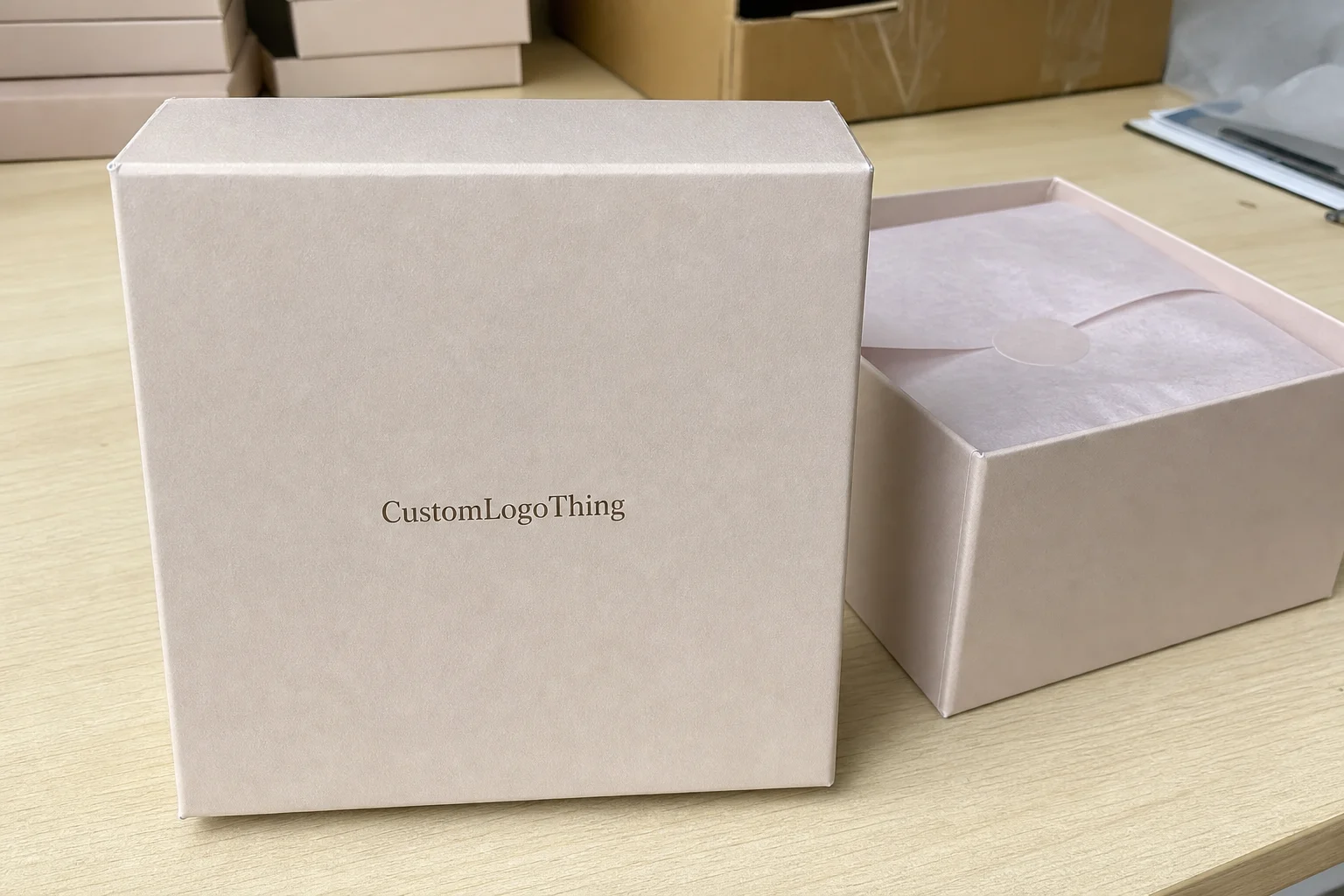
This is also where packaging format matters. Some orders call for a rigid gift box, others for a foam insert and outer shipper, and some for a simple presentation sleeve if the bottle is hand-delivered. If the order is traveling, the outer pack matters as much as the engraving itself. For related presentation pieces, see Custom Packaging Products and Custom Labels & Tags.
How the engraving and personalization process works
The process starts with the decoration method, and this is where buyers often make assumptions too early. Not every “engraving” request is literally the same. Depending on the production setup, personalization may be applied directly to the glass, to a label-style surface, or to a presentation element tied to the bottle. A good supplier should explain the available method before collecting payment, not after the proof has already been built.
Artwork quality is the next pressure point. Vector files are the safest route: AI, EPS, or SVG. Those formats keep edges clean and reduce the risk of jagged curves or blurry type. If you only have a PNG or JPG, it can still work, but the file needs to be high-resolution and free of compression artifacts. Tiny serif fonts, hairline strokes, and intricate line art are risky on curved or narrow surfaces because the bottle shape leaves less room than a flat sheet would.
Good proofing is not cosmetic. It is a control step. A useful mockup should show scale, placement, spacing, and how the text sits against the bottle silhouette. If multiple bottles are involved, the proof should also make the naming format obvious. One bottle can hide an alignment issue. Twenty bottles make it visible.
Keep the copy short. Names, dates, a short dedication, and one logo usually work better than a paragraph. The bottle already communicates premium status; the personalization should frame it, not compete with it. The cleanest custom engraved Johnnie Walker Blue Label orders are usually the most edited ones.
For a clean handoff, the supplier should ideally receive:
- Final spelling for every name, title, and line of text.
- Logo artwork in vector format whenever possible.
- Any required brand colors, font references, or layout preferences.
- Packaging details, including whether a rigid box, insert, or shipper is needed.
That last item matters more than many buyers expect. Packaging and decoration are not separate decisions. They affect each other. A design that looks fine on-screen can fail once it is paired with a specific box size, insert depth, or shipping configuration. If the order is event-driven or intended for client delivery, the packaging plan should be part of the initial brief.
There is also a practical constraint that gets ignored: the bottle surface and the label area are not infinitely flexible. If the artwork is dense, the available surface can force tradeoffs in type size or placement. A supplier that tells you “yes” to everything before seeing the artwork is usually setting you up for a weak result.
Cost, pricing, and quote drivers
Pricing for a custom engraved Johnnie Walker Blue Label depends on quantity, artwork complexity, packaging format, and turnaround. The bottle price is only one part of the total. Setup, file cleanup, proofing, and protective packaging can move the final number more than buyers expect.
Small runs are usually expensive on a per-unit basis because the setup cost is spread across fewer bottles. That is not a markup trick. It is simple math. A one-off piece often carries the highest effective labor cost because the supplier still has to review artwork, prepare a proof, adjust the production files, and verify the result before shipping. A run of 25 or 50 bottles spreads that work more efficiently.
Artwork cleanup is another common cost driver. If a supplier has to redraw a logo, rebuild low-quality text, correct spacing, or convert a screenshot into something production-ready, the order becomes more time-intensive. That labor shows up in the quote. It should. Clean files save money.
Rush work costs more as well. Faster proofing, priority production, and expedited shipping all compress the schedule somewhere upstream. If a quote claims urgency without any tradeoff, the tradeoff is probably hidden in quality or reliability.
Packaging upgrades also change the economics. A simple bottle presentation is cheaper than a rigid gift box with an insert and outer shipper. But the cheaper option is not always the wiser one. If the bottles are traveling, better packaging often reduces breakage risk, replacement cost, and client-facing embarrassment. For transit-heavy shipments, the packaging should be designed for abuse, not just for a photo.
Typical pricing behavior for a custom engraved presentation order often looks something like this:
| Order Type | Typical Cost Pattern | What Usually Drives It | Best Fit |
|---|---|---|---|
| Single bottle | Highest unit cost | Setup and proofing dominate | One-off gift, award, milestone piece |
| 5-10 bottles | Still setup-heavy, but better value | Artwork prep and packaging choices | Executive gifts, weddings, small events |
| 25-50 bottles | More efficient per unit | Repeatability and standardization | Corporate gifting, event handoffs |
| 100+ bottles | Lowest unit cost, tighter planning needed | Production coordination and lead time | Recurring programs, larger gifting campaigns |
In real terms, a simple engraved bottle with basic protective packaging might sit in the lower end of the custom range, while a piece with a rigid box, insert, custom print, and specialty shipping can climb much higher. Depending on the supplier and the production method, that difference can be significant. The gap is rarely about the decoration alone. It is about everything surrounding it.
For buyers comparing quotes, ask for quantity breaks at 1, 5, 10, 25, and 50 units. The jump from one bottle to ten is often steep. The jump from twenty-five to fifty can be more efficient than expected. That is usually where the best value appears.
Common packaging materials also affect cost. Rigid paperboard boxes tend to cost more than folding cartons, but they hold shape better and feel more premium. Foam inserts offer strong protection, though molded pulp or die-cut paperboard may be preferable if the goal is a cleaner, more recyclable presentation. There is no universal winner. The right choice depends on shipping distance, budget, and how the bottle will be handed over.
Suppliers should also be able to tell you whether the box structure leaves enough clearance for the bottle’s dimensions, label height, and any closure or cap detail. That sounds basic, but basic mistakes are expensive when the item is fragile and the deadline is fixed.
Step-by-step order guide for a clean result
Step 1: lock the use case, quantity, target date, and exact personalization text before requesting pricing. Vague briefs create vague proofs. Vague proofs create revisions. Revisions cost time and usually money.
Step 2: gather the right files. Send vector artwork if you have it. Include names, date formats, punctuation preferences, and any brand references that matter. If the order needs a box, insert, or outer shipper, mention that immediately. It is easier to build the bottle around the packaging plan than to force the packaging to catch up later.
Step 3: review the proof like someone responsible for the final outcome. Check spelling, capitalization, punctuation, line breaks, and the balance of the layout on the actual bottle shape. A design that looks centered in a PDF can feel off once it wraps around glass.
Step 4: approve the full system, not just the text. The bottle treatment, the box, and the protective layers should work together. A good custom engraved Johnnie Walker Blue Label order feels edited because the details are coordinated, not because the design tried harder.
Step 5: confirm shipping details before production starts. Delivery address, contact name, receiving hours, and event date should all be clear. A finished bottle sitting in a warehouse or delayed because of an incomplete address is not a production problem. It is a planning problem.
If the order is for a larger brand or hospitality program, define naming rules at the start. Decide whether every piece uses full names, first names, titles, initials, or a standardized message. Consistency sounds boring. It is also what keeps a run from looking improvised.
There is one more useful habit: ask for a final image or proof reference before release if the supplier offers it. You do not need a photo to make the order work, but it helps confirm that the layout survived production intact. That one checkpoint can prevent a lot of disappointment.
Process and turnaround: what to expect after approval
The production flow usually moves through four stages: quote, proof, approval, and fulfillment. If any one of those stages stalls, the schedule slides. That sounds obvious until a deadline is attached to a wedding, a board dinner, or a client event. Then the buffer disappears fast.
Proof approval is the actual clock starter. Once the artwork is signed off, any change becomes a delay and often a charge. If the order includes custom packaging, that part may have its own lead time. In some cases, the bottle work is ready before the box, or the box is ready before the bottles. Coordination is the job.
Turnaround depends on whether the order is stock-based or requires custom setup. A straightforward presentation piece with standard materials can move faster than a build that needs special inserts, extra print elements, or multiple custom components. More moving parts means more chances for delay. There is no shortcut around that.
Shipping time is separate from production time, and buyers confuse those constantly. A bottle can be made and still not be delivered. If the order has a hard deadline, the calendar needs to account for both production and transit. Build buffer into the plan. A deadline is less flexible than the supplier’s schedule.
Reasonable quality-control checkpoints include:
- One named person approves the final proof.
- Packaging format is confirmed before production begins.
- Shipping method matches the delivery window.
- The address is checked against the actual receiving location.
That discipline matters even more when the order is going to an event venue or office with restricted receiving hours. A premium bottle delayed at the dock loses the moment it was meant to create.
For buyers thinking about material choice and waste, recyclable cartons, paper-based inserts, and minimal excess packaging are worth asking for. Reusable shippers are often practical for larger or repeat orders. If the packaging materials are fiber-based, checking for sourcing standards such as FSC certification is reasonable. If the order has compliance or disposal concerns, it is better to ask than to assume.
The smoothest orders are usually the least dramatic: clean file, clean proof, clean packaging plan, clean shipment. There is a reason boring projects often look expensive in the end. They were controlled on the way through.
Common mistakes that make the bottle look cheap
Too much text is the most common failure. A luxury bottle rarely benefits from a long message. Once the layout gets crowded, it starts to resemble souvenir merch instead of a premium gift. Shorter almost always looks more expensive.
Low-resolution artwork is another obvious problem. A fuzzy logo on a premium bottle reads as carelessness, even if the rest of the order is fine. If the file is weak, simplify the design or replace the artwork. Pretending the file is acceptable does not make it better.
Skipping the proof review causes avoidable errors in scale and alignment. On a curved or narrow surface, what looks balanced in a desktop mockup may drift off-center once it is placed on the actual bottle. Small misjudgments become loud when the object itself is expensive.
Ignoring packaging undermines the finish. A custom engraved Johnnie Walker Blue Label can look exceptional and still disappoint if it arrives in a thin carton with no insert, no rigidity, and no protection. The outer presentation is part of the experience. Treating it like an afterthought usually shows.
Waiting until the last minute removes your options. Material choices shrink, proof rounds get compressed, and any error becomes more expensive to fix. Rush work can be done well, but it gives you less room to correct the small things that make a premium piece feel polished.
The shortcuts that usually backfire are predictable:
- Using multiple fonts because they all look good separately.
- Placing a paragraph where a name and date would do better.
- Approving a proof without checking spelling carefully.
- Sending a screenshot instead of usable artwork.
- Assuming the box will protect the bottle “well enough.”
Premium presentation is usually quiet. That is the part many people miss. The best piece is not loud, overdesigned, or crowded. It is controlled. It feels intentional because every element had to earn its place.
Expert tips and next steps before you request a quote
Keep the design restrained. A single strong idea usually performs better than several competing ideas. For a bottle like this, one name, one date, and one mark can carry the whole composition if the spacing is correct.
Choose contrast carefully. The personalization should be readable at arm’s length, not just in a polished mockup. Thin type, weak contrast, and cramped spacing are the fastest ways to make an expensive bottle look undecided.
Use one approval contact. Multiple decision-makers create version drift, especially when people comment on the same proof from different angles. One person can collect feedback. One person should give the final approval. That keeps the production side from chasing conflicting edits.
Write down the exact text, quantity, deadline, and delivery location before asking for a quote. Include the packaging requirement in the first message if you need a gift box, insert, or outer shipper. The more complete the brief, the cleaner the quote and the lower the risk of revision churn.
There is also a useful decision point before pricing begins: determine whether you need a true bottle-focused personalized finish or a label-style presentation build. Those are not the same job. They do not quote the same way, and they do not finish the same way. Get that decision right first and the rest becomes much more manageable.
If I were reducing the whole process to one rule, it would be this: treat a custom engraved Johnnie Walker Blue Label as a packaging project with a premium bottle inside it, not as a bottle with decoration bolted on later. That framing usually produces cleaner artwork, better packaging, and fewer surprises.
How much does a custom engraved Johnnie Walker Blue Label usually cost?
Price depends on quantity, artwork complexity, packaging, and turnaround. Single-bottle orders usually carry the highest unit cost because setup is spread across one piece. Small runs often land in a more efficient middle range, while larger quantities lower the per-unit price. Ask for tiers at 1, 5, 10, 25, and 50 units so you can compare the actual breakpoints.
What is the usual turnaround time for a custom engraved Blue Label order?
Turnaround includes proofing and production, so approval speed matters as much as manufacturing speed. Straightforward orders can move fairly quickly, but custom boxes, special inserts, or multiple decoration steps add time. Build in extra buffer if the bottles need to arrive before an event.
What file should I send for the artwork?
Vector files are best: AI, EPS, or SVG. They stay sharp and are easier to place cleanly on a bottle or presentation surface. If you only have a PNG or JPG, send the highest-resolution version you have. Avoid screenshots whenever possible.
Can I order just one custom engraved Johnnie Walker Blue Label bottle?
Yes, but single-piece orders tend to be more expensive per bottle because setup does not spread across volume. That is normal. If the order is a one-off gift, keep the design simple and avoid unnecessary production complexity.
What details should I finalize before requesting a quote?
Confirm the exact text, quantity, delivery date, shipping address, and packaging needs before asking for pricing. Decide whether you need the bottle alone or a complete presentation setup with a box and insert. Clear input makes the quote faster and reduces revision back-and-forth.