In premium gifting, the message often outlasts the bottle. That is why Johnnie Walker Blue Label custom engraving matters: it changes the object from a high-end purchase into a specific gesture, one that looks considered rather than selected at the last minute. The bottle already carries status. The engraving gives it context.
Blue Label sits in a narrow lane where presentation is not decoration. It is part of the product. The bottle, carton, insert, and note card all work together, so a weak personalization can drag down the entire package. A clean layout does the opposite. It makes the gift feel deliberate without trying too hard.
That is the practical reason buyers pay attention to spacing, proof quality, and bottle format before production starts. It is also why the same message can look polished on one bottle and cramped on another. The difference is rarely about sentiment. It is about production constraints.
Why this engraving stands out in a luxury gift moment
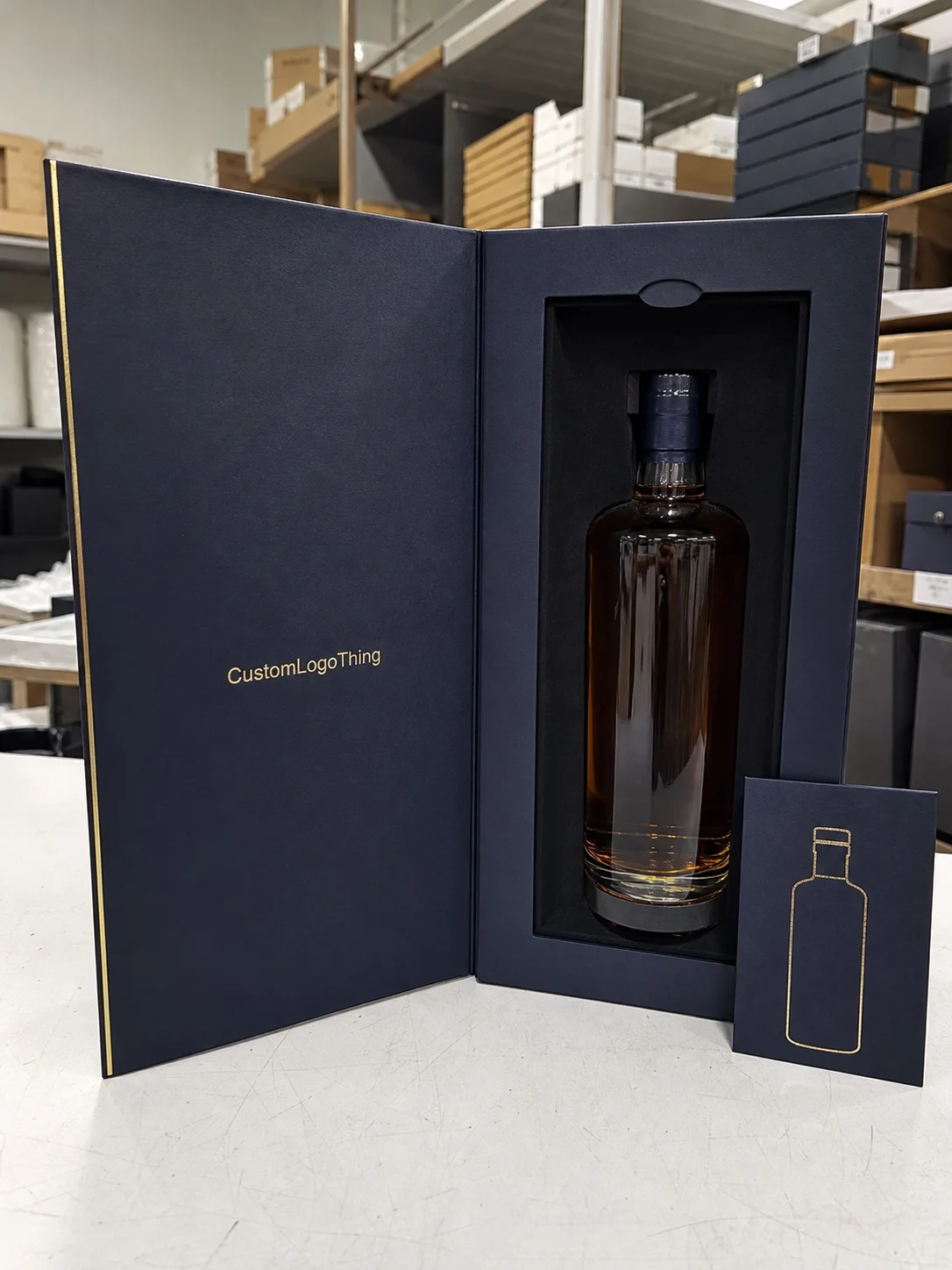
Custom engraving in this setting usually means adding a name, date, short message, logo, or related marking to the bottle or its presentation system. Some providers engrave directly on the glass, while others personalize a fitted plaque, sleeve, insert, or outer pack. The strongest results keep the bottle visually dominant and use the engraving to support the gift, not compete with it.
That balance is why this format works so well for milestone birthdays, retirements, promotions, client thank-yous, and collector-style gifts. It can signal formality without feeling stiff. It can feel personal without becoming sentimental in a way that reads poorly on a luxury item.
From a packaging buyer’s perspective, the value is in control. The surface is limited, the message is fixed, and the proof has to match the physical bottle, not just a screen mockup. That makes this a small production job with luxury expectations attached. If the artwork is off by a few millimeters, the entire presentation can feel cheaper than it should.
There is also a practical upside. A short engraved message is easier to approve, easier to produce, and easier to ship. It reduces the number of things that can go wrong. That matters more than most buyers expect once the order moves beyond a single gift.
Many buyers also coordinate the bottle with secondary packaging so the final set feels complete. A simple note card, a branded shipper, or a matching insert from Custom Labels & Tags can improve the finish without adding clutter. The same logic applies to Custom Packaging Products. If the bottle is premium and the outer packaging looks generic, the contrast is obvious.
A short message with strong spacing usually reads more luxurious than a longer message squeezed into a narrow panel.
That is especially true for gifts that have to communicate quickly, such as executive presents or event deliveries. The recipient should understand the intent at a glance. If the message takes effort to decode, the presentation has already lost part of its value.
How the process and turnaround work from proof to delivery
The process is usually simple on paper. The buyer sends the bottle size, quantity, message, artwork, and delivery date. The provider creates a proof. The buyer approves or requests a correction. Production follows, then packing and shipping. The difficulty is not the sequence. It is the time each step can consume when details are incomplete.
Proofing is where most delays happen. A small text change can alter line breaks. A line break can change the visual center. If a logo is involved, even minor spacing adjustments can affect how the bottle reads from a normal viewing distance. A mockup that looks balanced on a laptop may need a different treatment once it is mapped to the actual bottle panel.
Typical turnaround for a standard order often lands around 7 to 15 business days after stock is confirmed. That range depends on bottle availability, artwork readiness, proof approval speed, and destination. Rush production can shorten the calendar, but it usually narrows the room for corrections. If the order involves a rare bottle format or a more elaborate presentation pack, expect the schedule to stretch.
Quantity matters too. One bottle and a batch of twelve are not the same job. The first is mostly setup and attention. The second is process control. Once a run gets larger, pack consistency, label accuracy, and final inspection become more important because a small error repeats across the whole order. For recurring corporate gifting, that is usually where vendors tighten the approval process.
If the bottle is going to travel in a custom shipper, the structure should be evaluated like other protective product packaging. Glass needs restraint, not just filler. If there is an outer carton, inserts, or decorative material, the pack should resist scuffing and movement during transit. For that reason, it is reasonable to ask whether the shipping format has been assessed against ISTA transit methods. The answer does not change the engraving itself, but it says something useful about how seriously the package was built.
The same thinking applies to any presentation box or sleeve. Every added surface creates another place for misalignment, print variation, or handling damage. A cleaner proof process usually saves time later, especially when the order includes multiple branded elements. The more surfaces involved, the more important it is to approve the layout with the real bottle in mind.
What changes the final result: artwork, bottle condition, and message length
Three factors decide whether the finished bottle looks tailored or cramped: usable surface area, artwork quality, and the amount of text. The bottle shape sets the boundary. Some formats offer a cleaner face than others, and some leave less room once labels, seams, or printed graphics are accounted for. That is why one layout can feel spacious while another feels crowded, even when the wording is identical.
Shorter copy generally performs better. A name, a date, and a brief phrase of recognition usually create a stronger visual hierarchy than a long message. Two lines often look more refined than four. If a logo is included, the text usually needs to get shorter, not longer, so the design can breathe. White space is part of the premium impression. It is not wasted.
Artwork quality is a major bottleneck. Clean vector files are ideal for logos, initials, and simple marks. High-resolution raster files can work if they are sharp and properly prepared. Screenshots, compressed social media images, and low-resolution exports usually require cleanup before they are production-ready. If the provider has to redraw the artwork, that can add both time and cost. It can also shift the result away from the brand asset the buyer thought they were sending.
Bottle condition and exact format matter more than many buyers expect. The edition, fill, carton, and available imprint area all need to match the proof. A quote based on one version does not always transfer to another version if the visible panel changes. That is why confirming the exact SKU before approval is not a formality. It is risk control.
Consistency across the order matters as well. If the goal is a polished presentation, all bottles in the run should match on edition and packaging format. A mixed batch can create alignment issues and make the final set look less deliberate. That is especially noticeable in corporate gifting, where repetition is part of the visual standard.
For buyers thinking beyond the bottle alone, packaging design should be treated as part of the same system. The bottle, outer box, and insert should not compete for attention. A strong presentation depends on cohesion. One good element can help, but it cannot rescue three weak ones.
Cost and pricing: what changes the quote
Buyers often focus on the bottle price and underestimate the personalization cost. That usually leads to surprise later. The bottle is one line item. The engraving, artwork preparation, proofing, handling, and shipping are separate. If the order includes premium packaging, there is another layer on top of that.
A practical way to read the quote is to separate fixed setup from per-unit work. For a single bottle, the setup cost gets spread over one item, so the effective personalization price is higher. For a small run, the average per bottle can fall because the artwork and production setup are reused. For a larger gifting program, volume can improve efficiency, but review standards usually get stricter.
| Order type | Typical personalization charge | Main cost driver | Best fit |
|---|---|---|---|
| Single bottle gift | $35-$90, excluding the bottle | Setup, proofing, and one-off handling | Personal milestones and last-minute gifts |
| Small run of 3-12 bottles | $25-$70 per unit | Shared artwork setup and batch production | Executive gifting and small event batches |
| Larger run of 13+ bottles | $18-$55 per unit | Standardized layout and volume efficiency | Corporate programs and recurring campaigns |
| Rush order | Often adds 15%-35% | Priority scheduling and compressed review time | Deadline-driven events |
| Premium presentation pack | $10-$40 extra | Better board, inserts, or custom printed boxes | High-visibility gift moments |
Those ranges are practical rather than universal. Still, they are more useful than vague language like “affordable” or “premium.” The same message can produce very different numbers if the logo is complex, the schedule is compressed, or the packaging spec changes. Price without context is not a meaningful comparison.
Compare quotes only when the variables match. Same bottle. Same copy. Same artwork. Same delivery window. If those inputs differ, the lower number may simply exclude work that the higher number includes. That is common with proof revisions, special handling, and packaging details that are easy to overlook during the first conversation.
There is also a material sourcing angle worth checking if the order includes printed inserts or outer cartons. If the provider can source fiber-based stock, ask whether it is FSC-certified through FSC. That will not affect the engraving quality, but it can improve the broader packaging story for buyers who care about paper traceability and responsible sourcing.
Step-by-step ordering flow from idea to approved proof
The cleanest orders usually follow the same sequence.
- Define the purpose. Decide whether the bottle is for a personal milestone, client recognition, holiday gifting, or an internal award. The message should match the occasion instead of trying to cover every possible audience.
- Write the copy first. Keep it short enough to read at a glance. If the presentation needs more structure, pair the bottle with a note card or a named tag from Custom Labels & Tags.
- Confirm the bottle details. Send the exact size, edition, and quantity. If the bottle is still being sourced, say so up front. That lets the provider verify feasibility before the proof stage begins.
- Send artwork in a production-friendly format. Vector files are best for logos. If a raster file is all that exists, it should be high-resolution and clean enough to reproduce without visible degradation.
- Review the proof carefully. Check spelling, punctuation, spacing, and the visual balance of the layout. Small proof mistakes become expensive once production starts.
- Approve with the delivery date in mind. A perfect proof is not useful if it arrives after the event. Timing has to be part of the approval decision.
That process sounds routine, but the outcomes are not. Most failures come from the same two places: the message is too long, or the proof was approved too late to leave room for correction. Both problems are avoidable. Both create the kind of delay that damages an otherwise strong gift.
If the order belongs to a larger presentation set, coordinate the bottle with the carton, insert, and printed collateral at the same time. That keeps the typography, finish, and messaging aligned. It also avoids a common problem where the bottle is approved in isolation and the rest of the package still needs work.
For repeat gifting, treat the order like a packaging workflow rather than a one-off novelty. That mindset makes reorders faster, reduces errors, and keeps the final presentation consistent across batches. It is the difference between a present that feels assembled and a present that feels specified.
Common mistakes that make a premium engraving feel off
The first mistake is too much text. Long dedications can feel thoughtful in a draft and awkward once they are compressed into a limited surface area. Dense copy lowers the perceived value because the eye has to work harder to parse it. Luxury presentation relies on restraint.
The second mistake is decorative typography that looks good on a screen and weak in production. Thin script, low contrast, and tight spacing can all fail once they are translated to the real bottle or insert. The best type choice is not the fanciest one. It is the one that survives scale, finish, and viewing distance.
The third mistake is rushing the schedule. If the order is placed too close to the event, there is no room for proof correction, packaging adjustment, or shipping disruption. A buyer can save a day in planning and lose the entire presentation if the bottle misses the deadline. That trade is poor under almost any circumstances.
The fourth mistake is ignoring the package around the bottle. An engraved bottle in a weak shipper still arrives as a weak gift. If the insert shifts, the outer carton scuffs, or the bottle moves during transit, the presentation loses its edge before it reaches the recipient. That failure is usually preventable.
- Do not approve a proof with uncertain spelling or punctuation.
- Do not assume a marketing file is production-ready artwork.
- Do not order the wrong bottle format and hope the layout can be fixed later.
- Do not leave shipping terms vague if the gift has a fixed delivery date.
These are basic checks, but they show up repeatedly in real orders. The correction fee is rarely the real problem. The larger cost is the loss of credibility when the gift arrives looking improvised.
Expert tips for a cleaner result and smarter next steps
Keep the message short and strong. That one decision improves readability, spacing, and the overall feel of the piece more than any other adjustment. A name and a short line of recognition usually outperform a paragraph, especially on a premium bottle with limited panel space.
Ask for a proof that reflects the actual bottle size, not just a generic text mockup. Proportions can shift once the design is placed on the real format. If the order includes an outer box or sleeve, ask to see the bottle with the packaging together. That is where package branding either comes together or falls apart.
Build in time for review and transit. Most delays are small, not dramatic. One correction. One missing file. One shipping exception. A few extra business days can absorb those problems before they turn into a deadline miss.
If the presentation includes printed inserts, ask whether the board can be FSC-certified and whether the shipper has been tested for transit durability. Those questions do not complicate the order. They make it more controlled. They also align the bottle with the rest of the branded packaging instead of treating it as a standalone object.
For buyers, the smartest next steps are simple: confirm the exact bottle, write a concise message, prepare artwork in the right format, compare quotes on equal terms, and approve the proof only after the layout matches the occasion. That is the cleanest route to johnnie walker blue label custom engraving that feels polished rather than forced. Handled well, johnnie walker blue label custom engraving is not just decoration. It is a controlled presentation decision, and the details are what make it work.
How long does Johnnie Walker Blue Label custom engraving usually take?
Most timelines depend more on proof approval, bottle stock, and shipping distance than on the engraving step itself. A standard order often fits into a 7-15 business day window once stock is confirmed, while rush orders can shorten that at the expense of revision time. A buffer is still the safest option if the bottle has to arrive before a fixed event.
What information do I need for an accurate custom engraving quote?
Provide the bottle size, quantity, delivery zip code, and the exact message or logo you want included. If artwork is involved, send a clean vector file or a high-resolution image so the provider can judge production quality quickly. The event date should be included too, because timing affects both feasibility and pricing.
Can I put both a logo and a short message on the bottle?
Yes, if the available surface area and production method can handle it without making the layout feel crowded. Short copy usually works better when a logo is included because it preserves space and readability. The proof matters here more than anywhere else, since logo placement and text balance shape the final impression.
What drives the price up the most on a personalized bottle order?
The biggest cost drivers are usually quantity, artwork complexity, rush timing, and shipping. Extra proof revisions, premium packaging, and special handling can also change the quote. Compare quotes using the same bottle, same copy, and same delivery terms or the numbers will not mean much.
What should I check before approving the engraving proof?
Check spelling, punctuation, line breaks, and any names or dates that could create an expensive error if missed. Confirm the layout is readable at the actual bottle size, not just on a screen preview. Verify the delivery date too, because an approved proof only helps if the bottle can still arrive on time.