Buyer Fit Snapshot
| Best fit | Buy Custom Printed Mailers in Bulk projects where brand print, material claims, artwork control, MOQ, and repeat-order consistency need to be specified before quoting. |
|---|---|
| Quote inputs | Share finished size, material target, print colors, finish, packing count, annual reorder estimate, ship-to region, and any compliance wording. |
| Proofing check | Approve dieline scale, logo placement, barcode or warning zones, color tolerance, closure strength, and carton packing before bulk production. |
| Main risk | Vague material claims, crowded artwork, missing packing details, or unclear freight terms can make a low unit price expensive after revisions. |
Fast answer: Buy Custom Printed Mailers in Bulk: Material Claims, Seal Quality, and Freight Cost should be specified like a repeatable production item. The safest quote records material, print method, finish, artwork proof, packing count, and reorder notes in one written spec.
Production checks before approval
Compare the actual filled-product size with the drawing, then confirm tolerance on folds, seals, hang holes, label areas, and retail display edges. Reserve space for logos, QR codes, warning copy, and material claims before decorative graphics fill the panel.
Quote comparison points
Review material grade, print process, finish, sampling route, tooling charges, carton quantity, and freight assumptions side by side. A quote is only useful when the supplier can repeat the same color, closure quality, and packing count on the next order.
If you want to buy Custom Printed Mailers in bulk, the first thing I tell people is simple: don’t shop only by unit price. On a packaging line, the real savings usually come from setup efficiency, steady run speed, and fewer interruptions once the film is loaded, the print plates are locked in, and the converting line is moving at full pace. I’ve stood beside that kind of line in Shenzhen, where a flexographic press was running 120 to 180 meters per minute, and in a Midwest fulfillment plant in Indianapolis, where a weekend rush exposed every weak point in the supply plan; the difference between a well-planned bulk order and a rushed one shows up fast in waste, labor, and rework.
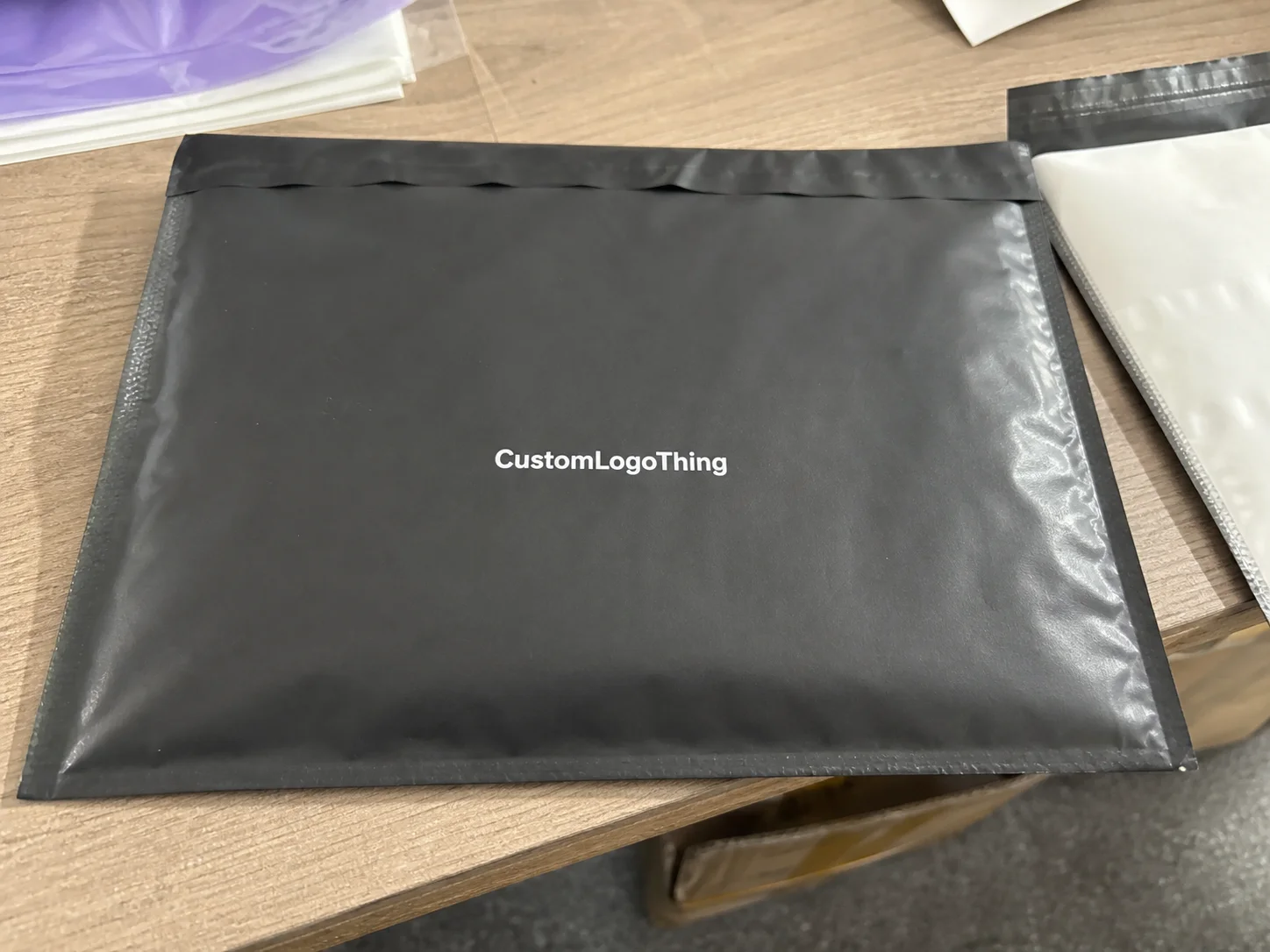
For Custom Logo Things, helping brands Buy Custom Printed mailers in bulk is not just about lowering the cost per bag. It is about keeping branding consistent from the first shipment to the five-thousandth, cutting down last-minute substitutions, and making sure every parcel leaving the dock looks like it belongs to the same brand family. That matters in subscription shipping, apparel, accessories, and DTC fulfillment, where the mailer is often the first physical impression a customer gets. Honestly, I think that first impression is doing a lot more heavy lifting than some teams want to admit, especially when the mailer lands on a porch in Atlanta, Austin, or Brooklyn and gets photographed before it gets opened.
Buy Custom Printed Mailers in Bulk: Why Bulk Orders Save More Than Money
When brands buy custom printed mailers in bulk, they usually notice the headline savings first, but the operational savings are often bigger. Once a polyethylene film roll is loaded and the print system is dialed in, each additional mailer is cheaper to produce because the setup cost gets spread over more units. I’ve seen a flexographic run in Dongguan where the first 5,000 pieces carried the burden of plate prep, ink balance, and line calibration, and after that the press crew settled into a steady rhythm. That’s where the economics improve, especially on orders in the 10,000- to 50,000-piece range.
Bulk ordering also keeps branding stable. A brand color matched on one order and swapped on the next can look surprisingly different when the customer sees packages stacked together at home, in a locker, or on a retail back shelf. If you buy custom printed mailers in bulk, you reduce those changes and keep logo placement, return messaging, and shipping instructions consistent. That consistency matters as much for package branding as it does for product packaging, and it is one reason many teams lock in a single spec for an entire quarter rather than resetting artwork every few weeks.
I’ve had a client in apparel tell me their fulfillment center in Nashville was constantly substituting plain mailers during peak weeks because they kept ordering too late. Their product line was solid, but the unboxing experience looked inconsistent. Once they shifted to a proper bulk plan and ordered enough inventory for six to eight weeks of volume, the problem disappeared. The packing team stopped improvising, and the brand presentation became predictable. That was one of those moments where everybody suddenly became very interested in planning, especially after the buyer realized the emergency freight bill was $860 for a single pallet.
There are also practical benefits that do not show up in a quote sheet. When you buy custom printed mailers in bulk, you usually reduce vendor handoffs, avoid emergency ordering, and make inventory planning easier for the operations team. That means fewer small purchase orders, fewer freight surprises, and fewer moments where the warehouse runs out of branded mailers on a Thursday afternoon before a holiday push. If you’ve ever watched a fulfillment manager stare into an empty rack like it personally betrayed them, you know exactly why this matters, especially when the next outbound wave is already booked for 2,400 units.
A lot of people treat mailers like a disposable supply item instead of part of the brand system. A well-designed poly mailer with a logo, return panel, color-blocked graphics, or shipping instructions can function like a lightweight form of retail packaging. It protects the product, but it also carries the brand into every shipment. A 12 x 15.5 inch mailer printed on a white 2.5 mil co-extruded film can do that job very well when the design is clean and the seal is reliable.
“The best bulk order is the one that disappears into the workflow,” a fulfillment manager told me after we changed her mailer spec from inconsistent short runs to a single planned production schedule. “No rush orders, no mix-ups, no mystery boxes at the packing bench.” That was the right way to say it, especially after we moved her reorder point to 7,500 units and cut the number of emergency pickups to zero.
If you are comparing options, I also recommend looking at our Custom Poly Mailers and the broader Custom Packaging Products lineup, especially if you are coordinating mailers with other branded packaging pieces like tissue, stickers, or Wholesale Programs for repeat procurement. A coordinated order of 10,000 mailers, 5,000 inserts, and 20,000 stickers is usually easier to plan than three separate rush orders spread across different vendors.
The brands that benefit most when they buy custom printed mailers in bulk are subscription services, apparel sellers, accessories companies, DTC fulfillment teams, and distributors shipping lightweight goods. If your products fit in a flexible mailer, are not fragile, and ship in repeatable quantities, bulk mailer planning is usually the cleanest way to control cost and presentation at the same time. In practical terms, that often includes items under 3 pounds, packed in bins of 250 to 500 units, and shipped from facilities in Los Angeles, Dallas, or Charlotte.
Product Details: What You Get When You Buy Custom Printed Mailers in Bulk
At the factory level, a poly mailer is not complicated, but the details matter. Most custom mailers are made from co-extruded polyethylene film, which means the film layers are engineered together for strength, printability, and opacity. A good mailer will have sealed edges, a pressure-sensitive peel-and-seal adhesive strip, and enough closure strength to stay secure through conveyor movement, parcel handling, and final delivery. If tamper evidence is needed, we can specify a closure design that shows clear opening disruption, such as a permanent adhesive strip with a 5 to 7 mm seal zone and a visible tear line.
When you buy custom printed mailers in bulk, you can usually choose from flexographic printing for larger volume production or digital Printing for Smaller multi-design runs. Flexo is the workhorse for high quantities because once the plates are set and registration is locked, the line can move fast with consistent coverage. Digital printing is useful when a buyer needs more versioning, smaller batch runs, or frequent artwork changes. Neither is automatically better; the right choice depends on quantity, artwork complexity, and deadline, and a 2-color flexo job in a 20,000-piece run will usually price very differently from a 4-design digital order of 1,500 units.
Customization is usually broader than people expect. You can place a logo near the top edge, run one-color or multi-color graphics across the face, print return instructions inside the flap area, add a QR code, or include customer-facing shipping text. Some brands also ask for interior printing, which is a nice touch for product packaging because the customer sees a branded reveal when the bag is opened. That kind of detail can elevate the shipment without adding the cost of custom printed boxes, especially if you are using a 350gsm C1S artboard insert inside the parcel to reinforce presentation.
I’ve walked through plants where the packaging design team spent weeks perfecting the mailer layout because they wanted the brand color to appear exactly the same on every unit. That attention pays off. If you buy custom printed mailers in bulk, you can lock in a specific ink formula, a fixed print area, and a repeatable finish so the mailer supports the same visual standard every time. In one Guangzhou facility, the quality team kept a signed master sample on the press bench under LED lighting at 5000K, which is exactly the kind of discipline that keeps color drift under control.
Typical use cases include folded apparel, knitwear, socks, textile accessories, documents, soft goods, subscription kits, and small non-fragile items like cosmetics samples or phone accessories. The right mailer is the one that complements the product being shipped. Too large, and you waste material and freight. Too small, and packing becomes slow and the seal gets stressed. A good spec avoids both problems, and for a medium-weight hoodie I usually expect a 14 x 19 inch mailer with 2.75 mil film to be a much better fit than a loose 19 x 24 inch oversized pouch.
For brands comparing standard shipping mailers against premium branded packaging, the differences usually show up in thickness, opacity, tear resistance, and surface appearance. A simple white mailer may do the job, but a premium mailer with better film clarity control, cleaner edge sealing, and a smoother print surface often presents much better on camera and in the customer’s hands. That matters for retail packaging sensibility, even if the parcel never touches a retail shelf, and it matters even more when your team is shipping 8,000 orders a month out of Chicago or Phoenix.
One more point people underestimate: moisture resistance and puncture resistance. Polyethylene mailers are built to handle light shipping abuse, but not all films are equal. If your product has sharp corners, zipper hardware, or carton edges inside, the material choice needs to account for that. When buyers buy custom printed mailers in bulk, I always ask what is being shipped, how it is folded, and whether there is any hard component that can press through the film. A 3 mil film with reinforced side seals will usually outperform a thinner 1.5 mil option for accessories with metal clasps or boxed sets with sharp corners.
For buyers also thinking about broader package branding, these mailers can sit nicely beside labels, inserts, and coordinating branded packaging pieces. A small, well-specified mailer can carry the brand story almost as effectively as larger formats in the right category, especially when paired with a simple branded insert and a return card printed on 350gsm C1S artboard.
Specifications to Review Before You Buy Custom Printed Mailers in Bulk
The first spec I want to see is finished size, not just a loose guess. Measure the folded product, add a little handling room, and then confirm how the item will be packed by the fulfillment team. When brands buy custom printed mailers in bulk, sizing mistakes are one of the most expensive preventable errors because the entire order gets committed to the wrong format. I’ve watched a warehouse in Columbus try to force oversized hoodies into a mailer meant for lightweight tees, and the result was slower packing, stressed seals, and nearly 9% more waste on that line.
Thickness is the second checkpoint. Poly mailers are often discussed in mils, and that number matters because it influences puncture resistance, feel, and freight weight. Thicker film can look more premium and hold up better in transit, but it can also increase material usage and shipping cost. For many apparel lines, a balance between durability and cost works better than simply choosing the thickest option available. If you buy custom printed mailers in bulk, ask for the exact mil spec and compare it against product risk, such as 2.25 mil for lightweight goods or 3.0 mil for heavier folded apparel.
Other technical checkpoints include seal width, closure strength, print coverage area, gusset options, and opacity. A wider seal can improve confidence during transit, while full opacity helps keep contents private. If your customer base values discretion, especially for intimate apparel or personal items, opacity matters more than many teams realize. I’ve seen brands lose trust because the product silhouette was too visible through a thin film, and nobody enjoys that awkward customer email. A 30 mm seal width and a high-opacity white film can solve that issue in a way a vague “premium” label never will.
Material composition is another question worth asking. Virgin polyethylene usually gives very consistent performance and print response. Recycled content can be the right choice for sustainability goals, but it may change film appearance, surface smoothness, or print brightness depending on the formulation. If you need FSC-related paper elements for inserts or companion materials, that is a separate conversation, but the same discipline applies: specify clearly and document the desired outcome. For general packaging guidance and sustainability standards, I also suggest reviewing industry resources like the Packaging Machinery Manufacturers Institute and EPA recycling guidance.
Finish also affects brand feel. Matte film creates a softer, more muted presentation, while glossy film can make colors pop and improve contrast. Neither is automatically superior. A matte finish may fit a premium apparel label, while glossy can work better for bold, high-contrast graphics. If you buy custom printed mailers in bulk, ask for samples of both finishes if the visual identity is still being refined, especially if the final artwork uses deep navy, black, or metallic red tones.
| Mailer Spec | Typical Range | Best For | Notes |
|---|---|---|---|
| Size | 9 x 12 in to 19 x 24 in | Apparel, accessories, kits | Choose based on folded product dimensions plus handling room |
| Thickness | 1.5 to 3.5 mil | Light to medium shipping loads | Higher mil improves puncture resistance but may increase cost |
| Print Method | Flexographic or digital | High-volume or short multi-design orders | Flexo usually wins on volume; digital helps when artwork changes often |
| Finish | Matte or glossy | Premium branding or bright color work | Finish affects both look and print contrast |
| Film Content | Virgin or recycled content | Sustainability-focused programs | Confirm print appearance and local recycling compatibility |
Sustainability questions should be asked early. If your buyers care whether the mailer can enter a local plastic collection stream, confirm the recycling compatibility in the destination market rather than assuming it is universal. Also ask whether post-consumer recycled content is available, and whether that content changes the print surface. A responsible spec sheet is better than a vague green claim every time, especially if your shipments go to states with different curbside rules and sorting systems.
The clearest way to buy custom printed mailers in bulk is to compare mailer size, thickness, print method, and intended product category side by side. That keeps the conversation technical, which is where packaging decisions should live, whether your operation is in Seattle, Miami, or a contract warehouse outside Louisville.
How do you buy custom printed mailers in bulk without overpaying?
The best way to buy custom printed mailers in bulk without overpaying is to compare the full landed cost, not only the unit price. Ask for a quote that includes size, thickness, print colors, artwork coverage, carton count, palletization, and freight to your receiving dock. That gives you a real picture of what the order will cost once it reaches the warehouse, and it helps you avoid the trap of a low piece price that turns expensive after shipping and handling are added.
Pricing and MOQ: How Bulk Quotes Are Calculated
Pricing starts with the basics: size, thickness, number of print colors, print coverage, packaging format, and total quantity. If you buy custom printed mailers in bulk, the quote usually becomes more attractive as quantity rises because the setup expense is spread across more units. That setup cost includes plate work for flexo, color matching, machine staging, material prep, and carton packing. There is no magic in the math; it is simply production economics, and a common benchmark for a 5,000-piece run might land around $0.15 per unit before freight if the spec is straightforward.
Minimum order quantities exist because custom work takes setup time. A smaller run often costs more per unit than a larger one because the factory still has to make plates, stage film, align artwork, and approve color. I’ve negotiated enough print jobs to say this plainly: the cheapest-looking quote is not always the best deal if it is based on an unrealistically small quantity that the plant can only run inefficiently. If you buy custom printed mailers in bulk, the unit cost usually drops as the run becomes more stable, and a 10,000-piece order can often come in 12% to 20% lower per unit than a 2,000-piece order with the same artwork.
At higher volumes, production can move continuously on a converted film line or high-speed printing press, and that is where the economics improve sharply. The crew spends less time stopping and starting, waste drops, and the finished bags come off in a more predictable flow. That is one reason brands with repeat ship volume often do better with planned bulk procurement instead of scattered emergency buys, particularly when the production site is in Shenzhen, Jiangsu, or Vietnam and the run is booked around other scheduled jobs.
Freight matters too. Carton count, palletization, destination, and whether the shipment goes by truckload or LTL all affect the landed price. I’ve seen a quote look excellent until freight was added, and suddenly the “cheap” order was no longer the best option. When you buy custom printed mailers in bulk, you should compare the full landed cost, not just the headline unit rate, because a $0.14 unit price from the port can become $0.19 landed once pallet fees and inland delivery are included.
Here is the framework I recommend when requesting quotes:
- Share finished dimensions, not estimated size.
- Send vector artwork or editable source files.
- State your target quantity in exact numbers.
- Give a target ship date and realistic in-hand deadline.
- Note finish preferences, such as matte, glossy, or recycled-content film.
- Ask for freight estimates to your receiving location.
One of my more memorable supplier negotiations happened in a plant where the buyer kept comparing only the per-unit piece price and ignoring cartons, pallet count, and delivery timing. Once we laid out the total landed picture, the better option was obvious. The lower piece price had hidden freight and a slower schedule, which would have disrupted their packing operation. That is the kind of problem that disappears when you buy custom printed mailers in bulk with all the numbers in front of you, including a clear carton count like 200 pieces per master case and 48 cases per pallet.
If you want volume pricing aligned with repeat procurement, our Wholesale Programs are designed for buyers who need dependable restocks, not one-off trial orders. The best buying decision is the one that fits your shipping rhythm, warehouse space, and reorder cadence, especially if your team reorders every 6 to 10 weeks.
Typical pricing factors at a glance:
- Mailer size: larger formats use more film and more print area.
- Film thickness: heavier gauges cost more but may improve durability.
- Print colors: more colors usually mean more setup and higher press time.
- Coverage: full-face graphics cost more than a simple logo mark.
- Quantity: higher volume usually reduces unit cost.
- Freight: destination and pallet count affect the final landed price.
That is why the smartest way to buy custom printed mailers in bulk is to ask for a spec-driven quote instead of a casual price estimate. Specifics save money, and a buyer who sends accurate dimensions, artwork, and quantity can usually avoid a costly revision cycle.
Process and Timeline for Custom Printed Mailer Orders
The standard production path is straightforward, but every step matters. It starts with artwork submission, moves to proof approval, then spec confirmation, scheduling, printing, converting, packing, and shipment. If you buy custom printed mailers in bulk, the factory will usually need all of those details locked before the job is released to production. That is how you avoid mistakes that cost days, not hours, and it is why a typical timeline is often 12 to 15 business days from proof approval to shipment for a straightforward order.
Artwork issues are one of the biggest delay sources. Missing dieline alignment, low-resolution logos, unconverted fonts, or unclear color references can slow everything down. I’ve seen a team wait three days because they sent a JPEG logo that looked fine on a laptop but collapsed on a production proof. If you want to buy custom printed mailers in bulk without delays, send vector files whenever possible and confirm the exact layout early, preferably before the first round of proofing.
At the plant level, a good run includes checkpoints for ink adhesion, seal integrity, print registration, and carton verification. These are not decorative steps; they are the controls that keep the order from failing in transit or at the fulfillment table. If a seal does not hold under handling, the shipment suffers. If the print drifts off registration, the branding looks sloppy. That kind of mistake is avoidable when the job is reviewed properly before and during run time, often with a press check at the start of the shift in facilities running near Suzhou or Dongguan.
Timelines depend on volume, print method, and current factory load, so any honest supplier should treat lead times as conditional rather than magical. Fast approvals keep orders moving. Delayed signoff on proofs will slow the schedule every time. If you buy custom printed mailers in bulk, expect your timeline to include artwork review, proofing, production, and transit, and always leave room for a small buffer, especially if your receiving dock closes at 4:00 p.m. or only accepts appointments on Tuesdays and Thursdays.
Here is how I usually advise buyers to shorten lead time without sacrificing quality:
- Provide vector artwork in AI, EPS, or high-quality PDF format.
- Confirm exact dimensions before proofing begins.
- Approve proofs quickly and consolidate feedback into one response.
- Keep ship-to and receiving details consistent.
- Decide on finish and color targets before production scheduling.
Reliable factories communicate milestone updates because fulfillment teams need to plan inventory intake, bin locations, and outbound sequencing. That communication matters when a client has multiple SKUs moving through the same packing line. If you buy custom printed mailers in bulk, ask how status updates will be shared and who owns the timeline at each step, because a single missed update can ripple into a missed outbound cutoff in Memphis or Reno.
I still remember a client meeting in which their warehouse supervisor asked whether a mailer order could arrive two days earlier so they would not have to switch to plain stock during a promotion. That was not a branding problem alone; it was a labor and scheduling problem. The production team adjusted the run order, the proof was approved same day, and the shipment made it. That is the kind of practical coordination that makes a bulk order actually useful, especially when the order was already packed into 1,200 cartons and staged for container loading.
For buyers who need a packaging standard that supports both branded packaging and efficient fulfillment, the process should feel controlled and transparent from the first proof to the final pallet. A good vendor will tell you exactly what happens on day 1, day 5, and day 12, not just say the order is “in process.”
Why Choose Us When You Buy Custom Printed Mailers in Bulk
Custom Logo Things brings packaging experience that comes from seeing how these products behave in real warehouses, not just in mockups. When you buy custom printed mailers in bulk through a team that knows the factory floor, you avoid common mistakes like underspecified film thickness, oversized print coverage, weak seal selection, or unrealistic lead-time expectations. That kind of guidance is worth more than a generic sales pitch, especially when one bad spec can turn into a 2,000-unit remanufacture.
We help buyers Choose the Right film, print setup, adhesive performance, and carton packing so the mailer works in transit and fits the shipping workflow. That matters if your fulfillment line packs hundreds or thousands of orders a day, because a mailer that jams, tears, or seals inconsistently creates real labor costs. I’ve seen one poorly chosen bag add just a few seconds per pack, which sounds minor until you multiply it across a week of outbound volume. That is how little frustrations become expensive annoyances, and a 4-second delay across 8,000 parcels can swallow a whole shift’s labor budget.
Quality control should stay consistent across runs. Color stability, seal performance, and dimensional accuracy all need to stay inside acceptable ranges from order to order. When you buy custom printed mailers in bulk, the advantage of repeatability is only real if the supplier controls the variables. I’ve spent long afternoons on the floor checking samples against approved masters, and the difference between a disciplined run and a careless one shows immediately, especially under the fluorescent lights in a plant outside Guangzhou or Ningbo.
Flexibility matters as well. Some brands need the same mailer every month. Others need to tweak seasonal graphics, limited-edition artwork, or promotional copy without rebuilding the whole program. A good packaging partner should support both scenarios. If you are balancing mailers with other custom printed boxes or retail packaging elements, continuity across the product line becomes even more valuable, particularly when your spring launch uses one color family and your Q4 drop uses another.
We also give practical support around proof review and spec confirmation, because a customer cannot use a mailer effectively if the size, color, or closure is wrong for the product being shipped. That is what separates a useful packaging supplier from a noisy one. One gives you answers grounded in production reality. The other gives you nice language and little else, which is not much help when your receiving team is trying to unload a 40-foot container at 7:30 a.m.
Why teams come back to us:
- Clear spec guidance from first quote to final approval.
- Support for repeat orders and seasonal reprints.
- Realistic production and freight planning.
- Technical help with branding, color, and film choice.
- Order coordination that fits fulfillment operations.
When brands buy custom printed mailers in bulk with us, they are not buying hype. They are buying a packaging program that is built to ship consistently, look clean, and keep costs predictable, whether the order starts at 3,000 units or 30,000 units.
Next Steps Before You Buy Custom Printed Mailers in Bulk
Before you request a quote, gather three things: product dimensions, target quantity, and artwork files. If you buy custom printed mailers in bulk with those basics ready, the response will be much faster and the quote will be much more accurate. The more precise you are, the better the recommendation will be for size, thickness, and print method, and the less likely you are to need a second proof cycle.
Next, decide what kind of film you want. Standard white, colored, clear, matte, or recycled-content film can all be valid choices, but each one changes the look and sometimes the performance. If your product line is style-driven, the visual effect matters. If your focus is operational, you may care more about opacity, closure strength, and freight efficiency. That balance should be decided before you buy custom printed mailers in bulk, ideally before artwork is laid out on the dieline.
You should also confirm branding priorities. Do you want a logo only, or a fuller package branding treatment with color fields, return text, QR codes, or interior print? Do you want the brand mark centered or shifted to one edge so it aligns with label placement? Those are small details, but they affect the finished result. Good packaging design starts with a clear hierarchy of what must appear and what can stay minimal, and that often means choosing between a 1-color mark and a 3-color full-face layout.
I always recommend asking for a spec sheet, proof, and freight estimate together. That gives you the full order picture in one review cycle, which is easier for operations, procurement, and finance. If a buyer only sees the unit price, they miss the real story. If you buy custom printed mailers in bulk, use the complete picture: material, print, timing, and delivery, plus the destination ZIP code and carton count so the freight number is grounded in reality.
One last practical note from the floor: order early enough to cover production, transit, and a little safety buffer. A buffer of even one week can keep a packing line from stalling when volumes spike or a carrier delay appears. I’ve seen brands lose more from a stockout than they ever saved by delaying the purchase, and a single missed fulfillment window can cost far more than the difference between $0.14 and $0.16 per unit.
When the details are right, the process is simple. You specify the product, approve the artwork, plan the schedule, and receive a mailer that supports your shipping operation without improvisation. That is the best reason to buy custom printed mailers in bulk: not just because the price gets better, but because the entire packaging system works better from the first pallet to the last carton.
Frequently Asked Questions
What do I need to buy custom printed mailers in bulk?
You will need finished product dimensions, an estimated order quantity, logo or artwork files, and your preferred material or thickness. If you can also share the shipping destination and target timeline, the quote will better reflect freight and production reality, which saves a lot of back-and-forth later. A complete request usually includes size, quantity, print colors, and whether you want matte or glossy film.
How many mailers count as bulk when I buy custom printed mailers in bulk?
Bulk usually means an order large enough to justify setup and printing efficiencies, often starting at a few thousand units depending on size and print complexity. The higher the quantity, the more the setup cost gets spread out, which is why the per-unit price usually improves as the run grows. In many programs, 5,000 pieces or more is where the pricing starts to improve noticeably.
What affects the price most when I buy custom printed mailers in bulk?
The biggest drivers are mailer size, film thickness, number of print colors, print coverage, and total quantity. Freight, packaging format, and special finishes can also change the final landed cost, so a careful quote should include all of those elements. A simple one-color logo on a 2.25 mil mailer will usually cost less than a full-face 3-color print on a thicker film.
How long does it take to receive custom printed mailers in bulk?
Timing depends on proof approval, print method, order size, and the current factory schedule. Fast artwork approval and clear specifications keep the order moving, while late changes to layout, color, or dimensions usually push the timeline out. For many standard runs, the schedule is typically 12 to 15 business days from proof approval, plus transit time based on destination.
Can I order samples before I buy custom printed mailers in bulk?
Yes, sample or pre-production proof options are useful for checking size, print layout, material feel, and closure performance. A sample review can prevent expensive changes after the full production run starts, especially if you are balancing shipping speed with branded packaging quality. In some cases, a printed sample can be turned around in 3 to 5 business days before the main order is scheduled.