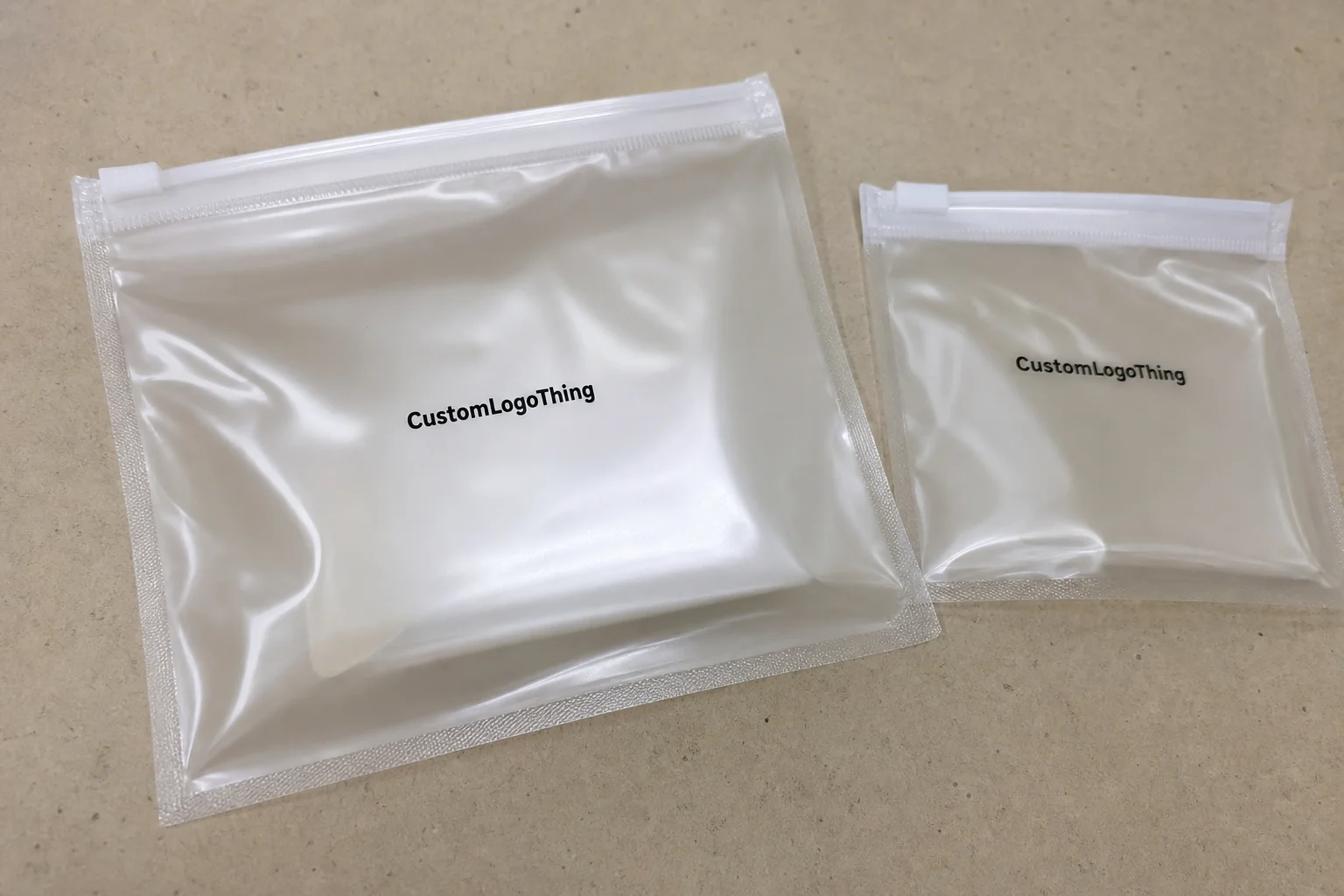
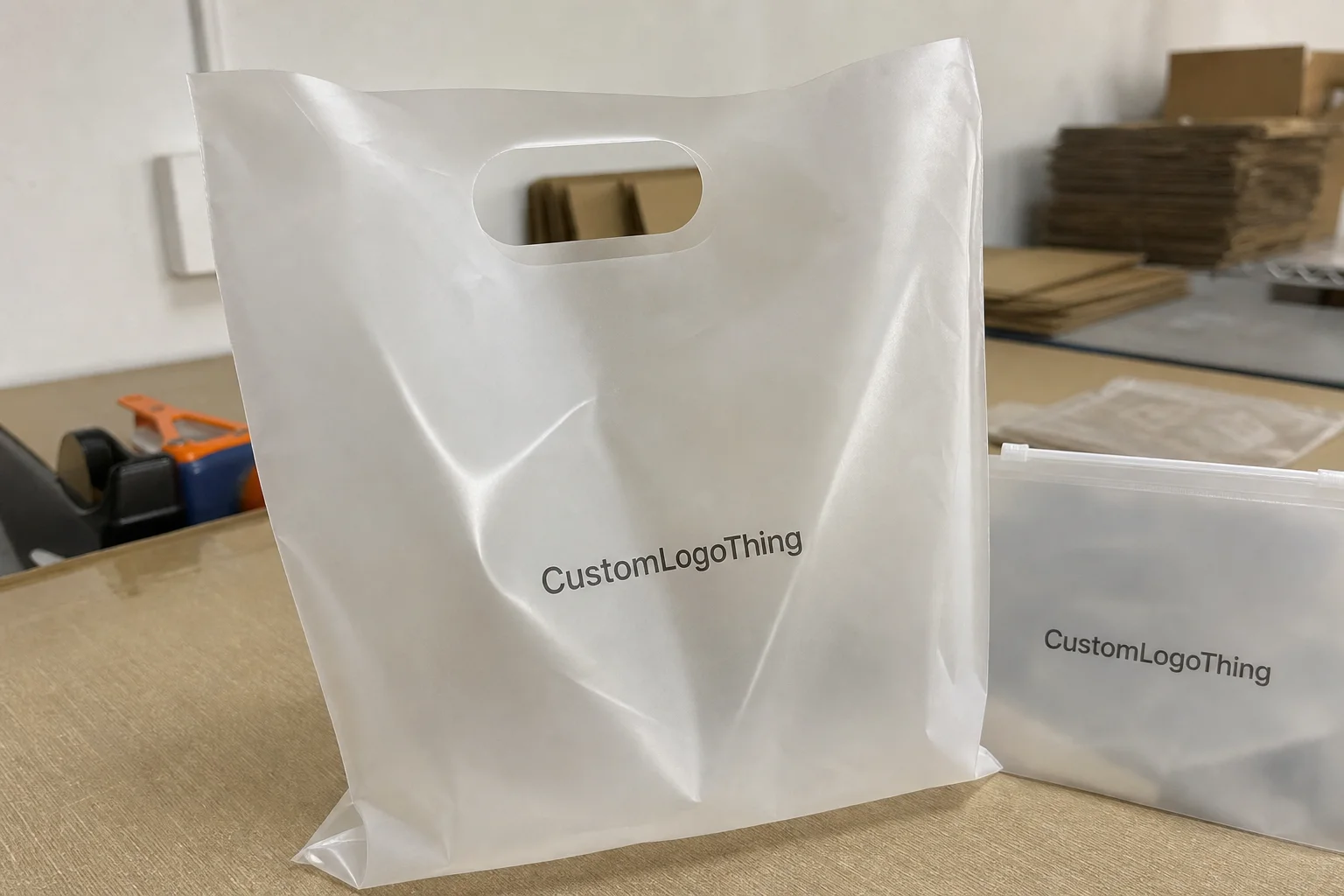
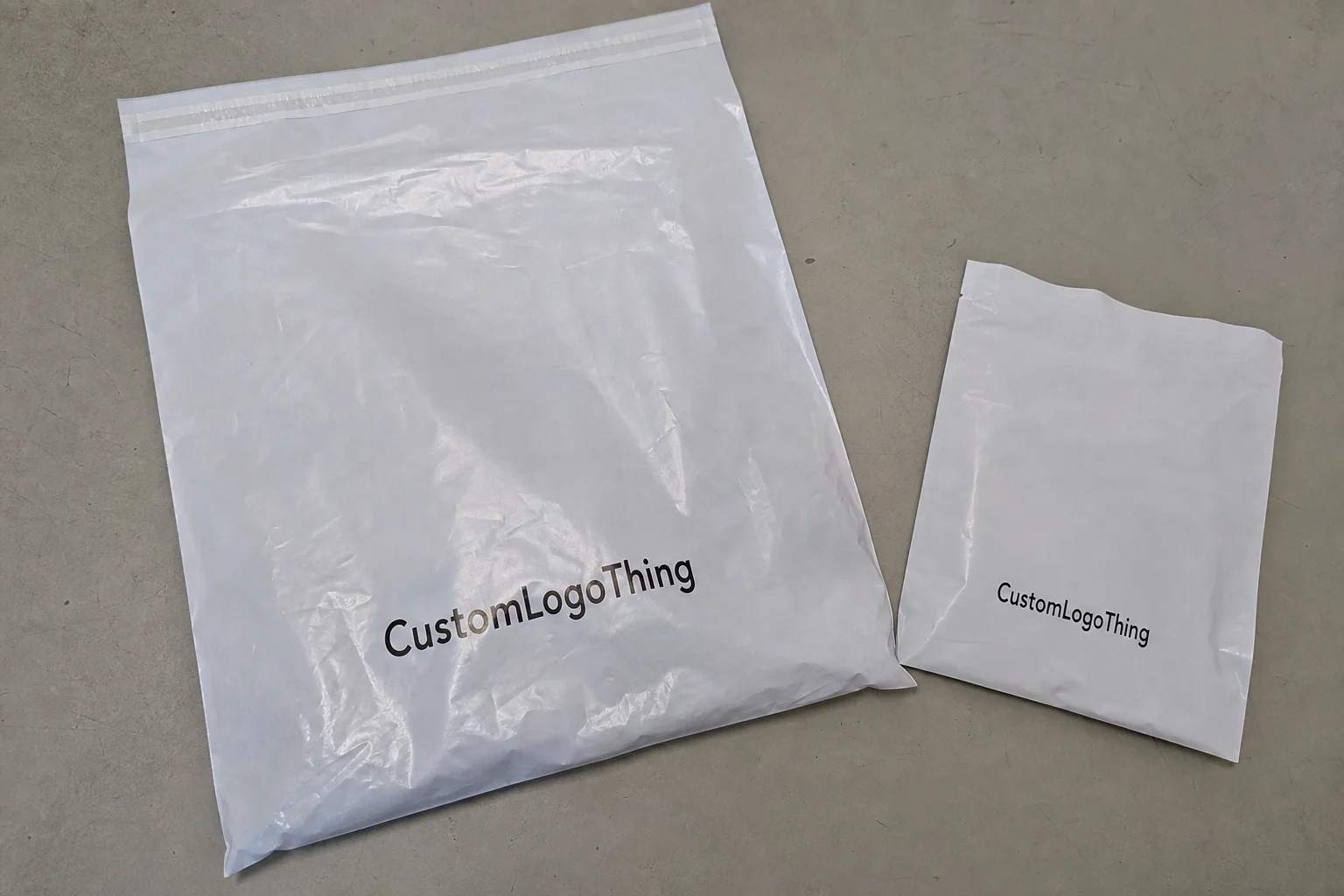
Custom shrink wrap labels do one job that sounds simple and behaves anything but: they make a garment pack look finished after folding, handling, stacking, and shipping. That difference shows up fast on shelf. A tee bundle with a clean, tight wrap reads as controlled inventory. The same bundle with wrinkles, shifted print, or a barcode sitting over a crease starts looking like surplus, even if the product inside is excellent.
For apparel buyers, the value is not just branding. It is presentation under pressure. Shrink wraps have to hold shape, keep artwork legible, and tolerate the normal abuse of a warehouse floor: carton vibration, friction from stacking, and the occasional rough handoff between pack-out and retail display. The best result is a pack that looks unremarkable in the right way. It looks intentional because nothing is fighting the format.
What custom shrink wrap labels are and why they matter
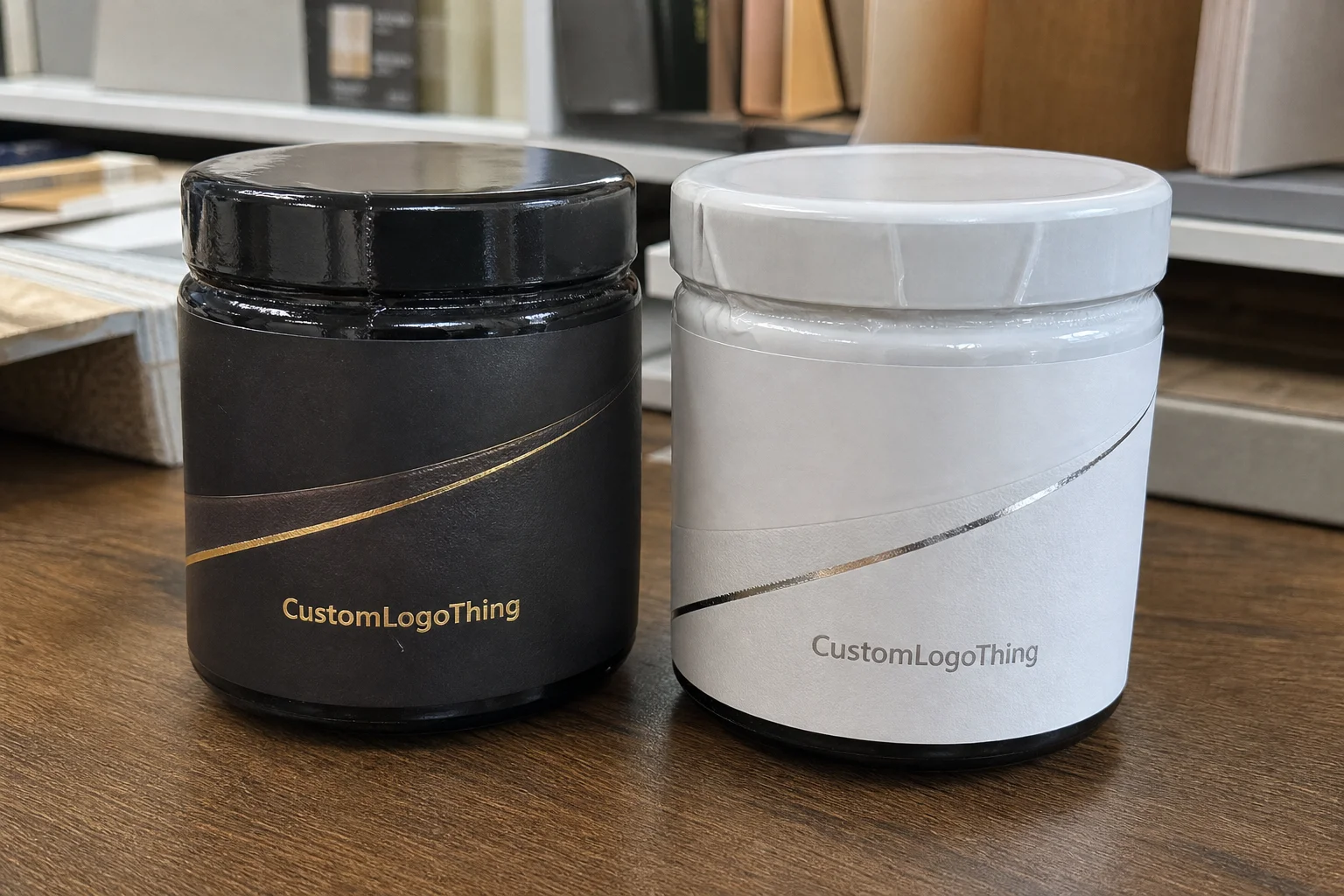
At the simplest level, custom shrink wrap labels are printed packaging components designed to fit around a garment pack and tighten into a clean, retail-ready face. They can be a full wrap, a branding band, or a multi-panel layout that carries logo, size, barcode, care text, and other product data. The key is that the label and the film behavior are designed together, not treated as separate pieces glued onto a finished bundle.
That distinction matters because apparel is unforgiving packaging. A folded shirt gives you flat space, but the edges still compress unevenly. Socks stack differently from tees. Ribbed knits behave differently from smooth jersey. Any wrap that ignores those differences will show it immediately. The logo drifts. The corners pucker. The barcode lands where a scanner has to fight glare or curvature. None of that is dramatic on a spec sheet, but it is visible in person.
Retail buyers usually judge the pack before they judge the product. That is not vanity; it is how shelf economics work. A neat wrap signals lower handling risk and better assortment control. A sloppy wrap suggests the opposite. For brands that also use hangtags, neck labels, or cartons, the shrink wrap becomes part of the same visual system. It should match the tone of the rest of the packaging, not compete with it.
There is a practical comparison worth making. Custom printed boxes give more structure and stronger unboxing value, but they also add board cost, storage space, and freight weight. Shrink wrap is cheaper, lighter, and often better suited to flat apparel. It will not replace a rigid carton where protection is the priority. It is better suited to compact presentation, fast handling, and shelf-facing consistency.
How shrink wrap labels work on garments
The process is straightforward on paper. A printed wrap or label is positioned around the folded garment, then heat or tension contracts the film so it conforms to the pack. In practice, the result depends on dimensions, film behavior, print placement, and how the garment was folded before the wrap was applied. The same artwork can look sharp on one style and distorted on another if the geometry changes.
Think of the fold as part of the print spec. That is the point buyers often miss. A shrink label is not a sticker that happens to sit on top of a bundle. It is part of the bundle’s structure. If the fold creates thick corners or hidden pressure points, the wrap has to accommodate them. If it cannot, the label buckles, the corners lift, or the front panel takes on a slightly stressed look that is hard to ignore under store lighting.
Some products are more forgiving than others. Flat folded tees usually behave well. Stacked multipacks and thick knits introduce more risk. Socks can be deceptive because they seem small, but the combined thickness of the folded bundle can create a surprisingly stubborn edge. A label that is only a few millimeters off can show a crease once the film contracts. That is why sample approval matters more than a screen proof alone.
Custom shrink wrap labels also serve identification needs. A cleanly designed panel can carry brand marks, size callouts, barcodes, care text, and SKU data without forcing the retailer to add extra stickers later. That reduces handling and cuts down on the kind of last-minute labeling that turns into misalignment and wasted labor. If a program also uses other Custom Labels & Tags, the visual logic should stay consistent across every surface the shopper sees.
A pack can be accurate and still read as low quality if the label size, fold pattern, and film tension were not designed as one system.
There is also a meaningful difference between shrink wrap and a basic sleeve. A sleeve can add outer coverage, but it does not always lock the pack into a predictable shape. A sticker can communicate branding, but it cannot conceal a rough fold or a bulky edge. Shrink wrap is the better option when the goal is a compact retail pack that scans cleanly and keeps its shape through handling.
Material, print, and fit factors
Material selection affects appearance more than many first-time buyers expect. Film clarity changes how the garment color reads under store lighting. Surface finish changes how much glare lands on the artwork. Thickness affects whether corners stay stable or start to crease. Adhesion matters too, especially if the pack will sit in a distribution center before it reaches a store. The wrong material can look fine on day one and fail after a few handling cycles.
For apparel wraps, PETG and PVC are both common choices in shrink applications, but the better option depends on pack geometry, visual target, and any retailer or compliance requirement that applies to the item. PETG is often selected for clearer presentation and stronger shrink performance in certain formats. PVC may be used where cost and availability are the main drivers. Neither is universally better. The geometry and end use decide more than the material name on its own.
Size tolerance is where the risk becomes expensive. A wrap that is too large tends to wrinkle. One that is too small can tear or expose too much of the fold. On tight packs, even a small mismatch is visible. Keep critical copy away from fold lines, and leave enough safe area that barcodes and small text do not drop into a crease after contraction. Very small type is especially fragile once the film adds reflection and slight distortion. Below about 6 pt, readability becomes a real question unless the surface is very clean and the design is sparse.
Substrate and finish
Gloss and matte do different jobs. Gloss can sharpen color and help a logo pop under bright retail lighting. Matte reduces glare and can improve legibility on dense layouts. Soft-touch finishes may feel more premium, but they can also show scuffs differently depending on the handling path. If the wrap is likely to be rubbed inside cartons or stacked tightly, scuff resistance deserves attention. Dark wraps and high-contrast artwork make minor damage easier to see.
Artwork and registration
File setup has a larger effect on the final result than most buyers anticipate. Vector artwork, correct bleed, a defined safe area, and an accurate dieline all reduce the chance of skew. Keep barcodes inside their quiet zone and test them after the wrap is applied, not just on the proof. A barcode can look acceptable in a PDF and still read poorly once glare and curvature are introduced.
Registration deserves extra scrutiny. If the logo, size panel, and barcode do not line up after shrink, the pack loses polish even when the ink is sharp. That is one reason packaging teams usually review a production sample before release. The same logic applies if the shrink label is part of a larger Custom Packaging Products order. The label, carton, and insert should all look like they came from the same system.
| Option | Best use | Typical unit cost at 5,000 pcs | Notes |
|---|---|---|---|
| Narrow branding band | Simple logo, SKU mark, or limited retail face | $0.08-$0.16 | Fast to approve, but it leaves little room for copy or imagery. |
| Full shrink wrap label | Folded tees, sock sets, and standard apparel bundles | $0.14-$0.30 | Usually the best balance between shelf presence and usable print space. |
| Multi-panel wrap with data area | Branding plus barcode, size, care text, and compliance copy | $0.22-$0.45 | More proofing is required, but the pack is easier to scan and sell cleanly. |
Those figures are planning numbers, not a fixed quote. Real pricing shifts with quantity, finish, print coverage, and whether custom cutting or special application support is needed. Still, the pattern is consistent: more space, more color, and tighter tolerances cost more. They also reduce the chance that extra packaging layers are needed later.
Production steps and turnaround
Good packaging jobs fail less from print speed than from unclear specifications. The workflow should be boring: artwork review, size confirmation, proofing, sample testing, production, and shipment. If the fold dimensions are vague or the file is incomplete, the schedule slips. If the label spec changes after proof approval, the delay tends to multiply.
- Confirm the garment type, fold size, and pack thickness.
- Lock the label size, material, and finish.
- Check artwork for bleed, safe area, and barcode placement.
- Approve a digital proof or physical sample.
- Run an application test on a real garment pack.
- Release full production after the test passes.
The proof is not the finish line. It only proves that the file is arranged correctly. It does not prove that the wrap will sit flat on a thick knit or that the barcode will still scan after heat is applied. That is why a sample on the real product is worth the time, even on straightforward runs.
For standard orders, turnaround often lands around 12 to 15 business days after proof approval. More complex jobs, especially those with multiple SKUs, special sizing, or a required sample round, can push into the 18 to 25 business day range. Rush service is sometimes possible, but file readiness usually saves more time than pressure on the production schedule. A complete spec sheet and a clean artwork package can remove days of back-and-forth.
If the shipment will move through a rough distribution route, ask whether the pack has been checked against relevant transit tests. The ISTA protocols are widely used to evaluate vibration, drop, and compression. Even lightweight apparel can show damage from those conditions, usually as scuffed film, lifted corners, or slight opening of the wrap.
Cost, pricing, and MOQ
Pricing for custom shrink wrap labels is driven by a small set of variables: size, material, print coverage, finish, and order volume. Setup costs are the part many buyers underestimate. A lower-MOQ order can look expensive per unit because proofing, plate work, or die setup gets spread across fewer pieces. Once volume rises, unit cost drops quickly. That is normal, and it is similar to other branded packaging programs. The first run carries the most overhead.
The cleanest way to compare quotes is to ask for the same detail from every supplier: unit price at multiple quantities, setup or plate charges, sample costs, shipping assumptions, and the exact material spec. If one quote includes test samples and another does not, the prices are not actually comparable. One is bundling in risk reduction. The other is leaving it for later.
Hidden costs usually show up in five places: rush fees, reprints caused by artwork errors, sample revisions, changes after approval, and application failures that force a second run. Most of those can be reduced by fixing the size and file structure early. If the garment style is still changing, hold the order. Reordering because the fold spec shifted by half an inch is a waste of money that could have been avoided with a longer pre-production check.
For brands comparing wrap labels with other retail packaging options, the tradeoff usually comes down to shelf impact versus structure. Custom printed boxes provide more protection and a stronger unboxing moment, but they also increase material, freight, and storage costs. For a folded garment that does not need rigid protection, shrink wrap usually delivers a better presentation-to-cost ratio.
If the program includes cartons, inserts, or hangtags, the Custom Packaging Products range can help keep the order organized. That is less about upselling a package and more about keeping the pack system coherent. The retailer sees the whole unit, not the component list.
Sustainability claims should be handled carefully. If paper components or board elements are part of the order, FSC certification may matter to retail partners that track sourcing. It does not automatically improve performance, but it does make the sourcing story easier to defend. If the packaging is mostly film-based, the more relevant question is whether the material mix is appropriate for the product and whether the design avoids unnecessary waste.
Common mistakes that cause wrinkles, scuffs, or rejected packs
Most failures are small and predictable. The wrong dimensions create wrinkles. The wrong film thickness makes corners buckle. The wrong print placement makes the logo drift off the visible face. None of those problems is subtle once the pack is on a shelf. A package can be technically complete and still look low value because one detail is off by a few millimeters.
Artwork problems are just as common. Thin type disappears once the pack tightens. Low-contrast text gets lost on dark garments or patterned fabrics. Overly delicate logo strokes can break visually when the film contracts. A barcode can pass on the file and fail on the finished pack if glare or curvature changes how the scanner reads the surface. That is why the sample should be tested as a real unit, not just inspected as artwork.
Process errors cause a lot of avoidable waste. Approving a proof without a physical sample is one of them. So is assuming one template works for every SKU. A men’s medium tee, a toddler pack, and a stacked sock set are not the same shape. They should not use the same wrap size unless the folded dimensions truly match.
Warehouse handling adds another layer of risk. Static, friction, carton dust, and rough stacking can damage the film before the packs ever reach a store. If the material is too soft, the surface picks up marks. If it is too brittle, corners crack or chip under pressure. Application testing should include actual handling, not just a bench check under perfect conditions.
The fastest improvement often comes from changing the mindset. Stop treating the wrap as the final decorative step. Treat it as part of the packaging structure. The fold, film, print, carton, and storage path all affect what the customer sees in the end.
Practical ordering checklist
Start with one representative product size, preferably the one that is hardest to pack cleanly. If the wrap performs on the thickest or most awkward garment in the line, the rest of the range is usually easier. Test the pack under realistic handling: stacking, carton opening, a short warehouse move, and a shelf check under the lighting the buyer will actually see.
Create a spec sheet for each style. Include folded dimensions, garment type, pack count, artwork version, target shelf presentation, and any retailer constraints. That single page becomes the source of truth for design, purchasing, and fulfillment. It also shortens quoting because there is no need to guess at the geometry.
Ask for samples and confirm print tolerances before production. If a supplier cannot explain how much artwork drift is acceptable, keep asking until the answer is clear. Packaging vendors should be able to discuss material behavior, scan quality, and application limits. That is especially true for custom shrink wrap labels, where a small file error can turn into a visible defect across the entire order.
- Choose the exact pack format and garment size.
- Lock the label spec, finish, and application method.
- Confirm MOQ, tiered pricing, and setup charges.
- Approve a sample or test run before full production.
- Verify scan quality, fold alignment, and shelf appearance.
Custom shrink wrap labels work best when they are treated as part of the brand system, not as an afterthought. If the goal is retail packaging that looks controlled, readable, and cost-aware, this is usually the place to start.
What are custom shrink wrap labels used for on clothing packs?
They help garments look retail-ready by combining branding, bundling, and basic protection in one wrapped presentation. They are especially useful for folded tees, multipacks, socks, and small accessories that need a clean shelf appearance.
Do shrink wrap labels work for different garment sizes and bundle types?
Yes, but the label size and film behavior should match the exact product dimensions. A setup that works on a flat tee pack may wrinkle or distort on thicker knits, stacked bundles, or odd-shaped accessories.
How do I estimate pricing and MOQ before requesting a quote?
Ask for unit price at multiple quantities, plus setup or plate charges, sample costs, and shipping assumptions. MOQ usually depends on print method, tooling, and whether the job needs custom sizing or finishing.
What is a normal turnaround for a custom run?
Turnaround depends on proof approval, print volume, finishing, and whether a test sample is required first. A complete file package and quick approval cycle usually reduce lead time more than pushing production harder.
What file details prevent blurry text or misaligned labels?
Use the correct dieline or size template, vector logos, and high-resolution images where needed. Confirm bleed, safe area, barcode readability, and color expectations before production starts.