Small retail accessories look disorganized fast. In a bookshop, that affects perceived value at the counter, especially for bookmarks, sticker sheets, pens, postcards, pins, and event kits. A solid bookshop Frosted Zipper Bags supplier quote helps buyers avoid the common problems that show up later: poor fit, weak zippers, unreadable barcodes, inconsistent reorders, and unit costs that change after approval.
Frosted zipper pouches work because they keep sets together, soften visual clutter, and still show enough of the contents to support impulse purchase. But the bag only performs if the quote is specific. Buyers should see size, material, gauge, print method, closure style, packing count, and lead time assumptions clearly stated. If a quote only lists a unit price, it is incomplete.
Why a bookshop frosted zipper bags supplier quote matters at the checkout counter
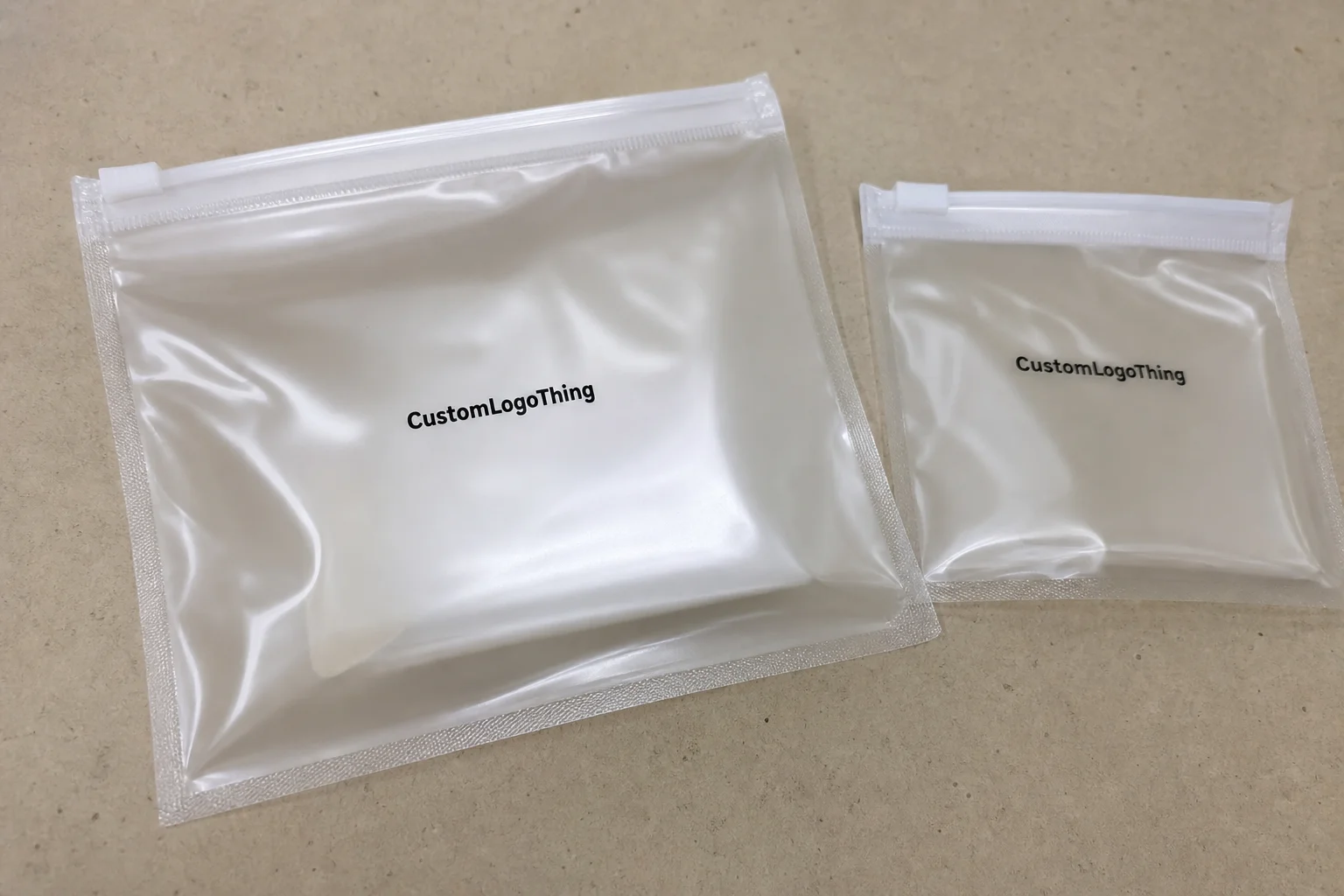
Checkout packaging has to do three jobs at once: keep products organized, survive handling, and look intentional in limited space. Frosted Zipper Bags usually outperform plain clear poly Bags for Small bundles because they reduce visual noise and make low-ticket accessories feel more like finished retail items.
The quote matters because repeatability matters. The first order may look fine, but weak documentation creates trouble on the second run. A usable quote should define outside dimensions, usable fill area below the zipper, material type, thickness, print colors, seal width, closure construction, carton quantity, and any freight assumption. Without that detail, reorders become a spec dispute instead of a routine purchase.
Buyers should also compare landed cost, not just unit price. A slightly higher-cost pouch can still be the better buy if it reduces repacking, resists corner splits, and presents better on shelf.
A quote should describe the pouch clearly enough that production is not a surprise.
Where frosted zipper bags add measurable value in bookshop retail packaging
Frosted Zipper Bags sit in a practical middle ground between visibility, protection, and presentation. Clear OPP bags show everything but often feel disposable. Paper sleeves can look tidy but offer limited protection. Basic non-zip pouches work for short-term packing, then become frustrating after opening.
For bookshop retail, frosted zipper pouches are especially useful because they reseal and keep mixed items together after staff handling or customer inspection. They also work across multiple display formats when paired with a hang hole, euro slot, or insert card.
- Bookmarks, postcards, and sticker sheets: cleaner edges and better grouping than loose sleeves
- Pens, clips, and mixed stationery: thicker gauges improve puncture resistance
- Event kits: one pouch can hold cards, tickets, inserts, and small merch
- Gift bundles: better shelf neatness and stronger perceived value
- Souvenir accessories: more polished than generic clear bags
The zipper deserves attention. Staff use it for assembly, repacking, and returns, so poor track alignment or weak closure slows operations and makes the pack look cheap immediately.
| Packaging Type | Visibility | Reuse | Protection | Retail Neatness | Typical Best Use |
|---|---|---|---|---|---|
| Frosted zipper bag | Medium | High | Good | High | Stationery sets, gifts, kits |
| Clear OPP bag | High | Low | Fair | Medium | Flat paper goods |
| Paper sleeve | Low | Low | Low | Good | Simple branding wraps |
| Non-zip plastic pouch | Medium | Low | Fair | Medium | Short-term packing |
Product details buyers should confirm before approving custom zipper pouch artwork
Construction should be settled before artwork approval. If the bag changes in thickness, zipper position, or frost level after logo approval, the sample may no longer reflect what was signed off internally.
Material is the first decision. LDPE is common for bookstore accessories because it is flexible and cost-effective. EVA generally feels smoother and more premium, but costs more. Some suppliers offer blends between the two.
Frost level also changes performance. Light frost gives better visibility. Heavier matte frost hides clutter better and can look more premium, but it reduces detail and can make barcode contrast harder if the product behind the print area is dark.
Closure and format choices
A standard press-to-close zipper is enough for most SKUs. Heavier bundles may need a stronger track or wider closure area. Slider zippers are available, but for small stationery packs they often add cost without adding much value.
- Flat pouch: best for cards, bookmarks, stickers, and slim stationery
- Bottom-gusset pouch: better for thicker mixed-item bundles
- Hanging retail pouch: useful for peg display
- Pouch with insert card: better branding and easier SKU grouping
Print method and artwork control
Simple one-color or two-color designs are often screen printed. Larger runs or jobs that need tighter repeat consistency may justify gravure. Buyers should confirm the safe printable area because seals, top margins, and zipper tracks reduce usable space quickly.
Barcode placement needs special care. If the code sits too close to a seal or over a dark product background, scanning issues show up in store. Optional features should be quoted as separate line items: hang hole, euro slot, tear notch, vent hole, zipper position, white barcode block, insert card, or soft-touch effect.
For many bookshop programs, standardizing two or three pouch sizes is the simplest way to reduce plate variation, control cost, and keep shelf presentation consistent.
Specifications that affect fit, durability, and retail performance
Accurate pricing starts with accurate dimensions. Suppliers need width, height, bottom gusset if applicable, and usable fill area below the zipper. Production tolerance should be stated as well; around ±3 mm to ±5 mm is common depending on size and process.
Thickness is a major cost and performance driver. For flat paper goods, around 120 to 160 microns total thickness is often enough. For pens, clips, mixed stationery, or heavier gift sets, 180 to 250 microns usually gives better hand feel and puncture resistance. Going thicker than necessary is a common source of overspend.
Durability is not only about nominal gauge. Buyers should ask about seal width, corner strength, and how the pouch performs with sharper contents such as metal clips, pin backings, or hard card corners. These details should be discussed before the quote is approved, not after failures appear in sampling.
Barcode readability is another common miss. Frosted film softens contrast, and dark contents behind the print area make it worse. A white underprint block often solves the issue and should be specified in the quote.
Documentation may matter too, especially for larger retail programs. Depending on market requirements, buyers may need material declarations, chemical compliance statements, or product safety documentation for the packed goods. If paper inserts or cartons are included, component-level clarity matters there as well. For paper-chain certification reference, see fsc.org.
Sample inspection should be specific:
- Zipper open-close test for 10 to 20 cycles
- Dry rub test for print scuffing
- Seal consistency check across multiple pieces
- Visual review under actual store lighting
- Carton count verification before shipment
Pricing, MOQ, and quote factors that change unit cost fast
Six variables move price fastest: size, thickness, material, print coverage, color count, and order volume. If one quote is dramatically lower than the rest, one of those inputs is probably different.
Custom printed Frosted Zipper Bags usually carry a higher MOQ than stock pouches because setup costs must be spread across the run. Those costs may include plates, machine setup, color matching, and startup waste. As a result, 1,000 pieces often look expensive per unit, while 5,000 or 10,000 pieces usually price much better.
For standard bookstore pouch projects, these ranges are useful for planning:
| Order Qty | Example Size | Spec | Estimated Unit Range | Common Notes |
|---|---|---|---|---|
| 1,000 pcs | 140 x 200 mm | LDPE frosted, 1 color | $0.26-$0.42 | High setup burden per bag |
| 5,000 pcs | 140 x 200 mm | LDPE frosted, 1-2 colors | $0.11-$0.22 | More efficient production run |
| 10,000 pcs | 180 x 250 mm | LDPE/EVA blend, 2 colors | $0.10-$0.19 | Fixed costs spread more effectively |
These are planning figures, not universal prices. Resin swings, exchange rates, freight, gauge, and print complexity can shift them.
Fixed costs versus variable costs
Fixed costs often include plates, tooling adjustments, and sample setup. Variable costs include film, ink, labor, packing, and freight. That is why increasing volume does not raise total cost in a straight line.
What adds cost quickly
- Oversized bags with poor fill efficiency
- Heavy white underprint or large opaque panels
- Full-panel graphics on both sides
- Non-standard zipper placement
- Rush production windows
- EVA-heavy structures or thicker-than-needed gauges
A practical way to control cost is to request two nearby sizes and two nearby gauges in the same quote. Small spec changes often cut cost without hurting fit or shelf presentation.
Production process and lead time: from artwork approval to packed cartons
The basic flow is straightforward: inquiry, spec confirmation, quotation, artwork review, sample or mockup, approval, production, inspection, packing, and shipment. Delays usually come from incomplete inputs.
Buyers should provide these details up front:
- Bag dimensions or product dimensions if bag size is not fixed
- Target quantity and quantity breaks
- Vector artwork files such as AI or PDF
- Print colors or Pantone references
- Zipper type and optional features
- Shipping country and delivery region
- Required in-hand date
Sampling is usually faster than full production. A simple visual mockup may take a few business days. A closer preproduction sample takes longer. Mass production often runs about 12 to 20 business days after final approval, with freight time added afterward.
Shipping method changes the schedule sharply. Air is fast but expensive per carton. Ocean freight lowers cost on larger orders but adds significant transit time. For launch dates or events, buyers should work backward from the required in-hand date, not from the planned production start.
Quality checks during production should cover zipper alignment, seal integrity, print registration, count accuracy, and carton labeling. If transit testing matters for a larger rollout, baseline distribution standards are available at ista.org.
One practical rule: do not reorder when stock is nearly gone. Rush air freight and compressed production windows usually erase any savings won in the original sourcing round.
How to compare suppliers using evidence, not promises
Most suppliers can promise quality, speed, and competitive pricing. The useful difference is in how completely they quote and how well they handle production risk.
- Did the quote include material, thickness, print method, closure type, and carton details?
- Did they ask sensible questions about fit, barcode area, or packed weight?
- Can they offer alternate specs instead of one rigid option?
- Do sample photos show clean zipper alignment and consistent seals?
- Are remake terms, defect thresholds, and packing counts stated clearly?
Packaging conversion experience matters. Ink adhesion on frosted film, zipper track alignment, seal strength, and print consistency are production issues, not copywriting points. Buyers should also ask how reorders are controlled: whether prior specs are stored, whether artwork files are managed properly, and whether material substitutions are disclosed.
A low bid gets expensive quickly if seals fail, color drifts, or delivery misses a launch date. Quote clarity, sample evidence, process control, and reorder discipline are more useful than a low opening number.
Next steps to request the right quote and shorten approval time
The fastest way to get a usable quote is to send a complete request the first time.
- Bag size: width x height x gusset if applicable
- Film thickness: target microns or request recommendation
- Material: LDPE, EVA, or open to recommendation
- Quantity: actual breaks such as 1,000 / 5,000 / 10,000
- Artwork: vector logo file with color references
- Print coverage: one side, two sides, spot print, or larger panel coverage
- Zipper type: standard press-to-close or reinforced
- Options: hang hole, barcode block, tear notch, insert card
- Shipping country and preferred incoterm if known
- Target in-hand date
If possible, include product photos or packed dimensions. That allows the supplier to recommend a better size, reduce wasted space, or suggest a gusseted format where needed.
If budget is tight, ask for two versions: an ideal spec and a cost-optimized spec. Also confirm whether setup charges, sampling, and freight are included or listed separately. If translucency, feel, or logo placement is critical, approve a preproduction sample before releasing the final purchase order.
The best quote is the one with the fewest gaps: clear specs, realistic lead time, and cost drivers stated plainly enough to support approval and future reorders.
FAQ
What information is needed for an accurate bookshop frosted zipper bags supplier quote?
Provide bag dimensions, target thickness, quantity, artwork file, print colors, zipper style, optional features, shipping destination, and required delivery date. If the bag size is not fixed, include the product dimensions and a photo of the packed item. That usually leads to a more accurate recommendation on fit and gauge.
What is the typical MOQ for custom frosted zipper bags for bookstores?
MOQ depends on size, print method, and material, but custom printed zipper bags usually start higher than plain stock pouches because setup costs have to be spread across the run. Smaller one-color jobs may allow lower entry quantities than larger multi-color projects. Always ask for several quantity breaks so the unit-cost curve is visible.
How does printing affect the cost of a frosted zipper pouch quote?
More colors, heavier coverage, tighter registration, and large white underprint areas usually raise cost. Fine text and barcode blocks can also require stricter print control. A simpler logo layout often reduces price without changing the bag size or base material.
How long does custom production take after approving a zipper bag sample?
For many standard projects, mass production runs roughly 12 to 20 business days after final approval, then freight time is added on top. Timing changes with order size, factory load, and shipping method. Internal approval delays often affect the schedule as much as manufacturing does.
Can a supplier help optimize size and thickness before I place a custom order?
Yes. A capable supplier should be able to suggest better dimensions, a more suitable pouch style, or a lower-cost gauge based on the actual items going inside. That is one of the easiest ways to avoid oversized bags, unnecessary material cost, and weak retail presentation.


