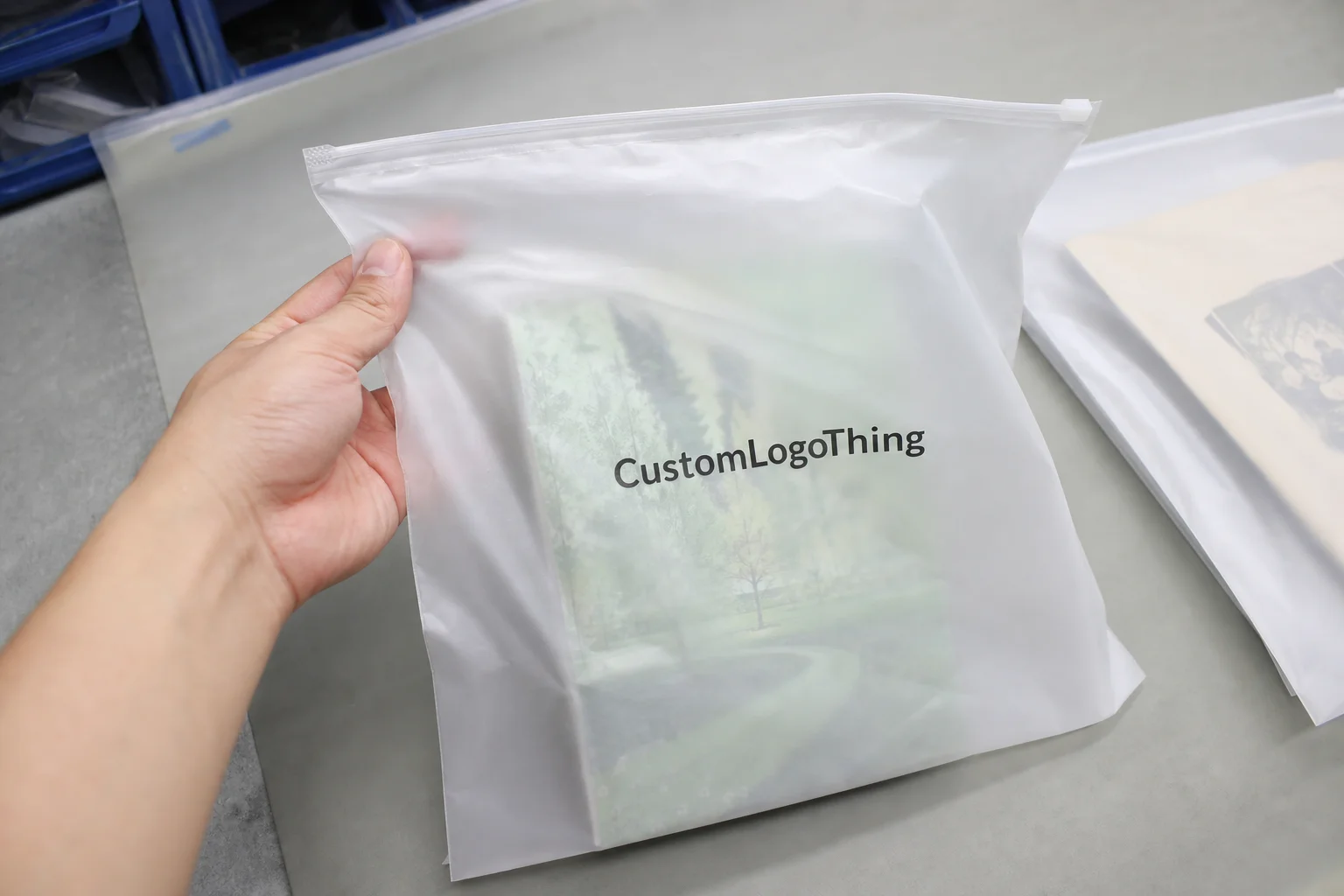
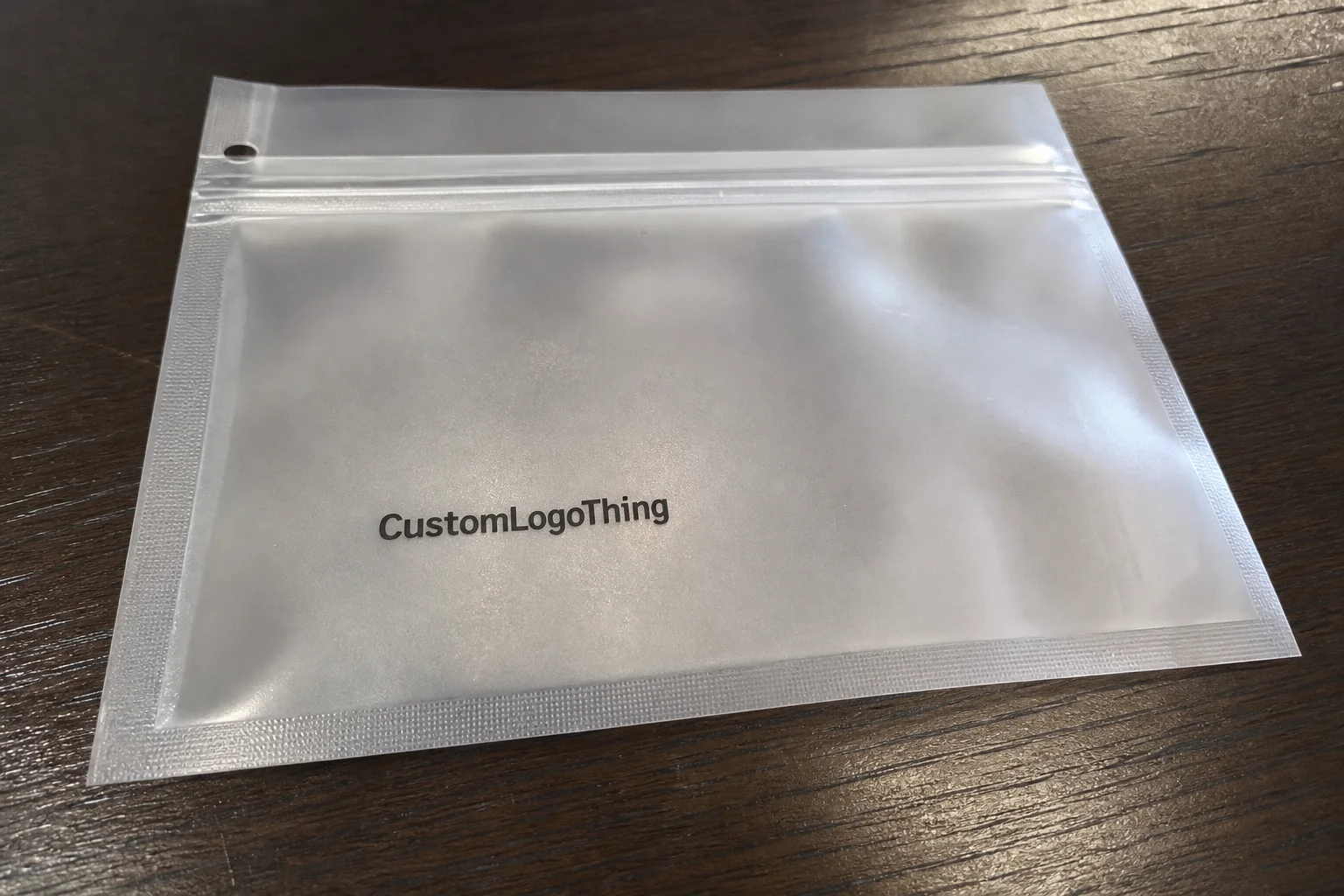
A spa guest can buy the same cleanser in two different packages and decide one feels more premium before touching the product. Packaging does that. So a spa frosted plastic Bags Supplier Quote deserves more discipline than it usually gets.
Frosted bags hit a useful middle ground. They look cleaner than glossy poly, hide clutter better than clear film, and often cost less than laminated paper once moisture, scuffing, and breakage risk are factored in. For spa retail, that balance is hard to ignore.
The real problem is not finding suppliers. It is getting meaningful pricing from them. Too many quote requests show up with a logo, a rough size guess, and not much else. No target load. No handle style. No print coverage. No deadline. The supplier answers with a placeholder number, then revises it twice after basic questions are finally answered. Budgeting gets messy fast.
The fix is simple. Define the bag as a working packaging item, not just branded decoration. Size, thickness, handle reinforcement, print method, and delivery requirements all affect cost and performance in ways that are easy to measure. A quote for 10,000 die-cut frosted bags in 2.5 mil film is not comparable to 10,000 soft-loop bags in 3.0 mil film with two-side white and metallic print, even if both look similar in a mockup.
This guide is built for spa owners, purchasing teams, private-label skincare sellers, and resellers who need cleaner numbers and fewer revisions. The goal is practical: tighter RFQs, more realistic expectations, and better decisions once the quotes start landing.
Spa Frosted Plastic Bags Supplier Quote: what buyers need before asking
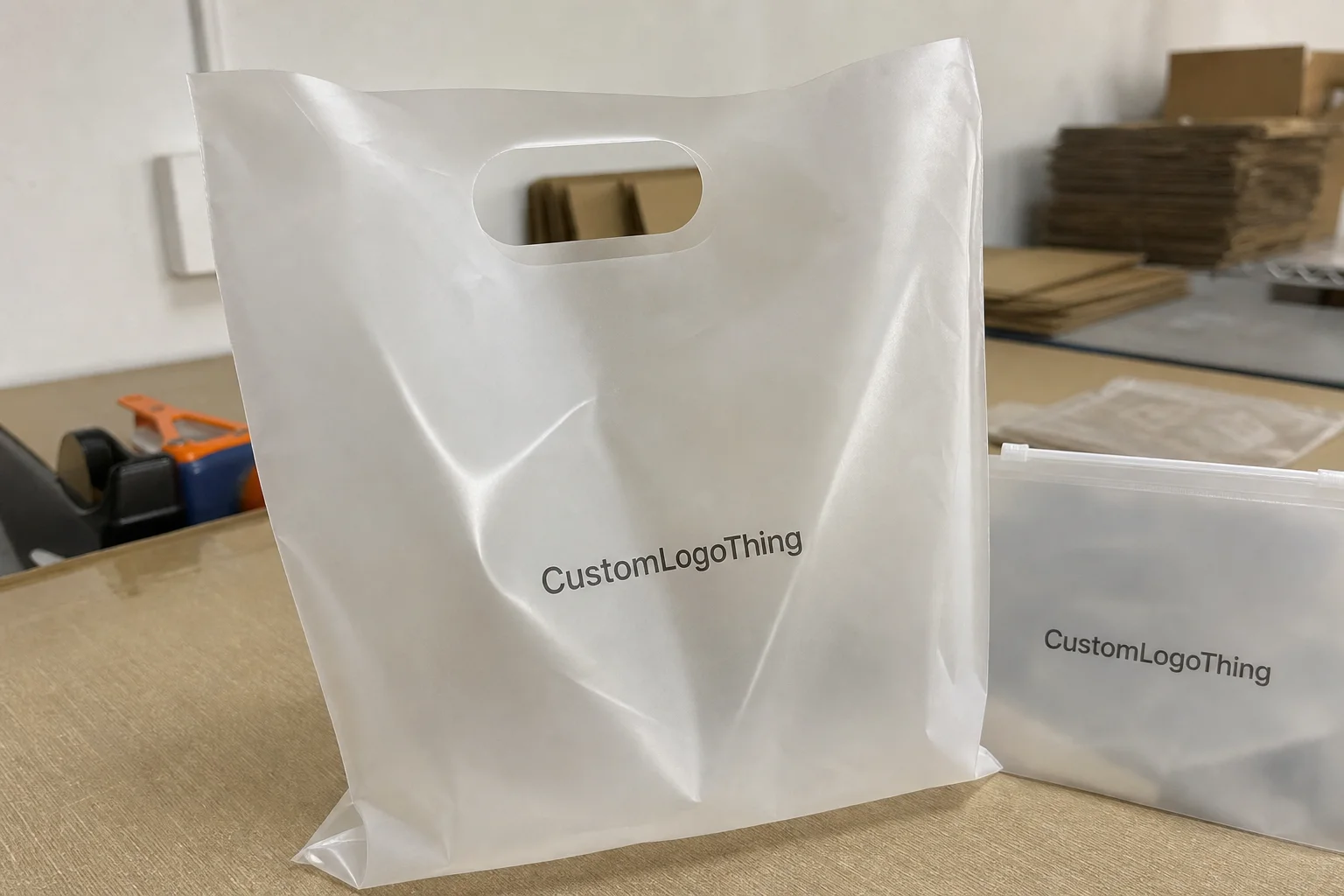
At the spa counter, presentation still matters. A guest buying a serum, body cream, and gift voucher is judging the handoff, not just the formula. Frosted Plastic Bags work in that setting because they signal order, cleanliness, and a bit of discretion. That fits spa retail better than loud glossy branding or fully transparent packaging.
There is also a practical reason buyers keep coming back to this format. Frosted film softens what is inside. It hides the random visual noise that comes with receipts, barcode labels, uneven product shapes, and mixed box finishes. You still get enough visibility to show silhouette and volume, but not enough to expose every packing flaw.
If you want an accurate spa frosted plastic Bags Supplier Quote, start with four basics:
- Dimensions: width x gusset x height, in inches or millimeters
- Expected load: what the bag will actually carry in normal use
- Handle style: die-cut, patch handle, soft loop, or drawstring
- Print details: one side or two sides, number of colors, and approximate logo area
Leave out any one of those and the quote is usually provisional. Leave out two and the supplier is guessing. Most factories will protect themselves by pricing higher if the request is vague, especially when thickness, resin type, or print coverage is unclear. Buyers then assume the market is expensive when the real issue is sloppy input.
Cost usually moves on four levers: size, thickness, print complexity, and order volume. A gusseted bag can consume substantially more film than a flat style. A switch from one-color flexo to larger coverage or metallic work pushes up setup cost and defect sensitivity. Low-volume custom runs are always harder on unit price because plates, machine setup, and production waste still exist whether the order is 3,000 pieces or 30,000.
The better buying lens is not cheapest unit cost. It is total delivered cost, presentation quality, and failure risk. A bag with weak patch adhesion or muddy print is not cheap once you account for replacement freight, lost time, and the very real annoyance of repacking goods before a launch.
How frosted plastic bags support spa retail, gifting, and treatment packaging
Frosted plastic bags are useful because they do more than one job. In spa programs, the same bag style can cover retail carryout, gift presentation, and internal kit packing. That flexibility helps buyers consolidate SKUs instead of maintaining separate packaging for every small program.
Common applications include take-home skincare purchases, membership welcome packs, robe-and-sandal kits, event samples, amenity bundles, and seasonal gift sets. A smaller 8 x 4 x 10 inch bag often works for two or three boxed skincare items. A 14 x 4 x 18 inch format is more realistic for folded textiles, larger assortments, or mixed purchases with taller bottles.
The finish does some quiet work here. Frosting reduces visual clutter and softens mismatched pack shapes, but it still lets the customer register that there is substance inside. For minimalist spa branding, that is usually the right amount of reveal.
| Bag Type | Moisture Resistance | Visual Style | Typical Cost Position | Best Use |
|---|---|---|---|---|
| Frosted plastic bag | High | Soft, clean, discreet | Low to mid | Spa retail, kits, gifting |
| Clear poly bag | High | Functional, less premium | Low | Back-of-house or sample packing |
| Laminated paper bag | Moderate | Structured, more upscale | Mid to high | Luxury gifting and heavier boxed sets |
| Non-woven tote | Moderate | Reusable, promotional | Mid | Events and larger giveaways |
In humid environments, frosted plastic has a clear advantage over standard uncoated paper. It tolerates damp hands, lotion residue, and occasional splashes far better. It also stores flat, wipes clean, and takes less back-room space than rigid gift packaging.
Branding options are broader than some buyers expect. White ink is the default because it reads sharply on frosted film. Muted gold or silver accents can work well for logos and fine borders, though metallic effects usually increase print cost and registration sensitivity. Die-cut handles keep pricing down. Soft loops feel better in hand. Drawstring versions suit gift or amenity programs where a pouch-like look matters more than quick checkout packing.
Still, this format has limits. Heavy candle sets, rigid glass-heavy gift boxes, or packaging programs built around fiber-based sustainability claims may be better served by reinforced paper or reusable bags. Buyers should be careful with environmental claims in either direction. Ask what resin is being used, whether recycled content is included, and what disposal route is realistic in your market. The EPA recycling resources are a decent baseline if your team needs neutral reference material.
Material, gauge, handle, and print specifications that change performance
Not all frosted bags feel the same because the film itself is not standardized across suppliers. Most spa retail bags in this category are made from LDPE, HDPE blends, or combinations designed to balance softness, stiffness, and cost.
LDPE usually feels smoother and more premium in hand. It drapes better and tends to read as less noisy. HDPE blends can improve stiffness and cost efficiency, but the feel is crisper and sometimes less refined. Neither is automatically right or wrong. It depends on the look, budget, and load.
Thickness matters more than many first-time buyers expect. Suppliers may quote in mil, micron, or gauge depending on the market, so confirm units every time. A rough working range looks like this:
- 2.0-2.5 mil: lighter skincare purchases, low to moderate loads
- 2.5-3.0 mil: mixed-product orders, gift assortments, better handle durability
- Above 3.0 mil: heavier or more premium builds, with a quick jump in cost and carton weight
Going too thin is where most regrets start. Handles stretch. Corners distort. Bottled products make the bag look underbuilt even before anything tears.
Size selection should follow the contents
Pick size from the actual packout, not from the logo file. Common skincare sizes include 8 x 3 x 10 inches, 10 x 4 x 12 inches, and 12 x 4 x 14 inches, but those are only starting points. If robes, sandals, folded garments, or taller pump bottles are involved, the gusset and height need more attention.
A decent internal check is to mock-pack the largest likely order, then measure it with at least 0.5 to 1 inch of headroom. That small buffer matters. Bags that are technically large enough on paper can still look strained at the top once staff adds tissue, inserts a receipt, or packs in a hurry.
Handle style changes both cost and failure risk
Die-cut handles are compact and economical. Patch handles add reinforcement behind the die-cut opening and usually improve tear resistance in a noticeable way. Soft loop handles increase carrying comfort and lift perceived value, especially on medium and larger bags. Drawstring bags are less common for checkout but can work for treatment kits or curated gift sets.
If the bag will carry glass bottles, metal tins, or bundled products with sharp corners, ask for realistic load guidance. Better yet, request a sample and test it with actual contents. A patch-handle frosted bag in the 2.5 to 3.0 mil range will usually outperform an unreinforced die-cut style under the same conditions, but that is still not a substitute for checking the intended load.
Print variables are where quotes drift
One-color logo printing is the easiest path to a stable quote. Add two-side printing, metallic inks, larger coverage, or fine registration requirements and both price and production sensitivity move up. Frosted film also affects color appearance. Some colors need a white underlay for consistent opacity, especially if brand standards are strict.
To cut down on revisions, a useful spec sheet should include:
- Bag dimensions and tolerance needs
- Material type and target thickness
- Handle style and reinforcement requirement
- Print colors, print sides, and estimated coverage
- Artwork format, ideally vector PDF or AI
- Expected load weight
- Order quantity by SKU if multiple sizes are needed
- Ship-to destination and required in-hands date
That is enough detail for a supplier to stop guessing and start quoting.
Pricing, MOQ, and unit cost: what moves the quote up or down
Most bad comparisons come from incomplete pricing, not from huge market differences. A proper spa frosted plastic bags supplier quote should separate unit price from setup charges, sample cost, and logistics. Otherwise one supplier looks cheaper simply because extra costs are hidden until later.
The main cost drivers are predictable:
- Bag size and gusset depth
- Film thickness and resin type
- Handle construction and reinforcement
- Number of print colors
- Ink coverage and print sides
- Packing method per carton
- Total order volume
MOQ matters because setup cost is stubborn. Plates, color setup, machine time, and production waste do not disappear on a small run. They just get spread across fewer bags. That is why a 3,000-piece order can look disproportionately expensive even with a simple one-color logo.
Typical custom pricing often lands in ranges like these, excluding freight and any import-related charges:
| Order Scenario | Typical Custom MOQ Range | Estimated Unit Price Range | Notes |
|---|---|---|---|
| Small custom run, one-color die-cut | 3,000-5,000 pcs | $0.18-$0.34 | Higher per-unit cost because setup is spread thin |
| Mid-volume patch handle, one to two colors | 5,000-10,000 pcs | $0.14-$0.26 | Often the most balanced range for spa retail |
| Larger run soft loop, premium print | 10,000-25,000 pcs | $0.12-$0.24 | Lower unit cost, but more cash tied up in stock |
Those ranges are not promises. Resin pricing, bag size, freight conditions, and print complexity can move them. But they are useful for spotting numbers that are suspiciously low or padded beyond reason.
Separate charges may include plates, prepress, sample fees, freight, duties where applicable, palletization, and split-shipment fees. Ask for carton count, pieces per carton, gross carton weight, and carton dimensions too. Flat-packed bags ship efficiently, but larger formats and thicker film reduce carton efficiency faster than many buyers expect.
If you are comparing offers, ask every supplier for the same line-item structure:
- Unit price by quantity tier
- Plate or setup charges
- Sample cost and sample lead time
- Production lead time after approval
- Shipping terms and estimated freight
- Carton packing details
That turns a quote into something you can actually judge.
Production process and lead time from artwork approval to delivery
Custom bag production is straightforward until the front end gets sloppy. The normal sequence is inquiry, spec confirmation, artwork review, digital proof, optional sample approval, bulk production, quality control, packing, and shipment. Weak information in step one tends to create delays in every step after it.
For many custom frosted bag orders, digital proofing takes 1 to 3 business days once usable artwork and clear specs are submitted. A pre-production sample can add 5 to 10 business days, depending on whether it is a stock-size print sample or a fully custom build. Bulk production often falls around 12 to 20 business days after approval. More colors, unusual handles, larger quantities, or crowded production schedules can stretch that.
The usual delays are not dramatic. They are boring, and that is what makes them expensive.
- Conflicting dimensions between email and artwork
- Low-resolution logo files
- Pantone requests without agreed color tolerance
- Late internal approvals
- Missing shipping marks or carton label instructions
Sampling is worth the extra days if the bag has premium branding, unusual dimensions, or a real load-bearing role. If the order is a simple one-color print on a proven size, some buyers skip a custom sample and rely on a digital proof plus stock material sample. That can be reasonable, but only if everyone involved is comfortable with the risk.
Quality control should be specific. Ask whether the supplier checks film thickness, seal integrity, print registration, frost consistency, handle pull strength, and carton labeling before dispatch. On a first order, production photos or packed-carton photos are not an unreasonable request. They catch obvious surprises before the shipment is already moving.
For teams thinking more broadly about packed-goods handling, ISTA offers useful transport test references, even if every frosted bag order will not require formal transit testing.
Practical rule: build in a one- to two-week buffer before a holiday set launch, membership promotion, or retail reset. Late bag orders usually start with incomplete specs and slow approvals, not with the press itself.
How to evaluate a supplier beyond the lowest quoted price
Cheap can mean thinner film than expected. Or weak patch adhesion. Or poor white opacity on frosted stock. Or inconsistent finish from lot to lot. Buyers usually find out after arrival, which is a terrible time to learn what was quietly omitted from the quote.
A serious review of a spa frosted plastic bags supplier quote should go beyond the number at the bottom. Ask what material is being quoted. Ask the thickness tolerance. Ask whether the handle is reinforced and how. Ask what happens if print registration is off or cartons arrive short. Clear answers usually signal a supplier that is used to repeat business, not just one-off wins.
Use a checklist that gets specific:
- Material documentation: resin description, recycled content if claimed, and any compliance notes available
- Print capability: number of colors, white ink handling, metallic options, and registration tolerance
- Sampling policy: stock sample, printed mockup, pre-production sample, and associated cost
- QC method: thickness checks, seal checks, handle testing, and visual print inspection
- Packing standard: bundle packing, master carton labeling, and carton strength
- Defect resolution: credit, remake, replacement timing, and claim window
Communication quality matters too. Fast replies are nice. Useful replies are better. Good suppliers explain tolerance limits, note what is included, and revise quotes in a traceable way. Weak ones hide behind vague assurances and avoid measurable details.
That difference matters more for spa groups, resellers, and multi-location programs. Those buyers need repeatable color, consistent bag feel, and stable case counts. One underbuilt shipment spread across multiple locations creates a cleanup job that wipes out tiny unit-price savings.
Samples or relevant reference photos help. Generic shopping bag images do not tell you much. You want to see skincare retail bags, amenity sets, or hospitality-oriented frosted packaging because those applications expose whether the supplier understands subtle branding and realistic product loads.
Honestly, this is risk management more than bargain hunting. Saving one or two cents per bag looks smart until the handles fail on launch week.
Next steps to request, compare, and approve the right bag order
If you want the fastest accurate spa frosted plastic bags supplier quote, send a complete request the first time. Not perfect. Complete. That alone can shave days off the process.
Your RFQ should include:
- Bag dimensions: width x gusset x height
- Intended contents and target load weight
- Material preference: LDPE, blend, or open to recommendation
- Thickness target or required performance level
- Handle style: die-cut, patch, soft loop, or drawstring
- Print colors, print sides, and estimated logo coverage
- Order quantity and any quantity tiers needed
- Delivery destination and required in-hands date
Ask for a structured quote instead of a single total. Unit price, setup charges, sample cost, production lead time, shipping terms, and carton details should all be visible. That makes it much easier to compare two or three suppliers on equal terms.
Also ask for reference photos or physical samples of similar spa packaging. Frost level, logo readability, film feel, and handle construction can vary more than the written spec suggests. Internal approvals move faster when brand, procurement, and operations are all looking at the same thing.
A short approval sequence usually keeps the process moving:
- Brand approves overall look and logo treatment
- Procurement checks price, MOQ, and commercial terms
- Operations confirms packout fit, storage, and handling
- Final sign-off releases proof or sample approval
Then compare offers using three filters: total landed cost, failure risk, and timeline reliability. Unit price matters. It just should not make the decision by itself.
The bottom line is simple. A good spa frosted plastic bags supplier quote starts with complete specs, realistic quantities, and a clear delivery target. Do that upfront and the rest gets easier: cleaner pricing, fewer revisions, better samples, and bags that actually perform at the spa counter.
FAQs
What information should I include in a spa frosted plastic bags supplier quote request?
Include bag dimensions, gusset if needed, intended contents, target load weight, material type, thickness, handle style, print colors, print sides, order quantity, ship-to location, and required arrival date. If artwork is ready, attach a vector file. The more complete the request, the less likely the quote is to shift later.
What is the typical MOQ for custom frosted plastic bags for spas?
For custom printed bags, many suppliers start around 3,000 to 5,000 pieces. Better unit economics often show up at 5,000 to 10,000 pieces or higher. Exact MOQ depends on size, print method, handle style, and whether the supplier is treating the order as a standard production run or a more specialized build.
How does printing affect the price of a frosted plastic bag quote?
More colors, larger ink coverage, two-sided print, metallic accents, and tighter registration all increase cost. Frosted film may also require a white underlay for stronger opacity or better color consistency. A one-color logo on one side is usually the lowest-risk and most economical custom option.
How long is the lead time after approving artwork for custom spa bags?
Proofing often takes 1 to 3 business days. Custom samples can add 5 to 10 business days. Bulk production commonly runs 12 to 20 business days after final approval, though quantity, print complexity, and shipping method can extend that schedule. Buyers should still build a time buffer for internal reviews and transport.
Can I get samples before placing a full custom frosted plastic bag order?
Yes. Many suppliers can provide stock material samples at low or no cost, while printed or fully custom pre-production samples are usually charged separately. Samples are useful for checking film feel, frost level, print readability, handle comfort, and how the bag performs with your actual products inside.