Most cheap-looking stickers fail for boring reasons: the wrong material, weak artwork, poor adhesive choice, or a buyer trying to make one tiny label do the job of a billboard. You can order custom stickers for cheap and still get a sharp, retail-ready result, but only if the specification is efficient. Size, shape, quantity, finish, and color choices all affect price. None of them are free. Shocking, I know.
For a cosmetics startup, bakery, event planner, online shop, or small food brand, stickers often add branding faster than custom boxes or printed pouches. A 2-inch circle on a jar lid, a 3 x 2 inch rectangle on a kraft mailer, or a logo seal on tissue paper can make plain packaging look intentional. That matters when the launch budget is already being eaten by product development, freight, photography, ads, and the quiet little expenses nobody forecasted.
Affordable stickers should still have clean print, accurate cuts, consistent color, and adhesive that survives normal handling. A bargain label that peels off in transit is not savings. It is a tiny branded failure arriving at your customer’s door.
Custom Stickers for Cheap Can Still Look Premium
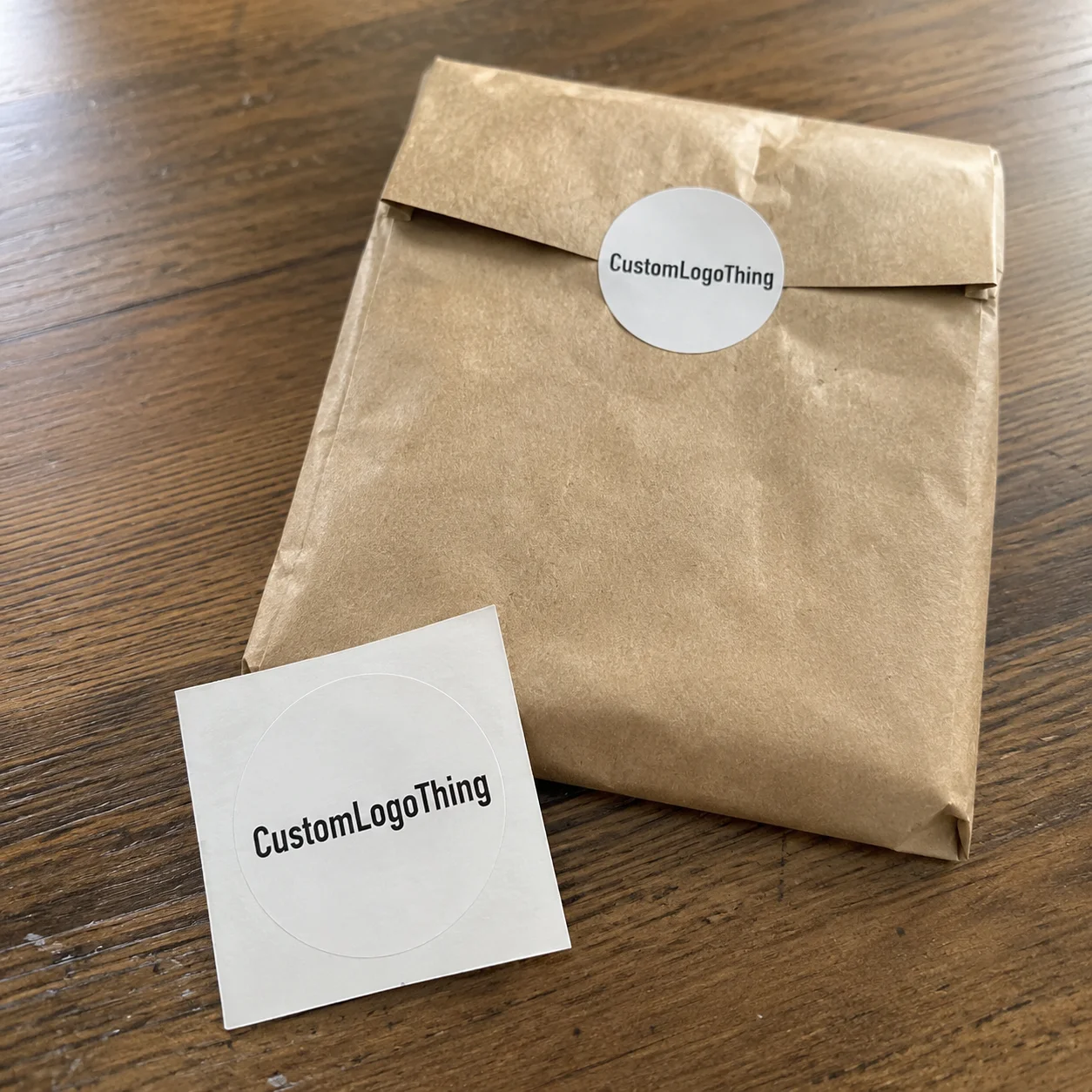
Stickers sit in a useful middle ground between plain stock packaging and fully custom packaging. They can brand jars, bottles, bags, mailers, boxes, tissue paper, thank-you cards, event swag, and promo handouts without locking a business into high inventory or long print runs. For many small brands, that flexibility is the point.
The practical payoff is speed. Stickers let buyers test seasonal designs, label short batches, add QR codes, seal retail packaging, or refresh campaign packaging without rebuilding the whole system. If a product line has four scents, three flavors, or one holiday variant that may never come back, stickers can carry the variable information while the main packaging stays simple.
The trick is choosing the right spec. A standard 2-inch circle on white BOPP with gloss laminate will usually price better and perform more predictably than a tiny custom shape with thin script fonts, metallic stock, and six versions at 100 pieces each. Fancy costs money. Weird costs money. Small and complicated costs money twice.
Buyer rule: cheap should mean efficient, not flimsy. Standardize what customers barely notice so you can protect what they do notice: print clarity, color, adhesion, and finish.
Start with the actual use case. Will the sticker go on paperboard, glass, plastic, metal, textured kraft, or a curved bottle? Will it face water, oil, refrigeration, sunlight, abrasion, or shipping friction? A sticker on a thank-you card has a very different job from a label on a cold-pressed juice bottle.
The strongest low-cost orders usually share a few traits: simple shapes, sensible sizing, one or two materials, clear artwork, and realistic expectations about where the sticker will live. The weakest ones try to combine tiny text, tight borders, special effects, low quantities, and difficult surfaces while still expecting the lowest possible unit price. That math rarely improves with optimism.
Pick the Sticker Type That Matches the Job
The cheapest sticker is not always the best value. The right format depends on how the sticker will be applied, where it will live, and how many people have to touch it during packing. Labor is real money, even if nobody puts it on the quote line.
| Sticker Type | Best Use | Cost Notes |
|---|---|---|
| Roll labels | Product labeling, packaging lines, bottle labels, candle labels, QR code stickers | Efficient for repeated application; better unit cost at 500, 1,000, and higher quantities |
| Sheet stickers | Hand packing, event inserts, retail sets, mixed designs | Good for low-volume use; easy to store and distribute |
| Kiss-cut stickers | Giveaways, laptop stickers, promo handouts, logo decals | Backing stays square or rectangular, making peeling easier |
| Die-cut stickers | Retail-ready branded shapes, mascots, product icons | Looks polished, but complex cut paths can increase cost and setup time |
| Clear stickers | Glass jars, candles, cosmetics, transparent retail packaging | Premium appearance; design needs strong contrast and sometimes white ink support |
Roll labels usually make sense for product packaging and repeated application. If staff apply 1,000 labels to jars every week, rolls are easier to handle, count, and feed into label applicators. Sheets are better for lower-volume hand packing, event kits, retail inserts, and mixed-design runs where convenience matters more than line speed.
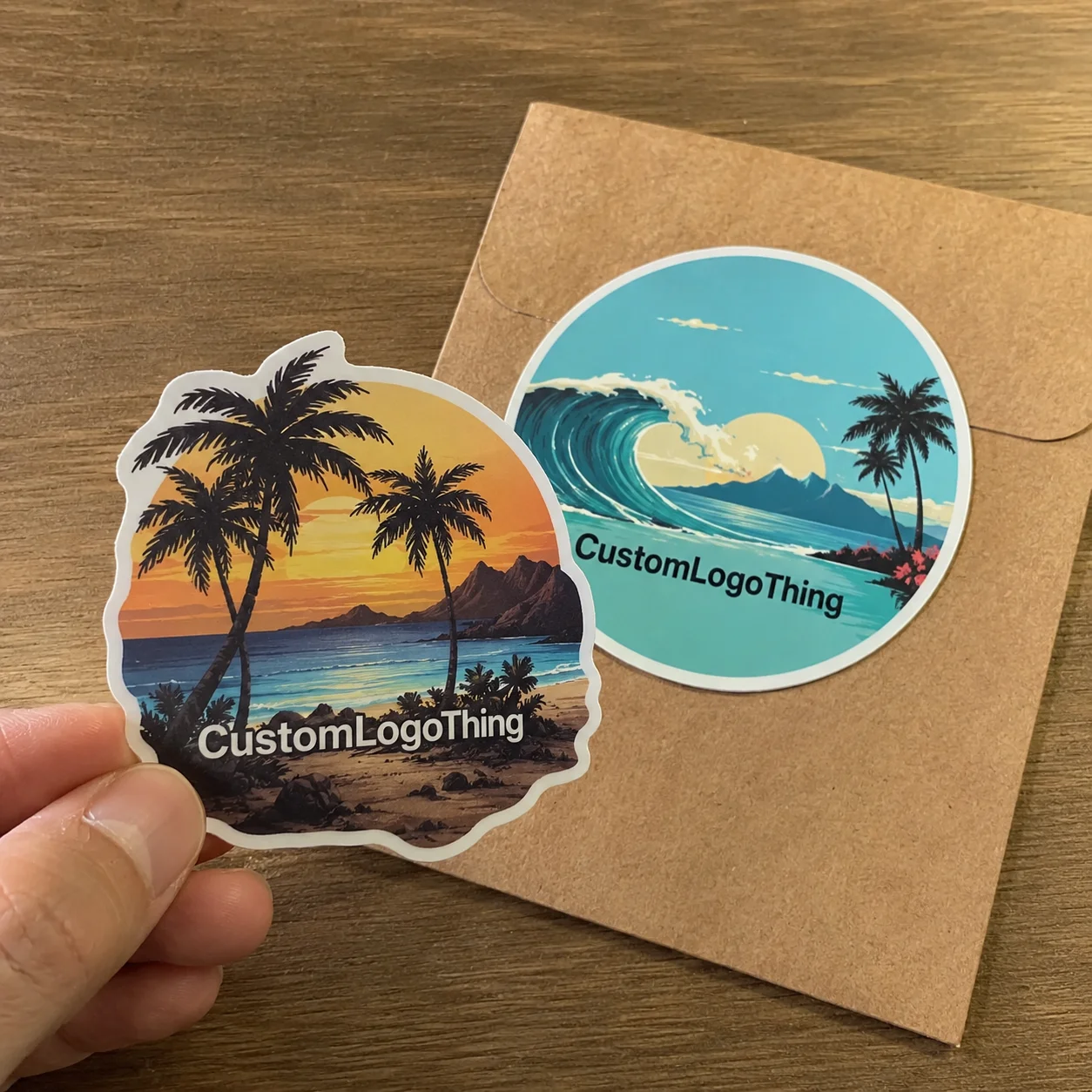
Die-cut and kiss-cut stickers are often confused. Die-cut follows the exact outer shape of the artwork, so the final piece feels finished and retail-ready. Kiss-cut cuts through the sticker layer but leaves the backing intact, usually in a square or rectangle. That backing makes peeling easier, which sounds minor until someone has to pack 800 orders on a Thursday afternoon.
Adhesive choice matters just as much as format. Permanent adhesive is the usual choice for shipping seals, product labels, and branded packaging. Removable adhesive works for temporary promos, event badges, price labels, or items where residue would irritate customers. Freezer-grade adhesive is built for cold-chain products. High-tack adhesive helps on textured, recycled, or difficult surfaces.
Standard shapes help keep custom stickers for cheap without pushing quality down. Circles, squares, rectangles, and ovals cut efficiently and waste less material. Specialty shapes, tiny interior details, multiple versions, and premium finishes can still be worth it, but they belong in the quote for a reason, not because someone saw a shiny sample and lost focus.
Common applications include ecommerce packaging seals, food container labels, warning labels, envelope seals, bottle labels, candle labels, laptop stickers, event badges, and promotional handouts. For larger product systems, pair stickers with Custom Labels & Tags so short-run labeling and primary product packaging do not look like they came from two different planets.
Materials, Adhesives, and Finishes That Control Quality
Material controls durability, feel, and price. Paper stickers are usually the lowest-cost option for dry indoor use: mailer seals, bakery boxes, paper bags, thank-you cards, and short-term promotions. They print cleanly, feel familiar, and keep budgets under control.
Paper is not magic. Put a basic paper sticker on a refrigerated bottle, oily jar, bath product, or outdoor surface and you may get wrinkles, staining, edge lift, or peeling. Then everyone acts surprised. The material did exactly what cheap paper does under moisture and friction.
White BOPP and vinyl are better choices for durability and moisture resistance. BOPP is common for food, beverage, cosmetic, and personal-care labels because it handles moisture better than paper and keeps a clean retail packaging look. White vinyl is useful for outdoor-friendly decals, equipment labels, and promotional stickers that need more toughness. Clear film works well on glass, transparent jars, candles, and premium product packaging, but artwork contrast becomes more important.
Metallic and holographic stocks grab attention for promotional work, limited drops, and event giveaways. They also raise cost. Use them when shine supports the brand, not because “premium” got thrown around in a meeting with no budget attached.
Finish changes appearance and performance. Matte gives a softer, modern look and reduces glare. Gloss makes colors look brighter and adds shine. Lamination improves scratch resistance and water resistance, especially for stickers handled often or exposed to moisture. UV coating can add surface protection, though the best choice depends on the material, print method, and how the sticker will be used.
Most affordable sticker orders use CMYK printing. That is normal. Pantone color matching may be available for tighter brand control, but it can add cost, require higher minimums, or change the production method. Screens glow. Printed ink does not. If brand color matters, request a proof and ask about color tolerance before approving thousands.
Artwork quality is the other half of the equation. A vector PDF, AI, or EPS file gives the cleanest edges for logos and type. A 300 dpi raster file can work for simpler graphics at final size. A screenshot pulled from a social post is not production artwork, no matter how emotionally attached someone is to it.
Small design choices create large production problems. Thin white type on a pale background may disappear. Tight borders can look uneven after normal cutting tolerance. QR codes need enough size and contrast to scan after printing, not just on a glowing mockup. Barcodes should be tested from an actual printed sample with the scanner or phone customers will use.
For broader sustainability and material planning, buyers can review packaging recovery and waste guidance from the EPA Sustainable Management of Materials packaging resources. If paper sourcing matters to your brand, ask whether FSC-certified options are available and compare them against the performance requirement. Sustainable failure is still failure.
Pricing, MOQ, and Unit Cost Tradeoffs
Sticker pricing depends on size, shape, material, adhesive, finish, quantity, number of designs, print method, packing format, and whether you need rolls, sheets, or individual pieces. A 1.5-inch paper circle is not the same job as a 4-inch waterproof die-cut vinyl sticker with laminate and individual backing. One is a packaging label. The other is a tiny sign.
Planning ranges help, even though every job is different. Small test runs can start around a few hundred pieces. Better unit costs usually show up at 500, 1,000, 2,500, and 5,000-piece breaks because setup, proofing, printing, cutting, finishing, and packing get spread across more units.
| Quantity Range | Typical Buyer Use | Unit Cost Behavior |
|---|---|---|
| 100-250 pieces | Samples, events, small product tests | Higher unit cost; useful for testing size, artwork, and adhesion |
| 500-1,000 pieces | Startup packaging, seasonal promos, small retail batches | Better balance of budget and usable quantity |
| 2,500-5,000 pieces | Growing ecommerce brands, repeat product labels, bulk promos | Lower unit cost as setup spreads across more stickers |
| 10,000+ pieces | Established product lines, large campaigns, distribution runs | Best per-piece economics, but only smart if specs are proven |
Low MOQs are useful for startups, seasonal campaigns, product testing, and event work. The tradeoff is simple: the per-piece price is usually higher because the fixed work does not disappear. Someone still checks the file, builds the proof, sets up the print, cuts the job, inspects it, packs it, and ships it. Machines are efficient, not charitable.
To control cost without wrecking quality, choose a standard size, avoid overly complex cut paths, group similar designs where possible, use the same material across multiple SKUs, and skip premium finishes unless they support the brand. If you need labels for six candle scents, using the same size, stock, and finish across all six can help reduce setup friction and simplify reorders.
Hidden cost traps are predictable. Stickers that are too small to read. Paper labels used on wet products. Rush production requested after a three-day delay approving artwork. One order split into twelve micro-versions. A QR code shrunk to the size of a lentil. These are not supplier problems; they are spec problems.
Price comparisons only work when the specs match. If one quote is much lower, check whether the material, adhesive, finish, backing format, production method, proofing, and shipping terms are the same. A thinner paper sticker may be perfectly fine for a bakery box seal. It is a poor substitute for a refrigerated sauce label.
Send clean quote details early: final size, quantity, material preference, indoor or outdoor use, surface type, roll or sheet format, number of designs, finish, deadline, and shipping location. If the sticker is going on a curved glass jar in a refrigerator, say that first. It affects material, adhesive, and testing.
For brands building a larger launch system, stickers can sit beside mailers, inserts, sleeves, and Custom Packaging Products. That approach keeps product packaging flexible while still giving customers a branded unboxing experience.
Process and Timeline From Artwork to Delivery
A clean sticker order follows a predictable path: submit quote details, receive pricing, upload artwork, review proof, approve production, print, cut, finish, quality check, pack, and ship. Simple. Not always instant.
Artwork review checks practical production issues: size, bleed, cut line, resolution, color mode, font legibility, safe area, and whether the design will survive trimming without chopping off important text or logos. A typical bleed allowance may be around 0.0625 to 0.125 inch depending on the job and equipment, and important text should sit inside a safe margin. Tiny borders near the cut edge are risky because normal cutting tolerance can make them look uneven.
Proofing is the buyer’s checkpoint. Review spelling, dimensions, color expectations, cut shape, quantity, orientation, and layout before approval. Once approved, production moves forward. Printers are fast, not psychic.
Simple sticker jobs can often move quickly after proof approval, especially when artwork is print-ready and the material is standard. Custom shapes, premium materials, specialty adhesives, larger quantities, and rush shipping can affect lead time. For practical planning, many straightforward short-run sticker jobs are measured in business days after proof approval, while complex or high-volume orders need more buffer.
What slows orders down? Low-resolution files. Missing dielines. Vague size requests like “small but visible.” Late proof approval. Last-minute design changes. Specialty stock sourcing. Freight address issues. Also, sending twelve emails with conflicting specs. That one is a classic.
If the sticker goes on a new packaging surface, order samples or a small run first. Test adhesion after 24 hours, rub the surface, expose it to expected moisture, and check how it behaves on curves or seams. For shipping-related packaging performance, standards and test methods from groups like ISTA can help buyers think beyond the pretty front panel and consider distribution handling.
For launches, trade shows, retail deadlines, and subscription box drops, build in buffer time. Approve proofs promptly, confirm the application surface, and avoid changing the artwork after production approval unless you enjoy paying for delays. Nobody needs that hobby.
Avoid Cheap Sticker Mistakes That Cost More Later
The biggest mistake is buying only on the lowest quoted price without checking material, adhesive, finish, print quality, and the application surface. If one quote is much lower, ask what changed. It may be thinner stock, basic paper instead of BOPP, no laminate, weaker adhesive, or a different supply format. Sometimes that is fine. Sometimes it is how you buy the same problem twice.
Surface mismatch causes a lot of sticker failure. Glass, plastic, paperboard, textured kraft, metal, frozen packaging, oily containers, and curved bottles all behave differently. A sticker that works beautifully on a shipping box may fail on a chilled sauce bottle because condensation attacks the adhesive edge. A label that sticks to smooth plastic may lift on rough recycled board. Context matters.
Undersizing is another budget trap. Small stickers can look sharp when the design is simple, but they look cheap when crowded with claims, icons, QR codes, ingredients, warnings, and social handles. If compliance copy must be readable, give it space. If a QR code must scan, print it large enough and test it under normal lighting.
Color mistakes show up fast. Your monitor is backlit. Stickers are ink or toner on material. CMYK output may not perfectly match a glowing RGB file, especially with neon colors, deep blues, bright oranges, and subtle gradients. Ask about proofing and color matching if brand consistency matters across retail packaging, website visuals, and printed inserts.
Workflow can quietly eat the savings. If staff apply hundreds of stickers by hand, the backing format matters. Easy-peel sheets or rolls can save labor. Fiddly individual stickers with tiny backing edges can turn fulfillment into a tiny nightmare. Not dramatic. Just slow, annoying, and expensive by the hour.
Before a large run, test adhesion, rub resistance, moisture exposure, barcode scanning, QR scanning, and how the sticker looks after packing. For Product Packaging That faces refrigeration, oils, bath products, or outdoor use, do not skip testing. A small test run may feel slower, but replacing 5,000 failing labels is slower. And uglier.
Quality control does not need to be complicated. Pull a few pieces from the order, compare size and color against the approved proof, check cut alignment, inspect edge lift, and apply samples to the real surface. Leave them overnight. Rub them. Chill them if they will be chilled. Ship a sample if shipping friction is part of the use case.
Next Steps to Order the Right Stickers Fast
The fastest quote starts with complete specs. Before asking for pricing, gather the final size, shape, quantity, number of designs, material needs, adhesive requirement, indoor or outdoor use, surface type, finish preference, artwork file, delivery deadline, and shipping address. That list looks long until you compare it with ten back-and-forth emails. Then it looks merciful.
- Size: exact width and height, such as 2 x 2 inches or 3 x 1.5 inches.
- Shape: circle, square, rectangle, oval, kiss-cut, or custom die-cut.
- Quantity: total count and quantity per design if multiple versions are needed.
- Material: paper, white BOPP, vinyl, clear film, metallic, or “please recommend.”
- Use case: dry indoor packaging, refrigerated product, bath item, outdoor decal, event giveaway, or shipping seal.
- Finish: matte, gloss, laminate, UV coating, or no special finish.
Vector artwork such as AI, EPS, or print-ready PDF is ideal. High-resolution PNG or PSD files may work for simpler designs if they are built at final size with enough resolution. Low-resolution screenshots are not artwork. They are evidence that someone is about to slow down the order.
Choose one priority before requesting pricing: lowest unit cost, fastest turnaround, premium finish, outdoor durability, freezer performance, or low test quantity. Buyers rarely get all six at once. Packaging budgets are not fairy tales.
Request samples or a small first run if you are using a new material, applying to a difficult surface, launching cosmetic packaging, labeling cold products, making outdoor decals, or preparing for retail distribution where failure is expensive. Samples help confirm tack, finish, readability, and fit before you scale.
Custom Logo Things can quote sticker jobs across packaging, promotional, and product-label use cases, but the quality of the quote still depends on the information provided. Clear specs help narrow the right material, adhesive, format, and quantity break before production starts. Vague specs usually move the cost conversation in circles.
To buy custom stickers for cheap without gambling on quality, send the core specs first, approve the proof carefully, and choose the material that matches the real use case. Cheap done properly looks efficient. Cheap done lazily peels off, smears, curls, and makes everyone pretend the lighting is bad.
FAQ
What is the cheapest way to order custom stickers?
The cheapest route is usually a standard shape like a circle, square, rectangle, or oval on paper material for dry indoor use. Order at higher quantity breaks such as 500, 1,000, or more to reduce unit cost. Limit premium finishes, specialty adhesives, and too many design versions if budget is the priority.
Can I get custom stickers for cheap in low quantities?
Yes, low-quantity sticker runs are possible and useful for startups, events, samples, and seasonal products. The unit price will usually be higher than bulk pricing because setup and proofing costs are spread across fewer stickers. A small first run is smart when testing adhesion, sizing, artwork, or customer response before ordering thousands.
Are cheap custom stickers waterproof?
Not always. Paper stickers are usually cheaper, but they are not the right choice for wet, refrigerated, oily, or outdoor use. Water-resistant materials like vinyl or BOPP cost more than basic paper, but they perform better on bottles, jars, bath products, and cold packaging. A laminate or protective coating can also improve scratch and moisture resistance depending on the application.
How fast can affordable custom stickers be produced?
Simple sticker orders can often move quickly once artwork is print-ready and the proof is approved. Custom shapes, specialty materials, large quantities, rush requests, and delayed proof approval can extend turnaround. To avoid timeline problems, send final artwork, confirm specs early, and approve the proof as soon as it is correct.
What details do I need for a custom sticker quote?
Provide size, shape, quantity, material preference, finish, number of designs, and whether you need rolls, sheets, or individual stickers. Share the application surface, indoor or outdoor use, moisture exposure, and any deadline that matters. Upload the best artwork file available, preferably vector PDF, AI, or EPS, so pricing and proofing do not stall.