Electronics Cuffed Knit Beanies Material Thickness Guide: What Buyers Are Really Specifying
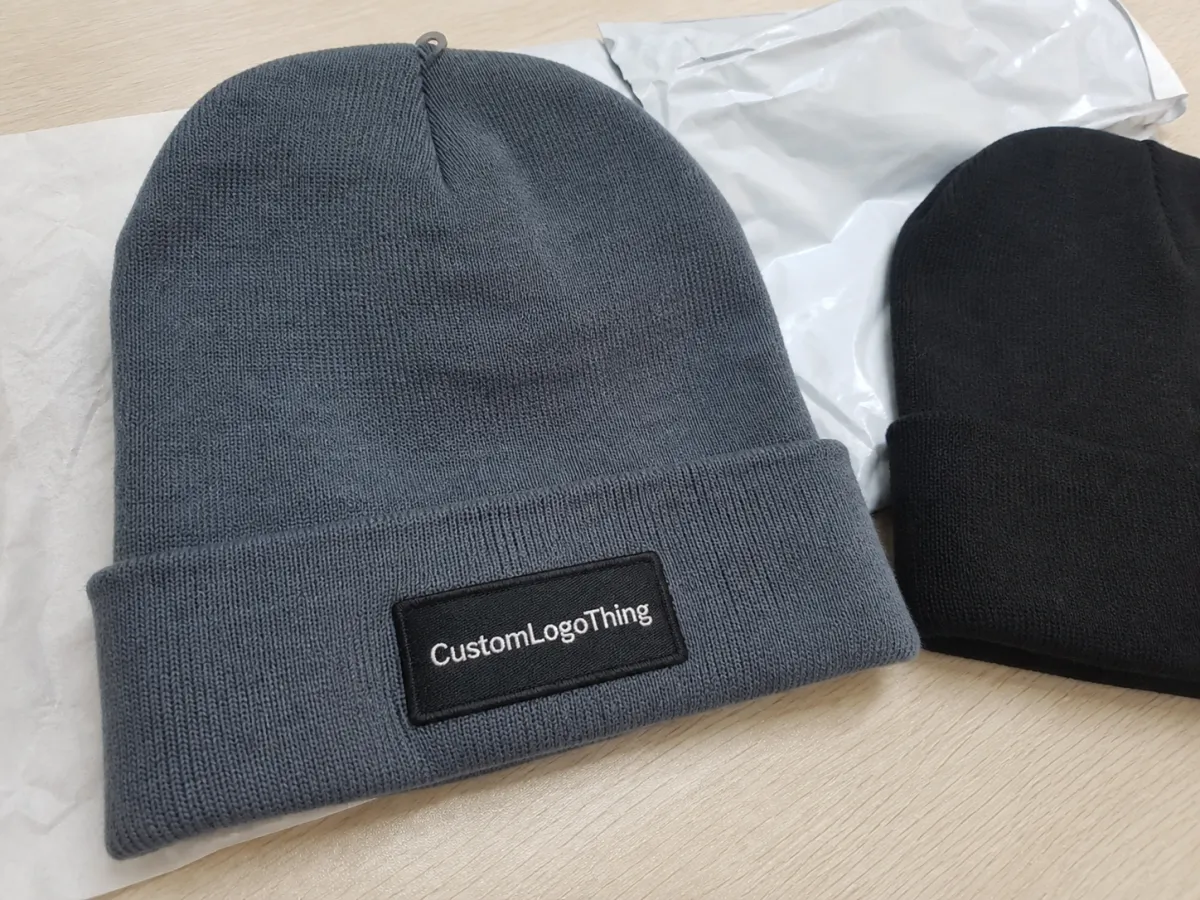
An electronics Cuffed Knit Beanies material thickness guide sounds narrow until a launch kit arrives with a cuff too bulky for clean embroidery, or so thin it collapses after one cold commute. That is not only a comfort issue. It is a brand-control issue.
Electronics buyers usually pair beanies with compact, higher-perceived-value products: wireless earbuds, chargers, repair kits, controller accessories, telecom welcome packs, warranty-registration gifts, or seasonal retail bundles. The beanie cannot feel like leftover swag tossed beside a $79 accessory. It has to feel intentional, useful, and proportionate to the device or kit it supports.
Thickness is a slippery specification. Yarn weight matters, but it does not tell the full story. Knit density, cuff layers, stretch recovery, GSM, rib structure, finishing, and perceived warmth all affect the final hand-feel. Two beanies can use the same 100% acrylic yarn and still behave differently. A tighter 2x2 rib knit with a doubled cuff may feel more structured than a heavier but looser body knit that stretches out after several wears.
The buyer’s real decision is not “thick or thin.” It is a five-way trade between warmth, logo clarity, packing volume, unit cost, and recipient use case. A trade-show giveaway for a software accessory brand may need a lighter cuffed knit that sits neatly in a kraft paper mailer. A field-service telecom kit may need a heavier cuff, better wind resistance, and a logo method that survives repeated wear.
Packaging buyer rule: if the beanie must sit next to electronics, judge it like packaging. It protects perception, controls the unboxing feel, affects freight, and carries the brand mark in public.
A useful specification starts with the end use, not the material catalog. Who wears it? Indoors or outdoors? Is it folded into a box with cables and manuals? Does the logo need fine embroidery, a woven patch, a leatherette patch, or a molded silicone label? Those answers narrow the thickness range faster than any supplier adjective.
How Beanie Thickness Works: Yarn, Knit Density, Cuff Layers, and GSM
Think of yarn as the ingredient, knit construction as the recipe, and finishing as the inspection that decides whether the beanie feels substantial or flimsy. A buyer may request “midweight acrylic,” yet the finished result can vary widely depending on gauge, rib pattern, cuff depth, and how tightly the fabric is knitted.
Common material choices break down cleanly. Acrylic is the cost-control workhorse. It offers good color consistency, strong availability, and predictable decoration results. Cotton blends feel softer and more breathable, though they can lose shape faster if the knit is too loose. Wool blends add warmth and higher perceived value, but they raise cost and may trigger care-label questions or itch concerns. Recycled polyester blends can support sustainability positioning, especially if the campaign already uses recycled packaging or post-consumer waste content.
GSM, or grams per square meter, is useful. It is not complete. A higher GSM usually signals more material, but the same GSM can feel different depending on yarn loft, stitch type, and cuff construction. A 260 GSM single-layer knit may feel lighter on the head than a 240 GSM beanie with a tight rib and doubled cuff. That difference matters if procurement is comparing quotes line by line.
The cuff is the prime branding zone. It usually carries embroidery, woven patches, leatherette patches, silicone labels, or small woven tabs. A stable cuff supports stitches and keeps the logo legible. Too thin, and embroidery can pucker. Too spongy, and patches may tilt or curl. Too thick, and a small electronics logo can look overbuilt, almost armored.
Thickness also changes the packaging math. A thicker beanie may require a larger gift box, taller corrugated cardboard shipper, or looser carton count. If one carton holds 100 lightweight beanies but only 60 heavy cuffed styles, freight and warehouse handling shift quickly. For electronics kits, even 8-12 mm of extra folded height can push a mailer from tidy to bulging.
A serious beanie thickness spec pairs numbers with physical samples. Spreadsheets cannot fully describe recovery, softness, stitch shadow, or how a cuff behaves after being compressed under a cable tray for two weeks.
Key Thickness Factors for Electronics Promotions and Retail Kits
Different campaigns need different beanies. Obvious on paper, easy to miss during quoting.
For conference giveaways, lightweight or light-midweight cuffed knits often make sense because recipients may pack them into laptop bags, hotel luggage, or mailers. A stock acrylic option with a modest cuff can keep unit cost controlled and packing volume manageable. For employee onboarding kits, midweight construction usually works better because the beanie needs to feel durable enough for repeated wear and visible enough for internal brand pride.
Outdoor tech, gaming, telecom, repair, and field-service brands can justify heavier cuffed styles because the product story matches the environment. A rugged charger kit or cold-weather installation pack looks more credible with a denser knit than with a thin giveaway cap. Still, heavier is not automatically better. If the audience wears the item indoors, or if the kit ships in a narrow retail sleeve, bulk can work against the program.
| Buyer Scenario | Typical Thickness Direction | Decoration Fit | Packaging Impact | Common Use Case |
|---|---|---|---|---|
| Conference giveaway | Light to midweight | Simple embroidery or woven tab | Lower carton volume; easier mailer fit | High-volume event handouts |
| Employee kit | Midweight | Embroidery, woven patch, or leatherette patch | Moderate box height; stable presentation | Onboarding and internal campaigns |
| Outdoor tech launch | Midweight to heavyweight | Patch or bold embroidery | Higher freight cube; larger insert cavity | Wearables, rugged devices, telecom field teams |
| Retail bundle | Controlled midweight | Woven label or low-profile patch | Must fit retail tray or sleeve dimensions | Gift-with-purchase and seasonal bundles |
Logo method should drive thickness decisions early. Fine embroidery needs a stable cuff with enough density to hold stitches. Woven labels tolerate more knit texture and can preserve small type better. PVC or silicone patches can look sharp for electronics brands because they echo device materials, but they may feel awkward on a very soft or floppy knit.
Warmth has a cost. A thick beanie photographs well, especially in lifestyle shots, but it can be too warm for indoor events, mild climates, or recipients who only need a commuter layer. Promotional wearables create value because they extend brand exposure beyond the unboxing moment. That exposure disappears if the beanie stays in a drawer.
Color and texture deserve the same scrutiny as GSM. Dark navy, charcoal, and black knits hide stitch shadows and minor decoration imperfections. Heather yarns often feel more retail, but they can reduce contrast for small logos, QR-adjacent campaign marks, or thin-line icons. A white logo on charcoal rib may read cleanly at 3 meters. A pale gray logo on oatmeal heather may vanish.
Confirm compliance basics before approval. Fiber content labeling, country-of-origin marking, and production tolerances for dimensions and weight should be documented, not assumed. For packaging claims, align language with recognized sources such as the EPA’s recycling guidance, especially if the electronics kit also mentions recycled materials, biodegradable packaging, or post-consumer waste.
Step-by-Step Process and Timeline from Sample to Delivery
A clean beanie program follows a practical sequence: define the use case, choose the material blend, select target thickness, approve cuff depth, confirm logo method, review a pre-production sample, produce the bulk order, inspect, pack, and ship. Skip one step, and the cost usually returns as delay.
Stock blanks with standard embroidery can move faster because the base beanie already exists. Custom yarn colors, private-label tags, special cuff depths, and bespoke thickness targets add sampling time. A decorated stock program may be measured in a few weeks after proof approval. A fully custom knit with packaging tests can take longer, especially if the beanie needs to fit a rigid electronics box, molded pulp tray, or corrugated cardboard insert.
Thickness decisions should happen before artwork finalization. If the cuff height changes from 2.5 inches to 3 inches, the logo may need resizing. Stitch count changes. Patch dimensions shift. Placement moves. Even a 5 mm difference can affect whether a mark sits centered on the folded cuff or drifts too close to the top edge after wear.
Sampling should be physical and slightly skeptical. Check stretch, recovery, seam comfort, cuff stability, logo legibility, and packed appearance. Fold the beanie flat. Compress it beside the charger, manual, or cable wrap. Leave it packed overnight. Then inspect whether the cuff rebounds or holds a crease.
- Confirm wearer profile, climate, and campaign channel.
- Select fiber direction: acrylic, cotton blend, wool blend, or recycled polyester blend.
- Request light, midweight, and heavyweight comparison samples.
- Approve cuff depth, body length, and folded presentation.
- Test the actual logo method on the actual cuff construction.
- Pack one complete kit and measure carton or mailer fit before bulk production.
Electronics coordination adds another layer. If the beanie ships with devices, cables, manuals, warranty cards, or kraft paper wraps, confirm carton dimensions and insert layout before production. Last-minute repacking is expensive, and it can make a neat launch kit look improvised.
The slowest part is often not knitting. It is approvals. Marketing checks brand feel, legal checks claims, procurement checks price, operations checks fulfillment, and product teams check audience fit. Build decision time into the schedule, not just production time.
Cost, MOQ, and Unit Cost Trade-Offs Buyers Should Expect
Price is driven by material blend, yarn weight, knit complexity, cuff construction, decoration method, logo stitch count, patch type, custom labeling, order quantity, packaging, inspection level, and freight. That long list explains why two “black cuffed beanie with logo” quotes can be 40% apart and both technically honest.
As a rough buying frame, a stock acrylic cuffed beanie with standard embroidery may land around $3.50-$7.50 per unit at moderate quantities, depending on decoration size and supplier channel. A custom midweight recycled blend with woven label, inside tag, belly band, and retail-ready poly-free packaging may move into the $6.50-$12.00+ range. Smaller runs, rush freight, complex logos, and premium patches push higher.
MOQ dynamics are straightforward but inconvenient. Lower quantities are easier with stock blanks. Custom yarn colors, private labels, special thickness targets, and unusual cuff depths usually require higher minimums because mills and knitting lines need setup efficiency. A supplier may decorate 100 stock beanies, while a custom knit program may start closer to 500, 1,000, or more, depending on construction.
| Specification Choice | Cost Pressure | Risk If Under-Specified | Buyer Checkpoint |
|---|---|---|---|
| 100% acrylic stock blank | Lower | May feel generic if too light | Compare cuff recovery and embroidery clarity |
| Midweight recycled blend | Medium | Sustainability claim may need documentation | Ask for fiber content and recycled-content support |
| Wool blend heavyweight knit | Higher | Care requirements and itch perception vary | Test wearer comfort and label language |
| Custom belly band or gift packaging | Medium to higher | Can alter carton count and fulfillment speed | Approve packed sample, not just loose beanie |
Do not compare quotes only by unit cost. A cheaper beanie may have a thinner cuff, weaker stretch recovery, inconsistent sizing, or logo distortion. Those defects cost money later through rejected samples, repacking, lower wear rates, or complaints from the sales team that the kit feels “off.” Vague, yes. But buyers know that reaction when they see it.
Packaging can quietly rewrite the budget. Thicker beanies may raise freight even if the apparel unit price looks fine. A program using FSC certified paperboard sleeves, kraft paper belly bands, or corrugated cardboard master cartons should be costed as a full system. The Forest Stewardship Council is a useful reference if your packaging brief includes FSC certified materials or paper-sourcing claims.
A quote-ready spec should include quantity, target delivery date, fiber preference, weight target or approved sample reference, cuff height, logo size, decoration type, packaging format, shipping destination, and sustainability requirements. Add whether the beanie ships alone or inside an electronics kit. That single detail can change the packing plan.
Common Mistakes When Choosing Material Thickness
The biggest mistake is choosing thickness from a photo. Product images rarely reveal density, stretch, recovery, cuff compression, or how embroidery behaves after the beanie is folded into a kit. A thick-looking rib in a studio shot may be soft and unstable in hand. A flatter knit may perform better under a patch.
Overbuilding is the second mistake. A very heavy cuff can make a small electronics logo look crowded. It can increase carton volume, reduce mailer efficiency, and feel too warm for indoor or temperate-market campaigns. If the recipient never wears it, the impression count drops to one: the unboxing.
Going too thin creates the opposite problem. Lightweight knits can reduce cost, but they may pucker under embroidery, expose backing, lose shape quickly, or feel mismatched next to premium electronics. That mismatch is especially visible in gift-with-purchase kits where the beanie sits beside polished device packaging.
Spec confusion is common. Buyers say “thick” when they may mean warmer, more structured, softer, more retail-like, or better for logo application. Each goal points to a different spec. Warmer may mean wool blend or tighter knit. More structured may mean a denser cuff. Softer may mean cotton blend or brushed finishing. Better embroidery may mean moderate thickness with less loft.
- Photo-only approval: misses stretch recovery, cuff density, and true hand-feel.
- Logo test skipped: hides puckering, backing show-through, and patch curl until bulk production.
- Packing compression ignored: samples look better than goods held under carton pressure during transit.
- One-word specs: “premium” or “thick” leaves too much interpretation to the supplier.
Decoration tests are not optional. Embroidery, woven patches, heat-applied labels, leatherette patches, and silicone labels stress the cuff differently. A material choice should be validated with the actual logo method, especially for small electronics marks with fine lines, registered symbols, or icon details.
Procurement blind spots also show up after packing. Humidity, carton stacking, transit compression, and long storage can change how samples compare with delivered goods. For larger programs, ask for inspection points tied to dimensions, cuff height, weight tolerance, decoration placement, and packed condition.
Build a Thickness Spec That Survives Sampling
The most useful electronics Cuffed Knit Beanies material thickness guide becomes a one-page buying spec. Not a mood board. Not a string of adjectives. A clear spec that a supplier can quote, sample, and repeat.
Start with climate and wearer profile. A gamer community gift, a telecom field-service kit, and a university tech repair giveaway should not share the same default beanie. Then choose a material direction: acrylic for cost and color control, cotton blend for softness, wool blend for warmth, or recycled polyester blend for sustainability positioning.
Next, select light, midweight, or heavy construction using comparison samples. Ask suppliers to show three Cuffed Knit Beanies side by side, then record the preferred GSM, cuff depth, yarn type, logo result, and folded height. Numbers beat adjectives. A sample reference beats memory.
Approve both the beanie and the packed presentation. For electronics bundles, test whether the beanie compresses cleanly beside the product without crushing inserts, bulging mailers, or hiding the intended unboxing sequence. If the packaging uses kraft paper, FSC certified board, recycled materials, or biodegradable packaging claims, align the textile presentation so the whole kit tells one coherent story.
Internal review should be divided. Marketing checks brand feel. Procurement checks quote assumptions. Operations checks fulfillment fit. Product teams check whether the beanie matches the audience. Nobody needs a 12-person approval meeting, but someone must own each risk.
Before requesting quotes, turn the thickness decision into a compact spec sheet: target construction, approved sample reference, cuff height, decoration method, folded dimensions, packing format, and tolerance expectations. That is the difference between a beanie that looks right in a rendering and one that survives sampling, packing, shipping, and actual wear.
FAQ
What is the best material thickness for electronics cuffed knit beanies?
Most electronics promotions work best with a midweight cuffed knit because it balances warmth, logo stability, packing efficiency, and perceived value. Heavier construction fits outdoor tech, telecom field teams, winter launches, and premium retail kits. Lighter construction works better for indoor events, mild climates, tight mailer packaging, or high-volume giveaways where freight cost matters.
How should I compare GSM in an electronics beanie thickness guide?
Treat GSM as a starting benchmark, not the final answer. Yarn loft, rib density, cuff layers, and stretch recovery affect how thick the beanie feels. Ask for physical samples at different GSM levels and compare logo clarity, hand-feel, cuff structure, and packing volume. Record the approved sample’s measured weight, cuff height, and decoration method so the production quote stays consistent.
Does a thicker cuffed knit beanie make embroidery look better?
A moderately thick, stable cuff often improves embroidery because it supports stitches and reduces puckering. Too much thickness can create needle resistance, heavy backing, stiff hand-feel, or a raised logo that looks bulky. Test the actual logo on the actual cuff construction before bulk approval, especially for small electronics marks or detailed icons.
What specs should I include when asking for a quote on custom electronics beanies?
Include quantity, material blend, target thickness or sample reference, cuff height, logo size, decoration method, packaging format, delivery date, and shipping destination. State whether the beanie will ship alone or inside an electronics kit, because carton size and packing method can affect cost. Ask suppliers to separate product cost, decoration cost, packaging cost, freight, and any sample or setup fees.
How long does it take to produce custom cuffed knit beanies for electronics campaigns?
Stock beanies with standard embroidery usually move faster than fully custom knits with special yarn, private labels, or custom thickness requirements. Sampling, artwork approval, decoration testing, bulk production, inspection, and shipping all add time, so build a timeline backward from the campaign launch date. If the beanie is part of an electronics bundle, add time for pack-out testing and carton approval before final production.


