Boutique buyers can usually tell fast whether a winter accessory will earn rack space. A Cuffed Knit Beanies wholesale Supplier for Boutique retail buyers is worth paying attention to when the sample looks finished, the cuff sits cleanly, and the landed cost still leaves room for markup after decoration and freight.
The cuff changes the product’s read immediately. It gives the beanie shape, adds a branding zone, and keeps it from looking like a soft, anonymous basic. For boutique stores, that affects sell-through as much as color or yarn choice.
Beanies sit between utility and fashion, so they have to hold up under try-ons, folding, and display handling. A weak knit, crooked logo, or sloppy finish can make a perfectly usable item look like discount stock.
Why cuffed beanies outperform flat knit basics on the boutique rack
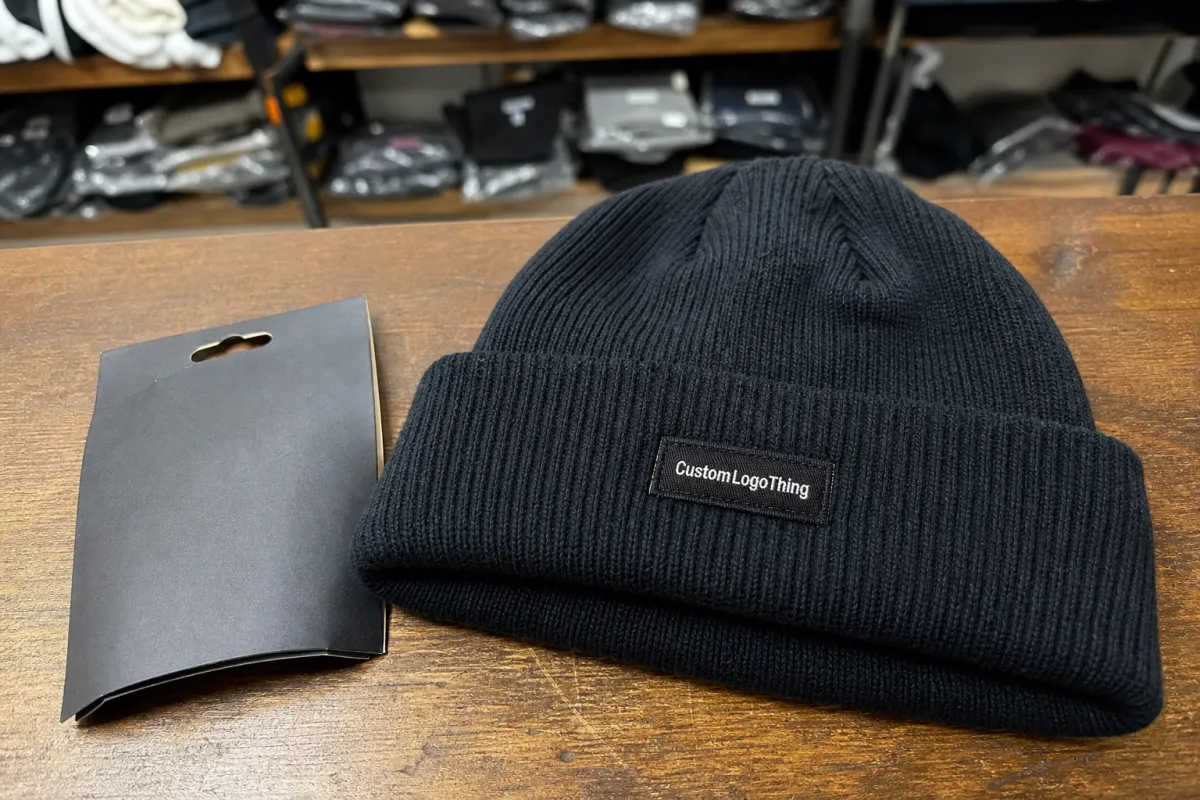
Cuffed beanies usually outperform flatter basics because they look more structured. The fold adds visual weight, which helps a small accessory feel intentional instead of like an afterthought. On a crowded fixture, that matters.
The cuff also gives decorators a flatter and more predictable surface. A logo placed on a narrow crown can feel cramped, while a folded cuff gives enough room for embroidery or a patch to read clearly from a few feet away.
That matters at retail because shoppers notice whether the logo sits straight, whether the beanie holds its shape, and whether the product looks curated. Nice packaging helps, but it cannot rescue a cheap-looking knit.
There is also a resale effect. A structured cuffed beanie feels giftable and easier to justify at a higher price point. For boutique assortments, that can make the difference between a core winter SKU and a clearance item.
A cuffed beanie earns its spot when the cuff sits flat, the logo reads cleanly, and the landed cost supports healthy margin.
That is why sourcing and product selection need to be decided together. The style choice affects margin, and the supplier choice affects whether the style can be repeated without corrections.
Knit structure, yarn weight, and cuff depth that change sell-through
Fabric choice affects more than warmth. It changes hand feel, recovery, color consistency, and how the beanie photographs under store lighting. For boutique retail, acrylic is still common because it gives stable pricing, predictable color, and enough softness for fashion use.
Blends can add a more elevated feel. An acrylic-wool blend often feels nicer in hand than a basic all-acrylic knit, but it also raises cost and can introduce care or shrinkage concerns. The right choice depends on the brand position and target retail price.
Knit gauge changes the silhouette. A tighter gauge usually looks cleaner and supports sharper decoration, while a looser knit may feel softer but can slump after handling. Recovery matters: if the crown does not bounce back, the beanie looks tired before it sells.
Cuff depth is another detail that changes both look and function. A deeper cuff gives more room for embroidery or a patch and makes the style feel more substantial. A slimmer cuff can look more fashion-forward, but decoration space gets limited quickly. For many boutique programs, a cuff around 2.5 to 3.5 inches is a practical starting point.
Spec check: ask for yarn composition, stitch gauge, finished weight, cuff depth, and stretch recovery. A sample that feels good in hand is useful; a sample that returns to shape after repeated handling is better.
Weight should match the season and retail price. A heavier knit can support a higher ticket if the structure is crisp and the fit is flattering. A lighter knit may work for early-season drops, but it needs cleaner finishing or it starts looking thin in the store.
Customization that looks premium: labels, embroidery, and color matching
Customization should improve the product, not overload it. With cuffed beanies, the cuff already creates enough visual structure, so the best decoration is usually simple and well placed.
Embroidery is the most common option because it reads cleanly and holds up well. A compact logo, often around 1.25 to 2 inches wide on the cuff, usually looks better than oversized art that distorts the knit.
Woven labels are a good choice when the brand wants a quieter finish. Faux leather patches can add texture and a more heritage feel, but they need restraint. Too large, and the beanie starts to look bulky; too small, and the patch disappears when the cuff is worn down.
Color matching is where quote sheets can get misleading. PMS matching may be possible, but yarn availability and dye lot variation still create limits. Boutique Buyers Should Ask how much batch variation is normal, what tolerance is acceptable, and whether the supplier can repeat the same color on a reorder.
Finishing details separate retail-ready inventory from commodity stock. Check label placement, seam finish, polybag quality, hangtag spacing, and how the cuff is folded before packing. Those details are small on a spreadsheet and obvious in-store.
Before approving production, review the sample against a short list:
- Logo size and thread contrast
- Cuff placement and symmetry
- Color match under daylight and indoor light
- Stretch recovery after handling
- Label quality and placement accuracy
If the brand uses hangtags, inserts, or care cards, those should be checked with the same level of care. Presentation becomes visible the moment the shipment reaches the sales floor.
Pricing, MOQ, and unit cost tradeoffs for boutique orders
MOQ changes the economics quickly. Lower minimums reduce risk and make test buys easier, but unit cost usually rises when the order is small or heavily customized. A first run of 100 to 300 units will not price like a 1,000-unit replenishment order.
Compare quotes line by line. The base beanie price is only one part of the total. Decoration setup, digitizing, woven labels, packaging, sample fees, and freight can change the final landed cost more than the product itself.
Reorder pricing is where boutique programs become more attractive. The first order usually carries the setup burden. If the spec stays stable, later runs often price better, which is why buyers should ask for launch and reorder terms before approving the sample.
| Order type | Typical landed unit cost | Common MOQ | Best fit |
|---|---|---|---|
| In-stock blank cuffed beanie | $1.20-$2.10 | 50-100 | Fast test buys, pop-ups, quick seasonal fill-ins |
| Embroidered logo beanie | $1.80-$3.40 | 100-300 | Core boutique assortment with clear branding |
| Patch plus woven label package | $2.10-$4.10 | 100-300 | More premium presentation and giftable display |
| Private-label color match | $2.80-$5.25 | 300-500 | Signature line with tighter brand control |
Those figures are directional, not fixed. Yarn choice, stitch density, decoration coverage, packaging, and freight method can move them around. Still, the table helps buyers compare options without getting distracted by a low headline price.
Useful rule: compare landed unit cost, not sticker price. Landed cost is what the boutique actually pays per sellable unit after decoration, packaging, and freight.
If you need a baseline for order structure before requesting custom details, the Wholesale Programs page is a reasonable place to start comparing quantities and packaging levels.
Process, timeline, and production steps from sample to delivery
Good orders usually follow the same path: brief, quote, sample, approval, production, inspection, freight booking, and delivery. The delays usually appear at the handoffs, not in the knitting itself.
Lead time depends on complexity. Blank inventory can move quickly, often in 7 to 10 business days if stock is available. Custom embroidery usually needs 12 to 20 business days after proof approval. Private-label programs with matched yarn or custom color can take 30 to 45 days or more. Freight adds its own clock.
Buyers should ask for milestone dates, not one vague delivery promise. The useful checkpoints are sample approval date, production start date, inspection date, carton close date, and ship date. If a supplier cannot give those dates, planning a retail floor set becomes guesswork.
Confirm in writing:
- Artwork approval method and file format
- Color standard or acceptable tolerance
- Decoration position and size
- Packing method and carton count
- Shipping method and delivery window
That level of clarity reduces rework and makes quality control easier. The strongest suppliers are usually not the ones promising the fastest turnaround. They are the ones keeping the schedule believable.
Inspection should not stop at the hero sample. Ask how the supplier checks stitch tension, dimensional consistency, label placement, and carton count before release. One perfect sample means little if the production run arrives with uneven cuffs or mixed labels.
How to choose a cuffed knit beanies wholesale supplier for boutique retail buyers
This is where mistakes get expensive. A supplier can quote a good number and still cause problems if communication is slow, specs are vague, or reorders require starting from zero. For boutique retail, repeatability matters as much as the first sample.
Start with the sample trail. A credible supplier should show a clear path from quote to proof to pre-production sample. That matters because it shows how revisions are handled and whether the same item can be repeated later.
Ask for QC details, not general assurances. How many units are checked? Are measurements taken from the same reference points each time? Is thread tension monitored? Are labels and packaging verified before shipment? Consistent production is the real test.
Compliance and shipping paperwork matter even on smaller orders. Carton counts need to match the invoice. Shipping terms need to be clear. Reorder logic should be documented. If a supplier cannot answer those questions directly, the relationship is not ready for a retail schedule.
For cartons and transit damage, ask whether the packaging has been tested against ISTA transport-test methods. If sustainability claims matter to the brand, ask whether paper inserts or hangtags can be sourced as FSC-certified paper.
Response speed also tells you something. A supplier that answers revision questions quickly usually understands seasonal buying pressure. That matters because color decisions, artwork approvals, and delivery windows all move quickly once the buying calendar gets tight.
The best supplier is not always the one with the lowest first quote. It is the one that gives you the clearest spec sheet, the least ambiguity, and the best shot at reproducing the same item next month without drama.
Next steps: request samples, compare quotes, and lock the first run
Do not buy the first sample just because it exists. Ask for two or three variations if the supplier can support them: one with embroidery, one with a patch or woven label, and one with a different cuff depth or yarn feel. Then compare them on the same scorecard.
Before production starts, confirm logo art, cuff placement, color standard, packaging, and reorder path. If the first run sells, the second order should not require another round of guessing.
A simple decision matrix keeps the review honest:
- Fit: Does the cuff sit cleanly and hold shape?
- Finish: Does the branding read clearly at retail distance?
- Price: Is the landed unit cost inside margin targets?
- Timeline: Can the goods arrive before the selling window closes?
- Reorder: Can the supplier repeat the spec without surprises?
Set a reorder trigger before launch. Many boutique buyers use sell-through thresholds instead of waiting for instinct to catch up. If a style hits the target by week two or three, the replenishment order goes in while the colorway is still moving.
If the quotes are close, choose the supplier that gives you the clearest spec sheet and the most stable production path. That is usually the lower-risk choice over time.
What is the typical MOQ for cuffed knit beanies for boutique retail buyers?
MOQ depends on whether the beanie is blank, embroidered, patched, or fully private-label. In-stock blanks often start lower, while custom colors, labels, or patches usually push the minimum higher. Ask for MOQ by decoration method, not just by style name.
How long does production usually take for a cuffed knit beanies wholesale order?
Blank inventory is usually the fastest path, while custom decoration and color matching take longer. Sample approval can add days or weeks if the artwork, yarn, or placement needs revision. A milestone schedule that separates sampling, production, inspection, and freight is the safest way to plan.
Can boutique buyers mix colors in one cuffed knit beanies order?
Many suppliers allow mixed colors, but the available mix depends on stock yarn, dye lots, and MOQ rules. A mixed-color run is often easier when the decoration stays consistent across all colorways. Ask whether the price changes when the order is split across multiple colors.
Which decoration method looks best on cuffed knit beanies?
Embroidery is the most common choice because it gives a clean retail look and holds up well. Patches can work well for a more premium or heritage feel, especially on wider cuffs. Match the decoration method to the cuff size so the logo stays legible without crowding the knit.
How do I compare two cuffed knit beanies wholesale supplier quotes?
Compare landed unit cost, not just the base price. Check what is included: samples, setup, labels, packaging, freight, and any rush fees. Use the same specs for both quotes so differences in yarn, knit, and finish are easy to see.


