Most event merch problems start with the insert, not the bag. A vague event merch PVC Garment Bags Packaging Insert checklist can lead to wrinkled apparel, the wrong pack count, and a quote that changes after approval.
That sounds minor until production begins. The checklist is the common reference that keeps marketing, procurement, and the factory aligned on bag size, PVC clarity, insert dimensions, fold sequence, carton count, and ship date. Without it, people may agree on the mockup and still disagree on the job.
For concert merch, conference VIP kits, launch-day apparel, sponsor giveaways, and retail-style presentation, the difference between a tidy pack and a messy one usually comes down to specifications rather than creativity. Buyers often spend more time on artwork than on how the garment actually sits inside the bag, and the result shows.
A polished mockup is not a production spec. If the insert does not match the garment, the bag, and the pack-out plan, the order can look expensive on screen and awkward in hand.
What the event merch PVC garment bags packaging insert checklist covers
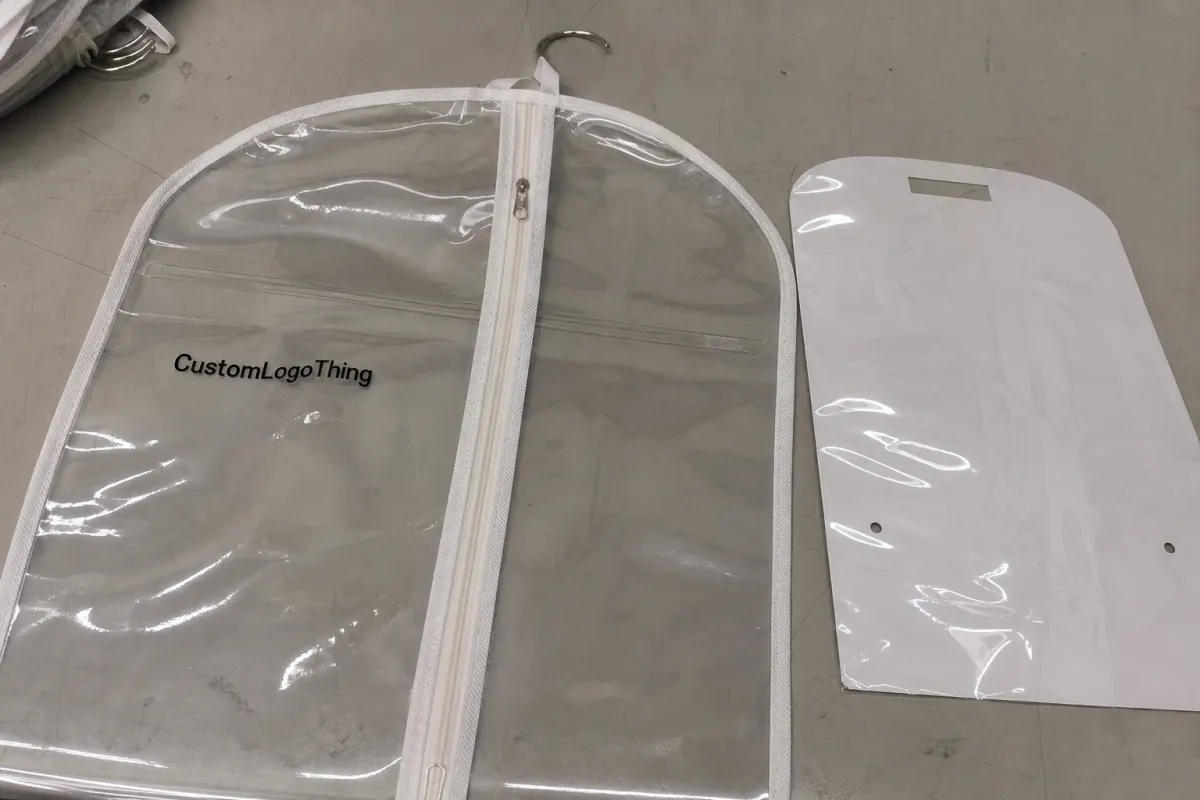
The checklist should function as the master reference for the whole pack. It needs to define bag dimensions, PVC clarity and thickness, insert size and stock, fold order, units per carton, and any display or shipping notes the factory needs before quoting. That is what makes the event merch PVC Garment Bags Packaging Insert checklist useful: it turns a loose idea into something a supplier can price and build without guessing.
From the buyer side, that discipline saves time and money. “Garment bag with insert” is too vague for an accurate quote. A supplier still needs to know whether the garment is a folded tee, hoodie, jacket, dress shirt, or full costume piece; whether the insert is paper, SBS board, or coated card; and whether the pack should feel like retail packaging or simple protective packaging.
The same logic shows up in branded packaging and custom printed boxes. The format changes, but the requirement stays the same: exact specs reduce revisions, protect timing, and make the finished order easier to compare against the original brief.
In practice, this checklist usually supports:
- Concert merch where speed matters and the merch table has to stay organized.
- Conference VIP kits where presentation matters as much as protection.
- Launch-day apparel where package branding needs to feel deliberate.
- Sponsor giveaways where the bag and insert carry the event identity.
- Retail-style presentation where the bag adds perceived value, not just transit protection.
When buyers treat the checklist as a handoff document, the factory can quote the same job the buyer thinks they are ordering. That reduces art revisions, packing mistakes, and the back-and-forth that usually slows down urgent merchandise runs.
Sizing, thickness, and closure choices that affect the insert
Size first. An insert should be based on the actual cavity inside the bag, not only on the flat garment measurement. That means folded width, folded height, sleeve bulk, collar volume, and any extra space created by a gusset, zipper track, flap, or hanger hole. If those numbers are off, the insert may look right on paper but fail at pack-out because the garment shifts, wrinkles, or bunches near the top edge.
PVC thickness changes the whole feel of the pack. For lighter event apparel, a thinner clear PVC around 0.18 mm to 0.25 mm can keep cost and weight down. For a firmer, more structured presentation, 0.30 mm to 0.40 mm is a common middle ground. Thicker material adds visual presence, but it also increases stiffness, weight, and freight cost, so the right choice depends on whether the job is mainly display, protection, or both.
Closure style affects the insert copy too. A zipper bag often needs opening and closing guidance, especially if the zipper sits tight against the garment. A flap bag may need seal direction and a note about adhesive alignment. An open-top bag needs packing direction and display instructions so the content does not slide out in transit. The structure is simple; the implications are not.
The measurement trap shows up often: buyers size the insert to the garment, not to the bag cavity. The result is a pack that compresses too hard, rides too high, or leaves too much empty space. Empty space is not harmless. It lets the garment shift during fulfillment, and once that happens, the bag can look off-center even if the print is perfect.
Before sending a quote request, collect these measurements:
- Garment width, height, and folded depth.
- Bag opening, body width, and gusset depth.
- Hanger hole or hanging feature location, if any.
- Closure type and closure position.
- Insert size, insert stock, and whether the insert needs to sit above or behind the fold.
Pricing, MOQ, and quote drivers for custom PVC garment bags
Cost is shaped by more than the bag itself. The biggest drivers are bag size, PVC gauge, print coverage, zipper hardware, hanger style, insert stock, and the amount of manual assembly required. If the order includes insert insertion, count checks, or special carton pack-out, those labor steps can move the price more than the print run does.
For most buyers, a simple clear bag with a basic paper insert is the lowest-cost route. Add full-coverage print, thicker material, a custom zipper, or a detailed instruction insert, and the quote steps up quickly. That is not a red flag; it is the cost of materials and handling showing up clearly.
| Construction | Typical MOQ | Typical unit range | Best fit | Cost drivers |
|---|---|---|---|---|
| Clear PVC bag + paper insert | 1,000-3,000 pcs | $0.22-$0.48 | Giveaways, simple merch drops | Bag size, paper stock, pack-out |
| Printed PVC bag + insert | 3,000-5,000 pcs | $0.38-$0.85 | Launch kits, branded packaging | Print coverage, setup, proofing |
| Zipper bag + custom insert | 2,000-5,000 pcs | $0.55-$1.20 | VIP kits, retail packaging feel | Hardware, assembly, QA time |
| Gusseted presentation bag | 3,000-8,000 pcs | $0.70-$1.60 | Thicker apparel, premium display | Material weight, freight, folding |
Quote requests should ask for the same items every time: unit cost, setup or plate charges, sample fees, carton counts, and freight assumptions. If two quotes look close, check whether one includes proofing, assembly, and insert insertion. Those costs often hide in the detail lines and only appear later.
MOQ tends to rise as construction gets more complex. A straight clear bag may be quoted at a lower threshold than a fully printed, die-cut, or zipper-based version because tooling, setup, and handling are harder to spread across a small run.
If you are also sourcing protective mailers, retail cartons, or other branded components, separate print, structure, and fulfillment labor in the quote. A blended number can look attractive and still be impossible to compare. For broader planning, Custom Packaging Products can be a useful reference point when you want to align insert stock, board options, and presentation materials across a merch program.
Production steps and turnaround from proof to delivery
The workflow is usually predictable if the spec is frozen early. It starts with artwork intake and a spec review, then moves to a layout or dieline proof, sample approval, production, quality inspection, and freight booking. If any of those steps stalls, the schedule slips. The fastest orders are rarely the ones with the loudest urgency; they are the ones with the cleanest files.
The biggest time sink is not the press. It is missing measurements, late art revisions, unclear insert copy, or a change after proof approval. A single small revision can trigger a new proof, a new sample, or a new packing instruction. On a tight event calendar, that can be the difference between a clean ship date and a rushed partial delivery.
For a straightforward custom PVC garment bag program, a standard lead time is often around 12-15 business days from proof approval. That depends on structure, queue, and whether the insert is simple or highly customized. Rush jobs can move faster, but only when the artwork is final and the spec stops changing.
For larger or more sensitive programs, it helps to track milestones explicitly:
- First proof sent.
- Revised proof approved.
- Pre-production signoff.
- Production start.
- Quality inspection complete.
- Ship date confirmed.
For transit-heavy shipments, ask whether the cartons are built and packed for the route they are actually taking. If the order moves by mixed freight, international air, or long truck lanes, ask about basic distribution testing and carton handling. The public guidance at ISTA is useful because it frames packaging in terms of vibration, drop, compression, and real shipping abuse rather than appearance alone.
If the insert stock matters to the brand story, the paper side deserves attention too. FSC certification is often the cleanest procurement signal for responsibly sourced paper inserts, especially when the merch drop sits inside a broader sustainability story. For background, see FSC.
Artwork, insert copy, and compliance details buyers often miss
The insert is not decoration. It is a working sheet. The first items on it should be the product name, size, folding direction, pack count, and destination or event code if the warehouse needs it. After that come care instructions, handling notes, and any brand copy that helps the merch team keep the order organized.
Artwork problems are rarely limited to logos. Barcode placement, font size, and color contrast matter just as much when the pack is being scanned, sorted, or handed out under time pressure. Tiny type can look elegant on a screen and disappear once it is printed on coated stock or viewed under warehouse lighting.
Compliance deserves a review before anything gets locked. Apparel inserts may need fiber content, country-of-origin copy, or care marks depending on the market and the product type. Imported goods can also trigger labeling rules that are easy to miss when the team is focused on package branding rather than regulatory details.
A clean content hierarchy helps. I usually think of it in three layers:
- Packer first: fold direction, count, destination code, and any special handling note.
- Attendee second: product name, logo, and presentation copy.
- Warehouse last: barcode, compliance text, carton count, and shipment reference.
That hierarchy keeps the insert useful in more than one setting. It also keeps the layout from becoming crowded, which matters for product packaging that has to survive both fulfillment and a live event table.
If the insert uses paper board or card, keep the artwork aligned with the stock finish. A matte uncoated card supports readable instructions. A coated card can make the presentation feel sharper, but it can also glare under lights. That is not a design flaw; it is a production reality that teams often discover after proof approval.
Common mistakes that cause reprints, damage, or late arrivals
The classic error is approving a polished mockup before confirming the actual garment dimensions and the insert trim size. A render hides a lot. The live pack does not. If the hoodie is bulkier than expected, the insert may need a different width or fold order to keep the bag looking straight.
Overfilled bags create stress points. Thick apparel, folded inserts, hang tags, and accessories all compete for the same cavity. Once the pack gets too tight, seams strain, corners warp, and the closure becomes harder to finish. That is especially true for PVC, which is stable enough for presentation but still has limits under pressure.
Another common problem is late file handling. Low-resolution art, missing approvals, or a changed pack count after production begins can force a reprint or repack. Those delays are expensive because they interrupt both manufacturing and fulfillment. A clean approval trail is one of the cheapest forms of risk control in packaging design.
Packaging damage is its own issue. Cold storage can make some PVC edges more brittle. Loose cartons can scuff the surface. Moisture during a long move can affect the insert stock, especially if the paper is uncoated. None of that means the format is weak. It means the shipment needs to match the route.
These are the failures worth flagging before release:
- Insert size is based on the garment alone, not the bag cavity.
- Closure notes are missing, so packers improvise.
- Artwork is approved before compliance text is checked.
- Pallet and carton counts are assumed, not confirmed.
- Assembly labor is omitted from the quote.
Those errors are boring, which is exactly why they are expensive. They usually show up after the client already likes the mockup.
Expert setup tips and next steps before you request a quote
Start with a one-page spec sheet. Keep it plain. It should list bag dimensions, PVC thickness, closure type, insert size, print zones, carton count, and delivery location. If the supplier needs to quote a fulfillment step, say so directly. If the merch will be packed for an event rather than retail resale, say that too. The difference changes how the bag is built and how the insert is written.
Gather the exact files before you brief the supplier: final artwork, text copy, measurement notes, brand approvals, and any compliance language that must appear on pack. If you have a reference sample or a photo of how the garment currently folds, include that as well. A picture can save a long back-and-forth about trim size and fold sequence.
Set a realistic internal timeline. Checkpoints for proofing, revisions, sample approval, production, QC, and freight booking keep the order from drifting while everyone waits for someone else to approve the same line of text.
If your team is juggling apparel, inserts, and other promotional items, keep the packaging plan grouped together. That is where Custom Packaging Products can help as a planning reference, especially if the event kit includes more than one component and the merch has to arrive looking intentional rather than assembled at the last second.
Use the event merch PVC Garment Bags Packaging Insert checklist as the final pre-production gate before you approve the quote and release the order. That one habit protects art, budget, and delivery, and it usually pays for itself the first time it prevents a reprint or a repack.
What should be on an event merch PVC garment bags insert checklist?
Include bag dimensions, PVC thickness, closure type, insert size, fold order, pack count, and delivery instructions. Add artwork notes, approval contacts, and any labeling or care-copy requirements before the quote goes out.
How do I choose the right PVC thickness for garment bags with inserts?
Use a thinner gauge for lightweight giveaways and a thicker gauge when presentation, structure, or shipping protection matters more. Match the thickness to garment weight and fold bulk so the bag closes cleanly without stressing the seams.
What usually raises the MOQ or unit cost on these bags?
Costs rise with larger sizes, custom printing, special closures, hangers, zipper hardware, and detailed insert work. MOQs tend to increase when the order adds more steps, more tooling, or more manual assembly.
How long does production usually take for custom PVC garment bags?
Timeline depends on proofing speed, sample approval, and whether the order uses standard or custom construction. Rush jobs are possible, but clean files and frozen specs are the fastest way to protect turnaround.
What files should I send to get an accurate quote?
Send final artwork, bag measurements, insert copy, quantity targets, and any required labeling or compliance text. If possible, include a reference sample or packing photo so the supplier can quote the real workflow, not just the artwork.

