The sale often fails in the last 18 inches: the handoff from counter to customer, the damp cooler door, the walk across a festival floor with glass and liquid weight pulling against a thin handle. A beer PVC Garment Bags Packaging Insert checklist keeps buyers from treating the clear bag, printed insert, and fulfillment plan as three unrelated jobs. That separation is where small packaging choices turn expensive late.
The cheapest bag is often not the lowest-cost bag. A quote that looks attractive at $0.38 per unit can become painful if the handle tears during a tasting event, the insert hides the front label, or the packing team spends an extra 20 seconds aligning every bottle and card by hand. Across 5,000 units, those seconds become more than 27 labor hours before anyone counts rework, damaged product, or customer complaints.
Why Beer Buyers Use PVC Garment Bags Differently
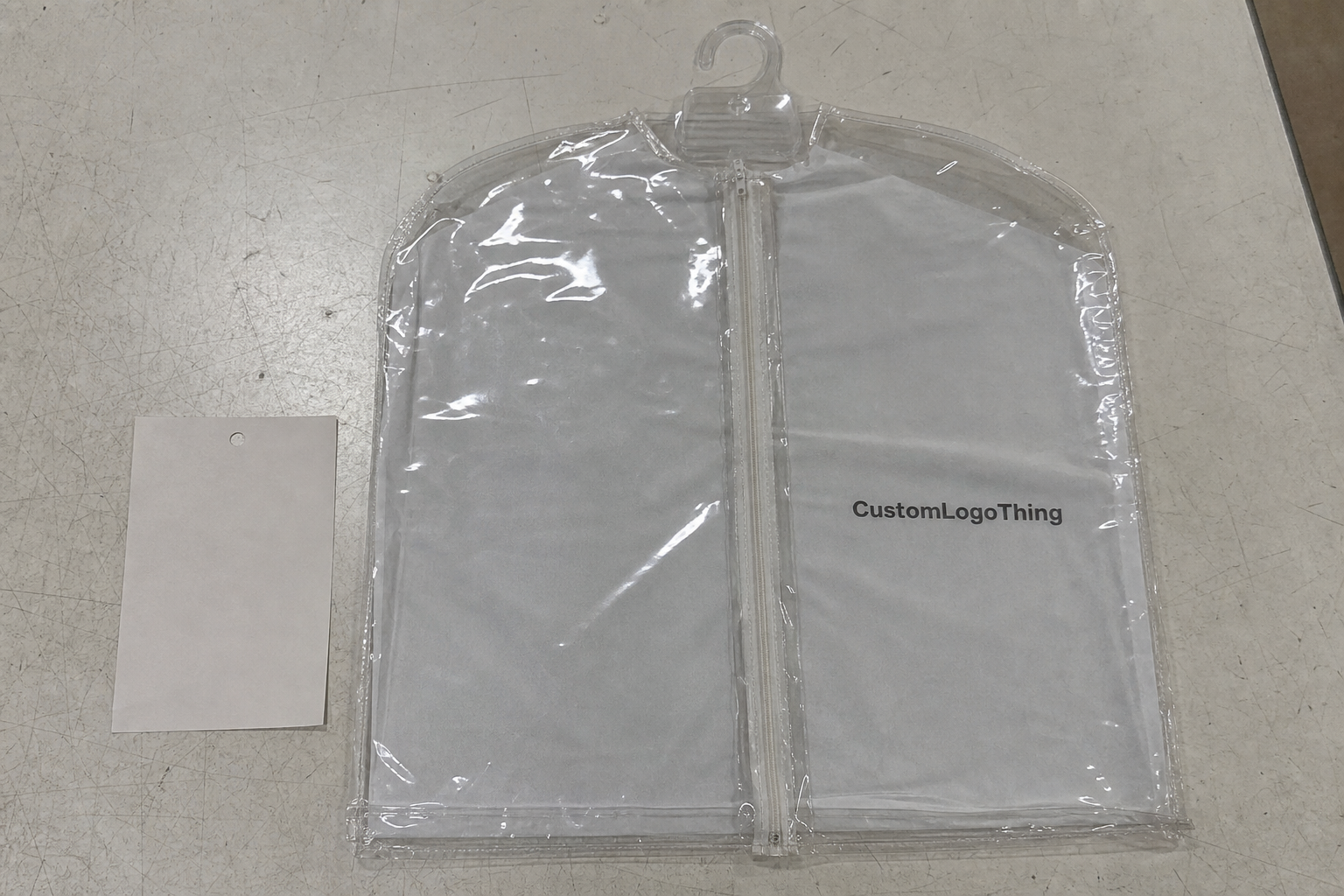
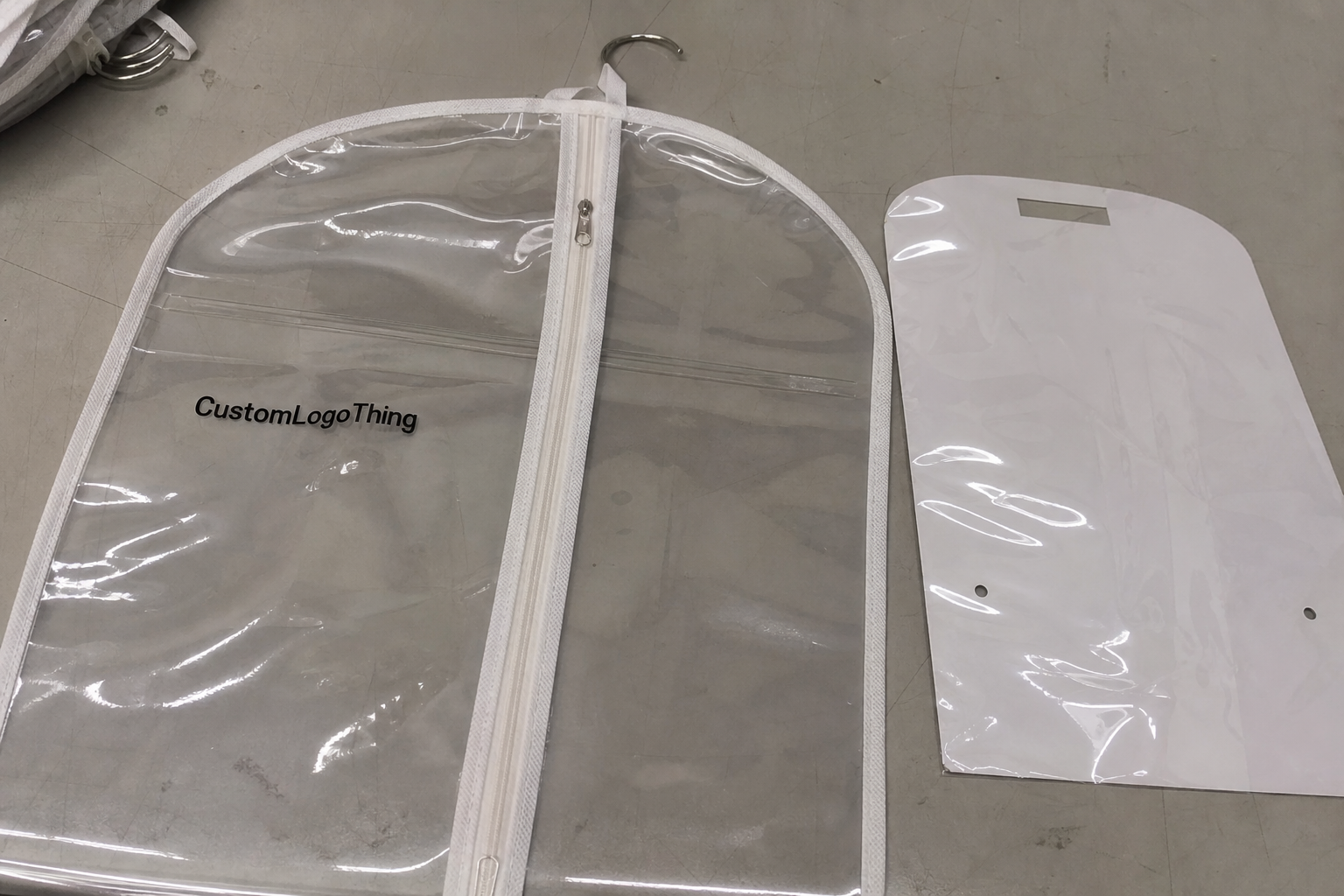
PVC garment-style bags were not originally designed for beer. They were built to hold apparel, protect it from dust and moisture, and show the product inside. Beer buyers borrow the format for a different reason: visibility with structure. The same clear shell that displays a folded shirt can also frame limited-release bottles, taproom merchandise, event kits, branded openers, tasting cards, and gift bundles.
The format does more work than it first appears to do. Handles change how a customer carries the pack. Gussets create usable volume instead of a flat pouch that bulges at the corners. Zipper, snap, and fold-over closures affect both perceived value and packing speed. A hang-ready construction can move a brewery merchandise set closer to premium retail packaging than a simple giveaway bag.
The comparison with other packaging formats is not one-sided. Paper bags print beautifully and can use FSC-certified board, but condensation and cooler handling expose weak points quickly. LDPE bags are flexible and inexpensive, yet they often lack the crisp presentation buyers want for limited releases. Nonwoven bags feel reusable, though they can look bulky in storage and may obscure label art. PVC offers clarity, rigidity, and moisture resistance, but the buyer still has to think about reuse claims, local recycling expectations, and customer perception.
That tradeoff is why a checklist is practical, not ceremonial. What is the pack carrying? How heavy is it when filled? Will it sit chilled? Who assembles it? Which label must face forward? Which side carries the compliance copy? If those questions are not answered before sampling, the sample usually becomes a guess in physical form.
Buyer reality check: a bag that looks clean in a digital proof can sag, glare, scuff, or twist once it carries chilled beer, glass bottles, and a printed insert.
How the Bag, Insert, and Beer Pack Work Together
Think of the pack as a small engineered system. The PVC shell protects and displays. The printed surface carries brand cues. The insert controls movement, explains the product, and may hold compliance or promotional copy. If one element is designed alone, the other two usually absorb the mistake.
Insert choices vary more than many buyers expect. A paperboard divider card can keep bottles apart. A printed belly card can wrap a can set and create a stronger front-facing panel. Hang tags work for short copy, QR codes, and event messaging. Coupon sheets, tasting-note cards, authenticity cards, structural pads, and mini brochures all solve different problems. None is automatically the premium choice. The right insert depends on the container, the retail environment, the display angle, and the assembly method.
Beer dimensions drive the whole conversation. A 12 oz can, a 16 oz tallboy, a 500 ml bottle, and a 750 ml bomber all behave differently inside a clear bag. Diameter affects sidewall pressure. Height affects closure clearance. Neck profile affects insert placement. Label orientation matters because clear PVC exposes crooked packing immediately.
Chilled sales add another variable. Condensation can make a paper insert curl, soften, or cling to the product unless the stock, coating, or placement is chosen carefully. A 300gsm C1S card may be fine for a dry shelf display. A heavier 350gsm or 400gsm board, coated stock, lamination, or a repositioned insert may be safer if the pack is handled near coolers or ice buckets.
PVC gauge changes the outcome too. Thinner gauges reduce unit cost and storage weight, which can work for light merchandise bags or short-term promotions. Heavier gauges give the pack more shape, improve handle feel, and make sense for premium multipacks or reusable gift packaging. A 4-pack can set may need less vertical rigidity than a bomber bottle gift set, but it may need better sidewall stability because cans rotate and rub.
Handles, seams, and closures deserve blunt scrutiny. Beer is dense. Glass adds load. A narrow heat seal or weak handle cutout can turn branded packaging into a breakage risk. Ask how the handle performs under the maximum filled weight, not how it looks in a product photo.
Key Specs to Confirm Before Artwork or Sampling
Lock the boring details before design begins. They are not actually boring. They are the difference between one clean proof cycle and four rounds of avoidable revisions.
- Finished bag size: outside width, height, and depth after sealing.
- Usable interior space: the real capacity after seams, folds, closures, gussets, and inserts reduce available room.
- PVC gauge: selected against filled weight, reuse expectations, and retail presentation.
- Handle style: die-cut, sewn, reinforced plastic, rope, or another specified construction.
- Closure type: zipper, snap, hook-and-loop, fold-over flap, or open top.
- Insert dimensions: flat size, folded size, score positions, and tolerance.
- Packed weight: measured with real filled containers and all secondary items.
Outside dimensions and usable dimensions are not the same. A bag listed as 10 inches wide may lose meaningful interior width to side seals and gusset geometry. Add a divider or belly card and the available space changes again. From a packaging buyer’s point of view, “it should fit” is not a specification.
Print specs need the same discipline. One-color screen print can be economical and bold, especially for logos or short slogans. Full-color process can carry artwork, photography, or more complex package branding, but transparent PVC changes color behavior. A white underbase may be needed behind colored inks so they do not disappear against amber bottles or dark cans. A print shift of 3 mm can look minor on paper and obvious on a clear bag with a centered label.
Compliance copy is not decoration. Alcohol warnings, recycling marks, suffocation warnings where required, barcode placement, distributor requirements, and retail channel rules should be reviewed before the sample is made. For general package testing language and transit considerations, buyers can reference resources from the International Safe Transit Association. For paperboard insert sourcing, some teams ask about FSC-certified options through the Forest Stewardship Council.
A practical beer PVC Garment Bags Packaging Insert checklist should include a load test target. Ask the supplier how the handle, seam, and closure perform at the filled weight. If the pack may hold four cans, a shirt, a bottle opener, and a card, test that exact combination. A beautiful insert can buckle, shift, or block the label if it was designed around an empty container instead of the real pack.
Cost, MOQ, and Unit Cost Drivers Buyers Miss
The quoted unit price is only one line in the real cost story. Tooling, sampling, insert printing, freight, hand packing, carton size, and revision cycles can change landed cost more than the first quote suggests. A clean quote separates these variables. A vague quote hides them.
Major cost drivers include PVC thickness, bag size, gusset depth, closure hardware, reinforced handles, print colors, white underbase, insert material, die-cut complexity, and packing configuration. Larger bags use more material. Deeper gussets may require more labor and stronger seams. A zipper costs more than a simple open top, but it may improve reuse and presentation for a premium gift pack.
MOQ deserves special attention. Custom PVC bags and custom inserts may have different minimums. If the bag MOQ is 3,000 pieces and the insert MOQ is 5,000 pieces, someone must decide whether to order extra inserts, raise the bag quantity, or redesign the insert for another use. That mismatch is common in product packaging, and it is rarely visible if the buyer only asks for “a bag price.”
| Cost Factor | Typical Buyer Choice | Likely Cost Effect | Risk If Ignored |
|---|---|---|---|
| PVC gauge | Thinner for giveaways, heavier for gift packs | Often changes unit cost by several cents to over $0.15 depending on size | Sagging, tearing, weak perceived value |
| Print method | One-color screen print or full-color process | Setup and color count can shift pricing quickly | Low contrast, poor logo visibility, extra proof cycles |
| Insert material | 250gsm to 400gsm paperboard, coated or uncoated | Higher stiffness and coatings raise cost | Curling, buckling, hidden labels |
| Assembly method | Bulk packed components or pre-assembled kits | Assembly labor may add $0.08-$0.35 per unit or more | Slow fulfillment, inconsistent presentation |
| Freight and cartons | Flat-packed bags, inserts separate, or nested kits | Carton volume affects shipping and storage cost | Unexpected warehouse space and handling issues |
Here is the less glamorous math. Saving $0.04 per bag looks smart across 5,000 pieces; that is $200. If the cheaper insert makes fulfillment 20 seconds slower per unit, the packing team spends more than 27 extra labor hours on the order. The savings may still be real, but only if labor, timing, and presentation do not suffer.
Ask for line items: bag production, insert production, sampling, setup, freight, and optional assembly. If you are comparing suppliers for Custom Packaging Products, make sure each quote assumes the same gauge, closure, print coverage, insert stock, and packing method. Otherwise, the lowest number may simply be the least complete specification.
Process and Lead Time From Brief to Delivery
A typical custom project moves through discovery, specification sheet, artwork setup, digital proof, physical sample, approval, mass production, quality control, packing, freight, and receiving inspection. That sounds linear. It often is not.
Timeline depends on decision speed as much as production speed. Late container measurements, revised artwork, unclear insert copy, missing compliance language, or a barcode that arrives after proof approval can stall a project before manufacturing starts. Many delays are not factory problems. They are unanswered questions disguised as design details.
For a simple custom bag with one-color print, buyers might see sampling in roughly 7-12 business days after files and specs are confirmed, with bulk production often taking 15-25 business days after approval. More complex inserts, multiple print passes, reinforced handles, or pre-assembly can push the schedule longer. Freight method matters. Air freight can rescue a deadline at a price; ocean freight can protect margin if the launch calendar allows it.
Start with a physical fit sample if the pack carries glass bottles, mixed merchandise, or a premium gift kit. Digital proofs cannot reveal sagging, scuffing, condensation marks, handle strain, or whether a card shifts behind the product. A sample also gives the brand team something concrete to approve, which helps when several people are reviewing logo position, legal copy, and retail display.
Use approval checkpoints in order: confirm dimensions before artwork, confirm artwork before sample, confirm sample before bulk production, and confirm packing method before final shipment. Skipping that order usually creates rework. A beer PVC Garment Bags Packaging Insert checklist keeps approvals tied to one specification instead of scattered across emails, chat threads, and old PDF proofs.
Step-by-Step Insert Checklist for Beer Packaging
The insert is easy to underestimate because it looks like a flat printed piece. In practice, it can be a spacer, sales panel, compliance carrier, QR bridge, divider, authenticity marker, or unboxing cue. Sometimes it is all of those at once.
- Measure the actual filled product. Include caps, labels, sleeves, condensation clearance, and secondary items such as coasters, openers, shirts, enamel pins, tasting cards, or coupons. Empty containers give false confidence.
- Define the insert’s job. Is it protecting bottles, separating cans, educating the buyer, promoting a release, verifying authenticity, supporting scan-to-shop activity, or creating a premium reveal? One insert can do several jobs, but the hierarchy must be clear.
- Choose material by exposure. A 300gsm C1S card may look sharp for a shelf display, while a thicker 350gsm or 400gsm board may be better for structure. If cooler moisture is likely, ask about coating, lamination, or alternative placement.
- Build the information hierarchy. Brand story first? Beer style? ABV? Tasting notes? QR code? Recycling guidance? Promotion? Legal copy? Customer service details? Put the most important message where glare, seams, and container curves will not hide it.
- Check print contrast before approval. Transparent PVC and glossy coatings can reduce readability. Test colored ink against amber glass, dark cans, silver cans, and any high-glare surfaces likely to sit behind the insert.
- Test with real product weight. Sag, glare, shifting, and scuffing often appear only after the bag is loaded. A flat desk review will not show how the insert behaves in a customer’s hand.
- Document the final spec. Include bag dimensions, insert dimensions, print colors, art files, copy approvals, packing order, carton count, and inspection criteria.
That last step sounds administrative, but it protects money. A clear checklist reduces the chance that purchasing approves one thing, design expects another, and fulfillment receives a third. It also helps suppliers quote accurately, especially if the same order includes clear bags, printed cards, and other custom packaging products.
One practical detail deserves its own line: QR codes need breathing room. On glossy clear PVC or a curved insert surface, a small code can fail under glare. A safe starting point is at least 0.8 inches square for close-range scanning, with quiet space around the code and enough contrast to scan against the product behind it.
Common Mistakes That Make PVC Beer Bags Fail
The biggest mistake is designing for the empty bag on a screen instead of the filled pack in a customer’s hand. Empty bags lie. They sit flat, photograph cleanly, and make handles look stronger than they are.
Weight is the second trap. Beer is heavy; glass is heavier. A 4-pack of 16 oz cans can approach 4.5 pounds before the bag, insert, and extras are counted. A bottle gift set can climb higher. If the handle or seam is not matched to that load, the bag becomes a liability rather than a promotional asset.
Visibility can also turn against the buyer. Clear PVC shows everything: crooked inserts, scuffed cans, condensation, fingerprints, inconsistent product orientation, and loose promotional cards. That is the price of clarity. For premium programs, packing instructions should be as specific as the artwork: label faces forward, insert behind product, QR code visible, closure aligned, no loose debris inside the bag.
Artwork problems are common. Low-contrast ink on transparent material can vanish against dark beer labels. Tiny legal copy may not hold cleanly. QR codes placed over seams, curves, or gussets may scan poorly. Print areas can disappear behind the insert if the design team never sees a loaded sample.
Buying mistakes are just as expensive: approving production without a physical sample, comparing quotes with different gauges, ignoring carton dimensions, and forgetting who will assemble the pack. Sustainability deserves a careful note too. PVC may be chosen for durability, clarity, and reuse potential, but buyers should understand local expectations, retail perception, and customer concerns before launch. Not every market will respond the same way.
Quality control should be specific enough to catch the failures that matter. Check seam strength, handle alignment, closure function, print registration, scratches, cloudy panels, odor, insert fit, carton count, and finished pack appearance. If the bag is meant to sit upright, inspect it loaded. If it is meant to hang, inspect it hanging. The test should match the way customers will actually encounter the product.
Next Steps Before You Request a Custom Bag Quote
A strong pre-quote package saves time. Send product photos, exact container measurements, desired quantity, event or launch date, artwork files, insert copy, estimated packed weight, and shipping destination. If the pack includes bottles, cans, apparel, or mixed items, send one real product sample or a dimensioned mockup. The supplier can make better recommendations when the physical constraints are visible.
Ask targeted quote questions. What PVC gauge is assumed? Is the insert included? Are setup charges separate? What is the sample timeline? What print method is quoted? What packing method is included? Are components bulk packed or assembled? How many finished units fit per carton? What inspection criteria are used before shipment?
A small decision matrix works well for these projects. Score cost, lead time, durability, print quality, insert performance, and assembly labor from 1 to 5. The highest-scoring option is not always the cheapest, and that is the point. A premium brewery release, festival kit, or distributor promotion does not need the fanciest construction every time; it needs the construction that matches the job.
If you are building related packaging design components such as hang tags, belly cards, or custom printed boxes, keep those specs connected to the bag decision. Custom Logo Things can quote coordinated items through Custom Packaging Products, which helps when color, carton packing, and launch timing need to line up across several pieces.
Keep the beer PVC Garment Bags Packaging Insert checklist beside the quote, proof, and sample so every approval ties back to the same spec. The goal is not more paperwork. It is fewer surprises when the finished bags arrive days before a release, festival, or retail promotion.
FAQ
What should be included in a beer PVC garment bag packaging checklist?
Include finished bag size, usable interior dimensions, PVC gauge, handle style, closure type, print method, insert size, insert material, packed weight, quantity, artwork files, compliance copy, carton packing, and delivery deadline. Add a physical fit test using the real beer bottles, cans, or merchandise so the checklist reflects actual load, not just empty packaging dimensions.
How thick should PVC garment bags be for beer packaging?
Thickness depends on product weight, bag size, handle construction, gusset depth, and reuse expectations. Heavier beer gift packs usually need a stronger gauge than lightweight merchandise or empty promotional bags. Ask the supplier to recommend options based on filled weight and whether the pack will hold glass, cans, apparel, or mixed contents.
Do packaging inserts increase the cost of custom beer PVC bags?
Yes. Inserts can add material, printing, die-cutting, setup, and assembly costs, but they may reduce product shifting, improve shelf presentation, and lower hand-packing confusion. Request separate pricing for the bag, insert, sampling, freight, and assembly so you can see whether the insert is a cost burden or a value-adding component.
How long does production take for custom PVC beer garment bags with inserts?
For a simple one-color custom bag, sampling may take roughly 7-12 business days after specs and files are confirmed, with bulk production often taking 15-25 business days after sample approval. Complex inserts, reinforced handles, multiple print passes, pre-assembly, and freight method can extend the timeline.
Can PVC garment bags be used for chilled beer or cooler displays?
They can be used in some chilled or moisture-prone scenarios, but buyers should test condensation, ink durability, insert warping, seam strength, odor, and customer handling before committing to a large run. If the pack will sit in ice or heavy condensation, discuss insert coatings, reinforced construction, and possible material alternatives with the manufacturer.