An 18-location restaurant group can burn through 6,000 to 20,000 branded bags a month before anyone calls it a packaging program. A Matte Poly Mailers unit cost breakdown for restaurant groups is not just a packaging quote; it is a way to separate material cost, print cost, freight, storage, and operational waste before those few cents turn into a recurring line item.
Packaging decisions often receive less scrutiny than software subscriptions, yet the math can be harsher. Add takeout inserts, retail sauce shipments, loyalty kits, catering collateral, uniforms, ghost-kitchen materials, and local marketplace orders, and a $0.04 difference per mailer can exceed the monthly cost of several restaurant management tools.
When a Delivery Bag Becomes a Margin Leak
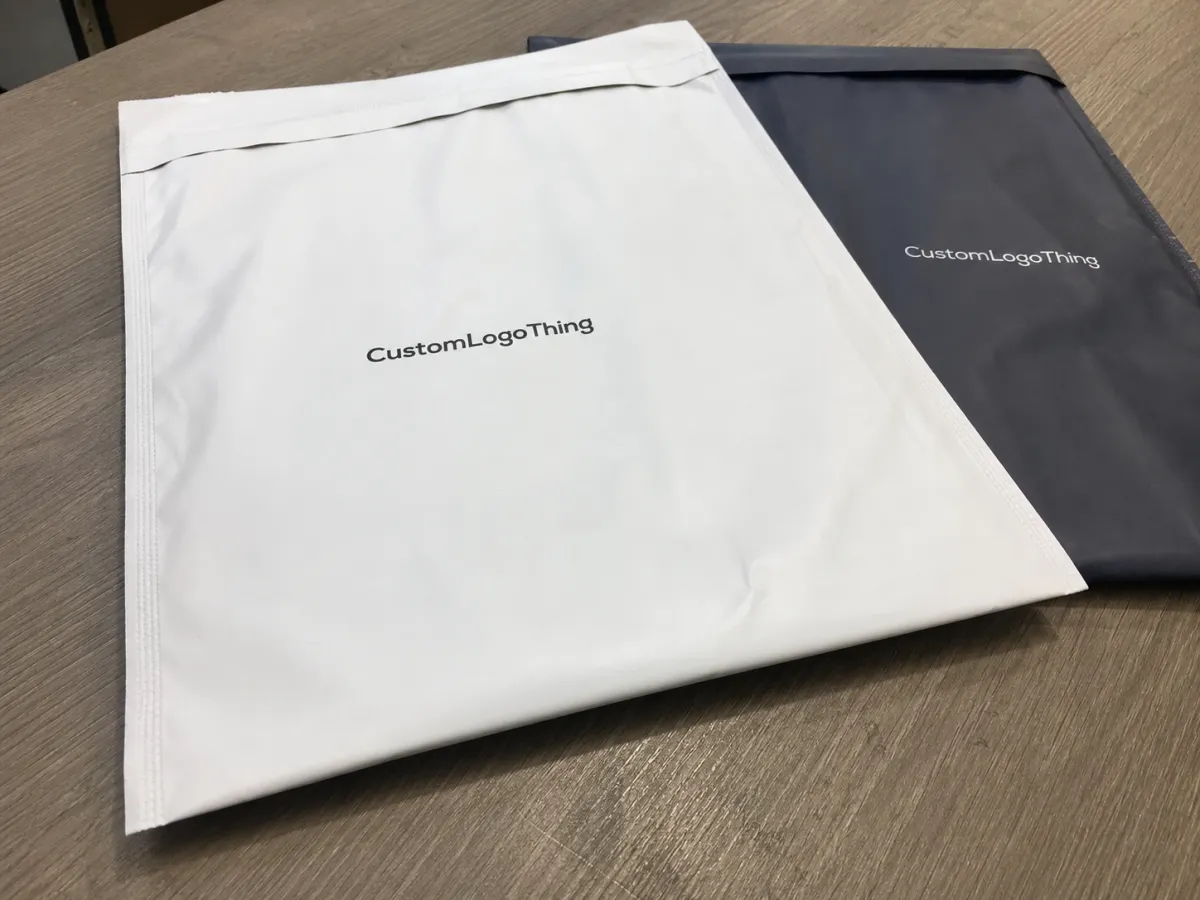
Matte Poly Mailers do not belong around hot prepared food as the primary package. They are not insulation. They are not crush protection. They are better suited to branded merchandise, shelf-stable retail products, gift cards, event swag, staff apparel, document shipping, franchise welcome kits, and e-commerce orders tied to the restaurant brand.
That distinction matters. A mailer for folded staff T-shirts has a different risk profile than a mailer carrying glass sauce bottles. A bag used for a franchise opening kit may need high opacity and a permanent seal. A bag used for inter-location transfers may need a second adhesive strip. Small choices become expensive when they repeat across dozens of locations.
Packaging buyer reality: the cheapest mailer on a spreadsheet can become the most expensive option after returns, repacking, stockouts, damaged contents, or split shipments are counted.
From a procurement point of view, the goal is not to buy the prettiest matte bag. The goal is to understand cost per piece, minimum order quantity, production timing, and the operational conditions that make one specification safer than another. That is why a matte Poly Mailers Unit cost breakdown for restaurant groups should be treated as a buying map, not a decorative estimate.
Custom Logo Things works with buyers who need those numbers before placing an order. Operators, procurement teams, and marketing leaders usually need to defend the spend internally. They need to know whether the difference between 5,000 and 25,000 units is meaningful, whether full-bleed print is justified, and whether a slightly larger mailer is helping packing speed or simply wasting film.
Matte Poly Mailers Unit Cost Breakdown for Restaurant Groups
A serious matte Poly Mailers Unit cost breakdown for restaurant groups separates the visible unit price from the costs hiding behind it. The main cost drivers are material film, finished size, film thickness, closure type, printing method, ink coverage, quantity tier, carton packing, freight, and any pre-production proofing, tooling fees, or setup charges.
Matte finishes usually cost more than plain gloss or unprinted stock bags. The surface treatment, film selection, ink behavior, and handling controls all affect production. A soft matte surface can make a restaurant brand look more premium, but it also requires tighter print management than a plain white commodity mailer.
| Cost Driver | Typical Buyer Choice | Effect on Unit Cost | Procurement Check |
|---|---|---|---|
| Quantity | 5,000, 25,000, or 50,000 units | Higher runs usually reduce cost per piece by spreading setup charges | Ask for at least three bulk pricing tiers |
| Size | 10 x 13 inches, 12 x 15.5 inches, or custom | Larger bags use more film and increase carton volume | Measure the actual packed product stack |
| Film Gauge | Commonly around 2.0 to 3.0 mil for shipping mailers | Thicker film improves durability but raises material use | Match gauge to weight, edges, and handling risk |
| Print Coverage | One-color logo, two-color design, or full-coverage branding | More ink and tighter color control can raise cost | Confirm Pantone or CMYK targets before quoting |
| Closure | Permanent seal, dual seal, or tamper-evident feature | Additional adhesive strips add material and process cost | Decide if returns or transfers matter |
Volume changes the math quickly. A 5,000-unit order may carry a noticeably higher unit cost than 25,000 or 50,000 units because the setup work is similar. The press still has to be prepared. Artwork still has to be checked. Waste still occurs during make-ready. Cartons still need labeling and handling.
For a simple example, a smaller run with one-color print may look sensible if cash flow is tight. A larger run with the same artwork may reduce cost per piece, but it also puts more inventory in storage. Restaurant groups should compare landed cost, not only factory unit price. Freight, split deliveries, and warehouse handling can distort the number.
Lowest unit cost usually points to fewer print colors, controlled ink coverage, a standard size, and a larger production run. Stronger brand presentation may require fuller print coverage, sharper color matching, higher opacity, or a specialty film. Neither choice is automatically right. The right choice depends on how the mailer is used, how visible it is to customers, and how long the inventory will remain current.
A complete custom packaging quote should itemize finished size, film gauge, color count, matte finish, adhesive strip configuration, print sides, packing method, incoterms or delivery destination, and estimated landed cost. If those inputs are missing, the Matte Poly Mailers unit cost breakdown for restaurant groups is incomplete.
Product Details That Change the Quote Before Artwork Does
Matte poly mailers are lightweight polyethylene mailing bags with a soft, non-gloss surface. They are usually selected for non-fragile products that need moisture resistance, opacity, and visible branding. For restaurant groups, that often means apparel, loyalty materials, shelf-stable pantry goods, gift-card bundles, or promotional inserts.
Standard poly mailers are the baseline. Co-extruded mailers can combine different film layers for strength, opacity, or surface performance. Recycled-content options may support internal sustainability goals, although availability, cost, and film behavior depend on the specification. Opaque security mailers are useful when staff uniforms, branded merchandise, or documents should not be visible during shipment.
Closure design is not a small detail. A permanent peel-and-seal strip is common for outbound shipments. Dual adhesive strips help with returns, exchanges, or internal transfers between locations. Tamper-evident construction may be preferred if the mailer carries employee materials, credentials, or high-value branded products.
Restaurant applications are broader than many operators first assume. A franchisor may use matte mailers for welcome kits. A beverage concept may ship limited-edition sauce drops or dry mixes. A catering team may send sample menus and sales collateral. A multi-brand group may distribute staff apparel by location. A marketing team may use the same outer mailer for influencer kits, event follow-ups, and loyalty member rewards.
There are hard limits. Poly mailers do not protect glass from impact unless the primary packaging does the work. They do not replace food-safe primary packaging. They do not provide thermal control for hot or chilled items. If a product touches food directly, procurement must confirm the food-contact requirement and select packaging accordingly.
Sustainability claims also need precision. A lightweight mailer can reduce shipping weight compared with a rigid box, which may reduce transport-related impact in some routes. But recyclability depends on material structure, labels, contamination, and local collection infrastructure. The U.S. Environmental Protection Agency provides broader guidance on packaging waste and recycling systems at epa.gov/recycle. For paper-based components in a broader packaging program, FSC certification may also matter; details are available at fsc.org.
Specifications Procurement Teams Should Lock Before Requesting Pricing
A clean matte poly mailers unit cost breakdown for restaurant groups starts with specifications, not artwork. Finished width, finished height, flap length, film thickness, opacity, matte finish type, print colors, print coverage, adhesive strip configuration, and carton packing should be decided before pricing is treated as final.
Sizing discipline saves money. Restaurant teams should measure the actual product stack, not the hoped-for average. Fold the hoodie. Add the sauce packet. Include the postcard, receipt, or gift-card carrier. Then allow enough room for fast insertion and sealing without buying unnecessary film across every unit.
Gauge selection deserves the same discipline. A thinner film may reduce unit cost, but it can fail when shipping folded apparel with sharp seams, heavy promotional inserts, or multiple pantry items. A thicker film improves durability and opacity, but it raises material use and may increase carton weight. In many custom mailer projects, buyers compare samples around common gauges such as 2.0 mil, 2.5 mil, and 3.0 mil before committing.
Artwork variables can change pricing before anyone discusses brand preference. One-color logos usually quote differently from full-bleed designs, gradients, dense ink fields, or multi-location personalization. A matte black bag with white print may require different handling than a white mailer with a small one-color logo. Dense ink can affect dry time, production speed, and inspection standards.
Franchise systems should centralize artwork rules. One master vector logo file, approved Pantone or CMYK targets, clear placement limits, and a defined policy for local market add-ons can prevent expensive variation. Without that control, one region asks for a sponsor mark, another asks for a QR code, and a third asks for a seasonal tagline after proofing has started.
Compliance questions belong early in the process. If the mailer is only an outer shipping bag for sealed goods, the requirement may be straightforward. If the bag is near unpackaged food or used in a food-adjacent environment, procurement should identify whether contact is direct or indirect and choose materials accordingly. For transit performance thinking, standards and test methods from organizations such as the International Safe Transit Association at ista.org can help buyers understand distribution risk, especially when mailers are part of a larger shipping system.
MOQ, Pricing Tiers, and the Hidden Cost of Ordering Too Little
MOQ is a production reality, not merely a sales device. Film sourcing, press setup, make-ready waste, cutting, sealing, packing labor, and carton labeling create a minimum efficient run. Below that point, the unit economics can become unattractive for both buyer and manufacturer.
Small orders protect cash. They also raise cost per piece. Larger orders usually improve bulk pricing because fixed work is spread across more mailers, yet they introduce storage exposure, inventory carrying cost, and brand-obsolescence risk. A logo refresh, franchise territory update, menu concept shift, acquisition, or expired campaign can turn 15,000 unused bags into dead stock.
Forecasting by channel is the practical fix. Corporate e-commerce may need steady monthly replenishment. Seasonal gift-card bundles may spike for six weeks. Franchise openings may need kits in batches. Employee onboarding may create predictable uniform shipments. Catering sales may vary by region. Treating all of that as one average demand number hides the real buying pattern.
Underbuying has its own penalty. Rush reorders, split shipments, temporary stock bags, or expedited freight can erase the savings from choosing the lowest MOQ. A restaurant group that saves $400 on the first order can lose more than that during one urgent replenishment if production and freight are compressed.
Here is the buying model I usually trust: estimate 90-day demand, estimate 180-day demand, add a controlled buffer, then request tiered quotes at several quantities. The point is not to chase the lowest theoretical unit cost. The point is to identify the quantity break that changes the real landed cost enough to justify the extra inventory.
For many restaurant groups, the useful comparison is not “MOQ versus huge run.” It is minimum viable run versus the next two logical tiers. A matte poly mailers unit cost breakdown for restaurant groups should expose that curve clearly enough for finance, operations, and marketing to agree on the trade-off.
Production Process, Proofing, and Lead Time Expectations
The typical custom mailer process follows a predictable path: discovery, specification confirmation, size verification, artwork review, quote approval, digital proof, production scheduling, manufacturing, quality check, packing, and shipment. Each step can be quick. Each step can also stall.
Timeline depends on more than printing. Film availability, matte finish requirements, color matching, production queue, artwork readiness, approval speed, quantity, and freight route all influence turnaround. A simple one-color mailer with confirmed dimensions generally moves faster than a full-coverage design with several stakeholders debating the proof.
Buyer-controlled delays are common. Incomplete dimensions. Low-resolution logos. Unclear delivery locations. Late legal approval. A last-minute quantity change after proofing. Multiple departments sending conflicting instructions. These are not manufacturing delays; they are project-control delays.
Restaurant groups should appoint one decision owner. Procurement, marketing, operations, and franchise teams can all provide input, but one person needs authority to approve the proof and freeze the specification. Otherwise, production can sit while internal debates continue.
Proofing deserves careful attention because the digital proof is the last low-cost correction point. Check logo scale, spelling, QR codes, barcode readability, seal direction, print position, opacity expectations, and whether the bag opens in the correct orientation for packing teams. A beautiful mailer that opens the wrong way at the packing station slows labor every day.
Lead time should be built into campaign planning. New store openings, retail product drops, loyalty launches, holiday fulfillment peaks, and uniform rollouts should not rely on last-minute packaging. A matte poly mailers unit cost breakdown for restaurant groups is most useful when it is tied to calendar demand, not requested after the campaign has already been announced.
Why Restaurant Groups Buy From Custom Logo Things
Custom Logo Things helps buyers translate restaurant operations into exact packaging specifications before production money is committed. That matters because a restaurant group rarely needs “just a bag.” It needs a mailer that fits real contents, supports the brand, ships efficiently, and can be reordered without rebuilding the project from scratch.
The quoting approach is fact-led. The aim is not to push the largest run. It is to identify the quantity, size, print configuration, and delivery plan that produce a sensible landed cost. For a procurement team, that difference is important. A decorative mockup is not enough. The numbers need to survive internal review.
Multi-location buyers need repeatability. Custom Logo Things can support centralized brand control, consistent specifications, reorder planning, and quote comparisons across several volume tiers. That is valuable when locations are opening, franchisees are requesting materials, or marketing is managing several campaigns at once.
Custom manufacturing also reduces the waste created by oversized generic stock. A correctly sized matte mailer can reduce excess film, improve packing speed, and present the brand consistently across shipments. Buyers can review Custom Packaging Products to see broader packaging options, or focus on Custom Poly Mailers when the application calls for lightweight branded shipping.
Quality checkpoints should be practical: seal performance, opacity, print clarity, count accuracy, carton labeling, and delivery coordination. Those details are not glamorous. They are the details that decide whether the bag works inside a real restaurant operation.
Honestly, I think the best packaging suppliers are not the ones promising the lowest number in isolation. They are the ones willing to explain why the number changes. Custom Logo Things is best suited for teams that want packaging costs they can explain internally, with a clear matte poly mailers unit cost breakdown for restaurant groups instead of vague promises.
Next Steps Before You Request a Quote
Before requesting pricing, count every use case. Merchandise shipments, staff apparel, gift-card bundles, sauce kits, retail inserts, franchise launch packs, catering collateral, and local marketplace orders may not need the same size or closure. One mailer can sometimes cover several uses, but forcing one size across every scenario can waste


