A coffee shop can spend weeks getting a warm, kraft-inspired mailer design right, approve a proof that looks calm and premium on screen, and still end up with a printed matte bag where the roast date sticker competes with the logo, the QR code scans poorly, or the return address sits too close to a fold. A matte poly mailers Artwork Proof Checklist for coffee shops is not decoration review. It is the last controlled pause before film, ink, print setup, cutting, sealing, and packing turn into finished inventory.
Matte Poly Mailers are lightweight polyethylene shipping bags with a low-gloss outside surface, a pressure-sensitive adhesive strip, optional tear strip, and a printable face. Coffee businesses use them for subscriptions, sample packs, small merch, tasting kits, gift bundles, and Ecommerce Orders That do not need a corrugated box. The bag looks simple, but the proof carries a dense set of production decisions: finished dimensions, flap direction, trim or fold areas, logo scale, color callouts, warning copy, barcode placement, shipping label clearance, and sometimes dieline markings that show exactly how the flat film becomes a usable mailer.
Why Coffee Shops Need a Proof Review Before Matte Mailers Go to Print
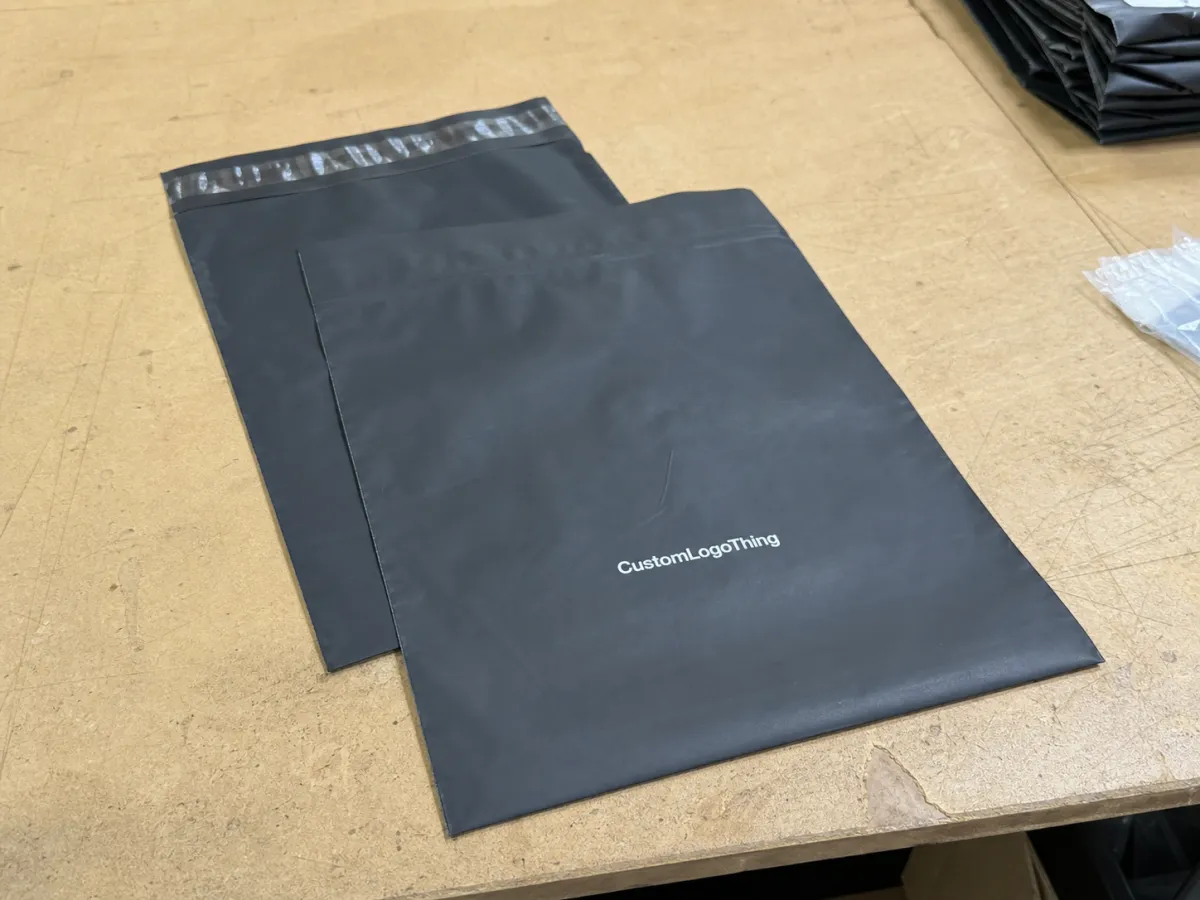
The proof is not a polished mockup for a marketing folder. It is a production communication tool. It tells prepress where the artwork sits, tells the press operator what colors and coverage are expected, and tells the converting line which way the bag should be oriented once it is sealed and packed.
Most proofing mistakes come from reviewing the mailer as if it will lie perfectly flat under studio lighting. Real mailers are filled, flexed, labeled, stacked in cartons, scanned, tossed into bins, and handled by carriers. A one-pound coffee pouch can create a rounded center in the mailer. Two 12-ounce bags may pull the artwork toward the side seams. A matte finish can look restrained and high-end, but it can also soften dark browns, warm grays, cream lettering, and fine detail if the contrast is too delicate.
From a packaging buyer’s point of view, the proof needs to answer plain physical questions before the order is released. Does the 6 by 9 inch mailer fit the packed shipment, or only the flat coffee pouch? Will a 4 by 6 inch shipping label cover the logo? Does the adhesive flap fold over a tagline? Is the QR code large enough to scan after printing and handling? Those are small issues on a PDF. They become expensive, repetitive issues when 5,000 or 10,000 bags arrive in cartons.
This matters for specialty coffee because the package often carries more than a logo. It may include subscription instructions, origin language, tasting notes, recycling language, social handles, a return address, a suffocation warning, and a code that sends the customer to brewing guidance. Every detail has to survive the move from screen to flexible plastic.
How Matte Poly Mailer Artwork Proofs Work From File to Bag
The usual path is direct. The buyer sends logo files, brand colors, bag size, order quantity, and layout direction. The packaging team places the artwork on the correct dieline, checks the print area, and returns a digital proof for approval before production. If the shop is ordering through Custom Poly Mailers, clean inputs usually shorten the first proof cycle.
Good artwork starts with usable files. Vector logos in AI, EPS, or editable PDF format are preferred because they scale cleanly. Raster images should be high resolution, often 300 dpi at final print size if they are used for illustration, texture, or photography. Fonts should be outlined or supplied correctly, linked images should be included, and color notes should be specific. “Espresso brown” may be helpful as a mood direction, but production still needs a PMS target, CMYK build, black preference, or approved reference file.
Matte film changes the visual read. Gloss is reduced, reflections are softer, and dark colors may feel less sharp than they do on a backlit screen. A muted cafe palette can look excellent on matte polyethylene, especially earthy neutrals and low-key brand systems, but the proof has to be reviewed with print behavior in mind rather than screen brightness.
Digital proofs, plain samples, and printed samples do different jobs. A digital proof confirms layout, content, orientation, dimensions, and basic color callouts. A plain physical sample confirms size, film feel, flap depth, seal position, and how the filled mailer behaves in hand. A print sample or ink drawdown can improve color confidence when the order size, brand standard, or launch date justifies the added cost and time.
View the proof at actual size. Small roast icons, QR codes, UPCs, social handles, thin-line illustrations, and return addresses can look acceptable at 150 percent zoom and feel weak at real scale. Proof approval usually means the customer accepts spelling, layout, orientation, and artwork content, while normal manufacturing tolerances still apply to color, registration, cut, and placement.
Key Specs to Confirm: Size, Film, Finish, Seals, and Print Area
Start with size, but match the mailer to the packed shipment, not only the coffee bag. A 12-ounce stand-up pouch may measure neatly on its own, then behave differently once you add tissue, a recipe card, stickers, a sample sleeve, or a small merch item. Leave enough clearance for the mailer to close without strain and open without tearing through customer-facing artwork.
Film thickness affects feel, opacity, durability, and cost. Lighter gauges may suit flat samples, postcards, apparel, or soft inserts. Heavier films tend to feel better for multiple coffee bags, higher-value subscription shipments, or orders that may be handled roughly in transit. Many Custom Poly Mailers fall around 2.5 to 3.0 mil, though the right gauge depends on bag size, packed weight, handling risk, and budget. For shipment performance and distribution hazards, packaging teams may reference testing organizations such as ISTA, especially when a brand is evaluating damage risk across a broader ecommerce program.
The matte finish gives a softer, retail-friendly surface. It can also show rub marks differently from gloss and reduce perceived saturation. That does not make matte worse; it means the proof should be judged as a flexible packaging part, not as a screen image with perfect contrast.
Seal details deserve careful review. Confirm adhesive strip location, flap depth, peel-and-seal liner position, tamper-evident closure, optional return strip, and whether any design element crosses into the seal zone. The flap may sit on the back panel, but its fold can still affect what the customer sees first after the package is filled and sealed.
- Orientation: confirm the front panel, back panel, top edge, flap fold, and upright reading direction.
- Shipping label zone: reserve space for a common 4 by 6 inch label without covering the primary logo or QR code.
- Margins: keep critical art away from side seams, folds, trim areas, and no-print zones.
- Barcode quiet zones: leave clean space around UPCs, QR codes, and return labels for reliable scanning.
- Claims: match recyclable, recycled-content, or compostable wording to the actual material structure and local recycling realities.
Sustainability language needs restraint. A polyethylene mailer may be recyclable through store drop-off programs in some markets, but that does not mean curbside acceptance is universal. If the proof includes recycling language, align it with the actual film structure and current guidance from credible sources such as the EPA recycling resources. Claims that sound harmless on a design board can create real confusion for customers if they overpromise what the package can do after use.
Pricing, MOQ, and Unit Cost Factors for Custom Matte Mailers
Custom matte poly mailer pricing is shaped by size, film gauge, order quantity, print method, number of print colors, ink coverage, special features, packing format, and whether plates or tooling are required. MOQ means minimum order quantity. It exists because setup, press time, ink mixing, material handling, machine adjustment, and normal converting waste have to be spread across enough bags to make the run practical.
A larger mailer usually costs more than a smaller one at the same quantity because it uses more film, may reduce press yield, and takes up more carton and freight space. Print coverage matters as well. A small one-color logo is usually simpler than a full flood coat, reverse-out typography, large black panels, or a multi-color cafe illustration that requires tighter registration.
| Specification Choice | Typical Impact | Buyer Watchout |
|---|---|---|
| Small one-color logo on stock size | Often the lowest custom unit cost; some higher-quantity runs may land around $0.18-$0.32 per bag | Make sure the logo is still visible once the shipping label is applied |
| Two or three print colors | Higher setup and registration control; pricing may move into the $0.28-$0.55 range depending on size and quantity | Confirm PMS or CMYK targets before proof approval |
| Full-coverage artwork or heavy ink | More ink, slower review, possible color matching steps, and higher waste allowance | Check rub, fold areas, and contrast on matte film |
| Custom size, return strip, or specialty film | May require higher MOQ, longer setup, or custom material sourcing | Ask whether tooling, plates, or special packing fees apply |
Those ranges are not universal price promises; they are useful buyer context. Actual pricing can move above or below them based on freight, supplier setup, material market changes, print process, and order volume. A quote for 5,000 bags at 2.5 mil with one-color print is not comparable to a quote for 10,000 bags at 3.0 mil with heavy coverage and a return strip.
Proof changes can affect both cost and schedule. Small layout adjustments before approval are normal. Repeated redesigns, new dielines, color matching rounds, or late file replacements can add days and sometimes fees. That is one reason a matte poly mailers Artwork Proof Checklist for coffee shops is useful before comments go back to the supplier; it helps the team send one organized revision instead of several partial corrections.
Freight and storage are easy to underestimate. Poly mailers are lightweight, but they are bulky in cartons. A coffee shop with limited back-room storage should ask about carton count, palletization, receiving hours, and delivery ZIP code. The true landed cost includes the bag, freight, storage space, and staff time to receive, count, and move the inventory.
For accurate comparisons, request quotes using the same size, quantity breaks, print colors, film thickness, matte finish, packing requirements, and delivery ZIP code. If the shipment may need labels, pouches, boxes, or inserts alongside the mailer, related options under Custom Packaging Products can help the buyer compare the total packout rather than pricing the mailer in isolation.
Proof Approval Process and Timeline Before Production Starts
A clean approval process usually follows a predictable order: specification review, artwork upload, dieline placement, internal prepress check, digital proof creation, customer review, revisions if needed, final approval, then production scheduling. Production lead time generally begins after final proof approval and payment terms are settled, not when the first quote is requested.
Timeline depends heavily on artwork readiness. Clean vector files, clear dimensions, and firm color direction move faster than low-resolution screenshots, embedded fonts, missing links, or undecided bag sizes. A first proof may be possible soon after complete information is supplied, while revisions add time depending on complexity and supplier workload. For many custom mailer projects, buyers should plan in business days rather than hours.
Build buffer before a subscription launch, seasonal roast drop, wholesale push, or holiday gift campaign. Proofing, production, freight, and in-house packing tests all need room. A tight schedule can work, but it gives the team fewer chances to catch a wrong URL, weak QR contrast, or mailer that feels too snug once two coffee pouches and a card are packed together.
Practical rule: assign one decision-maker for proof approval. The roaster, marketing lead, ecommerce manager, and owner can all review, but one person should consolidate comments so the supplier is not trying to interpret four conflicting notes.
Before final approval, check spelling, legal copy, website, QR destination, barcode test, social handles, logo position, bag size, color callouts, seal direction, and shipping label clearance. Post-approval changes can be difficult or impossible once plates, print files, materials, or production slots are committed. That is not supplier stubbornness. It is the reality of physical production once setup begins.
Matte Poly Mailers Artwork Proof Checklist for Coffee Shops
Use this matte poly mailers Artwork Proof Checklist for coffee shops as a practical prepress pass before you write “approved.” Print it, share it, or turn it into an internal form. The goal is not to slow the order down. The goal is to stop avoidable mistakes before they become finished packaging.
- Confirm brand assets. Use the current logo version, not an old horizontal lockup, menu file, JPEG pulled from a website, or social media export. Check icon spacing, trademark marks if used, and minimum logo size.
- Check color specifications. Confirm PMS, CMYK, black builds, white ink needs if applicable, and whether matte film may soften the intended look. Ask for a drawdown if color accuracy is critical to the brand.
- Review the dieline at actual size. Verify front panel, back panel, flap, folds, side seams, trim margins, seal area, and no-print zones. If the proof is scaled, request an actual-size PDF.
- Test scannable items. QR codes, UPCs, barcodes, return labels, and tracking-related marks need enough contrast, quiet zone, and size. Keep them on flatter areas away from folds and heavy distortion.
- Proofread customer-facing copy. Check roast names, subscription language, URLs, social handles, recycling statements, origin references, return instructions, and suffocation warnings if required for the bag format.
- Mock up the shipping label. Place a 4 by 6 inch rectangle over the proof and confirm it does not cover the logo, seasonal artwork, QR code, or first-read message.
- Review packed appearance. Imagine the mailer with one pouch, two pouches, tissue, card inserts, stickers, or merch inside. Contents change how the bag stretches and where artwork lands visually.
- Document approval. Save the approved proof file name, revision number, quantity, size, date, and approver name so there is a clean reference if questions come up later.
A checklist also helps newer team members understand that packaging approval is not just “does it look nice?” It is size, print, code scanning, sealing, shipping, and customer experience tied together in one piece of flexible packaging.
Common Proofing Mistakes That Make Matte Mailers Look Off
The first mistake is judging color only on a phone or laptop screen. Screens are bright, backlit, and inconsistent from one device to the next. Matte film reflects light differently, so warm neutrals, deep blacks, olive tones, and cream lettering can shift in perceived contrast. If the brand uses quiet cafe colors, review them with extra care.
Another common issue is reusing artwork built for paper bags or labels without adapting it to flexible plastic. Paper labels sit on a firm surface. Poly mailers bend, stretch slightly, fold at the flap, and pass through converting equipment. A line that looks elegant on a label may feel too fragile on a moving bag, especially after the mailer has been packed and handled.
Tiny detail creates trouble. Coffee origin maps, tasting note clusters, fine script, and thin-line illustrations can look beautiful on a menu card but weak on a flexible matte mailer. Keep critical text bold enough to survive normal print tolerance and handling. For small type, ask whether the supplier has a recommended minimum line weight or font size for the chosen print method.
Placement near edges can make a good design feel accidental. If important branding sits too close to a fold, trim edge, or side seam, normal registration and cutting tolerances may make it look uneven. Leave breathing room. A quarter inch can be the difference between intentional and cramped.
Watch for missing white ink or poor contrast planning on tinted, opaque, or specialty films. If light artwork is printed without enough backing, it may lose strength. The proof should make clear whether white is used as a printed color, an underbase, or not used at all.
Copy errors are sneaky. Old URLs, wrong Instagram handles, discontinued roast names, outdated certification claims, and incorrect return addresses often survive because the team is staring at the layout instead of reading the words. A structured proof pass forces that slower copy review.
Fit is the final trap. A mailer can technically hold the product and still feel wrong: too tight, wrinkled, hard to seal, or awkward to open cleanly. Test with the real packed coffee shipment whenever size is uncertain, and test more than one packout if subscriptions vary by item count.
Next Steps Before You Approve Your Matte Poly Mailer Order
Print the proof at actual size if possible. Mark the flap area, place a sample shipping label on it, and set the packed coffee item on top to judge proportion. It is a simple exercise, but it catches problems that a flat screen proof can hide.
Create a short internal approval sheet with checkboxes for size, film gauge, finish, print colors, barcode test, QR test, copy review, seal direction, shipping label zone, quantity, and delivery address. Keep it plain. Boring checklists save money.
Send one consolidated revision email rather than scattered comments. Include a marked-up PDF, exact text replacements, final logo files, and clear color references. “Move the logo up a little” can mean several things; “move logo centerline 0.5 inch higher on front panel” gives prepress something usable.
If size is uncertain, request or review a plain sample mailer before final approval. A real packed test often catches fit, seal, and handling issues that no digital proof can fully show. Ask specific production questions too: what print placement tolerance applies, whether matte finish affects color, when production time starts, what the MOQ is, and how cartons will be packed.
Using a matte poly mailers Artwork Proof Checklist for coffee shops turns a custom bag order from a hopeful design decision into a controlled packaging step with fewer surprises. Gather final artwork, confirm product dimensions, request quantity breaks, and approve only after the proof has been checked against the physical coffee shipment.
FAQ
What should a coffee shop check first on a matte poly mailer artwork proof?
Start with the physical basics: mailer size, flap direction, front and back orientation, print area, and shipping label clearance. Then check brand details such as logo version, color callouts, website, QR code, social handles, roast or subscription copy, and any required warnings. View the proof at actual size because small type, thin lines, and barcode quiet zones can look acceptable on screen but fail in real use.
Does matte finish change how coffee shop artwork prints on poly mailers?
Yes. Matte surfaces reduce glare and create a softer premium feel, but they can also make colors look less glossy or less saturated than a screen preview. Dark solids, muted earth tones, cream colors, and fine-line artwork should be reviewed carefully for contrast. If color is critical, ask whether a drawdown, material sample, or printed sample is available.
How long does the proof and production timeline usually take for custom matte poly mailers?
The timeline starts with complete specs and usable artwork; missing files, unclear sizing, or undecided colors can delay the first proof. Production lead time usually begins after final proof approval, not when the first quote is requested. Coffee shops should add buffer for revisions, manufacturing, freight, and a packed-mailer test before a subscription launch or seasonal promotion.
What affects the cost of matte poly mailers for coffee shops?
Main cost factors include bag size, film thickness, order quantity, number of print colors, ink coverage, finish, special features, and freight. Higher quantities usually lower unit cost because setup and production time are spread across more mailers. For accurate pricing, request quantity breaks using the same size, gauge, print method, color count, and delivery ZIP code.
Can a matte poly mailers artwork proof checklist prevent barcode or QR code problems?
It can catch many problems before production, especially poor contrast, small code size, missing quiet zones, or placement under a shipping label. QR codes and barcodes should be tested from the proof at actual size whenever possible. For best results, keep codes on a flat, visible area away from folds, seams, heavy texture effects, and high-distortion zones.
Should coffee shops request a physical sample before approving matte poly mailers?
A physical sample is useful when the shop is unsure about size, film feel, seal strength, or packed appearance. A plain sample can confirm fit and handling, while a printed sample or drawdown may help when color accuracy is especially important. For urgent or budget-sensitive orders, ask the supplier which sample options are realistic before the production schedule is set.


