Matte Poly Mailers Sample Revision Checklist for Restaurant Groups
Matte Poly Mailers Sample Revision Checklist for Restaurant Groups
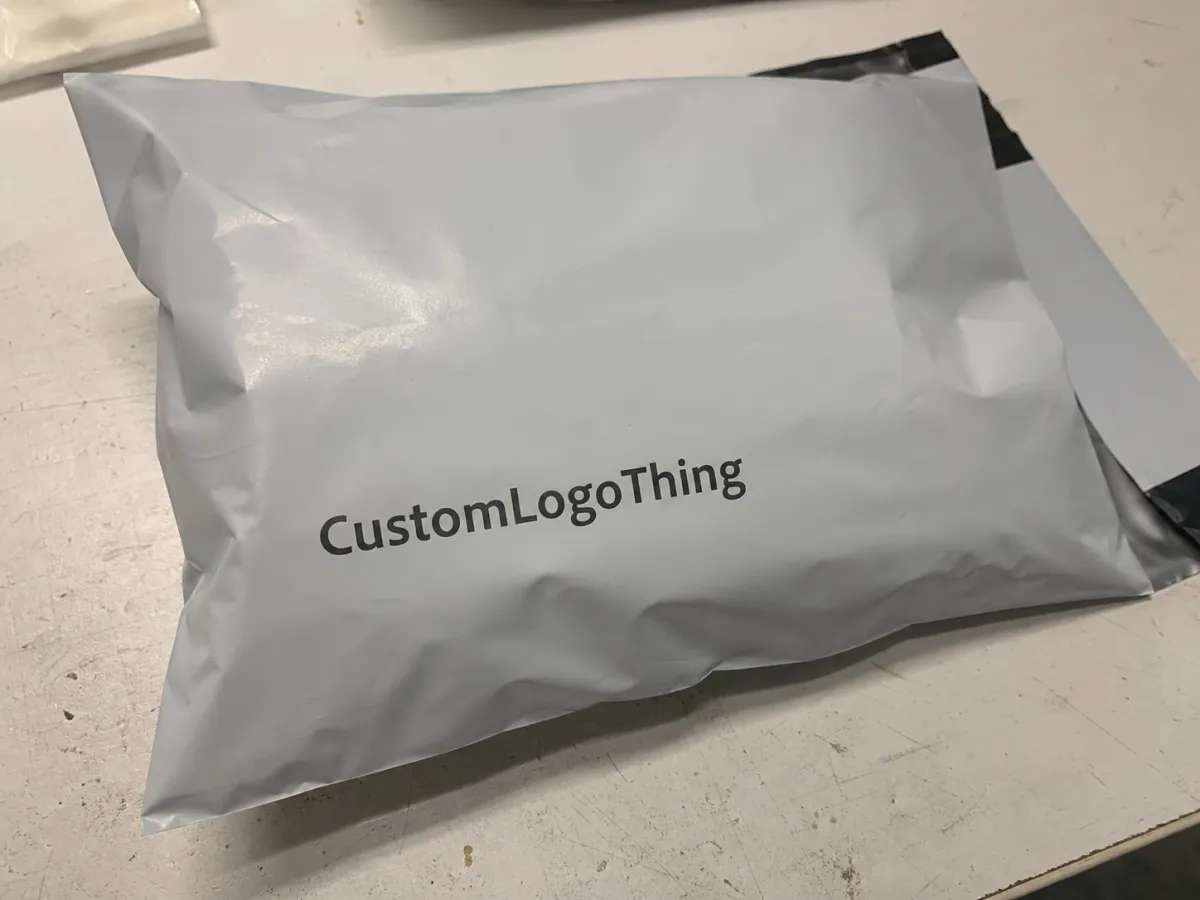
A restaurant group can approve a handsome matte mailer sample and still end up with a real operational problem: the tamper seal lifts after packing, the courier label covers the logo, the QR code fails after the bag wrinkles, or the brand red turns muddy under warm dining-room lights. None of those issues looks dramatic on a PDF. They become expensive when the order arrives in cartons and every location is expected to use the bags anyway.
A Matte Poly Mailers Sample Revision checklist for restaurant groups is a structured review tool used before full production starts. It forces the team to check physical size, print placement, film gauge, adhesive strength, label space, compliance marks, carton packing, and cost impact while changes are still manageable. For restaurant groups, that discipline matters because one bag may support several concepts, catering kits, loyalty gifts, franchise launch packs, employee apparel, or seasonal menu drops.
Matte Poly Mailers are not just glossy courier bags with a softer finish. Matte film changes how ink reads, how scuffs show, and how premium the bag feels in hand. It can also flatten low-contrast artwork. A cream logo on a pale matte film may look refined on screen and nearly disappear on the finished bag. Plastic does not glow; screens do.
Restaurant groups often use custom mailers for off-premise meal kits, branded merchandise, printed catering packets, gift cards, training materials, folded apparel, promotional inserts, and event collateral that needs to arrive clean and intact. The mailer has to protect the contents, seal quickly, scan cleanly, store efficiently, and still leave a practical zone for shipping or courier labels. That is a lot of responsibility for a lightweight bag that may cost less than a side of ranch.
The checklist is not about being fussy. It is about catching small production details before they multiply across every store, franchise, campaign, and reorder.
How Matte Poly Mailer Sampling Works Before Approval
Buyers often talk about “the sample” as if every sample proves the same thing. It does not. A useful checklist starts by naming the sample type being reviewed: digital proof, blank size sample, pre-production sample, or printed production sample. Each one answers a different question.
A digital proof shows layout, copy, print position, logo scale, and color references. It helps catch obvious artwork problems, but it cannot prove film feel, opacity, adhesive performance, or real color on matte plastic. A blank size sample confirms dimensions, flap depth, opening style, and whether the contents fit. A pre-production sample is closer to the intended bag, usually made with the planned material and print method. A printed production sample gives the highest confidence, especially when brand color, QR scanning, or a large multi-location rollout is at stake.
Sample documentation should include film thickness, finished bag dimensions, usable interior space, flap depth, adhesive type, print method, print placement, logo size, Pantone or CMYK references, carton count, and any tolerances the supplier expects in production. For poly mailers, common gauges often sit around 2.5 mil to 4 mil. Lighter gauges can work for menus, coupons, or flat printed packets. Heavier gauges are usually better for apparel, boxed gift items, or multi-piece kits that create pressure along the seal and side seams.
Matte finish deserves its own review. Dark solids may show pressure marks. Fine text often needs a heavier weight than it would on coated paper. QR codes need enough quiet space around them, commonly at least 0.125 inch, and should be tested after the bag is lightly bent or wrinkled. Restaurant lighting matters, too. Warm bulbs can push cream, kraft, red, orange, and brown tones in directions that surprise teams who only reviewed artwork under office LEDs.
Marketing should not review the sample alone. Marketing will catch logo scale, campaign hierarchy, and color drift. Operations will notice whether staff can pack the bag quickly during a rush. Store managers may spot storage problems. Procurement sees cost creep hiding behind a small spec change. Delivery or fulfillment teams understand where labels, scans, and handling damage usually happen. All of that feedback is useful, but it needs to be collected in one controlled round rather than scattered across separate email threads.
Always test the sample with real contents: folded menus, sauce cards, gift items, catering instruction sheets, printed coupons, staff apparel, loyalty materials, or whatever the bag is meant to carry. A mailer that looks perfect empty may bulge, wrinkle, split, or lose its shape once packed. The checklist should require an actual packing test before approval, not a conference-room beauty contest.
Specs Restaurant Groups Must Check Before Revising Artwork
Start with the physical spec sheet. Confirm width, height, lip size, usable interior space, film thickness, opacity, adhesive type, perforation needs, recycled content, and any sustainability claims. If the mailer uses post-consumer recycled film, ask for the percentage and documentation. If the package includes paper inserts or paper-based components, claims should be kept separate and compared with recognized resources such as the Forest Stewardship Council. For recycling language, the EPA recycling guidance is a useful reference because collection rules and consumer access vary widely.
Size tolerance needs plain English. A 10 x 13 inch mailer is not a magic portal. If a catering card is exactly 10 inches wide, it will not slide in neatly once staff are packing fast, especially after the seal area and side seams reduce usable space. Leave at least 0.5 inch of side clearance for flat items and more for bulky or stacked contents. For folded apparel, 1 to 2 inches of breathing room is often more realistic, depending on fabric thickness and how consistently the item is folded.
Print specs can create just as many problems as bag size. Check safe zones, bleed, edge distance, barcode spacing, logo position, white ink requirements, and whether artwork crosses folds, seams, or the adhesive flap. White ink underbase is a frequent source of confusion. On clear, dark, or tinted matte film, brand colors can look weak or muddy without it. If the bag is black matte and the logo is a warm yellow, the ink stack needs to be tested rather than assumed.
Restaurant groups also need clear brand hierarchy rules before revision starts. Does the parent group name lead, or does the individual restaurant concept lead? Is the seasonal campaign message more important than the logo? Does a delivery partner mark need reserved space? If several restaurant concepts share the same mailer, one neutral design may work better than a crowded layout trying to represent everyone equally.
Compliance checks are dull until they are missed. Depending on bag size, thickness, and market, a suffocation warning may be required or strongly recommended. If the mailer carries packaged food items but does not touch food directly, use accurate food-adjacent language instead of treating the mailer like primary food packaging. Add recycling marks only if the material and local collection realities support the claim.
Leave a blank label zone. A beautiful branded mailer without a planned label area becomes a sticker-covered mess after the first few orders. Many shipping workflows use a 4 x 6 inch label, but restaurant groups should check the exact courier, shipping platform, or fulfillment system their teams use.
- Size: confirm exterior dimensions and usable interior space after sealing.
- Film: check gauge, opacity, recycled content, and matte texture.
- Print: confirm color references, safe zones, QR scan quality, and white ink needs.
- Function: test adhesive, flap depth, perforation, and tamper-evident language.
- Logistics: verify carton count, case weight, storage space, and ship-to split.
Cost, MOQ, and Unit Cost Checks Before You Approve
Sample revisions are not only creative decisions. A change can affect plate charges, setup costs, unit price, minimum order quantity, production timing, and freight. Procurement should be included before someone adds another ink color because it “feels more premium.” Premium has a bill attached.
Common cost drivers include bag size, film thickness, matte finish, ink coverage, number of print colors, front-and-back printing, custom adhesive features, recycled content, and order volume. As a practical range, a one-color front print on a standard 10 x 13 inch matte mailer may fall around $0.18 to $0.32 per unit at 10,000 pieces, depending on film, print coverage, packing, and freight. Smaller custom runs can push closer to $0.45 to $0.85 per unit because setup is spread across fewer bags. Heavier gauges, flood print, two-sided artwork, specialty closures, or custom tamper features can move pricing higher.
Minimum order quantities vary by supplier and print method. A basic Custom Poly Mailer run may start around 1,000 to 5,000 pieces, while stronger pricing usually appears at 10,000, 25,000, or 50,000 pieces. Larger restaurant groups often get better unit economics, but they also take on storage pressure. A low unit price is not helpful if 30 locations have cases stacked beside the mop sink because nobody checked carton dimensions.
Pay for a second physical sample when the revision affects size, seal performance, film thickness, brand color, QR code placement, opacity, or any customer-facing function. Do not pay for another sample just because a small icon moved 2 millimeters, unless that mark has a regulatory or brand-control purpose. For copy corrections and minor layout cleanup, a revised digital proof is often enough after the original physical sample has passed fit and seal testing.
Ask the supplier for quote versions: base spec, upgraded film, lower MOQ option, and bulk-order option. That turns tradeoffs into numbers instead of leaving the team to argue from instinct. For format comparisons, review Custom Packaging Products or compare bag options under Custom Poly Mailers before locking into one construction.
| Spec Option | Typical Use | Practical Cost Impact | Buyer Warning |
|---|---|---|---|
| 2.5 mil matte mailer, one-color front print | Menus, flat inserts, loyalty mailings | Often the lowest custom option at medium quantities | May feel light for bulky merch or multi-item kits |
| 3 mil to 3.5 mil matte mailer | Apparel, gift packs, catering collateral | Moderate increase, often worth it for better feel | Confirm case weight and storage volume |
| Two-sided print or heavy ink coverage | High-visibility campaigns and premium launches | Higher ink, setup, and sometimes longer production | Dark matte solids can show handling marks |
| Custom adhesive or tamper-evident feature | Delivery kits, controlled inserts, higher-value items | Can raise MOQ and sample cost | Always test opening and seal strength physically |
Process and Timeline From Sample Notes to Production
A clean workflow saves days. Review the sample, collect internal feedback, consolidate revisions, update artwork or specs, confirm the revised proof, approve the sample or waive resampling, then release the order to production. The checklist should sit in the middle of that workflow, not appear after different departments have already approved different versions.
Assign one owner for feedback. If 12 location managers send separate notes, the supplier receives chaos with attachments. The owner should merge comments, remove contradictions, rank priorities, and send one revision document. “Make the logo bigger” and “leave more blank label space” may conflict on a small mailer. Someone has to decide which matters more.
Artwork edits can be quick, often 1 to 3 business days if the file is clean and the dieline is correct. Physical sample revisions take longer because materials, printing, cutting, sealing, packing, and shipping are involved. A revised physical sample may take 7 to 15 business days depending on the print method, production queue, and freight. Full production after approval often runs 12 to 25 business days for many custom poly mailer orders, though rush schedules depend on capacity and spec complexity.
Delays usually come from predictable places: late feedback, missing dielines, unclear Pantone references, legal copy that arrives after artwork lock, changing bag size after design work is built, or discovering the contents do not fit after the printed sample arrives. That last one hurts because it should have been caught with a blank size sample before printing.
Use a simple approval rule. If the revision affects function, size, seal, film, QR scan, or print color, consider another physical sample. If the revision is a spelling fix, small copy change, or minor placement adjustment, a revised digital proof may be enough. Not every change deserves another sample round, but every functional change deserves a physical check.
Approval trigger matters. Ask whether production starts after proof approval, deposit payment, sample approval, or written purchase order. Those are not always the same milestone.
Step-by-Step Sample Revision Review for Multi-Location Teams
Use the same review process for every concept and location group. Consistency prevents the loudest stakeholder from becoming the approval system. A practical Matte Poly Mailers sample revision checklist for restaurant groups should be simple enough for a district manager to complete and specific enough for procurement to trust.
- Photograph the sample in multiple lighting conditions. Use daylight, warm dining-room light, office LEDs, and back-of-house lighting. Matte film shifts, and colors such as red, cream, green, brown, and orange can change more than expected.
- Pack the real items. Test the heaviest and bulkiest use case: menus, cards, small boxes, folded apparel, stickers, coupons, gift cards, or event inserts. Do not approve an empty bag lying flat on a table.
- Inspect the print. Check logo sharpness, color match, registration, ink coverage, edge distance, and whether the QR code scans after light wrinkling. Use several phones, not one perfect device in one perfect room.
- Test sealing and opening. Press the adhesive, wait 30 to 60 seconds, tug lightly, and check whether the flap lifts. If a courier or customer can open it too easily, the bag has a functional problem.
- Gather ranked feedback. Ask marketing, procurement, operations, and one or two store users for comments. Sort them into must-fix, nice-to-have, and ignore. Ignore is a valid category.
For larger rollouts, keep a photo record. Place the sample next to a ruler, a shipping label, the packed contents, and the current artwork proof. Add the artwork file name, sample date, and revision number in the approval packet. If a reorder goes sideways six months later, that plain record becomes useful very quickly.
If shipping performance matters, ask whether the mailer needs transit testing. Full ISTA testing may be excessive for a simple flat mailer, but the standards from the International Safe Transit Association are useful when mailers are part of a larger kit or shipper system. For higher-value gift packs, light drop checks, compression checks, and packed handling tests are not dramatic. They are basic risk control.
Common Mistakes That Create Bad Matte Mailer Samples
The first mistake is approving color from a screen. Always compare the physical matte sample against an approved brand reference, ideally Pantone or a printed standard your team actually uses. If the brand system has only digital values, expect some interpretation once ink hits film.
The second mistake is choosing a mailer that fits only when packed perfectly. Restaurant teams move fast. If the bag requires careful folding, exact stacking, and slow sealing, it is probably the wrong size. Add clearance for real hands, rushed shifts, and slightly uneven contents.
Label placement gets ignored constantly. A polished branded mailer can turn messy when the courier label covers the logo, campaign line, QR code, or tamper language. Reserve a label zone before approving art. For common shipping labels, plan around a 4 x 6 inch area, then confirm the exact format used by your carrier or platform.
Thin type and low-contrast colors create another trap. Matte film can swallow delicate details, especially on darker mailers or heavy ink coverage. Legal copy, recycling text, QR instructions, and promotional URLs need enough size and contrast to survive real handling. A 5-point line of gray text on black matte film is not elegant; it is invisible.
Stakeholder chaos may be the most expensive mistake. If every department revises the sample independently, the team gets conflicting notes, extra proof rounds, higher costs, and slower production. Centralize comments or expect confusion.
Storage checks also deserve attention. Restaurant groups need to know how many mailers fit per case, how cases stack, and whether each location has room. Ask for carton dimensions, case weight, units per carton, and pallet count. A case might hold 500 to 1,000 mailers depending on size and gauge, but larger bags and heavier matte film can reduce that count quickly.
Final Checks Before Sending Approval
Create a final approval packet before anyone writes “approved.” Include the signed proof, sample photos, spec sheet, quantity, ship-to locations, carton count, approved revision notes, and any waived resampling decision. Keep it boring and complete. Boring paperwork beats exciting refunds.
Confirm the exact production version: size, film gauge, matte finish, ink colors, adhesive type, print side, artwork file name, suffocation warning if required, recycling marks, label zone, and any tamper-evident copy. If multiple restaurant concepts share the same mailer, confirm which logo version is final and which campaign language has been removed.
Ask the supplier to restate lead time, payment terms, freight plan, and the production trigger. Does the clock start after deposit, proof approval, physical sample approval, or purchase order? Also confirm whether overruns or underruns apply. A 5% production tolerance on 20,000 pieces means the final count may vary by 1,000 bags, which affects store allocation.
Send one final internal note to marketing, procurement, operations, and the relevant location leads. State what was approved, what changed, and what was intentionally not changed. That last part prevents the familiar post-approval complaint parade, where someone suddenly remembers they wanted the QR code on the other side.
A sample revision checklist is the cheapest way to stop small packaging issues from spreading across every location. Use it before approval, while the bag is still a sample and not a palletized mistake.
FAQ
What should restaurant groups include in a matte poly mailer sample checklist?
Include size, usable interior space, film thickness, matte finish quality, print color, logo placement, adhesive strength, label area, QR code scanning, compliance marks, carton packing details, and ship-to requirements. Test the mailer with real restaurant items instead of reviewing it empty. Fit and seal performance matter more than how attractive it looks flat.
How many sample revision rounds are normal for custom matte poly mailers?
One revision round is common when artwork and specs are prepared well. Two rounds may be needed if the first sample reveals size, color, opacity, or seal problems. More than two rounds often means the buying team did not align internally before sampling or changed the use case midstream.
Do matte poly mailer samples match final production exactly?
They should be close, but small tolerances can occur in color, cutting, sealing, and placement. Ask the supplier to state acceptable production tolerances before approval. For critical brand colors, review a physical printed sample under realistic lighting and compare it to an approved Pantone or printed brand reference.
What affects the pricing of matte poly mailers for restaurant groups?
Major pricing factors include order quantity, bag size, film gauge, matte finish, ink coverage, number of colors, print sides, recycled content, adhesive type, packing, and freight. Higher quantities usually reduce unit cost, but they also increase storage needs across restaurant locations.
When should a restaurant group request another physical sample?
Request another sample when changing bag size, film thickness, adhesive, print color, QR code placement, opacity, or anything that affects function or brand accuracy. For minor copy edits or small placement corrections, a revised digital proof may be enough if the original physical sample already passed fit and seal testing.


