Why Wine Shops Should Treat a Mailer Sample Like a Label Proof
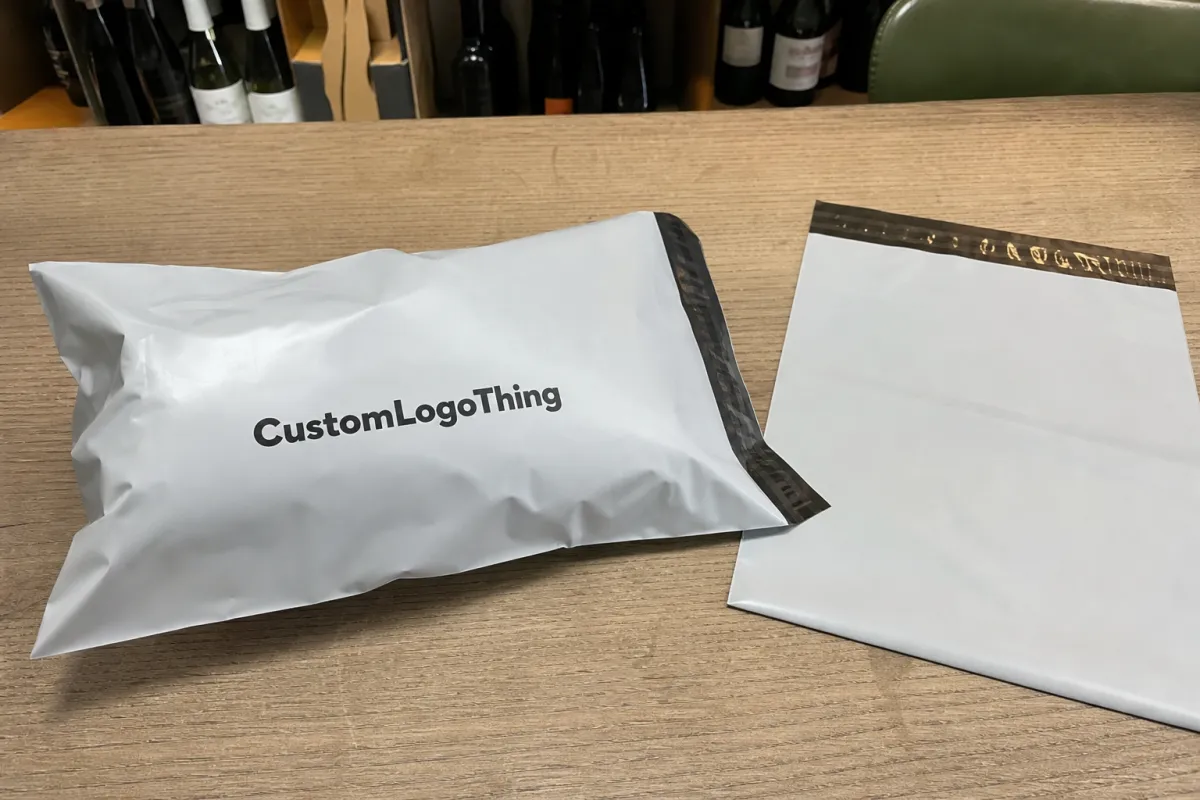
A wine shop can approve a beautiful black matte mailer on Monday and regret it three weeks later when the burgundy logo prints almost brown, the adhesive strip catches on tissue wrap, and the finished bag feels too thin for a two-bottle gift-card bundle with inserts. A matte poly mailers sample revision Checklist for Wine Shops is not administrative clutter. It is the last inexpensive checkpoint before artwork, film, setup charges, freight, and production timing start behaving like real money.
Wine retailers tend to be disciplined about bottle labels. They notice paper texture, foil registration, serif thickness, the warmth of cream stock, and whether a tasting note card feels consistent with the bottle it accompanies. Yet the same team may approve 5,000 branded shipping bags from a flat PDF, even though a PDF cannot show sheen, opacity, ink laydown, hand feel, wrinkle behavior, seam strength, or how the closure performs at a crowded packing table.
That gap matters because a poly mailer is not just a branded surface. It moves through hands, bins, counters, carrier equipment, back rooms, delivery vehicles, and front porches. A bag that looks refined on screen can feel flimsy in the customer's hand. A logo that looks rich in a design file can disappear on matte film under warm retail lighting.
For wine shops, Matte Poly Mailers are best suited for non-fragile merchandise: tasting room apparel, wine club welcome materials without glass, corkscrews, shelf talkers, gift card sleeves, branded inserts, event merchandise, and lightweight accessories. They are not a substitute for protective wine bottle shippers. Bare glass needs tested cushioning, carrier-compliant packaging, and the alcohol shipping procedures that apply to the shipment.
Most sample failures fall into three practical categories: brand appearance, functional durability, and fulfillment friction. The best sample review covers all three. Not only, "Does the logo look attractive?" but also, "Can staff pack this quickly, can the customer read it after shipping, and does the mailer support the price point of the shop?"
If you are comparing suppliers for Custom Poly Mailers, treat the sample stage as an investigation. The point is not to admire the sample. The point is to find the expensive mistake while it is still small enough to fix.
How Matte Poly Mailer Samples Work Before Production
Not all samples prove the same thing, and this is where buyers often get misled without anyone intending to mislead them. A blank stock sample, a digital printed sample, a pre-production sample, and a production-run sample answer different questions.
- Blank stock sample: Confirms size, film gauge, texture, opacity, seam quality, and adhesive feel. It does not prove final artwork color.
- Digital printed sample: Helps test artwork placement, color behavior, QR scanning, and contrast. It may not match flexographic production exactly.
- Pre-production sample: Shows the intended construction, print, closure, and sizing before the full run. For custom work, this is often the strongest approval checkpoint.
- Production-run sample: Confirms repeatability after manufacturing begins. Useful, but late if the design, size, or material choice is wrong.
Matte film behaves differently from glossy film. It softens glare and can feel more refined, especially for wine brands using cream, charcoal, forest green, copper, oxblood, or merlot tones. The tradeoff is that matte surfaces can mute ink, show scuffs, and make dark-on-dark artwork harder to read. A black mailer with a deep red logo may look elegant on a calibrated monitor and nearly invisible in a dim stockroom.
Physical testing matters because a branded mailer has a small but demanding journey. It may start at a boutique counter, move to a back-room fulfillment table, get stacked near corrugated cartons, drop into a carrier bin, rub against other parcels, and land under porch lighting. Each environment exposes a different weakness.
Ask suppliers to describe the material in plain terms. Common specifications include LDPE, co-extruded poly, recycled-content film, post-consumer recycled content, thickness in mils, opacity, tear resistance, and whether the mailer is recyclable through any realistic collection stream. If sustainability claims appear on the bag, documentation matters. The EPA recycling guidance is a useful reminder that recyclability depends on material, labeling, and local access, not only on the symbol printed on a package.
The revision loop should stay orderly. The buyer reviews the sample, marks issues, and sends clear evidence. The supplier confirms whether the fix requires an artwork change, material change, size change, adhesive change, new quote, or new physical sample. Both sides document approval before bulk production. A matte poly mailers sample revision Checklist for Wine Shops keeps that loop from turning into a long chain of subjective emails.
A Practical Sample Revision Checklist Before Art Approval
A strong checklist divides the sample into inspection zones: exterior print, interior privacy, seams, adhesive closure, sizing, packing speed, shipping performance, and customer presentation. That may sound formal, but the work itself is straightforward. It simply forces the review to move beyond first impressions.
Start with print. Inspect logo sharpness from 12 inches and from arm's length. Scan every QR code. Test barcodes if the mailer includes returns, campaign tracking, or club-member instructions. Look closely at fine-line artwork, small legal text, wine-region maps, vintage-inspired borders, and metallic-look colors. Matte film can dull premium tones, especially cream, copper, merlot, forest green, and charcoal.
Then measure the structure. Do not rely on the listed size alone. Measure lay-flat width, usable internal width, flap depth, side seam alignment, bottom seal strength, and finished tolerance. A 10 x 13 inch mailer may not provide 10 full inches of comfortable packing space once seams, product thickness, and flap behavior are considered.
Opacity deserves its own test. Place a dark insert, gift card envelope, folded black tee, or printed club note inside the mailer and hold it under bright light. If customers can read through the film, the bag may feel less private and less premium. That may be acceptable for a low-cost promo piece. It is less acceptable for a higher-value wine club gift package that includes branded accessories or member materials.
Fulfillment testing is where tidy design assumptions usually get challenged. Pack three real order types: a folded tee and insert card, a corkscrew and event postcard, and a gift card envelope with tissue. Time each pack. Does the release liner peel cleanly? Does the flap wrinkle? Does the adhesive catch on tissue? Can staff close the bag without fighting trapped air?
Sample rule: if a comment cannot be photographed, measured, scanned, timed, or compared against a reference, rewrite it before sending it to the supplier.
Use a simple status system: pass, revise, reject. "Color feels off" is weak feedback. "Logo prints 15-20% darker than Pantone reference under warm retail lighting" gives the supplier something to solve. The checklist should turn personal preference into production notes a printer, converter, or account manager can act on without guessing.
Key Specs That Change Durability, Color, and Shelf Appeal
Several specs deserve more attention than buyers usually give them: film thickness, resin blend, recycled content, opacity, finish, adhesive type, print method, ink coverage, and tolerance on finished dimensions. Small changes in these details can alter cost, pack speed, and brand feel.
Thickness is the obvious one. A lighter mailer may work for postcards, shelf talkers, and lightweight apparel. Heavier tasting-room merchandise or boxed accessories may need a sturdier gauge to reduce punctures and corner stress. Many retail poly mailers fall around 2.0 to 3.0 mil, though the right choice depends on item weight, shape, and shipping route. A corkscrew in a sharp-edged retail box stresses film differently than a folded cotton tee.
Size is a cost issue, not just a fit issue. Oversized bags wrinkle, look sloppy, and can waste space in cartons or carrier equipment. Undersized bags slow staff and stress seams. If a team ships 80 merchandise orders after a club event, a 10-second packing delay per order adds more than 13 minutes of labor. That is the kind of friction that appears exactly when the tasting room is already short-staffed.
Print method also matters. Flexographic printing can be efficient for larger quantities and simpler artwork, especially one to three colors. Digital printing may suit lower quantities, seasonal art, variable campaigns, or more frequent SKU changes, depending on supplier capability. Neither method is automatically better. The job decides.
| Spec Decision | Typical Buyer Question | What It Can Change | Sample Check |
|---|---|---|---|
| Film thickness | Is 2.0 mil enough? | Puncture resistance, hand feel, unit cost | Pack actual merchandise and press corners against the film |
| Mailer size | Stock or custom size? | MOQ, wrinkles, pack speed, freight efficiency | Measure usable internal width, not only lay-flat width |
| Print coverage | Full bleed or logo-only? | Ink cost, scuff visibility, production method | Rub sample against cartons and check visible wear |
| Recycled content | How much PCR can we use? | Film appearance, availability, claim support | Ask for documentation before printing claims |
| Adhesive closure | Standard strip or stronger closure? | Packing speed, tamper resistance, reclosure risk | Close once, attempt to reopen, and check flap wrinkling |
Color management should be physical. Ask for Pantone references where possible. Compare the sample in daylight and under the warmer lighting used in the shop. Photograph it beside actual bottle labels, tissue, stickers, and insert cards. If a wine label uses soft-touch cream stock and restrained typography, a thin grayish mailer with muddy ink will feel disconnected even if the logo is technically correct.
Compliance-adjacent details should be checked before print approval. Suffocation warnings may be required depending on bag size and destination. Recycling marks should be substantiated. State and local bag rules can vary. Avoid claims such as compostable, recyclable, or eco-friendly unless the material and certification support them. For forest-based paper components included in a kit, FSC certification may be relevant, but it does not certify a plastic mailer.
Cost, MOQ, and Unit Cost Signals Hidden in Sample Revisions
Sample revisions preview the final invoice. Changing size, film thickness, ink coverage, closure style, recycled content, or print plates can shift unit cost more than expected. A revision that sounds minor in an email may be expensive on a production line.
Common cost drivers include custom size versus stock size, number of print colors, full-bleed coverage, matte film availability, PCR percentage, minimum order quantity, freight, and whether new tooling or plates are required. For rough planning, simple Custom Printed Poly Mailers may land around $0.18-$0.45 per unit at mid-sized quantities, while lower quantities, heavy ink, specialty film, or multiple colors can push higher. That range depends heavily on supplier, order volume, freight, artwork, and delivery location.
Compare quotes like an investigator. Separate one-time setup charges from per-unit pricing. Ask whether sample fees are credited to production. Compare landed cost, not only factory unit price. A $0.22 mailer with high freight and a large setup charge may not beat a $0.28 mailer that ships domestically with fewer surprises.
MOQ matters for wine shops because campaigns expire. A harvest-themed mailer may look tired after a few months. A holiday gift mailer has an even shorter window. An evergreen brand mailer can justify a larger run because it spreads setup costs over more units and reduces reorder pressure.
Ask which revision is free and which triggers a charge. Many suppliers include minor artwork corrections. Fewer include new printed samples, size changes, material swaps, or reprints after buyer-approved files. If the sample checklist flags a major structural issue, confirm the revised price before approving the fix.
Cheapest is not always safest. If a thicker film raises unit cost by $0.04 but reduces packing frustration and protects the brand impression for higher-value club merchandise, the tradeoff may be rational. If a full-bleed black mailer doubles scuff visibility, a simpler logo-only design may be the better premium choice.
Process, Timeline, and Turnaround for Sample Revisions
A practical timeline usually runs through inquiry, artwork submission, dieline or layout confirmation, blank sample review, printed sample production, buyer feedback, revised proof, optional second sample, production approval, manufacturing, quality check, and shipping. Each step can be short. Together, they need breathing room.
Delays often come from ordinary gaps: missing vector artwork, unclear Pantone targets, late address changes, undecided mailer size, uncertainty about opacity, or warning text that nobody wants to approve. Another common delay is organizational. Marketing approves color, operations later rejects the pack speed, and ownership then questions the brand feel. Three reviews, three standards, one strained production schedule.
Wine retail calendars are unforgiving. Work backward from club shipment windows, holiday gift sets, tasting events, vineyard partner launches, and tourist-season merchandise pushes. If production often takes 12-20 business days after proof approval, and a revised printed sample adds another week or two, the approval date matters more than the launch date on the marketing calendar.
Turnaround varies. Blank sample shipment is usually faster than a custom printed sample. Major material or size changes may restart part of the sampling process. A revised PDF proof may be enough for a logo move. A revised physical sample is wiser if you changed film gauge, adhesive, size, finish, or heavy ink coverage.
Create an approval packet before the final yes. Include final artwork, approved dimensions, photos of marked sample issues, packing test notes, shipping test results, color references, quantity target, delivery deadline, and the name of the person authorized to approve production. One decision-maker reduces drift.
Deadline pressure is where bad approvals happen. If a shop skips the second sample after a major revision, it accepts the risk that the fixed file or new material behaves differently in the real run. Sometimes that risk is acceptable. Be honest about it. A Matte Poly Mailers sample revision Checklist for Wine Shops does not remove risk; it makes the risk visible before money moves.
Common Sample Review Mistakes That Create Expensive Reprints
The biggest mistake is reviewing the mailer like a flat advertisement. It is not flat in use. It stretches, wrinkles, reflects light unevenly, and gets handled aggressively during fulfillment. The artwork must survive that reality.
Artwork mistakes are common. Important text sits too close to seams or folds. Low-contrast ink disappears on matte film. Tiny QR codes scan on the proof but fail on a wrinkled bag. Bleed and safe zones get ignored because the mockup looked centered on a screen. A wine-region map with hairline roads may look charming in the design file and turn into fuzz on film.
Physical testing mistakes cost just as much. Buyers load a sample with tissue but never with the actual merchandise mix. They do not check whether adhesive holds after a repositioning attempt. They skip opacity testing with dark inserts. They never mail a sample through a real carrier route, so scuffs and rub marks remain invisible until customers receive orders.
Internal communication creates another trap. Marketing may care about color. Operations may care about packing speed. The owner may care about whether the bag feels consistent with the tasting room. If all three groups review different evidence, the approved sample becomes a compromise instead of a packaging decision.
Sustainability overclaiming is a quieter risk. If the mailer says recycled, recyclable, lower impact, or eco-conscious, the shop should confirm the material structure, claim language, and documentation before printing. ASTM standards, recycling access, and supplier certifications are not decorative details; they support whether a claim can stand up to scrutiny.
Document every approved change in writing. "Same as the sample but slightly larger" is not a production instruction. "Increase finished lay-flat width from 10 inches to 10.5 inches while maintaining 2.5-inch flap depth and same print position from top edge" is much safer. The second version can be quoted, checked, and approved.
Build a Revision Packet Your Supplier Can Act On
Start with evidence. Photograph the sample under two lighting conditions: daylight and the warm lighting used in the shop. Measure the finished bag. Pack three realistic order types. Test the closure. Scan every QR code or barcode. Mark each issue directly on a photo.
Sort feedback into three categories: must-fix, nice-to-fix, and approved. Suppliers can respond faster when they know which items are dealbreakers. A must-fix might be "increase usable width by half an inch." A nice-to-fix might be "slightly warmer cream tone if possible without new print setup." Approved might be "adhesive strength and flap depth accepted."
Use specific language. Try: "Move logo one inch away from bottom seam." Or: "Match Pantone reference under matte finish as closely as production allows." Or: "Confirm whether thicker film changes MOQ." These comments reduce interpretation and make quote changes easier to understand.
Request the right kind of revision. Artwork changes need a revised proof. Size, material, ink coverage, adhesive, or finish changes often deserve a revised physical sample because they change how the package behaves. Treat those changes as structural decisions, not cosmetic edits.
For shops building a broader branded packaging system, align the mailer with tissue, stickers, insert cards, and other Custom Packaging Products. A matte mailer does not need to match every component exactly, but it should feel intentional. If the bottle label is restrained and tactile, the shipping bag should not feel like a disposable afterthought.
Save the approved sample, signed proof, quote, and email confirmation together. Receiving staff can then compare the delivered bulk order against what was actually approved. That habit prevents arguments about memory, monitor color, and vague expectations. More importantly, the checklist becomes a repeatable approval habit, not a one-time scramble before a seasonal shipment.
FAQ
What should a matte poly mailer sample checklist for wine shops include?
It should include print accuracy, color under matte finish, finished size, usable internal space, seam strength, opacity, adhesive performance, QR or barcode scanning, packing speed, and whether the mailer suits the actual items being shipped. Wine shops should also confirm the mailer is for non-fragile merchandise or protected accessories, not bare glass bottles.
How many sample revisions should a wine shop expect before approving custom matte poly mailers?
One revision may be enough for small artwork corrections. Size, material, adhesive, or print coverage changes often justify a second physical sample. The more seasonal or premium the campaign, the more valuable that second sample becomes because reprints and missed launch windows usually cost more than one extra review step.
Do matte poly mailers cost more than glossy poly mailers for wine shop packaging?
They can, depending on film availability, order quantity, print method, and ink coverage. The finish alone is not the only cost driver. Ask suppliers to separate setup fees, sample fees, freight, MOQ, and unit cost so the matte upgrade can be judged against the full landed cost.
Can wine shops use matte poly mailers for shipping wine bottles?
Not by themselves. Matte Poly Mailers are generally better for apparel, documents, tasting room merchandise, gift cards, inserts, and lightweight accessories. Glass bottles need approved protective packaging, carrier-compliant shipper systems, and any alcohol shipping requirements that apply to the shop's location and destination.
What is the fastest way to give useful sample revision feedback to a supplier?
Send marked photos, measurements, order-use examples, color references, and a clear list of must-fix items. Avoid vague comments like "make it more premium"; instead, specify the exact change, such as thicker film, darker ink, larger bag size, or logo repositioning.


