For coffee brands, Printed Hang Tags for coffee roasters sustainable material options are not a minor packaging choice. They are often the first physical item a buyer handles, and that first touch does more work than most brands expect. The tag needs to explain the coffee, support the brand, and still hold up to retail handling without looking like it belongs on a craft project table.
That is a narrow brief. It gets narrower once sustainability enters the conversation. A tag can be recycled, FSC-certified, kraft-based, cotton-based, or seed paper, but none of that matters much if the print smears, the hole tears, or the finish undermines the environmental claim. Buyers who understand coffee packaging notice those contradictions quickly. So do retail buyers.
Why coffee roaster hang tags pull more weight than you think
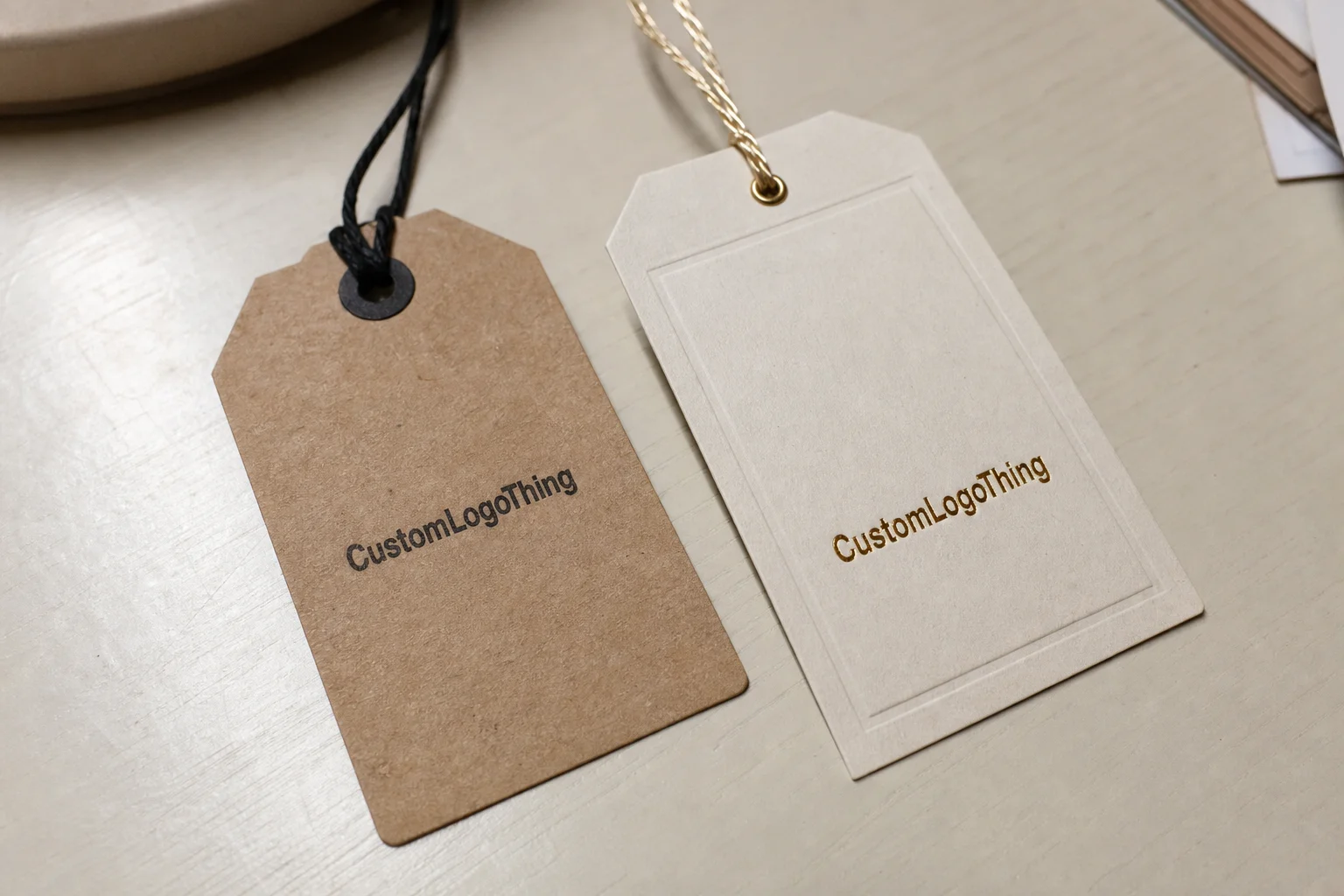
The tag usually gets read before the bag is opened. That sounds obvious, but it changes how the piece should be built. A customer lifts the bag, sees the coffee name, origin, roast level, process method, and maybe a QR code. In a few seconds, the tag has already done part of the selling.
For specialty coffee, that short interaction matters. The more clearly a tag communicates origin, tasting notes, and roast information, the easier it is for a buyer to make a decision without asking a staff member to explain the product. That matters in retail, on subscription shipments, and at events where the customer is comparing three or four similar bags at once.
The best tags are also honest about what they are. They should look premium if the line is premium, but not fake premium. Heavy gloss, plastic lamination, and metallic effects can work visually, yet they can also clash with a sustainability message if the rest of the package is trying to signal low-impact materials. The mismatch is usually more damaging than a plain design.
There is a practical side to this too. A hang tag that curls, smudges, or tears at the hole can create extra handling work at pack-out and complaints after the product reaches the shelf. A good tag should survive the route from printer to warehouse to retail display without looking tired.
Sustainable materials that actually match roastery use
Material choice is where most buyers need the most context. A stock can look good in a sample and still behave badly on press or in the field. The paper has to accept ink cleanly, hold a hole punch, and stay readable after handling. Sustainability is part of the decision, but it is not the only variable.
| Material | Best Use | Print Feel | Durability | Typical Cost Impact |
|---|---|---|---|---|
| Recycled uncoated cardstock | Everyday retail bags, subscription coffee, larger runs | Natural, matte, easy to write on | Good for normal handling | Lowest among sustainable options |
| FSC-certified cardstock | Core branding, multi-origin programs, retail launches | Clean, versatile, predictable | Good to very good depending on thickness | Usually modest premium |
| Kraft paper | Rustic branding, natural-process coffees, small-batch lines | Warm, textured, earthy | Fair to good; depends on GSM | Moderate |
| Cotton paper | Premium microlots, gift sets, collector-style releases | Soft, tactile, upscale | Good, but can be more delicate at low weights | Higher |
| Seed paper | Promotional runs, short campaigns, limited giveaways | Distinctive, rustic, less crisp than other stocks | Limited; not ideal for heavy retail handling | Highest for what you get |
Recycled uncoated cardstock is the practical default for many roasters. A 300gsm to 350gsm sheet usually gives enough stiffness for a hang tag without feeling heavy or wasteful. It also works well for handwritten lot numbers and brew notes because the surface accepts pen and marker more cleanly than coated stock.
FSC-certified paper is useful when a brand wants a cleaner print surface with a traceable sourcing story. It usually performs well for QR codes, small type, and full-color branding. If the design is detail-heavy, FSC stock can be a safer choice than rough recycled paper because contrast stays more predictable.
Kraft paper still earns its place, especially for roasters that lean into natural-process coffees or more rustic packaging. The tradeoff is color behavior. Dark inks usually look strong, but pale colors can disappear or feel dull if the artwork was built for white paper. That is not a flaw in kraft. It is a design constraint that needs to be planned for upfront.
Cotton paper sits at the premium end. It has a soft hand feel and a more elevated texture, which can work well for microlots, gift packs, or anniversary releases. It is not the cheapest route, and it is not always the toughest. For low-volume, high-value programs, though, it can be the right material.
Seed paper is mostly a campaign material. It gets attention because it is unusual, but it is not the strongest choice for ongoing retail programs. The embedded seed structure makes it less consistent than standard card, and the print surface is usually less crisp. If the tag needs to live on a shelf for months, a more stable stock is usually the smarter decision.
For sustainability claims, the document trail matters as much as the look of the paper. If the tag is described as FSC-certified, the supplier should be able to back that up. If the stock is recycled, the post-consumer content should be clear. If there is a coating, varnish, or adhesive attachment that complicates recyclability, that should be understood before the order goes out the door.
A lot of buyers ask for “eco-friendly” tags and stop there. That is too vague. The more useful question is which material will survive the actual use case: shelf display, shipping compression, humidity, repeated handling, and whatever attachment method is being used. That is the point where a sample pack becomes more useful than a sales description.
From a packaging buyer’s point of view, the best sustainable tag is the one that looks honest, prints cleanly, and still reads well after shipping. Anything else is just a theory with good branding.
For packaging standards and material sourcing language, the FSC site is useful: FSC certification resources. For paper recovery and recycling basics, the EPA has practical guidance: EPA recycling information.
Printing process and timeline from proof to delivery
Printing hang tags is straightforward until the files arrive. Then the job starts revealing its weak points. The flow is usually file review, proofing, sample approval, print production, cutting, finishing, and final packing. Every one of those steps can be delayed by something small.
For standard runs, digital printing is often the quickest option. It is useful for smaller quantities, versioned artwork, and seasonal blends. Offset printing starts to make more sense when the quantity rises and the design is stable enough to justify setup. Letterpress and specialty finishing can look excellent, but they add time and cost. That tradeoff needs to be intentional.
Typical timing looks like this:
- Proof setup: 1 to 2 business days if files are clean.
- Sample approval: 2 to 4 business days, longer if multiple stocks are requested.
- Production: usually 7 to 12 business days for standard runs.
- Shipping: 2 to 7 business days depending on destination and carton count.
Those numbers move if the job includes specialty paper, custom die cutting, variable data, or unusual attachments. Thick recycled stocks may need slower cutting to keep edges clean. Dense solids can require more drying time to avoid scuffing. If the tag has foil, embossing, or heavy coverage, add more margin.
The most common delays are not glamorous. A barcode is too small. A QR code has poor contrast. Bleed was missed. The hole is too close to the edge. Someone approved the front and forgot the back. That last one happens more often than it should. It is also why packaging proofs should always be checked in final size, not only on screen.
Lead time matters more during seasonal launches. If the tags need to arrive with a new roast line, holiday blend, or harvest release, three weeks is a comfortable planning window. Two weeks can still work if the artwork is finished and the stock is standard. Less than that starts to put pressure on both production and shipping.
For shipping-heavy programs, ask whether the string, hole size, and stock thickness were chosen with real handling in mind. Tags do not need laboratory testing for every job, but they do need enough mechanical margin to survive pack-out, transit, and shelf display. A 3 mm to 5 mm hole with enough edge clearance is usually safer than pushing the punch too close to the edge for the sake of a cleaner design.
Cost, MOQ, and unit pricing for custom hang tags
Pricing depends on a handful of variables: paper stock, quantity, print coverage, finishing, hole punching, and attachment method. Once those are set, the quote becomes much easier to read. Until then, it tends to look like a moving target.
For simple recycled cardstock in larger runs, unit pricing often falls somewhere around $0.10 to $0.22 per tag. Add a premium stock, a custom shape, or more complex finishing, and the price can move into the $0.20 to $0.45 range fairly quickly. Cotton paper, seed paper, and specialty textures can push beyond that, especially at lower quantities.
MOQ is where a lot of buyers get surprised. A 500-piece order can look manageable on paper, but setup costs spread across fewer units, so the per-piece price climbs. At 3,000 or 5,000 pieces, the unit cost usually drops enough to make the run much more efficient. That does not mean larger is always better. If the copy changes often, smaller batches reduce waste and avoid dead inventory.
The right order size depends on how stable the product line is. If the tag design will stay active for six months or more, a larger run often makes sense. If the line changes with each harvest or seasonal roast, smaller repeats are safer even if the unit cost is a bit higher. Inventory that becomes obsolete is more expensive than paper.
Attachments also affect price. Cotton string, jute twine, recycled cord, paper ties, and pre-tied loops all have different labor and material costs. A tag that is cheap to print can become less efficient if it requires hand assembly. That should be part of the quote from the start, not discovered at pack-out.
If you are requesting Printed Hang Tags for coffee roasters sustainable material options, ask for tiered pricing at 500, 1,000, 3,000, and 5,000 units. That shows where the real break point sits and helps you decide whether to buy for one launch or for a longer sales window. Comparing only one quantity can give a false sense of savings.
Typical pricing drivers
- Lower cost: recycled uncoated stock, standard rectangle, one or two colors, no special finish.
- Mid range: FSC-certified paper, custom size, two-sided print, jute or cotton string.
- Higher cost: cotton paper, seed paper, die-cut shapes, variable data, specialty finishing.
Step-by-step: specifying size, copy, and attachments
Start with function, not design. The tag has to earn its space. If it only needs to carry brand name and roast level, a small format may be enough. If it also needs origin, process, altitude, tasting notes, and a QR code, the tag has to grow. Otherwise the layout becomes crowded and hard to read.
Common sizes for coffee hang tags are 2 x 3 inches, 2.5 x 4 inches, and 3 x 5 inches. Smaller formats feel cleaner and cheaper, but they leave very little room for copy. Larger tags are easier to scan and easier to read at a distance. They are also better when the back needs space for batch info or handwritten notes.
Typography matters more than buyers expect. Small text on textured stock can disappear, especially if the ink is light or the contrast is weak. For recycled or kraft materials, simple typefaces usually hold up better than decorative ones. Fine lines and thin weights can look elegant on screen and fail on paper. That is a print problem, not a design problem.
Copy order should be practical. Brand first. Coffee name second. Origin and roast level next. Then supporting details such as process method, tasting notes, brew recommendation, or a short origin note. If there is a QR code, keep it in a quiet space and give it enough white space to scan reliably.
Attachments deserve the same attention as the paper. Cotton string feels clean and controlled. Jute supports a rustic or farm-forward look, but it can fray. Recycled twine is a good fit for brands that want a low-impact look without leaning too hard into craft aesthetics. Paper ties are neat for lighter bags, though they are not always ideal for repeated handling.
Hole placement should be checked against the final layout, not guessed. If the hole lands too close to the edge, the tag tears faster. If it is too close to key text, the design starts to look cramped. A small technical adjustment here can prevent a lot of production pain later.
If the business already uses Custom Labels & Tags, the hang tag should fit the same visual system. That includes typography, color palette, and sustainability language. A tag that feels detached from the rest of the package usually weakens the shelf presentation instead of strengthening it.
Clean packaging copy works the same way as a clean recipe. If too much is trying to happen in one place, the result feels noisy even when the ingredients are good.
Variable data is another useful detail to plan for early. Batch numbers, roast dates, and lot identifiers often need a quiet field on the back or lower edge of the tag. That field should stay readable after the tag has been handled a few times. If the stock is too slick, handwritten marks can smear or refuse to sit properly.
Common mistakes that undercut eco-friendly tag orders
The first mistake is choosing a sustainable stock only because it looks good in a sample. Some recycled papers scuff easily. Some kraft stocks mute color too aggressively. Some textured papers make small text fuzzy. A paper can be environmentally better and operationally worse at the same time. That needs to be checked before purchase.
Another mistake is trying to make the tag do the job of the whole package. A hang tag is not a brochure. If it tries to cover brand story, tasting notes, farm details, brewing instructions, and compliance language in one cramped layout, the result is usually unreadable. Better to keep the first read fast and the second read optional.
Hardware mistakes are common too. The hole can be too small for the string. The edge can be too close to the punch. The string can be too thin for heavier bags. Any of those can turn into a failure point once the tags are moved through packing and shipping. A retail tag is a mechanical object, not just a graphic one.
Sustainability claims are another area where brands get sloppy. If the tag says recyclable, biodegradable, compostable, or similar, the stock, ink, coating, adhesive, and attachment all need to support that claim. A plastic coating or non-recoverable attachment can undermine the statement. Buyers and retailers are more careful about this than they used to be.
Reorder consistency is easy to overlook. Natural stocks can vary in tone and texture from batch to batch. That is normal. It is not a problem if the buyer expects it. It becomes a problem when the second run is slightly darker or rougher and nobody warned the brand. That kind of variation should be discussed early, especially for long-running coffee lines.
Finally, do not skip the physical review. A screen proof cannot tell you how a recycled stock will feel, how a QR code will scan under retail lighting, or how a jute tie will sit against a matte black bag. Those details decide whether the tag feels intentional or improvised.
Next steps: build a better quote request
Good quote requests are specific. Include size, quantity, stock preference, print colors, attachment type, and whether variable data is needed. If there are multiple SKUs, list them clearly. Do not bury the differences in a long email thread and hope somebody sorts them out correctly later.
Ask for sample stocks before committing. A recycled uncoated option, a kraft option, and one premium stock will usually show the tradeoffs fast. You can feel the difference, see how type behaves on each surface, and judge whether the material supports the story the brand wants to tell.
Get pricing at more than one quantity. The best buying decision is usually somewhere between unit cost and inventory risk. A larger seasonal run may make sense for a stable origin series. Smaller repeat runs may be smarter for menus that change often. The right answer depends on how long the design will stay in circulation.
Confirm lead time, proof approval steps, and the exact material source if the sustainability claim matters to the sales story. If the supplier can document the stock and the finishing method, the claim is easier to defend. If not, the wording should be adjusted before the job goes to press.
Before production starts, inspect the final proof with actual use in mind. Check readability, QR scan performance, hole placement, and how the tag sits against the bag color. A hang tag does its job best when the details align. The paper, the print, the attachment, and the claim all need to tell the same story.
FAQ
What are the best sustainable material options for printed hang tags for coffee roasters?
Recycled uncoated cardstock is usually the safest balance of cost, print quality, and sustainability. FSC-certified paper is a strong choice when the brand wants a cleaner print surface with documented sourcing. Kraft works well for rustic or origin-focused branding, while cotton paper fits premium releases. Seed paper is better for short campaigns than for ongoing retail use.
Are recycled hang tags durable enough for coffee bags and shipping?
Yes, if the stock thickness and hole placement are selected correctly. A 300gsm to 350gsm uncoated recycled stock usually holds up well for retail use. For shipping-heavy programs, it is smarter to test string strength, scuff resistance, and edge clearance before approving the full run.
How much do printed hang tags for coffee roasters usually cost?
Price depends on quantity, stock, print coverage, finishing, and attachment choice. Simple recycled tags in larger runs often sit around $0.10 to $0.22 per piece. Premium stocks, custom shapes, or special finishing can move the cost into the $0.20 to $0.45 range or higher.
What turnaround time should I expect for sustainable coffee hang tags?
Clean files usually move faster than heavily revised ones. Standard production often takes about 7 to 12 business days after approval, with shipping added on top. Specialty papers, variable data, or multiple SKU versions usually add time.
Can eco hang tags still look premium?
Yes. Premium usually comes from restraint rather than extra effects. Strong typography, clean contrast, and a well-chosen uncoated or textured stock can look more expensive than glossy finishes. A simple die cut, careful color choice, or refined edge treatment can elevate the result without breaking the sustainability story.
If a coffee brand wants the tag to work, the material, print method, and attachment should be chosen together. That is the part that usually gets skipped. Once those pieces line up, the hang tag stops feeling like an accessory and starts doing actual packaging work.