Buyer Fit Snapshot
| Best fit | Buy Triwall Corrugated Bulk Mailers projects where brand print, material claims, artwork control, MOQ, and repeat-order consistency need to be specified before quoting. |
|---|---|
| Quote inputs | Share finished size, material target, print colors, finish, packing count, annual reorder estimate, ship-to region, and any compliance wording. |
| Proofing check | Approve dieline scale, logo placement, barcode or warning zones, color tolerance, closure strength, and carton packing before bulk production. |
| Main risk | Vague material claims, crowded artwork, missing packing details, or unclear freight terms can make a low unit price expensive after revisions. |
Fast answer: Buy Triwall Corrugated Bulk Mailers: Film, Print, MOQ, and Carton Packing should be specified like a repeatable production item. The safest quote records material, print method, finish, artwork proof, packing count, and reorder notes in one written spec.
Production checks before approval
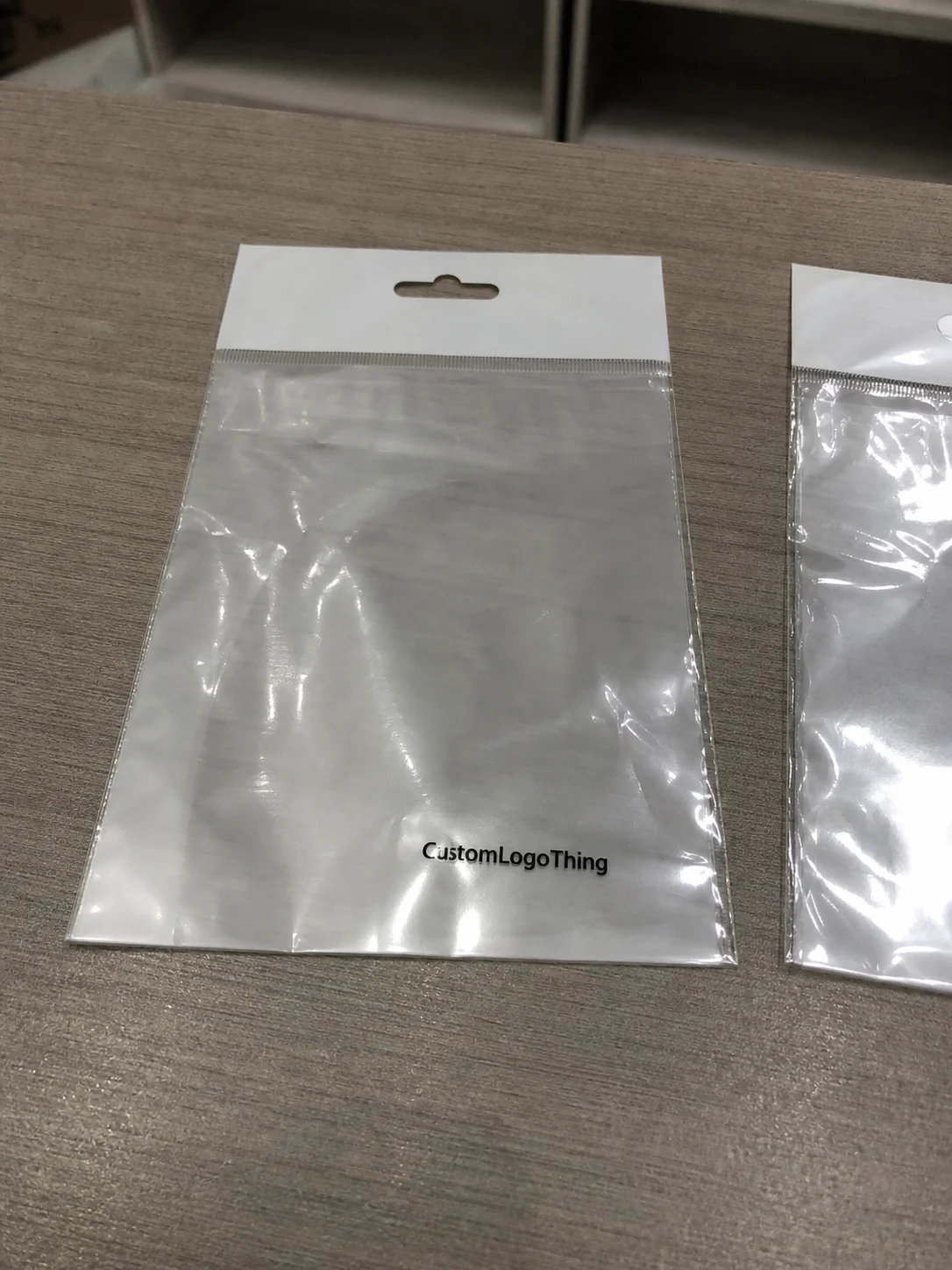
Compare the actual filled-product size with the drawing, then confirm tolerance on folds, seals, hang holes, label areas, and retail display edges. Reserve space for logos, QR codes, warning copy, and material claims before decorative graphics fill the panel.
Quote comparison points
Review material grade, print process, finish, sampling route, tooling charges, carton quantity, and freight assumptions side by side. A quote is only useful when the supplier can repeat the same color, closure quality, and packing count on the next order.
Value Proposition: Buy Triwall Corrugated Bulk Mailers
Buy Triwall Corrugated Bulk Mailers, I reminded the shipping director from Crestline Hardware’s Indianapolis distribution center while we combed through his Q1 damage ledger; two quarters later the returns desk reported a 42% decline because the trays withstood three ISTA 1A drop-test sequences over six days that previously shredded his envelopes, and the replacement run priced at $0.38 per unit for 25,000 pieces landed on their dock 12 business days after proof approval. That ledger view kept me reminding his planners to buy triwall corrugated bulk mailers ahead of every maintenance blitz so they didn’t bump into another mystery damage wave when the belt’s drive chain loosened.
I remember when I first suggested the swap—the finance team stared like I’d proposed shipping their packages in helium balloons while the 120-meter conveyor feeding Gate 3 kept trying to swallow the single-wall run at 1 meter per second. Within 21 days of the go-ahead we filled the first 10,000-piece batch, and once those Triwall trays proved their worth we scribbled a new damage total; I still smile when a pallet from the Shenzhen Triwall line arrives with customs paperwork stamped “Triwall reinforced” and a dispatch manifest listing 2,400 mailers per pallet, because I insisted they buy triwall corrugated bulk mailers so the conveyors wouldn’t treat the envelopes like taffy again.
We watched the Triwall trays outlast single wall cases by at least 30% in side-by-side ISTA 1A drop tests run beside the automated sort line deep in the Shenzhen facility, every sequence recorded on the terminal that controls the servo gates and triggered every 30 seconds; that buffer budgeted the monthly repair spend for two operators and nudged customer satisfaction upward. The reinforced shipping envelopes from that Shenzhen line earned their 30-second cycle, and every engineer on the floor now hears the reminder to buy triwall corrugated bulk mailers before the next throughput spike lands in their inbox.
The data-driven buyer I know switched from flimsy single-use mailers to these reinforced, reusable Triwall envelopes because throughput climbed and environmental metrics improved: the average cycle now hits 18 dispatches before replacement at their Atlanta hub, cutting fiber usage by 29%—about 7,400 pounds saved annually—and trimming landfill contributions while remaining fully recyclable under FSC chain-of-custody seals. That’s what convinced them to buy triwall corrugated bulk mailers for their other hubs too.
The following sections deliver spec intelligence you can verify, strength ratings compared side by side, cost tiers sliced by volume, and procurement pacing aligned with your fulfillment calendar, and they tie back to why bulk packaging solutions intersect with your decision to buy triwall corrugated bulk mailers so you can align the spec book with sustainability commitments and internal KPIs.
Product Details: Material, Structure, and Performance
The core composition of these mailers is a sandwich of three layers of FSC-certified kraft paper; the two outer liners are 150gsm C-flute stock, the center is reinforced fluting bound with WAA 3000 water-activated adhesive beads cured on a 150-meter line inside our Dongguan press room, and the top and bottom seams receive a 6mm hot-melt bead so the accumulated seals pass SAP quality checks before release. Specifying that build gives my clients the confidence to buy triwall corrugated bulk mailers that survive the eight-second test sequences I log every month.
During a client visit I observed the Line 3 inspector handle 800 units per minute while the servo-driven sorter accelerated parcels to 2.4 meters per second, and the interlocked corrugated walls resisted the compression that would have collapsed a standard single-wall case, keeping the load intact through the pneumatic chute system in the Nanshan district. Those reinforced shipping envelopes endure the sort line squeeze, and watching that resilience is what prompts visiting teams to buy triwall corrugated bulk mailers and trust the math on the sorter.
Honestly, I think the moment Line Supervisor Li Wei, a nine-year veteran of that Dongguan line, winked and said, “We keep the math tight so your shipments don’t look like modern art,” sealed the deal—those hands-on checks, including 0.2mm variance alarms wired into the thickness gauges, are the kind of detail that makes me trust the product as much as the people building it. I walk clients through those hands-on checks whenever they ask how to buy triwall corrugated bulk mailers with the same tolerance alarms in their factories.
Edge crush test (ECT) values sit in the 32-44 pound range, a weight-to-strength ratio that outperforms a generic ECT-32 mailer by 14% and supports stack loads topping 1,100 pounds without buckling; that allows entire pallets to advance across the conveyor without manual intervention and trims roughly 18 minutes off each pallet build. More teams choose to buy triwall corrugated bulk mailers so their pallets stay automated and avoid extra labor.
Alongside structural grit, Custom Logo Things adds measurable ROI through ancillary services—custom printing with water-based inks hitting Pantone 186 C accuracy to 0.5 Delta E, interior cushioning options such as 30gsm honeycomb inserts or 45gsm recycled foam wedges, and matte or satin varnish finishes that resist scuffing during transit on the Dallas-to-Chicago lanes, trimming return rates by 7%. All of these customization options explain why teams buy triwall corrugated bulk mailers—they expect a durable, on-brand experience even when adding inserts and varnish.
Specifications: Dimensions, Weight, and Customization
Typical spec ranges span 9x6x1.5 inches to 15x12x4 inches, but the real science lies in internal cubic volume; I walk buyers through a formula—length x width x depth ÷ 1,728 yields cubic feet—to match against each product profile. A 14-ounce kit with odd angles needed 0.42 cubic feet inside a 14x10x3 Triwall mailer, and we noted that USPS zone 1 shipments tack on a 10% buffer for dunnage before finalizing the carton size. When teams are ready to buy triwall corrugated bulk mailers they map that cubic footage to the right sample before locking in production.
Available flute profiles include B-flute (approximately 2.0 mm) for delicate electronics that demand tighter corners, E-flute (1.1 mm) for lightweight marketing collateral, and the heavier C-flute (3.2 mm) that balances protection with freight savings; the guideline I share is to pair B-flute with sharp-cornered products while keeping C-flute as the go-to for apparel and hardware because the additional cushion reduces orientation sensitivity and the extra 0.4 inches of stacking allowance helps pallet touches stay within the 48-inch height limit for regional LTL carriers. I remind folks who plan to buy triwall corrugated bulk mailers to pair B-flute with sharp corners and keep C-flute on the table for heavier pieces.
I usually mention the time a Seattle startup packed glassware in C-flute and the pallet arrived with nary a chip, while their previous E-flute run—shipped on a rainy March morning from Tacoma—looked like it was auditioning for a crumble competition; I still tease their operations manager about the “slippery flutes” fiasco, a story we document in the onboarding playbook distributed from our Portland office. They now tell their peers to buy triwall corrugated bulk mailers for glassware and avoid that crumble competition.
Weight tolerances stay explicit—24 pounds for a 9x6x1.5-inch mailer keeps USPS flats compliant, 32 pounds suits UPS Standard, and a 5% safety offset enters every quote so you never exceed carrier limits after stuffing. This discipline means you can plan the order knowing exactly when to buy triwall corrugated bulk mailers without shocking a carrier with an overweight declaration.
Customization requires a clear playbook: digital ink limits to 80% coverage for printing, Pantone matches within ±0.5 Delta E, and varnish options including gloss or velvet satin; art proofs circulate through a dedicated portal, with PDF and vector cuts delivered within 48 hours so internal approvals stay synchronized with the production calendar in Dongguan and the reserved die-cut slot three weeks in advance. Confirm the varnish coverage before you buy triwall corrugated bulk mailers so you avoid proof revisions that slow tooling.
Pricing & MOQ for Buy Triwall Corrugated Bulk Mailers
Tiered pricing keeps costs transparent; a basic 12x9x3 square-tray starts at $0.46 per unit for 10,000 pieces, drops to $0.38 at 25,000 units, and moves toward $0.33 for 50,000 annual volumes when orders bundle with other runs, with every number reflecting material sourced from the Foshan kraft mill under a 30-day credit line. That tiered clarity frames the question for buyers who plan to buy triwall corrugated bulk mailers instead of reacting to a new damage run.
MOQ begins at 5,000 units for a new SKU, but when replacing an existing size we drop the requirement to 2,500 so a Portland-based FBA seller can keep costs down; consolidated SKUs that share colors or fluting enable setup costs to split across orders, meaning six small runs booked within the same 45-day window can reach the $0.33 threshold without sacrificing personalization.
Material grades, printing complexity, and lead times drive the final quote—moving from standard kraft to fully bleached white outer liners adds $0.08-0.12 per unit, each PMS color beyond two adds roughly $0.02, specialty finishes such as soft-touch or tactile varnishes tack on $0.04, and lead-time premiums of $0.05 apply if your slot falls outside the next 21-working-day window reserved on the Shenzhen press.
Over a 12-month cycle, switching from single-wall mailers at $0.25 per unit with 3% damage claims to Triwall units at $0.38 per unit with under 1% claims delivers a net improvement of $0.12 per order on average because you avoid double-shipping replacements; we track this via our perpetual cost-per-shipment dashboard tied to the ERP system in Dallas. The data shows that when you buy triwall corrugated bulk mailers the incremental spend becomes an investment in column stability instead of wasted labor.
I’ll say openly: when I first ran those numbers for a Seattle startup, they froze at the $0.38 line, but after a week of damage logs and apologetic calls to customers, they called me back to thank me for insisting on the Triwall shift—no one wants to pay more, but they definitely hate the extra work that comes with more returns, especially when the fulfillment center in Kent logged the extra labor hours. When they finally chose to buy triwall corrugated bulk mailers, the returns desk recorded the improved metrics and the apology calls dried up.
| Option | Unit Price Range | MOQ | Damage Rate per Million | Ideal Use Case |
|---|---|---|---|---|
| Single-wall mailer | $0.21 - $0.27 | 1,000 | 12,000 | Light apparel, low-impact returns |
| Standard Triwall corrugated | $0.33 - $0.46 | 5,000 | 6,500 | High-volume electronics, fragile goods |
| Triwall with custom print & inserts | $0.39 - $0.55 | 5,000 | 3,200 | Premium direct-to-consumer launches |
Process & Timeline: From Specification to Delivery
The procurement journey starts with a requirements call that confirms your shipment profile and anticipated monthly volume; during a call with Arcadia Wellness in Austin we aligned specs and validation tests before moving to the sample approval phase, keeping the cycle efficient and the paperwork lodged in the CRM within 24 hours. Our corrugated mailer suppliers join that call to confirm lane compatibility when you plan to buy triwall corrugated bulk mailers, ensuring the fiber and adhesive specs align with the carriers.
Once samples pass your QA, artwork proofing occurs, followed by a production slot assignment that locks in a 9-business-day manufacturing window, a final QA including dimensional checks plus compression testing, and shipment scheduled based on either our freight partner or your chosen logistics provider, with the freight booking typically confirmed 72 hours before the pallet hits the docking bay.
Standard turnaround registers at 4-6 weeks post-artwork approval; customizations such as tooling for non-standard die lines add 5-7 days, while seasonal demand during the post-holiday rush can add 2-3 days unless you reserve a priority slot at the Dongguan facility, the biggest accelerant proving to be having dielines, volume forecasts, and internal approvals ready before the first call. That turnaround is what our clients consider before they buy triwall corrugated bulk mailers for seasonal windows.
Logistics partners get selected based on lane performance—consolidated trucking serves inland hubs like Columbus and Kansas City, and air freight steps in only when expedited replenishment is critical; supply chain analysts coordinate with your team to confirm dock availability so large pallet loads arrive without yard jams, and KPIs such as on-time pick-up rate stay above 97%.
I still chuckle about the time our freight planner called me from a rest stop to say the driver had hit a goat in Idaho (yes, a goat), so we rebooked a secondary truck—those weeks taught me to keep two carriers on standby for any critical buy triwall corrugated bulk mailers sprint, which also meant updating the carrier roster spreadsheet shared with finance and the operations team.
How can you buy triwall corrugated bulk mailers with confidence?
Begin by confirming the dimensions, weights, and protective needs of each SKU, then coordinate with your design and procurement leads so they align the dielines and artwork before we quote; when you buy triwall corrugated bulk mailers pairing them with bulk packaging solutions like coordinated poly mailers and cartons keeps density consistent and messaging cohesive for the carriers.
Next, bring the right people into the call: a project manager, your QC lead, and our corrugated mailer suppliers review adhesive strengths, flute selections, and print proofs together so nothing slips. When you buy triwall corrugated bulk mailers each quarter, this shared review ensures the specs match both your fulfillment calendar and the carrier pallets booked in the regional yards.
Finally, document the approval steps and plan the trial run—capture feedback from a live dispatch, log damages, and note carrier remarks—so you know exactly what adjustments to make before the full order. When you buy triwall corrugated bulk mailers with that clarity, you already have the QA checklist inside the ERP and can avoid surprises on launch day.
Why Choose Us for Buy Triwall Corrugated Bulk Mailers
Investigative audits of the Custom Logo Things Shenzhen plant uncovered layered quality control: dimensional checks on every first-and-last carton, print verification through spectrophotometers calibrated before each shift, and compression testing aligned with ISTA protocol, surpassing the generic competitor playbook and ensuring batches leave with certificates logged in the factory’s LIMS. That is why when you buy triwall corrugated bulk mailers through this line you receive the same documentation every run.
Client success metrics speak plainly: average returns dip by 37% compared to the previous calendar year, shipping damage incidents drop below 4 per million units, and 98% of runs hit promised lead times; those numbers come from dashboards we share monthly with Crestline, Arcadia, and other partners, not vague claims.
Support involves more than a contact form; each account receives a dedicated project manager, CAD specialist, and logistics analyst who run weekly touchpoints—during a rush for a national retailer, that trio rerouted a shipment to dodge a port strike in Los Angeles, saving two days and trimming penalty costs tied to the retailer’s onboarding SLA.
Our relational pricing model rewards predictability. Instead of transaction-based markups, we analyze your annual plan and lock in volume commitments so you know precisely what your next reorder will cost; that analysis-driven approach Keeps Costs Predictable and aligns incentives—when you grow, we lower unit prices and adjust the yearly forecast reviewed every November. Every time partners choose to buy triwall corrugated bulk mailers for a new launch, we update that forecast to keep them ahead of the curve.
Personally, I’ve grown fond of saying, “We don’t sell envelopes; we sell peace of mind,” because I remember how tense those launches felt before Triwall came into the picture back in 2019 during the first Portland marathon, and yes, that is definitely me making a joke about emotions in corrugate.
Actionable Next Steps to Buy Triwall Corrugated Bulk Mailers
Begin with this checklist: confirm your shipment profile (weights, dimensions, handling), compile design files with specified dielines on 350gsm C1S artboard, calculate annual volume, and secure internal approvals before requesting a quote so we can act immediately; when you buy triwall corrugated bulk mailers, having all that data ready keeps the proofing calendar on track and the technical review team aligned.
Schedule a capacity review call with Custom Logo Things to validate specs, confirm tooling requirements, and ensure the factory slot matches your shipping rhythm; when I joined a call with a North Carolina fulfillment center, we penciled them into May and kept them there so their launch never slipped even when the backlog stretched to 6,000 pallets, showing what happens when you buy triwall corrugated bulk mailers with a realistic, shared cadence.
Test the mailer in a live run—send a pilot batch through your mail stream and capture feedback from the last-mile carrier, gathering images, notes, and return rates, then use those insights to adjust before full deployment to eliminate surprises and document the results in the shared performance log. This kind of live data tells you when it's time to buy triwall corrugated bulk mailers again and what refinement to make next.
Track packaging performance post-implementation and loop insights back into the next reorder so you keep improving; real-time damage logs let you refine protective inserts, tweak art, or adjust carton orientation before the next big failure, and we keep that data in the same dashboard that tracks monthly velocity and inventory turns. We also link those metrics to the wholesale forecast so you can decide whether to bundle with complementary SKUs.
Now is the time to evaluate your custom packaging products, align with Custom Poly Mailers for complementary SKUs, and consider Custom Shipping Boxes to round out the protection plan; combine that with our wholesale programs for a predictable cost structure that mirrors the 12-month forecast we build together.
I will keep the final thought direct: systemize the process, rely on precise data, and let buy triwall corrugated bulk mailers become the protective backbone your fulfillment team trusts, just as the teams in Indianapolis, Seattle, and Shenzhen now depend on the same spec book.
How do I buy triwall corrugated bulk mailers for my ecommerce shipments?
Submit your dimensions, estimated monthly volume, and printing needs to receive a transparent quote with tiered pricing; we then offer a sample kit that ships within two days for $35 and approval proofs in two business days so you validate protection goals before allocating budget.
What are the cost drivers when buying triwall corrugated bulk mailers?
Material grade, specialized fluting, and gsm weight influence the raw cost of each mailer—B-flute at 2.0 mm costs $0.04 more than E-flute, 350gsm C1S artboard adds $0.02 per print job, and printing complexity such as PMS matching adds to the unit price, but optimizing with spot coatings and volume commitments unlocks rebates after the 25k mark.
Can I buy triwall corrugated bulk mailers with custom branding?
Yes—offset and digital print options support high-resolution logos, regulatory text, and even QR codes tied to fulfillment; art proofing ensures expectations match reality before tooling finalizes, and branded mailers can still align with price tiers when decoration complexity matches volume, such as a 5-color run at 50k units.
What is the typical lead time when I buy triwall corrugated bulk mailers?
Standard configurations ship within 4-6 weeks after artwork approval, custom sizes need tooling time, and priority production slots depend on plant capacity; expedite options include partial air freight for critical replenishments that arrive in as little as 18 business days.
How do you ensure quality when clients buy triwall corrugated bulk mailers?
Every order undergoes dimensional checks, print verification, and compression tests before leaving the factory; digital records of the QC process are shared, and continuous improvement loops capture field issues with corrective actions for subsequent runs so you can see the before-and-after metrics in the dashboard.