A cap can look perfect on a screen and still stitch badly. That gap between digital artwork and thread is exactly why a brewery event caps embroidery approval checklist belongs before production starts. Brewery logos often carry tiny lettering, hop illustrations, worn badge edges, founding dates, neighborhood references, and script slogans, which gives the brand texture and also creates risk once the design has to fit inside a 2.5- to 3.5-inch embroidery area on a curved crown.
Embroidery is not ink. It has thickness, direction, tension, shine, and limits. A label designer can fade a distressed texture into the background, but a needle cannot. A can label may hold six lines of microcopy; a cap front usually should not try. Who wants 300 hats with the wrong date or a hop cone that reads like a green blob?
Brewery Event Caps Embroidery Approval Checklist Basics
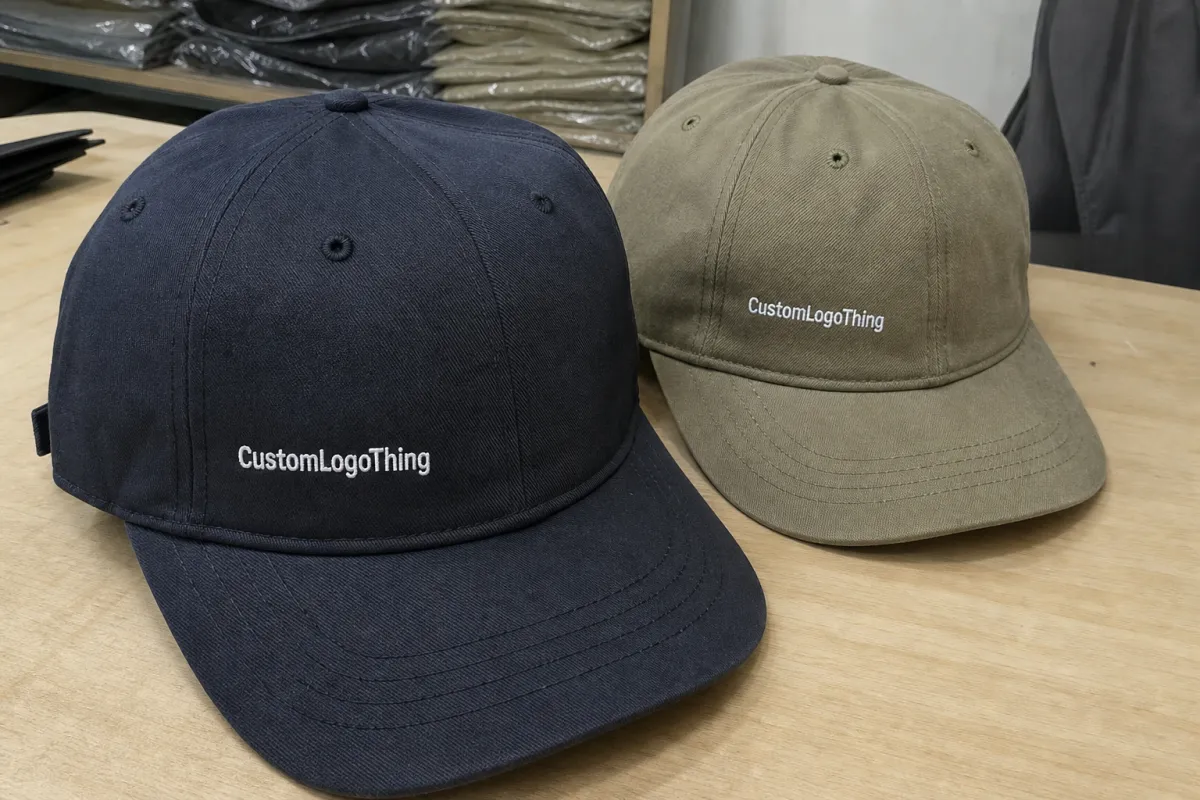
A brewery event caps embroidery approval checklist is the final buyer-side review before blanks move into production. It confirms the cap style, logo version, thread colors, decoration method, embroidery size, placement, quantity breakdown, delivery address, and required in-hands date. In plain terms, it verifies what will be sewn, where it will be sewn, and whether the result can still be produced cleanly in the time available.
That sounds administrative.
It is not.
Once the embroidery file is digitized, thread colors are selected, caps are allocated, and machine time is scheduled, even small changes become expensive or slow. A spelling correction during proofing is usually a revision; the same correction after production may mean rework, replacement caps, freight upgrades, or a short table at the event.
Brewery merchandise has a particular approval problem: the artwork is often more detailed than the medium can support. A shield logo might include “EST. 2016,” a curved town name, thin barley stems, a small taproom slogan, and roughened edges to match a vintage label system. At cap scale, some of that detail may need to be simplified, and the best embroidered version is not always the most literal version of the brand file.
Expect to review a digital proof, cap specifications, thread references, embroidery dimensions, placement notes, and quantity counts. For high-risk designs, larger runs, first-time merchandise, or premium retail caps, a stitched sample or pre-production photo can be worth the added time because it shows how thread behaves on the actual cap surface rather than on a flat PDF.
Practical rule: approval is the last low-cost point to catch logo, color, fit, and timing issues before the order becomes sewn inventory.
How Embroidered Brewery Caps Move From Artwork to Stitching
The production path is usually simple on paper: artwork intake, cleanup, digitizing, thread selection, proofing, buyer approval, cap allocation, machine setup, embroidery, trimming, inspection, packing, and shipping. The trouble sits inside the details.
Digitizing is not the same as opening an AI, EPS, PDF, SVG, or PNG file and sending it to a machine. A logo has to be translated into stitch types, stitch direction, stitch density, underlay, pull compensation, trims, and color changes, and each choice changes how the final mark survives on a curved crown.
Satin stitches may work for clear block lettering. Fill stitches may be needed for larger badge areas. Run stitches can handle some outlines, but only when the line is thick enough to survive thread tension and cap movement.
Caps also change the rules. A structured snapback has a firmer front panel and can support bold flat embroidery or 3D puff if the design is built for it. An Unstructured Dad Hat has a softer crown, so heavy stitch density can pucker the fabric. Trucker caps bring foam fronts and mesh backs, rope caps limit vertical placement near the bill, and beanies stretch in ways that demand extra care from backing, density, and logo size.
The comparison to brewing is useful because it is precise. A recipe matters, but the vessel, temperature, timing, and equipment shape the beer. Here, the logo is the recipe, and the cap structure, thread, backing, needle path, and machine setup are the production conditions.
The approval proof should identify whether the decoration is flat embroidery, 3D puff, a woven patch, a faux leather patch, or a mixed method. It should also note size, location, thread colors, and any compromises: removed texture, enlarged lettering, simplified hop veins, or adjusted line weights. If a supplier flags detail loss and the buyer approves anyway, the final cap will reflect that decision.
Logo, Cap Style, and Thread Details to Confirm Before Approval
Start with the obvious items because hurried teams skip them. Confirm the brewery name, event name, date, city, beer release name, slogan, sponsor marks, collaboration partner, and any required legal or charity wording. Read every word slowly, because a wrong neighborhood reference or missing apostrophe can bother people more than a thread color being half a shade off.
Then check the embroidery limits. As a practical guideline, small block letters often need to be at least 0.20 to 0.25 inches tall to stitch cleanly. Script lettering usually needs more room because thin connectors can close up. Lines thinner than roughly 1 millimeter may disappear, fuzz, or merge into nearby stitches, and distressed textures, tiny hop veins, and tight barley details often need to be removed, enlarged, or redrawn.
Cap choice is not just a taste question. Crown height controls vertical logo space. Panel construction determines whether seams interrupt the art. Bill shape affects the retail feel. Closure type affects comfort and audience: snapback, strapback, hook-and-loop, fitted, or stretch-fit. A performance cap with moisture-wicking fabric may make sense for an outdoor beer festival, while a relaxed dad hat or rope cap may fit taproom merchandise better if the brewery leans casual and heritage-heavy.
Thread color approval also needs restraint. Thread is not ink, and it does not behave like vinyl, screen print, or a matte label stock. Even a close Madeira, Isacord, or Pantone-referenced match can read differently because polyester and rayon thread have sheen. Metallic thread can look sharp but usually needs simpler shapes. Neon thread has punch, not subtlety.
Why assume thread will match a proof exactly when the material itself changes the look? Heathered effects are rarely solved by choosing two thread colors; they usually require a different decoration approach.
Placement is another quiet source of bad surprises. Front center embroidery is the safest and most common. Side panel logos can run into seams. Back arch text can fight the closure. Over-closure embroidery has very little room, and low-profile caps may not hold a tall crest while high-crown caps can make a small logo look stranded unless the size is adjusted.
Review the proof at actual size. A 3-inch badge may look generous on a monitor and crowded on a curved front panel. If the proof is scaled up on a laptop screen, it can flatter details that will not exist in thread.
Process, Timeline, and Lead Time for Event Cap Approval
Brewery events have hard dates. Anniversary parties, tap takeovers, beer festivals, staff launches, golf outings, distributor meetings, mug club releases, and charity collaborations do not pause because a cap order needs another art revision.
A standard order usually moves through artwork submission, cap style selection, digitizing, proofing, buyer review, revision if needed, final approval, production scheduling, embroidery, quality control, packing, and transit. For many embroidered cap orders, production may take about 7 to 15 business days after final proof approval, excluding shipping.
Rush schedules can be possible, but only when the proof moves fast and the supplier still has machine time, blanks, and shipping options available.
Every day in approval matters.
A delay at the proof stage can compress digitizing, force a cap substitution, or push shipping into a more expensive service tier. If the event date is fixed, work backward from delivery and leave room for revision cycles, freight cushion, and a second look at the stitched sample if one is part of the process.
Cost, Pricing, MOQ, and Unit Cost Factors for Embroidered Caps
Cost starts with the blank cap, but it does not end there. Cap style, decoration method, stitch count, digitizing fees, thread count, rush timing, packaging, and shipping all affect the final number. A simple one-color front logo on a standard dad hat will usually cost less than a multi-color, high-stitch-count design on a premium structured cap with mixed decoration.
MOQ, or minimum order quantity, matters because setup work has a fixed cost whether the run is 24 caps or 240 caps. Smaller orders often carry higher unit pricing, especially when the design needs a custom digitized file or multiple proof rounds. Larger orders can reduce the unit cost, but only if the approval is clean and the specification stays stable.
The cheapest option is not always the best value. A cap that saves a dollar but arrives late, fits poorly, or distorts the logo can cost more in reputation than the original savings were worth.
Pricing also depends on complexity. Raised embroidery, side hits, woven patches, mixed materials, and specialty thread finishes can increase labor and tooling. When the artwork is dense, a supplier may recommend simplification before approval so the buyer can protect both the visual result and the budget.
Step-by-Step Approval Guide Before You Release the Order
Use the proof like a checklist, not like a glance. First, verify the exact artwork version and make sure the logo file matches the current brand usage. Then confirm the cap model, color, closure, and fabric. After that, compare the embroidery size and placement against the actual cap dimensions rather than the PDF scale.
Next, inspect every word in the design. Brewery names, dates, cities, taglines, and sponsor marks should all be spelled correctly and positioned intentionally. If the logo uses small type, ask for a closer view or a revised mockup before you sign off.
Then review the stitch logic. Are fine details simplified? Is the thread palette consistent with the brand? Does the design need flat embroidery, puff, or a patch to work cleanly? These questions catch problems before the machine does.
Finally, confirm the practical details: quantity split, shipping address, delivery date, and any packing instructions. A complete approval package leaves less room for guessing, and guessing is expensive once production starts.
Common Approval Mistakes That Delay Brewery Cap Orders
The most common mistake is approving art before checking the scale. A logo that looks balanced on a computer can become too small, too detailed, or too close to the seams once it is placed on a specific cap. Another mistake is treating thread as paint and expecting exact color behavior from a material that reflects light differently on every stitch.
Missing deadlines create the second wave of problems. If the brewery event date is fixed but the proof sits in someone’s inbox for three days, the window for revision shrinks fast. That is when teams start making rushed choices they would not have made at the start.
Can a supplier salvage a rushed order? Sometimes. Should they have to rescue an avoidable approval delay? No.
A third mistake is ignoring production warnings. When a decorator says a thin line will collapse, that is not a stylistic opinion. It is a manufacturing note based on how the cap, the thread, and the machine behave together.
Overcomplicating the design is another trap. Too many thread colors, too much text, and too many tiny features can turn a strong brewery identity into a muddy patch of stitches. Clean approval means knowing what to remove, not just what to add.
Next Steps for Submitting a Clean Cap Approval Package
Send the newest artwork file, not an old favorite buried in a shared folder. Include the exact cap style, target quantity, preferred thread colors, event date, and delivery address in one place so the supplier does not have to hunt for missing details. If the logo has special spacing, color rules, or legal text, say so before the proof is built.
Ask for a proof at actual size. If the design is detailed, request a stitched sample or a pre-production photo, especially for a first-time brewery cap run or a launch tied to a major event. The goal is simple: no surprises when the boxes arrive.
Approval is not paperwork for its own sake.
It is the point where brand, budget, and production reality finally meet.
Review carefully, answer quickly, and keep the file trail clean. That is how a brewery cap order stays on time and comes back looking intentional.


