Buyer Fit Snapshot
| Best fit | Buy Wholesale Shipping Tubes projects where brand print, material claims, artwork control, MOQ, and repeat-order consistency need to be specified before quoting. |
|---|---|
| Quote inputs | Share finished size, material target, print colors, finish, packing count, annual reorder estimate, ship-to region, and any compliance wording. |
| Proofing check | Approve dieline scale, logo placement, barcode or warning zones, color tolerance, closure strength, and carton packing before bulk production. |
| Main risk | Vague material claims, crowded artwork, missing packing details, or unclear freight terms can make a low unit price expensive after revisions. |
Fast answer: Buy Wholesale Shipping Tubes: Sizes, Pricing & Lead Times should be specified like a repeatable production item. The safest quote records material, print method, finish, artwork proof, packing count, and reorder notes in one written spec.
Production checks before approval
Compare the actual filled-product size with the drawing, then confirm tolerance on folds, seals, hang holes, label areas, and retail display edges. Reserve space for logos, QR codes, warning copy, and material claims before decorative graphics fill the panel.
Quote comparison points
Review material grade, print process, finish, sampling route, tooling charges, carton quantity, and freight assumptions side by side. A quote is only useful when the supplier can repeat the same color, closure quality, and packing count on the next order.
Buy Wholesale Shipping Tubes: Sizes, Pricing & Lead Times
If you need to buy wholesale shipping tubes, start with the shipping lane before you start with the sample. A tube that looks perfect on a clean bench in Memphis can still fail after a long conveyor run and a pallet stack that presses harder than anyone expected. I still remember seeing a 36-inch tube split at the seam in a fulfillment center near the Mississippi riverfront after three cartons were loaded above it; the artwork was fine, the finish was fine, and the failure came down to a wall spec that simply was not up to the actual transit path. That kind of miss is maddening because it usually shows up after approval, after scheduling, and after everyone thinks the packaging part is finished.
At Custom Logo Things, buyers who buy wholesale shipping tubes usually want the same three things: fewer damages, faster pack-out, and one tube format they can reuse across posters, prints, textiles, or promotional kits instead of juggling six different carton styles. I have seen art studios in Chicago, textile brands in North Carolina, and agency teams in Austin settle into a calmer rhythm once the spec gets standardized at something like a 3-inch inside diameter with a 0.060-inch wall, because the warehouse stops second-guessing every order and just starts moving. That sounds small, but in a 10,000-unit month it adds up fast.
There is real money in that consistency. When you buy wholesale shipping tubes in the right diameter and wall strength, you can reduce reprints, cut replacement claims, trim packing labor, and keep rolled goods flatter and cleaner than a folding carton can manage on a parcel line running through Louisville or Indianapolis. One print shop in Columbus saved more on reduced damage than it spent on the annual tube program, and that was before the team counted the hours saved in labeling, kitting, and palletizing 4,800 pieces a month. Packaging decisions show up twice: once on the purchase order and again in the warehouse. The second bill is often the one that stings.
What Should You Know Before You Buy Wholesale Shipping Tubes?
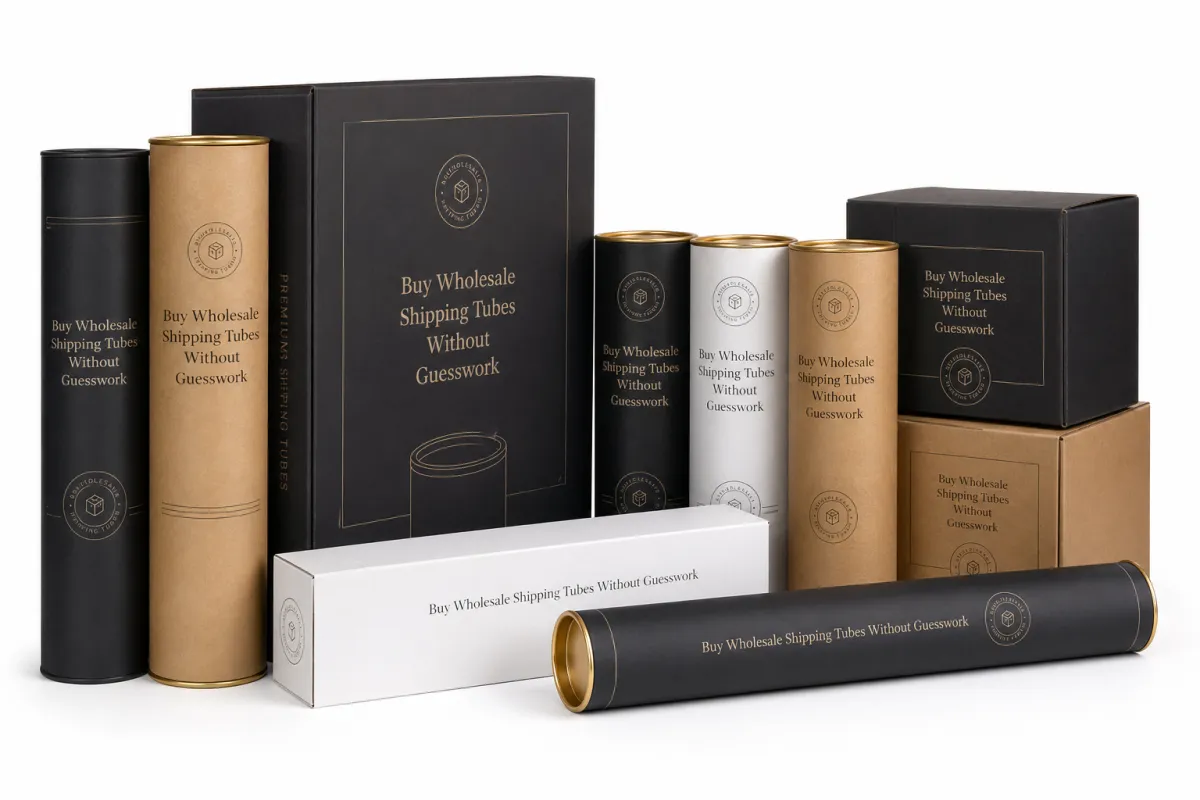
Before you buy wholesale shipping tubes, confirm the product length, rolled diameter, wall thickness, and closure style, then match those details to the carrier lane and warehouse handling you actually use. The best tube is not just the one that fits the item; it is the one that survives sortation hubs, pallet stacks, and the ordinary roughness of ecommerce shipping without crushing the contents. For many buyers, that means choosing between kraft shipping tubes, poster tubes, and heavier paper tubes based on the route, the product, and the amount of protection needed.
If your packaging program includes rolled prints, plans, textiles, or display graphics, a standard tube family can simplify order fulfillment while improving product protection. I have seen brands buy wholesale shipping tubes for multiple SKUs and cut pack-out time simply by standardizing one label position, one cap style, and one storage footprint. That is often the easiest way to reduce errors without changing the product line itself. And frankly, once the warehouse team gets used to one format, nobody wants to go back to a mix of odd sizes and half-forgotten label rules.
Buy Wholesale Shipping Tubes Without Guesswork
Brands that buy wholesale shipping tubes without studying the full path usually run into the same issue later: the tube fits the product, yet it fails under stacking pressure, corner impacts, or a long belt run that ends at a sortation hub in Newark or Dallas. I remember a client bringing me a 36-inch poster tube that looked ideal in the design room, only to see the ends crush during a 72-hour distribution test where the case pack sat against a hard pallet edge and a steel rack upright. The fit was right. The transit behavior was not. That is the part people forget until the first damage claim lands in the inbox.
The value of buy wholesale shipping tubes is straightforward: they keep posters, art prints, plans, textiles, rods, and branded graphics protected in a rigid cylindrical shape that resists bend damage better than a loose sleeve or a soft mailer. In ecommerce shipping, that matters because customers judge the product before they think about the packaging bill, and a clean tube can make a $28 art print feel like it arrived from a gallery in Portland instead of a mass warehouse in Ohio. I have watched customers forgive a plain kraft exterior if the print arrives pristine, and I have also watched support queues fill up because a glossy tube still let the poster crease near the seam. Packaging is not theater; it has a job.
Standardization matters just as much. If a retailer plans to buy wholesale shipping tubes for several SKUs, the warehouse can use one pack-out method, one label position, and one storage footprint, which means fewer picking errors, fewer training issues for seasonal staff, and fewer surprises when a new line gets added in Q4. That means the packaging choice follows the product instead of forcing the product to fit the packaging. It is one of the few formats that can simplify operations while improving protection at the same time, which is why I keep coming back to it with clients who think they need three separate solutions for what is really one family of rolled goods.
Many teams underestimate how much consistency is worth. A good wholesale tube program removes friction from order fulfillment, especially if the catalog includes posters, calendars, rolled textiles, or display graphics that ship every day from warehouses in Atlanta, Reno, or Toronto. If you have ever watched a night shift repack a bent art print because the carton was one inch short, you already know the pain point. I still remember a warehouse supervisor saying, with the kind of tired honesty only a 2:15 a.m. shift can produce, “We’ve got time to fix everything except the box that was wrong from the start.” That line stuck with me because it was both funny and depressing, and because it is still true on a lot of packing floors.
“We stopped seeing those random corner dents once we standardized the tube wall and closure,” a fulfillment manager in Columbus told me after a 1,500-piece pilot run. “The unit cost was a little higher, but our reprint rate fell fast, and the labeler stopped jamming on the cap seam.”
For buyers comparing packaging formats, I often point them to the broader Wholesale Programs page and, for mixed-shape product lines, the full Custom Packaging Products catalog. If the item is flatter than a tube can handle well, I will usually compare it against Custom Shipping Boxes or Custom Poly Mailers so the packaging choice stays tied to the product instead of the other way around. That comparison gets practical fast when the item is a 22 x 28-inch print with a rigid backing board or a 14-ounce textile set that needs fold protection more than cylinder protection.
One more lesson from the dock floor: a rigid mailer only works if the lane supports it. On a tube line I visited near Newark, the team had good print quality but poor exit handling because the tube diameter was too small for gloved hands and the handoff point on the sorter sat 6 inches too low for the packing table. Once we increased the usable length and changed the closure style, the line sped up without altering the artwork or the SKU code. That is why teams should buy wholesale shipping tubes with the product, the warehouse, and the carrier lane in the same conversation. Leaving any one of those out is how a tidy spec turns into a very annoying rework cycle.
Buy Wholesale Shipping Tubes: Product Details
Most buyers who buy wholesale shipping tubes choose between spiral-wound paperboard, heavy-wall paper tubes, and wrapped kraft finishes. Spiral-wound construction stays popular because it offers a strong balance of stiffness and cost, while heavy-wall tubes make more sense for longer products, heavier rolled goods, or shipping lanes that treat parcels roughly between Indianapolis sort centers and regional last-mile trucks. The finish matters too. A smoother outer wrap prints cleaner than a rough recycled face, and that detail matters if you need branding, barcodes, or handling instructions to stay readable after a 48-hour shipment and a damp delivery porch. I have seen a beautiful label job ruined by a fuzzy outer wrap that drank the ink like it was offended by the artwork.
Closure style deserves the same attention before you buy wholesale shipping tubes. End caps, friction-fit plugs, and plug-and-cap combinations each behave differently once they meet warehouse pressure, parcel sorting, or a humid storage room in Houston. A friction-fit cap can be quick for hand packing, while a tighter end system may suit high-friction lanes better or a retail presentation that needs the customer to open and close the tube twice. I have seen teams save labor with a simple plug, then lose that gain because the closure loosened in a warehouse held at 78 degrees and 62 percent humidity. That is why I always ask how the tubes will be stored, packed, and shipped before I recommend a build. If someone tells me “dry most of the time,” I already know the follow-up conversation is gonna get interesting.
Customization usually begins with three things: length, inside diameter, and wall thickness. If you buy wholesale shipping tubes for posters, the inside diameter may need to sit at 2.5 inches, 3 inches, or 4 inches depending on the paper stock and whether the print includes a backing sheet, tissue wrap, or a 350gsm C1S artboard insert card for premium presentation. I also ask about print placement early, because once the artwork is approved, the label panel, barcode zone, and handling notes need to line up with the way the tube will be read on the packing table and at the carrier sort. A few extra minutes here saves a lot of muttering later, especially when the order contains 8,000 tubes going to three warehouses in different states.
From a manufacturing standpoint, the process is straightforward and unforgiving at the same time. Paper mills supply the base stock, tube winding lines build the body to the required caliper, and finishing stations trim, cap, print, and inspect the final piece. When I visited a tube line in Shenzhen, an operator showed me how a tiny variation in moisture content could change winding tension enough to alter the final diameter by nearly 1 millimeter. That stayed with me because it was such a small detail with such a big consequence. Dimensional control matters a lot when you buy wholesale shipping tubes in repeated lots; a buyer expects every batch to behave the same way, and the line has to prove it can.
Brands that care about responsible sourcing can also match paper tube programs with FSC-certified paperboard when required, and many procurement teams will ask for the mill certificate before they sign off on a 12,000-piece run. If that matters for your customer base or a retailer compliance checklist, ask for the documentation up front and verify it against the supplier chain. For extra context on forest certification, the FSC site is a useful reference. I also like to check parcel testing standards through ISTA so the packaging choice reflects how the tube will actually move through distribution, not just how it looks on a sample bench. Lab samples can be charming right up until they meet a conveyor system in Memphis with opinions.
Wholesale Shipping Tube Specifications That Matter
If you want to buy wholesale shipping tubes with confidence, measure the product first and the tube second. I ask for inside diameter, usable length, wall caliper, weight range, and closure style before I quote anything, because a two-millimeter miss can change the fit enough to affect freight class, pack-out labor, and whether the item loads cleanly into a manual station. That small gap matters more than most buyers expect, especially when the product is a 30-inch art print, a set of rolled plans, or a textile roll that needs a little extra room to avoid edge curl. It is the kind of tiny problem that looks harmless on a spreadsheet and turns into a recurring annoyance on the packing line.
Tolerances are not a technical footnote; they are a production issue. A tube that arrives one-eighth inch undersized can rub the edges of a print, while a tube that is oversized can trigger rattling, extra void fill, and higher Dimensional Weight Charges on a shipment headed to Denver or Atlanta. If you plan to buy wholesale shipping tubes for ecommerce shipping, the outer dimensions should be checked against carrier limits and warehouse shelving as well as the product itself. I have seen a good design fail because pallets were built around a tube length that would not stack efficiently on a standard 48 x 40 footprint, and that mistake turned a neat run into a week of repacking.
Performance specs deserve the same care. Ask about crush resistance, seam strength, and stiffness, especially if the tube will move through busy order fulfillment lanes or ride under heavier cartons on a mixed-SKU pallet. A lightweight tube may be fine for a rolled poster under 12 ounces, while a heavier wall may be needed for textiles, plans, or longer graphics that flex under load and create edge pressure near the end cap. Teams that buy wholesale shipping tubes without asking about the drop profile sometimes pay twice, once for the tube and again to replace the damaged product inside it. Nobody enjoys explaining that to finance, and honestly, I do not blame them.
Matching the tube to the shipping environment matters just as much as matching it to the item. If the product travels through humid regions like Florida or the Gulf Coast, a moisture-resistant coating can help maintain shape. If the tubes will sit in a warehouse for six weeks in Ontario or Illinois, a smoother outer wrap can keep labels readable and cut down on scuff marks. If the end customer is receiving a premium presentation piece, a cleaner print face and a tighter cap fit improve perception immediately. In other words, buy wholesale shipping tubes based on the route the package will travel, not only on the product dimension. The route is part of the design, whether people want to admit it or not.
- Inside diameter: Usually 2.5, 3, or 4 inches for rolled graphics, though larger sizes work for textiles, rods, and narrow display hardware.
- Usable length: Should allow 1/8 to 1/4 inch clearance on each side for easy loading without rattle or edge scuffing.
- Wall caliper: Heavier walls help with crush resistance on long routes, pallet stacks, and parcel sorting in dense hubs.
- Closure style: End caps, plugs, or friction-fit closures should match line speed, customer presentation, and warehouse handling.
- Print zone: Leave space for SKU labels, barcodes, handling marks, and any compliance text that needs to stay visible.
One spec that often gets ignored is how the tube behaves under stacking. A carrier can compress a parcel harder than buyers expect, especially when the shipment rides under heavier cartons or a 25-pound master case. I have seen a 0.060-inch wall tube hold up beautifully in one lane and fail in another because the pallet pattern changed from a tight 5-layer stack to a looser mixed-load build. That is why I tell teams to buy wholesale shipping tubes with real transit data in mind, not just a catalog drawing and a wish. Packaging drawings can be charmingly optimistic; trucks are not.
Buy Wholesale Shipping Tubes: Pricing, MOQ, and Savings
Pricing shifts quickly once you buy wholesale shipping tubes across different diameters, wall thicknesses, and print requirements, but the main drivers are easy to track. Material grade, closure style, custom sizing, and print coverage all affect cost, and a heavier wall or specialty finish usually adds more than a simple dimension change. On a recent quote set, a standard kraft tube with stock caps came in at $0.15 per unit for 5,000 pieces, while a printed custom version with a heavier wall and a matte label panel moved closer to $0.49 per unit. Those are the kinds of differences that matter in a margin-sensitive program, especially when someone has already promised the buyer the packaging should be “cheap.”
MOQ is usually tied to setup efficiency. If you buy wholesale shipping tubes in a stock format, the minimum can be manageable, sometimes a few hundred pieces depending on the spec and the warehouse region. Once the run becomes custom-sized or printed, the minimum often rises because winding setups, print plates, and finishing adjustments need to be spread across more units. That does not mean the program is expensive; it means the economics change. Larger volumes usually reduce unit cost because setup and freight are distributed across the run, and a 5,000-piece order from a facility in Guangdong will almost always price differently than a 500-piece reorder from a domestic stock line. I have watched buyers relax as soon as they saw the break points laid out clearly, because half the stress was really about the unknowns.
I always tell buyers to compare landed cost, not just unit cost. If you buy wholesale shipping tubes at a lower unit price but spend more on packing labor, extra void fill, or damage replacement, the cheaper quote is not cheaper at all. I have seen one catalog brand save $0.07 per tube on paper and lose $0.21 per order in rework because the closure style slowed down the line by 11 seconds per pack. A quote is only useful when it shows material, labor, freight class, and any pre-assembly clearly. Otherwise, you are just picking a number that feels polite.
Here is a simple comparison I use with purchasing teams when they want to buy wholesale shipping tubes without overcomplicating the decision.
| Option | Typical Unit Price | MOQ | Lead Time | Best For |
|---|---|---|---|---|
| Stock kraft shipping tube, unprinted | $0.15-$0.34 | 500 pcs | 7-10 business days | Posters, plans, and standard rolled prints |
| Custom-sized tube, unprinted | $0.32-$0.48 | 1,000 pcs | 10-15 business days | Mixed SKUs, tighter fit requirements, ecommerce shipping |
| Custom-printed tube with branded finish | $0.41-$0.72 | 3,000 pcs | 12-15 business days from proof approval | Retail presentation, promotional graphics, premium package protection |
The best savings usually come from standardization. If you buy wholesale shipping tubes in two or three sizes instead of six, you reduce setup friction, lower reorder complexity, and simplify inventory control at the dock. I have seen teams bundle related SKUs into one tube family and save more through cleaner replenishment than they ever saved by chasing the lowest single-run quote. That is the kind of decision a packaging buyer feels all year, not just on the day the purchase order is issued. It also keeps your replenishment emails a lot less dramatic, which is a hidden benefit nobody puts on the spreadsheet.
Another useful savings lever is freight planning. Tubes that nest well, stack cleanly, and palletize to a predictable height can lower shipping cost and reduce damage in transit. If you buy wholesale shipping tubes with a sloppy pallet pattern, you may end up paying a dimensional weight penalty that wipes out the material savings, especially on larger wholesale orders moving into distribution centers in New Jersey or Southern California. A cleaner pallet can be worth more than a smaller print discount, and on a 4,000-piece order it can be the difference between a good month and a bad one. I have seen people celebrate a five-cent unit win and then lose the whole thing because the pallets were built like they were invented during lunch.
For teams scaling order fulfillment, I often recommend asking for tiered pricing. A pilot run at 1,000 pieces tells you whether the spec works. A 5,000-piece run tells you whether the economics make sense. A replenishment quote at 10,000 pieces shows you what the packaging program will cost when the line is running full at a plant in Ohio or a co-pack facility in Texas. That kind of ladder makes it easier to buy wholesale shipping tubes with confidence and fewer surprises, and it gives the buyer enough room to compare real options instead of chasing the cheapest headline.
Order Process and Lead Time for Wholesale Shipping Tubes
Most buyers who buy wholesale shipping tubes move through the same sequence: send dimensions, quantity, product type, and branding needs; review the spec sheet; approve the proof; and then release production. That sounds simple, but every step matters. I have seen deals stall because a customer left the usable length vague, and once the proof was built, the closure depth no longer matched the product. A fifteen-minute measurement call would have saved three days and probably a small amount of everyone’s sanity.
Lead time depends on a few practical variables. If you buy wholesale shipping tubes from stock components, the schedule can be relatively quick because the body size and cap style already exist. If the order needs custom tooling or print setup, the schedule stretches. Material availability, proof approval, and finishing all add time as well. On a straightforward run, I usually expect 7 to 10 business days after approval for stock-heavy orders and 12 to 15 business days from proof approval for more customized work. That range is not a promise; it is a planning window that reflects how production floors in Dongguan, Shenzhen, and domestic finishing shops actually move. Production does not care about your launch calendar nearly as much as your launch calendar cares about production.
One reason buyers get frustrated is that they treat proofing like a formality. It is not. A proof is the last clean moment to check barcode placement, handling icons, artwork bleed, and the relationship between the print area and the cap seam. If you buy wholesale shipping tubes for branded ecommerce shipping, a misplaced logo can make the entire run feel rushed even when the structure is perfect. I would rather spend an extra day on proofing than rework 3,000 pieces after they are already in production. Rework is expensive; regret is free but somehow more annoying.
I learned that lesson years ago during a supplier meeting when a paper vendor in Shenzhen tried to switch to a lighter wrap to save a few cents per unit. The sample looked fine in the showroom, but seam failure showed up only after a compression test at 18 pounds of stacked load. We held the line on the heavier wrap, and the customer avoided a wave of returns. That is why I tell people to buy wholesale shipping tubes with the full process in view: material, print, finish, pack-out, and freight all need to fit together. If any one of those pieces is weak, the whole system starts to wobble.
Here is the cleanest way to keep the schedule on track:
- Measure the product and note the actual rolled diameter, not the flat print size.
- Confirm the inside diameter, usable length, and wall thickness before requesting quotes.
- Send artwork in the required format so proofing starts on the first pass.
- Ask for a sample if the product is fragile, premium, or unusually long.
- Approve the production proof quickly so the line can be scheduled without delay.
If your team needs packaging support beyond tubes, I would rather talk through the whole program than sell a single SKU in isolation. The best shipping material choices often happen alongside cartons, inserts, or mailers, and that is where buy wholesale shipping tubes can fit into a broader packaging system instead of standing alone. In a busy warehouse, that coordination often matters more than a half-cent difference in material cost.
Why Choose Us for Wholesale Shipping Tubes
We treat buy wholesale shipping tubes as a manufacturing partnership, not a one-line resale. That means size control, print quality, and communication stay close to the production floor instead of getting blurred between middlemen. When a customer gives us a dimension set, I want that spec to reach the winding line exactly as written, because that is where consistency is won or lost. If the build is off by even a small amount, the warehouse team feels it immediately at pack-out. There is no polite way to hide a tube that is wrong by a fraction of an inch, especially on a line moving 600 units an hour.
I have spent enough time on factory floors in Shenzhen, Guangzhou, and Dongguan to know where quality actually slips. It is rarely at the glossy sample stage. It is usually at the seam bead, the cap fit, the trim station, or the final inspection table where a tired operator sees a slightly oval tube and sends it through anyway. We built our process around those realities. When customers buy wholesale shipping tubes from us, they get dimensional verification, proof checks, and a production conversation that stays specific instead of vague. That sounds plain, but plain is good when the ship date is getting close and the carrier cutoff is 4:00 p.m.
On one run for a poster brand, we caught a cap mismatch before the job reached full production. The customer had planned to buy wholesale shipping tubes with a friction-fit closure, but the artwork and label layout assumed a plug cap with a 1/8-inch deeper insertion depth. That sounds small, yet the difference changes how fast the line packs, how the tube opens for the customer, and how the finished piece reads on a retail shelf in Minneapolis or Seattle. We corrected the spec early and saved the client a rework cycle that would have cost both time and money. I still think about that one because it was such a clean save.
That is also why I like giving buyers straight numbers instead of marketing fluff. If you buy wholesale shipping tubes through us, you can ask for sample checks, tiered pricing, and clear replenishment timing, whether you are ordering 800 pieces or 18,000. You can also fold the tube program into a wider buying strategy that includes Custom Packaging Products or other item-specific solutions. Sometimes a tube is the right answer. Sometimes a printed carton or a mailer fits better. Good packaging work means Choosing the Right lane for the product, even if that means telling someone their favorite idea is not the best one.
We also know what shipping departments need after the PO is approved: clear documentation, dependable replenishment, and a packaging spec that does not require a new conversation every time inventory is reordered. That is why wholesale buyers who buy wholesale shipping tubes with us often stay with the program longer than they planned. The repeat order becomes easier because the spec is already locked, the tolerances are understood, and the packaging team knows what to expect on the dock. Less drama, fewer surprises, better days all around.
If you are deciding whether tubes or another format is better for a launch, I will usually compare the economics against Custom Shipping Boxes and, for flatter goods, Custom Poly Mailers. That comparison helps because not every product deserves a tube. The right answer depends on stiffness, print shape, carrier constraints, and the kind of presentation you want the customer to see when the parcel opens. I have an opinion on this, and I will say it plainly: forcing the wrong product into a tube because “that’s what we’ve always done” is one of the quickest ways to spend extra money for no good reason.
Next Steps to Buy Wholesale Shipping Tubes
Before you buy wholesale shipping tubes, gather the basics: product dimensions, desired tube size, approximate quantity, artwork files, and any carrier or warehouse limits that affect the build. If you know the rolled diameter of the product, the required label panel, and whether the closure needs to be fast for hand packing, the quote will be sharper and the proof will move faster. A good request is specific enough to build from without a long back-and-forth, and specific enough to keep everybody from pretending they understood a vague email sent at 6:48 p.m.
I recommend a simple buying sequence. First, request a quote with two or three tube options so you can compare fit and price. Second, review a sample or drawing if the product is fragile, premium, or unusually long. Third, confirm the lead time before approval so the shipment lands inside your launch or replenishment window. That process helps teams buy wholesale shipping tubes without guessing on cost or timing. It also keeps the approval chain from turning into a small committee meeting where everyone has a thought and nobody has a measurement.
One thing I always tell new buyers is to keep the spec sheet close to the product team and the warehouse team at the same time. The people designing the package often care about print and presentation; the people loading the cartons care about speed and stack behavior. If you buy wholesale shipping tubes with both groups in the room, the final choice is usually better because it balances branding, protection, and labor. That is the kind of decision that holds up under real volume. It also tends to survive the first unexpected rush order, which is the real test nobody mentions during planning.
Here is a short checklist that speeds the whole process:
- Measure first: Provide the item length, rolled diameter, and any wrap or insert thickness.
- Choose the right spec: Confirm wall thickness, cap style, and print requirements.
- Check quantity breaks: Ask for pricing at pilot, mid-run, and replenishment volumes.
- Confirm logistics: Share destination, pallet preference, and freight constraints.
- Approve quickly: Proof speed matters if you need the order to hit a launch date.
If you are ready to buy wholesale shipping tubes, bring us the measurements and we will help you narrow the choices without padding the spec. I have seen too many packaging programs start with a vague request and turn into weeks of unnecessary revisions. With the right dimensions, the right wall strength, and a clear view of lead time, the process becomes straightforward. If your product line changes later, the tube spec can be adjusted without rebuilding the whole packaging system from scratch. That flexibility is part of the appeal, even if nobody puts it in the glossy brochure.
The practical path is simple: measure the product, confirm the transit requirements, compare the pricing tiers, and then buy wholesale shipping tubes with the confidence that the package will do its job on the line, in the truck, and at the customer’s door. If the spec is solid, everything downstream gets easier. If it is not, the warehouse will let you know pretty fast.
What do I need to know before I buy wholesale shipping tubes?
Measure the item first, then choose the inside diameter, usable length, and wall strength around that product. Decide whether you need a stock tube or a custom build based on branding, fit, and shipping requirements, and include the rolled diameter in inches so the quote is based on the real packed form. Share quantity and destination early so the quote reflects the actual freight and packaging cost. I also like to ask where the product sits in the warehouse, because a 24-inch shelf and a 48-inch shelf change the packing workflow in very different ways.
How do wholesale shipping tube prices change with order size?
Larger orders usually lower the unit price because setup and material handling are spread across more tubes. Custom printing, heavier walls, and unusual diameters increase cost more than standard sizes do, and a 5,000-piece order can price very differently from a 500-piece test run. Freight and pallet configuration can change the landed cost, so compare total delivered pricing, not just unit pricing. I have seen people celebrate a lower unit price and then curse the freight invoice, which is not my favorite kind of surprise.
What MOQ should I expect when I buy wholesale shipping tubes?
MOQ depends on whether the tube is stock, custom-sized, or printed. Standard formats usually support lower minimums than fully custom builds, and stock items can sometimes start at 500 pieces while printed builds may begin closer to 3,000. Ask for tiered pricing so you can see the break points between pilot orders and full replenishment runs. That way you know whether you are testing a fit or committing to a production schedule that actually matches demand in Chicago, Dallas, or Toronto.
How long does production usually take for wholesale shipping tubes?
Lead time depends on proof approval, material availability, and whether the order needs custom tooling or print setup. Stock configurations move faster than highly customized runs, and most custom printed jobs run about 12-15 business days from proof approval when the artwork and dimensions are locked. Confirm the schedule before approval so the shipment date aligns with your launch or replenishment window. I always tell buyers to leave a little breathing room, because production has a habit of revealing tiny problems at the least convenient moment.
Can I order custom-printed shipping tubes in wholesale quantities?
Yes, most wholesale tube programs can include branding, handling instructions, or barcode placement. Provide artwork in the requested format so proofing moves quickly, and if the tube uses a premium presentation panel, a 350gsm C1S artboard wrap or insert can help the branding feel more polished. Keep print coverage aligned with the tube finish so the design stays legible and durable in transit. A clean print on the wrong surface is a fast way to make an expensive tube look oddly tired.


