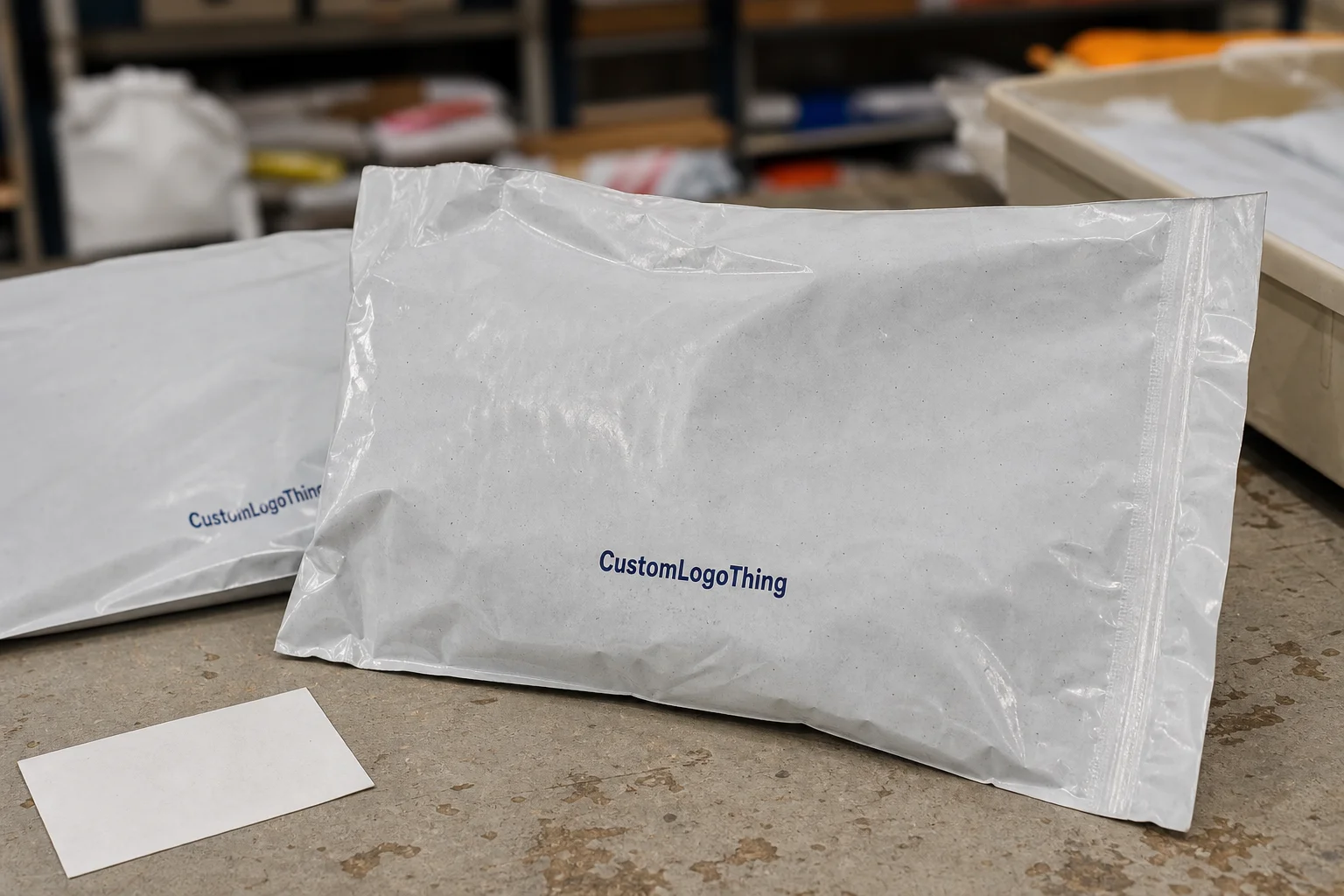
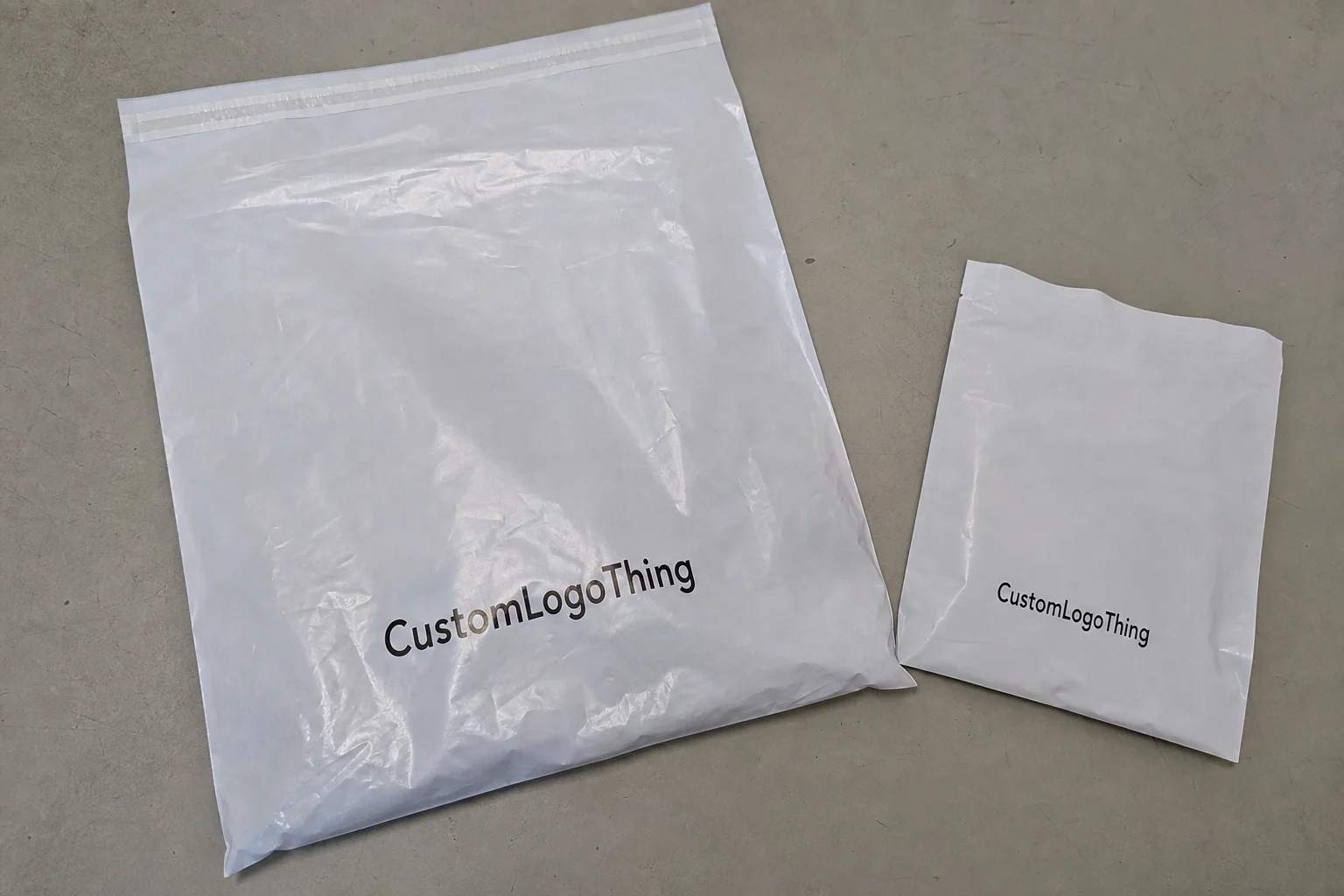
Buyer Fit Snapshot
| Best fit | Heavy Duty Mailers for Shoes projects where brand print, material claims, artwork control, MOQ, and repeat-order consistency need to be specified before quoting. |
|---|---|
| Quote inputs | Share finished size, material target, print colors, finish, packing count, annual reorder estimate, ship-to region, and any compliance wording. |
| Proofing check | Approve dieline scale, logo placement, barcode or warning zones, color tolerance, closure strength, and carton packing before bulk production. |
| Main risk | Vague material claims, crowded artwork, missing packing details, or unclear freight terms can make a low unit price expensive after revisions. |
Fast answer: Heavy Duty Mailers for Shoes: Choosing the Right Fit should be specified like a repeatable production item. The safest quote records material, print method, finish, artwork proof, packing count, and reorder notes in one written spec.
Production checks before approval
Compare the actual filled-product size with the drawing, then confirm tolerance on folds, seals, hang holes, label areas, and retail display edges. Reserve space for logos, QR codes, warning copy, and material claims before decorative graphics fill the panel.
Quote comparison points
Review material grade, print process, finish, sampling route, tooling charges, carton quantity, and freight assumptions side by side. A quote is only useful when the supplier can repeat the same color, closure quality, and packing count on the next order.
I still remember standing on a warehouse floor in Columbus, Ohio, with a tray of returned sneakers in one hand and three split bags stacked beside me like bad evidence. Each mailer had failed in a different place after a rough sortation pass and a long local delivery route, and the shoes inside were untouched, which somehow made the whole thing feel more preventable than unlucky. That was the moment Heavy Duty Mailers for shoes stopped being a packaging line item and became a real operational fix worth paying attention to. A better outer package solved the problem faster than changing the shoe, the pick path, or the carrier mix, and that is usually where the real savings sit.
Plainly put, heavy duty mailers for shoes are tougher poly mailers or padded-style mailers built to resist punctures, scuffing, seam blowouts, and the rough handling that happens on conveyors, in tote bins, and in delivery vans. In my experience, they work best for lightweight sneakers, sandals, flats, kid shoes, and low-profile fashion pairs that do not need the rigid crush protection of a box. A 2.5 mil to 3.0 mil coextruded LDPE/LLDPE film is often the sweet spot for these jobs, and that detail matters because a flimsy 1.6 mil bag can look fine on a sample table while failing after one sharp edge on a steel sorter. Packaging gets underestimated right up until the returns report starts showing the bill in plain dollars.
They do real business work too. Heavy duty mailers for shoes can cut replacement cost, lower repack labor, improve the unboxing presentation, and keep a warehouse moving at a steadier pace because the pack station is not stopping to rescue damaged parcels every twenty minutes. A team shipping 1,500 pairs a week from Louisville, Kentucky, or from a regional node outside Dallas, Texas, feels that difference quickly because each saved repack can trim 35 to 50 seconds from the line. The tradeoff is simple enough: these mailers are not magic, and the final result still depends on film gauge, seal quality, and how carefully the shoes are prepped before sealing. I have seen a strong spec fail because someone rushed the fold, and I have also seen a modest spec perform beautifully because the packing team treated it with a little discipline, which is where the real gains usually hide.
How Do Heavy Duty Mailers for Shoes Protect Footwear in Transit?
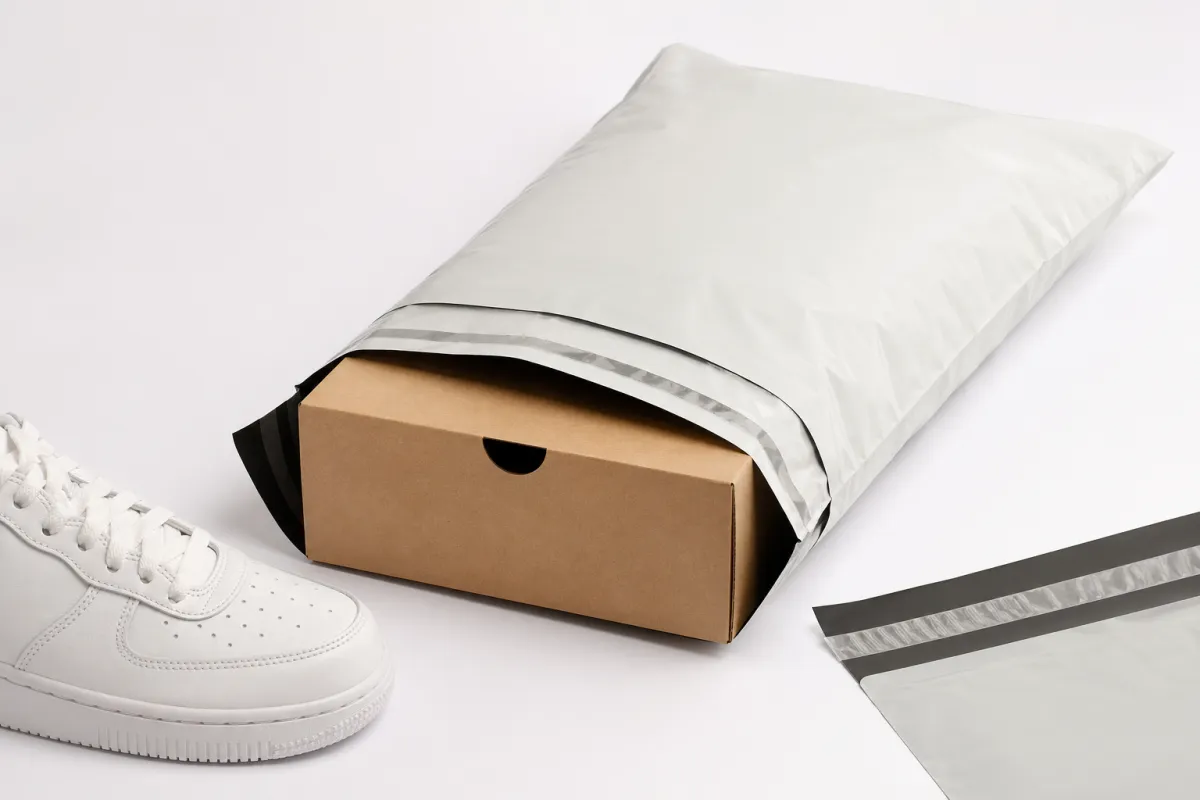
When I walked a regional fulfillment center outside Louisville and looked at a stack of 200 returned pairs from a single Wednesday ship date, the operations manager pointed out that 6 out of 10 complaints started with the outer mailer tearing at a corner. That stuck with me because it explained something a lot of teams feel but do not always name: heavy duty mailers for shoes are not just packaging, they are the first line of defense between a product and a very physical shipping network. If the outer bag fails, the customer notices the failure before they ever judge the shoe, and that first impression is hard to win back once it has gone sideways.
Heavy duty mailers for shoes are usually built from multilayer polyethylene or a reinforced polymer blend that stretches a bit before it tears, which matters when a parcel slides against a carton edge or gets shoved into a delivery tote in a hub like Memphis or Newark. A standard thin economy bag might survive a neat hand pack, but these mailers are designed for abrasion, light compression, and the kind of repeated friction that comes from real parcel handling rather than ideal bench testing. I have always thought that distinction matters more than the marketing copy on the sleeve, because the package does not live in a brochure, it lives in a truck, on a chute, and under other parcels that do not care how nice the artwork looks.
They are best matched to soft or moderately structured footwear. I have seen heavy duty mailers for shoes used successfully for canvas sneakers, toddler shoes, ballet flats, and slim loafers, especially when the pair is wrapped neatly and the package dimensions stay flat at about 12 by 15 inches or 14 by 18 inches. Boots are a different story; a mid-calf boot with a stiff shaft often pushes the bag past its comfort zone, so a box-over-mailer approach or a reinforced carton is usually safer. That is one of those decisions that saves headaches later, because I would rather explain a box choice once than explain a burst seam to a customer service team five hundred times.
What I like about heavy duty mailers for shoes is the consistency. A retailer that ships 1,500 pairs a week wants fewer surprises, and a mailer that resists scuffing and seam split failures gives the operation a repeatable lane from picking to carrier handoff. Most brands underestimate how much customer trust comes from the outer package looking intact, clean, and properly closed when it lands on the doorstep in Seattle, Atlanta, or even a rural ZIP where the parcel takes a longer road route. And yes, people do judge the shoe by the bag more than they admit; I have watched a perfectly fine sneaker get a side-eye because the mailer looked like it lost a fight with a forklift.
"We stopped treating the mailer like a disposable shell," one client told me after their damage rate dropped from 5.4% to 1.1% in two test lanes running through Indianapolis and Chicago. "The bag was part of the product experience, not an afterthought."
That quote sticks with me because it captures the real value of heavy duty mailers for shoes. They reduce avoidable loss, but they also help the brand look disciplined, which matters whether the order is a $48 pair of kids' sneakers or a $180 fashion shoe. A custom insert card printed on 350gsm C1S artboard can add a neat branded note without changing the mailer spec, and that kind of detail reads as intentional when the customer opens the package at a kitchen table in Phoenix or Newark. The package does not need to be fancy, but it does need to show that someone thought through the trip from warehouse shelf to front porch.
How Heavy Duty Mailers for Shoes Work
The basic structure is simple, but the details matter. Heavy duty mailers for shoes usually rely on a thicker film gauge, better welds at the bottom seam, and a closure strip that stays sticky even when the bag is flexed by hand sorters or brushed against automated equipment running at 60 to 90 parcels per minute. In the packaging world, I have seen a 2.5 mil bag outperform a cheaper 1.8 mil version simply because the weld geometry was cleaner and the adhesive tape held under load. The difference sounds tiny when you say it out loud, then suddenly it becomes very not tiny after the first carrier test.
The protection sequence starts the moment the shoes go inside. Heavy duty mailers for shoes hold shape better than flimsy bags, so the pair is less likely to shift into a sharp corner, less likely to snag on conveyor guides, and less likely to rub dust or abrasion into the upper. On a high-volume line, that matters because the package may see 10 or 12 contact points before it reaches the carrier dock, and each touch is an opportunity for damage. I have watched a bag get batted from tote to sorter to chute like it was being passed around by people who all hoped someone else was responsible, and somehow the stronger mailer still came through cleaner.
Seam quality is a bigger issue than most buyers expect. The side seal and bottom seal are often the first places a bag fails when the load is oversized or uneven, which is why heavy duty mailers for shoes with strong welds can outperform a prettier printed bag that looks premium but splits under a 2.2-pound pair. I learned that lesson during a supplier negotiation in Shenzhen, where a factory tried to sell me on a glossy outer finish while quietly shaving material thickness by 15 percent. I remember thinking, with some irritation, that shine is not strength, no matter how nicely the sample catches light under showroom lamps in Guangdong.
Closure systems also deserve attention. Pressure-sensitive adhesive strips, tamper-evident seals, and dual-strip closures all show up in the market, but the best choice depends on pack speed and return policy. Heavy duty mailers for shoes with a strong closure help prevent accidental openings during hand sorting or automated induction, and a properly sealed top edge is often the difference between a clean delivery and a scattered return. Nobody wants to explain why a pair of loafers showed up halfway out of the bag like it tried to escape on the way to the customer.
None of that matters if the shoes are packed carelessly. I always tell teams to tie or tuck loose laces, keep metal buckles from pressing into a single point, and wrap paired shoes so one heel does not stab the other during transit. Heavy duty mailers for shoes work best when the internal prep is calm and orderly, because a tough outer shell cannot compensate for sharp hardware poking at one weak spot from the inside. That is the part people forget when they are in a hurry, and then they act surprised when the bag does exactly what physics told it to do.
Key Factors That Decide Which Mailer to Buy
Material thickness comes first because it changes puncture resistance in a way that is easy to feel at the packing table. Heavy duty mailers for shoes with a slightly heavier gauge can handle heel taps, studs, buckles, or the hard corner of a shoe box insert far better than a thin bag, and I would rather spend a few extra cents on film than pay for one damaged return and the labor to reprocess it. A 3 mil mailer sourced from a plant in Dongguan or Ningbo can cost about $0.15 per unit for 5,000 pieces, while a lighter spec might save $0.02 on paper and lose $4.80 in handling and reshipment after one failure. That is not me being sentimental about packaging; that is me having seen the spreadsheet after the damage claims landed.
Size selection is a fit-and-flow decision, not a guessing game. Heavy duty mailers for shoes should be large enough to slide the pair in without forcing a stressed fold, yet not so oversized that the shoes slosh around and create ugly shifting during transit. A bag that is too tight stretches the seal line; one that is too loose can look sloppy and leave the package vulnerable to crushing at the edges. I usually tell teams that the right fit feels boring in the best possible way, because boring packaging tends to show up as fewer surprises on the dock and fewer 6 a.m. calls from the evening shift supervisor.
Opacity and surface finish matter more than many people admit. Retailers shipping premium footwear often want a clean, private exterior, while custom-printed brands may prefer matte, satin, or gloss finishes that hold ink sharply and keep barcodes readable. Heavy duty mailers for shoes can be custom printed or kept plain, but in both cases the finish should support warehouse labeling, scan accuracy, and a neat first impression when the customer opens the front door. I have a soft spot for a matte finish that keeps glare down under warehouse lights in Nashville or Las Vegas, because nothing is more irritating than labels that look great in a mockup and then become annoying little mirrors in production.
Sustainability belongs in the buying decision, but honesty has to stay in the room. Recycled-content polyethylene, downgauged film, and right-sized mailers can all reduce material use, yet a bag that is too light will create more waste through damage, returns, and replacement shipments. Heavy duty mailers for shoes often do best when the spec is practical rather than aspirational, because a durable bag with less product waste usually beats a fragile "green" choice in the real world. I know that is not the fun answer, but packaging rarely rewards wishful thinking, especially when a 200-piece pilot in April suddenly becomes a 2,000-piece replacement order in May.
Shipping environment should be on the checklist too. A local boutique sending 80 pairs a week across one metro area can sometimes run a lighter spec than a national e-commerce brand shipping through hot trailers, damp dock doors, and cross-country linehaul. Heavy duty mailers for shoes need to be judged against the actual route, not the nicest day in the test room, and that is especially true for humid regions like Houston, Tampa, or Ho Chi Minh City where adhesive and film behavior can change. I have seen a seal that behaved perfectly in a dry sample room get weird and temperamental once it met summer humidity, which is one of packaging's less charming personality traits.
If you want a useful technical reference point, I often point teams to the packaging discipline resources at Packaging Institute materials and the test methods published by ISTA. Those references are not a substitute for lane testing, but they do help buyers ask better questions about seal strength, compression, and distribution risk before they sign off on a spec. A good reference sheet will not save a bad decision, but it can save a lot of awkward confidence in a procurement meeting.
| Mailer Type | Typical Unit Price at 5,000 | Best Fit | Notes |
|---|---|---|---|
| Stock economy poly mailer | $0.10 - $0.16 | Light apparel, very soft shoes | Lowest cost, but weakest puncture margin |
| Heavy-duty plain mailer | $0.15 - $0.28 | Sneakers, flats, kid shoes | Best balance of price and protection for most brands, often 2.5-3.0 mil film |
| Custom printed heavy-duty mailer | $0.24 - $0.48 | Premium footwear, branded DTC | Includes artwork, proofing, and stronger presentation value; typical lead time 12-15 business days from proof approval |
Step-by-Step: Choosing and Packing Shoes the Right Way
Start by classifying the footwear, because not every pair belongs in the same package. Heavy duty mailers for shoes work well for flexible sneakers, casual slip-ons, lightweight dress shoes, and sandals, while rigid hiking boots or heavy work boots need a different plan. I usually tell packing leads to separate the catalog into three groups first: soft, medium, and bulky, because that simple split prevents a lot of bad decisions later. It also keeps the team from trying to force every product into one packaging rule just because the rule is convenient.
Measure the pair in its shipped state, not in the showroom state. Add tissue, shoe inserts, dust sleeves, or tags, then check the combined footprint against the internal dimensions of the mailer. Heavy duty mailers for shoes should be chosen from the flat packed size, not the marketing size printed on the outer carton, and I have seen more than one operations team discover a sizing mistake only after a 200-piece pilot run. That kind of discovery is always slightly funny in hindsight and deeply irritating in the moment, especially when the samples came from a factory in Guangdong and the freight bill already landed.
Prep the shoes before the seal goes down. Tie loose laces, tuck decorative straps, brush off grit, and keep buckle ends from pressing into a single wall of the bag. Heavy duty mailers for shoes will handle normal handling, but they cannot protect against a pointed metal accent shoved into one corner with 14 pounds of force from a conveyor drop. I have had packers ask whether that kind of failure is really possible, and my answer is usually a tired yes, because gravity and speed are not sentimental.
Load the pair with even distribution so the weight sits centered and the package stays flat. A pair leaned hard to one side can crease the seam line or create a thick corner that catches on sorter equipment. Heavy duty mailers for shoes are most reliable when the contents lay with a steady profile, because a calm package moves through the warehouse without drama and creates less strain on the closure. That calmness pays off in a way that is easy to miss unless you are watching the same lane every day, usually between 9:00 a.m. and 2:00 p.m. when the shipping volume peaks.
Seal the top with full pressure across the adhesive strip, then do a quick shake test. If the shoes migrate too much or the closure lifts at the corners, the fit is wrong or the bag is too light. Heavy duty mailers for shoes should close cleanly in one motion, and if a packer has to wrestle the flap, I would rather step up the size than force a bad seal on a busy shift. I know everyone loves to save material, but there is a point where a stubborn seal becomes an expensive little drama.
Finish with the label and the barcode in the clear zone, because scan failures create their own kind of damage. A parcel that cannot be read may be diverted, touched more times, and delayed by a day or two, which raises the odds of scuffing and customer complaint. Heavy duty mailers for shoes perform best when the final package is neat, legible, and easy for a carrier to handle without improvising. A straight label sounds minor until you realize it keeps your parcel from wandering around the network like it forgot where it lived.
Heavy Duty Mailers for Shoes: Cost and Pricing Factors
Buyers usually look at unit price first, but that is only one slice of the real cost. Heavy duty mailers for shoes are priced based on film gauge, bag dimensions, print coverage, adhesive type, carton pack count, and whether the order is stock or custom-made. In one client meeting in Chicago, I watched a finance team fixate on a $0.03 difference per unit while ignoring a 3.8% damage rate that was costing them far more in refunds and labor. That is the kind of math that makes a packaging person quietly sip coffee and wait for the room to come around.
For planning purposes, a plain heavy-duty shoe mailer can land around $0.14 to $0.28 at 5,000 pieces, while a custom printed version often sits closer to $0.24 to $0.48 depending on ink count and bag size. Heavy duty mailers for shoes with tamper evidence, reinforced side seals, or specialty finishes can move higher, but the extra spend is easier to justify when the brand ships a premium product or absorbs costly customer service claims. I do not mind a higher spec if the business case is real; what I dislike is paying more for decoration when the actual pain point is puncture resistance.
Volume changes the math quickly. A warehouse shipping 20,000 pairs a month can usually standardize around two or three proven sizes and get better pricing than a small boutique that orders in 500-piece increments across six shoe styles. Heavy duty mailers for shoes become more economical when the operation reduces SKU complexity, because packers move faster and the buyer has more leverage during supplier talks. In plain language, fewer SKUs usually mean fewer headaches, and I have yet to meet a warehouse manager who misses the old chaos once the line gets cleaned up.
I also encourage teams to compare landed cost instead of raw unit price. Freight from Dongguan to Los Angeles, import duty, carton count, and warehouse handling all belong in the calculation, and a cheaper mailer that causes 25 extra returns a week is not actually cheaper. Heavy duty mailers for shoes should be judged against the cost of one replacement pair, one angry review, and one repack cycle, because those soft costs pile up quickly in apparel and footwear fulfillment. Nobody frames it that way when they are pitching a bargain, but the floor has a way of telling the truth later.
| Buying Choice | Typical MOQ | Lead Time | Best For |
|---|---|---|---|
| Stock plain mailers | 1 carton to 2,000 units | 2-5 business days | Fast replenishment and testing |
| Custom printed mailers | 3,000-10,000 units | 12-15 business days from proof approval | Brand presentation and consistent SKU programs |
| Special reinforced specs | 5,000+ units | 15-20 business days | Longer routes, heavier pairs, tougher handling |
There is also a pricing question tied to performance testing. I have seen brands spend an extra $900 on sample iterations and save $18,000 in annual damage losses once the right mailer was chosen, and that kind of result is much easier to defend than a glossy presentation board. Heavy duty mailers for shoes are not a place to chase the absolute cheapest number on a quote sheet, because the correct spec protects margin in a way that shows up in returns data, not just in procurement spreadsheets. If the product gets to the customer looking good and arriving intact, the packaging choice has already paid back a portion of its cost before anyone opens a spreadsheet.
Common Mistakes and Expert Tips From the Packaging Floor
The most common mistake is buying a bag that looks strong but fails once a real shoe is inside it. Heavy duty mailers for shoes need to account for heel counters, decorative hardware, box inserts, and odd shapes that create pressure points, and I have watched a buyer approve a spec after touching an empty sample that later tore in the first 40-test pilot because the loaded pair was far less forgiving than the empty bag. Empty samples can be flattering liars, and I say that with affection and a little frustration.
Overstuffing is the second big problem. When a packer forces a pair into a bag that is one size too small, the closure gets stretched, the seams are stressed, and the package is more likely to split at a conveyor turn or fold line. Heavy duty mailers for shoes can tolerate a lot, but they cannot rescue a package that is packed as if the whole point is to prove how much abuse one bag can endure. I have seen that kind of overconfidence end with a torn seam and a very quiet packing bench, which is never a sign of victory.
Too many sizes create their own mess. A warehouse with nine mailer SKUs usually has slower packers, more mistakes, and more inventory confusion than a warehouse with three well chosen sizes that cover 90% of the catalog. Heavy duty mailers for shoes work best when the operation standardizes around a few proven dimensions, because fewer choices mean faster packing and fewer wrong-ship events. Honestly, I think standardization is underrated because it is less glamorous than innovation, but it saves real money without asking for applause.
My strongest advice is to validate with real transit lanes. Drop tests, compression tests, and a short pilot run through the carrier path tell you far more than a desk review ever will, and I usually want at least 25 samples per configuration before I sign off on a large print order. Heavy duty mailers for shoes should be inspected after transit, not just before it, because crease lines, adhesive lift, and corner wear show up only after the package has been moved, stacked, and sorted. A clean sample on the table is nice; a clean sample after a carrier run is the one that matters.
One more detail people forget is presentation. Clean folds, straight labels, and minimal scuffing shape the first impression of the brand, especially for direct-to-consumer footwear. Heavy duty mailers for shoes are part protection and part theater, and if the outside arrives with tape wrinkles, soil marks, or a lopsided seal, the customer starts questioning the product before they ever try it on. That is annoying, because the shoe may be excellent and still lose points simply because the bag looked tired.
Process, Timeline, and Your Next Steps
The practical workflow usually starts with a sample request and a basic shoe audit. Identify the top three footwear SKUs, measure the packed dimensions after tissue and inserts, and decide whether the primary goal is speed, protection, branding, or all three. Heavy duty mailers for shoes are easier to source once the pack profile is clear, because the supplier can recommend a gauge and closure that matches the actual load instead of a guess. I have seen this first step save teams from months of back-and-forth, which is a lovely thing to watch when everyone is trying to move quickly.
From there, move into sample review and transit testing. A realistic rhythm is one week for samples and fit checks, one week for internal test shipments or lane simulations, then a final decision window before volume ordering. Heavy duty mailers for shoes should survive that process without forcing the team to debate every small detail, and if the sample survives 25 drops, a basic compression load, and a hand-sort pass, you are at least starting from a sane baseline. That may not sound glamorous, but packaging work is often just the art of choosing the least dramatic option that still performs.
If you are comparing packaging formats, our Custom Packaging Products page is a useful place to review related formats, and the Custom Poly Mailers category shows how size, print, and closure choices can change the final package. I have found that teams make better decisions once they see the options side by side, especially when heavy duty mailers for shoes are being weighed against cartons or lighter poly bags. A side-by-side view cuts through a lot of abstract debate, which is helpful because abstract debate has a habit of eating entire afternoons.
Build a short vendor checklist Before You Order anything large. Ask for film gauge, seam construction, closure strength, MOQ, print method, and transit performance notes, then compare every quote against the same list. Heavy duty mailers for shoes should be selected with the same discipline you would use for a corrugate spec or a label adhesive, because consistency is what keeps the pack station calm during peak volume. And calm stations matter; nobody packs faster when the room feels like a mess.
Document the final spec and train the packing team on it. A one-page work instruction with the bag size, fold position, closure method, and label location can prevent a surprising amount of waste, and that single sheet is often worth more than a fancy sourcing meeting. Heavy duty mailers for shoes pay off only when the warehouse uses them the same way every shift, every dock, and every pick line. I have seen that one-page sheet rescue an otherwise decent program, which is why I always respect simple documentation more than people expect me to.
The clearest next step is simple: pull the top three shoe SKUs, measure the packed footprint, and compare the current damage rate against a small pilot run with heavy duty mailers for shoes. If the numbers improve, lock the spec, train the team, and keep the process tight. If they do not, the lane test will tell you whether you need a heavier film, a different size, or a box for the oddball pairs that are trying to fight the bag. Tedious is usually a good sign here; it means the package is doing its job without drama.
Are heavy duty mailers for shoes better than boxes for sneakers?
They are usually better for lightweight, flexible sneaker styles when lower postage and faster packing matter most. Heavy duty mailers for shoes can cut pack time by 20 to 30 seconds per order in a well-run line, and that difference adds up across 1,000 weekly orders, but boxes still win for rigid shoes, luxury presentation, or pairs that need crush resistance and structured protection. I tend to view it as a fit question rather than a loyalty contest, because the best format is the one that survives the route and still leaves the customer with a clean first impression.
What size heavy duty mailer do I need for shoes?
Measure the pair after adding tissue, inserts, or protective sleeves, then choose a bag with enough flat room for the load and a clean seal. Heavy duty mailers for shoes should leave margin for the adhesive flap to close without forcing the shoes into a tight bend, and a 0.5 to 1.0 inch buffer on each side often prevents seam stress. If the shoes have bulky heels or stiff edges, I would rather size up slightly than pretend the bag will work itself out later, because bags almost never get more cooperative under pressure.
How thick should heavy duty mailers for shoes be?
There is no single perfect thickness, but thicker film generally performs better for shoes with hard edges, metal accents, or a higher chance of puncture. Heavy duty mailers for shoes usually do well in the 2.5 mil to 3.0 mil range for many DTC programs, although the best spec still depends on the exact shape and carrier path. I like to treat thickness as one part of the answer, not the whole answer, because seam design and closure quality can matter just as much.
Can I use heavy duty mailers for boots?
Sometimes, but only for slimmer ankle boots or soft boots that can be packed without overstressing the seams. Heavy duty mailers for shoes are not the right answer for most mid-calf or tall boots, because the volume and shape memory often make a reinforced box or a hybrid outer pack a safer choice. If a boot wants to stand up and fight the mailer on the way in, that is a pretty good hint the bag is not the right format.
How do I reduce shipping damage when using shoe mailers?
Use the correct size, avoid overpacking, secure the closure fully, and wrap sharp or decorative elements before sealing the bag. Heavy duty mailers for shoes should also be tested through real carrier lanes, and any damaged returns should be inspected closely so you can tell whether the issue was size, seal, or product shape. I always push teams to look at the failure pattern, not just the failure count, because the pattern is what tells you how to fix the next run instead of just arguing about the last one.