Most customers notice the front label before they notice the stitching, crown fabric, sweatband, or brand story. Brutal, but useful. Buyers searching to Buy Woven Labels for caps usually do not need branding theory warmed over for the thousandth time. They need specs, pricing signals, artwork rules, and a supplier willing to say when a design is not production-ready.
A cap label is small, but it carries an unfair amount of visual weight. On a retail shelf, in an event merch bin, or in a distributor sample kit, the patch often decides whether the hat reads as deliberate or disposable. A clean woven label can make a modest blank cap look sharper. A bad one can drag down an expensive cap in seconds.
Buy Woven Labels for Caps When the Patch Has to Sell the Hat
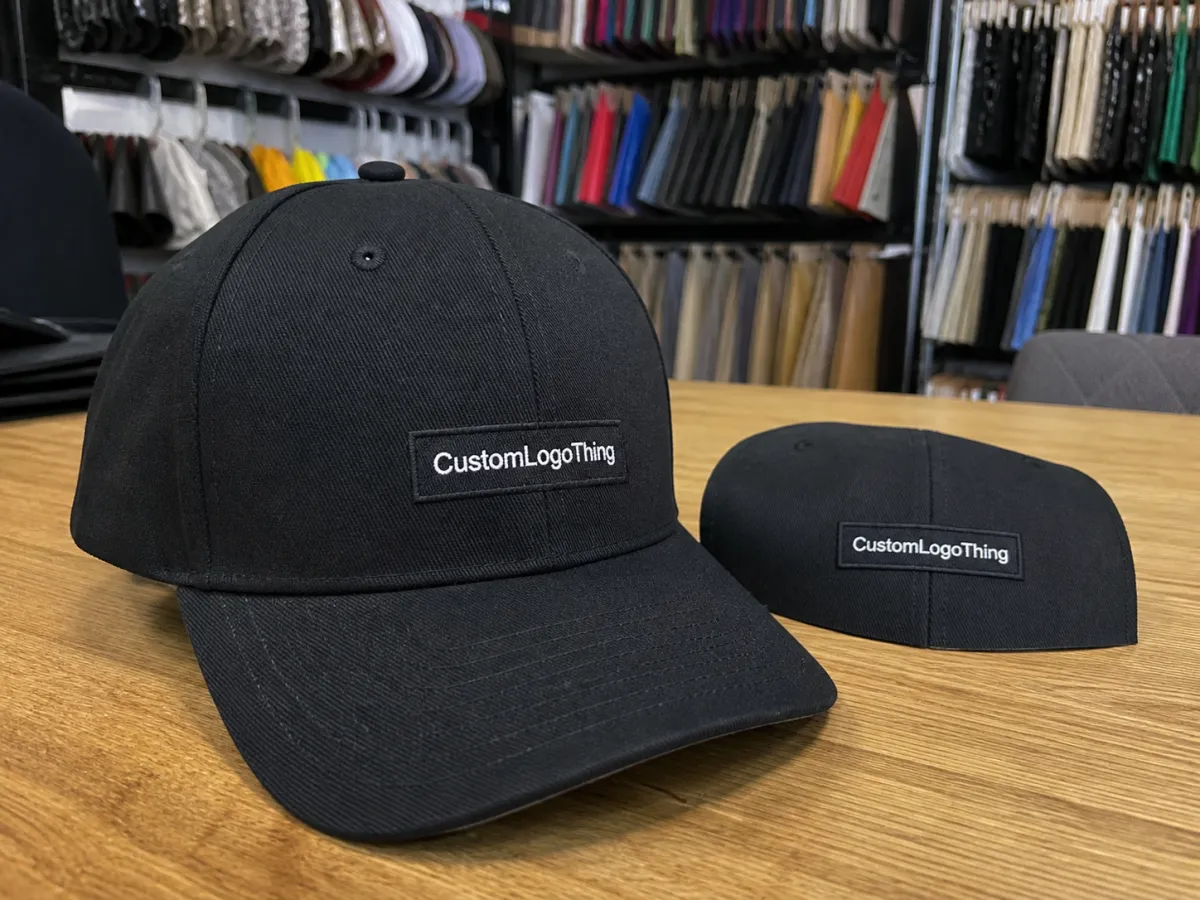
A cap can be structurally fine and still feel cheap if the label looks like an afterthought. Streetwear drops, brewery merch, golf tournament caps, outdoor promos, employee uniforms, resale hats, and team gear all face the same problem: the label is the first impression. If it is fuzzy, crooked, oversized, under-contrasted, or visibly bargain-bin, the whole cap inherits that problem.
That is why many brands choose woven labels instead of using basic printed transfers for every project. A woven label gives cleaner surface definition, stronger color structure, better abrasion resistance, and more premium texture when the artwork is built correctly. It can handle small logos, wordmarks, badge layouts, side tabs, rear labels, and repeat brand programs better than many decoration methods.
Woven labels are not magic. Tiny gradients, microscopic lettering, ten-color logo chaos, and hairline outlines will not suddenly become premium because a quote request says “custom.” Thread has physical limits. Scale matters. Clean artwork matters even more.
From a buyer’s point of view, the right cap label should answer four questions before production starts: What size fits the cap panel? What edge finish fits the artwork? What backing fits the application? What level of detail can the loom actually hold?
Practical rule: If the label has to sell the hat from three feet away, design it for three feet away. Not for a 27-inch monitor at 400% zoom.
Custom Logo Things helps buyers move from rough idea to quote-ready specifications with fabric label options, cap-ready backing choices, edge finishes, sampling support, and production guidance before money gets wasted. For related branded product needs, the Custom Labels & Tags category is a useful starting point.
Woven Label Types That Work Best on Caps and Hats
Not every woven label belongs on every hat. A low-profile side tab on a dad hat is not built like a front patch on a structured trucker cap. A beanie fold-over label has different stress points than a snapback front badge. Construction needs to match the cap, not just the logo file.
Flat woven labels
Flat woven labels work well for low-profile branding on dad hats, 5-panel caps, snapbacks, trucker hats, beanies, and performance caps. Common side placements run around 1 to 1.5 inches wide. Compact front marks often sit around 2 to 3 inches wide. The thinner profile helps the label bend on curved panels without creating too much stiffness.
Woven patches
Woven patches create a stronger badge effect. They are common on front panels, side panels, rear closure areas, and fold-over beanies. A woven patch can carry fine text better than embroidery in many cases, especially when the design includes small lettering, thin linework, or a detailed emblem.
Embroidery has its place. It gives raised texture and a classic decorated-apparel feel. But for small words, tight icons, coordinates, badge copy, or multi-line artwork, woven construction often keeps edges cleaner. The tradeoff is texture: woven patches look flatter and more graphic, while embroidery looks thicker and more dimensional.
Damask and satin woven labels
Damask labels usually provide tighter detail and a smoother premium look. They are a strong choice for small text, crisp borders, and retail-ready caps. Satin woven labels have a shinier surface and can look polished, but they may not hold tiny details as cleanly as damask. If the artwork is text-heavy, damask usually wins.
Edges and backing
Heat-cut edges create sharp rectangular or simple shaped labels. Folded edges work for sewn-in applications. Laser-cut edges are useful for custom silhouettes when the outline is not overly fussy. Merrowed borders give the classic patch look with a raised stitched edge.
For backing, sew-on is the most reliable choice for caps that will be worn, washed, bent, packed, and handled. Heat-seal can work for certain materials and placements, but it depends on cap fabric, heat tolerance, pressure, and the surface under the label. Hook-and-loop backing makes sense for tactical caps, morale patches, and interchangeable patch programs.
- Retail apparel: damask woven patch, clean edge, sew-on backing.
- Employee uniforms: durable woven patch, standard shape, consistent thread colors.
- Promo caps: flat woven label or simple patch with fewer colors.
- Outdoor gear: sew-on woven patch with fray-resistant edge finishing.
- Event caps: medium-size front patch, simple artwork, reorder-ready specs.
Oversized labels can pucker, lift, or look like a billboard strapped to fabric. Nobody asked for that. If you plan to buy woven labels for caps across multiple hat styles, build around the smallest realistic placement first, then scale with caution.
Cap Label Specifications: Size, Thread, Backing, and Placement
A good quote starts with clear specifications. Send label size, shape, thread colors, background color, border style, backing type, quantity, cap placement, and whether the labels are being supplied loose or applied to caps. Vague requests create vague pricing. Then everyone acts surprised.
Typical side labels run about 1 to 1.5 inches wide. Front woven labels usually land around 2 to 3.5 inches wide. Larger patch-style labels can reach 3 to 4 inches, depending on crown shape, panel seams, and artwork detail. A structured trucker cap can handle a different patch than an unstructured dad hat because the front panel behaves differently under tension.
Placement changes the label. A flat woven label on a curved front panel has to bend without buckling. A small tab near the back strap needs clean folded edges and secure stitching. A front patch on a structured crown needs enough body to look intentional, not limp.
Thread detail also has limits. Woven labels can handle fine detail better than embroidery, but very small type still needs enough stroke weight and spacing. As a practical check, print the artwork at actual label size. If the letters close up on paper, they will not become more legible after weaving.
Color matching deserves honesty. Thread colors are matched to available thread libraries, not invented from a glowing RGB screen. Pantone references help, but thread has texture, sheen, and shadow. A navy thread, a matte navy ink, and a backlit navy logo file are related. They are not identical.
Contrast does more work than most buyers expect. Low-contrast branding can look expensive in a PDF and nearly invisible on a cap. Navy on black. Cream on pale khaki. Dark green on charcoal. Elegant, maybe. Readable from three feet away? Often not.
For durability, ask about washable threads, fray-resistant edges, secure backing, and sew-on construction for caps that will be worn hard. If sustainability claims matter to the broader packaging or apparel program, buyers may also want to review recognized sourcing standards such as FSC certification for paper-based packaging components used with the finished goods.
Before you buy woven labels for caps, clarify whether you need labels only, labels applied to supplied caps, or labels produced for a separate cap factory. That single detail affects pricing, packing, lead time, and shipping coordination.
Pricing, MOQ, and Unit Cost for Custom Cap Labels
Price is driven by label size, thread count, number of colors, edge finish, backing, shape complexity, quantity, sampling needs, and whether application to caps is included. A small rectangular woven label does not price like a thick merrowed patch with a custom silhouette and hook-and-loop backing.
Small pilot runs may be possible, but unit cost improves quickly as quantity increases because setup time spreads across more labels. The loom setup, artwork prep, color matching, sample work, and production handling do not shrink just because the first order is tiny.
| Order Type | Typical Quantity | Common Use | Pricing Behavior |
|---|---|---|---|
| Sample or pilot run | 50-250 labels | Fit testing, brand review, first merch idea | Higher unit cost because setup is spread over fewer pieces |
| Small merch run | 300-1,000 labels | Brewery caps, local events, team hats | Better unit cost, still sensitive to complexity |
| Mid-size replenishment | 1,000-5,000 labels | Brand drops, uniforms, repeat retail styles | Stronger value once specs are stable |
| Bulk production | 5,000+ labels | Retailers, distributors, uniform programs | Best unit economics, especially on reorders |
As a rough buying range, simple woven labels can land in the low cents to mid-cents per piece at larger quantities. Thicker woven patches with specialty edges, custom shapes, or backing can cost several times more. Application to caps adds labor, inspection, and packing cost. Shipping method also matters; air freight for a late event is rarely cheap.
Setup costs may include artwork cleanup, loom setup, die or mold needs for special shapes, backing setup, and sample development. First orders often cost more than reorders because production has to interpret and lock the specifications. Once the file, thread colors, edge style, and backing are approved, repeat orders are usually cleaner.
Do not chase the cheapest quote blindly. If the label curls, blurs detail, uses the wrong backing, or turns the logo into thread soup, the savings disappear when the cap looks like a clearance-bin souvenir.
To get an accurate quote from Custom Logo Things, send vector artwork, desired label size, quantity, cap type, placement photo, backing preference, deadline, shipping destination, and whether sample approval is required. Buyers who need other branded label formats can also review Custom Labels & Tags for related options.
Production Process and Timeline From Artwork to Finished Labels
The normal process is straightforward: send artwork and specs, review feasibility, confirm the quote, approve a digital proof, produce a physical sample if needed, run bulk production, inspect, pack, and ship. Simple label-only orders can move faster. Custom shapes, specialty backings, multiple sample rounds, and cap application add time.
For many woven label projects, buyers should plan around 10-15 business days after proof approval for straightforward production, with more time for sampling, large quantities, or applied cap programs. That is not a universal promise. Timeline depends on artwork complexity, production capacity, holiday schedules, shipping method, and how quickly the buyer approves details.
The proofing stage deserves real attention. Review size, thread colors, border, text legibility, backing, and placement notes before approval. Read the text at actual size. Check spelling twice. Confirm orientation. A logo upside down on a rear strap label is funny for about six seconds.
A physical sample can catch issues a screen will not show, especially thread sheen, tiny lettering, edge thickness, border weight, and how the label sits on the cap. If the project is for retail resale, a major event, or a larger uniform rollout, sampling is usually worth the extra time.
Buyer-controlled delays are painfully common: late artwork, vague color notes, changing the label size after proof approval, and committee feedback from twelve people who all suddenly became designers. Pick the decision maker early. Production timelines improve when the approval path is not a group therapy session.
Reorders are easier. Once approved woven label specs are on file, the setup, artwork interpretation, thread choices, and production notes already exist. That helps maintain consistency across repeat cap drops, employee onboarding batches, trade show inventory, and seasonal merch.
If your launch, tournament, retail drop, or distributor ship date is fixed, build a buffer. A cap label order should not be planned like a panic drill. For transit and packed-goods testing programs tied to larger shipments, buyers can also reference ISTA packaging test procedures when cartons and distribution handling are part of the project.
Artwork Mistakes That Make Woven Cap Labels Look Cheap
Expensive caps cannot rescue a badly planned label. The biggest design problems are tiny text, thin outlines, too many colors, low-contrast thread combinations, photographic artwork, soft gradients, and logos designed only for screens.
Cap scale is unforgiving. A logo that looks clean at 6 inches wide on a monitor can turn muddy at 2.25 inches on a curved front panel. That does not mean the label maker failed. It may mean the artwork was never built for woven production.
Contrast is your friend. Use dark thread on light backgrounds, light thread on dark backgrounds, and enough separation between similar shades so the mark reads from three feet away. Navy on black can look premium in a brand deck and invisible on a cap. Very elegant. Very useless.
Border choices also change the final look. Merrowed borders add weight and a classic patch feel. Heat-cut edges look sharper and more modern, but they require cleaner shapes. Laser-cut silhouettes can look strong when the design is simple; overly detailed novelty shapes can feel messy even when the edge is technically clean.
Simple rectangles, arches, shields, circles, ovals, and rounded badges usually produce cleaner results than hyper-detailed outlines. If the label is going on a curved cap front, the shape needs to sit naturally on the panel without fighting seams or crown structure.
- Read all text at actual production size before approving the proof.
- Confirm spelling, orientation, edge style, backing, and placement.
- Remove unnecessary shadows, gradients, and hairline strokes.
- Separate similar colors so thread contrast stays visible.
- Ask for artwork adjustment recommendations before bulk production.
Custom Logo Things can recommend practical artwork changes before production. That is much better than politely manufacturing exactly the wrong thing. If you plan to buy woven labels for caps for a retail or resale program, that review step matters.
Supplier Process and Quality Checks for Cap Woven Labels
Cap labels are not one-size-fits-all. A trucker hat front patch, a golf cap side label, a beanie fold-over label, and a tactical hook-and-loop patch may need different constructions. Treating them the same is how brands end up with labels that technically exist but do not look right.
A useful supplier asks unglamorous questions. What cap style is being used? Is the crown structured or unstructured? Will the label be sewn on by the label supplier, the cap factory, or a local decorator? Does the backing need to survive heat, pressure, washing, packing, or repeated flexing? Boring questions, yes. Expensive to skip.
Quality control should include legibility checks, edge finishing, color consistency, backing alignment, count verification, and packing review before shipment. For applied cap programs, placement consistency matters too. A patch that wanders slightly from cap to cap may pass casual inspection, but it can look sloppy in a retail stack or team photo.
Repeatability is another under-rated buying factor. Consistent thread colors, stored specs, approved proof files, sizing notes, and reorder references help companies keep the same look across multiple cap drops. That matters for retail shelves, sales reps, distributors, franchise teams, and employee uniform programs.
The best sales approach is not “yes” to everything. It is options with tradeoffs. If a merrowed border adds cost but gives the badge the right weight, say that. If a heat-cut edge reduces bulk and fits a modern logo better, say that too. If the artwork needs to lose a line of tiny text, say it before the loom proves the point.
A cheap vendor may take the order exactly as submitted. A useful supplier tells the buyer when the artwork needs to be simplified before it becomes an expensive lesson. That difference matters if you buy woven cap labels more than once and need the next run to match the first one.
What to Prepare Before You Request a Quote
Get the basics together before asking for pricing. You do not need a 40-page brand manual, but you do need enough information for a real estimate.
- Logo file, preferably vector artwork such as AI, EPS, SVG, or editable PDF.
- Preferred label size, plus a second acceptable size if the artwork is detailed.
- Quantity range, such as 250, 500, 1,000, 5,000, or larger.
- Cap style, including dad hat, snapback, trucker, beanie, 5-panel, or performance cap.
- Placement area, with a photo or mockup if possible.
- Backing type, edge finish, color references, deadline, and delivery address.
- Decision on labels only versus labels applied to caps.
A placement photo helps, especially for curved front panels, side panels, beanies, and hats with seams that may interfere with the label. If the design has small details, give production two acceptable size options. That gives the label room to stay legible instead of forcing a bad tiny version.
Also mention whether the caps are for retail, promo, uniform, resale, or event use. A one-day giveaway cap and a retail hat expected to survive repeated wear do not always need the same finish, durability, or presentation.
One more useful detail: tell the supplier what cannot change. Sometimes the logo must stay exact, but the label size can move. Sometimes the size is locked because a cap panel is small, but the artwork can simplify. The faster those constraints are clear, the faster the quote becomes useful.
When you are ready to buy woven labels for caps, send the specs and deadline first so the quote can be accurate instead of decorative nonsense. Better inputs mean cleaner labels, faster quoting, fewer revisions, and fewer surprises when the finished caps arrive.
FAQ
What details do I need to buy custom woven labels for caps?
Send vector artwork if available, target label size, quantity, cap type, placement, backing preference, edge finish, thread color references, deadline, and shipping address. A placement photo or cap mockup helps prevent sizing and curve-related issues before production starts.
What is the best size for woven labels on baseball caps?
Front cap labels commonly land around 2 to 3.5 inches wide, depending on the crown shape and artwork detail. Side labels are usually smaller, often around 1 to 1.5 inches wide, because the space is tighter and more curved.
Are woven patches or embroidered patches better for caps?
Woven patches are usually better for small text, cleaner logos, and finer detail. Embroidered patches work well for bold, textured designs but can lose detail when the artwork is small, narrow, or type-heavy.
What MOQ should I expect for woven cap labels?
MOQ depends on size, backing, edge finish, and production setup, but larger quantities usually lower the unit cost quickly. Small test runs may be possible, while bulk orders are more cost-efficient for brands, teams, merch programs, and distributors.
How long does production take for custom woven labels for hats?
Timeline depends on artwork complexity, proof approval speed, sample needs, quantity, backing, and shipping method. Straightforward label-only orders often move faster than custom shapes, specialty backings, physical samples, or orders that include applying labels to caps.


