Candle makers Kraft Paper Bags custom size quote requests usually begin with the bag, not the candle. That sounds backwards until a 6 to 8 mm mismatch starts making trouble: a rigid box creases, packing slows down, and the finished display looks improvised instead of intentional. For candle brands selling through boutiques, ecommerce, gift sets, and subscription add-ons, that gap is not minor. It changes how the product is handled, presented, and remembered.
From a packaging buyer's point of view, the right kraft paper bag is carrying three jobs at once. It protects the candle, supports package branding, and keeps labor predictable on the packing line. That is why a candle makers Kraft Paper Bags custom size quote matters so much: it is not only a price request. It is the first hard check on fit, printability, and production readiness.
Many candle brands still treat the bag as an afterthought. A jar candle in a bag with too much room feels loose. A two-piece set that rattles feels uncertain. A snug, well-proportioned bag sends a different message. It signals care in packaging design. In a boutique, that can separate one candle from a shelf full of similar jars. In an unboxing video, it can turn the wrapper into part of the product story.
The practical upside is just as strong. The right size cuts filler, speeds pick-and-pack, and keeps a product line visually consistent across branded packaging, retail packaging, and gifting channels. Seasonal launches especially depend on that consistency. A clean candle makers Kraft Paper Bags custom size quote gives the team a usable starting point instead of a rough guess that creates rework later.
Experienced buyers usually treat the quote process as an operations tool. They want to know whether the bag fits a jar, a box, a sleeve, or a bundled set. They want to see how print changes the unit cost. They want to know whether custom size means a small template adjustment or a new die line. That level of detail prevents expensive surprises at the warehouse door. I have seen brands lose a week on fulfillment because the handle drop was right on paper but wrong once the tissue and hang tag were added. Tiny difference, big headache.
Why candle makers kraft paper bags custom size quote requests matter
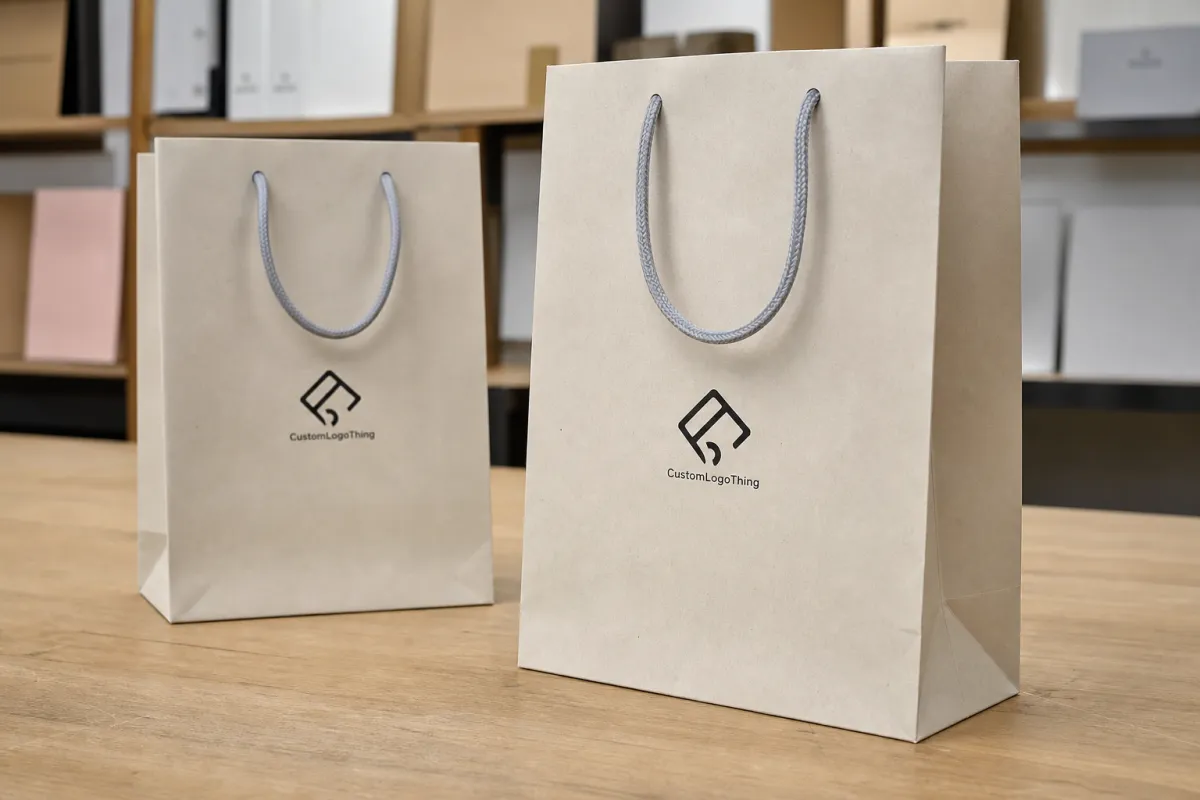
A candle makers kraft paper bags custom size quote is often the point where packaging assumptions get tested. Buyers may start with jar diameter, but the selling unit is rarely just a jar. It may include a dust cover, a tuck box, tissue, a wick trimmer, or an insert card. Once those pieces are assembled, the footprint changes. A bag that looked generous on paper can turn tight at the handle, bow at the gusset, or crush the top fold in transport.
That is why the quote should happen before artwork is locked. A candle line with a 90 mm jar in one configuration may need a very different bag from the same candle sold in a boxed set. The bag has to accommodate the product packaging the customer actually receives, not the candle alone. If the dimensions miss the mark, the brand pays twice: once for the wrong bag, then again for the time spent reshaping fulfillment.
The channel matters too. Boutique retail punishes bad fit on the shelf. Ecommerce punishes bad fit in transit. Corporate gifting punishes bad fit at the presentation moment, which is a different kind of failure altogether. A bag that looks fine in a sample photo can feel awkward once a ribbon, tissue stack, and protective insert are all inside it. That is why reliable suppliers ask for the full packed configuration, not just the candle jar size. They are trying to avoid guesswork, not be fussy.
There is also a brand perception angle that gets missed. Candle buyers do not usually measure a bag with a ruler, but they do notice whether it sits square, whether the handles stay upright, and whether the material has enough stiffness to hold a premium feel. Kraft paper can read rustic, natural, or upscale depending on weight, finish, and print treatment. The difference is not cosmetic fluff. It is part of the offer.
Candle makers kraft paper bags custom size quote: what to define first
Before asking for a candle makers kraft paper bags custom size quote, define the object that will actually go into the bag. That sounds basic, but it is where most spec sheets go sideways. A candle in a glass jar is not the same as a candle in a gift box, and neither is the same as a bundled set with tissue, a card, and a wax seal. The bag should be sized to the packed unit, not the mental image of the product.
Start with outside dimensions: width, depth, and height. Then add the extra space needed for closure style, handle clearance, and any top embellishment. If the candle sits inside another package, measure that outer package instead. A custom kraft bag needs a little breathing room, but not so much that the product shifts from side to side. In practice, the best-fit bag often leaves just enough room for a finger's width on the long side and a bit more on the height, depending on the closure and handle type.
Weight matters just as much as size. A single soy candle in a glass vessel behaves differently from a two-pack with metal lids or a boxed trio with inserts. The bag's paper weight, reinforcement, and handle construction need to match the load. A light bag with a heavy candle set can tear at the fold before it ever reaches the customer. That is not a design problem; it is a basic material mismatch.
Artwork details should be defined early too. Decide whether the bag needs one-color print, full coverage print, foil, embossing, or a simple label-ready surface. Print coverage changes the quote because it changes setup time, tooling, and waste. If you are testing a new line, a plain kraft base with one logo panel may be the smartest first run. It keeps the order flexible while the market response is still unknown. A lot of brands skip that step and jump straight to a fully printed run. Sometimes it works. Sometimes it just means they are committed to a design before the numbers have had a chance to speak.
Finally, confirm the destination. If the bags are going into retail stores, the supplier may need stricter finish control for color consistency. If they are going into ecommerce fulfillment, the focus shifts to strength and packing speed. If they are for seasonal gifting, the request may call for a slightly different board feel so the bag reads premium without tipping into wasteful overbuild. That is the kind of context a good supplier can use right away.
Product details that make candle bags work on the shelf
Good candle packaging is a quiet piece of engineering. The shopper sees charm and cohesion; the production team sees caliper, fold memory, print registration, and handling performance. Both views matter.
The paper stock is the first decision. Natural kraft has a textured, earthy look that works well for handmade or plant-based candle lines. Bleached kraft looks cleaner and can support a more refined visual language. The choice affects not only appearance but also print contrast. Dark logos usually pop better on lighter kraft, while minimalist designs can look stronger on the natural base. That is why sample approval should always happen under the same lighting the product will face in store or in the studio.
Handle style is the next one. Twisted paper handles are common because they balance cost and durability. Rope handles feel more giftable, though they often push the price upward. Flat handles can be practical for volume runs. Each option changes the quote, but the bigger issue is how the handle sits against the packed candle. If the handle twists or sits too low, the bag can look underfilled even when the product is a perfect fit. Presentation is not a side issue here; it is part of perceived value.
Structural details help the bag hold its shape. Reinforced tops, glued gussets, and bottom inserts all affect how the bag stands on a shelf and how it survives transit. For heavier candles, that internal support can matter more than fancy print. A beautiful bag that collapses in the customer's hands is not doing its job. A flatter, sturdier bag usually performs better than a taller one with weak construction. That is a trade-off worth making.
Print placement needs careful thought. Centered logos are safe, but sometimes the best look is a lower placement that leaves more breathing room near the top fold. Side-panel branding can work for boutique lines that want a subtle mark. Full-wrap print is the loudest choice and the most expensive one to get wrong. The production team has to keep registration tight, especially on kraft stock where the surface texture can expose small shifts that coated paper would hide.
There is one more thing buyers tend to underestimate: color variation. Kraft paper is not a sterile substrate. Natural variation between batches is normal, and honest suppliers should say so upfront. If absolute color matching is the goal, a coated or treated kraft option may be needed. If a brand wants the raw paper look, then some variation has to be accepted. That is not a defect. It is part of the material's character.
Candle makers kraft paper bags custom size quote: pricing and MOQ
Pricing for a candle makers kraft paper bags custom size quote depends on several moving parts: size, material weight, handle type, printing method, and order quantity. The short version is simple enough. Custom sizes cost more than stock sizes, and print complexity pushes the price upward. The longer version is where buyers save money.
Minimum order quantity, or MOQ, is usually tied to setup. If a supplier needs a custom die line, a print plate, or a dedicated run, the MOQ helps spread that setup cost across enough units to keep the order feasible. Smaller brands sometimes hope to buy just a handful of bags for a launch test. That can be done in some cases, but the unit cost climbs quickly. Once quantities get larger, the price per bag usually drops in noticeable steps. The curve is not always pretty, but it is predictable.
Custom dimensions also influence logistics. A bag that is only a few millimeters wider can change how many units fit in a carton, which affects shipping efficiency and storage. That is one reason a quote should include packing details, not just the bag spec. A supplier quoting on the wrong carton configuration may look cheap on paper and expensive on delivery. A sharp buyer will ask for landed cost, not only ex-factory cost, because freight can quietly erase the savings from a lower unit price.
Print method matters as well. Simple one-color branding can be economical on larger orders. Multi-color artwork, foil, or specialty finishes raise the quote because they add setup and inspection steps. If the candle line is still evolving, a restrained design can be the smartest move. It keeps cash tied up in the product itself, not in a packaging flourish that may change next season.
There is no universal price chart that fits every candle brand. A small boutique order, a regional retail rollout, and a holiday gifting program are three different animals. The right supplier should explain what is driving the price instead of hiding behind a round number. If the explanation sounds vague, ask again. Packaging budgets deserve that level of clarity. Honestly, that is where trust gets built.
Production process, timeline, and proofing steps
Good packaging production moves through a few clear stages. First comes the brief, then sizing, then artwork placement, then sampling or proofing, and only after that does mass production begin. Skipping one of those steps is how brands end up with a bag that almost works. Almost is expensive.
The sample stage should test more than color. It should test fit, structure, handle comfort, and how the bag behaves when fully loaded. A flat sample can look perfect and still fail once a candle is inside it. I have seen bags that folded beautifully on the table but bowed once they were stacked in cartons. That kind of problem only shows up when the physical sample is handled the way the customer will handle it.
Timeline depends on complexity and season. A straightforward kraft bag with limited print can move faster than a fully customized bag with multiple finishes. Peak seasons take longer because the factory schedule is already crowded. Holiday candle lines, in particular, need more lead time than teams usually want to admit. If a launch date is fixed, work backward from that date and build in room for sample revisions. Rushing the proof stage is a fast route to a second order of mistakes.
Proofing should be documented. That includes approved dimensions, paper weight, handle type, print placement, carton count, and the acceptable range for color variation. A written approval cuts down on confusion later. It also helps if different people touch the order across purchasing, design, and warehouse teams. The notes do not need to be dramatic. They just need to be complete.
In a well-run project, the supplier flags issues before production starts. If the requested bag size is too shallow for the closure, they should say so. If the print panel is too close to a fold, they should say so. That kind of feedback can feel inconvenient, but it usually saves a brand from a costly reprint. A supplier who nods at every request is not being helpful. They are passing the risk down the line.
Why choose us for repeat candle packaging orders
Repeat orders are where packaging partners prove their value. The first order is mostly about getting the spec right. The second and third are about consistency, speed, and not making the buyer repeat themselves. That is the work that keeps candle programs healthy.
For candle makers, continuity matters because seasonal collections often return with slight changes. A scent line may be the same, but the jar size shifts, the label changes, or the gift set adds a candle snuffer. A reliable kraft bag supplier should be able to adapt the spec without forcing a complete restart. That is especially useful for brands that sell across retail, direct-to-consumer, and wholesale channels at the same time.
There is also an operational advantage in using one packaging partner for recurring runs. Color matching stays steadier, lead times become easier to forecast, and reorder paperwork gets simpler. That sounds boring until a holiday reorder lands during a busy production week. Then boring starts to look like genius.
Trustworthy suppliers also tell the truth about limits. Some sizes will not work well with certain handle styles. Some finishes will not reproduce cleanly on kraft stock. Some deadlines are simply too tight for the complexity requested. Honest pushback is worth more than enthusiastic overpromising. In our experience, that honesty is what keeps a program from drifting into rework and lost margin.
Next steps to request a candle makers kraft paper bags custom size quote
The cleanest way to request a candle makers kraft paper bags custom size quote is to send the packed product size, quantity, material preference, handle style, print requirements, and delivery window together. If you have a reference sample, include that too. It helps the supplier see the target feel, not just the dimensions.
For candle lines with multiple SKUs, group the variants by size and weight before asking for pricing. A small assortment of near-identical bags can sometimes be standardized with one or two shared templates, which simplifies production and lowers cost. That kind of consolidation is worth checking before the order is sent out. It is a small planning step that can save a lot of back-and-forth later.
If the candle is sold in a box, photograph the packed unit next to a ruler or provide a dieline from the current packaging. If the product is being rebranded, send both the old and new references. The more concrete the request, the less room there is for guesswork. And guesswork is exactly what custom packaging is supposed to eliminate.
The real takeaway is simple: quote the bag around the final packed candle, not the candle alone. That one habit improves fit, protects margins, and makes the shelf presentation feel deliberate. Once the size is right, everything else gets easier.
FAQ
What details should I include in a candle makers kraft paper bags Custom Size Quote Request?
Include the packed product dimensions, candle weight, bag style, handle preference, print needs, order quantity, and target delivery date. If the candle ships inside a box or with inserts, share those dimensions instead of the jar size alone.
Do Custom Kraft Paper bags cost much more than stock sizes?
Usually, yes, but not always by much if the order quantity is solid. The biggest cost drivers are tooling, print complexity, and paper weight. A simple custom size with one-color branding can still be efficient if the run is large enough.
How do I know if the bag is too small or too large?
A bag is too small if the top fold crushes, the handles strain, or the packed item rubs the sides during insertion. It is too large if the product shifts around, the bag slumps, or the shelf profile looks empty. The sweet spot is a snug fit with enough clearance for clean packing.
Can kraft paper bags work for premium candle lines?
Yes. Kraft is not automatically casual. With the right paper weight, structure, and print treatment, it can look refined and high-value. The key is matching the finish to the brand story instead of trying to make kraft imitate something it is not.
How early should I Request a Quote before launch?
Earlier than most teams think. Give yourself time for sizing review, sample approval, and one round of changes if needed. For seasonal candle launches, the safe move is to start well before the order feels urgent. That breathing room matters more than people usually admit.

