Your bakery apron can look beautiful on the shelf and still fail the second a customer washes it wrong. This care labels MOQ guide for bakery brands is for Buyers Who Need the right label quantity without accidentally buying a lifetime supply of tags for one seasonal drop.
Bakery merch is not just cute add-on revenue. Branded aprons, staff tees, oven mitts, tea towels, reusable bread bags, baby bibs, tote bags, and gift-box textile items all need care information if customers are expected to launder them. The label is not decoration. It is part of the product.
Care Labels MOQ Guide for Bakery Brands That Sell Wearables
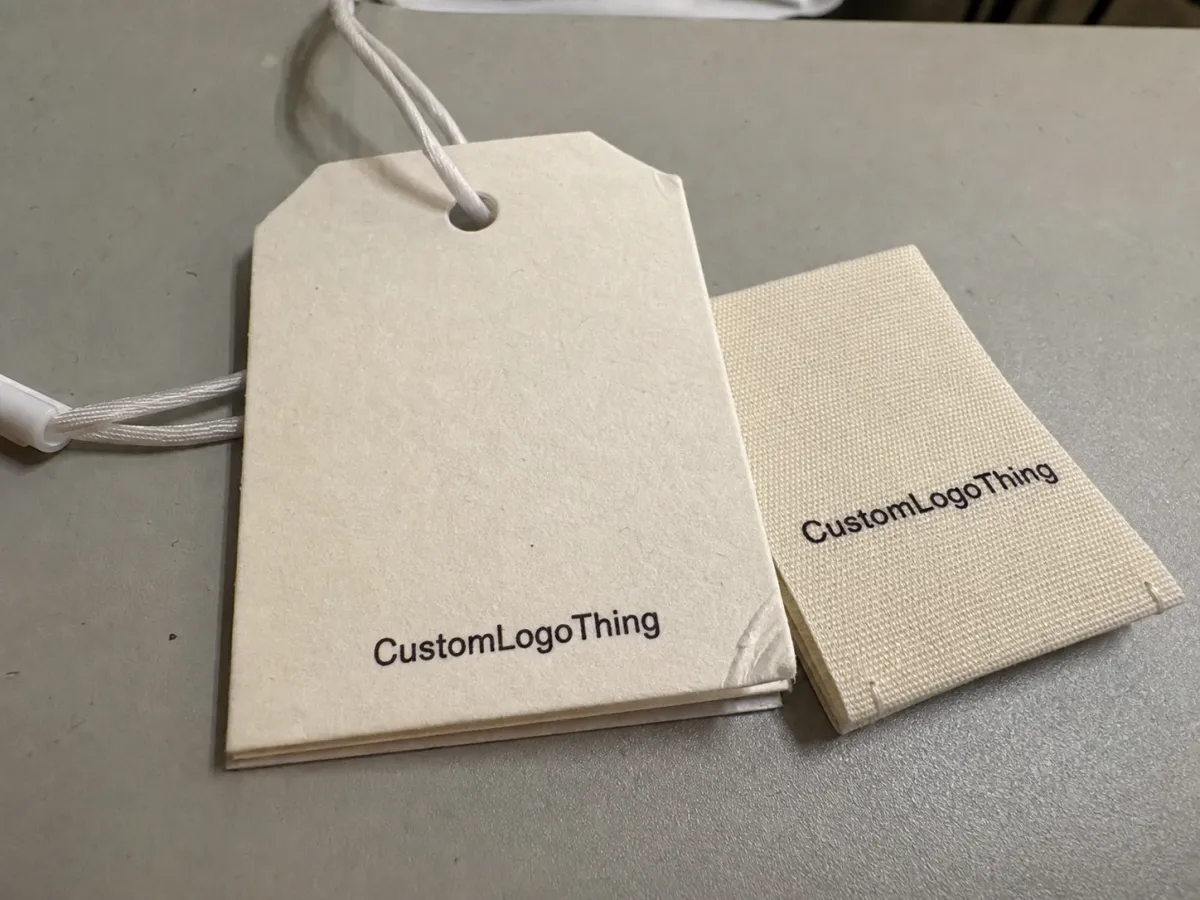
Most bakery brands do not need the same care label strategy as a fashion label producing 40 apparel SKUs per season. You probably need smaller runs, flexible reorder options, and labels that can work across multiple product types without turning the packing table into a paper trail disaster.
A cafe launching embroidered aprons for staff and retail might need 300 to 1,000 labels. A bakery adding tea towels to holiday gift boxes may need 500. A wholesale bakery selling branded reusable bread bags could need 2,500 or more. Those are not the same buying decision, even if the finished label looks almost identical.
MOQ is not just a supplier rule. It affects cash flow, cost per piece, storage, reorder timing, and whether you get stuck with obsolete labels after a logo refresh. Shocking, I know.
Care labels also make bakery-branded textiles feel retail-ready. A towel with a clean folded label feels intentional. An apron with proper care instructions feels sellable. A tote bag with no permanent tag feels like someone guessed their way through merchandising and hoped nobody noticed.
Start with the practical question: will this textile be sold, gifted, worn by staff, or included in a paid bundle? If yes, plan the label early. Waiting until the garments arrive is how brands end up paying rush fees for a tiny tag that should have been specified two weeks earlier.
Practical rule: If a customer can wash it, shrink it, fade it, or complain about it, give them a readable care label. Tiny mystery tags are not a brand strategy.
Choose the Right Care Label Type Before Requesting Pricing
Label type drives MOQ, price, lead time, and durability. Before asking for bulk pricing, decide whether you need printed satin, printed cotton, woven, or heat-transfer labels. Sending a vague “how much for custom labels?” request gets you vague pricing. Funny how that works.
Printed satin care labels
Printed satin is usually the most cost-effective choice for detailed care instructions, fiber content, country of origin, RN number if applicable, and wash symbols. It handles small text better than woven labels and commonly works for aprons, apparel, oven mitts, tea towels, and fabric bags.
Typical sizes run around 1 x 2 inches for compact side-seam labels, or 1.25 x 2.5 inches to 1.5 x 3 inches for folded labels with more text. White satin with black print is the budget baseline. Add colors, custom backgrounds, or specialty finishes, and the unit cost moves up.
Satin can feel slick or slightly synthetic, which is fine for many uniforms and retail aprons but less aligned with a rustic linen bread bag. The material choice should match the product, not just the quote total.
Printed cotton labels
Printed cotton has a softer, more natural look. It pairs well with artisan bakery branding, linen bread bags, tea towels, and rustic packaging aesthetics. If your brand uses kraft paper, cotton twine, linen pouches, and warm neutral colors, cotton labels often feel less synthetic than shiny satin.
The tradeoff is detail. Cotton has more texture, so extremely small type and tiny icons may not print as crisply. If the care text is dense, keep the design simple and give the label enough room. A beautiful label that nobody can read is a very small poster, not a useful care tag.
Woven and heat-transfer labels
Woven labels are durable and premium, but they are not always ideal for long wash instructions. Woven damask is great for a logo tab, size marker, or small brand label. It is less great for cramming six care symbols, fiber content, and three lines of washing text into a postage stamp.
Heat-transfer labels work well on tees and soft garments where neck comfort matters. They can reduce irritation and eliminate a flapping tag. They also require compatible fabrics, heat application, and a production workflow that can apply transfers consistently. Not every apron maker wants that extra step, and not every textile tolerates heat the same way.
Often, the cleanest solution is two labels: one small woven logo label plus one printed care label. The brand mark looks premium, and the care instructions stay readable. That split is usually worth considering when the single-label version starts looking like a legal disclaimer printed on a grain of rice.
| Label Type | Best Use | Typical MOQ Range | Cost Behavior |
|---|---|---|---|
| Printed satin | Detailed care text, fiber content, wash icons | About 300-500+ | Lowest cost per piece on simple black print |
| Printed cotton | Tea towels, linen bags, artisan-style textiles | About 300-500+ | Slightly higher than basic satin due to material texture |
| Woven damask | Logo tabs, brand labels, size labels | About 500-1,000+ | Better value once setup charges spread across more units |
| Heat transfer | Soft tees, neck labels, comfort-focused garments | About 500+ | Depends on artwork size, color, and application requirements |
Label Specifications Bakery Buyers Should Confirm Up Front
A good quote starts with complete specs. A complete spec set includes label type, size, fold style, material, print color, text content, wash symbols, quantity, and attachment method. Miss two of those, and your quote becomes a placeholder dressed up as a number.
Common side-seam care labels are around 1 x 2 inches. More detailed folded labels may need extra length, often 1.25 x 2.5 inches or larger, so the text remains readable after folding and sewing. If the customer needs a magnifying glass to read wash instructions, the label failed. Cute branding does not beat legibility.
Fold styles that actually matter
Straight cut labels are flat strips, often used when the label is sewn on all sides or tucked into a seam. End fold labels have folded edges for a cleaner finish and are common on towels and bags. Center fold labels create a two-sided tag, useful for side seams on shirts, aprons, or textile accessories.
Loop fold labels work well when the label needs to hang from a seam and show information on both sides. Manhattan fold and book fold styles are better for multi-panel information, though they can be overkill for a simple bakery towel. More folds mean more finishing work, and finishing work is not free.
Attachment method matters too. A label sewn into a side seam is different from a label top-stitched onto a tea towel corner. Ask the cut-and-sew supplier where the label will be placed before finalizing the fold. The wrong fold can force the sewer to improvise, which is how neat samples become crooked production.
Material and compliance details
Satin is smooth and affordable. Cotton feels natural. Polyester handles repeated laundering. Woven damask gives a higher-end brand look for logo applications. Match the label to the product feel, laundering expectations, and available print area, not just the cheapest line item.
Many textile products require permanent, readable labeling with fiber content, care instructions, and country of origin. An RN number may apply for certain U.S. textile sellers. This is not legal advice, because lawyers get paid more than label people for a reason, but bakery buyers should check the Federal Trade Commission textile labeling rules and any applicable product category requirements before bulk production.
For sustainability claims or certified materials, verify before printing anything permanent. If you use FSC-certified hang tags or packaging components, the FSC trademark rules matter. Textile care labels are not usually the place for vague “eco” claims unless the claim can be supported.
One smart move: create a master care label that works across similar product lines. For example, one cotton tea towel label, one apron label, and one apparel label. Standardization reduces artwork versions, lowers waste, and makes reorders easier. Fewer label versions are usually better unless there is a real fabric, care, origin, or compliance reason to split them.
MOQ, Pricing, and Unit Cost: What Actually Moves the Number
MOQ depends on label type, printing method, material, artwork complexity, fold style, and whether the order uses custom colors or standard stock materials. The supplier is not making up minimums just to annoy you. Well, not usually.
Printed care labels often start around a few hundred pieces. Woven custom labels may make more sense at 500 to 1,000+ pieces because tooling fees, loom setup, proofing, and production handling need to be spread across the run. The lower the quantity, the more each label carries those fixed costs.
Here is a realistic cost pattern for basic printed care labels, assuming standard material, one-color print, and a common folded style:
| Order Quantity | Typical Use Case | Estimated Cost Per Piece | Buyer Tradeoff |
|---|---|---|---|
| 300 pieces | Test merch drop or limited event run | $0.22-$0.45 | Lower cash outlay, higher unit cost |
| 500 pieces | Small recurring apron or towel program | $0.16-$0.32 | Better balance for many bakeries |
| 1,000 pieces | Regular retail merch or uniform use | $0.09-$0.22 | Lower cost per piece, more inventory to store |
| 2,500 pieces | Wholesale textile program or multi-location use | $0.05-$0.16 | Best bulk pricing, higher obsolete inventory risk |
Those numbers are not universal. Material, print coverage, fold style, cutting, finishing, packaging, shipping destination, rush service, and multiple label versions can all change the final quote. A two-color printed cotton label with custom folding will not price like a black-on-white satin tag. Please do not send one screenshot and expect miracle math.
Setup charges matter. A small 300-piece order might look cheap until a $35-$95 setup fee lands on top. Woven labels can have higher setup or tooling fees depending on artwork and loom requirements. On a 300-piece run, that fee hurts. On a 2,500-piece run, it becomes a much smaller piece of the unit cost.
Freight can distort the math, especially on rush jobs. Labels are light, but expedited shipping, split shipments, and international transit can still erase part of the savings from a slightly cheaper unit price. Compare landed cost, not just the per-label number.
For bakery buyers, 300 labels can protect cash flow during a test merch drop. A 1,000-piece run can be smarter if aprons, totes, or tea towels sell every month. The wrong move is chasing the lowest MOQ blindly, then needing a rush reorder two weeks before holiday gift boxes ship.
Ask for tiered pricing at 300, 500, 1,000, and 2,500 pieces. Same specs. Same artwork. Same delivery address. That gives you the actual cost curve instead of a guessing contest. Custom Logo Things buyers can also start with Custom Labels & Tags to compare construction options before requesting a quote.
Proofing, Production Steps, and Lead Time for Custom Care Labels
The production path is straightforward if the specs are complete: submit artwork and label details, receive a quote, confirm the layout, approve a digital proof, approve a physical sample if needed, start bulk production, inspect, pack, and ship.
The proofing stage is where most delays happen. Missing fiber content, unclear wash symbols, vague size requests, and late logo files can stall an otherwise easy label order. If the artwork file is a blurry PNG pulled from a social profile, expect a designer to ask for a vector file. They are not being dramatic. They are trying to keep your logo from looking like it was printed through a screen door.
Digital proofing often takes 1-3 business days after complete specs are submitted. Sampling can add several business days or more, depending on the label type. Bulk production commonly ranges from about 7-20 business days for many standard printed labels, while woven labels, specialty finishes, large quantities, or complicated folding can run longer.
Rush production may be possible. It also costs more and leaves less room for revisions. Magic is not a production schedule.
Work backward from the launch date. Holiday boxes, farmer’s market events, staff uniform rollouts, cafe openings, and wholesale gift programs all have hard deadlines. If the event is in four weeks and the label size is still undecided, the safety buffer is already being spent.
Fast-turn quote checklist
- Final logo file, preferably vector format such as AI, EPS, or editable PDF
- Exact label text, including care instructions and fiber content
- Wash symbols or written care directions
- Finished label dimensions, such as 1 x 2 inches or 1.25 x 2.5 inches
- Fold style: straight cut, end fold, center fold, loop fold, book fold, or other
- Material preference: satin, cotton, polyester, woven damask, or heat transfer
- Quantity tiers requested
- Shipping address and in-hand deadline
Quality control should not be saved for the final box count. Check proof text against the garment spec sheet. Confirm the logo orientation after folding. Verify that the printed side is the side the customer will actually see. For care symbols, check that they are large enough to survive production, sewing, laundering, and human eyesight.
On finished labels, inspect cut consistency, fold alignment, ink density, spelling, symbol clarity, and fraying at the edges. For woven labels, look for filled-in details and thread color shifts. For printed cotton, check whether the texture is softening small letters. A 2-millimeter problem can become a 2,500-piece problem with impressive speed.
For shipping durability and distribution testing, larger packaging programs often reference standards from organizations such as ISTA. Care labels themselves are small, but if they are part of a larger merch kit, gift box, or wholesale package, transit testing and pack-out consistency still matter.
Labels are small enough to be forgotten and critical enough to delay a launch. Treat them like a production component, not an afterthought.
Common Ordering Mistakes That Waste Bakery Merch Budgets
Do not order labels before finalizing the product assortment. Aprons, towels, tote bags, baby bibs, and tees may need different label placements, sizes, care text, or attachment methods. One label can work across multiple products only if the fiber content, care instructions, and origin details actually match.
Over-personalizing every label is another budget leak. A different tag for every seasonal pastry slogan sounds charming until setup charges hit five tiny versions. If each version needs only 100 pieces, the cost per piece can get ugly fast.
Under-ordering causes a different headache. If the bakery expects repeat sales, ordering right at the minimum can create stockouts. Then the team pays rush fees, splits shipments, or delays finished goods because a three-cent-looking label is missing. Small part. Big nuisance.
Over-ordering is no better. Buying 10,000 labels for a first merch test because the unit price looked pretty is how boxes of obsolete tags are born. Logos change. Care text changes. Product materials change. Storage closets do not care that the spreadsheet once looked efficient.
Artwork problems are common too: low-resolution logos, unconverted fonts, thin lines, gradients, and color choices that do not reproduce cleanly on small textile labels. For woven labels, very fine detail can fill in. For printed cotton, tiny text can soften. For satin, heavy ink coverage can affect feel and readability.
Care instruction mistakes can create real customer complaints. Generic wash text may not match the fabric. Country of origin may be missing. Type may be too small. Symbols may be unclear. If a cotton tea towel and a polyester apron need different care instructions, do not force them onto one universal label to save a few dollars.
Placement is another quiet failure point. A stiff label at the back neck of a tee can irritate customers. A long label in an apron side seam can curl or stick out. A towel label placed where it interferes with folding can make otherwise tidy retail stacks look sloppy. The label has to survive both laundering and presentation.
Consolidate SKUs where it makes sense. One label for all cotton tea towels. One for aprons. One for apparel. That reduces MOQ pressure without creating compliance chaos. If you want examples of practical branded product planning, the Custom Logo Things Case Studies section shows how product decisions stack up across different categories.
How to Place a Smart Care Label Order Without Guesswork
Start by listing every textile item being labeled. Include staff aprons, retail aprons, tea towels, oven mitts, bread bags, tote bags, uniform shirts, baby bibs, and promotional fabric items. Then group them by fabric and care instructions.
Decide whether one shared label works or whether multiple versions are needed. If three products are 100% cotton, made in the same country, and use the same wash instructions, one label may work. If one item is cotton canvas and another is polyester-cotton blend with different drying instructions, split the labels. Saving money by printing wrong information is not saving money.
Estimate demand by product, not vibes. Count staff uniforms. Review planned retail inventory. Add event quantities. Include wholesale projections if gift sets are sold to corporate buyers or local shops. Then choose an order tier that fits both cash flow and reorder risk.
Request tiered quotes with the same specs at several quantities. Compare total spend, unit cost, setup charges, lead time, and freight. A 500-piece run may be the right answer for a new towel drop. A 2,500-piece run may be smarter for a standardized apron label used across every location and restocked quarterly.
Send complete production details in the first inquiry: label type, size, fold, material, colors, quantity, artwork, care text, delivery deadline, and shipping location. If the right construction is unclear, ask before artwork is finalized. That is much cheaper than redesigning after proofing.
Choose a lower MOQ for a new product test, uncertain design, limited seasonal run, or pending brand refresh. Choose a higher MOQ for a proven merch line, recurring uniform needs, wholesale textile program, or standardized care label used across multiple products.
The practical target is not the smallest order or the cheapest unit price. It is the order that matches actual use, avoids preventable reorders, and keeps obsolete inventory low. Need more ordering basics before sending specs? The FAQ page can help with general production questions, but an accurate quote still needs accurate details. Use this care label planning process before requesting pricing, and the numbers will be far easier to compare.
FAQ
What is a typical care labels MOQ for bakery brands ordering merch?
Printed care labels often start around a few hundred pieces, while woven labels commonly become more cost-effective around 500 to 1,000+ pieces. The exact MOQ depends on material, size, print method, fold style, color count, and whether one label version or several are needed. Ask for tiered pricing at 300, 500, 1,000, and 2,500 pieces to see the real unit cost difference.
Which care label type is best for bakery aprons, towels, and fabric bags?
Printed satin or printed cotton labels usually work best for detailed care instructions and fiber content. Cotton labels fit a rustic or artisan bakery look, while satin is smooth, clean, and cost-efficient. Woven labels are better for simple logo branding than long care text.
Can one custom care label work across multiple bakery products?
Yes, if the products share the same fiber content, care instructions, and origin details. This can reduce MOQ pressure, lower setup costs, and simplify reorders. Do not use one label if fabrics or washing instructions differ. That shortcut can create customer complaints and compliance problems.
How long does production take for custom care labels?
Digital proofing usually takes 1-3 business days after complete specs are submitted. Bulk production can range from about 7-20 business days for many standard printed labels, depending on label type, order size, finishing, and workload. Sampling, woven production, specialty materials, and rush changes can extend the timeline.
How do I get an accurate quote for bakery care labels?
Send label size, material, fold style, quantity, artwork, care text, color requirements, delivery deadline, and shipping destination. Include the product type, such as apron, tea towel, tote bag, or uniform shirt, so the label construction matches the use. Request multiple quantity tiers so cash flow, unit cost, and reorder risk can be compared before ordering.


