Cuffed Beanies Quote for Ecommerce: Why Specs Change the Number
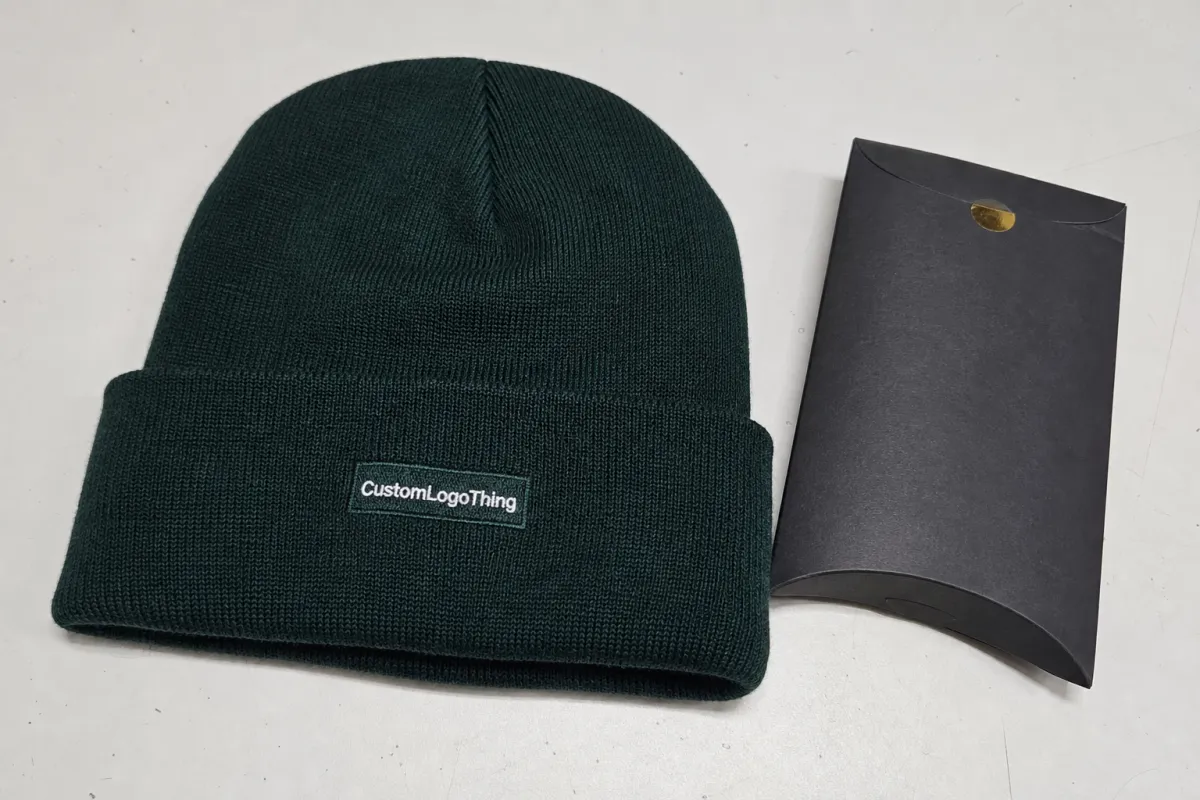
A Cuffed Beanies Quote for ecommerce looks simple until the order stops being a product idea and starts behaving like a production job. Then the details show up. Cuff height. Yarn weight. Knit structure. Logo method. Pack-out. Freight. The quote changes because the item changes. That is not a trick. It is just manufacturing refusing to pretend that every beanie is the same.
Cuffed beanies are popular for ecommerce for one basic reason: they are easy to brand and easy to photograph. The cuff gives you a defined decoration zone, and the shape holds up better than a soft slouch style. That matters more than buyers usually admit. A beanie that keeps its silhouette in a product photo looks cleaner on the listing page, and a cleaner listing usually means fewer questions from customers later.
The cheapest quote is rarely the useful one. A quote has to answer a more annoying question: can this item support the retail price, the margin target, and a reorder without forcing a redesign? If the answer is no, the number is cheap for the wrong reason. A real quote breaks out the cost drivers so the buyer can see where the money goes. Blank product. Decoration. Labeling. Packaging. Freight. Anything less is basically a guess with a logo on it.
For ecommerce, that distinction matters because inventory math is unforgiving. A beanie that lands at the wrong cost can kill margin before the first sale ships. A decent quote helps you plan launch pricing, promotions, and replenishment without discovering too late that the unit economics only worked on paper.
Pick the Right Beanie Build for Your Store
The build choices are not endless, but they do affect both the quote and the customer experience. Start with the yarn. Acrylic is the common baseline because it is predictable, warm enough for most retail use, and usually the easiest way to keep unit cost inside a sane range. It also takes color well, which matters if the beanie is part of a seasonal drop or needs a specific brand shade.
Acrylic-wool blends read as a little more premium. They can feel better in hand and often photograph with more texture. The tradeoff is cost and more sensitivity in production. If the knit tension is off or the washing process is sloppy, the fabric can behave badly. Not dramatically. Just enough to make the sample and bulk order feel like cousins instead of twins. Buyers notice that. So do customers.
Recycled yarns are useful for brands that actually need the lower-impact material story, but they are not a shortcut. Recycled content can change hand feel, yarn behavior, and lead time. It can also alter the look of the knit in subtle ways, especially on darker colors. If sustainability claims are going on hangtags or packaging, keep the wording tight and supported by documentation. For certification language around responsible materials, the FSC site is a practical reference point for paper-based packaging and sourcing terms.
Construction matters just as much as fiber. A single-layer cuffed beanie is lighter and usually cheaper. A double-layer version feels more substantial, holds its structure better, and gives embroidery a steadier base. The difference shows up in the quote, but it also shows up in the photo shoot and in customer reviews. A limp beanie may still sell. It just looks more like a budget item.
The cuff depth changes the branding space. A shallow cuff can look modern and minimal, but it limits logo size. A deeper cuff gives the decoration more room and usually reads better on a store shelf or in a thumbnail image. For ecommerce, that is not a small detail. The cuff is the billboard.
If the goal is a balanced retail item, a structured double-layer cuffed knit usually makes the most sense. It is not the cheapest route, but it tends to hold shape, look cleaner in photos, and reduce complaints about fit. Sometimes boring is profitable. That is the whole point.
Specs That Move Fit, Decoration, and Inventory
Quotes get messy when the spec sheet stays fuzzy. The core measurements are straightforward: circumference, crown height, cuff depth, and stitch gauge. A standard adult cuffed beanie often lands around 19 to 22 inches in circumference, with a crown height near 8 to 9 inches and a cuff depth around 2.5 to 4 inches. Those numbers are not sacred. They just give the factory a target. Oversized fits, youth sizing, and intentionally slouchy proportions all change the pattern and the price.
Decoration is usually where the quote starts moving faster. Direct embroidery is the usual first choice because it is durable and familiar, but it only works well if the logo is simple enough for the knit surface. Small text gets ugly fast. Fine lines disappear. A dense rib knit can pull the stitches and distort the artwork. If the logo needs to live inside a tight window on the cuff, simplify it before production starts. A design that looks great in vector form can turn into mush at beanie scale.
Woven patches handle detail better in many cases, especially when the artwork includes thin lines or more than a couple of colors. They also create a cleaner edge on product photos. Leather-style patches push the look in a tougher direction and often work for outdoors, workwear, or heritage-style branding. None of these methods is automatically better. They just behave differently. Labor, setup, and attachment method all affect price.
Inventory specs matter too, even though buyers often leave them until the end. Decide whether the beanies ship folded flat, in individual polybags, with hangtags, or with carton-level labeling. Confirm SKU stickers. Confirm carton count. Confirm whether mixed colors share a box or stay separated. A warehouse team can handle almost anything once. They get grumpy when the order is packed in a way that creates extra receiving work for every carton after that.
If the order is going into a U.S. warehouse, make sure fiber content, care instructions, and country-of-origin marking are accurate before bulk starts. That part is not optional. A clean retail-looking beanie still needs the boring compliance details behind it. If the packaging includes paper tags or inserts and transit performance matters, a standard handling reference from the ISTA test library is useful for pack-out planning.
The tighter the spec, the cleaner the quote. A factory can price certainty. It struggles with “roughly this, but maybe not.” Buyers do the same thing, but with more email.
Pricing, MOQ, and Unit Cost by Volume
Pricing should be broken into tiers because one number hides the shape of the deal. A Cuffed Beanies Quote for ecommerce usually improves with volume, but only if the spec stays steady. The following ranges are practical for custom orders before freight:
| Order Size | Typical Unit Cost | What Usually Changes | Buyer Takeaway |
|---|---|---|---|
| 100 units | $8.50-$13.50 | Setup gets spread over fewer pieces | Useful for testing demand, rough on margin |
| 250 units | $6.80-$10.20 | Decoration and packing become more efficient | Often the first workable ecommerce tier |
| 500 units | $5.20-$8.40 | Better material buying and production flow | Usually the best balance for a launch run |
| 1,000 units | $4.10-$6.90 | Setup costs shrink per piece | Best once the style has already proven itself |
The real cost drivers are not mysterious. Yarn type. Knit complexity. Decoration method. Label choice. Packaging. Number of colors. Shipping method. Every extra option adds labor or material, and sometimes both. A two-color beanie is easier to run than a five-color one. Standard polybags are cheaper than custom printed cartons. A sewn patch can simplify artwork, but it may add attachment labor. None of that is surprising. It just becomes expensive when it stacks up.
MOQ exists because setup does not care how small the order is. The machine still needs programming. The yarn still needs to be purchased. The sample still needs to be checked. Low-MOQ orders usually carry a higher per-piece price because the setup cost has fewer units to land on. That is not the factory being difficult. That is arithmetic doing its thing.
A low MOQ makes sense for a new design, a seasonal drop, or a small audience that is hard to forecast. It makes less sense if the retail price needs a healthy margin and the landed cost is already too high. If the target selling price is $24 and the product is already near $10 before freight, the product might still work. It might also be a polite way to lose money while pretending the shelf looks good.
There is also a practical point buyers sometimes miss: reorders are cheaper only when the original spec is stable. If the initial run used a simple logo and standard packaging, the repeat order stays manageable. If the first batch started with custom labels, recycled yarn, and a special insert card, every reorder inherits those choices. That is fine if the product is built for it. Less fine if the first quote was just trying to impress someone in procurement.
Production Timeline and Approval Points
The production path should be visible before anything gets approved. A clean order usually moves through inquiry, spec review, digital proof, sample or pre-production sample, bulk production, quality control, packing, and ship approval. If a supplier cannot describe those steps clearly, the order probably has more risk than the quote admits.
For planning, a realistic production window is often 10 to 20 business days after final proof approval. Simple acrylic builds tend to sit near the low end. Orders with recycled yarn, special labels, or custom packaging usually land higher. Add freight separately. Freight is not production time, and mixing those two numbers is how launches slip while everyone pretends the schedule is still fine.
Speed starts with good inputs. Send vector artwork. Use actual color references instead of vague descriptions like “muted blue” or “almost black.” Confirm quantity by color. Pick the decoration method before requesting pricing. Include the ship-to location so transit is not guessed. If the internal buyer needs to approve the order quickly, send the retail target too. Margin changes the conversation faster than anyone likes to admit.
Sample approval is not just about the logo placement. It is also about fit, cuff tension, and how the knit behaves under compression. A beanie can look correct flat on a table and still feel wrong in hand if the crown is too tall, the cuff twists, or the rib density is too loose. A pre-production sample catches that before the run is locked. That is cheaper than fixing a full carton of product after it arrives.
Transit protection matters as well. A folded beanie in a polybag is not the same as a bundled set with tags, inserts, and carton-level labeling. If the order needs to survive inbound handling, the pack-out has to match the route. Carton count, inner pack, and label placement all affect receiving speed and damage risk. That is the unglamorous part of ecommerce. Also the part that saves the most time.
QC Checks Before the Order Ships
Quality control on cuffed beanies is not flashy, but it prevents the kind of customer complaints that eat support time. The first checks are basic: stitch consistency, cuff symmetry, embroidery registration, logo centering, and label placement. If the cuff twists or the logo sits just far enough off center to look sloppy, customers notice. They may not know why. They just know it looks off.
Fit checks matter too. The same beanie can feel snug, loose, or oddly tall depending on the yarn and knit tension. That is why size verification should happen against an approved sample, not against memory. Memory is generous. The product is not.
Packing checks are just as important. Cartons should be counted and labeled cleanly. SKU separation should match the plan. Polybag counts should match the approved pack-out. If a warehouse receives a mix of neatly packed cartons and a few loose, unmarked ones, the receiving team stops trusting the whole shipment. Then the buyer gets the phone call nobody wants.
For ecommerce orders, QC photos before shipment are worth asking for. They do not need to be glamorous. They need to show the logo position, the folded shape, the carton count, and the outer label. If the order includes paper packaging or hangtags, those should be visible too. Small mistakes cost more than they should because they interrupt fulfillment after the product has already crossed the ocean and the budget has already been spent.
This is also where communication discipline matters. One contact. One approval trail. No “small” artwork tweaks after sign-off. No color substitutions that were never discussed. A quote is only useful if the production path stays aligned with it. Otherwise the number is just a suggestion with a production schedule attached.
What to Send for a Clean Quote
If the goal is a quote that can actually be used, send the full intake set the first time. Quantity. Color count. Artwork file. Decoration method. Packaging requirements. Ship-to location. Required delivery window. That is the baseline. Anything less forces assumptions, and assumptions are where budgets start drifting.
Ask for a line-item quote instead of a single lump sum. Blank beanie cost. Decoration. Labeling. Packaging. Freight. Once the costs are separated, the buyer can see which lever actually changes the total. That makes internal approval easier and prevents the classic round of “can you quote it again with one less color and a different bag?”
If the price comes back higher than expected, do not slash everything at once. Start with the easiest adjustments. Simplify the artwork. Reduce thread colors. Swap from custom packaging to standard polybag plus label. Move from a patch to embroidery if the logo is simple enough. Or drop from an acrylic-wool blend to standard acrylic if the material story is not central to the product. Those changes are small on paper and large in the final unit cost.
Catalog planning helps too. If the beanie sits alongside other knit accessories, keep the product family close enough in styling and packaging that photography and fulfillment stay efficient. One product that requires an entirely separate workflow can be fine. Three of them start acting like a department.
The clearest path is still the simplest: request a Cuffed Beanies Quote for ecommerce with the full spec list, compare it against the retail target, and check the lead time against the launch window before the order is approved. That avoids the expensive kind of surprise.
What details do I need for a cuffed beanies quote for ecommerce?
Send quantity, color count, logo file, decoration method, packaging requirements, and ship-to location. If the launch date is fixed, include that too so production and freight can be planned around it.
What MOQ should I expect for custom cuffed beanies?
MOQ often starts around 100-300 units, but it depends on yarn choice, decoration method, and packaging complexity. Lower MOQs usually carry a higher unit cost because setup time is spread across fewer pieces.
Which decoration method works best for ecommerce beanies?
Embroidery is the common choice for simple logos and gives a clean retail look. Woven patches can handle finer detail, while leather-style patches work well for brands that want a tougher visual style. The best option depends on logo size and how much texture you want in the product photo.
How long does production usually take after approval?
A typical production window is often 10-20 business days after final proof approval. More complex yarns, labels, or packaging can extend that timeline, and freight time should be counted separately.
Can I mix colors or packaging styles in one order?
Yes, but mixed colors and mixed packaging usually increase labor, raise the unit cost, and add packing complexity. If you want an accurate comparison, ask for a line-item quote so the extra cost is visible instead of hidden inside a single number.

