Why Jewelry Brands Need Better Labeling Than the Usual Afterthought
A premium bracelet pouch, polished rigid box, and well-finished product can still feel unfinished if the care label looks like a bargain-bin laundry tag. A care labels Supplier Quote for Jewelry Brands should cover more than unit price. It should clarify material, fold style, print durability, compliance text, attachment method, packing requirements, and how the label fits the pouch, box, envelope, display card, gift bag, or direct-to-consumer mailer.
Small labels carry more brand weight than most buyers expect. They tell customers how to clean plated jewelry, sterling silver, gold-filled pieces, pearls, leather cords, resin charms, gemstones, and delicate chains without guessing. Guessing is where the trouble starts. Perfume, sweat, saltwater, chlorine, and aggressive polishing cloths can ruin finishes quickly; then the support email arrives: “I only wore it once.” Always fun.
Care labels are not decoration. They are brand protection. Clear instructions can reduce avoidable returns, set realistic customer expectations, and make the product feel finished. For a $38 fashion necklace, a small printed insert may be enough. For a $280 vermeil bracelet in a suede pouch, a satin or cotton label with a matching card may make more sense.
Jewelry brands often need more than one label type. Common pieces include care cards, sewn pouch labels, hang tags, adhesive box labels, sticker seals, mini insert cards, and folded textile-style labels. Each one has a different cost structure. Each one needs a different spec.
Here is the blunt version: do not ask for “a small nice label, maybe beige” and expect an accurate quote. That is not a purchasing brief. It is a mood. A useful quote starts with the final packaging environment and the job the label needs to do.
Care Label Formats That Work for Jewelry Packaging
Jewelry care labeling is small-format branding. That means tight spaces, short copy, and no room for sloppy artwork. The right format depends on whether the label is sewn, tied, inserted, stuck, or displayed.
| Label Format | Best Use | Typical Size Range | Buying Notes |
|---|---|---|---|
| Satin label | Soft pouches, drawstring bags | 0.5–1.5 in wide | Smooth feel, crisp print, good for simple care text |
| Cotton label | Handmade, natural, bridal, artisan lines | 0.75–2 in wide | Texture feels warm, but ink can look softer than satin |
| Woven label | Reusable pouches, premium textile packaging | 0.5–2 in wide | Higher MOQ and setup, strong tactile branding |
| Printed care card | Boxes, mailers, display cards | Business card size or smaller | Best for longer instructions, QR codes, and warranty notes |
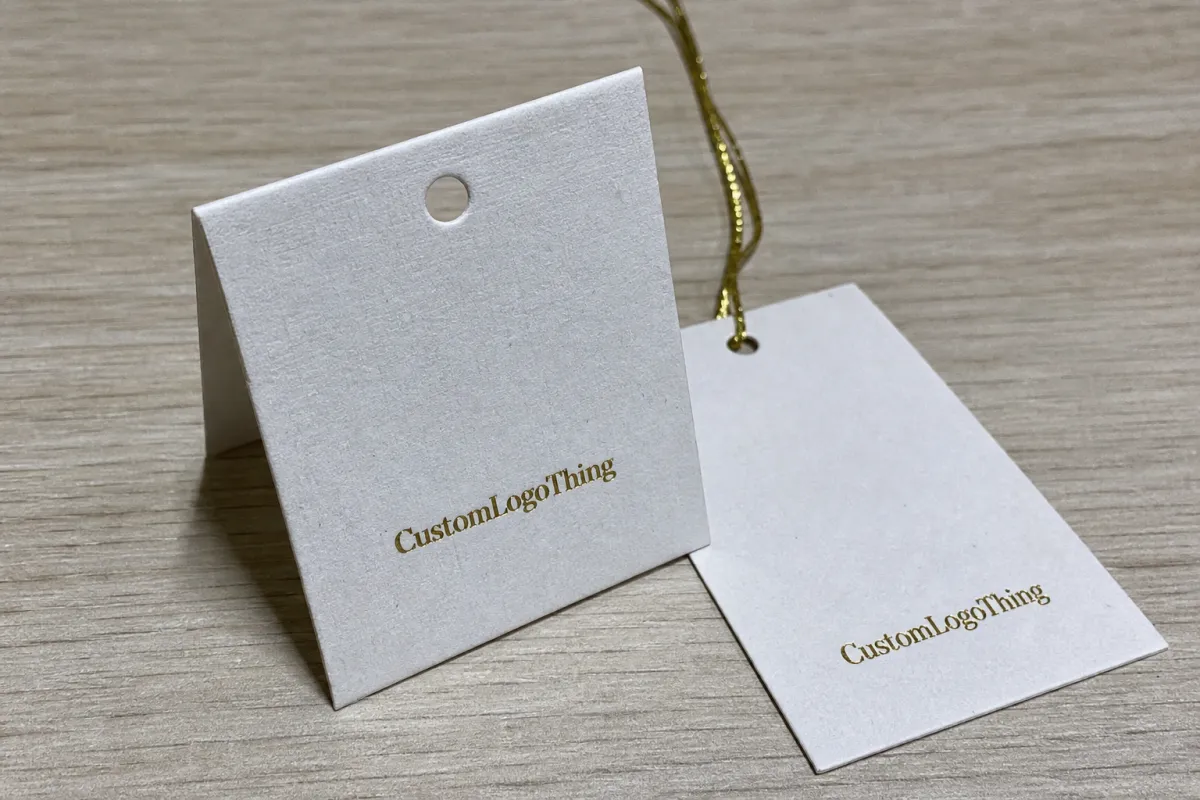
| Kraft hang tag | Gift-ready jewelry, handmade collections | 1.5 x 2.5 in to 2 x 3.5 in | Works with cotton string, ribbon, or elastic cord |
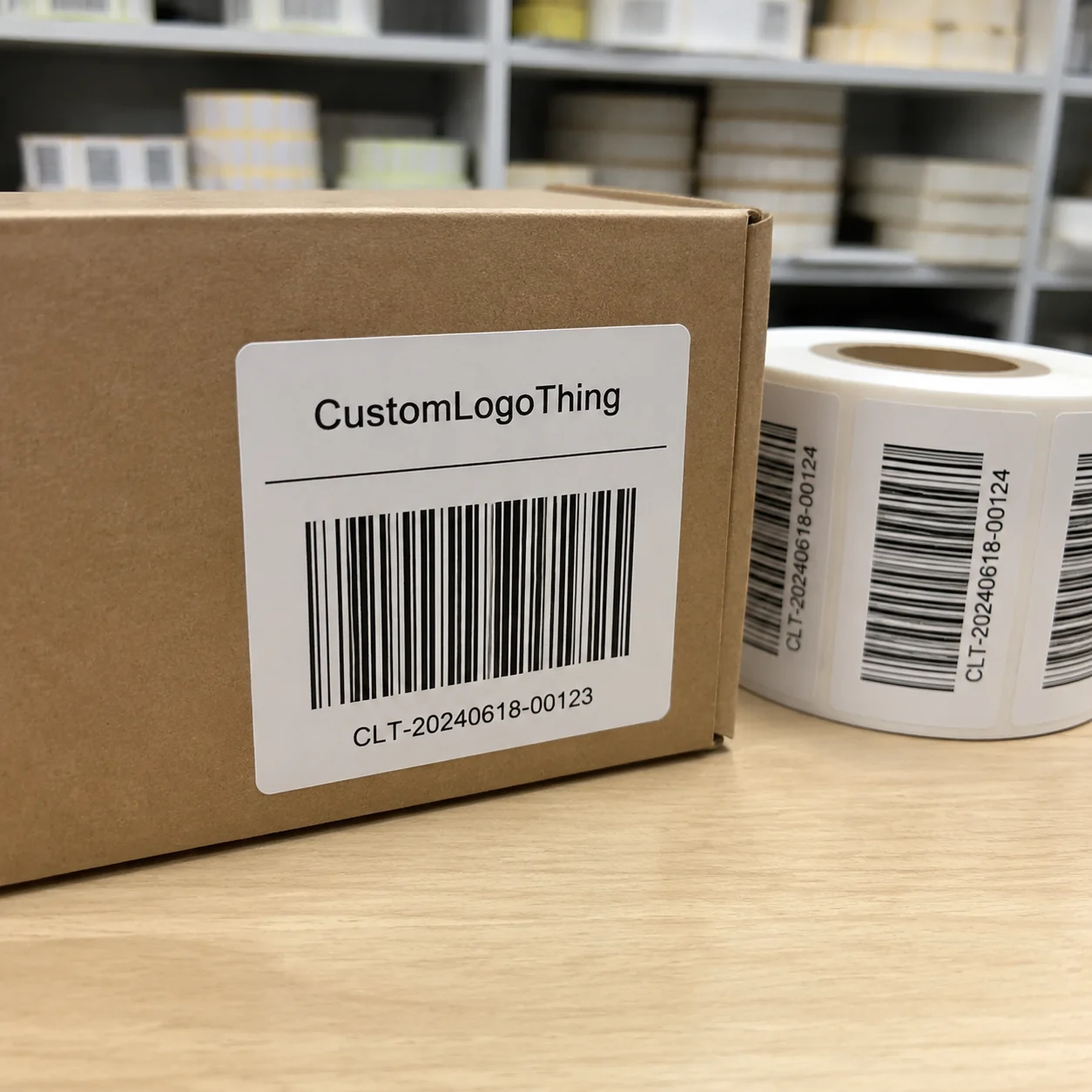
| Adhesive label | Box interior, tissue wrap, outer sleeve | 0.75–2.5 in wide | Fast to apply, but adhesive strength must match the surface |
Satin labels suit soft pouches because they do not fight the fabric. Cotton labels feel more natural and handmade. Woven labels work well for reusable pouches or textile accessories where the logo is the hero and the care text is short. Cards and tags are usually better for boxed jewelry because they hold more detail without turning the label into an eye exam.
Attachment matters. A label can be sewn into a pouch seam, loop folded onto ribbon, stitched flat to fabric, applied inside a box lid, used as a tissue seal, or inserted under a product card. Jewelry usually does not need garment-style washing symbols unless the label is attached to a textile pouch, bag, or accessory. Match the content to real customer behavior, not a generic apparel template from a dusty catalog.
Useful text categories include cleaning instructions, storage guidance, water exposure warnings, tarnish prevention, plating care, allergy notices, material disclosure, warranty notes, website URL, QR code, and a short brand line. Tiny labels look elegant, but they force microscopic text. Larger labels explain more, but they can crowd a delicate pouch.
Minimalist fine jewelry brands often do best with a simple card plus a small pouch label. Handmade marketplace sellers may prefer cotton or kraft. Subscription jewelry boxes usually need cost-controlled cards and stickers. Bridal accessory brands can justify foil tags or soft-touch cards. Permanent jewelry studios often need clear aftercare cards with QR codes. Fashion jewelry lines need durable, inexpensive labels that scale.
The best supplier will ask what the label is doing before quoting. If they quote blindly, congratulations, you found a printer with a keyboard.
Materials, Print Methods, and Finish Options to Specify
Material choice can move a Care Labels Supplier Quote for jewelry brands from practical and inexpensive to premium and costly very quickly. Core materials to compare include polyester satin, recycled polyester, organic cotton, standard cotton, nylon, taffeta, woven damask, kraft paper, coated card stock, textured paper, transparent adhesive stock, and matte adhesive stock.
Satin prints crisply and feels smooth. Cotton has a softer, more organic look, but ink may absorb unevenly and fine lines can lose sharpness. Woven damask labels cost more because the design is built with thread rather than printed ink, but the finish feels more permanent. Paper care cards are flexible, economical, and easier to update across product collections.
Print method affects cost, color, and timeline. Screen printing is strong for simple one-color textile labels. Digital printing handles short runs, gradients, and variable artwork better. Thermal transfer can work for basic label printing. Flexographic printing is common for roll labels and higher-volume adhesive work. Offset printing suits care cards and hang tags where color control and finish matter. Woven production works for logo-forward textile labels with fewer small words.
Jewelry care labels may not face machine washing, but they still need to survive rubbing, oils, perfumes, humidity, and packaging friction. A satin label stitched into a pouch can rub against chains and clasps during storage. A card under a ring box insert can scuff if the stock is too soft. A sticker on textured paper may lift if the adhesive is wrong.
Finish options include matte coating, gloss coating, soft-touch lamination, foil stamping, embossing, debossing, rounded corners, die-cut shapes, reinforced holes, cotton string, ribbon, elastic cord, and safety pin attachments. One-color black printing is usually the cheapest and cleanest option. Metallic ink and foil look premium, but they require better artwork prep and tighter production control. Fancy costs money. Shocking, I know.
QR codes need enough printed size, quiet space, and contrast. For most care cards, keep the QR code around 0.6–0.8 inches square or larger if the surrounding artwork is busy. Do not place it across a fold, stitch line, hole punch, or heavy texture. Test it from the proof and again from a physical sample before bulk production.
Practical rule: ask for photos or samples of similar materials before committing. A spec sheet is not a sense of touch.
If sustainability claims matter to your brand, be precise. Recycled polyester, FSC-certified paper, and organic cotton are different claims with different documentation. For paper-based packaging, the Forest Stewardship Council is a useful reference point for responsible sourcing language. Do not print claims you cannot support.
Size, Artwork, and Compliance Details That Change the Quote
Label size is one of the fastest ways to change price because it affects material yield, print area, cutting, folding, and packing efficiency. A 1 x 1 inch satin label and a 2 x 3.5 inch foil hang tag are not “basically the same small thing.” They use different material, different setup, and different labor.
Practical size ranges help. Mini satin labels are often 0.5 to 1 inch wide. Pouch labels usually sit around 1 to 2 inches wide. Care cards often use business card size, 2 x 3.5 inches, or a smaller 2 x 2 inch square. Hang tags commonly range from 1.5 x 2.5 inches to 2 x 3.5 inches. Tiny folded labels can work, but only if the copy is short.
Fold styles include straight cut, end fold, center fold, loop fold, mitre fold, book fold, and Manhattan fold. Straight cut works for flat sewn labels. End fold hides raw edges. Center fold and loop fold work well on pouch seams, drawstrings, or ribbon. Book fold gives more surface area, but it can feel bulky on small jewelry packaging.
Artwork should be production-ready. Send a vector logo in AI, EPS, or PDF. Outline fonts. Provide Pantone or CMYK references. Use high-resolution raster images only when needed. Mark bleed and safe area clearly for cards, tags, and stickers. For very small textile labels, avoid hairline strokes and tiny serif fonts unless you enjoy disappointment.
Copy must be final before proofing. Care wording changes after proof approval can add delays and sometimes setup costs. A supplier can print the words, but the brand owns the claims. Suppliers are not legal counsel. Again, shocking.
Regulatory and practical content may include fiber content for textile pouches where applicable, country of origin where required, material claims, metal allergy warnings, small-parts warnings for children’s items, and accurate plating language. Do not call something “gold” if it is gold-tone alloy. Do not call a plated item “solid” unless it actually is. Customers notice. Regulators notice too.
Create a simple brief before asking for pricing. Include size, material, print colors, fold type, artwork, quantity, destination, and packaging use case. If you sell multiple collections, mention version count. Five care card versions packed by SKU costs more than one shared design packed in bulk.
Care Labels Supplier Quote for Jewelry Brands: Pricing, MOQ, and Unit Cost Factors
A proper Care Labels Supplier Quote for jewelry brands depends on quantity, material, size, print method, number of colors, finishing, folding, attachment accessories, packing requirements, and shipping destination. Unit price alone is not enough. Landed cost is what matters.
Basic printed satin or cotton labels can often land in the low cents to several cents each at larger volumes, depending on size and print coverage. Short runs cost more because setup gets spread across fewer units. A 500-piece order may feel expensive per label. A 5,000-piece order usually looks much better, assuming your design is stable.
Printed cards and stickers often support lower MOQs because digital production is easier to set up. Woven labels, foil tags, specialty fabric labels, and custom die-cut shapes usually need higher minimums because setup is heavier. Foil dies, cutting dies, weaving setup, color matching, and folding labor all have to be paid for somewhere. They are not absorbed by magic.
| Option | Typical MOQ Pattern | Common Cost Drivers | Best Buying Move |
|---|---|---|---|
| Digital care cards | Lower minimums possible | Stock weight, finish, print sides, corners | Ask for 500, 1,000, and 2,500 tiers |
| Printed satin labels | Moderate minimums | Width, fold style, color count, cutting | Use one-color print for cost control |
| Cotton labels | Moderate to higher minimums | Fabric type, ink absorption, finishing | Request sample photos before approval |
| Woven labels | Higher minimums common | Thread colors, density, fold, logo detail | Simplify artwork and avoid tiny copy |
| Foil hang tags | Higher setup cost | Foil die, stock, hole punch, string | Use for premium collections, not every SKU |
Ask suppliers to list setup fees, plate fees, proof fees, die charges, Pantone matching fees, and express production surcharges. These are not hidden if the supplier is competent; they should appear clearly in the quote. If the quote is one vague number with no detail, push back.
Compare landed cost, not just unit price. A cheap label quote can become expensive after freight, duties, rushed shipping, reprints, or quality failures. For packaging that ships through parcel networks, testing standards from groups like ISTA can be useful for broader packaging validation, especially if labels are part of gift sets or boxed kits.
Buy more when the design is stable. Buy smaller when you are testing a new collection, new care wording, or new packaging structure. Yes, the unit cost may sting a little. That is still cheaper than sitting on 10,000 outdated labels because someone changed “gold plated” to “gold vermeil” two weeks after launch.
Request tiers at 500, 1,000, 2,500, 5,000, and 10,000 pieces if those quantities match your sales plan. Price breaks show where the real savings start, and sometimes they reveal that the “expensive” supplier is cheaper once setup and shipping are included.
Production Process and Timeline from Quote to Delivery
The production process is straightforward when the specs are clean. It usually runs like this: quote request, spec confirmation, artwork review, digital proof, optional physical sample, production approval, bulk manufacturing, quality control, packing, and shipping.
Quote turnaround can be same day to two business days for simple labels. Complex projects with multiple materials, foil, woven construction, versioning, or specialty packing may take longer. Digital proofs often take one to three business days after artwork is received. Physical samples add several days, sometimes more if the material is custom.
Bulk production varies by format. Simple printed paper cards and basic stickers are usually faster than woven labels, foil tags, specialty cotton labels, or complex folded textile labels. A straightforward card reorder may move quickly. A new woven label with three thread colors, a center fold, and SKU-separated packing needs more time.
Orders slow down for predictable reasons: missing artwork, unclear dimensions, unapproved care copy, late color changes, multiple decision makers, holidays, custom hardware, and destination-specific shipping issues. The most expensive delay is usually not the factory. It is the internal team still debating whether the care card should say “avoid water” or “remove before showering.” Pick one.
Rush production may be possible, but it can limit materials, increase cost, or reduce time for sampling. Speed is useful. Panic is expensive. If labels need to coordinate with jewelry boxes, pouches, tissue, mailers, or retail displays, plan them together instead of treating labels as the last tiny detail.
Digital proof approval deserves attention. Verify spelling, logo placement, fold orientation, QR code function, colors, trim lines, hole position, and quantity. For folded labels, confirm which side faces out after sewing or tying. That sounds basic until a logo ends up inside the fold.
Quality control checkpoints include print clarity, color consistency, cut accuracy, fold alignment, material defects, adhesive strength, card finish, and packaging count. If you have multiple versions, request packing by SKU, collection, or material. It costs a little more sometimes. It saves warehouse confusion later.
How to Compare Suppliers Without Getting Distracted by Pretty Mockups
A good quote is specific. A shiny mockup is not a quote. Mockups help visualize placement, but they do not tell you material thickness, tolerance, lead time, finishing method, adhesive type, or whether the supplier understood the actual packaging use.
Compare suppliers side by side using the same specs. Review material, size, print method, quantity, MOQ, setup fees, proofing process, sample options, production timeline, shipping method, payment terms, and remake policy. If one supplier includes freight and another does not, the cheaper number may be fake comfort.
Jewelry labels require small-format discipline. A supplier used to oversized apparel neck labels may not automatically understand tiny pouch labels, mini insert cards, or delicate box interiors. Fine text, QR codes, foil alignment, and fold placement get harder as the label gets smaller.
Communication quality tells you a lot. If a supplier cannot answer basic questions before payment, they probably will not become magically responsive after they have your money. Ask direct questions: What material weight? What print method? What tolerance? Can you show similar work? What happens if the QR code prints too soft to scan?
Sample libraries and previous work matter. Ask for photos or videos of similar labels, not just catalog images. For color, expect a professional supplier to explain Pantone, CMYK, material absorption, and reasonable tolerance. Anyone promising perfect color on every material is selling fantasy.
Packing and counting also matter. Labels should arrive organized by SKU, version, or material when requested. A mixed carton of 12 similar beige labels is a fulfillment headache waiting to happen.
For custom jewelry labels, care cards, pouch labels, or hang tags, review the available Custom Labels & Tags formats before finalizing specs. If labels are part of a larger packaging system, broader branded packaging examples in the Case Studies section can help identify the level of finish and coordination you need.
Before You Request a Supplier Quote
Prepare the basics before contacting a supplier. Choose the label format. Select a material preference. Define the size. Decide quantity tiers. Prepare logo files. Finalize care text. Choose print colors. Confirm where the label will be used.
- Format: satin label, cotton label, woven label, sticker, hang tag, care card, or insert card.
- Size: include width, height, fold size, hole size, or finished card size.
- Material: satin, cotton, woven damask, kraft paper, coated card, textured paper, matte adhesive, or transparent stock.
- Print: one-color, CMYK, Pantone match, foil, embossing, debossing, or woven thread colors.
- Quantity: ask for 500, 1,000, 2,500, 5,000, and 10,000 pieces if relevant.
- Packaging use: pouch seam, box lid, display card, gift bag, mailer, or retail kit.
- Deadline: include approval date, in-hand date, and shipping destination.
Send photos of the jewelry packaging if you have them. A pouch, box, display card, mailer, or gift bag photo helps the supplier recommend realistic sizing and attachment. A 1.25 inch cotton label may look perfect on a large velvet pouch and ridiculous on a tiny ring pouch.
Send both the ideal spec and the budget target. A good supplier can suggest tradeoffs: smaller size, fewer colors, different stock, standard shape, or a higher quantity for a better unit cost. Ask for two or three quote options. For example: budget printed label, mid-range cotton label, and premium woven or foil option.
Request a proof every time. For premium launches, request a physical sample before bulk production. Sampling costs less than explaining a bad label to customers. Also confirm whether labels need to coordinate with boxes, pouches, tissue, ribbons, stickers, or other branded packaging.
For an accurate Care Labels Supplier Quote for jewelry brands, the supplier needs artwork, dimensions, quantity tiers, material preference, care text, shipping destination, and deadline. Complete specs get accurate pricing, MOQ, and timeline. Vague specs get guesswork, and guesswork is a terrible purchasing strategy.
FAQs
What should I include when requesting a care label supplier quote for a jewelry brand?
Send the label format, size, material, print colors, quantity, fold or cut style, artwork files, finalized care text, delivery location, and deadline. Include photos of your pouch, box, card, or mailer so the supplier can recommend the right label size and attachment method. Ask for quantity breaks, usually at 500, 1,000, 2,500, 5,000, and 10,000 pieces, so you can compare unit cost.
What is the typical MOQ for custom jewelry care labels?
MOQs vary by product type. Printed cards and stickers often support lower quantities, while woven labels, foil tags, custom die-cuts, and specialty fabric labels usually require higher minimums. If you are testing a new collection, start with a smaller run even if the unit price is higher. For stable packaging designs, larger runs usually reduce unit cost significantly.
Which material is best for jewelry care labels?
Satin is smooth, clean, and popular for pouches. Cotton feels natural and handmade. Woven labels look premium for reusable textile packaging. Paper care cards are the most flexible choice for boxed jewelry because they hold longer instructions, QR codes, warranty notes, and material disclosures. The best material depends on whether the label is sewn, inserted, tied, or stuck to packaging.
How long does production take after approving the care label proof?
Simple printed labels, stickers, and cards are usually faster than woven, foil, or specialty fabric labels. Timeline depends on sample needs, order size, material availability, finishing, quality control, and shipping method. Delays usually come from missing artwork, late text changes, unclear dimensions, slow proof approval, or last-minute color changes.
Can jewelry care labels include QR codes and small care instructions?
Yes, but the QR code needs enough size, contrast, and quiet space to scan reliably. Small care text must remain readable after cutting, folding, sewing, or hole punching. Always test the QR code on the final proof or physical sample before approving bulk production. If it does not scan easily under normal lighting, fix it before the full run.