A ceramic studio Tissue Paper Quote can look simple on the surface, then the details start stacking up fast: sheet size, print coverage, folding style, pack count, freight, and the little handling choices that quietly move the final number. A quote that starts from a rough guess usually turns messy later, which is why a ceramic studio tissue paper quote should be built from actual specs, not a quick ballpark. If you have ever watched a beautiful sample become a headache in production, you already know how that story goes.
Studios use custom tissue to protect mugs, plates, glaze-fired pieces, and boxed sets while giving every shipment a sense of care and intention. A good ceramic studio tissue paper quote lets you get that thoughtful unboxing moment without paying for premium details you do not need. The goal is practical, not precious: tissue that folds well, prints cleanly, protects fragile work, and stays inside budget.
Buyers balancing fragile ceramics, tight margins, and event deadlines need the real cost drivers before they commit. If you are comparing vendors, ask for a ceramic studio tissue paper quote that breaks out stock, print method, ink coverage, folding, packing, and freight. Without that separation, two totals can look close while describing very different products, and that is where people get burned.
Ceramic studio tissue paper quote: what drives the price
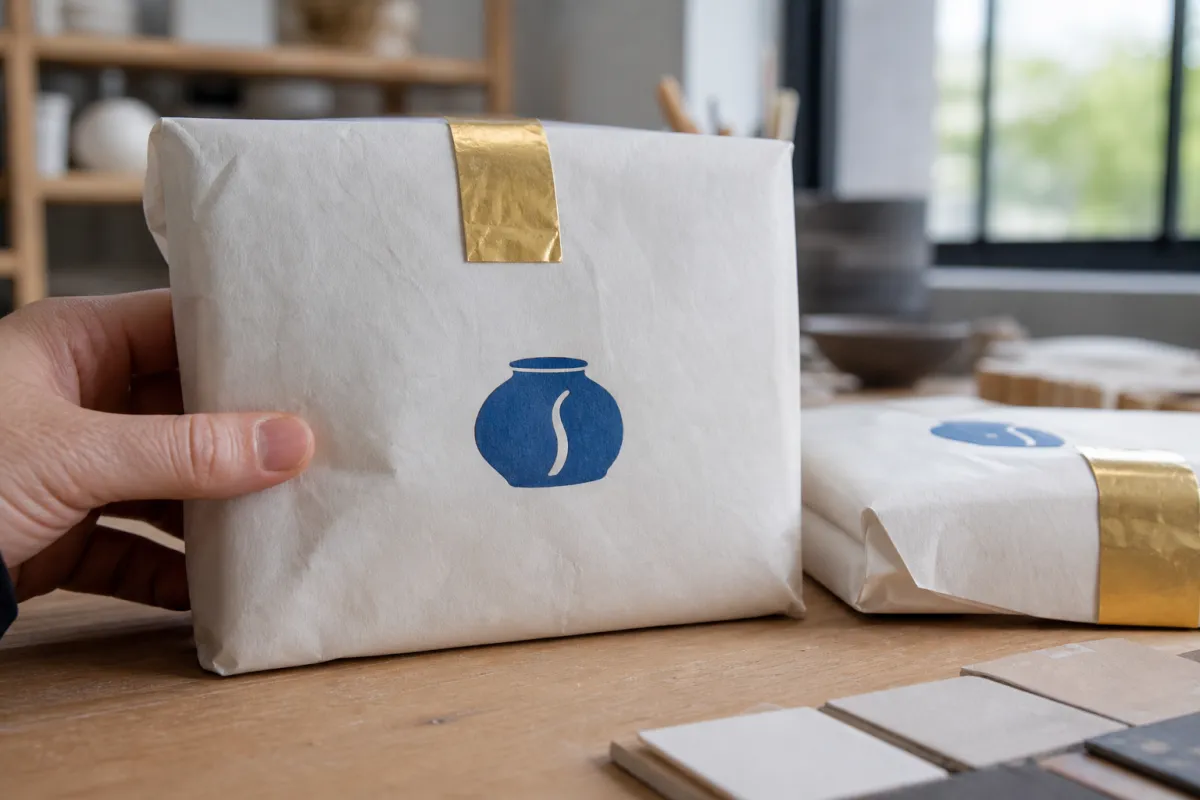
Paper tissue seems inexpensive until the production details show up. A plain blank sheet can stay low cost, but a ceramic studio tissue paper quote rises quickly once you increase sheet size, add print coverage, or ask for a pack format that needs more handling. That is not a hidden fee. It is just the math of paper, ink, labor, and waste doing what math does.
The most common mistake is comparing quotes by sheet count alone. Two orders can both list 10,000 sheets and still land at very different totals because one uses a larger sheet, a heavier tissue stock, or a full-coverage pattern. The ceramic studio tissue paper quote that looks cheapest on the first line can end up the most expensive after freight, overage, and wasted material are added. I have seen that more than once, and it is always avoidable with a better spec sheet.
Custom tissue for ceramic brands usually has two jobs at once. It cushions the product and it strengthens the brand story inside the box. That matters for gallery pieces, mug collections, holiday sets, and wholesale orders where the customer sees the packaging before they ever touch the ceramic itself. A useful ceramic studio tissue paper quote should reflect both the protective role and the presentation role, not just one of them.
Opacity matters more than many buyers expect. Thin tissue with a dense print can ghost through, and once that happens the logo can look faint, muddy, or uneven. A slightly better stock, often around 17-22 gsm depending on the job, may cost more per sheet, but it can keep the print crisp and the tissue from feeling flimsy. That is the kind of tradeoff a real ceramic studio tissue paper quote should explain clearly. If the tissue is also meant for long-term storage, ask whether the stock is acid-free or low-acid. Not every order needs archival paper, but the question is worth asking.
A studio does not need tissue that only photographs well on a sample table. It needs tissue that folds cleanly, prints consistently, protects fragile work, and holds up in a busy packing room where speed matters as much as appearance.
Freight deserves a separate line, not a buried assumption. A quote should show paper, print, packing, and shipping as distinct items so you can see where the money is actually going. If those are bundled together, it becomes hard to know whether the deal is genuinely favorable. A clean ceramic studio tissue paper quote gives you the information needed to compare real options rather than polished totals.
For broader packaging guidance, the educational resources at packaging.org are helpful when you want to sanity-check material choices and transit expectations. If your brand pays close attention to fiber sourcing, the FSC framework remains one of the clearest references for responsible paper claims. Those references do not replace a vendor quote, but they do help you ask better questions.
Small studios usually do best with a quote built around a standard sheet size, one or two print colors, and a realistic MOQ. Push the design too hard and the ceramic studio tissue paper quote climbs without adding much practical value. Most buyers do not need a luxury stationery spec. They need tissue that packs well, prints cleanly, and does the job every day.
Ceramic studio tissue paper quote: print styles and artwork setup
Print style changes pricing more than many people expect. A ceramic studio tissue paper quote for a one-color logo repeat is usually the easiest to control. Add a second ink, a larger repeat, or a heavy background pattern, and the number moves. That is normal, because ink, setup, proofing, and registration all have real cost behind them.
The best print style depends on the brand story you want the tissue to support. A small pottery studio with hand-thrown mugs may want a subtle logo repeat or a light watermark pattern that lets the product stay central. A more premium ceramic label may prefer a denser repeat or a full-sheet pattern that makes the box feel deliberate from the first fold. Either way, the ceramic studio tissue paper quote should reflect the visual weight of the artwork, not just the number of colors.
Artwork setup matters just as much as the design itself. Send vector files if you have them. Keep line art clean. Define spot colors clearly. Confirm whether the repeat should sit on a straight grid or shift in a staggered layout. Cleaner files shorten the approval cycle, while sloppy files slow everything down. A messy file can stretch a ceramic studio tissue paper quote by days, and sometimes by an entire week if revisions keep bouncing back and forth. Honestly, that is where a lot of avoidable frustration lives.
A simple approach often works best. A crisp one-color logo repeat on good tissue usually looks more polished than a crowded pattern trying to carry too much weight. Ceramic packaging should feel thoughtful and restrained, not loud for the sake of being loud. If the right direction is unclear, ask for two quote options and compare the effect on unit cost and appearance. That is a better use of time than guessing from memory or mood.
Dark inks, full-bleed layouts, and multiple print colors can also push minimums upward. More coverage means more setup, more proofing, and a higher chance of make-ready waste. A ceramic studio tissue paper quote that states those realities plainly helps prevent production surprises later. Strong artwork is fine. Expensive artwork is fine too. Pretending it should cost the same as a simple repeat is the mistake.
Artwork checklist for a cleaner quote:
- Vector logo file in AI, EPS, or PDF format
- Preferred sheet size and whether the design needs a repeat pattern
- Number of print colors and any Pantone references
- Approximate print coverage, from small logo to full background
- Target quantity and target ship date
If you need help sorting out the file side, a quick request for artwork review can spare you a long chain of revisions. That is especially useful for a ceramic studio tissue paper quote tied to a launch date or wholesale drop, where one small delay can ripple through the rest of the schedule.
Specifications that matter before you approve a sample
Before you approve a sample, confirm the basic specs. A ceramic studio tissue paper quote should list sheet size, paper weight, print area, color count, folding style, and pack configuration. If those details are vague, the quote is not ready yet. It is only a polite estimate wearing a professional tone.
For ceramic products, sheet size matters more than many buyers realize. Small items like earrings or single mugs may work with a compact sheet, but boxed sets, stacked plates, and awkward forms need more surface area for wrapping and layering. A proper ceramic studio tissue paper quote takes product dimensions into account because the wrong sheet size creates waste. Too small, and the wrap fails. Too large, and you pay for empty space that does nothing useful.
Paper weight usually sits in the 17-22 gsm range for many tissue runs, though the right choice depends on the look you want and how the paper folds around your ceramics. Lighter tissue can feel delicate but may tear more easily. Heavier tissue can feel sturdier, yet it costs more and may lose some of that airy feel. A careful ceramic studio tissue paper quote should tell you which stock supports the packing style instead of leaving you to interpret a number by itself.
Finish and handling matter, too. Some tissue folds sharply and stays in place around a mug handle. Some has a softer drape that works nicely for apparel packaging but becomes awkward around angular ceramics. If the paper needs to wrap irregular forms without cracking, ask for a sample that is tested in the actual packing workflow. A ceramic studio tissue paper quote only proves useful if the tissue can survive real hands on a real table.
When you review the sample, do not stop at a photo. Fold it, crumple it lightly, wrap a piece with awkward edges, and check whether the ink transfers. A solid sample should pass four tests: look, feel, tear resistance, and print stability. If it fails one of those, the ceramic studio tissue paper quote deserves another round of review before production gets the green light. I have watched pretty samples fall apart in the first minute of packing, and that is not a fun surprise on a deadline.
Common spec mismatches:
- Choosing a small sheet for an oversized mug box
- Selecting a beautiful design that smudges during folding
- Buying heavy stock that slows packing speed
- Approving a repeat pattern without checking seam alignment
- Ignoring whether the pack count matches your storage space
From a transit standpoint, ceramic pieces are usually more sensitive than the tissue itself. That means the tissue should support the wider packaging system, not stand alone as a pretty layer. If you want a useful benchmark for shipping tests, the ISTA resources are worth a look, especially for parcel and distribution shock testing. A ceramic studio tissue paper quote should account for the realities of shipping fragile boxed goods, not just the visual finish.
If your studio wants the simplest path, ask for a sample built to the same sheet size and print count you plan to order. That keeps the evaluation honest. A sample that is prettier than the production spec is not a useful sample. It is a convincing distraction.
Cost, pricing, MOQ, and unit cost: how to compare quotes
A ceramic studio tissue paper quote should separate setup fees, screen or plate charges, per-sheet pricing, packing, and freight. If any of those are hidden, the comparison is shaky. Buyers lose money when they focus only on the headline number and ignore the rest of the order economics. This is where a quote either helps you decide or quietly misleads you.
MOQ changes the math quickly. Smaller runs are possible, but they usually carry a higher unit cost because the setup cost gets spread across fewer sheets. A 2,000-sheet order may look convenient, while a 10,000-sheet order can bring the per-sheet cost down sharply. The real question is whether your studio has the storage room and reorder rhythm to support that volume. A ceramic studio tissue paper quote should make that tradeoff obvious instead of leaving you to guess.
For small ceramic studios, the right answer is often not the absolute minimum order. It is the smallest run that still gives you a sensible unit cost without crowding your storage. If you sell mostly direct to consumer and ship in bursts, a smaller MOQ may be worth the premium. If wholesale demand is steady, a larger ceramic studio tissue paper quote can be the better long-term choice. The right answer depends on how your studio actually ships, not how it wishes it shipped.
Here is a practical comparison table. The numbers are directional rather than fixed. Real pricing depends on sheet size, artwork, color count, and freight distance. Even so, this is the kind of structure a buyer should expect to see before making a decision. A vendor who cannot give you this level of breakdown is asking you to buy blind.
| Option | Best for | Typical unit range | MOQ / notes |
|---|---|---|---|
| One-color logo repeat on standard tissue | Small studios, clean branding, lower setup complexity | $0.09-$0.16 per sheet at 5,000 sheets | Often 3,000-5,000 sheets; strong value for repeat orders |
| Two-color pattern or logo plus detail | Mid-tier product lines, stronger shelf and unboxing impact | $0.12-$0.22 per sheet at 5,000 sheets | More setup and proofing; color matching matters more |
| Full-coverage or full-bleed artwork | Premium pottery, seasonal packaging, statement presentation | $0.18-$0.35 per sheet at 5,000 sheets | Higher ink use and more waste risk; minimums can rise |
| Larger sheet size or heavier tissue stock | Oversized mugs, boxed sets, fragile layered wrap | $0.15-$0.30 per sheet depending on stock | Paper cost rises with size and basis weight |
Those ranges tell a clear story. A ceramic studio tissue paper quote can move from a few cents to the high teens or beyond depending on coverage and format. That does not mean the higher option is wrong. It means you need to know exactly what you are paying for. If the more expensive version helps reduce breakage, improve shelf appeal, or support a stronger wholesale position, it may be the better buy.
Do not ignore total landed cost. A quote that looks inexpensive before freight can become the most costly option after shipping and receiving charges are added. Ask whether the estimate includes carton packing, palletizing if needed, and delivery terms. A proper ceramic studio tissue paper quote should let you compare landed cost, not just factory pricing.
Use this comparison framework:
- Price per sheet
- Price per pack, if applicable
- Setup or tooling fees
- Shipping and any packing add-ons
- Reorder cost at the same spec
That is the clean way to judge a ceramic studio tissue paper quote. Chasing the lowest number often backfires. Thin stock, oversized waste, sloppy packing, or surprise freight charges can erase the savings faster than expected. Packaging is one of those categories where cheap often becomes expensive in one bad afternoon.
Process, timeline, and lead time from proof to shipment
A good ceramic studio tissue paper quote is more than a number. It is also a process. The usual sequence is inquiry, artwork review, quote approval, sampling, proof sign-off, production, packing, and shipment. If a vendor cannot explain that path clearly, they probably have not thought through your order with enough care.
Most quote responses can come back within 24 to 48 hours if the artwork is clean and the spec is clear. Sampling often takes a few days, depending on print complexity and whether the tissue needs color matching. After proof approval, production lead time often lands in the 12-15 business day range for standard runs, though busy periods can extend that. A realistic ceramic studio tissue paper quote should show where the time goes, not hide it under one vague line.
Where do delays usually show up? File fixes. Color matching. Waiting for approval. More file fixes. That pattern is not mysterious; it is just paperwork paired with a print process. If you want the timeline to stay on track, send editable artwork, confirm the sheet size before the quote is finalized, and approve the proof quickly. A fast-moving ceramic studio tissue paper quote depends more on buyer clarity than on vendor enthusiasm.
If your studio is planning a market launch or a wholesale restock, build in buffer time. Ceramic orders often move in waves: first the product run, then the packaging run, then the packing schedule. If the tissue arrives late, the whole shipment waits. That is why a ceramic studio tissue paper quote should always be tied to a target ship date, not just an order quantity. A week of slack can save you a month of scrambling.
A few practical ways to shorten lead time without cutting corners:
- Send the logo as a vector file from the start
- Confirm the exact sheet size before requesting the quote
- Decide the print color count before sampling begins
- Keep the artwork repeat simple unless you truly need a complex pattern
- Answer proof questions the same day whenever possible
For fragile ceramics, transit planning matters as much as print approval. If your tissue paper is part of a boxed shipping system, think in terms of the entire pack-out rather than one layer of paper. That is where a ceramic studio tissue paper quote connects to the rest of your packaging schedule. The tissue should fit the packing line instead of creating friction for it.
If you want to move quickly, a custom quote request for ceramic packaging is the best place to start. Include quantity, size, print colors, and ship target. That is enough to build a solid ceramic studio tissue paper quote without losing days to guesswork.
Why choose us for ceramic studio tissue paper
Custom Logo Things focuses on practical packaging, not theater. For a ceramic studio tissue paper quote, that means clear pricing, straightforward spec guidance, and support that respects small runs as much as larger reorder programs. Some suppliers talk as if every customer is a multinational. That does not help a studio packing 300 mugs and trying to keep a launch on schedule.
The real value is repeatability. Your tissue should print consistently, fold cleanly, and fit the same way on reorder. A strong ceramic studio tissue paper quote should give you confidence that the next batch will match the first one closely enough that your packaging does not drift from month to month. That kind of consistency matters more than a flashy pitch.
We also keep MOQ guidance honest. If a small run makes sense, we say so. If a slightly larger order lowers your unit cost in a meaningful way, we say that too. No smoke. No fake urgency. Just the kind of answer a packaging buyer actually needs. It is kinda refreshing, honestly, because not every quote process has to feel like a sales trap.
Quality checks matter here because ceramic packaging tends to expose weak points quickly. Poor registration stands out. Weak paper tears in the packing room. Ink that rubs off turns a nice brand touch into a mess. A careful ceramic studio tissue paper quote should account for those risks before production starts, not after a customer complains. That is the sort of thing you only learn by seeing enough production runs go right and wrong.
What buyers usually get from a direct quoting process:
- Clear sheet-size recommendations based on product use
- Simple guidance on print styles that match the brand
- Realistic MOQ and reorder expectations
- Pricing that separates paper, print, and freight
- Fewer revisions and fewer surprises
That is the point. The goal is not a fancy sales parade. It is a ceramic studio tissue paper quote that helps your ceramics ship well, look good, and stay inside budget. If you want a practical packaging partner, send your tissue paper specs and get a quote built around the actual order instead of a generic template.
Next steps to request your ceramic studio tissue paper quote
Start with the basics. Send your logo file, preferred sheet size, print color count, estimated quantity, and target ship date. That gives the supplier enough information to build a real ceramic studio tissue paper quote instead of a placeholder. If one spec is still uncertain, say so. Guessing is how budgets drift, and once a tissue spec is wrong, the fix is usually more expensive than the first decision would have been.
If you want the smartest result, ask for two options: one at the minimum viable run and one at a higher quantity that improves the unit cost. That comparison shows where the pricing steps down. A good ceramic studio tissue paper quote should help you see whether paying a little more for volume makes sense for your storage and reorder rhythm.
Before you approve anything, run a quick checklist. Confirm packaging dimensions. Confirm whether the tissue needs flexibility for future product sizes. Confirm your reorder goal, even if it is rough. Those three checks save more money than people usually admit. They also make a ceramic studio tissue paper quote easier to compare against other packaging choices like inserts or custom wrap.
Quick decision guide:
- Choose standard tissue if you want clean branding and low complexity
- Choose premium tissue if the product presentation needs a stronger visual cue
- Choose custom wrap if the tissue has to do more than look good, such as carrying a larger surface graphic or special packing function
If your studio ships fragile work through parcel networks, keep transit performance in mind alongside appearance. The packaging should hold up to real handling, not just look polished on a mock-up table. That is why a ceramic studio tissue paper quote should be tied to both product protection and brand presentation. One without the other is only half the answer.
Send the core specs now, then compare the quote against how you actually pack, store, and ship ceramic goods. That is the practical takeaway: a good ceramic studio tissue paper quote is the one that fits your real packing routine, not the prettiest number on a screen.
Frequently Asked Questions
What details do I need for a ceramic studio tissue paper quote?
Send logo artwork, sheet size, quantity, print colors, and whether you want standard or premium tissue. Include your target ship date so the ceramic studio tissue paper quote can reflect realistic lead time. If you are unsure about specs, ask for two options instead of guessing. That usually gets you to a better answer faster.
Does a ceramic studio tissue paper quote change with print coverage?
Yes, coverage is one of the biggest price drivers. A small repeat logo usually costs less than a full-bleed pattern or multi-color design. More ink, more setup, and more proofing usually mean a higher unit cost, so the ceramic studio tissue paper quote should show that difference clearly. If it does not, ask for a revised breakdown.
What is the usual MOQ for ceramic studio tissue paper?
MOQ depends on the print method, sheet size, and number of colors. Smaller runs are possible, but the per-sheet price is usually higher. If you want a lower unit cost, ask where the pricing drops at higher volumes in the ceramic studio tissue paper quote. Sometimes the sweet spot is not the smallest order, just the smartest one.
How long does production usually take after approval?
Production starts after artwork approval and deposit confirmation. Lead time depends on sample approval, color matching, and factory schedule. A clean file and fast sign-off usually shorten the timeline, which is why a ceramic studio tissue paper quote should come with a clear approval window. Standard runs often land around 12-15 business days after proof approval, though busy seasons can push that out.
Can I reorder the same ceramic studio tissue paper quote later?
Usually yes, if the artwork and specs stay the same. Reorders are faster when the original file, size, and print setup are already approved. Ask whether the same unit cost applies or if pricing changes with quantity so your next ceramic studio tissue paper quote does not surprise you. A clean reorder history saves a lot of back-and-forth.
If you want branded tissue that protects ceramics and still looks clean in the box, keep the order simple, keep the specs honest, and ask for the ceramic studio tissue paper quote before you commit to a design that will never fit your packing reality. The best packaging choice is usually the one that works hard in the packing room, ships without drama, and still feels like your studio the moment the box opens.