Cheap Custom Tissue Paper That Makes Unboxing Feel Finished
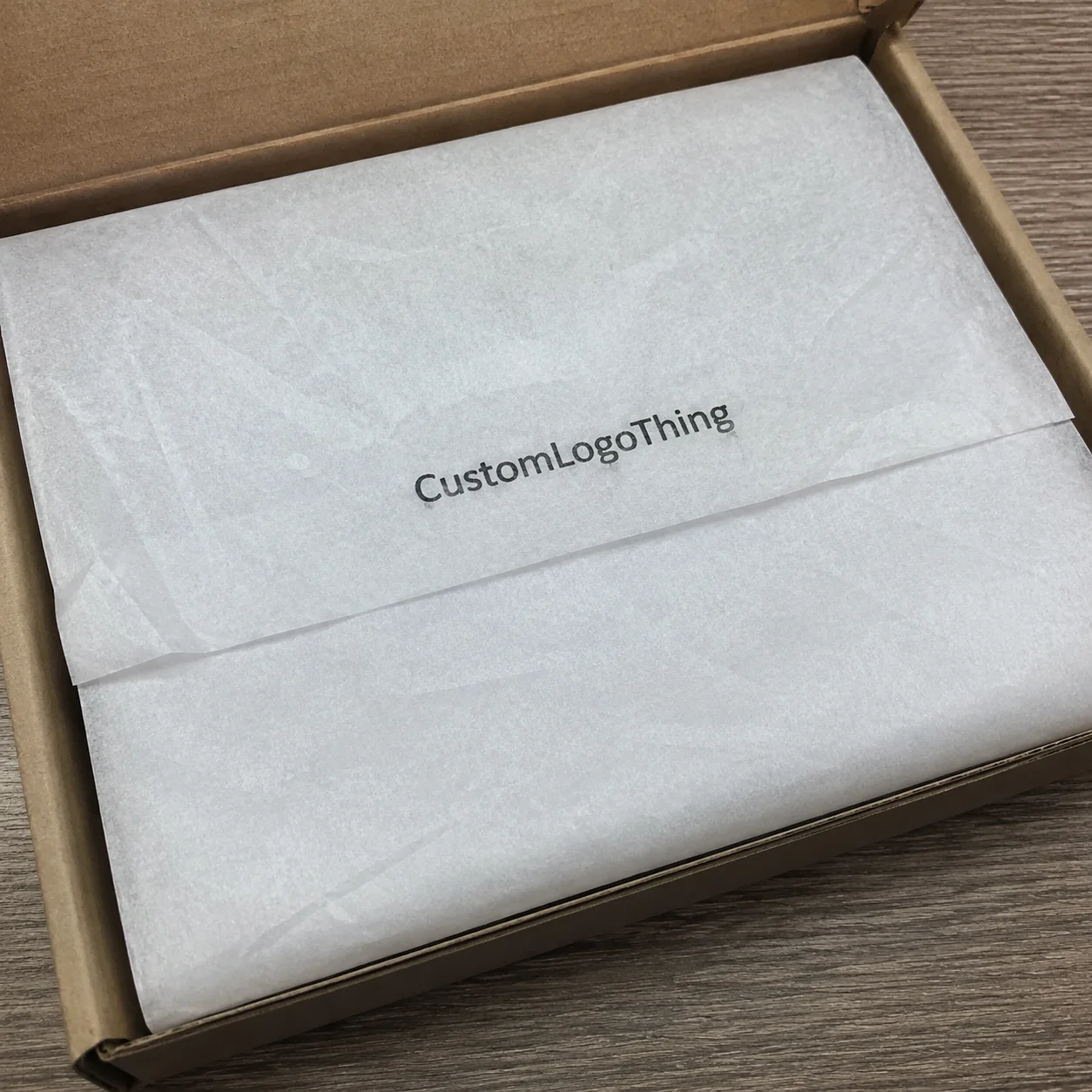
A plain mailer can make a good product feel half-packed. Add one printed tissue sheet around the same item, and the order looks more intentional without moving straight to custom boxes, molded inserts, or expensive rigid packaging.
That is the practical value of cheap custom tissue paper: it is light, flexible, and usually does not change parcel weight in a meaningful way. For ecommerce sellers, boutiques, subscription brands, bakeries, gift shops, and retail teams, tissue is often the first branded packaging component that makes financial sense.
Low cost still needs a controlled specification. The best value comes from matching paper weight, sheet size, ink coverage, artwork repeat, and packing format to the way the sheet will be used. Folded apparel, small ceramics, cosmetics, and monthly subscription cartons do not all need the same tissue setup.
Custom Logo Things can quote more accurately when buyers share concrete order details early: sheet size, print color count, quantity, packing format, delivery location, and in-hands date. Those details turn a rough estimate into a usable buying decision.
Buyer note: Printed tissue is a presentation layer, not structural protection. If the product can crack, dent, leak, or crush in transit, plan for corrugated pads, molded pulp, inserts, air-fill, or a tested shipper design alongside the tissue.
Product Details: Paper Feel, Print Coverage, and Everyday Use Cases
Good tissue is judged by softness, drape, translucency, foldability, and how cleanly it sits inside a box, bag, or gift setup. A lighter sheet wraps small apparel and accessories well. A slightly heavier sheet feels more controlled around candles, boxed cosmetics, folded knits, and gift sets.
Most affordable designs use one of a few print styles. A spot logo repeat gives broad brand coverage while keeping ink use moderate. A single centered logo looks clean for gift wrapping. A border print can frame a box or bag liner, but it requires more attention to sheet orientation. Dense all-over patterns can look strong, but they increase ink coverage, may show more variation, and usually cost more.
Custom tissue works well around folded apparel, inside ecommerce mailers, between accessories, over subscription box contents, around small gift sets, and as a retail bag liner. It can also sit under stickers, hang tags, belly bands, or thank-you cards. If tissue is part of a wider packaging system, it pairs naturally with Custom Packaging Products such as mailer boxes, labels, printed bags, and other branded packaging components.
Handling is part of the spec. Tissue should fold without excessive cracking, pull cleanly from the stack, and arrive in a format that matches the fulfillment station. A team packing hundreds of orders per day will feel the difference between loose, curled sheets and tidy ream-packed or folded bundles that can be grabbed quickly.
Material options vary by stock and order requirements. Common requests include white tissue, colored base tissue, recycled-content paper, FSC-related sourcing where available, and soy- or water-based ink discussions. For sourcing standards, the Forest Stewardship Council is a useful reference for buyers who need responsible fiber documentation. Availability depends on stock, supplier stream, and quantity, so confirm requirements before proofing.
Specifications to Confirm Before You Order Printed Tissue
An accurate quote starts with clear specifications: sheet size, paper weight or GSM, base color, print color count, ink coverage, artwork repeat, order quantity, folding preference, packing format, shipping destination, and target arrival date. Without these points, a quote is only a rough estimate.
GSM is easy to misunderstand. Lighter tissue, often in the low-to-mid teens depending on the stock, gives a soft wrap and helps keep Unit Cost Low. Slightly heavier tissue can feel more substantial, handle larger products better, and reduce tearing during packing, but it may cost more per sheet and take up more carton space.
Sheet size is where many buyers overspend or under-spec. Measure the product or the box interior, then decide whether the tissue needs to line, cover, or fully wrap the item. A 15 x 20 inch sheet may fit small accessories or cosmetics. Apparel and larger gift boxes may need 20 x 30 inch sheets or larger. Oversized sheets slow folding and use more paper; undersized sheets create gaps and make the wrap feel accidental.
Print method depends on quantity, registration needs, and artwork. Many tissue programs use flexographic-style production for repeat patterns and larger runs, while other print paths may fit lower quantities or certain artwork requirements. The production team should review line thickness, repeat spacing, ink coverage, and color count before recommending the route. Thin absorbent paper behaves differently from coated board, so artwork that looks crisp on a label may need adjustment for tissue.
- Artwork file: vector AI, EPS, or editable PDF is preferred for clean scaling.
- Color reference: Pantone or CMYK values help guide proofing and production expectations.
- Layout: confirm logo size, repeat direction, margins, and whether the print bleeds to the edge.
- Fine details: avoid tiny reversed-out type, hairline strokes, and dense solids unless reviewed first.
- Packing format: choose flat packed, folded, ream packed, or bulk cartons based on packing workflow.
Before approval, check the sheet against the actual box or product. A digital proof can look correct while the physical fit fails at the packing table.
Pricing, MOQ, and Unit Cost Drivers for Custom Tissue Orders
Pricing is driven by order quantity, sheet dimensions, paper weight, ink color count, ink coverage, proofing needs, packing format, and freight. A one-color repeat on standard white tissue usually prices very differently from a large colored sheet with dense two-color coverage and special packing instructions.
Minimum order quantity is often more approachable than rigid box or corrugated programs, but it still depends on setup, paper availability, print method, and artwork complexity. Simple one-color jobs tend to have more flexible entry points. Specialty base colors, exact color matching, heavy ink coverage, or multiple artwork versions can push the minimum higher.
Unit cost drops as volume rises because setup time, plate or screen preparation where applicable, press makeready, cutting, packing labor, and carton handling are spread across more sheets. Tiered pricing helps buyers compare a launch quantity, reorder quantity, and bulk stock quantity.
| Order Choice | Typical Cost Impact | Best Fit |
|---|---|---|
| One-color repeat on white tissue | Usually the most economical custom print route | Launches, ecommerce orders, boutiques, reorder stock |
| Two-color artwork or tighter brand matching | Higher setup and print control requirements | Established retail packaging or coordinated campaigns |
| Large sheet size or heavier GSM | More paper per unit and higher freight volume | Apparel, gift boxes, bulky product packaging |
| Dense all-over ink coverage | Higher ink use, longer review, greater variation risk | Bold branded packaging where budget allows |
| Folded or station-ready packing | May add labor cost but can save fulfillment time | Teams packing steady daily order volume |
For budget control, start with one color, a standard sheet size, available base paper, moderate ink coverage, and consolidated shipping. Higher cost may be justified if heavier paper improves handling, if exact brand color matching is central to the package, or if a rush order protects a launch date.
A clear quote request should include target quantity, artwork file, sheet dimensions, desired paper feel, delivery ZIP code or country, in-hands date, and whether the tissue will be hand-packed or used on a fulfillment line. If boxes, bags, or inserts are being priced at the same time, review tissue as part of the broader custom packaging product mix so sizes and schedules do not conflict.
Production Process and Lead Time From Artwork to Delivery
The standard order path is simple: confirm sheet size, GSM, base color, quantity, print colors, packing style, and delivery address; review artwork; approve the quote; then approve a digital proof showing logo scale, repeat direction, color notes, sheet size, and safe area. Production should not begin until that proof is approved.
Lead time is most reliable after final proof approval and payment or purchase order confirmation, not from the first inquiry. Simple printed tissue orders may often need about 12 to 20 business days after approval, depending on material availability, quantity, plant schedule, finishing, packing, and transit. Larger runs, specialty stocks, or multi-color work can need more room.
Proofing deserves careful attention. Check logo size against the sheet, confirm whether the pattern runs horizontally or vertically, review text and color references, and verify margins or bleed notes. If the tissue must face a certain direction inside a box, say so before approval.
Common delays include low-resolution PNG files, missing Pantone references, late sheet-size changes, unclear warehouse receiving rules, and requests for special base paper. Split shipments and carton labeling should also be discussed early, especially for third-party fulfillment centers, kitting houses, retail distribution centers, or event warehouses.
Quality checks usually focus on print registration, color consistency within practical tolerance, sheet count verification, cutting accuracy, clean packing, and carton labeling. Tissue is thin and absorbent, so some variation is normal, but the job should still be controlled. For shipping performance of the full pack, buyers can review transit-test concepts from ISTA, especially when tissue is part of a broader ecommerce packaging program.
Rush production may be possible for simple one-color tissue using available stock. Complex artwork, exact color requests, custom colored base paper, or very high quantities need more scheduling room.
How to Avoid Cheap-Looking Tissue While Keeping the Budget Low
The cheapest-looking tissue usually comes from mismatched specs, not just a low price. Paper that is too thin for a heavy item, muddy artwork, excessive ink coverage, poor logo scale, or a sheet that is too small can all make the presentation feel careless.
If the budget is tight, use a one-color logo repeat or a single-logo system. Simple artwork prints more consistently on thin paper and gives the wrap a deliberate rhythm. A 2.5 to 4 inch logo repeat, adjusted for sheet size, often reads well without turning the tissue into a heavy ink field. Very tiny repeats can look noisy; oversized logos can feel clumsy unless the sheet is meant to act as dramatic gift wrap.
Color expectations should be realistic. Tissue absorbs ink differently than coated boxes, labels, or laminated shopping bags, so colors can look softer. A Pantone reference helps, but exact matching across multiple substrates is not guaranteed. For many brands, a strong one-color print in black, charcoal, navy, green, burgundy, or a close brand tone gives better value than dense multi-color art.
Design for the material. Avoid tiny text, tight patterns, large heavy solids, delicate reversed-out lines, and artwork that depends on perfect edge-to-edge registration. If the tissue will be sealed with a sticker, leave the wrap area calm enough for the sticker to read. If it will sit inside a printed mailer, make sure the tissue and box graphics do not compete.
Finishing touches should serve the packing process. A custom sticker can secure the fold and add a brand mark. A belly band may organize multiple small items. A hang tag can help retail display. Extra layers that slow fulfillment or add no visible value are hidden labor costs.
Operationally, affordable tissue performs best when sheet size, fold method, and packing format are repeatable. Standardized sheets reduce decisions at the bench. Folded bundles help packers grab one piece quickly. Clear carton labels help inventory teams rotate stock and reorder before the last case disappears. If tissue is one part of a larger branding program, it can be coordinated with Custom Packaging Products so the full presentation feels consistent.
Next Steps: Build a Quote-Ready Tissue Paper Order
Start with the product and the packing motion. Measure the item or box interior, then decide whether the tissue will fully wrap, line the box, cover the product from the top, or sit inside a retail bag. A box liner can often use a smaller sheet than a full wrap. A gift-ready apparel fold may need more overlap for a clean tuck.
Next, choose the artwork direction. One-color repeat patterns are usually the most budget-friendly starting point. Multi-color artwork can work, but it needs a strong reason, especially for high-volume fulfillment. Prepare a vector logo file, brand color references, sample photos of the desired wrap style, and any existing packaging dimensions before requesting a quote.
Plan quantity around launch volume, monthly usage, and reorder timing. If repeat orders are likely, request two or three quantity tiers so the price break is visible. Many buyers make better decisions after comparing a starter quantity, a practical monthly quantity, and a bulk stock quantity.
Confirm delivery requirements early. Provide the warehouse address, receiving hours if relevant, split-shipment needs, carton labeling instructions, and the date the tissue must arrive before kitting or fulfillment begins. If the order supports a product launch, build in buffer time for proof review and transit.
A quote-ready request for cheap custom tissue paper includes artwork, target quantity, sheet size, desired paper feel, shipping destination, in-hands date, and any packing or warehouse requirements that could affect production.
Frequently Asked Questions
What is the usual MOQ for affordable custom tissue paper?
MOQ depends on sheet size, paper stock, print method, artwork coverage, and packing format, so the most accurate answer comes from a spec-based quote. Simple one-color logo patterns on standard tissue sizes usually have more flexible minimums than specialty colors, heavy ink coverage, or multiple artwork versions. Ask for tiered pricing at launch quantity, reorder quantity, and larger bulk quantity to see where the unit cost improves.
How much does cheap printed tissue paper cost per sheet?
Unit cost is driven by quantity, sheet dimensions, GSM, ink color count, coverage, packing format, and freight. Larger runs typically lower the per-sheet cost because setup and makeready are spread across more pieces. A standard-size, one-color repeat pattern is usually the most budget-friendly starting point.
Can cheap custom wrapping tissue still match my brand colors?
Brand color matching is possible within practical printing tolerances, but tissue paper absorbs ink differently than coated labels, boxes, or bags. Pantone references, vector artwork, and a clear proof approval process help control expectations before production. For tight budgets, a strong one-color logo print often looks cleaner than forcing dense multi-color artwork onto thin paper.
How long does custom logo tissue paper production take?
Timeline depends on proof approval, material availability, order quantity, print complexity, finishing, packing, and transit distance. Lead time is best measured after final artwork, quote approval, and proof approval are complete. Rush options may be easier for simple one-color jobs using available tissue stock.
What artwork file is best for cheap custom tissue paper printing?
Vector files such as AI, EPS, or editable PDF are preferred because they scale cleanly for repeat patterns and logo placement. Include Pantone or CMYK color references, desired logo size, repeat direction, and safe-margin requirements. Avoid tiny text, thin reversed-out lines, and large heavy ink areas unless the production team confirms they will print well on tissue.