Chocolate Brand Hang Tags Cost: Request Custom Quotes
The chocolate Brand Hang Tags cost is often lower than buyers expect, but the final price usually lives in the setup, finishing, and die cutting rather than the paper itself. A small retail tag can look straightforward on a screen and still carry very different production demands once the order is quoted, which is why two tags that look nearly identical on the shelf can land at very different unit costs.
That matters because chocolate is a brand-led purchase. A well-made hang tag can support brand identity, sharpen visual branding, and improve customer perception without forcing a full carton redesign every time a flavor changes. For seasonal truffles, limited runs, or batch-specific notes, the chocolate Brand Hang Tags cost can be a smarter spend than rebuilding the whole package from scratch.
From a packaging buyer's point of view, the strongest quote is the one that matches the real use case. A gift box hanging from a boutique display, a supermarket chocolate bar tied with ribbon, and a subscription-friendly seasonal sleeve do not need the same stock, finish, or attachment method. That is why buyers at Custom Logo Things often get the best result by requesting a quote with the finished size, quantity, stock preference, print method, and attachment style spelled out up front.
If you are comparing formats, our Custom Labels & Tags page is a useful place to see how small production choices change presentation and budget. The same logic applies to hang tags: the best-looking option is not always the most expensive, and the cheapest option is not always the right one for shelf impact.
Chocolate Brand Hang Tags Cost: What Drives the Number
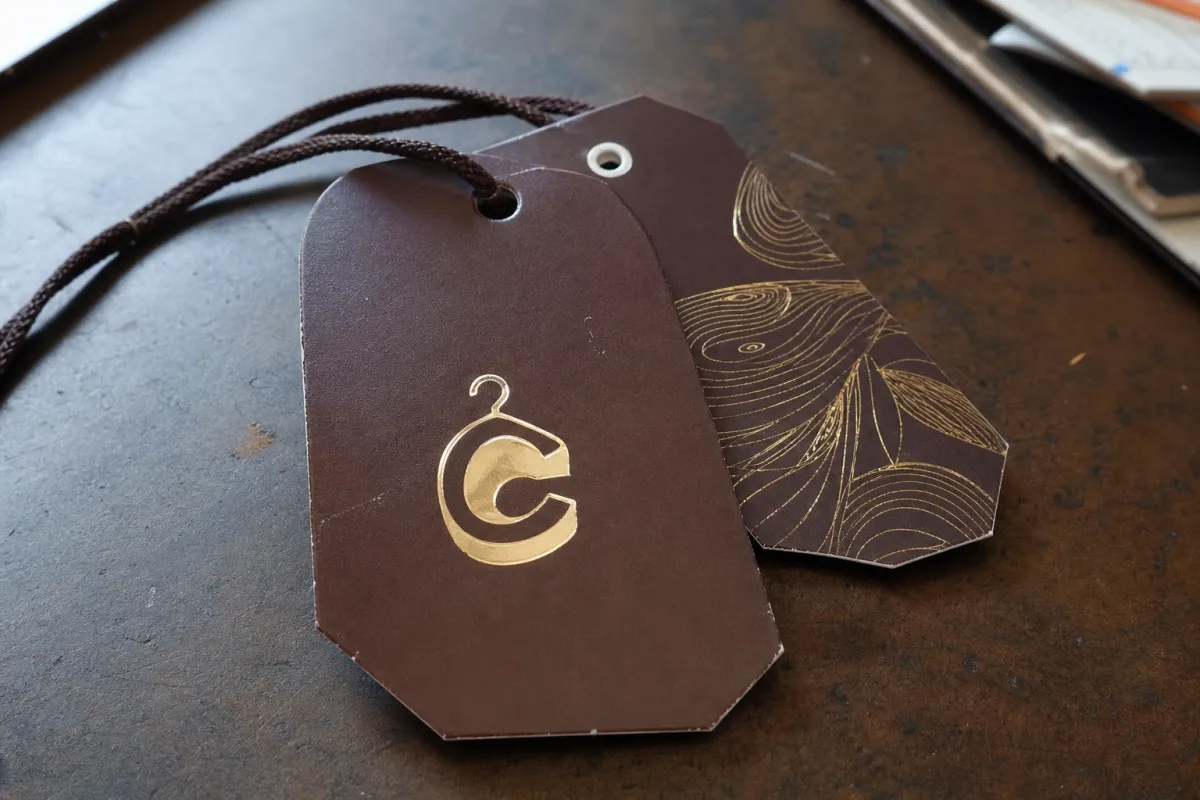
The biggest surprise for many buyers is that the chocolate Brand Hang Tags cost is often driven more by production steps than by raw paper. A sheet of cover stock may be inexpensive, but once you add die cutting, drilling, finishing, and any special attachment process, the labor and setup start to matter. On short runs, that setup can outweigh the paper price by a wide margin.
In practical terms, a tag for a premium chocolate gift line is doing more than carrying a logo. It is signaling flavor, origin, weight, allergen notes, and brand tone in a few square inches. That is why the chocolate brand hang tags cost should be viewed as part of the brand presentation budget, not as a tiny accessory line item that can be judged only by sheet cost.
Seasonal flavor changes make this even clearer. Many chocolate brands rotate peppermint bark, raspberry ganache, spiced orange, and other limited flavors across the year, and hang tags let those changes happen without reprinting a carton in every variation. In that scenario, the chocolate brand hang tags cost is easier to justify because the format supports short-run flexibility and keeps brand consistency intact across multiple SKUs.
There is also a retail reality here. A small tag can improve brand recognition because it gives the eye a clear focal point near the product. A tidy tag with the right typography, paper tone, and attachment detail can make a confection feel more thoughtful before the customer even opens the box. That is why the chocolate brand hang tags cost is frequently tied to customer perception in ways that are not obvious if you only look at unit price.
For many buyers, the quote decision comes down to four inputs: size, quantity, stock, and print method. Add a fifth, attachment style, and the range becomes much clearer. A 2 x 3 inch tag on coated cover with digital print is a different job from a 3 x 5 inch custom shape on textured stock with foil and ribbon tie. The chocolate brand hang tags cost shifts quickly when any one of those variables changes.
A good chocolate tag should earn its place on the package. It should look intentional, hold up in handling, and support the product without forcing the brand to overspend on decoration that does not improve the shelf story.
If you want a practical benchmark, think in terms of production complexity. A simple rectangular tag with a clean one-color design can be efficient, while a custom silhouette with embossed logo and foil edge is a premium build that deserves a higher budget. The chocolate brand hang tags cost should match the retail price point of the chocolate itself, because a low-margin everyday bar and a boxed gifting assortment do not need the same level of finish.
Our Case Studies page is useful if you want to see how packaging specs can support a brand without unnecessary extras. In chocolate packaging, restraint can be a strength. The right tag often does more for visual branding than an overloaded design that tries to show everything at once.
Chocolate Brand Hang Tags Cost by Material and Finish
Material choice is where many buyers first see the chocolate brand hang tags cost move. Coated cover stock tends to deliver crisp color and sharp type at a sensible price. Uncoated stock feels warmer and more tactile, which works well for artisan chocolate brands, but it can absorb ink differently and may need a more controlled design approach. Recycled stock often fits sustainability goals and can support strong brand identity, though the exact tone and surface texture may change the final look slightly.
Textured specialty sheets sit at the premium end. They can add a refined feel that works beautifully on gifting lines, but the chocolate brand hang tags cost rises as soon as the paper itself becomes a feature. That is not always a drawback. For a high-end truffle assortment or a holiday gift box, the tactile effect can do a lot of work before the customer reads a word.
Finish is the next big lever. Matte lamination keeps the look calm and modern. Soft-touch feels velvety and upscale in the hand. Foil stamping adds shine and contrast, while embossing gives the logo or pattern a raised detail that reads as premium even from a distance. Spot UV can help one design element pop against a more subdued field. Each of these choices increases the chocolate brand hang tags cost, and each one changes how the tag performs on shelf and during the unboxing experience.
Attachment method matters more than some buyers expect. A basic string tie is usually straightforward, but ribbon can raise the labor level and improve presentation. Plastic loops are efficient for some retail applications, while adhesive tabs can be useful when the tag is meant to sit on a sealed box or pouch rather than hang freely. The chocolate brand hang tags cost changes not just because of the material, but because every attachment option affects how the line is packed and how quickly the order can move through production.
| Material / Finish | Typical Look | Planning Range at Mid-Sized Quantity | Best Use Case |
|---|---|---|---|
| Coated cover, digital print, no special finish | Clean, bright, retail-ready | $0.08-$0.16 per unit | Everyday chocolate bars, simple branding |
| Uncoated or FSC paper, one- or two-color print | Natural, tactile, restrained | $0.09-$0.18 per unit | Artisan chocolate, kraft-style branding |
| Matte lamination with spot color work | Soft, polished, balanced | $0.14-$0.26 per unit | Gift boxes, branded retail assortments |
| Soft-touch plus foil or emboss | Premium, rich, tactile | $0.22-$0.45 per unit | Holiday sets, premium gifting, limited editions |
| Textured specialty stock with ribbon tie | Luxury, highly tactile | $0.28-$0.60 per unit | High-end chocolatier programs |
Those numbers are planning ranges, not a formal quote, because the chocolate brand hang tags cost can move with quantity, setup, and artwork complexity. Still, the table shows a pattern most buyers recognize quickly: the more premium the surface and the more involved the finish, the higher the unit cost. The smartest move is usually to choose one premium detail rather than stacking three or four at once. That keeps the design focused and the budget from wandering off in a direction nobody planned.
For brands that care about responsible sourcing, FSC-certified paper can be a sensible way to align material choice with brand messaging. You can review standards and certification basics at FSC, then decide whether the paper tone and certificate requirements fit your packaging story. That decision can influence the chocolate brand hang tags cost, and it can also strengthen customer trust when sustainability is part of the sales pitch.
The best material and finish mix depends on the product tier. Everyday retail chocolates usually do well with a straightforward coated or uncoated tag, because the customer is paying for flavor and convenience more than luxury cues. Premium gifting lines can justify a softer laminate, foil, or embossing because the hang tag contributes to the unboxing experience and helps the package feel more giftable. In both cases, the chocolate brand hang tags cost should follow the role the tag is expected to play.
Specifications That Change Chocolate Brand Hang Tags Cost
Specification discipline is the fastest way to control the chocolate brand hang tags cost. Finished size sounds simple, but it affects layout, press setup, cutting efficiency, and how much information can be printed clearly. A compact tag may work for a single logo and flavor name, while a larger tag is needed if you want room for ingredients, origin notes, promotional copy, or legal information. If the design gets crowded, the tag starts doing too much and the value drops.
Bleed and trim are small details that matter in production. A tag with generous bleed is easier to cut cleanly, but an odd shape or tight border can increase the need for careful alignment. Corner style also changes the outcome. Square corners are efficient and modern; rounded corners can reduce wear and soften the visual impression. A custom hole placement may seem minor, yet it can affect both the die and the way the tag hangs in the final package. Each of these decisions nudges the chocolate brand hang tags cost up or down.
Print method is another major driver. Digital printing usually works well for short runs, variable artwork, or multiple flavors, and it keeps setup light. Offset printing can be more cost-efficient on larger quantities and typically gives strong color consistency across a bigger production run. If the artwork uses brand-matched Pantones, dark solids, white ink on kraft, or fine type reversed out of a dark field, the prepress work becomes more important. That can increase the chocolate brand hang tags cost, and it also protects color fidelity and keeps brand consistency tight.
Durability is easy to overlook until the tags are already in circulation. Chocolate often sits in display cases, refrigerated environments, or high-handling retail settings where scuffing and edge wear matter. A matte coating may be enough for a low-touch presentation, while a more protective laminate can help on tags that will be picked up repeatedly. In practical terms, the chocolate brand hang tags cost should account for where the product lives, not just how it looks on the proof.
There is also a standards mindset worth keeping in view. If tags are being packed flat with other retail items, and especially if they are shipping long distances, some brands ask whether the packaging should reflect transit conditions similar to those covered in ISTA testing logic. You can see the broader testing landscape at ISTA. While hang tags are not a carton test item in the same way a shipper box is, the same thinking applies: choose a spec that survives handling without unnecessary waste. That mindset keeps the chocolate brand hang tags cost grounded in real use.
Here is the part buyers sometimes miss. The best spec sheet is not the most detailed one; it is the clearest one. If the designer, printer, and packaging buyer all understand the finished size, hole diameter, attachment style, and print finish, the order moves faster and with fewer revisions. Fewer revisions mean less time, fewer surprises, and a more predictable chocolate brand hang tags cost.
A concise spec sheet usually includes:
- Finished size and shape
- Stock type and thickness, such as 14 pt, 16 pt, or specialty cover
- Print side, color count, and any Pantone references
- Finish type, such as matte, soft-touch, foil, emboss, or spot UV
- Hole size, placement, and attachment method
- Quantity by SKU if multiple flavors are included
With those details in place, the chocolate brand hang tags cost becomes much easier to estimate accurately. Without them, every quote is partly a guess, and guesswork almost always leads to back-and-forth that slows the project down.
Pricing, MOQ, and Chocolate Brand Hang Tags Cost
The most useful way to think about the chocolate brand hang tags cost is by breaking it into clear buckets: prepress, plates or digital setup, die cutting, stock, ink, finishing, packing, and freight. Each bucket behaves differently. Some are fixed costs, some rise with quantity, and some grow with complexity. That is why a quote that looks higher at first glance can actually be better value if it includes clean finishing and accurate packing.
Fixed setup charges are the reason the chocolate brand hang tags cost tends to fall as quantity rises. When you make 500 tags, the setup is spread over a small number of pieces. When you make 10,000 tags, that same setup gets diluted across a much larger run. This is the basic math behind most print pricing, and it is why buyers often see the sharpest drop after the first production break point.
MOQ expectations depend on whether the format is standard or custom. A simple rectangular tag with digital print may start at a lower MOQ because there is less tooling involved. A custom shape, foil, embossing, or ribbon attachment may push the minimum higher because the production steps are more involved. In those cases, the chocolate brand hang tags cost and the MOQ move together. It is not a penalty; it is simply the reality of how the job is built.
To compare quotes fairly, ask for tiered pricing at more than one quantity. A quote for 1,000 pieces, 5,000 pieces, and 10,000 pieces makes the break points obvious. You will see where the unit cost starts to ease and whether the savings justify the larger order. That is far more useful than a single headline number, because the chocolate brand hang tags cost can look attractive in one tier and less competitive in another.
Here is a practical quote checklist that keeps comparisons honest:
- Confirm finished size and exact shape.
- Specify the stock, thickness, and any sustainability requirement.
- List all finishes, not just the main one.
- State the attachment method and whether it is included.
- Note if the order has multiple flavors or versions.
- Ask whether freight and packing are included in the unit cost.
That last point matters more than many buyers realize. A quote can look lower until you add freight, special packing, or extra handling for mixed SKUs. Once those pieces are included, the real chocolate brand hang tags cost may shift noticeably. It is better to know that before approval than after the purchase order is already moving.
For a sense of how the economics work in practice, a basic tag run might land around $0.08 to $0.16 per unit at a moderate quantity if the design is simple, the shape is standard, and the finish is minimal. Add foil, embossing, or specialty paper, and the range can move into the $0.22 to $0.60 zone depending on quantity and labor. That is why the chocolate brand hang tags cost should always be discussed in context, not as a single fixed number.
If you are building a seasonal program, it helps to reserve a little budget buffer for late artwork updates or flavor changes. Chocolate packaging tends to change faster than people expect. A small contingency keeps the schedule stable and prevents rushed redesigns from inflating the chocolate brand hang tags cost at the end of the process.
Process and Timeline: From Proof to Delivery
A clear process keeps the chocolate brand hang tags cost under control because it reduces rework. The production flow usually starts with a request for quote, followed by a specification review, proofing, approval, printing, finishing, inspection, and shipment. Each stage has a purpose. The more complete the request, the faster the quote. The cleaner the artwork, the smoother the proof. The fewer last-minute changes, the more predictable the schedule.
Turnaround depends on a handful of real factors. Artwork readiness is first. If the file already has the correct size, bleed, and color information, there is less prepress work. Stock availability is next. Standard cover sheets move faster than specialty materials that need to be sourced. Finishing complexity matters as well, because foil, embossing, custom cutting, and ribbon attachment add steps. All of that influences the chocolate brand hang tags cost because time and labor are part of the total.
Standard lead times for a straightforward hang tag order are often in the 12 to 15 business day range after proof approval, though that can stretch when a job includes multiple SKUs or a custom tool. Rush production may be possible, but only if the artwork is already final, the stock is in hand, and the finishing plan is simple. Faster schedules are usually possible only when the order has been planned well in advance. That is one more reason the chocolate brand hang tags cost should be considered alongside timing, not separately from it.
For seasonal launches, locking artwork early pays off. If a holiday line needs to hit retail before the selling window opens, the best move is to finalize the size, structure, and finishes first, then leave enough room for proofing and shipping. Packaging teams often underestimate how quickly a small delay can ripple through a launch. A late proof can turn a tidy chocolate brand hang tags cost into a rushed, more expensive job because every compressed step adds pressure.
Here is a practical planning sequence:
- Final artwork and dieline confirmation
- Quote review and approval
- Digital proof or press proof review
- Production scheduling and material release
- Printing, finishing, and inspection
- Packing and shipment to the receiving location
There is a subtle benefit to this order. It protects brand consistency. When the proof is checked carefully, the print team can match the logo placement, color values, and copy treatment across every SKU. That consistency strengthens brand recognition and keeps the unboxing experience aligned with the product promise. It also reduces the chance that a small error inflates the chocolate brand hang tags cost through reprints or corrections.
One practical note for buyers who manage several chocolate flavors at once: keep the variable information structured. If only the flavor line changes, keep the same tag base and change just the version-specific text or color accent. That approach lowers the odds of approval delays and often makes the chocolate brand hang tags cost easier to hold across a family of products. It is a simple habit, but it saves a lot of back-and-forth later.
Why Choose Us for Chocolate Brand Hang Tags
Custom Logo Things focuses on practical packaging decisions, not inflated promises. For a buyer, that matters. The best outcome is usually a tag that looks right, runs cleanly, and keeps the chocolate brand hang tags cost in line with the product's retail position. Our approach is built around clear specs, sensible material recommendations, and honest guidance about where a premium finish will help and where it will simply add cost.
We also think carefully about matching the tag to the brand story. A minimalist dark-chocolate line may need a restrained matte stock and strong typography. A festive gift assortment may benefit from a foil accent or a ribbon tie. In both cases, the goal is the same: support brand identity without wasting budget on decoration that does not improve shelf appeal. That is how the chocolate brand hang tags cost stays useful instead of becoming a random number.
Communication is another reason buyers come back. If the artwork needs a revision, or if the order includes multiple chocolate flavors, the project should not become confusing. Clear proof comments, plain language on the quote, and realistic delivery expectations save time for everyone. That predictability matters because the chocolate brand hang tags cost is only one part of the buying decision; the other part is whether the supplier makes the process easy to manage.
We also understand that not every order deserves the same level of finish. A simple everyday retail tag can be effective without foil or embossing. A premium holiday run may justify one or two high-impact details. That judgment is important because many buyers overspend by layering too many finishes at once. A cleaner spec often delivers a better result and a lower chocolate brand hang tags cost than a design that tries to do everything at once.
For a deeper look at how packaging decisions translate into real output, our Case Studies page shows the kind of practical thinking that helps projects stay on budget. You will see that strong packaging rarely comes from adding features blindly. It comes from matching the structure, print method, and finishing to the product's role in the market.
One more point: if your brand needs consistency across several chocolate SKUs, hang tags are a flexible way to hold that line together. The same base design can carry different flavor names, batch notes, or seasonal messages while maintaining a unified visual branding system. That helps customer perception, and it often keeps the chocolate brand hang tags cost lower than rebuilding a full package architecture every time the assortment changes.
Next Steps to Lock In an Accurate Quote
If you want an accurate chocolate brand hang tags cost quickly, gather the essentials before you send the request. The most helpful items are finished size, quantity, stock preference, finish preference, attachment method, and artwork files. If you have a dieline, include it. If you do not, say whether the tag should be standard or custom shaped. That one decision changes tooling, unit cost, and likely MOQ.
It is also smart to ask for two quote scenarios. A value option and a premium option make the budget conversation much easier. The lower-price version may use a standard shape, coated cover, and minimal finish. The premium version might include foil, embossing, or specialty stock. Comparing both side by side gives you a realistic picture of the chocolate brand hang tags cost against shelf impact, not just against a spreadsheet line item.
Attach your deadline, note whether the tags are for a single SKU or a multi-flavor launch, and say how the product will be used in store. That context helps the packaging team recommend the right spec instead of guessing. A tag for a refrigerated case may need different protection than a tag for a dry gift shelf. Those details change the chocolate brand hang tags cost only modestly in some cases, and dramatically in others, so they are worth sharing up front.
From there, the workflow is straightforward: quote, proof, approval, production, shipment. Keep each step clean and the order tends to stay on time. Keep the brief incomplete and the process usually slows down. For chocolate brands that care about brand consistency, that delay is more than an inconvenience; it can affect launch timing, retail readiness, and the customer experience at the shelf. A well-prepared request keeps the chocolate brand hang tags cost aligned with the product, the calendar, and the brand story.
If you are ready to move, send the details as a complete request and ask for a quote that reflects your real priorities, not just the lowest headline number. The right chocolate brand hang tags cost should support the chocolate, fit the budget, and give the packaging enough polish to earn attention the moment the box is picked up.
What drives chocolate brand hang tags cost the most?
Quantity, finishing, and setup usually matter more than the paper price itself. Custom shapes, foil, embossing, and specialty stocks can raise the unit cost quickly, while a clean standard format often gives the best balance of presentation and budget. In most cases, the chocolate brand hang tags cost rises fastest when the job adds extra production steps.
Do chocolate brand hang tags cost less at higher quantities?
Yes. Fixed setup charges are spread across more pieces, so the unit price usually drops most clearly after the first production break point. Ask for tiered quotes so you can see where the savings begin, because the chocolate brand hang tags cost can change a lot between small and mid-sized runs.
What MOQ should I expect for chocolate brand hang tags?
MOQ depends on size, stock, print method, and whether the shape is standard or custom. Simple digital runs can often start lower than die-cut or specialty-finish orders, but the best MOQ is the one that fits your actual sales window. If the tags support a launch, plan the chocolate brand hang tags cost around the quantity you can confidently use.
Which materials keep chocolate brand hang tags cost manageable?
Uncoated and matte-coated covers are often the most efficient choices. One premium detail, such as foil or embossing, can elevate the design without overcomplicating the order. If the goal is value and consistency, avoid stacking too many finishes, because the chocolate brand hang tags cost climbs as complexity increases.
How do I get an accurate chocolate brand hang tags cost quote fast?
Send the finished size, quantity, stock preference, finish choice, and artwork files together. Include your deadline, attachment method, and whether the tag is for a single SKU or multiple flavors. A complete request reduces back-and-forth and gives you a more reliable chocolate brand hang tags cost estimate on the first pass.