A drawer can feel cheap before anyone loads a spoon, folded shirt, tool kit, or product sample into it. If the box is slightly out of square, too damp, poorly sanded, or mismatched to the slide system, a premium cabinet front will still rack, bind, chatter, or sit proud of the opening. Choosing an oak drawer boxes manufacturer is less about buying four wood sides and more about controlling material, milling, joinery, finish, packing, and repeatability.
Oak drawer boxes are hardwood drawer assemblies used in cabinets, furniture, closets, retail fixtures, hospitality casegoods, office storage, and product display systems. They may use solid oak sides, oak veneer plywood, captured plywood bottoms, dovetail corners, doweled joints, lock-rabbet construction, prefinished interiors, or special machining for undermount and side-mount slides.
Most problems do not come from choosing oak. Oak is dense, durable, and visually strong. The trouble starts when specifications are loose, moisture is ignored, tooling leaves chipped grain, or hardware clearances are guessed. A capable supplier connects the cabinet opening, slide model, drawer load, finish target, freight method, and installation process before production begins.
What an Oak Drawer Boxes Manufacturer Actually Builds
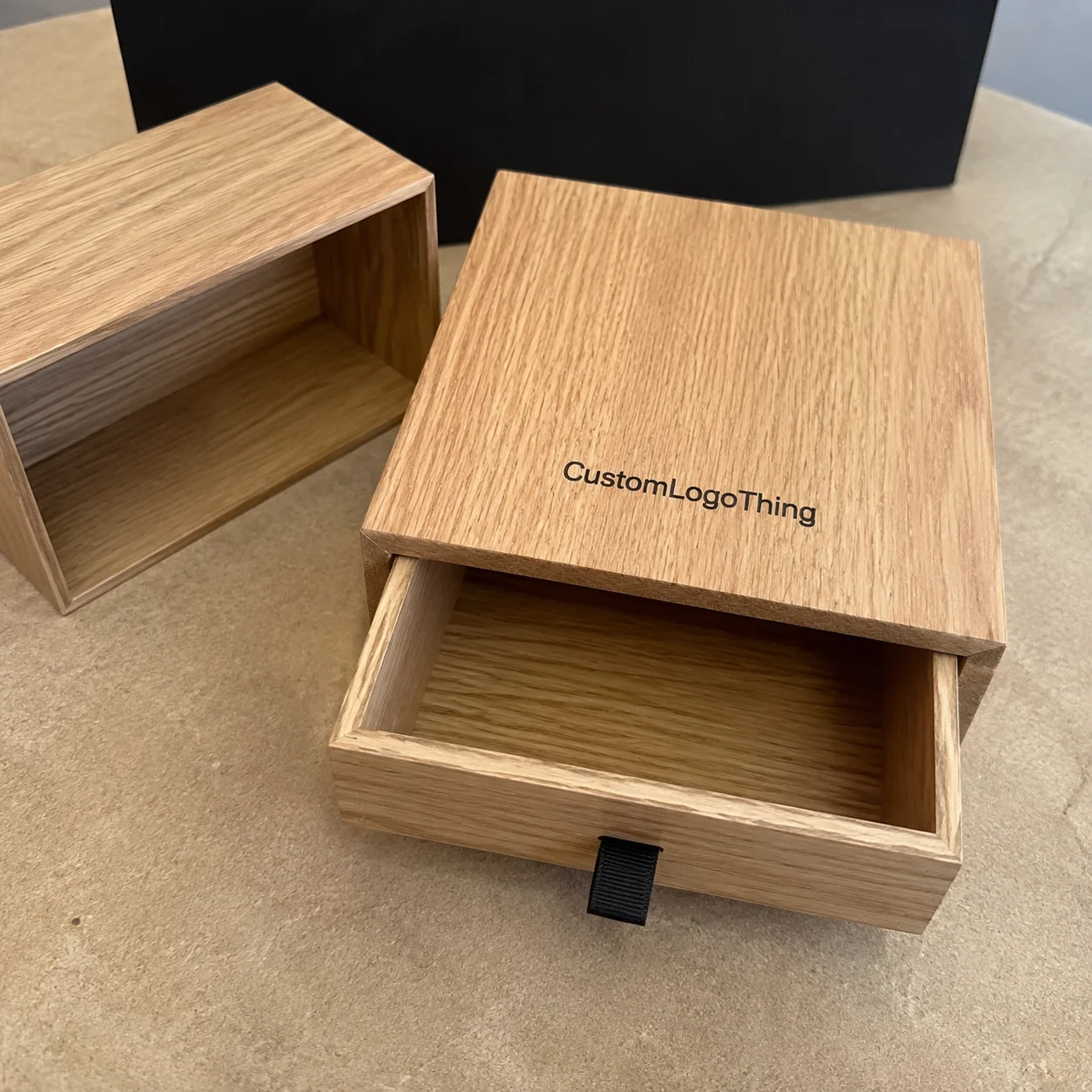
An oak drawer boxes manufacturer does more than cut panels and fasten a bottom. The work is controlled repeat woodworking: select suitable oak stock or panels, mill parts to consistent thickness, machine joinery cleanly, sand to the required grit, assemble square, apply finish if specified, inspect against tolerances, and protect every edge for shipping.
Construction style should follow the drawer’s job. A shallow utensil drawer in a residential kitchen does not face the same load as a deep linen drawer in a hotel casegood, a file drawer in an office system, or a retail fixture drawer opened hundreds of times a week. Solid oak sides are common where the interior is visible and buyers want a premium hardwood feel. Oak veneer plywood can be a practical choice where stability, flatness, and cost control matter more than thick solid edges.
Dovetail drawer boxes remain popular in higher-end cabinet work because the joint is both mechanical and visual. The interlocking pins and tails resist pull-apart forces, and the corner itself signals quality. Still, dovetails are not the only valid answer. Doweled and lock-rabbet boxes can perform very well when machining is accurate, glue coverage is consistent, and assembly fixtures hold the box square while the adhesive cures.
Oak behaves differently from softwoods and composite panels. It has open grain, strong edges, and good density, but that same grain can chip, fuzz, or burn when tooling is dull or feed speeds are off. Red oak and white oak also differ in color, pore structure, availability, and cost. A quote that simply says “oak” may not define enough for a buyer who cares about appearance.
Practical callout: Drawer box quality lives in plain details: square corners, repeat dimensions, clean machining, controlled moisture, protected finishes, and hardware-ready accuracy.
For projects that combine drawer-style wood components with presentation packaging, inserts, cartons, or branded display systems, it helps to view the drawer as part of the whole package. The team behind Custom Packaging Products can help buyers compare drawer structures, inserts, and cartons as connected components rather than isolated purchases.
How Oak Drawer Box Production Steps Work
A clean production flow starts with drawings or a size schedule. The supplier confirms outside width, depth, height, side thickness, bottom design, joinery, finish, quantity, and slide requirements. After that, material is selected and acclimated, parts are ripped and crosscut, joinery is machined, components are sanded, boxes are assembled, bottoms are fitted, finish is applied if needed, and finished boxes are inspected and packed.
The stronger shops build quality into each step instead of asking final inspection to catch avoidable errors. That means calibrated stops, repeatable machine setups, sharp tooling, controlled adhesive use, assembly fixtures, and written tolerances. Final inspection still matters, but it should confirm the process rather than rescue it.
Moisture content deserves more attention than it usually gets. Solid oak sides machined too wet can shrink after assembly, opening joints or changing the drawer’s fit. Material that is too dry may absorb moisture after delivery if it sits in a humid warehouse or unfinished jobsite. Many hardwood operations target a furniture-grade moisture range around 6% to 8% for interior work, though the right number depends on region, storage conditions, and end use. Ask how moisture is checked and how long material acclimates before machining.
Joinery should be chosen for the application. Dovetails are strong and attractive. Dowels suit repeat production when boring accuracy and glue control are reliable. Lock-rabbets create clean, square corners with good glue area. Reinforced corners may be useful for heavy storage, commercial casework, or drawers expected to see frequent hard use.
Slide compatibility drives more dimensions than many buyers expect. Undermount slides often require a specific bottom recess, rear notch, locking device clearance, and bore pattern. Side-mount slides usually need predictable side clearances and consistent box width. A drawer listed as 21 inches deep does not automatically work with every 21-inch slide.
Packing belongs in the production conversation. Finished oak corners chip under vibration. Clear-coated surfaces can rub and haze if boxes are nested without protection. Depending on order size, good packing may include foam sheets, corner protection, interleaving, snug cartons, pallet strapping, and stretch wrap. For transit testing concepts, the International Safe Transit Association is a useful reference for how packaged goods are evaluated during distribution.
Key Specs That Decide Fit, Strength, and Finish
Before requesting a quote from an oak drawer boxes manufacturer, prepare the core specifications in writing: outside width, outside depth, height, side thickness, bottom thickness, slide type, joinery style, finish requirement, quantity by size, and delivery destination. Include any machining for locking devices, rear brackets, side-mount slides, handles, labels, or pull hardware.
Nominal and finished dimensions are not the same. Cabinet opening size, face-frame opening, clear inside cabinet width, slide clearance, and final drawer box outside width can all be different numbers. Many side-mount slides need about 1/2 inch clearance per side, while undermount systems follow their own rules based on model and locking device. The safest quoting package identifies both the cabinet context and the final box dimensions.
Material selection changes price, movement, and appearance. Solid oak sides offer a premium hardwood edge and a strong tactile feel. Oak veneer plywood can improve stability across wider parts and may reduce waste in larger runs. Mixed construction is common: solid oak sides where users see and touch the drawer, with plywood bottoms chosen for flatness, load performance, and cost control.
Bottom panels should be specified by load and span. A light vanity drawer may use a thinner captured bottom. Deep pantry storage, file drawers, hospitality casegoods, or retail fixture drawers may call for 1/4 inch, 3/8 inch, or 1/2 inch bottoms depending on width and expected weight. Captured bottoms usually feel more refined than stapled-on bottoms, but the right choice depends on use, budget, and hardware geometry.
Finish decisions affect schedule as well as appearance. Raw sanded oak may be enough when a cabinet shop will finish everything in-house. Stain-ready sanding requires tighter grit control, often around 150 to 180 grit depending on the finish system. Clear coat, low-sheen protective finishes, and prefinished UV coatings add cost, but they can reduce downstream labor and improve consistency when boxes ship ready to install.
| Specification Choice | Best Use | Typical Cost Impact | Buyer Watchpoint |
|---|---|---|---|
| Solid oak sides | Premium visible interiors and high-touch cabinetry | Higher material and machining cost | Confirm moisture control and color expectations |
| Oak veneer plywood sides | Stable production runs and cost-controlled builds | Moderate, often lower than solid oak | Check edge treatment and veneer grade |
| Dovetail joinery | High-end furniture, cabinetry, and visible drawers | Higher setup and machining cost | Approve corner appearance and fit tolerance |
| Lock-rabbet or doweled corners | Efficient production and clean square assemblies | Often lower than dovetail | Confirm glue strength and squareness standards |
| Clear-coated finish | Ready-to-install drawers with protected surfaces | Adds finishing labor and cure time | Request a sample for sheen and color |
Tolerances should be written, not assumed. A production drawer box order may need width held within plus or minus 1/32 inch, squareness controlled by diagonal measurement, and consistent side height across the run. The exact tolerance depends on machinery, construction, material, and hardware system. Define what will be measured before production starts.
Cost, Pricing, and Quote Factors for Oak Drawer Boxes
Pricing depends on oak grade, solid versus plywood construction, drawer size, side height, joinery method, sanding level, finish, hardware machining, quantity, packing method, and freight. A small custom batch with five sizes, dovetails, clear finish, and special notching will cost more per box than a repeat run of 500 identical unfinished boxes.
Oak generally costs more than birch, maple plywood, or MDF-based alternatives because it is dense, visually variable, and harder on tooling. Clean grain presentation takes care. If a drawer side is visible every time the user opens a cabinet, the buyer may reject mineral streaks, rough end grain, sanding chatter, or mismatched color that would pass in a hidden structural part.
Quantity has a direct effect on unit cost. Setup time, tooling adjustments, finish preparation, inspection, carton setup, and pallet configuration are spread across the order. For small custom runs, a drawer box might land around $45 to $120 depending on size, finish, and joinery. Larger repeat production can reduce the unit price, though freight and finish still matter. Oversized or heavy-duty oak drawers can exceed those ranges, especially with thick bottoms or premium finish work.
Minimum order quantity can be stated several ways. Some suppliers set a formal MOQ, such as 25 or 50 boxes. Others use a minimum dollar value because engineering, material ordering, setup, and packing do not make sense below a certain threshold. Freight can behave like a hidden minimum; shipping three finished oak boxes by less-than-truckload carrier may be poor economics compared with combining orders.
Quote clarity protects both sides. Ask whether the price includes finish, slide notching, drilling, rear bracket cuts, special labeling, individual cartons, master cartons, pallets, freight, residential delivery, liftgate service, or rush production. A cheaper quote may simply exclude work you still need.
If budget is tight, reduce complexity before reducing quality. Standardize sizes. Limit finish variations. Combine releases into a larger order. Use lock-rabbet construction where dovetails are not visible or necessary. Keep side heights consistent where possible. A good supplier can usually identify two or three cost levers without damaging fit or durability.
Timeline, Lead Time, and What Can Slow an Order
A realistic timeline runs through inquiry, spec review, quote, drawing or sample approval, material procurement, production scheduling, cutting, machining, assembly, finishing, inspection, packing, and freight transit. Cutting and assembly may take only a few days. The full order can still take several weeks once approvals, material, finishing, and carrier pickup are included.
For a straightforward repeat order with approved drawings and unfinished boxes, production might be scheduled in 10 to 20 business days depending on shop capacity. Finished oak boxes, new sizes, specialty joinery, or prototype approval can add another week or more. These are practical ranges, not promises, because material availability and workload move constantly.
A clean purchase order helps the clock start. Include approved drawings, final quantities, finish selection, hardware requirements, ship-to address, receiving hours, delivery constraints, labeling needs, and packing instructions. If the supplier has to stop for a slide model, stain target, or final width confirmation, the order is not truly released.
Samples are worth the time when risk is high. Use a prototype for a new cabinet line, a high-volume rollout, a premium visible interior, an unfamiliar slide system, or a first order with a new supplier. One approved sample can prevent a full pallet of drawers from arriving with the wrong recess, sheen, side height, or bore location.
Common delays are predictable: late drawing revisions, missing slide specifications, unclear finish expectations, quantity changes after material is ordered, and rush requests without accepted tradeoffs. Rush work can also raise scrap risk if material is not acclimated or finish is handled before it is ready.
Ask for milestone dates instead of one vague ship date. Useful checkpoints include drawing approval deadline, material arrival, production start, finishing completion, final inspection, packing date, carrier pickup, and expected delivery. For broader packaging and branded product planning, the background on About Custom Logo Things gives context on how custom components fit into larger sourcing decisions.
Common Mistakes Buyers Make Before Ordering
The most expensive mistake is ordering from cabinet opening dimensions without accounting for slide clearance, side thickness, notch requirements, bottom recess, or manufacturer-specific hardware instructions. A drawer box can be beautifully built and still be wrong if the starting number was the opening rather than the final outside box size.
Finish samples matter more with oak than many buyers expect. Oak absorbs stain and clear coat differently depending on grain, sanding grit, cut, and batch. A screen photo is not a color standard. If the drawer interior will be visible in a premium installation, approve a physical finish sample under lighting similar to the cabinet or display environment.
Another common mistake is choosing joinery by appearance alone. Dovetails look premium and often make sense, but they are not automatically the best answer for every budget, load, or production program. Doweled, lock-rabbet, or reinforced construction can be appropriate for commercial storage, hidden utility drawers, or larger runs where consistent function matters more than decorative corner detail.
Vague tolerances create downstream pain. A cabinet shop installing 200 drawer boxes can lose hours if widths drift, diagonals vary, or side heights change enough to affect reveal lines. If the boxes feed a production installation, write the tolerance expectation into the quote and approval drawing.
Freight assumptions can ruin good manufacturing. Finished oak boxes should not ship loose in a carton with empty space around the corners. Nested boxes need protection between surfaces. Pallets need enough support to avoid crushing lower cartons, and labels should make receiving easy. For wood sourcing claims, buyers who care about responsible forestry can review the Forest Stewardship Council and ask whether certified material is available for the project.
Changing quantities or sizes after approval can reset both pricing and timing. Material yield changes. Machine setups change. Finishing batches change. Pallet configuration changes. A supplier is not being difficult by requoting; the production math has changed.
Next Steps Before You Contact a Drawer Box Supplier
Before contacting an oak drawer boxes manufacturer, gather the information that removes guesswork: outside drawer box width, depth, height, slide model, cabinet opening size, quantity by size, material preference, finish requirement, joinery preference, delivery location, receiving constraints, and any special machining. If the drawer will carry heavy items, note the expected load or use case.
A spreadsheet beats a long email almost every time. Use columns for width, depth, height, quantity, material, finish, slide model, notching, drilling, labels, and notes. Manufacturers can quote faster, spot odd dimensions earlier, and reduce the risk of copying a number incorrectly from a paragraph.
Request drawing approval or a sample when the drawer affects a repeat cabinet line, a premium project, a new hardware system, or a high-volume order. Approving one box before production is slower at the beginning but often faster than sorting, reworking, or replacing a larger run after delivery.
Ask practical supplier questions. What tolerances do you hold? How do you control oak moisture? What finish options are available? What sanding grit is standard? How are boxes packed? What is your current lead time? What information do you need for a clean quote? The answers reveal whether the supplier thinks like a production partner or just a parts seller.
- Confirm final outside drawer box dimensions, not just cabinet openings.
- Decide where solid oak adds value and where oak plywood may be enough.
- Compare quotes using the same assumptions for finish, joinery, machining, packing, and freight.
- Approve a sample if fit, finish, or volume creates meaningful risk.
- Place the order with written dimensions, tolerances, delivery requirements, and contact information.
The right manufacturer is not simply the lowest line item on a spreadsheet. The better choice is the supplier whose construction method, finish process, timeline, packaging, and communication match the way the drawers will be installed and used. Do the specification work early, compare suppliers against the same assumptions, and make sure every quote reflects the same material, joinery, hardware machining, finish, packing, and freight requirements before production is approved.
FAQ
What should I send an oak drawer box manufacturer for an accurate quote?
Send outside box width, depth, height, quantity by size, side thickness, bottom thickness, slide model, joinery preference, finish requirement, shipping address, and any notching or drilling needs. If you have cabinet drawings, include them, but still identify the final drawer box dimensions so the manufacturer is not forced to guess clearances.
Is solid oak better than oak plywood for drawer boxes?
Solid oak offers a premium hardwood look and strong edges, which helps when drawer sides are visible or heavily used. Oak plywood can improve stability and cost control, especially for larger runs or applications where visual grain consistency is less critical.
How much do custom oak drawer boxes usually cost?
Cost depends on size, quantity, oak grade, construction style, joinery, finish, hardware machining, packaging, and freight. Small custom batches cost more per unit because setup, material handling, finishing, and packing time are spread across fewer boxes.
What lead time should I expect from an oak drawer boxes supplier?
Lead time depends on shop capacity, material availability, finish requirements, sample approval, order size, and freight distance. Ask for milestone dates, including drawing approval, production start, finishing, packing, and shipping, instead of relying on one general estimate.
Which joinery style is best for oak drawer boxes?
Dovetail joinery is strong and visually premium, making it popular for high-end cabinetry and furniture. Doweled, lock-rabbet, or reinforced construction can also perform well when properly machined, glued, squared, and matched to the drawer load.